The Shooting Sports USA website includes two excellent articles about the basics of metallic cartridge reloading. These two articles provide an excellent summary of the key procedures. If you are new to reloading, we recommend you read both articles:
Part II is particularly helpful because it explains the entire reloading process step-by-step, with 14 listed steps. The author notes: “In this, the second installment on metallic cartridge reloading, we’ll follow the sequence of steps involved in reloading a rifle cartridge and refining a metallic cartridge load. These steps are based on the use of a single-stage reloading press and a separate priming tool.”
Much important advice is provided as this article runs through the 14 Steps of Reloading. For example, when explaining Step 13, Bullet Seating, the article states:
“Proper seating depth is critical. Too much bullet protrusion and the cartridge may not work through the gun’s magazine, or it may fail to chamber. Too little and the bullet intrudes excessively into the powder chamber, decreasing volume and raising pressure. Neck tension is also important; any bullet that fails to seat with some resistance may be held only loosely by the neck and may be driven back into the case when the round is chambered, especially in semi-automatic arms.”
Important Guide to Detecting Over-Pressure Signs in Brass
As an example of the invaluable advice provided in these two articles, here’s a sample from Part II that explains how to determine if your load is over-pressure. We recommend that EVERY reader read this twice. There are more things to consider than a stiff bolt lift. You need to inspect cartridges very carefully:
At the request of our readers, we provide select “Deals of the Week”. Every Sunday afternoon or Monday morning we offer our Best Bargain selections. Here are some of the best deals on firearms, hardware, reloading components, optics, and shooting accessories. Be aware that sale prices are subject to change, and once clearance inventory is sold, it’s gone for good. You snooze you lose.
NOTE: All listed products are for sale to persons 18 years of age or older. No products are intended for use by minors.
Sportsman’s Warehouse — Orange Tag Gun Sale
⏺️ » Big savings on rifles, shotguns and pistols
If you’re in the market for a new firearm — whether a new hunting rifle, AR rifle, lever-action rifle, pistol, or shotgun — head over to Sportsman’s Warehouse for the major Orange Tag Gun Sale running this week. With 390 firearms on sale, there’s literally something for anyone no matter what kind of guns you like or what discipline you shoot. Savings are significant, up to 32%. For example the S&W M&P Shield 40sw pistol is marked down to $365.47 from $519.99, a 30% discount.
Brownells – Freedom Sale + 12% Savings with Code FREEDOM12
⏺️ » Major savings on products plus 12% OFF with CODE FREEDOM12
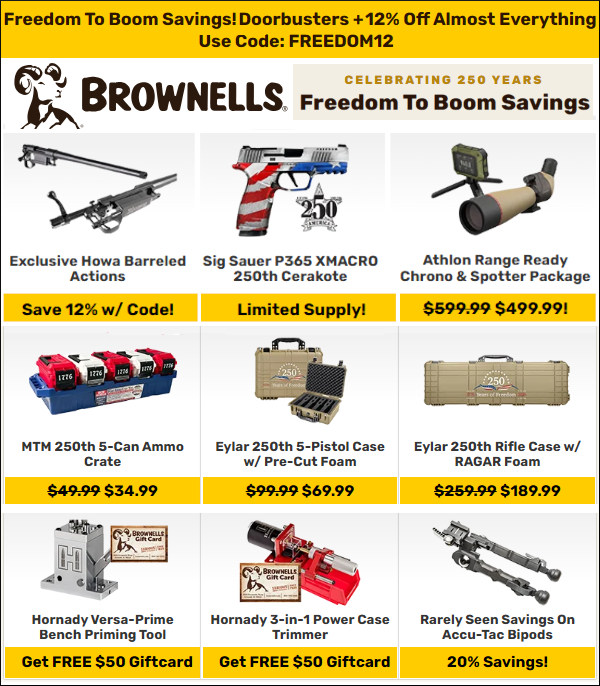
Brownells is running a major Freedom to Boom Sale this week in preparation for July 4 and the nation’s 250th anniversary. A wide variety of products are on sale, including Howa barreled actions, Athlon chronographs, and AccuTac bipods. PLUS you can save 12% on most products with code FREEDOM12.
As an Amazon affiliate, this site can earn revenues through sales commissions.
After purchasing a new set of dies from Forster, Hornady, Redding, or Whidden Gunworks, you’ll want to disassemble the dies, inspect then, and then remove the internal grease and/or waxy coatings placed on the dies by the manufacturer. Below are two videos that show how to de-grease and clean dies as they come “out of the box” from the manufacturer. The videos also explain how to clean your dies after regular use. Cleaning your dies helps remove carbon, brass shavings, lube residues and other stuff that can get inside the dies.
In the first video, from Creedmoor Sports, Bill Gravatt (Creedmoor’s President) shows various methods for cleaning dies both when new and after they have accumulated carbon and lube after use. This video is definitely worth watching. In the second video, a Hornady technician shows the method for degreasing dies before first use. A convenient aerosol spray cleaner is used in the video. You can also use a liquid solvent with soft nylon brush, and cotton patches. NOTE: After cleaning you may want to apply a light grease to the external threads of your dies.
Creedmoor Sports Die Cleaning Video with Bill Gravatt
Hornady Video Showing Aerosol Cleaner
Clean Your Sizing Dies and Body Dies Regularly
These same techniques work for cleaning dies after they have been used for reloading. Many otherwise smart hand-loaders forget to clean the inside of their dies, allowing old case lube, gunk, carbon residue, and other contaminants to build up inside the die. You should clean your dies fairly often, particularly if you do not tumble or ultrasound your cases between loadings. It is most important to keep full-length sizing and body dies clean. These dies accumulate lube and carbon residue quickly.
Henry Rifle serial number 1, the first production Henry rifle, is now the most valuable long gun ever made. This historic rifle, Henry serial number 1, recently sold for $5.875 million, the highest price ever paid for a rifle. This wasn’t a rare prototype — Henry Rifle serial number 1 was the very first production Henry, built by New Haven Arms Company in the 1860s.
The Most Expensive Rifle Ever Sold | Henry Serial No. 1 | ($5.875 MILLION)
Technological Innovation — 16-round Lever-Action Rifle
Patented by Benjamin Tyler Henry in 1860, this lever-action rifle chambered in .44 rimfire was a massive breakthrough, allowing soldiers to rapidly fire 16 rounds without reloading one round at a time. This design directly paved the way for the Winchester dynasty. The auction description noted: “Serial number 1 is not merely an early production example but the genesis of an entire technological and cultural legacy. Every Winchester that followed traces its lineage to this [rifle] that launched a company and helped define an era. As the starting point of the Winchester story … this rifle stands at the beginning of a legend, where Oliver Winchester’s vision took form and the repeating rifle that would shape the American West was born.”
The Birth of America’s Lever Action Rifle
It can be argued that EVERY lever-action rifle built in the 160-plus years since Henry serial number 1 was crafted — every model, every maker, every variation on that under-barrel magazine and swinging lever — traces its lineage back to this one gun.
The 1860 Henry was the design that proved a repeating rifle could actually work in the field, and it set the template that the entire lever-action category has followed ever since. Since its creation a century and a half ago, the lever-action rifle has been the rifle of hunters, ranchers, and everyday Americans who needed a dependable repeater they could trust with their lives.
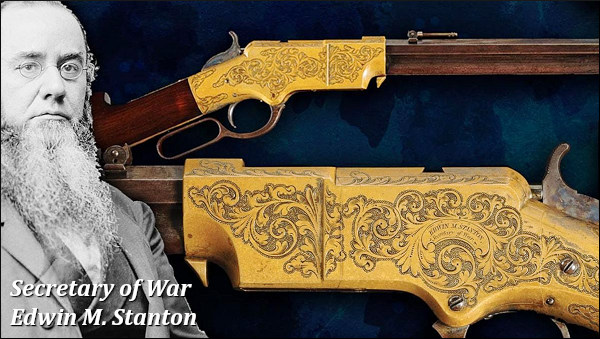
Henry Rifle serial number 1 was presented to President Abraham Lincoln’s Secretary of War, Edwin Stanton during the Civil War. This rifle is part of an exclusive trio of factory-engraved Henry rifles presented by Oliver Winchester to high-ranking Union officials to secure military contracts. The other two include Lincoln’s rifle (Serial No. 6, now in the Smithsonian National Museum of American History) and Secretary of the Navy Gideon Welles’ rifle (Serial No. 9, housed at the Autry Museum of the American West).
Henry Rifle serial number 1 is not simply the first Henry rifle ever made — it is arguably the most important lever action rifle in existence. Manufactured during the American Civil War and presented to President Abraham Lincoln’s Secretary of War, Edwin Stanton, this historic Henry repeating rifle launched the era of metallic cartridge repeating long guns in America produced by Winchester Repeating Arms. Every legendary Winchester rifle that followed the Henry — from the Model 1866 to the famed Model 1873 — owes its existence to the Henry lever-action rifle.
This rifle features elaborate engraving and an inscription to Secretary Stanton.
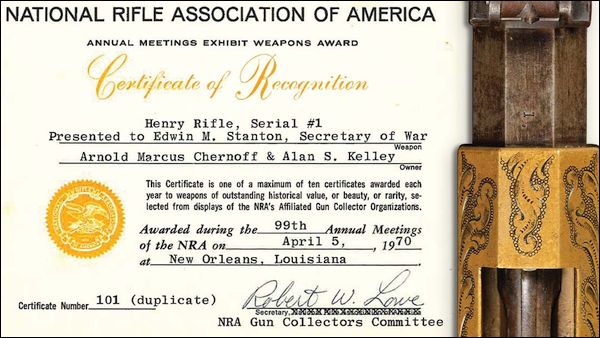
Henry Rifle Serial Number 1 Henry Rifle serial number 1 was awarded a certificate of recognition from the National Rifle Association at the NRA annual meeting in New Orleans in 1970.
Presented alongside other famous “Lincoln Cabinet” Henry rifles gifted to Abraham Lincoln and Gideon Welles, this extraordinary Civil War firearm represents a pivotal turning point in American military and technological history. Featuring factory engraving by Samuel J. Hoggson, with early production features unique to the first Henry rifles, the Henry serial number 1 remains one of the most coveted and historically important American firearms ever made.
This video includes footage from the auction where Henry Rifle Serial Number 1 was sold.
Rifle Was Gift for Lincoln’s Right Hand Man — Secretary of War Stanton
In the 1860s, arms-makers often gave their finest work to key government leaders. After Benjamin Tyler Henry had introduced his lever-action repeating rifle that could fire 16 rounds without reloading, there was good reasons to showcase this for the government. This rifle represented a major breakthrough that could dramatically change how military operations could be conducted. So the company presented engraved Henry rifles to three men close to President Lincoln: Secretary of War Edwin Stanton received serial no. 1, Lincoln himself received serial no. 6, and Secretary of the Navy Gideon Welles received serial no. 9.
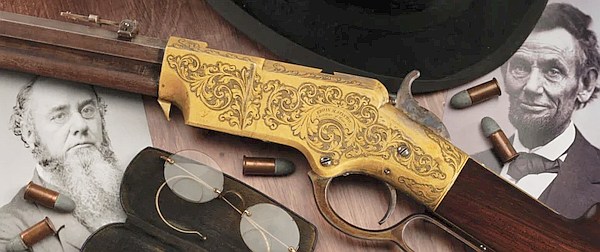
Engraved brass rifle shown with portraits of Edwin Stanton and Abraham Lincoln.
Today, collectors know these three rifles as the Lincoln Cabinet Guns. Lincoln’s rifle now sits in the Smithsonian, while the Welles rfle is at the Autry Museum of the American West. The Stanton rifle, Henry serial no. 1, was the last of the three still in private hands, and the only one anyone could actually buy. Stanton is best remembered for the words he spoke at Lincoln’s deathbed: “Now he belongs to the ages.”
Henry No. 1 Is Highest Priced Rifle, But NOT the Most Expensive Gun Ever Sold
Is Henry serial number 1 the most valuable gun ever sold? Actually not. It is the most expensive rifle, but a famous handgun, a Colt revolver, represents the most expensive gun ever sold. Sheriff Pat Garrett’s Colt Single Action Army revolver, which he seized from gang member Billy Wilson in 1880 and used to kill Billy the Kid (William Bonney) in 1881, sold at a Bonham’s Auction on August 27, 2021, for a record-breaking $6,030,313 (including buyer’s premium).
Details of Rifle (from Auction Description):
Condition: Extremely fine overall with crisp original barrel address and serial number “1” on the barrel. The engraving and historic inscription are all crisp and of extraordinary detail. 85% plus original vibrant case colors remain on the hammer. 40% of the original blue finish mixed with attractive even brown patina remains on the barrel. Significant patches of original silver plating are found in the protected areas of the frame such as the lower tang as well as on the heel extension of the buttplate, attractively aged patina on the exceedingly attractive brass, a mostly even brown patina on the lever, and generally minimal overall wear consistent with the rifle’s age[.] The stock is also fine and has attractive natural grain and color, with an overcoat of protective varnish, faint flakes at the edges of the wrist, a tight hairline crack follows the grain in the butt, and slight storage dings and scratches. Mechanically excellent.
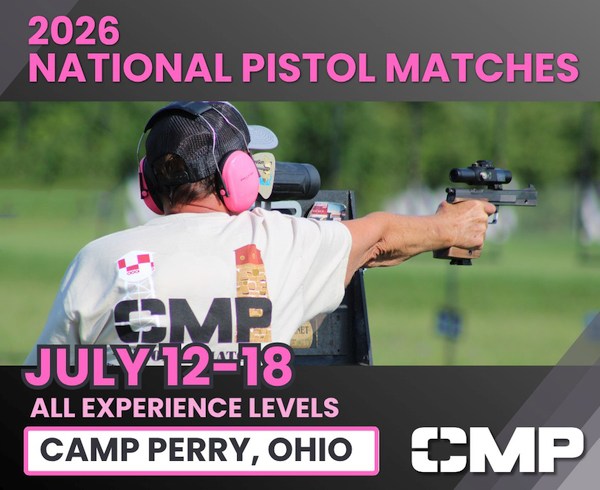
Today, 7/12/26, the 2026 Pistol Competitions officially commenced at the CMP 2026 National Matches at Camp Perry, Ohio. While the rifle competitions get the most coverage, the CMP National Matches also include very popular handgun competitions. Traditional Bullseye pistol shooting can bring nearly a thousand competitors to Camp Perry each summer, as part of the CMP National Championships. For these Camp Perry pistol matches, held July 12-18, 2026, targets are set at 25 and 50 yards. The shooting position is standing and firing one-handed in slow fire, timed fire, and rapid-fire.
Sunday 7/12/26
CMP Pistol Check-In Opens
Military & Police Pistol Match &
1911 As-Issued Pistol Match (PM)
Monday 7/13/26
Pistol Practice (AM & PM)
Small Arms Firing School (Pistol)
SAFS M17 Pistol EIC Match
SAFS/M17 Awards (CMP Headquarters)
Military & Police Pistol Match &
1911 As-Issued Pistol Match
Tuesday 7/14/26
Pistol Warm-Up Match
GSSF Glock National Challenge
Wednesday 7/15/26
CMP .22 Pistol 900 Aggregate
.22 Rimfire Pistol EIC Match
.22 Pistol Team Matches
Thursday 7/16/26
CMP CF Pistol 900 Aggregate
CMP Service Revolver EIC Match
CF Pistol Team Matches
Saturday 7/18/26
President’s 100 Pistol Match
National Trophy Individual Match
National Trophy Team Matches
CMP Shooter’s Reception (CMP Headquarters)
National Trophy Pistol Award Ceremony (Theatre)
Since their inception over a century ago*, the National Matches have become a major shooting sports festival with over 4,500 annual participants. Held at the Camp Perry Nat’l Guard Training Base, the National Matches now include both indoor and outdoor events. Adult and junior athletes are welcome.
Camp Perry Bullseye Pistol Competition
Camp Perry is synonymous with the oldest and most prestigious annual trophy matches in our nation’s history. And in a venue renowned for service rifle matches, the sport of precision pistol is no less important, no less challenging, and no less respected. The National Trophy Pistol Matches is all about traditional handgunning — the stance, the intense concentration, and of course, the one-handed grip. It’s all unmistakable as the game of Bullseye Pistol. Every year there are no fewer than 24 separate match trophies for the top Bullseye Pistol shooters, both military and civilian. And the very best will claim National Match Trophies and receive the President’s 100 Tab.
This video shows .45 ACP centerfire pistol competitors at Camp Perry
Civilians and military shooters competed together at the 2019 NTT Pistol Match.
The 2026 CMP Pistol Matches at Camp Perry include M9 EIC Match, the Pistol Warm-Up Match, the Pistol 2700 Aggregate, Team Matches, GSSF Glock National Challenge, Revolver Match, the CMP National Trophy Pistol Matches, and CMP Pistol Games Matches. To learn more about CMP events at the 2026 National Matches at Camp Perry, visit the CMP Nat’l Matches Website.
* The first National Matches at Camp Perry were held in 1907. SEE: A Short History of Perry and the National Championships by Hap Rocketto.
This content is Copyright 2026 AccurateShooter.com. No reproduction on any other website is authorized. Use of this content without payment of licensing fees is a violation of Federal law.
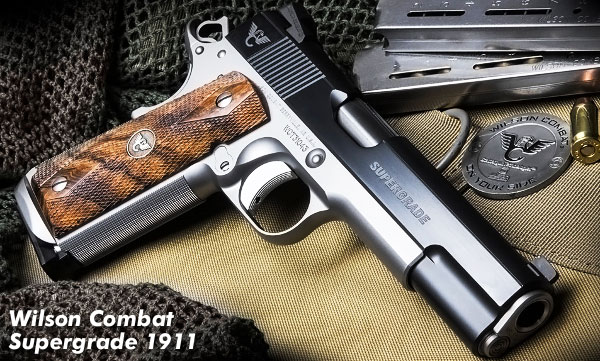
These three videos show how the classic Model 1911 pistol works, a pistol that will be featured in the CMP National Matches starting today, July 12, 2026. The famous 1911 pistol requires the hammer to be cocked in order to fire. Watch the video to see the operation of the trigger, hammer, firing pin, and slide. After the round is fired the slide retracts and the cartridge ejects. Then, a new round rises in the magazine and chambers as the slide moves forward back into battery. With the hammer cocked when the slide came back, the m1911 is ready for the next shot.
We enjoy shooting steel targets with rifle, pistols, and shotguns. Hitting a steel target provides instant gratification with a loud “ping” and possible movement. You can shoot small, low-cost reactive steel targets with rimfire guns at short range. Or get the stronger high-grade AR500 steel targets for centerfire shooting at 50 yards and beyond. We’ve enjoyed varmint matches with steel targets placed at 100-yard intervals from 200 to 700 yards.
Action pistol and rifle matches are typically conducted with steel targets, some that spin, and others that may even be set on moving tracks. Dueling trees are another popular type of steel targets. These have multiple plates that swing horizontally from side to side. For long-range rifles, self-resetting targets are popular. These typically have a tombstone-style steel plate set with a spring-loaded base. When hit, the target goes down, but then pops back up again after a few seconds.
Dustin Ellermann’s Steel Target Playground
In this video, popular Top Shot champion Dustin Ellerman shows his entire Steel Target facility with dozens of targets. This range has one of the most diverse collections of steel targets in any single location.
Know Your Limits Portable Steel Targets
Know Your Limits (KYL) target sets typically provide a series of swinging targets of multiple sizes, running from larger to smaller. This provides increasing challenge with each shot. This Guns and Guitars Channel video showcases two portable KYL target sets you can easily transport in your car/truck. The host states: “I love how portable and easy to set up it is, I love how many targets you get… and most importantly, I love that Shooting Targets 7 offer the best price for AR500 steel targets on the internet.”
Ten Good Steel Target Offerings — Product Reviews
This 8-minute video shows steel targets in various sizes from multiple vendors/manufacturers. This is a good starter video if you are looking to purchase your first steel targets. The video covers a wide selection of shapes, sizes, and metal ratings. In order, the featured steel targets and target accessories are:
Highwild 6″ x 3/8″ Steel Target Set
Hotop Shooting Target Pipe Hang Hooks
Do-All Outdoors Steel Shooting Target
HD Targets AR500 Steel Shooting Targets
Do-All Outdoors Steel Auto-Reset Spinner Target
Do-It-Yourself REBAR Target Stands — Very Low Cost
This Guns and Guitars Channel Video shows how to make making the CHEAP and sturdy target stands from REBAR. The host says: “These things are basically bullet-proof and would probably stand up against a charging rhino. You can build these stands using a 10-foot length of 1/2″ rebar from your local hardware store. Bending it is not super easy, but it can be done without a rebar bender, just watch the video!”
If you are thinking of crafting your own target, you may also want to watch a good Tactical Rifleman channel video about building a range on your own property. The host notes: “There is so much more to it than just pushing up a berm and buying some steel targets. Med plan, legal restrictions, drainage, targetry, and 50 other things should be planned out BEFORE you start digging. CLICK HERE for “How to Build Make Your Own Shooting Range” video.
Steel Target Arrangements for Action Shooting Matches
This video from Tactical Hyve shows a variety of steel targets used in action shooting scenarios. The host is a knowledgeable gear analyst and a very good shooter. If you are looking to get started in action pistol disciplines this is a good video to watch.
Steel Target and Target Stand Varieties
This video reviews the key features and functions of a variety of steel targets — from large torso silhouettes to reactive dueling trees. The video also reviews various target stands and supports. This is worth watching if you are considering buying steel targets for your shooting club or home range.
Shooting Steel Targets Safely — Tips from Hickok45
In this video, YouTube host Hickok45 offers valuable safety tips on shooting steel targets, based on his 30+ years of steel shooting experience. This guy knows his stuff — as proven by the fact that he now has over 7.6 million subscribers to his Hickok45 YouTube channel.
TOP SHOT: The steel targets in the top photo are part of the extensive facility operated by Big Daddy Hoffman 1911. See more on his popular YouTube Channel, now with 315,000 subscribers.
If there is a single CMP event at Camp Perry every summer that offers the highest level of shooter satisfaction, the most diverse group of competitors, and the lowest cost of entry, that would have to be the annual National Rimfire Sporter Match. This year’s match will be held Saturday, August 1, 2026 at Camp Perry. There will also be a rimfire Training Clinic on the afternoon of July 31st.
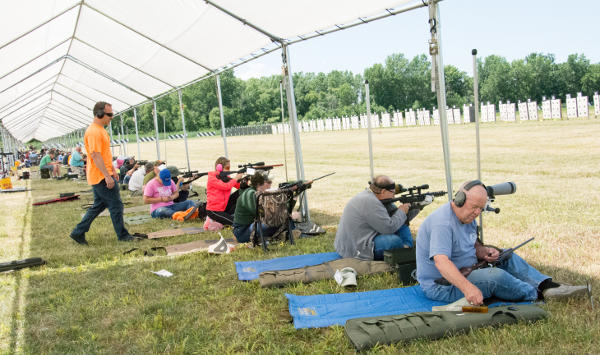
Each year, the Rimfire Sporter Match attracts hundreds of shooters to the shore of Lake Erie at Camp Perry. The CMP National Rimfire Sporter Rifle Match offers shooters a recreation-oriented competition where they use affordable, smallbore sporter rifles with either scopes or iron sights. All you need are a .22 LR rifle, sling, and ammo.
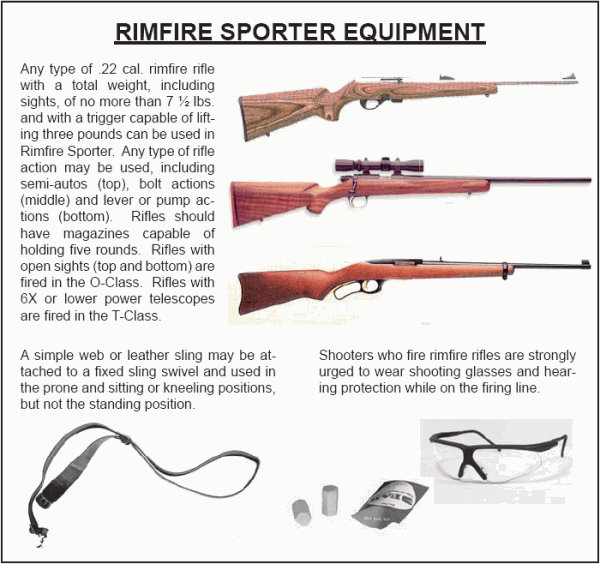
Rifles may be manually operated or semi-automatic, in four classes: the standard “O Class” for open-sight and iron-sight rifles, “T-Class” for rifles equipped with telescopic sights or rear aperture sights, “TU-Class” (Tactical/Unlimited) for tactical-style rimfire rifles and customized target rifles, and “M-Class” (Military Trainer) for vintage military rimfire training rifles that exceed the 7.5-pound weight limit.* Firing is done at 50 and 25 yards on a target with a 1.78″ ten-ring. The target is simple enough for a beginner to hit, yet challenging enough that only one competitor in the history of the match has ever fired a perfect 600 score. Here’s the young man who did that, Samuel Payne:
NOTE: Along with the three (3) classes shown above there is a new “M-Class” for vintage military rimfire rifles that exceed the 7.5-lb weight limit for the other classes.
Getting Ready for the 2026 Rimfire Sporter Match
Preparing for the Match: You need to bring your own .22 cal. Rimfire rifle(s) and ammunition. Special target shooting equipment, shooting jackets, or shooting gloves are not permitted, but feel free to bring a spotting telescope and ground cloth or shooting mat. You will be shooting on a grass firing point. Competitors are strongly urged to you wear hearing and eye protection.
A free Shooters’ Clinic will be held Friday, July 31st. The Clinic covers Rimfire Sporter rules, safety instructions, course of fire, and competition procedures. The Clinic will also demonstrate the firing positions, use of the sling, as well as slow and rapid-fire techniques. Shooters who have not previously attended a CMP Rimfire Sporter Match are strongly encouraged to attend.
Rimfire Sporter Course of Fire
Competitors will complete slow fire prone, rapid fire prone, slow fire sitting or kneeling, rapid fire sitting or kneeling, slow fire standing, and rapid fire standing shot sequences. To learn more about the National Rimfire Sporter Match, CLICK HERE.
Three different classifications of rifles can be used in Rimfire Sporter competition: “O Class” for open-sighted rifles, “T Class” for telescope-sighted rifles, “Tactical Rimfire” class, and recently-added “M-Class”. Awards are offered to High Juniors, High Seniors, High Women as well as Overall winners are named for each class.
* The M-Class was added as an “optional” Rimfire Sporter Rifle category in 2024. This rule was intended to allow rimfire military training rifles sold by the CMP to be used in a special Rimfire Sporter category where the 7.5 lb. weight limit does not apply. The intent was to give owners of these rifles opportunities to use them in CMP competitions. Recently, issues have come up regarding the wide range of rimfire rifles that the CMP acquired from government sources and subsequently sold to U. S. citizens. To answer those concerns the M-Class Rule (G9.2.1 d) has been amended to now read: “Match sponsors have the option of including an M-Class for rimfire rifles that were acquired by the U. S. Government for various purposes and subsequently sold by the CMP to U. S. citizens for their private use. Rimfire rifles eligible for inclusion in the M-Class must be repeater rifles suitable for use in firing the 60-shot Rimfire Sporter Rifle course of fire. There is no weight limit for rifles in this class (Rule 9.2.3), but they must have a minimum trigger pull of 3.0 lbs. (Rule 9.2.5) and aperture sights (Rule 9.2.6 d). The rule will be interpreted to allow any rimfire repeater rifle sold by the CMP that is suitable for Rimfire Sporter shooting will be accepted in this class. Note that M-Class rifles must have aperture receiver sights.”
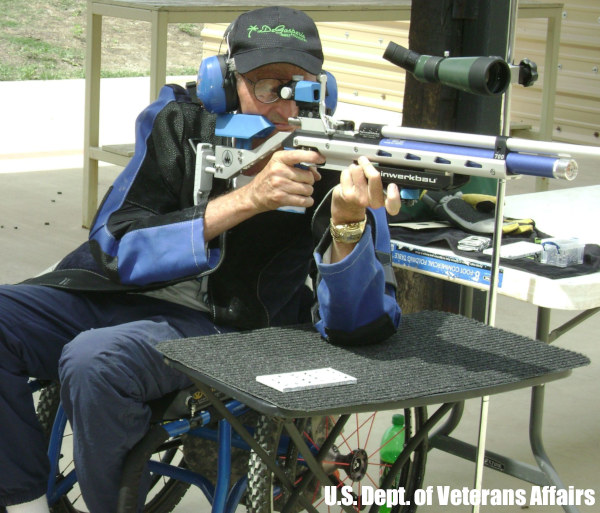
One of the great thing about shooting is that marksmanship is one of the few sports where physically-challenged persons can compete at the highest level — with some provisions for wheelchair access and mobility. For example, in the world of F-Class competition, Matt Schwartzkopf is one of the best in the nation. Matt, a rangemaster at Ben Avery in Arizona, is a double amputee (below the knee). He hasn’t let that challenge stop him. He has been a Top-10 finisher at major F-Class matches, and was chosen to shoot with F-TR Team USA.
F-TR Team USA member Matt Schwartzkopf is a double amputee below the knee, having had his lower legs removed due to a birth defect. That hasn’t held him back. Matt is an inspiration to us all. He told us: “This condition has not held me back from anything.” Jokingly, he added, “I may not have ‘a leg to stand on’, but that doesn’t mean I can’t still shoot 10s and Xs at 1000.” Matt is living proof that competitive shooting is a sport for all individuals — young and old, able-bodied and physically challenged.
Matt isn’t just a talented shooter — he runs range operations at Ben Avery in Arizona. During a major match, Matt can be seen supervising the firing line, organizing pit crews, and posting match results.
New USA Nationwide Adventure Database for Adaptive Shooters
Here’s a great new opportunity for shooters and sportsmen with physical limitations. The NRA has created a nationwide database of hunting and fishing adventures for individuals with disabilities. There are programs throughout the country with 45+ organizations such as Buckmasters, Freedom Hunters, Hope Outdoors, Hunting with Heroes, and Safari Club International.
“Venturing into the outdoors has long been acknowledged as healing for the body and soul”, said NRA National Adaptive Shooting Programs Manager Dr. Joe Logar, PT, DPT. “These benefits can be even more profound for someone experiencing an illness, injury, or disability.”
NRA’s Hunter Services and Adaptive Shooting Programs have maintained a list of organizations offering people with disabilities outdoor opportunities. Now available in a searchable database, any adaptive shooter can easily choose from adventures such as guided whitetail hunts, chartered fishing trips, and accessible hiking trails anywhere across the country. To find a program, visit the NRA Adaptive Shooting Program’s Hunting/Fishing Trip Database.
NRA Resources for Adaptive Shooting Events
The NRA Adaptive Shooting Program also provides information for organizations planning an event to include person with disabilities. Events may be organized by veterans’ groups, rehabilitation facilities, and gun clubs. For more information visit AdaptiveShooting.NRA.org.
Adaptive Shooting Programs in the United Kingdom
Across the pond, the National Rifle Association of the United Kingdom (NRAUK) also has adaptive shooting programs. The NRA.ORG.UK website has a wealth of information for shooters with physical challenges.
The NRAUK states: “There are many different types of target shooting available for people to try in Great Britain. Some of them are readily accessible to disabled people, others less so. Also, shooting clubs and facilities do not all cater for every discipline; some only offer one, whilst larger complexes can cater for many of them. The only place in the country where almost all disciplines can be tried is Bisley Camp in Surrey. Access to the outdoor ranges is being improved all the time, although most are already accessible.
If the disciplines that you particularly fancy are not suitable for your type of disability at the moment, or are not currently available in your area, do not give up hope! The key skills for target shooting are very similar for all disciplines, so you could start with a different but similar option, learn those key skills, and take up your first choice when it is available to you.”
Making Ranges Suitable for Disabled Shooters
The Summer 2019 issue of NRA Club Connections magazine has a feature on Adaptive Shooting. This article explains how range owners can make their lines of fire more accessible with the addition of a simple mat.
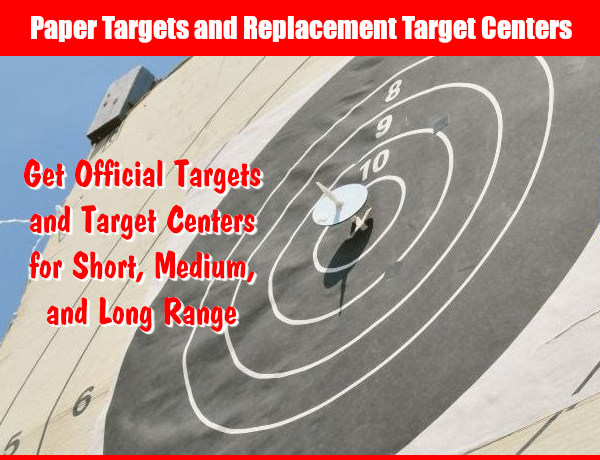
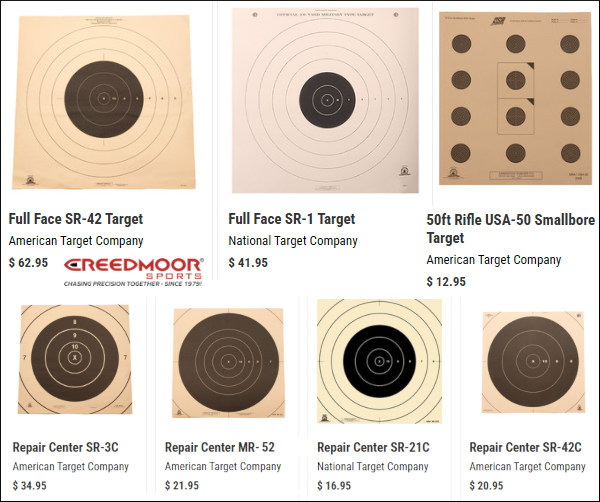
Are you a High Power or Smallbore marksman looking for bullseye paper targets? Here are bulk sets of 25, 50 and 100 targets from Creedmoor Sports. All these can can be used for general practice, fun matches, or official sanctioned events. Choose the 200-yard SR-1 target with seven scoring rings (X,10,9,8,7,6,5), priced at $41.95 for 100. For smallbore, you can get the USA-50 Smallbore Target $12.95 for 100. Creedmoor also offers a variety of Repair Centers, including the 300-Yard SR-3C Target Repair Center ($34.95), or the SR-21C Target Repair Center ($16.95). These target centers can be used on top of full targets, or by themselves for practice on smaller target frames.
Creedmoor Sports also offers match-grade shot spotter discs. These are used to mark shot locations. They are offered in three diameters: 1.5″, 3.0″, and 5.0″. In addition, you can purchase the spindles used with spotter discs along with range Golf Tees also employed to mark shots. These are placed in the shot holes by pit workers.
Frankly for practice, we recommend a target cam, or ShotMarker system.














 F-TR Team USA member Matt Schwartzkopf is a double amputee below the knee, having had his lower legs removed due to a birth defect. That hasn’t held him back. Matt is an inspiration to us all. He told us: “This condition has not held me back from anything.” Jokingly, he added, “I may not have ‘a leg to stand on’, but that doesn’t mean I can’t still shoot 10s and Xs at 1000.” Matt is living proof that competitive shooting is a sport for all individuals — young and old, able-bodied and physically challenged.