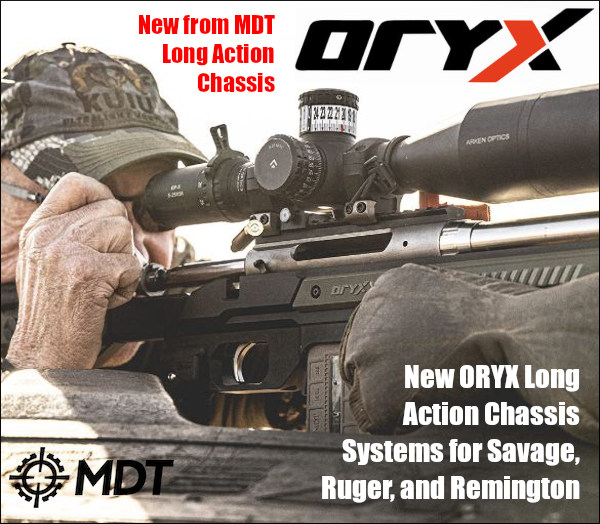
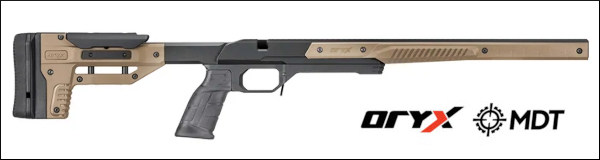
Here’s some good news for owners of long-action rifles that want to convert to a modular chassis system. MDT now offers the ORYX Chassis System for three popular long action platforms: Remington 700 LA CIP, and the Savage LA CIP, and Ruger American LA. These chassis systems start at $549.99 at MDTtac.com. Four colors (for polymer components) are offered: Black, Flat Dark Earth (FDE), Olive Drab Green (ODG), and Gray. Shown below is the Remington Long Action version in FDE.
The ORYX is an aluminum chassis built to bring factory rifles closer to a precision setup. The action is bedded on a V-block and the barrel is free-floated. The buttstock adjusts for both length of pull and cheek height, allowing the shooter to customize the rifle ergonomics to suit his preferences. And the ORYX takes AR-15 compatible grips, allowing the owner to easily customize his rig.
The ORYX chassis accepts AICS pattern magazines and AR15 pattern grips, carries M-LOK on the underside of the forend for bipods and accessories, and includes an integrated barricade stop for positional shooting. These long action ORYX chassis systems are offered in Black, Flat Dark Earth, Olive Drab Green, and Gray.
The ORYX LA chassis systems with long action inlets cover most chamberings used in factory field and hunting rifles. The ORYX is built for the shooter who wants bedded, free-floated accuracy and a stock with good ergonomics, without moving to a custom action.
The ORYX chassis systems for the Ruger American LA RH, Remington 700 LA CIP RH, and Savage LA CIP RH are currently available (as of 9/22/26) through MDT dealers and at MDTtac.com.
At the request of our readers, we provide select “Deals of the Week”. Every Sunday afternoon or Monday morning we offer our Best Bargain selections. Here are some of the best deals on firearms, hardware, reloading components, optics, and shooting accessories. Be aware that sale prices are subject to change, and once clearance inventory is sold, it’s gone for good. You snooze you lose.
NOTE: All listed products are for sale to persons 18 years of age or older. No products are intended for use by minors.
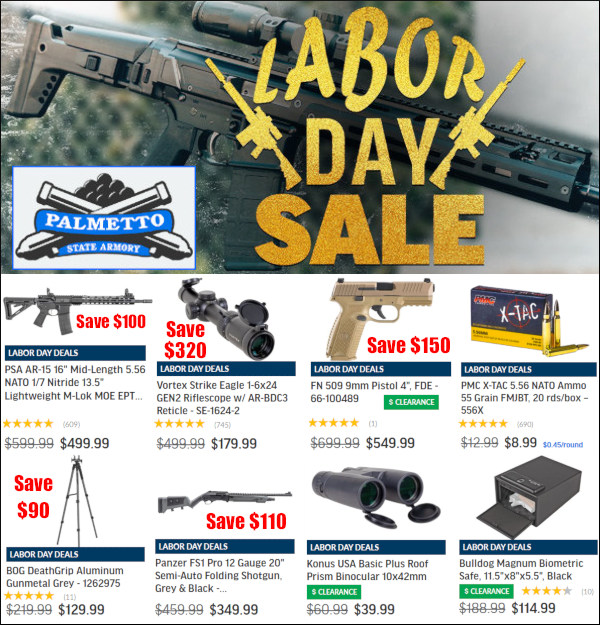
Palmetto State Armory — Labor Day Sale with Big Discounts
⏺️ » Major savings on ARs, lowers/uppers, handguns, optics, ammo
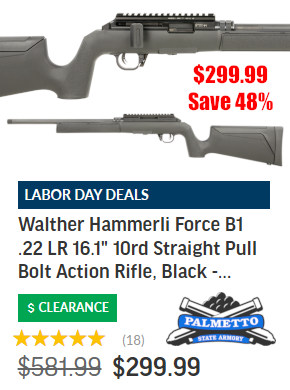
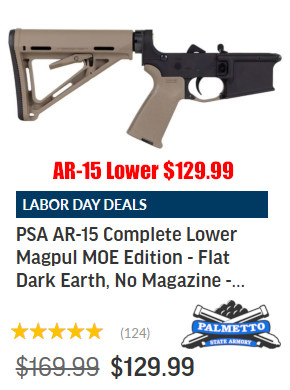
If you’re looking for an AR-type rifle, AR upper/lower, or a good handgun at a great price, head over to Palmetto State Armory (PSA) this week. PSA’s Labor Day Sale has commenced already and will run for the next two weeks. Along with the rifle, pistol, and shotgun discounts, there are significant savings on optics, ammo, tripods, and gun cases. PSA also has big discounts on AR lowers and uppers.
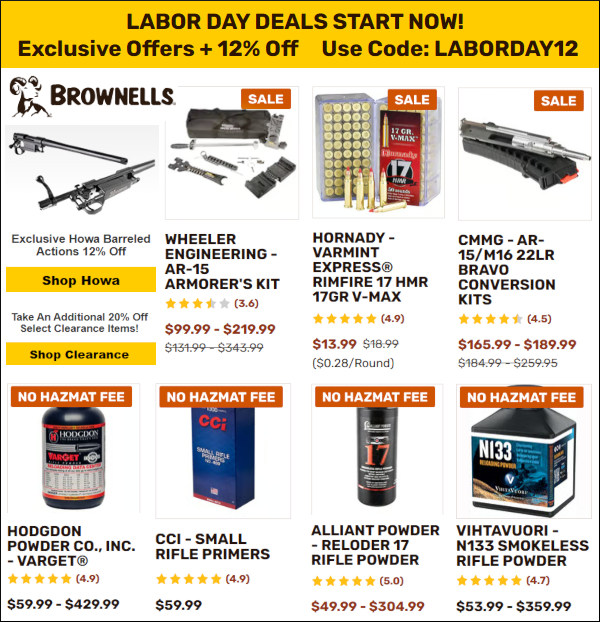
Brownells — Labor Day Sale + 12% OFF with Code LABORDAY12
⏺️ » Deals on guns, ammo, optics and gear plus 12% OFF Code
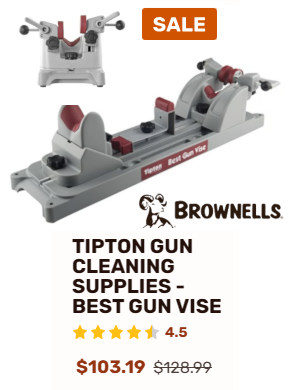
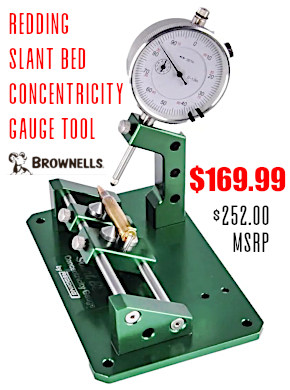
Get big savings with the Brownells Labor Day Sale. Along with the already discounted prices, on select clearance items you can save an additional 12% by using Code LABORDAY12 during check-out. Sale items include rifle scopes, Howa barreled actions, Reloading equipment, Hunting packs, Ammo (rifle, pistol, shotgun), powder and primers. Definitely check out this Clearance Sale. There are exceptional deals plus there are ZERO HazMat Fees on Powder and/or Primer purchases with no minimum!
As an Amazon affiliate, this site can earn revenues through sales commissions.
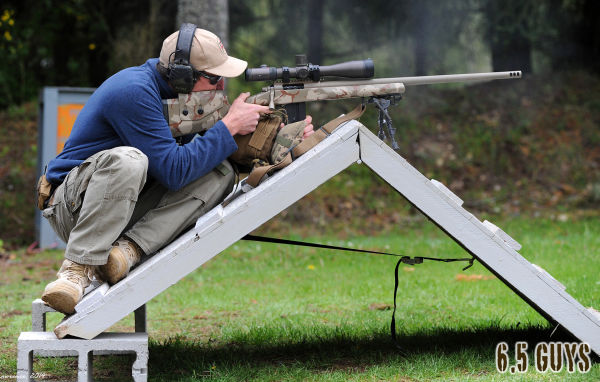
Our friends, Ed Mobley and Steve Lawrence, aka the “6.5 Guys”, have written an excellent article on getting started in practical/tactical competition. If you are new to the game, these tips can help you save money, progress faster, and have more fun. Here are article highlights, but we recommend you read the full story,5 Tips for Attending Your First Precision Rifle Match, onwww.65guys.com.
We often meet people who are new to long range precision shooting, and want to improve their knowledge and skill level. However, they aren’t sure if they are ready to sign up to compete in a match. They often ask, “What knowledge or skills are necessary to compete in a match?” Others may state, “I need to purchase this gear or that gear before I can attend a match”. For those guys who have a strong interest in precision rifle shooting, and who wish to chec out a precision rifle match, below are Five Tips to make it a positive experience.
TIP ONE: Make Plans and Commit to Go
First you need to start by finding a match to attend. This may entail a little bit of research and investigative work on your part to find what matches are scheduled in the next few months. We recommend starting with any match that may be within a reasonable driving distance. This may likely be a local “club” match, many of which are held on a regular basis. These make great venues because it will provide an opportunity to meet some of the regular attendees as well as shooters that are from your geographic area. Additionally, most of the smaller matches are a little more relaxed in terms of level of competitiveness.
Once you decide on the match you want to attend, do your homework. This means finding out if you need to pre-register or pre-pay the match fee. Commit to going by registering for the match and putting it on your schedule. Be sure to find other useful information for questions such as:
— What time should I arrive?
— Is there a mandatory safety briefing for new shooters at that venue?
— What is the travel time required to get to the match site?
— How many stages will there be?
— Is there a description of the stages available before the match?
— How many rounds should you bring?
— Are there special equipment requirements? (E.g. do you need chamber flags, is there a pistol stage?)
TIP TWO: Bring What You Have
(Don’t Spend a Fortune at the Start)
Some new shooters often assume they need a custom match rifle or all of the miscellaneous shooting gear associated with long range precision shooting to compete in match. While having a Kestrel weather meter and a high quality laser range finder and other shooting accoutrements are invaluable kit, you will find other shooters at your first match that will provide you with the information and coaching you need to get on target.
In fact, the only gear you really need to bring is a scoped rifle with a bipod and ammo capable of consistently shooting within one MOA. Also, be sure to know the ballistic drops or have a ballistic drop table prepared for your rifle/ammo to dial the correct DOPE on your scope for different target ranges. Many of the other participants at the match will be willing to let you borrow a support bag, bipod, tripod or other gear if you need one — just ask. Don’t use the excuse of not having the right gear to delay getting out to a match!
One reason not to make a big initial investment in a new rifle and assorted gear before competing, is we’ve seen a number of people come into the sport and try it for a year and then make the decision to move on to something else.
TIP THREE: Be Prepared to Learn
As a new shooter at a match, there is no better opportunity to learn. We often look to our local club matches as a group ‘training’ session to prepare for the bigger matches. You will find competitors at all levels of skill and many of your fellow shooters will enthusiastically provide helpful advice once they learn you are new to the sport. Take advantage of the opportunity to ask questions if you would like ideas for how to engage a stage, but also be sure to do more listening than talking as you receive guidance and tips from more experienced competitors.
Watch and observe other shooters and how they approach and ‘game’ a specific stage or course of fire. You’ll begin to recognize which shooting positions work best for different scenarios, and maybe even come up with some new ones that no one has thought of before.
Seeing what the better shooters do is an invaluable instructional tool. You can use your smart phone’s video camera to record other shooters (with their permission). When you’re ready to shoot, ask another shooter to record your performance. Watching yourself will point out needed areas of improvement.
After each match conduct an informal after action review and summarize for yourself the things that went well and what you should continue to do. You should also identify the specific shooting skills you should develop and make a plan to integrate the appropriate practice drills into your practice sessions. Finally, if you maintain a shooter’s data book or journal you’ll want to note things such as:
After Action Review – How you did, what went well, things you need to work on in practice. Stage Observations – Successful methods used for specific courses of fire. Note barricades, positions used, specific gear used for stages. Gear Observations – How your rifle/gear performed, what new items you should add to your “buy list”.
TIP FOUR: Be Safe and Have Fun
You’ve all heard a parent or teacher say, “It’s all fun and games until someone loses an eye.” The same can be said of the shooting sports. Safe handling of firearms is the number one rule at any match, and comes before the FUN part in terms of importance.
Before all matches start there will always be some form of a mandatory safety briefing. Make sure you know, understand, and follow any unique safety protocols for the match you attend. Some matches require all rifles have chamber flags inserted and are stowed in bags/cases while not on the firing line — other matches may not. If you run afoul of any safety rules, you risk the chance of being disqualified from a stage or worse, the entire match.
The second rule is simply have fun. This starts with having a good attitude throughout the day. Keep in mind that as a new competitor you should think of a match as a solid day of practice and training. If you blow a stage, use it as an opportunity to diagnose what you could have done differently or what you need to improve on — then smile and drive on.
Any day at the range or shooting is a good day. A match is an opportunity to hang out with like-minded people who are passionate about shooting and impacting targets far-far away. Life is great when you are doing what you enjoy!
TIP FIVE: Make Friends
There is no better way to meet lots of precision rifle shooters and make friends than at a match. The people that attend the tactical precision matches on a regular basis are those that have ‘fallen into the deep end of the pool’ and are really into the sport. As a result, they have become part of the local precision shooting community. As you strike up conversations at the match, find out if your new-found friends visit specific forum boards or social media outlets, or if there are other matches they attend.
Precision shooters tend to congregate and share information in different corners of the Internet. It will serve you well to meet some of the guys in person at matches and be able to connect a face to a screen name. As you develop your friendships and develop a level of trust, you will find opportunities become available to shoot with others in your local area, or get ‘read-in’ on a secret honey-hole of a spot to shoot long distance. Additionally, the local shooting community will often find it more convenient to sell or trade gear and equipment locally than deal with buyers/sellers that are out of state.
Getting Started in PRS/NRL — One Man’s Story
My name is Jeff Cosgrove. I have shot for 20+ years but I found my interest in shooting was dwindling over time. I got somewhat bored with shooting paper at 100 yards or plinking cans out in the desert. About 3 years ago I decided I wanted to shoot long range. I picked up a used MPA in .300 Win Mag and started shooting long range with a new buddy. That day I fell in love with guns all over again.
With that new .300 WM I found my reloads were not up to my expectations (high ES/SD), so I purchased all new reloading hardware. One of my purchases was a used Benchsource Annealer. The guy I bought that from asked if I had ever tried PRS and he invited me to check out a match. So I went to a local PRS event as a spectator. I looked at many rigs and took notes. By the end of the day I knew this was something I really wanted to do. I then acquired a used chassis rifle that I thought would work well for PRS.
After working with that first PRS rifle, a 6.5 CM with Stiller Tac30 action, MDT chassis, and Proof Carbon-wrapped barrel, I quickly learned that gun did not handle and balance the way I hoped. It was too light in the front, the ergos were poor, and scope eye relief was not optimal. So I decided to build my own GEN 2 PRS rifle, a switch-barrel rig that I now use in competition. READ FULL Story HERE.
Load Development Using 6.5 Guys Custom Spreadsheet
To hold and analyze his load development data, Jeff uses the spreadsheet from 65Guys.com. this can really help identifying your best load. The Excel spreadsheet is detailed, yet makes it simple to analyze your data. You can even copy and paste your chronograph data if your chrono logs on to a SD card.
In this 6.5 Guys video Steve provides an overview and tutorial for using the Excel load development analysis model that he has developed. The Excel Load Development Analysis Spreadsheet version 2.0 is FREE. Download from the 6.5 Guys Load Development Page using this LINK for XLSM spreadsheet.
NOTE: If that direct link does not work, CLICK HERE to go to the 6.5 Guys website page, then look for the “Load Development Analysis Model Version 2.0″ link in the second paragraph.
In this video Steve explains some key statistical concepts for performing load data analysis. He also provides tips and guidance for determining the optimal load for your rifle as you analyze the load data you’ve collected.
Good Resource for PRS/NRL Newbies — Practical Shooter’s Guide
Marcus Blanchard, $19.98 Paperback, $9.99 Kindle
Thinking of getting started in the Practical/Tactical shooting game? Looking for ways to be more stable when shooting from unconventional positions? Then you may want to read Marcus Blanchard’s Practical Shooter’s Guide (A How-To Approach for Unconventional Firing Positions and Training). Unlike almost every “how to shoot” book on the market, Blanchard’s work focuses on the shooting skills and positions you need to succeed in PRS matches and similar tactical competitions. Blanchard provides clear advice on shooting from barricades, from roof-tops, from steep angles. Blanchard says you need to train for these types of challenges: “I believe the largest factor in the improvement of the average shooter isn’t necessarily the gear; it’s the way the shooter approaches obstacles and how they properly train for them.”
AIM SMALL, MISS SMALL: At 25 yards, this is a fun rimfire plinking target. At longer distances it can be a great training target for precision centerfire shooters.
NRL22 and PRS rimfire competition is hugely popular. And we’re seeing great interest in .22 LR rimfire tactical cross-training. With a rimfire rig, you can practice regularly for a fraction of the cost of centerfire shooting. That way you can build your skill set without breaking the bank. Decent rimfire ammo can be had for 10 to 20 cents a round. Compare that to $1.30 (or more) for centerfire handloads and as much as $2.25 per round for factory ammo such as Hornady 6.5 Creedmoor.
To help with rimfire cross-training, here are some of our favorite rimfire tactical targets, all in easy-to-print PDF format. Click each target image to download the FREE target. You’ll find more free targets for load development, precision practice, and fun shooting on our AccurateShooter FREE Targets Page.
Modern Rimfire Tactical Rifle with MPA BA Comp Chassis and Vudoo V-22 action.
Targets for Rimfire Training and Fun Matches
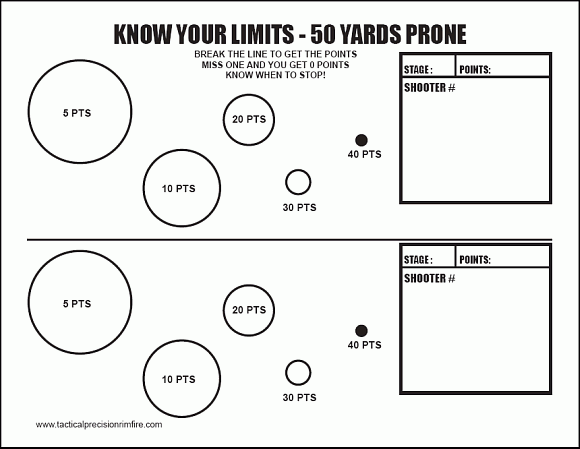
Here’s a rimfire training target with “big to small” target circles. Start with the largest circles, then move to the smaller ones in sequence. This systematic drill provides increasing challenge shot-by-shot. Novices often are quite surprised to see their accuracy improve as they move from bigger to smaller aiming points. That provides positive feedback — always a good thing.
Right Click and “Save as” to download printable PDF versions of target.
This Vortex Nation video features an 80-minute interview with Travis Ishida, one of the original founders of the NRL22 and NRL22-X disciplines. Travis told us that the NRL now runs 7-8 times as many rimfire matches as centerfire matches.
Rimfire Practice Targets
SPECIAL BONUS–Rimfire Tactical Precision Targets
These FREE targets by DesertFrog are offered in Adobe Acrobat format for easy printing. CLICK HERE to download all six targets as a .ZIP archive.
A while back, the Precision Rifle Blog conducted a fascinating study of Muzzle Brakes. PRB figured out a way to show the actual “blast pattern” of gasses ejecting from the ports of muzzle brakes. The result was a fascinating (and eye-catching) series of images revealing the distinctive gas outflows of 20+ different types of muzzle brakes. If you are considering buying and installing a muzzle brake on your rifle, you should definitely review this important PRB Muzzle Brake Test.
For a prone shooter, particularly on dusty, dirty or sandy ground, muzzle blast is a major bummer. Muzzle blast can be very disturbing — not just for the trigger-puller but for persons on either side of the gun as well. Some muzzle brakes send a huge shockwave back towards the shooter, and others send blast towards the ground, kicking dirt and debris into the prone shooter’s face. If there was a way to illustrate those factors — shockwave and debris — that might help shooters select one brake design over another.
Cal Zant at PrecisionRifleBlog.com applied a unique blend of creativity and resourcefulness to try to answer that question for 20+ muzzle brakes. Using high-speed photography and household products, he captured the blast pattern of 20+ different brake designs for easy side-by-side comparison. Can you figure out how Cal managed to show muzzle brake blasts so clearly? His “hi-viz” solution, revealed in the article, is very clever. See the eye-opening results for 20+ brakes, with illustrative photos, by visiting the Precision Rifle Blog Muzzle Brake Ground Signature Test Page.
M14 rifle from the NRA National Firearms Museum. Photo by Lloyd Hill.
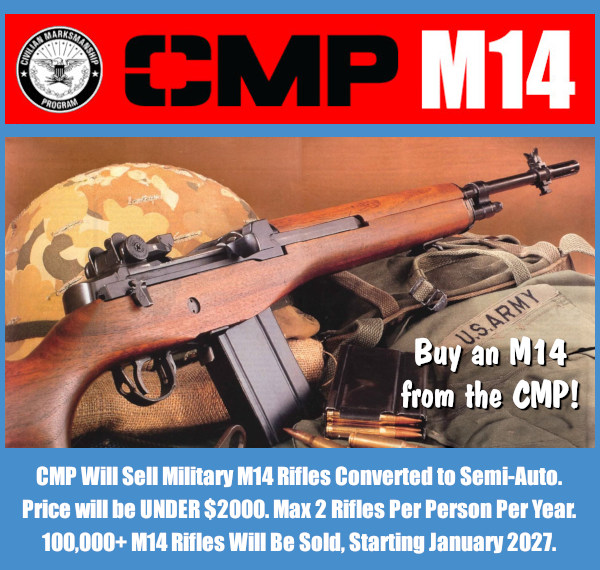
Interested in a semi-auto M14 for $2K or less? That would be a very impressive addition to any gun collection (and cost less than a similar Springfield Armory M1A). The CMP has acquired a massive number of military full-auto M14s that are currently being converted to semi-auto functionality. But these rifles retain the stocks, action blocks, and barrels of the originals so they remain very collectible. You should be able to get one of these historic M14s for under $2000.00 with units starting to ship in January 2027. There is no active order page yet for the CMP M14 rifles. CLICK HERE for CMP Official M14 Announcement.
CMP CEO and board chairman Jerry O’Keefe has stated that eventually over 100,000 M14s will be offered for sale, at prices under $2000.00 with a limit of two (2) M14s per buyer per year. Prior to sale, the rifles will be modified to be permanently and irreversibly semi-automatic rifles.
The CMP has stated that the modified M14s will start shipping in January 2027, just 4.5 months away. Why January? The CMP initially stated the first orders would ship in late 2026. However the massive positive response convinced the CMP that more time would be required to build a substantial inventory of converted M14 rifles. CLICK HERE for Shooting Sports USA article with details. NOTE: Purchasers must comply with CMP Sales Eligibility Requirements.
The CMP plans to modify its surplus M14 military rifles, making them permanently semi-auto rather than fully automatic as originally issued. These converted semi-automatic M14s will then be offered for sale through the CMP sales department in early 2027. Do note that the Springfield M1A, basically a civilian version of the M14, has been available for many years. However, this is the first time true, historic military M14s will be sold to the public, albeit after conversion to semi-auto function.
About the M14 Rifle — Military History
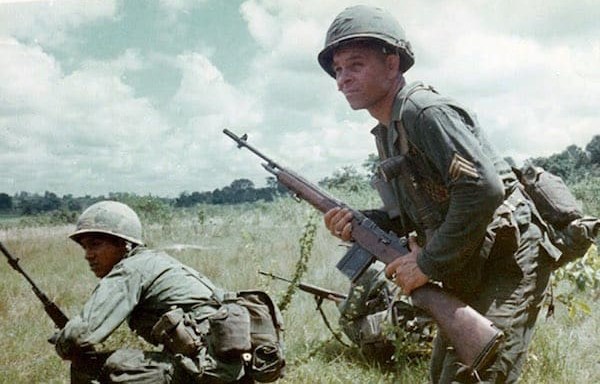
The American M14 is a direct descendant of the M1 Garand rifle. The full-auto M14 is a 7.62×51 rifle that was officially adopted as the U.S. Army’s service rifle in 1957. While the M14 was no longer the standard-issue rifle by 1970 — having been replaced by the M16 — M14 variants were used until the late 1980s, often as sniper rifles.
The M14 was developed at Springfield Armory as an upgraded, select-fire evolution of the M1 Garand rifle. M1 designer John Garand worked on the transition and final designs — such as the magazine system — before retiring, while other engineers added features including the gas system and automatic fire capability. The M14 uses an interior receiver and general layout heavily based on the M1 Garand.
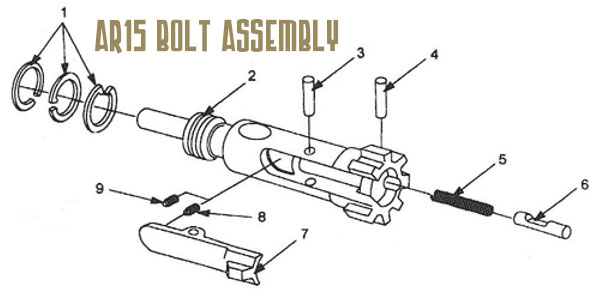
AR-platform rifles can be maintenance-intensive beasts. But some AR owners make the situation worse by not regularly cleaning important small parts, or by using too much oily/greasy lubricants in the wrong places. A properly maintained and lubricated AR15 can shoot hundreds of rounds (between cleanings) without a problem. If you learn where (and where not) to apply lubricant, you’ll find that your AR will run more reliably and the task of cleaning the bolt and bolt carrier will be less of a burden.
Here is a good video that explains AR-15 Cleaning and Maintenance. In this 30-minute NSSF video, Gunsite Academy instructor and gunsmith Cory Trapp discusses the proper way to clean and maintain the AR-15 carbine. Very knowledgeable, Trapp provides rock-solid advice for AR owners. Along with cleaning procedures, this video explains how to inspect key components and how to function-test your AR before each shooting session.
If you want to keep your black rifle running smoothly and reliably, you must clean it regularly and follow the correct maintenance procedures. Here’s another good video that explains how to properly disassemble and clean AR-platform rifles.
Take-Down and Full Cleaning of AR15 by Jerry Miculek
Here ace shooter Jerry Miculek takes down and cleans an AR-platform rifle belonging to his daughter Lena. This is a good video because Lena’s rifle was “run hard and packed up dirty” so you can see where carbon and grease build up. This 35-minute video is very thorough. Jerry is one of the nation’s top action carbine shooters, so listen carefully to his advice on cleaning and lubrication.
Getting started in the shooting sports can be intimidating, especially for women. Thankfully, there are many training resources available. NSSF has compiled a series of target shooting tips for women, by women. These tips, presented by instructors Deb Ferns, Kay Miculek, and Lena Miculek-Afentul, cover basic shooting methods and safety. Topics include pistol grip, stance, eye dominance, and ear protection. These tips can benefit any novice shooter, not just the ladies.
Rifle Stance and Hold (for Action Shooting)
Champion 3-Gun shooters Kay Miculek and Lena Miculek-Afentul demonstrate rifle stance basics and how to properly hold an AR-platform rifle for action shooting.
Grip and Stance for Pistol Shooting
Mother/daughter team Kay Miculek and Lena Miculek-Afentul demonstrate proper grip and stance for shooting semi-automatic pistols in action disciplines.
Eye Dominance (and Hand/Eye Cross-Dominance)
Learn how to identify your dominant eye. Kay Miculek, a cross-dominant shooter, explains how other cross-dominant individuals can maintain a proper sight picture.
Ear Protection — Double-Up for Safety
Babes with Bullets Director Deb Ferns says the most common complaint among new shooters is, “It’s too loud!” Deb recommends “doubling up” — wearing muffs OVER soft foam earplugs. That’s “sound advice” for any shooter.
When shooting at long range, two heads (and two sets of eyes) can be better than one. Teaming up with a buddy who acts as a spotter can speed up your long-range learning process. You can focus 100% on the shot, while your buddy calls the wind and spots your hits and misses.
The NSSF has created a short video that shows how shooter and spotter can work as a team. In the video, the NSSF’s Dave Miles works with Rod Ryan, owner of Storm Mountain Training Center in Elk Garden, WV. As the video shows, team-work can pay off — both during target training sessions and when you’re attempting a long shot on a hunt. Working as a two-person team divides the responsibilities, allowing the shooter to concentrate fully on breaking the perfect shot.
The spotter’s job is to watch the conditions and inform the shooter of needed wind corrections. The shooter can dial windage into his scope, or hold off if he has a suitable reticle. As Rod Ryan explains: “The most important part is for the shooter to be relaxed and… pay attention to nothing more than the shot itself.” The spotter calls the wind, gives the information to the shooter, thus allowing the shooter to concentrate on proper aim, gun handling, and trigger squeeze. Rod says: “The concept is that the spotter does all the looking, seeing and the calculations for [the shooter].”
Spotter Can Call Corrections After Missed Shots
The spotter’s ability to see misses can be as important as his role as a wind-caller. Rod explains: “If you shoot and hit, that’s great. But if you shoot and miss, since the recoil pulse of the firearm is hitting your shoulder pretty good, you’re not going to be able to see where you missed the target. The spotter [can] see exactly where you missed, so I’ll have exactly an idea of how many [inches/mils it takes] to give you a quick secondary call so you can get [back on target].”
Here’s exciting news from the Civilian Marksmanship Program (CMP). The CMP plans to modify its surplus M14 military rifles, making them permanently semi-auto rather than fully automatic as originally issued. These converted semi-automatic M14s will then be offered for sale through the CMP sales department, with the first M14 rifles set to be delivered “late 2026 to early 2027″. The CMP has not issued any pricing estimates at this time. Do note that the Springfield M1A, basically a civilian version of the M14, has been available for many years. However, this is the first time true, historic military M14s will be sold to the public, albeit after conversion to semi-auto function. CLICK HERE for CMP Official M14 Announcement.
Announcement: By special authorization, the CMP is pleased to announce the future availability and sale of surplus M14 Rifles. Prior to sale, the rifles will be modified to be permanently and irreversibly semi-automatic rifles. The modified semi-automatic M14s will be fully compliant with CMP enabling legislation authorizing the transfer and sale of military surplus .30 caliber rifles.
Details: The CMP anticipates first order fulfilment in the late 2026 to early 2027 timeframe. More details will be published on the M14 order submission process, pricing, limits and sales channels (mail order and physical stores) at a later date. Proceeds from the sale of these and other historic firearms allow the CMP to teach firearms safety and marksmanship, conduct competitions, and provide scholarships and youth programs, nationwide.
Background: Designed by John C. Garand, the M14 is the direct descendant of the M1 Garand rifle. It is a 7.62 rifle officially adopted as the U.S. Army’s service rifle in 1957. The Civilian Marksmanship Program is singularly authorized to modify these rifles and make them available for sale to eligible US Citizens.
CLICK HERE for additional, detailed 19-minute analysis of CMP M14 Sale Program by Second Amendment scholar Mark W. Smith.