You can spend thousands on a rifle, but that expensive hardware won’t perform at its best if you have poor trigger technique. One key element of precision shooting is trigger control. Our friend Kirsten Joy Weiss has produced a good video that shows how to refine your trigger technique for better accuracy. In this video, Kirsten talks about the actual placement of a shooter’s index finger on the trigger. It is important to have the finger positioned optimally. Otherwise you can pull the shot slightly left or slightly right.
Kirsten tells us: “Finger placement on the trigger might not seem like a big deal, but it actually is. The reason for this is because, depending on where your index finger is placed on the trigger, [this] translates to different muscle interactions with the gun.” Watch this video to see Kirsten demonstrate proper finger placement (and explain problems caused by improper finger positioning).
When you pull the trigger, you only want to engage the last section of your finger, in order to avoid unwanted muscle engagement and to achieve a smooth shot. Remember there is a “sweet spot” between the crease (first joint) and the tip of the finger. If you position the trigger in that “sweet spot”, you should see an increase in your accuracy. Don’t make the mistake of putting the trigger in the crease of your finger, as shown below.
Effects of Incorrect Finger Placements
You want to place the trigger shoe between the end of your finger and the first joint. If you place the trigger on the very tip of you finger you’ll tend to push the rear of the rifle to the left when engaging the trigger, causing shots to go right (for a right-handed shooter). On the other hand, if you put the trigger in the crease (first joint), you’ll tend to bring the rear of the rifle to the right, causing shots to fall left. This is illustrated below for a right-handed shooter.
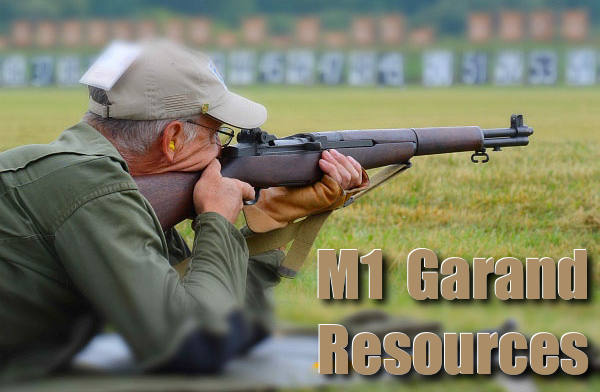
Do you own an M1 Garand? Or perhaps you’re thinking of ordering a Garand, now that the CMP has acquired 99,000 of these classic battle rifles from Turkey and the Philippines. An M1 Garand is a great addition to anyone’s firearms collection. It is a piece of living history — plus it can be used in Vintage Military rifle matches. Here are some great resources for M1 Garand owners. We list two useful articles on general maintenance. In addition, we’ve included three excellent videos covering M1 Garand Disassembly, Cleaning, and Lubrication. Finally there are links to recommended print manuals available from the CMP.
M1 Service and Maintenance Shooting Sports USA (SSUSA) recently published an excellent article on Service and Maintenance of M1 Garand Rifles. This offers some smart tricks, such as using smoke from burning masking tape to darken the front sight post. There is also an older SSUSA article that covers basic cleaning and servicing and also explains how to upgrade the performance of your Garands. READ Article HERE.
Recommended M1 Garand Manual
Among the many M1 Garand manuals available, we recommend the CMP’s U.S. Rifle, Caliber .30, M1: ‘Read This First’ Manual. This booklet covers take-down, reassembly, cleaning, lubrication, and operation. The manual comes with CMP rifles or can be purchased for $3.25 from the CMP eStore. The author of Garand Tips & Tricks says: “It’s one of the best firearms manuals I’ve seen and I highly recommend it.” The CMP also offers many other M1 Garand print resources including:
If you have been waiting to purchase a chronograph… now is a great time to buy. You can get the affordable MagnetoSpeed Sporter for under $160.00! You can set up this device in a few minutes, and you never have to go downrange to fiddle with a tripod or fuss with wires. The MagnetoSpeed Sporter is simple and effective — a no-hassle solution.
See MagnetoSpeed Sporter Chronograph Features Reviewed in Video
We’re impressed by the Sporter chrono, as are other shooters — this unit is very popular. Like the MagnetoSpeed V3, the Sporter faithfully records shots, even in complete darkness. Shot strings are recorded digitally and can be transferred to a smart phone via MagnetoSpeed’s XFR accessory (and Apps).
The MagnetoSpeed Sporter chrono is less than half the price of previous MagnetoSpeed models. This is big news for shooters who always wanted a MagnetoSpeed but found the $379.00 cost (for V3 model) too pricey. The Sporter Chronograph costs just $159.99 at MidwayUSA (see below) and $179.00 at Amazon.
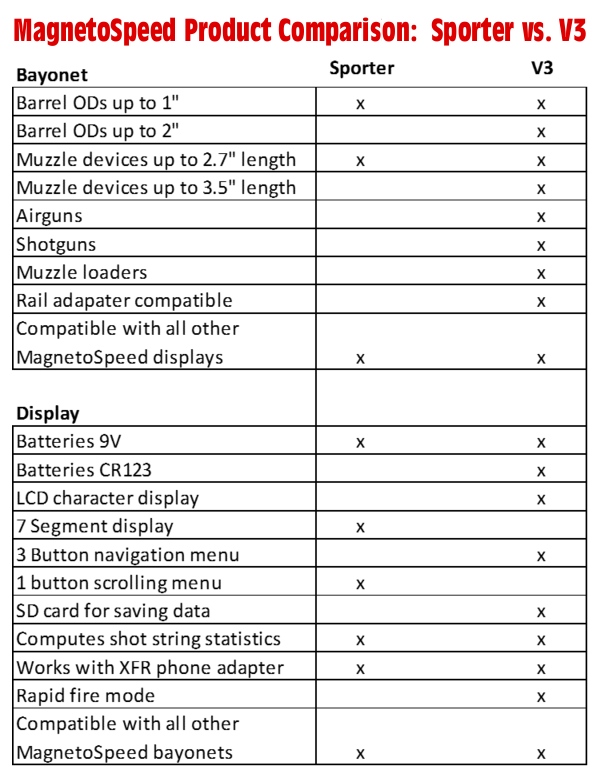
The Magnetospeed Sporter offers most of the features of the more expensive models (see chart below for details) and has a updated sensor. MagnetoSpeed says its new Sporter is “Ideal for contoured rifle barrels (sporter barrels) and long-barreled revolvers.” The Sporter Chronograph Kit (shown above) includes: Bayonet Sensor, 3.5 foot Data Cable, Remote Display (with Battery), Strap with thumb nut, Two V-block spacers, and compact storage box.
Q: Will the Sporter Chrono work with thicker barrel (i.e. greater than 1″ diameter)?
A: The manufacturer recommends the $399.00 V3 model for thicker barrels. But, wink-wink, if you have a 1.25″ barrel you can get this to work, based on what we’ve seen.. If you have a really fat barrel (up to 2.0″ diameter), get the V3. Magnetospeed also says the V3 is needed for airguns, shotguns, and muzzleloaders.
Click Image for Full-Screen Photo
The Sporter Chrono attaches quickly and easily. It has a 3.5-foot-long cord, and will work with Muzzle Brakes and Flash-hiders up to 2.7″ long.
This post essentially puts twenty bucks in your pocket if you need a chronograph. You see the MagnetoSpeed Sporter Chrono typically costs around $180.00 from most vendors. But right now MidwayUSA is running a special — the true “shopping cart price” is $159.99. That’s $20.00 cheaper than Midway’s regular $179.99 price, and $19.00 cheaper than the lowest price we found anywhere else. But this special “Shopping Cart Discount” may not last long, so you may want to act quickly. We confirmed Midway’s $159.99 price on the morning of November 7, 2020.
In response to the record number of first-time gun buyers in 2020, the NRA’s Education & Training Division is offering five Online Gun Safety Courses that can be completely online at home. The five NRA Online Gun Safety Courses ARE:
Each course, lasting from one to eight hours, is available online at NRAInstructors.org. To Access the 0nline training options, first CLICK HERE. Then under the Heading “DISTANCE LEARNING”, you will see options. CLICK the small gray box at the left of the title to select the course. IMPORTANT — Next you MUST SCROLL to the bottom of the NRA webpage to SEARCH. Select your state or Zip code, then you will get a list of the moderated online courses in your area.
Here is the Procedure to Follow:
1. CLICK HERE to Access ALL Course Listings
2. Select a “Distance Learning” Course.
3. Scroll Down and SEARCH for your State or Zip Code.
4. Review Course Dates and Times.
For example, here are the listed NRA online training courses for Washington only. Elsewhere (in other states), YOUR list will be different! NOTE: These online courses are NOT FREE. Typical cost ranges from $20 to $150.
“These courses will provide an option for first-time gun owners who don’t have the ability to take an NRA certified instructor-led class at their local shooting range at this time,” said Joe DeBergalis, Exec. Dir. of NRA General Operations. “While there is no replacement for in-person, instructor-led training, our new online classes do provide the basics of firearm safety training for those self-isolating at home.”
Though range time is an important part of the classes, there is still a wealth of knowledge available in the online programs. “The NRA recommends that all new gun owners seek professional training at the range, but that doesn’t mean you can’t get a head start on learning the basics of firearm safety at home. Taking one of these classes moderated by a certified NRA instructor, can only make you safer…” DeBergalis added.
Are you looking to get started in PRS and tactical/practical competitions? Here are three videos that can help you improve your game. These videos feature two top PRS competitors, and George Gardner of G.A. Precision, considered one of the founding fathers of the PRS game. You’ll find other PRS-focused videos on the Long Range Precision Shooters YouTube channel.
PRS Ace Shows Skills Barricade Technique — with POV Video
This first video features 2015 PRS Champion David Preston shooting the PRS Skills barricade. Dave Preston is widely considered the best in the nation running this PRS stage. Dave nearly always shoots 100% with the fastest recorded time. In this video you’ll see him successfully engage all eight shots in under 43 seconds — that’s crazy fast. This includes a POV sequence (4:35 time-mark) showing the actual view through Dave’s scope.
The PRS Skills Barricade is an 8-round, 4-position stage featured at most PRS matches. It’s called a “Skills Stage” as it is run the same way at every national match and gives shooters the ability to compare skill levels based on hit percentage and speed. The target is a 10″ plate at 400 yards. There are four different positions, with two shots each. Most people run this stage in about 70 seconds, some in the mid-60s, while Dave does it in the low 40s!
Know Your Limits PRS Stages — Pro Tips
The Second video showcases how 2018 Oklahoma PPS Champion Clay Blackketter approaches Know Your Limit Stages. With these particular type of stages you have to make judgment calls about your rifle’s accuracy and your ability to hold on target. You can boost your score by shooting the smallest target(s), but you risk losing points if you miss. Clay explains how best to manage a Know Your Limits stage.
Cartridge Choice for PRS and Tactical Competition
Today’s third video reviews many of the different caliber selections popular for PRS-style competition. The video examines pros and cons of various cartridge choices, focusing on accuracy, recoil, mag-feeding, and value for money. This segment features G.A. Precision owner/founder George Gardner.
Most Top PRS shooters are using 6mm catridges these days. These deliver excellent accuracy with lower recoil and cheaper bullet cost. Popular choices include 6 Dasher, 6mm Creedmoor, 6XC, 6-6.5×4 and the new 6GT cartridge, which is sort of a stretched version of a 6mmBR. It has a bit more case length for better feeding, and greater case capacity than a 6BR so you can shoot 105-108 grain bullets at the 2950 fps node.
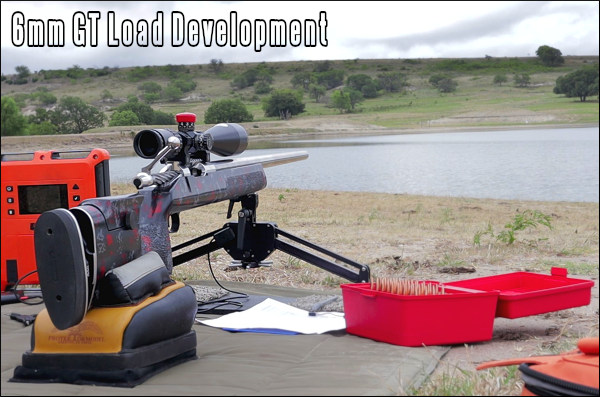
CLICK HERE for a full write-up on a 6GT rifle build by Mike McCasland (Texas Precision). This includes load development suggestions and a 6GT reamer print. The most common 0.120″ freebore chamber allows for the majority of high-BC 6mm projectiles found in both F-Class and PRS. Mike had good luck with the pointed 107gr Sierra Match Kings (SMK), as well as the 110gr Hornady A-Tips in his rifle, shown below:
Practical Shooter’s Guide
Thinking of getting started in the Practical/Tactical shooting game? Looking for ways to be more stable when shooting from unconventional positions? Then you may want to read Marcus Blanchard’s Practical Shooter’s Guide (A How-To Approach for Unconventional Firing Positions and Training). Unlike almost every “how to shoot” book on the market, Blanchard’s work focuses on the shooting skills and positions you need to succeed in PRS matches and similar tactical competitions. Blanchard provides clear advice on shooting from barricades, from roof-tops, from steep angles. Blanchard says you need to train for these types of challenges: “I believe the largest factor in the improvement of the average shooter isn’t necessarily the gear; it’s the way the shooter approaches obstacles and how they properly train for them.”
Vortex has assembled a variety of audio-visual resources to provide hunters with the info and tools they need to accurately sight-in their rifles, locate the right hunting gear, track game successfully, and then harvest and haul their game meat efficiently and safely. Here are two Vortex videos, plus a podcast that can help hunters with their late fall hunts.
How to Mount a Hunting Scope
This video shows, step-by-step, how to mount a scope on a hunting rifle. This explains how to ensure the rifle AND scope are level, and how to secure the rings properly. Then the video explains the best procedure for zeroing the scope at your desired distance.
Vortex Podcast with Hunting Advice from Expert Hunters
Learn to improve your whitetail ground hunting game with the podcast team here. This podcast covers tracking, stalking, equipment selection, hunt safety and many other important topics.
Meat Care After the Shot — Pro Tips
Ryan Lampers of Hunt Harvest Health discusses meat care techniques and tricks to ensure the game you take makes it to your table in the best condition possible. This video covers warm-weather hunts, keeping meet cool, gutting vs. the gutless method, how to take the heart, liver, and rib meat, shot placement, blood-shod meat, and avoiding contaminants. The video also covers all-night pack-outs, loading your pack with meat/gear, meat shelves vs. putting it in your pack, ageing meat, quarters Vs. boning, keeping your pack clean, kill kit items and more. For serious game hunters, this is a must-watch video.
Hunting Optics Selection — Scopes, LRFs, Binoculars
Here are some helpful hints on choosing optics for deer hunting. This Vortex promo piece discusses selection of riflescopes, rangefinders, and binoculars. Article: Choosing Glass to Conquer Whitetail Country.
Thanksgiving is November 26th this year. Looking for culinary inspiration for your holiday gatherings? The NRA Blog offers three special (and delicious) Wild Game Recipes for your family feasts: Honey Mustard Planked Wild Turkey Breast, Mushroom-Stuffed Wild Boar Roast with Black Truffle Sauce, and BBQ Brined Pigeon. These recipes come from some of the country’s best chefs, and they all seem mouth-watering. You’ll find a full list of ingredients plus step-by-step cooking tips.
One of the many advantages to hunting is the assortment of game you can gather that lasts for an extended period of time. Just because it’s Thanksgiving doesn’t mean you have to stick with a whole turkey from the store and a ham hock.
We have three unique spins on wild game recipes that will suit your dining table perfectly. Even if you’re one of those hunters who enjoys a quick hunt the morning of Thanksgiving, these recipes will make your holiday more delicious than ever. — NRABlog.com
And for those folks who hope to harvest their own gobbler for the Thanksgiving holiday, here is a special NRA Turkey target that can help you hone your turkey-hunting skills.
And here is a GetZone.com video with expert guidance on Turkey hunting, specifically stalking and shot placement: “When it comes to shotgun hunting, you don’t want to get BBs in the meat, so the most common (and lethal) shot with a shotgun is a headshot.”
Click Photo to Launch Turkey Hunting Video: Work warning: When you click photo, a loud voice over may start immediately.
Are you tired of struggling to fill your rear sandbags and other sand-filled shooting supports? With a conventional plastic funnel it can be difficult to get the bags filled to full capacity. It’s also time-consuming and awkward to keep pouring sand into a small funnel top.
21st Century Shooting has a solution — a tool that makes it WAY easier to fill all types of sandbags and sand-filled shooting rests, including PRS bags, Bulls Bags, and X-Bags. The 21st Century Sand Bag Filler has a large transparent bottle that holds a lot of sand. This attaches to a nicely-machined threaded grip section that feeds the sand into a small-diameter insert tube. This smaller tube easily fits in the small fill-ports of sandbags. The small tube also allows you to steer the sand flow to the corners of your bags to get a more even, uniform fill.
This video from F-Class John shows how to use the 21st Century Sand Bag Filler. John explains how to fill the sand bottle, than shows how to efficiently fill an Edgewood Dead-bottom bag with sand. John was impressed. At the 2:26 mark John notes: “This is pretty ‘kick ass’ … It is just sucking up the sand into this bag… that is fast”. John is sold on this tool: “I’ve got some giant SEB and Protektor bags. Before I had this tool, I’ve used any number of methods in the past and it’s probably taken me a good hour to pack a bag properly.” Now John says he can fill a big bag in a fraction of the time.
Along with benchrest rear bags, such as the new SEB Premium Bigfoot shown above, there are many other sand-filled support bags. Shown below are some popular bags. The Uncle Bud Bulls Bag has long been a favorite of varmint shooters. It’s very stable but does require a LOT of sand. The 21st Century tool will dramatically shorten filling time for a big Bulls Bag or X-Bag.
There has been a huge surge in firearm sales this year. October 2020 set a new, all-time record for the month. The October 2020 NSSF-adjusted National Instant Criminal Background Check System (NICS) figure of 1,769,553 is a 60.1% increase over the October 2019 NSSF-adjusted NICS figure of 1,105,335.
Even more telling, the 2020 year-to-date total of 17.2 million background checks shatters the previous annual record of 15.7 million background checks — and we still have two months in 2020! Notably, a high percentage of the purchasers are first-time gun owners. In fact the NSSF believes that nearly 5 million Americans have joined the ranks of gun owners for the first time this year.
Firearm sales are up 95% in 2020. And, according to the NSSF, there were nearly 5 million first-time-ever gun buyers in the USA this year. A NSSF dealer survey estimates that 40% of all gun sales were conducted to purchasers who have never previously owned a firearm. And women accounted for 40.2% of all first-time gun purchases. The NSSF estimates there are approximately 100 million gun owners in America.
Resources for New Gun Owners
With firearm sales continuing to surge across the country, NSSF President/CEO Joe Bartozzi welcomes first-time gun buyers in a new video with tips on how to safely enjoy the shooting sports. Here is the video for new gun owners.
“As a first-time gun owner, you’re going to want to spend time practicing with your new firearm … improving your gun-handling and marksmanship skills … and to educate [yourself] about personal and home protection, and to learn about keeping our guns securely stored…” says Bertozzi.
Firearm safety is every gun owner’s primary responsibility, emphasizes Bartozzi, a lifelong target shooter and hunter. As gun owners, “you and I are responsible for safely handling, transporting, and storing our firearms[.]” Newcomers are encouraged to watch NSSF’s Range Safety and Etiquette videos. You will find these on the NSSF YouTube Channel. Here is a basic safety video:
Where to Shoot Online Resource and Mobile Apps
If you are looking for a good indoor or outdoor shooting range near you, visit Wheretoshoot.org. On that website you can search by city, state, or zip code to find a range near you.
To complement Wheretoshoot.org, the NSSF also offers Where To Shoot Mobile Apps. These iOS and Android Apps quickly locate shooting ranges near you, drawing on North America’s most comprehensive range directory. Users can search by current location, state, or zip code. Once you locate a range, you can view activities offered along with a summary of range facilities. You can even get driving directions.
Do you shoot a magnum cartridge? Here are two modern-formulation powders you may want to try: Reloder 23 and 26. We have been particularly impressed with Reloder 23. It has worked well in competition for target cartridges such as the 7mm RSAUM. Reloder 23 is like a slower version of Reloder 16 — a very temp-stable powder which has proven a worthy rival to H4350.
Ever heard of Alliant Reloder 23? Or Reloder 26? These two relatively new European-produced Reloder propellants were introduced in 2014. Most folks haven’t tried these Reloder powders because it took quite a while for the first shipments of RL 23 and RL 26 to arrive in the USA. But now these two new propellants are available in the USA, with substantial inventories in stock at some larger vendors. For example, Powder Valley has both RL 23 and RL 26 in stock now at $23.50 per pound. Many other vendors have ample RL 23, but RL 26 is a bit harder to find.
From our Forum members who shoot large magnum cartridge types with heavy bullets, we have heard good things about both RL 23 and RL 26. Reports from the field indicate that both these powders are delivering impressive velocities with low velocity ES/SD.
What are the characteristics of RL 23 and RL 26? That question was answered by Paul Furrier who works for ATK, the parent company of Alliant Powders. Posting in our Shooters’ Forum, Paul writes:
“Let me provide some factual info about these products. Some of the stuff that gets propagated is not correct. Reloder 23 is produced by our Swedish partner Bofors, and Reloder 26 is produced in Switzerland by our extremely capable partner Nitrochemie. I have seen it stated that they are both made by Bofors, so that is incorrect.
I have also noticed people are equating Reloder 23 to Reloder 22, and Reloder 26 to Reloder 25. Both of those statements are definitely incorrect. We do state that the performance of Reloder 23 is similar to Reloder 22, and it is, in general burn speed terms, but they are most certainly not the same. We have worked quite a lot of recipes for Reloder 23, and they are not the same as Reloder 22. Reloder 26 is definitely slower burning than Reloder 25, so there shouldn’t be any confusion there either.”
Furrier says that RL 23 is NOT sensitive to temperature shifts: “Reloder 23 was developed to bring a truly temp-stable powder to the Reloder 22 burn-speed range using Bofors new process technology. This is the second product developed for us with this TZ® process, the first being AR-Comp™. We see terrific efficiencies, SDs, accuracy and flat temp response from these powders. Please try them, I think you will be impressed.”