The digital archives of Shooting Sports USA magazine (SSUSA) features an Expert Forum on Wind Reading. This outstanding article on wind reading starts off with a section by ballistics guru Bryan Litz, author of Applied Ballistics for Long-Range Shooting. Then four of the greatest American shooters in history share their personal wind wisdom. Lanny Basham (Olympic Gold Medalist, author, Winning in the Wind), Nancy Tompkins (Past National HP Champion, author, Prone and Long-Range Rifle Shooting), David Tubb (11-Time Camp Perry National Champion), and Lones Wigger (Olympic Hall of Fame) all offer practical wind-reading lessons learned during their shooting careers.
Whether you shoot paper at Perry or prairie dogs in the Dakotas, this is a certified “must-read” resource on reading the wind. Here is a sample selection from the article:
Shooting Sports USA magazine (SSUSA) has a modern, mobile-friendly website with tons of great content. Log on to www.ssusa.org. There you’ll find current news stories as well as popular articles from the SSUSA archives. The SSUSA website also includes match reports, gear reviews, reloading advice, plus expert marksmanship tips from the USAMU.
The question of barrel break-in is controversial. Some folks advocate an elaborate, lengthy cycle of shooting and brushing, repeated many times — one shot and clean, two shots and clean and so on. This, it is argued, helps barrels foul less and shoot more accurately. Others say minimal break-in, with patching and brushing after 10-15 rounds, is all you need. Still others contend that break-in procedures are a total waste of time and ammo — you should just load and shoot, and clean as you would normally.
We doubt if there will ever be real agreement among shooters concerning barrel break-in procedures. And one must remember that the appropriate break-in procedure might be quite different for a factory barrel vs. a custom hand-lapped barrel. This Editor has found that his very best custom barrels shot great right from the start, with no special break-in, other than wet patches at 5, 10, and 15 rounds. That said, I’ve seen some factory barrels that seemed to benefit from more elaborate break-in rituals.
What’s the best barrel break-in procedure? Eric Mayer of Varminter.com decided to ask the experts. Eric interviewed representatives of three leading barrel manufacturers: Krieger, Lothar-Walther, and Shilen. He recorded their responses on this video. In order of appearance, the three experts are:
Shilen, Krieger, and Walther Experts Talk about Barrel Break-in
Do I Need to Break-In a New Rifle Barrel?
Eric Mayer of Varminter.com says: “That is a simple question, [but it] does not necessarily have a simple answer. Instead of me repeating my own beliefs, and practices, on breaking-in a new rifle barrel, I decided to answer this one a bit differently. While we were at the 2016 SHOT Show, we tracked down three of the biggest, and most popular, custom barrel makers in the world, and asked them what they recommend to anyone buying their barrels, and why they recommend those procedures. We asked the question, and let the camera run!” Launch the video above to hear the answers — some of which may surprise you.
Barrel Break-in — Initial Inspection and Cleaning
This video explains that you should always inspect and clean the bore of your barrel before sending rounds through it. There may be remnants of the production process, such as lapping residues, that you’ll want to get out of the bore. We’ve even seen a few tiny metal pieces in some factory barrels. And it’s always wise to borescope a new barrel to see if there are visible defects in the rifling such as lands that have flawed edges — we’ve seen that on some cheaper barrels.
Barrel Break-In — Ian Klemm’s Surprising Observations
Here’s a 10-minute Vortex Nation interview with Ian Klemm. Ian, a 4-Time F-TR National Champion is one of America’s best long-range shooters. In this video, Ian explains his approach to barrel break-in, which may surprise you. Does barrel break-in even matter? Conventional wisdom says “Yes” and perhaps there’s some truth to that, but Ian argues that break-in is NOT nearly as important as the internet wants you to believe. Ian believes that you don’t need to waste a ton of time/ammo to get your barrel ready to shoot extremely accurately. This may be particularly true with premium hand-lapped custom barrels.
Barrel Break-In Procedures with Keith Glasscock
Keith Glasscock is also one of America’s greatest F-Class shooters who has finished second at the Nationals multiple times. Keith is also a highly-respected wind coach who has a popular YouTube video channel, Winning in the Wind. In this video, Keith explains his procedure for breaking-in his match barrels. He starts by bore-scoping the barrel and cleaning it. If he finds some burrs he may use some JB Bore Paste, a patch, and a worn brush and “give that throat a little scrub” (See 1:30 time-mark). He used different stroke lengths to avoid putting a “step” in the throat. When he’s satisfied he goes to the range. He fires the first five rounds, then cleans. He then fires quite a few rounds before cleaning the barrel again and beginning load development (See 8:25 time-mark).
General Barrel Break-in Procedures Recommended by Brownells
Brownells Gun Techs Steve Ostrem and Caleb Savant tackle a thorny topic: breaking in a new barrel. What IS breaking-in a barrel? And WHY do it? The rifling of a freshly machined barrel has microscopic burrs and sharp edges. “Breaking-in” is the process of putting bullets down the bore to smooth out those rough spots. The goal is to round down the sharp edges so they’re not stripping copper off a bullet as it travels the bore, which leads to fouling that leads to reduced accuracy and inconsistent groups. In a very minor way, you’re actually lapping the barrel. The breaking-in process works best on cut-rifled and button-rifled barrels. Cold hammer-forged, chrome-lined, or nitrided barrels — such as commonly found on AR-15s — may not benefit much from the process. Pistol barrels really don’t need to be broken in because larger-diameter bullets are not so much affected by tiny variations in the bore. Likewise, break-in is more helpful for a .17, .20, or .22 caliber rifle than a .45 caliber rifle.
George Gardner of G.A. Precision Talks About Barrel Break-In
G.A. Precision’s George Gardner is a leading figure in the PRS/NRL world. In this video, George makes the valid point that not all barrels require the same amount of break-in. George says some barrels require very little break-in, while others benefit from a more elaborate break-in process that helps reduce future copper and powder fouling. He calls this “seasoning” the barrel so it fouls less. For a typical barrel, George’s recommended process (4:25 time-mark) starts with one shot, then clean for three one-round cycles. This is followed by three shots then clean, with repeat 3-shot cycles if need. For cleaning George prefers nylon brushes (5:50 time-mark). NOTE: George also makes a very important point — you MUST swab the chamber and get it dry between cleaning cycles (5:30 time-mark).
Mark your calendars for the return of the Civilian Marksmanship Program’s Bianchi Cup International Pistol Tournament. The second longest-running pistol championship in the world, the 2025 CMP Bianchi Cup is set to run May 20-23, 2025 at the Green Valley Rifle & Pistol Club in Hallsville, Missouri.
About the CMP Bianchi Cup
The Bianchi Cup International Pistol Tournament was first held in 1979, making it the second longest running pistol championship in the world. This year, it will be hosted by the CMP May 20-23, 2025, at the Green Valley Rifle & Pistol Club in Missouri. The Bianchi Cup has been called the most prestigious pistol tournament in the world. Due to the high accuracy required in each stage of the Bianchi Cup, the tournament is considered one of the most difficult handgun championships on the planet.
The Bianchi Cup is Comprised of Four Events:
Practical Event: Competitors fire at distances from 10 yards to 50 yards under varying time limits from the shooting line.
Barricade Event: Competitors fire at targets on either side of the barricade at different distances and under varying time limits from within shooting boxes and behind barricades.
Falling Plate Event: Competitors fire at eight-inch round steel plates arranged in banks of six at distances from 10 to 25 yards under varying time limits.
Moving Target Event: Competitors fire from within shooting boxes at distances ranging from 10 to 25 yards at a target moving from left to right, with the target exposed for six seconds.
Bianchi Cup Open Class Pistol — Features in Review
Above an Australian lady competitor shoots Open Class pistol. Note the large flared grip extension, ported muzzle compensator, and elevated optic. Open pistols may also have special custom fittings: wings for barricades, mover base for leads, and prone pad for stability. Open Class pistols rule at the Bianchi Cup: “Unlike USPSA, all divisions compete heads up at Bianchi. While Bianchi recognizes wins in other divisions, only the absolute top score can win the Cup. Since Bianchi is typically won only with a perfect score, and often by X count, guns other than open are not really competitive.” See Pistol-Training.com.
Position Shooting with Pistols at Bianchi Cup
Competitors shoot from both standing and prone positions and are also required to shoot with both strong and weak hands at various stages. There are no make-up shots in the Bianchi Cup, adding to the difficulty.
Bianchi Cup 1911 Pistol Giveaway
Looking for a 1911 pistol? The Civilian Marksmanship Program (CMP) is giving away a vintage 1911 pistol (plus mags, holster, and ammo) for competitors who register for the upcoming 2025 CMP Bianchi Cup.
The 2025 Bianchi Cup match runs May 20-23 in Hallsville, Missouri. Those who sign up for the CMP Bianchi Cup BEFORE April 27, 2025 will be automatically entered to win.*
To have a chance to win, you must officially register for the 2025 Bianchi Cup. ALL paid registrants will be automatically entered for the raffle. To learn more and REGISTER for the 2023 Bianchi Cup, go to the CMP 2025 Bianchi Cup Web Page.
* The raffle is open to U.S. citizens only. If a non-U.S. citizen is drawn, he or she will receive $500 in place of the 1911 pistol. Those who have already purchased a pistol are still permitted to win.
Team Berger’s Larry Bartholome showcased his shooting prowess by winning the 2025 Western Wildcat Smallbore F-Class Championship. The event, held in March at the Ben Avery Shooting Complex and hosted by the Desert Sharpshooters Rifle Club, brought together the nation’s top smallbore F-Class shooters in a challenging 4-day competition.
Bartholome finished with a 6363 Grand Aggregate score and an impressive 434 Xs, showing remarkable consistency throughout the match. His Western Wildcat win comes on the heels of a strong third-place finish at the NRA Metric Prone National Championship. “The Western Wildcat is one of the most challenging smallbore matches in the country, and I knew I had to bring my absolute best”, said Bartholome. “Thank you to the Lapua group for producing such great .22 ammo. I couldn’t have won without it. The Lapua X-ACT [ammunition] I shot was outstanding.”
Bartholome’s victory at the Western Wildcat highlights not only his personal dedication and skill but also the critical role of precision equipment and top-tier ammunition in elite-level competition. His latest achievement adds to his distinguished career and reinforces his status as one of America’s best F-Class shooters in both centerfire and rimfire disciplines.
Bartholome prepared for the competition by testing ammo lots with his rifle at the Mesa, Arizona, Lapua Rimfire Performance Center. This facility allows testing of of multiple lots at both 50 and 100 meters to identify the best match for a shooter’s rifle. Lapua’s Rimfire Performance Centers, located in Mesa, AZ, and Marengo, OH, provide this ammo-testing service to competitive shooters. Appointments can be scheduled for those looking to refine their ammunition selection.
Want to go to some fun rifle matches in the months ahead? You can access coming events near your location with the interactive NRA SSUSA.org Shooting Sports Coming Events Calendar webpage. You can filter results by shooting discipline (pistol, smallbore rifle, high power rifle etc.) as well as location. You can also view the match locations on a map by clicking on the “View on Map” link on the right side of the page. This alternates with “View as List”.
To see ALL upcoming matches in your area, click on the “Edit Search” button then click the box for the lead category, “All Competition Types”. Or click one or more of these categories:
Action Pistol
Air Rifle
BB Gun
Black Powder Target Rifle
Collegiate Rifle/Pistol
High Power Rifle
International Pistol
Precision Pistol
For example, here are the results of a search for matches within 200 miles of Seattle Washington. First is the list view, then below that is the map view. For any search, you can alternate views by clicking “View on Map” or “View as List” in the right column.
For Summer Travelers, Find Matches Outside Your Home State
If you are planning an out-of-state vacation this summer and you want to combine your travels with a shooting match, simply click the blue “Edit Search” button. Then you can select a different location. Just type in the city and state, or the Zip Code. For example, here are the search results for shooting matches within 75 miles of Las Vegas, Nevada:
Enjoy the Shooting Sports USA Archives
As we head into spring, many Americans will be spending more time at the range. And competitors will be shooting in rimfire and centerfire rifle matches throughout the country. Here’s an opportunity to learn competition skills, gun tuning methods, and reloading techniques from leading experts. A vast resource of great gun-related content available online for FREE. Check out the Shooting Sports USA Articles Archive. SSUSA maintains a vast digital library with hundreds of articles going back to June 2009.
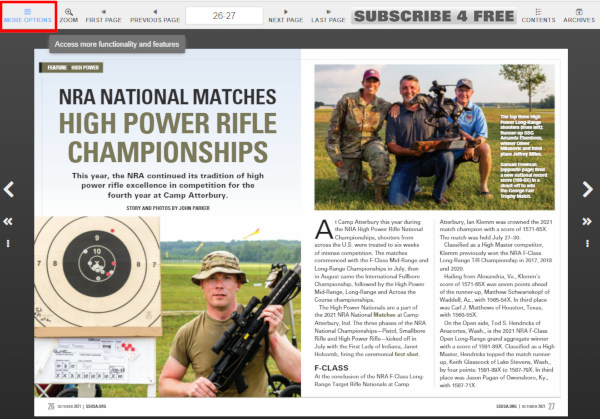
It’s easy to find back issues of Shooting Sports USA magazine. Here’s how: First, navigate to the latest SSUSA Online Issue (April 2025). Then click on the “ARCHIVES” icon in the upper right area (indicated with red arrow). When you click on “ARCHIVES”, a window will open with a selection of Shooting Sports USA magazine covers/dates in a vertical column. The most recent issue (April 2025) will appear at the top left. You can then scroll down — use the vertical scroll bar to go from April 2025 all the way back to June 2009. Click any issue cover to read.
How to Find and Save Articles
To search back issues, select “MORE OPTIONS” from the toolbar (top left). Then click the “SEARCH” button. When that opens, select either “Search Archives” for ALL back issues or “Search Only this Issue”. When you’ve made your choice, enter your search term(s). For example, you can search for “Camp Perry” or “Palma” or “F-Class Championship”. You can also save any archived issue as a PDF for viewing offline. Just click “SAVE” to download the article you’re currently viewing/reading.
Read Sample Articles
Here are a three of our favorite SSUSA feature stories from recent years. There are hundreds of other informative articles worth reading.
F-Class fans will enjoy the coverage of the 2023 F-Class World Championships in the June 2023 issue of Shooting Sports USA. On the cover is our friend and Forum member Erik Cortina.
Through the passage of Proposition KK last November, Colorado adopted a 6.5% state excise tax on the sale of firearms, ammunition, and certain firearm parts to Colorado consumers. Colorado’s new 6.5% guns/ammo tax took effect on April 1, 2025. The tax, codified by Colo. Rev. Stat. § 39-37-101, is levied on vendors (see below), but the amount is passed through to law-abiding Coloradans every time they purchase guns and ammo. The law also imposes burdensome registration and recordkeeping requirements on vendors and subjects them to harsh punishments for violations.
Legal experts believe this new law is unconstitutional and otherwise legally improper. Thankfully, this new Colorado gun tax is being challenged in the courts. The Second Amendment Foundation (2AF) has filed a lawsuit, Langston v. Humphreys, in Denver County District Court challenging Colorado’s Proposition KK as an unconstitutional tax on the exercise of a fundamental constitutional right. Joining SAF in Langston v. Humphreys are the National Rifle Association (NRA), Firearms Policy Coalition (FPC), Magnum Shooting Center, the Colorado State Shooting Association (CSSA), and a private citizen, Zachary Langston. Named as defendants are Heidi Humphreys, executive director of the Colorado Dept. of Revenue and Michael J. Allen, district attorney of El Paso County.
The complaint argues that Colorado’s new excise tax on guns and ammo violates the Second Amendment. Plaintifs seek a declaratory judgment that the tax is unconstitutional and plaintiffs further seek a permanent injunction forbidding the enforcement of the gun excise tax.
“Colorado’s firearms excise tax is an overt assault on the Second Amendment rights of law-abiding Coloradans and a deliberate attempt to discourage the exercise of constitutionally protected freedoms”, said John Commerford, Executive Director of the NRA Institute for Legislative Action (NRA-ILA). “Recently, anti-gun activists in Colorado have been adopting California’s radical gun control agenda to systematically erode gun rights in the state. We are pleased to join with other Second Amendment advocates in this lawsuit to protect and defend the fundamental right to keep and bear arms.”
The SAF, NRA and other plaintiffs contend that the state’s 6.5% excise tax on the retail sale of any firearm, firearm precursor part, or ammunition is unconstitutional in that it impermissibly singles out the exercise of a constitutional right for special taxation. There have been several rulings by the U.S. Supreme Court prohibiting such a tax scheme.
“Colorado’s new law impermissibly taxes an enumerated constitutional right”, said SAF Executive Director Adam Kraut. “Not only does the tax lack any basis in our nation’s history and tradition of firearms regulation, it violates Supreme Court precedent that states the exercise of constitutional rights cannot be targeted through taxation.”
“You simply cannot tax the exercise of a constitutionally-protected fundamental right” noted SAF founder and Executive V.P. Alan M. Gottlieb, who added that: “Federal legislation to prevent this sort of tax was introduced just days ago in both the House and Senate.”
New Requirements for Firearms Manufacturers, Gun Dealers, and Ammo Sellers
For the new guns/ammo tax Colorado defines a “Vendor” as a person or company doing business as an ammunition seller, firearms dealer, or firearms manufacturer. All Colorado Vendors must register with the Colorado Department of Revenue by April 1, 2025, and file annual registration renewals. After registration, Vendors are required to file monthly excise tax returns based on taxable products and submit excise tax payments to the state.
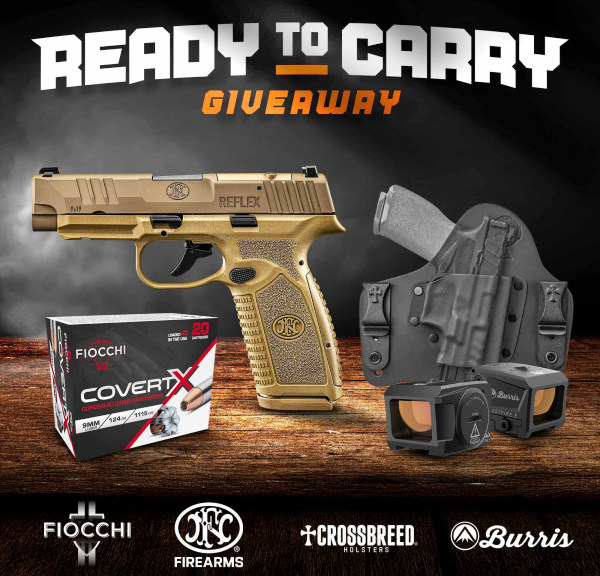
So, are you feeling lucky? Then you may want to sign up for the ShootOn.com Giveaway contest. The “Ready to Carry” Shoot ON contest prize pack includes an FN Reflex 9mm pistol, a Burris FastFire Red Dot Optic, a Crossbreed SuperTuck Holsert, and 5 boxes of Fiocchi CovertX defensive ammo. The total retail value of the “Ready to Carry” Giveaway prize package is $1,331.90.
CLICK HERE to visit the contest entry page. NOTE: No purchase is required to enter the “Ready to Carry” Giveaway. Simply go to the Shoot ON “Ready to Carry” Giveaway page and enter. You can also boost your odds of winning through the Daily Bonus Entry option. The Shoot ON “Ready to Carry” Giveaway ends April 17, 2025, so enter today!
Giveaway Items — Total Value $1331.90
Handgun: FN’s new Reflex XL MRD micro-compact 9mm is a rugged, accurate optics-ready pistol with good ergonomics and up to 18-round capacity even with a compact format. FN claims the Reflex EL series pistols off “best-in-class triggers” for optimal performance.
Holster: The Crossbreed SuperTuck is an IWB holster developed for deep concealment. This combine a Kydex pocket with a combat-cut premium leather backer for security and comfort. The SuperTuck also has powder-coated steel belt clips adjustable for height and cant (angle).
Red Dot Optic: The Burris FastFire E is an enclosed red dot optic with a large 22×17 mm sight window for the 3.5 MOA dot. The FastFire E offers 100 MOA of elevation and windage adjustment range so it works with handguns, shotguns and rifles. A tough housing protects the unit which is waterproof, shockproof and fogproof. The FastFire E offers an “always on” function.
Ammunition: The contest package includes five, 20-round boxes of Fiocchi’s new CovertX personal defense ammunition. This CovertX ammo features a new jacketed HP projectile specifically engineered for controlled expansion when fired from short-barrel handguns.
First there was F-Class, and now there will be E-Class, the “E” standing for “Economy”. The NRA Competitive Shooting Division has just approved a new form of rifle competition starting in 2025: E-Class. Unlike F-Class, E-Class will have tight rifle and gear cost controls. This is a clear response to rising F-Class costs, which have spiraled out of control. The first major E-Class National event will be a preview match held this summer at Camp Atterbury in Indiana.
The NRA’s sanctioning of E-Class competition makes sense. Let’s face it, top-level F-Class competition, both F-TR and F-Open, has become just too expensive. A modern F-Open rifle capable of winning a championship can now cost $9000.00 or more, including rest, premium trigger, and optics. Under the NRA’s new E-Class Rules, rifles can cost no more than $2000.00 total, including optics and rest (E-Open) or bipod (E-TR). In addition, new E-Class rules will recognize a special division, called E-Factory, that is limited to factory rifles, such as the Savage Axis II and Howa rifles. The E-Factory Class will also be restricted to .223 Remington to keep ammo costs down.
COST COMPARISON — F-Open, E-Open, and E-TR Factory
E-TR Factory Division
Complete Rifle
Savage Axis II: $1079 MSRP
Barrel: Included
Stock: Included
Optics: $500
Trigger: Included
Bipod: $150
Rear Bag: $50 Total: $1779.00
Under the new E-Class rules, TOTAL Cost for an E-Open or E-TR Rifle is limited to $2000.00, including optics, front rest or bipod, and rear bag. There are specific gear limits. Scope maximum is $500.00. Front rest or bipod is limited to $300.00. In the chart above you see how an E-Open rifle could be built for $1900 with a $400 action and a $400 optic. In the third column we’ve priced out an E-Factory rifle, based on a Savage Axis II Rifle, at $1779.00.
A top-of-the-line F-Open set-up like this can cost more than $8000.00 with custom stock, high-end optic, and coax front rest. All new E-Class rifles must cost less than $2000 including rests and scope.
These E-Class rigs cost less than a quarter of the price of a Top-of-the-line $8750.00 F-Open Rig. That’s a huge savings, that will allow more shooters to enjoy competitive shooting. E-Class combines the fun challenge of the F-Class course of fire, with a vastly lower investment. With the rising costs of taxes, food, fuel, and everything else, it’s high time we get serious about the money we throw away on competition rifles. We know the wives will approve!
Keeping on Lid on Expenses
In the Wings — Controls on Ammo Costs as Well
Shooters know that the price of the rifle, optics, and rests is only part of the cost equation. The price of ammunition is also significant. Currently, in F-Open, competitors can easily pay $1.40 per round just for the expendables — bullets, powder, and primers. Add in the cost of premium cartridge brass and the cost per shot goes up significantly. One competitor lamented “Shooting a match these days really empties your wallet. I cringe every time I pull the trigger, knowing what it costs.”
Therefore, the NRA is considering E-Class ammo restrictions. Starting in 2026, E-Factory class competitors would be required to shoot recycled bulk brass and blem bullets. Bulk Lake City 5.56 brass will be offered by ARMorAlly.com, and blem bullets will be offered by Midsouth Shooters Supply. Purists may complain about using surplus brass, but it only costs $199.99 for 500 cases! That’s a huge savings.
The Final Step — Claiming Rules for E-Class
As in every competitive endeavor, there may be temptation to bend or even break the rules. Predictably, some E-Class competitors may try to substitute more expensive components, such as high-cost triggers, or modified actions. To prevent this, the NRA plans to impose claiming rules for E-Class matches. This means that any rifle that captures first or second place in a major match can be claimed by another competitor for the fee of $2000.00. This procedure may seem radical but it is used in other sports to ensure parity among the competitors. If a shooter wins with a “cheater” $5000.00 rifle, he can be forced to sell it to a competitor for $2000.00.
A recent scientific discovery in Washington State suggests that areas in North America once harbored large colonies of giant, man-sized rodents — distant cousins to today’s prairie dogs.
In late 2024, while searching for ancient dinosaur fossils, a field team of Princeton University paleontologists has uncovered a startling find — the skull of a massive prehistoric rodent, along with other skeletal remains.
The skull, nearly the size of a horse’s head, is almost identical in form to the skull of a modern-era prairie dog, though it is is more than 50 times as large. Apparently today’s Black-Tailed Prairie Dogs had some very large predecessors. Based on the size of the skull and other bones, scientists estimate that the giant prairie dogs could stand up to 7′ tall and weigh up to 350 pounds. In other words, this critter was man-sized.
The giant rodents lived much like modern prairie dogs do today — grazing on vegetation and nesting underground in burrows. The giant skull was unearthed in Washington’s Mima Mounds Natural Area Preserve. View More: Mima Mounds Aerial photo.
Mystery of Mima Mounds Finally Solved
Southwest of Seattle, near Littlerock, Washington, you’ll find the Mima Mounds, a vast field of clustered earthen mounds covering over 600 acres. Since their discovery (by whites) in the 18th century, the Mima Mounds have confounded scientific explanation — until now that is. The location of the giant prairie dog skull and bones inside one of the Mima Mounds indicates, with great certainty, that the mound field was created by a large colony of giant burrowing rodents. Scientists now believe that the Mima Mounds area is a prehistoric prairie dog field, created by the creatures scientists have nicknamed “Big Dogs”.
NW Indian Legends Spoke of Giant Prairie Dogs
The presence of the giant prairie dogs at Mima Mounds is confirmed by Northwestern Indian legends describing a giant burrowing beast that stood as tall as a man, when raised on its hind legs. Researchers, who transcribed oral histories of the Sauk-Suiattle tribe, have recorded numerous references to a large, man-sized creature that burrowed underground. In the Suiattle language the beast was called “Chok-lahtle-wachook”, which, literally translated, means “Standing Man-Mouse”. A number of ancient Indian carvings and artifacts have depicted this creature (see photo at right), but cultural historians had not understood their significance. For decades the historians presumed Chok-lahtle-wachook was a wholly fictional man-beast, not a real species. Such mythical hybrid creatures are commonly revered as important totemic spirits by many Native American cultures. However, it now appears that Chok-lahtle-wachook really existed, and did so in great numbers.
Can Science Revive the Giant Prairie Dog?
The discovery of the giant prairie dog has electrified the scientific community because it appears that bone samples may contain recoverable DNA. And that means — you guessed it — there is a small chance that Chok-lahtle-wachook could be cloned. Geneticist Amy Moorwall of the Univ. of Washington explains: “These are not 100-million-year-old dinosaur bones. This creature lived in relatively recent times, so there is much more genetic material remaining that hasn’t completely fossilized. Initial inspection of bone marrow samples suggest that there may be viable, complete DNA strands that could be recovered. If that’s true, this could be one of our first opportunities to revive an extinct species.”
Varmint Hunters Hope for Successful Cloning
Could Chok-lahtle-wachook once again stand tall upon America’s prairies through the application of modern genetic cloning technology? If so, that would be exciting news for the nation’s hunting community. Varmint hunting is hugely popular in North America, and the possibility of bagging a man-sized prairie dog would be a dream come true for avid varminters. Ryan Stanley of the Varmint Hunters’ Association (VHA) told us that his members hope that the giant prairie dog could be cloned successfully: “We would definitely support a cloning effort. Many of our members spend countless days, over many seasons, trying to earn a 1000-yard patch, signifying a confirmed varmint kill at 1000 yards. Getting that patch, for a varminter, is like a baseball player making it into Cooperstown. Needless to say, if VHA members have a chance to shoot at a 7-foot-tall, 300-pound varmint, instead of a puny little prairie dog, many more of our members will finally earn their 1000-yard patch.”


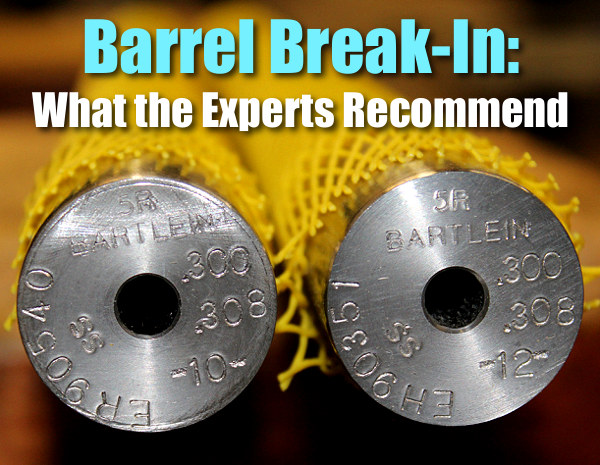
 We doubt if there will ever be real agreement among shooters concerning barrel break-in procedures. And one must remember that the appropriate break-in procedure might be quite different for a factory barrel vs. a custom hand-lapped barrel. This Editor has found that his very best custom barrels shot great right from the start, with no special break-in, other than wet patches at 5, 10, and 15 rounds. That said, I’ve seen some factory barrels that seemed to benefit from more elaborate break-in rituals.









 A recent scientific discovery in Washington State suggests that areas in North America once harbored large colonies of giant, man-sized rodents — distant cousins to today’s prairie dogs.
 NW Indian Legends Spoke of Giant Prairie Dogs
 Varmint Hunters Hope for Successful Cloning


