Article based on report from Montana Shooting Sports Association.
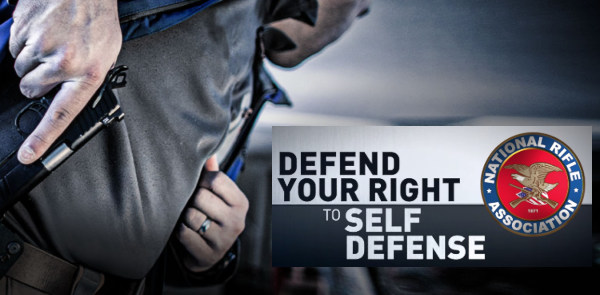
Some states with anti-gun leadership are aggressively trying to eliminate insurance programs that help protect gun owners who may be forced to use a gun in self-defense. These liberal-controlled states claim they can block such self-defense insurance coverage because insurance is not allowed for an “illegal activity”. Interesting theory — since when did self-defense become illegal? The right of armed self-protection is enshrined in the U.S. Constitution.
Most states have a position titled “Insurance Commissioner”, a public official (usually elected) who regulates insurance matters. We are seeing harsh anti-gun policies being pushed through by State Insurance Commissioners, often as the behest of Democratic-party Governors or Legislative leaders.
For example, in Washington State, the Office of Insurance Commissioner (OIC) sent cease and desist letters to the NRA (regarding previously offered Carry Guard*), the United States Concealed Carry Association (USCCA), the Armed Citizen Legal Defense Network, U.S. Law Shield, Firearms Legal Protection, and CCW Safe, demanding that all quit doing business in Washington State. California’s Insurance Commissioner blocked NRA Carry Guard Insurance, and the same thing is likely to happen in other states in the months ahead…
Gary Marbut, President of the Montana Shooting Sports Association, says that citizens need to be concerned with state candidates for Insurance Commissioner (or equivalent state official): “In Montana, the function of an insurance commissioner is performed by the State Auditor, an elected position most people don’t think about much. Because of the attack on self-defense insurance in other states, the race for State Auditor is worth paying attention to in Montana. As voters, you and your friends should know which candidates pledge that self-defense insurance will NOT be targeted for eradication in Montana.”
That advice should be headed by citizens in other states as well. With so many attacks on Second Amendment rights from liberal politicians (and the mainstream news media), we don’t want state insurance rules to be used to disarm law-abiding citizens, or subject them to increased risk of lawsuits.
*The NRA’s Carry Guard Insurance program is no longer offered. Cancellation of this program is due largely to aggressive actions by State Insurance Commissioners in blue states such as California, New York, and Washington.
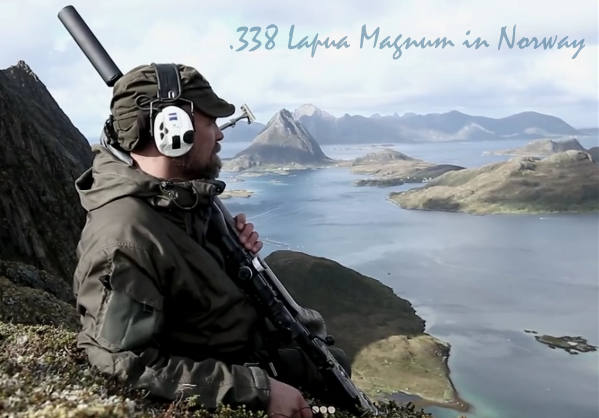
For our readers who are stuck at home under government orders, we are reprising a video feature about hunting in Norway. For those whose horizons have been limited due to the “shelter at home” response to the Coronavirus pandemic, we offer this getaway to scenic Vesterålen in northern Norway…
This is one of the finest shooting videos we’ve ever seen. Set in the scenic Vesterålen archipelago of northern Norway, this high-quality 15-minute video is part National Geograhic travelog, part ballistics lesson, part gear review. Given the current COVID-19 lockdowns, we wish we had the opportunity to join Ulf Lindroth and Thomas Haugland on their remarkable shooting adventure. This video was originally created for Great Britain’s Fieldsports TV Channel.
This is an outstanding video, recommended for anyone interested in long-range hunting.
Long range shooters Lindroth and Haugland traveled to the Arctic Circle to field test a new .338 LM Blaser R8 (in GRS stock) fitted with a Zeiss Victory V8 4.8-35x60mm scope. (Ammo is Norma-brand .338 Lapua Magnum). The video shows how they confirm the ballistics of the Norma factory ammo in the Blaser R8 rifle system.
Ulf and Thomas initially test out the system confirming drop at multiple yardages, and then use the rifle for practical accuracy. Ulf says: “If you know your hunting will demand a long shot, and you want to push the limit but still be sure to make the first-shot kill… If you want to do an ethical hunt, if you want to push that limit, you have to do [this kind of testing].”
Ulf Lindroth (above) observed: “We shot [at 808 meters] observed the misses, clicked our way into the target, and now we have the true drop at that distance… in this air pressure, in this temperature. From there we can start working to find our TRUE trajectory. And when we have THAT… we can get serious about some target shooting.”
A decade ago, the Editors of AccurateShooter.com and a pantheon of legendary shooters first collaborated on Voodoo Accuracy, hailed as “the definitive print resource for precision shooting”. Now to mark the new decade, we are releasing an updated 666-page, full-color “Voodoo Two”, the Voodoo Accuracy Second Edition. Voodoo Accuracy II compiles the wisdom of today’s greatest Hall of Fame and National Champion shooters. With the Voodoo knowledge of the world’s ‘top guns’ in your grasp, you can and will shoot more accurately no matter what your discipline.
Why do Voodoo? Sure you can spend hours, days, months, heck even a lifetime measuring stuff with calipers and trickling individual powder kernels, but you’re not going to win the big matches without access to the closely-guarded Voodoo secrets of the world’s master marksmen. Remember, there are more things in heaven and earth, Horatio, than are dreamt of in your reloading manuals!
Voodoo Accuracy II reveals the hidden shooting secrets of the greatest trigger-pullers of all time. Now you too can shoot like a legend! Find out how to win matches without ever practicing! Apply Voodoo reloading techniques with startling results! Voodoo Accuracy II contains chapters on all major forms of competitive shooting, from 25m air rifle to ultra-long range tactical competitions. Whatever your sport — point-blank benchrest, High Power, F-class, Silhouette, Palma, Multi-Gun, Biathlon, 1000-yard Benchrest — you’ll find invaluable Voodoo insights that will transform your shooting abilities overnight. We guarantee it!
Voodoo Accuracy II Chapter Highlights:
● Extreme Wind Calling — How to dope a hurricane.
● Barrel Break-In — Sure-fire 50-step, 1000-round method.
● Ogive Talkin’ — More incomprehensible Ballistology by Bryan Litz.
● Point-Blank Pointers — Feng Shui and the placement of Wind Flags.
● Why Weigh Charges? — How to throw perfect charges blind-folded.
● Powder Blending Basics — Have a BLAST with the Mix-Master method.
● For FTR, Size Matters — Six-foot-wide, servo-adjusting bipods by Danny Biggs.
● Hall of Fame Headgear — The effect of dorky hats on Group Size, by Tony Boyer.
● Barrel Tuning — Voodoo Methods demonstrated (results guaranteed non-repeatable).
● Tactical Gearfinder — Be the first on your block with the latest, overpriced Tacticool accessories.
● Voodoo Annealing — How to anneal by instinct (worrying about time and temperature is for sissies).
Here’s a sample from our chapter on the Joys of Abrasives: “We all learned as kids that shiny is good. Well it is. And more shiny is even better. Why settle for a bore that has anything less than a mirror finish? Just do a quick high-pressure bead-blast down your bore, followed by few thousand strokes with JB, and your bore will be perfectly slick and shiny. And you won’t have to waste any more time with those annoying lands and grooves that trap carbon and copper. They’re gone for good! Polish your bore to a mirror finish for the ultimate in barrel cleanliness.”
Order Your Own Copy of Voodoo Accuracy Voodoo Accuracy II comes in a handsome, large-format hardback edition for $49.99. There is also a special, limited-run letterbox edition signed by Hall of Famers so legendary we can’t even mention their names here. The letterbox edition, limited to 250 copies, will cost $1000.00. Think that’s too much? Well who can put a price on perfection? We guarantee that if you buy Voodoo Accuracy II you’ll win early and often, feeding your self-esteem while reducing your shooting rivals to whimpering, broken shells of their former selves. Remember, as Charlie Sheen said, it’s all about “Winning”! If you want to run with the Big Dogs, and strut your stuff on top of the podium, order your copy of Voodoo Accuracy II today!
After the NRA cancelled its 2020 Annual Meetings and Exhibits in Nashville, TN, there were grave concerns about the NRA losing support…and members. NRA leaders were worried that the cancellation of the much-anticipated NRA convention in Music City might lead to a mass exodus of members.
In fact, just the opposite occurred. A quite remarkable thing has happened. With the nationwide fears over the Coronavirus pandemic, American adults of all ages, all walks of life, and all political persuasions are now rushing out to buy firearms. And these new, first-time gun owners are signing up by the thousands with the NRA. Many of them are young, urban, and otherwise “liberal”. Some are avid CNN watchers who tweet “Orange Man Bad” and think AOC is cool. But they want their guns, and they want them now.
These new young/urban gun buyers are mad that they can’t get their guns “right now”. Believing the “fake news” from CNN and other anti-gun mainstream media, they thought they could get guns without background checks or waiting periods. Millenials and Gen-Xers, raised on instant gratification, can be “triggered” by waiting periods.
Millenials and Gen-Xers Join NRA Ranks in Droves
In recent decades the NRA has become less diverse, which the majority of its members being older, conservative “red state” males. Now that is changing, with a wave of new gun-buying by younger, urban populations, male and female, of all ethnic groups. It seems the interest in self-defense sweeps across all age groups, even Millenials and Gen-Xers. And remarkably, the new NRA sign-ups cross party lines.
A surprising number of new gun owners list themselves as Democrats, who remain hostile to President Trump. However, after buying guns and joining the NRA, many of these urban Democrats now say they support the Second Amendment and the right to “Keep and Bear Arms” (at least for themselves).
According to estimates received from the NRA sources, half of the new members are under 35 years of age, most live in urban metropolitan areas, and over 70% live in “Blue States”, some of which are being hit the hardest by the Coronavirus pandemic.
Why are young, urban Democrats joining the NRA? These new gun owners saw first-hand that Democratic Party-sponsored gun control laws have left them defenseless and vulnerable in a time of crisis. They are turning away from Beto, Biden and the Gun Grabbers.
One 27-year-old from Baltimore stated: “Look, yeah I was anti-gun, but with all the demands on police and first responders, I don’t see any option but to have a gun for self-defense. I’m still a registered Democrat, but yeah I’m joining the NRA because I know Biden and company will take the guns away.”
Record Numbers of FBI Background Checks for Gun Buyers
The FBI ran more than 3.7 million NICS firearm background checks 2020 in March, smashing the previous record as Americans armed themselves amid growing fears about the Coronavirus pandemic. The NICS system ran 3,740,688 background checks in March, which is 33% higher than the previous record of more than 2.8 million, which was set in February. The February numbers were a 34% uptick from the same time in 2019. Source: FOX News 4/2/2020.
Fears about the Coronavirus have resulted in a dramatic public opinion shift regarding gun ownership. Urban liberals and registered Democrats are now lining up to buy guns:
On Monday, March 30, the National Rifle Assocation (NRA) announced the suspension of all sanctioned matches until the end of April. Here is the NRA’s official statement:
Due to the Coronavirus (Covid-19) pandemic, the NRA is unfortunately suspending all sanctioned matches through April 30, 2020. Any requests for sanctioning of new matches beyond April 30 are also suspended until further notice. As a result of this suspension, the NRA will no longer accept match fees or scores. The NRA will continue to monitor the situation and make additional statements as the Covid-19 pandemic unfolds. [For more information] Please contact the NRA Competitive Shooting Division at comphelp@nrahq.org, follow the NRA Competitive Shooting Facebook page or monitor the Competitive Shooting Division website at Competitions.nra.org.
NOTE: At this time there are no plans to cancel the NRA National Championship Matches to be held at Camp Atterbury, Indiana during July and August 2020.
NRA Smallbore Championships — July 23 – August 5, 2020
NRA High Power Rifle Championships — August 9-15, 2020
NRA Mid-Range Rifle Championships — August 16-20, 2020
NRA Long Range Rifle Championships — August 21-25, 2020
Many of our readers are under mandatory “Stay at Home” orders. And, in some states, public shooting ranges have been closed. That limits your options. If you want a break from watching TV and doing chores around the house, here is a way you can improve your hunting skills/knowledge — and it’s 100% FREE.
The National Rifle Association recently launched the NRA Experienced Hunter Education Course, a new online training program designed to help hunters brush up their skills. Free to all, this comprehensive hunting refresher course will help hunters become safer and more confident before heading out into the field. CLICK HERE for more information.
NRA’s Experienced Hunter Education Course is an online review of everything an experienced hunter should know, including a review of firearm safety and safe hunting practices. Though not a substitute for state-mandated hunter safety requirements, it will provide a solid foundation of the fundamentals.
“If you’ve taken a break from the shooting sports or haven’t hunted in a season or two, our Experienced Hunter Education Course is the perfect refresher for firearms safety and safe hunting practices,” explained Elizabeth Bush, managing director of NRA Community Engagement. “Best of all, we’re offering this service completely free of charge.”
Course Description
This online training course is specifically designed for individuals who have not hunted in the past year or more and are looking for a safety refresher before they head back out in the field. In this course, hunters will have the opportunity to refresh their skills by taking a look at safe hunting practices and firearms safety. Once completed, you will be a safer hunter in the field.
OK this is no novice. But even champion pistol shooter Jessie Harrison, Captain of Team Taurus, had to start with the basics. Jessie says that safety should always be your number one priority.
Due to concerns about the Coronovirus pandemic, many Americans are purchasing firearms for self-defense. A large percentage of these purchasers are first-time gun buyers. It is vital that “newbie” gun owners learn proper safety procedures. In addition, even long-time gun owners should probably review the basic rules of gun safety. Here are six tips for shooting safely and accurately with handguns. These pointers will help you advance your skills and be more assured with your pistols and revolvers.
1. Make Sure Safety Is Number One
Whether you own one gun or one hundred, gun safety must always be your main priority. In this video, Smith & Wesson Team Captain Julie Golob covers the basics of gun safety.
2. Start with a .22 LR Handgun
We strongly recommend that new pistol shooters start off with a .22 LR rimfire handgun. The .22 LR cartridge is accurate but has very low recoil, less “bark” than a centerfire, and very little smoke and muzzle flash. New shooters won’t have to fight muzzle flip, and won’t develop a flinch from the sharp recoil and muzzle blast common to larger calibers. With the .22 LR, the trainee can focus on sight alignment, breathing, and trigger pull. When he or she has mastered those skills, move on to a .38 Special or 9mm Luger (9x19mm).
What gun to use? We recommend the 10-shot Smith & Wesson Model 617. Shooting single action, slow-fire, this is ideal for training. Shown above is the 4″-barrel Model 617version which balances well. There is also a 6″-barrel version. It has a longer sight radius, but is a little nose-heavy. Both are great choices. They are extremely accurate and they boast a very clean, precise trigger.
If you prefer a semi-auto .22 LR pistol, we recommend the Browning Buck Mark series. Buck Marks are very accurate and very reliable. This rimfire pistol is available in a variety of models starting at under $350.00. Like the S&W Model 617, a good Buck Mark will serve you for a lifetime.
3. Shoot Outdoors If You Can
We recommend that new pistol shooters begin their training at an outdoor range. There are many reasons. First, you can stay away from persons who may have a health problem, and you will be breathing fresh air. Second, the light is better outdoors. Third, sound dissipates better outdoors. The sound of gunfire echoes and bounces off walls indoors. Fourth, an outdoor range is a more comfortable environment. In addition, “stay at home” executive orders may have closed urban ranges. If you can make it to an outdoor range (which is still open in your area), you should have a good experience. Just be considerate with others and exercise “social distancing” — stay at least six feet from others.
4. Use Quality Targets with Multiple Aim Points
It’s common for new pistoleros to start shooting at cans or clay birds at a public range. That can be fun, but it’s better to start with proper targets, placed at eye level, at 7-10 yards. We like to use targets with large, brightly colored circles. Focus on putting 5 shots in a circle. We recommend targets that have multiple bullseyes or aiming points — that way you don’t have to constantly change your target. There are also special paper targets that can help you diagnose common shooting problems, such as anticipating recoil. EZ2C makes very good targets with bright, red-orange aim points. You can also use the bright orange Birchwood Casey stick-on Target Dots (right). These come in a variety of diameters. We like the 2″ dot at 10 yards.
Too many new pistol shooters try to move right to rapid fire drills. It’s better to start slow, practicing the basics, under the guidance of a good mentor. If you belong to a club, ask if there are certified instructors who will help out. This Editor learn pistol shooting from a seasoned bullseye shooter, who got me started with a .22 LR revolver and very close targets. Over the course of a few range sessions we progressed to farther targets and faster pace. But the fundamentals were never forgotten. When starting your pistol training, it’s wise to view some instructional videos. Top Shot Champion Chris Cheng hosts an excellent Handgun 101 Series produced by the NSSF. We’ve linked one of these Handgun 101 videos for Tip #6.
6. SLOW DOWN — This Is Not a Race
When you learned to ride a bicycle, you started slow — maybe even with training wheels. The same principle applies to pistol shooting. When you get started with handguns, we recommend you shoot slowly and deliberately. Start with the handgun unloaded — just work on your sight alignment and breathing. With snap caps in place, try some dry-firing drills. Then progress to live fire. But be deliberate and slow. With the target at 20 feet, see if you can get three successive shot-holes to touch. Believe it or not, many common pistols are capable of this kind of accuracy (but you won’t see many shooters at indoor ranges who pursue that kind of precision). Once you master your form and accuracy, then you can work on your speed.
There’s a very good episode of Gun Talk Radio slated today. Gun restoration expert Doug Turnbull will answer questions on restoring old guns, the team looks at the upcoming Presidential election, and Tom talks with the author of a new concealed carry manual. Tune in for all this today on Gun Talk, the original nationally-syndicated radio talk show about guns and the shooting sports.
This week, Tom interviews gun restoration expert Doug Turnbull (Turnbull Restoration). Call in with your questions about that old gun you own. Then gun rights attorney Emily Taylor comments on what a Biden presidency might look like and Tom also talks to Jerry Wayne, the Michigan union member who confronted Joe Biden about the Second Amendment. Lastly Tom Given talks about his new book Concealed Carry Class–The ABCs of Self-Defense Tools and Tactics.
This broadcast airs Sunday March 22, 2020 from 2:00 PM to 5:00 PM Eastern time on radio stations nationwide. Past podcasts can be heard online via the GUNTALK PODCAST Site and Apple iTunes. The Gun Talk podcast archive has many great shows. Click the link below to hear a recent show (3/15/2020) about the challenges of buying guns and ammo during the current crisis caused by the Coronovirus. In California, for example, the Governor has ordered the closure of gun stores, and state law blocks mail-order ammo sales.
Gun Talk Coronavirus Podcast from 3/15/2020:
As always, call 866-TALK-GUN with your comments, questions, and range reports.
Tom Gresham’s Gun Talk Radio show airs live on Sundays from 2PM-5PM Eastern, and runs on more than 270 stations. Listen on a radio station near you or via LIVE Streaming. All Gun Talk shows can also be downloaded as podcasts at http://bit.ly/GTRpodcast, Apple iTunes, or through the Gundelio Apps. Gun Talk is also available on YouTube, Roku, Apple TV, Amazon Fire TV, and GunTalk.com.
Savage Arms has completed a major overhaul of the Savage website. Now the SavageArms.com site is more mobile-friendly and easier to navigate. Savage has expanded information on its rifle products, and also updated the Expert Advice area. This section of the website offers informative technical articles/videos, as well as numerous helpful tips for hunters.
You’ll find 30 informative topics in the Expert Advice section of the updated Savage Arms website. Below are FIVE of our favorites. Click each item to view the full text and linked VIDEOS. Even if you don’t own a Savage, these features are useful. And all new shooters should definitely check out the Advanced Optics selection. This features a good video covering mirage and light refraction.
1. Advanced Optics — Stan Pate
Light refraction can wreak havoc on your ability to connect with a target at extreme long range. Stan Pate offers some good advice concerning mirage and refraction.
A while back, our friend Vince Bottomley in the UK wrote an excellent article for Target Shooter Magazine. Vince offers “solid-gold” advice for new F-TR and F-Open shooters. Vince reviews the cartridge options, and offers suggestions for a shooter’s first (and hopefully affordable) F-Class rifle. Vince also reviews various bipod choices for F-TR and discusses optics options (from $300 to $3000).
Getting Started in F-Class by Vince Bottomley
As membership secretary of a large club, one of the questions I’m frequently asked – “What’s the best way to get started in F-Class?” My club has an F-Class shoot every couple of weeks at ranges from 300 to 1000 yards and, not surprisingly, it’s very popular.
F-TR or Open Class?
From a shaky start way back in 2004, the F-TR Class is now proving as popular as Open Class and, at GBFCA League shoots and club shoots, many shooters choose to start with a 308, shooting off a bi-pod – in other words F-TR. In Open Class, the 7mm WSM soon established itself as the “must have” cartridge – if you wanted to win but, the WSM’s appetite for barrels eventually brought another 7mm cartridge into play – the 284 Winchester. This 50-year-old stalwart was revived a decade or so ago as the 6.5-284 and indeed this cartridge found some favor with F-Class pioneers – before the potency of the WSM was discovered. If you don’t mind shelling out for a couple of barrels per year (barrel life is about 750 rounds with the WSM) go for the 7mm WSM but, if you require a decent round-count, then opt for the .284 Win and learn to read the wind a bit better!
Scopes for F-Class
If you will be shooting 1000 yards then I would recommend at least 32 power and preferably a variable – like the 8-32. The cheapest “usable” scope in this range is the Sightron. It’s a great scope for the money and at under $900 (in the USA) it’s half the price of its nearest competitor. It’s also light – at 1.5 lbs – and there are some great reticles for the F-Class shooter – like the LRMOA.




 Order Your Own Copy of Voodoo Accuracy





 It’s common for new pistoleros to start shooting at cans or clay birds at a public range. That can be fun, but it’s better to start with proper targets, placed at eye level, at 7-10 yards. We like to use targets with large, brightly colored circles. Focus on putting 5 shots in a circle. We recommend targets that have multiple bullseyes or aiming points — that way you don’t have to constantly change your target. There are also special paper targets that can help you diagnose common shooting problems, such as anticipating recoil. EZ2C makes very good targets with bright, red-orange aim points. You can also use the bright orange Birchwood Casey stick-on Target Dots (right). These come in a variety of diameters. We like the 2″ dot at 10 yards.


 This week, Tom interviews gun restoration expert Doug Turnbull (


