By a 217-213 vote, the U.S. House of Representatives narrowly passed a bill that would ban mag-fed semi-automatic rifles for the first time since 2004, with two Republicans voting for the measure and five Democrats voting against it. This article features the NSSF’s response to this new legislation, which would ban sales of AR-type rifles and some pistols.
NSSF Denounces Unconstitutional Gun Ban Passed by U.S. House of Representatives
NSSF, the firearm industry trade association, condemns the U.S. House of Representatives’ passage of H.R. 1808, the “Assault Weapons Ban of 2022″, as amended. The legislation ignores the Constitutional right, upheld by the U.S. Supreme Court, for law-abiding Americans to keep and bear arms that are in common use. NSSF estimates that there are over 24.4 million Modern Sporting Rifles (MSRs) in circulation in America between 1990 and 2020.
“This legislation is as dangerous as it is revealing of the contempt for which the House Democrats hold for the Constitution and the U.S. Supreme Court”, said Lawrence G. Keane, NSSF’s Senior Vice President and General Counsel. “Chairman Jerrold Nadler admitted during debate in his committee that he didn’t care the legislation was unconstitutional and defied Supreme Court precedent. Democratic representatives are not fulfilling the interest of ‘the People,’ instead representing special-interest gun control groups that seek to disarm law-abiding citizens and scapegoat them for crimes committed by others.”
The MSR remains the most-popular selling centerfire semiautomatic rifle in the United States today. There are more MSRs in circulation today than there are Ford F-Series trucks on the road. The Supreme Court upheld that commonly-owned firearms are lawful for private ownership in both the Heller and Bruen rulings. Banning of an entire class of semiautomatic firearms can be viewed as nothing short of an outright infringement of Second Amendment rights — rights which belong to the people and not the government. This legislation, however, also includes some semiautomatic shotguns and handguns.
This legislation does nothing to improve public safety, as it doesn’t address criminals acting without regard for law or innocent life. Instead, it will put the lives of those who obey the law at greater risk by denying them an entire class of firearms that are used for home defense.
The previous 1994 Assault Weapons Ban proved to be ineffective at reducing crime. The Centers for Disease Control and Prevention (CDC) concluded the “assault weapons ban” did not result in crime reduction. (See Analysis).
The FBI’s Uniform Crime Report shows more murders were committed by individuals using knives, fists and clubs than by those using any rifle – not just MSRs like AR-15s.
Story by Paula Crenshaw
SFC Brandon Green of the U.S. Army Marksmanship Unit completely dominated the recent NRA Long Range Rifle Championships at Camp Atterbury, Indiana. Green finished as the 2022 Overall LR Champion, AND he won every other major individual Long Range Trophy — something that has NEVER been done before. With this truly dominant Long Range performance, along with his three previous National High Power Championships, Green has established himself, without a doubt, as one of the greatest American marksmen who has ever lived.
With this article, you can learn from SFC Green — sharing in his knowledge and amazing skill set. Today we feature a set of USAMU videos hosted by Brandon, with input from other top USAMU shooters. Watch, learn, and improve your game!
Marksmanship Video Training with SFC Brandon Green
The U.S. Army Marksmanship Unit (USAMU) has produced an excellent series of videos covering the Basic Rifleman’s Course. If you are getting started in High Power shooting, or want to improve your position shooting skills, this series is well worth watching. And these videos are not just for service rifle shooters — even bench shooters can benefit from these videos, particularly Part 5, which explains how to estimate wind speed and direction. The lead instructor for these videos is SFC Brandon Green, three-time National High Power Champion, and 2017 Service Rifle Champion. When SFC Green talks, you should listen.
SFC Brandon Green is a shooting superstar. Green won the National Long Range Championship this summer at Camp Atterbury, Indiana, winning every major trophy. Back in 2018, Green won his third NRA National High Power Rifle Championship in 2018, also at Camp Atterbury Brandon dominated the HP Championship cycle, finishing eight points and ten Xs ahead of his nearest competitor. Brandon also won High Power National Championships in 2015 and 2013. One of the greatest marksmen in the nation’s history, SFC Green excels at all positions, both rapid-fire and slow-fire.
Part 5 — Wind and Weather Estimation (Very Useful for All Shooters)
Note: This video includes a hit location “target analysis” in the first 6 minutes.
Part 4 — Minute of Angle Explained
Part 3 — Ballistics and Zeroing
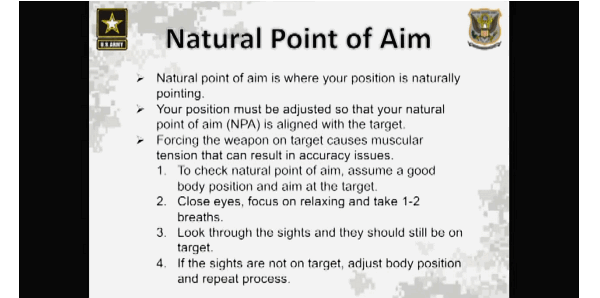
Part 2 — Positions, Sight Alignment, and Natural Point of Aim (Very Useful)
Part 1 — Aiming and Sight Picture
SFC Brandon Green (left above) has set multiple National Records at Camp Perry.
AR-platform rifles can be maintenance-intensive beasts. They need regular inspection, cleaning, and lubrication. But some AR owners make the situation worse by not regularly cleaning important small parts, or by using too MUCH oily/greasy lubricants in the wrong places. A properly maintained and lubricated AR15 can shoot hundreds of rounds (between cleanings) without a problem. If you learn where (and where not) to apply lubricant, you’ll find that your AR will run more reliably and the task of cleaning the bolt, bolt carrier, and upper receiver internals will be less of a burden.
Here we showcase videos that show how to field-strip an AR-15, inspect the key parts, clean components, and lubricate internal parts as needed. Along with these videos, we recommend you read the comprehensive AR-15 Gun Cleaning Clinic article on the Brownells website. This explains in detail important procedures that the videos might only cover in a few seconds.
If you want to keep your black rifle running smoothly and reliably, you must clean it regularly and follow the correct maintenance procedures. Here are five videos that explain how to properly disassemble and clean AR-platform rifles.
1. How To Clean Your AR-15 | Cleaning and Maintenance Tips
This is a quick 90-second starter video that may help new AR owners. Ricky Lehnhardt of OTIS Technology demonstrates the basics of cleaning and maintaining your AR-15. Lehnhardt does a good job identifying the points that need cleaning on the inside of ARs. However he works very quickly in the video. You may want to pause the video at some points. Also, Lehnhardt employs a cable for pulling patches and brushes through the barrel. Yes this is fast and easy. However, for match AR rifles, we recommend that you instead use a cleaning ROD with fitted bore guide.
2. Take-Down and Full Cleaning of AR-15 by Jerry Miculek
Here ace shooter Jerry Miculek takes down and cleans an AR-platform rifle belonging to his daughter Lena. This is a good video because Lena’s rifle was “run hard and packed up dirty” so you can see where carbon and grease build up. This 35-minute video is very thorough. Jerry is one of the nation’s top action carbine shooters, so listen carefully to his advice on cleaning and lubrication.
3. AR-15 Maintenance: Field-strip, Clean and Lubricate an AR-15
Gunsite Academy instructor and gunsmith Cory Trapp demonstrates the proper way to field-strip, clean, and lubricate an AR-15 carbine. In this 30-minute video, Trapp offers several important technical tips and hints. For example, at 11:05 Trap demonstrates how to determine if your bolt needs new gas rings. Along with cleaning procedures, this video explains how to inspect key components and how to function-test your AR before each shooting session.
4. AR-15 Dissassembly and Cleaning Guide
This video does a good job, with close-ups, showing how to remove the bolt carrier and clean the inside of the upper receiver. Then you can see how to work with various tools to clean the bolt, bolt carrier, and inside of chamber. We also recommend that you inspect the ejector recess and extractor recess. When we’ve inspected ARs that failed to cycle properly, we have often found nasty gunk (mixture of carbon, greasy lube, and brass particles) in these areas.
5. Basic AR-15 Quick and Easy Field Maintenance
In this NSSF-sponsored video, pro shooter Ryan Muller demonstrates basic, quick field maintenance of his AR-15. This would be for a quick cleaning and lubrication of the reciprocating parts. This covers rapid maintenance in the field. For full field-stripping and thorough cleaning, watch the previous videos.
Handy Mat for Cleaning AR Rifles
When working on an AR-15, it’s smart to have a pad that can absorb solvents and cushion your upper and lower. The $22.49 Real Avid Smart Mat is a good choice. This features printed take-down instructions and it has a handy parts tray on the right side. The mat rolls up for convenient storage. Click HERE to learn more.
Vital Inspections You Should Do After Disassembly
Last but not least, here are recommended inspections you should do every time you do a full field-strip and cleaning of your black rifle:
Probably the most popular centerfire rifle round in the Western Hemisphere is the .223 Remington and its metric match, the 5.56x45mm. Though many folks use “.223 Rem” and “5.56×45″ interchangeably, there are some meaningful differences in specifications for the original .223 Rem and the 5.56x45mm cartridge, as adopted by the U.S. military and NATO armies. The default chamber throats are slightly different and the .223 Rem is rated at 55,000 PSI vs. 62,366 PSI for the 5.56x45mm.*
.223 Rem vs 5.56x45mm — Key Differences
There is a truly outstanding, very thorough article on the subject, published by LuckyGunner.com.** This involved extensive testing, with pressure monitors, of 5.56x45mm ammo in .223 Rem chambers. Those tests revealed the peak pressures. Here is one of the ammo test charts:
NOTE: “The observed chamber pressure for Federal XM855 5.56mm ammunition in a .223 Rem chamber exceeded .223 maximum pressures, but not by a massive amount. The ninth shot (the red line) was an underpowered cartridge which exhibited significantly lower velocity and pressure than the other rounds, so it was excluded from the average velocity and pressure numbers for this chamber.”
And if you’re curious, LuckyGunner also fired .223 Rem ammo in a 5.56x45mm NATO-chambered AR15 rifle. As you would expect, the peak pressures were significantly lower, but the .223 Rem ammo still cycled the semi-auto AR-platform rifle perfectly well:
UltimateReloader.com Explains .223 Rem vs. 5.56x45mm
To explain the key differences between the .223 Rem and 5.56x45mm cartridges our friend Gavin Gear of UltimateReloader.com has created a very thorough 12-minute video. This covers the cartridge specifications and explains key considerations for hand-loaders. Gavin also addresses the oft-asked question “Can I shoot 5.56x45mm ammo in my .223 Rem chamber?” Gavin’s video is definitely worth watching. In fact, this is one of the most popular videos Gavin has ever created — it has been watched nearly 4.5 million times on YouTube.
What Exactly Is the 5.56x45mm NATO Cartridge?
The 5.56×45mm NATO is a rimless bottle-necked intermediate cartridge family standardized by NATO with development work by FN Herstal. It consists of the SS109, SS110, and SS111 cartridges. Under STANAG 4172, it is a standard cartridge for NATO forces as well as many non-NATO countries.
Bullet diameter: 5.70 mm (0.224 in)
Maximum pressure (EPVAT): 430.00 MPa (62,366 psi)
Maximum pressure (SCATP 5.56): 380.00 MPa (55,114 psi)
Case length: 44.70 mm (1.760 in)
Rifling twist: 178 mm or 229 mm (1 in 7 in)
Parent case: .223 Remington (M193)
Ammo-Maker Federal Premium Compares .223 Rem and 5.56x45mm
Here is a video from ammo-maker Federal Premium explaining the difference between .223 Remington and 5.56x45mm NATO. Federal states that you may experience excessive pressures when firing a 5.56x45mm in a standard .223 Remington chamber:
One leading gunwriter has addressed the question of shooting 5.56x45mm ammo in .223 Rem chambers. He advocates caution (for more info, SEE pressure tests by LuckyGunner.com):
“I have received a slew of questions — many from first time AR-type rifle buyers — about the .223 Rem and the 5.56×45 mm NATO cartridges. Can I shoot 5.56×45 mm NATO in my .223 and vice-versa? Are these the same cartridge?
Externally, the two cartridge cases are identical. The main differences are that 5.56×45 mm NATO operates at a higher chamber pressure (about 60,000 PSI versus 55,000 PSI on the .223 Rem.) and the 5.56’s chamber is slightly larger than that of the .223 Rem. Also, the throat or leade is longer in the 5.56×45 mm chamber. What does this mean? You should not shoot 5.56×45 mm NATO out of a rifle that is chambered in .223 Rem [with a standard short throat]. And be aware that some .223 Rem ammunition will not reliably cycle through some AR-style .223 Rem rifles, but it usually does. As a matter of fact, I have not encountered any difficulty with current .223 Rem. loads cycling through a 5.56 mm AR-style rifle.” — Mark Keefe, Editor, American Rifleman
* According to the official NATO proofing guidelines, the 5.56×45mm NATO case can handle up to 430.0 MPa (62,366 psi) piezo service pressure. The U.S. SAAMI lists Maximum Average Pressure (MAP) for the .223 Remington cartridge as 55,000 psi (379.2 MPa) piezo pressure with deviation of up to 58,000 psi (399.9 MPa). The chamber for military 5.56×45mm NATO has a longer throat prior to the bullet contacting the rifling which results in lower pressures when firing 5.56×45mm NATO ammunition. If 5.56×45mm NATO is used in rifles chambered for .223 Remington the bullet will be engraving the rifling when chambered. which can increase pressures past SAAMI Max levels. NOTE: The C.I.P. standards for the C.I.P. civilian .223 Remington chamber are much closer to the military 5.56×45mm NATO chamber.
** The full-length LuckyGunner article is well worth reading. It even provides specifications for a number of .223 Rem reamer types, and compares the original .223 Rem, the 5.56x45mm NATO, and the modern .223 Wylde chamberings.
Report by Craig Arnzen, Area419.com
It’s easy to think about shooting your first precision rifle match and worry about all of the gear and trinkets that you may need to make it through. In reality, the old rules apply — keep it simple.
We wanted to put together for you a no-nonsense list of the Top Five Gear Items you need for your first match. This list focuses on the “must-have” items you’ll need for PRS-Style competitions.
1. A Rifle (That is Reliable and Sub-MOA Accurate)
Your rifle is the most obvious piece of kit, but we can give you a little more information. Most of the guys you’ll find out there are shooting 6.5 Creedmoor. Yeah, there are guys using .308 Wins and 6mm Dashers, but the 6.5 Creedmoor makes up more than half of the rounds shot in PRS competition, when looking at both national and club matches. Your comp rig needs to be mag-fed and shoot better than 1 MOA. It DOESN’T need to be better than 0.5 MOA (half-MOA). With most targets being 2-3 MOA in size, a half-MOA gun will do just fine. More accuracy is better of course, but you don’t need an exotic quarter-MOA rig to win.
[Editor’s NOTE: PRS does offer a Gas Gun division, but most guys start out with a bolt-action rifle, which will be less maintenance-intensive than an AR-platform rig.]
Muzzle brakes, like our Area 419 Hellfire, are also very popular as much of the PRS game is recoil management. If you can’t see your misses, you’re sure to have more of them.
The rifle also needs an optic with repeatable clicks and a reticle with Mil- or MOA-based hashmarks. The clicks can be either Mil system or MOA system (Mil is more common), so long as the click values match the reticle (i.e. you don’t want 1/4-moa clicks with a Mil-marked reticle). How much power do you need? Anything that zooms in the mid-teens will suffice. I could shoot a match with a fixed 12X scope and not feel disadvantaged. We love the Kahles K624i, if you’re looking for a suggestion.
Oh, and you’ll want a bipod — but the choice in bipod deserves a whole separate article by itself. Nothing wrong with starting out with a Harris swivel. Then you might look at different bipods on other competitors’ rifles for comparison.
2. Ammunition — Factory Ammo and Hand-loads
Good ammo is important, but as we discuss above, 0.5 MOA is good enough. Also, speed is great but it matters FAR less than you’d think. Drop can be calculated with precision, and distances are normally known, so a slightly flatter trajectory doesn’t really matter. Wind matters, but the difference you’ll find when eeking out that last 50 fps is very, very small.
Federal, Hornady, and Prime all make quality ammo that is widely used by shooters from local to national matches. Facebook photo by CReece.
Precision Handloads
If you want to run down the rabbit hole of finding that perfect ammo that shoots in the “twos” (0.2 MOA), get yourself an AutoTrickler and some of our billet aluminum accessories — you’ll love the setup.
3. A Versatile Support Bag
There are countless bag options. But there is ONE bag you’ll see everywhere, and for good reason. The Game-Changer from Armageddon Gear is aptly named. Many shooters use it as a barricade bag as well as a rear bag, meaning a guy could get away with using only this bag for an entire match. If you need another bag when you get there, ask someone in your squad, they’ll share. I promise.
4. Ballistics Calculator APP
All PRS/NRL shooters need reliable and accurate ballistic solutions. The software-enabled Kestrel is a very common item on the range, but you’ll also see lots of guys using mobile Apps such as Shooter or Applied Ballistics Mobile, and they have great results.
It’s also handy to have an armband or an item like the Hawk Hill data card holder for stages with various targets at differing ranges. Once the RO says “engage” and your mind stops working, you’ll appreciate having it written down.
5. Hearing Protection
PRS Competitors shoot with brakes and sometimes in enclosed spaces. That’s why you need serious hearing protection. We recommend NRR 33 earplugs, doubled up with Electronic Muffs to hear range commands. I have used the 33 dB NRR Mack’s foamies at matches for most of the last year, and the Howard Leight NRR 33 Max-1s are also very effective. The budget-priced (under $50) Howard Leight Impact Sport Electronic muffs work well, but premium electronic muffs may be more comfortable.
Growing in popularity are high-tech, in-ear digital units like the ESP Stealth. I have a set of linked ESP Steaths on the way and hope to evaluate them soon. These are supposed to be very good, but the ESP Stealths cost $2100.00 per pair!
Think we missed something? Have more questions? Let us know.
Story by Boyd Allen
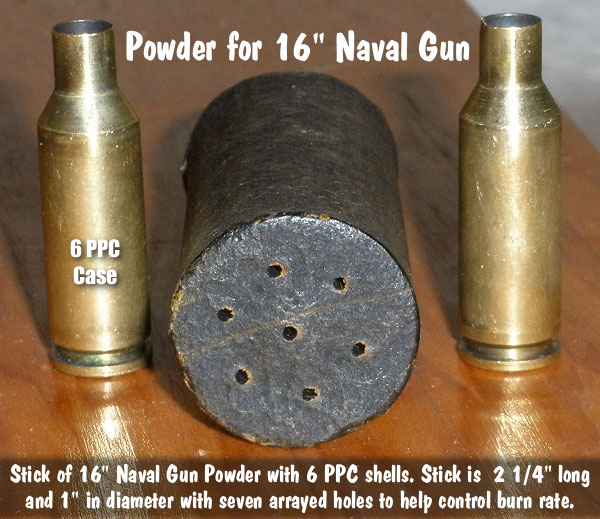
While many top competitive shooters trickle their stick powder charges to a kernel or two, that would be impractical when loading charges for giant naval guns. You may be surprised, but the shells fired by the U.S. Navy’s massive 14″ and 16″ naval guns were also propelled by stick-type extruded powders. You couldn’t trickle these ‘kernels’ though — a single stick or ‘grain’ can be over 2″ long.
The U.S.S. Iowa fires her massive 16″ main battery. The U.S. Navy’s Iowa-class battleships carried nine huge 16-inch Mark 7 cannons in three turrets. The big naval guns were 50 calibers long, i.e. 50 times bore diameter, making the barrels 66.7 feet long from chamber to muzzle.
In connection with a Benchrest Central discussion that drifted to the subject of powders used in large naval guns, I heard from Joe McNeil, whose father was involved in manufacturing those very propellants as a DuPont employee. Joe writes:
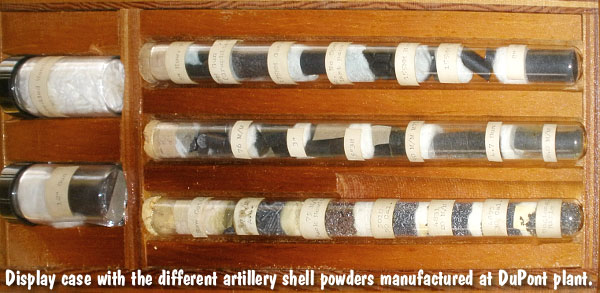
“My Dad worked for the DuPont company for over 40 years. Every time the nation went to war he was assigned to the gun powder plants which DuPont ran for the government for $1.00 per year! His last assignment was at the Indiana Ordnance Plant in Jefferson, Indiana from 1952 through 1958. He had a display case made of all of the different powders made at the plant and left it to me. That’s why I have a grain of 16″ gun powder. He took me out to the Jefferson proving grounds once when they tested the powder in a 16″ gun. We watched from a half-mile away but it left a lasting impression when they fired that gun. They actually had a set of rings they fired through to test the performance of the powder and shell. This was a truly fond memory of my Dad and his work.”
Here are some pictures of the gun powder “grains” made during the Korean War at the Indiana Ordnance Works where Joe McNeil’s father worked.
Above is the display case with the different powders manufactured at the DuPont plant. They include: 37 MM/AA, 75MM Pack Howitzer, 50 Cal. 5010, 20 MM 4831, 30 Cal. 4895, 76 MM, 3″, 5″, 90 MM, 4.7″, 240MM, 8″, 280 MM, 175 MM, 155 MM Howitzer, 155 MM Gun M.P., 8″ Gun M.P., 12″, 14, 16″. There are different-sized ‘grains’ for specific rounds.
16-inch/50-caliber gun projectile plus six propellant bags. Display mockup aboard U.S.S. Iowa (BB-61) in San Pedro, CA. Photo by James Madison per Creative Commons CC-BY-SA-4.0 license.
A new discipline has proven very successful. The NRL Precision Hunter Challenge features a multi-distance, walk-around shooting course similar in some ways to PRS/NRL, but limitations on weight and cost of equipment make this more affordable and more practical. The new discipline is catching on — the 2022 NRL Precision Hunter Challenge match, held June 24-26, 2022, in Price, Utah, drew nearly 150 competitors. Hornady was the title sponsor of the event.
Shooters from all over the country competed in 20 challenging stages. The course of fire consisted of 160 rounds with hiking between stages at the North Springs Shooting Complex. The Precision Hunter Challenge featured target distances from 200-850 yards, and angled shots between 0-10°. At the North Springs Shooting Complex, there were natural terrain obstacles and tree stands. Competitors had to navigate the terrain to establish their shooting positions — very much the opposite of a benchrest match!
“The NRL HUNTER Series is designed to help educate new and seasoned hunters about their skills, gear, and personal limitations. The Hornady Precision Hunter Challenge did just that!” said Travis Ishida, President of the NRL. “With a well-designed course of fire that was both challenging and fun, this match encompassed everything we are looking for. With over 50% new faces at this match the NRL HUNTER Series is growing faster than we ever imagined” he added. Verl Dallin, Match Director, added: “With the help of the staff and ROs, the Hornady Precision Hunter Match turned out simply fantastic”.
This video contains highlights from the 2021 Hornady Precision Hunter Challenge:
Here are the 2022 Hornady Precision Hunter Challenge division and class winners:
Factory – Kevin Wilkey
Open Light – Morgun King
Open Heavy – Serge Ducourneau
Team -Tyler Payne & Scott Peterson
Top Young Gun – Marshall Lewis
Top Lady – Katalin Burjan
CLICK HERE for complete 2022 Precision Hunting Challenge Match results on Practiscore.com. The next major NRL Hunter event is the 2022 COMPEXPO Hunter Challenge taking place July 20-22, 2022, at the Cameo Shooting and Education Complex, in Palisade, Colorado.
Tomorrow is July 4th, our nation’s birthday. To mark this important day in American history, we are featuring a great American military rifle, the M1 Garand, a rifle General George S. Patton called: “the greatest battle implement ever devised”. We think every serious vintage rifle collector should acquire an M1 Garand at some point.
The CMP has, in the past couple of years, received over 90,000 Garands from overseas arsenals, so there are plenty to be had currently. This article explains how to order an M1 Garand from the CMP, and how to select the right grade for your needs and budget.
How to Order an M1 Garand from the CMP
To purchase an M1 Garand through the CMP, you must be an adult U.S. Citizen, and a member of an affiliated organization who has participated in a “Marksmanship Activity”. This basically means you need to join a gun club and participate in a clinic or match. Proof of club membership and citizenship is mandatory for all ages. However, the marksmanship requirement is waived for those over 60 years of age. Garands must be ordered by mail or through official CMP Auctions. CLICK HERE to Start Order.
Here are two videos that explain the procedure for ordering an M1 Garand from the CMP. Along with mail-order sales, the CMP has brick-and-mortar stores where M1 Garands can be inspected and purchased and then transferred via your FFL (in compliance with state law). The three CMP stores are located in Anniston, Alabama; Talladega, Alabama; and Port Clinton (Camp Perry), Ohio.
M1 Garand Barreled Actions and Aftermarket Barrels
Along with complete M1 Garand rifles, the CMP also offers barreled actions. This can save you money, and also makes sense if you are looking to create a rifle with high-grade wood, or you want to bed the action for improved accuracy. You can order an M1 Garand barreled action, as well as complete M1 Garand rifles, from the Civilian Marksmanship Program (CMP). The eligibility requirements and ordering process will be the same for a barreled action as for a complete rifle.
If you already have an M1 Garand, but need a new barrel, you can order a pre-chambered Criterion barrel in .30-06 Springfield. Criterion tell us: “This is a direct replacement barrel for the M1 Garand rifle, manufactured to Mil-spec print #6535448. It has the original G.I. contour and Parkerized finish. Receiver threads are timed, all milling cuts are made, and all M1 Garand barrels are hand-lapped.” NOTE: Each barrel is .010 short-chambered and should be headspaced by a qualified gunsmith. These Criterion .30-06 replacement barrels, priced at $295.00, are legal for use in Service Rifle and John C. Garand matches.
How to Maintain the M1 Garand Rifle
Once you have an M1 Garand in your collection, you’ll want to keep it in tip-top condition so it works flawlessly for vintage military matches and fun shooting. Below we’ve linked two good SSUSA articles on M1 Garand maintenance. Following that you’ll find two excellent videos covering M1 Garand Disassembly, Cleaning, and Lubrication. Finally there are links to recommended print manuals for the M1 Garand.
M1 Service and Maintenance Shooting Sports USA (SSUSA) published an excellent article on Service and Maintenance of M1 Garand Rifles. This offers some smart tricks, such as using smoke from burning masking tape to darken the front sight post. There is also an older SSUSA article that covers basic cleaning and servicing and also explains how to upgrade the performance of your Garands. READ Article HERE.
As a resource for Garand owners, SSUSA recommends GarandGear.com: “[At] Garand Gear you’ll find USGI spec parts, tools, gauges, clips and a few Garand accessories. They also have some interesting freebies, most notably a direct analysis of M1 gas port pressures produced by different brands of commercial .30-06 ammunition, showing which ones exceed M2 Ball pressure, as well as the pressures produced by ammo manufactured specifically for the M1 Garand, such as Hornady’s M1 Garand Match and Federal’s American Eagle M1 Garand. Here you’ll also find free, downloadable and printable PDF copies of War Department M1 Garand maintenance manuals TM9-1275 and TM9-1005.”
If you compete in PRS/NRL, tactical, or 3-Gun matches, and need to haul a lot of gear in the field, consider this Savior LRP gun case with integral shoulder straps. With multiple compartments, it can carry a spotting scope, laser rangefinder, binoculars, and even a small tripod. In addition the Savior case has detachable MOLLE pouches that fit magazines, Kestrels, or other accessories. And the case even has a removable scope cover and cleaning rod sleeve.
In our Shooters’ Forum, members have given positive reviews of the Savior Long Range Precision (LRP) carry cases. These are available in three sizes: 47″, 51″, and 55″. The 51″ version should be good with barrels up to about 28″. If you have a suppressor attached or have a longer barrel, we recommend the 55″ version. The 47″ case is available in black or dark FDE (as shown) for $159.99 on Amazon. The larger 51″ and 55″ cases are $169.99 and currently offered in black only (FDE should be available soon).
These cases include full heavy-duty, padded shoulder harness, carry straps, scope cover, tripod storage section, two MOLLE pouches, and a separate large, padded storage pocket that can be used for a spotting scope, and/or other accessories.
Owner Comment: “Well-built. Fits lots of gear. Been using mine weekly for two years now. Good soft case for the price. Solid so far… but a bit heavy. I think with my PRS rifle and accessories including a 5-lb gamer plate and bag, it weighs close to 40 pounds.” — Member DDRH65PRC
Tactical competitor Zak Smith stores his elevation and wind drift data on a handy laminated data card. To make one, first generate a come-up table, using one of the free online ballistics programs such as JBM Ballistics. You can also put the info in an Excel spreadsheet or MS Word table and print it out.
Above is a sample of a data card. For each distance, the card includes drop in inches, drop in MOA, drop in Mils. It also shows drift for a 10-mph cross wind, expressed in inches, MOA, and mils. Zak explained that “to save space… I printed data every 50 yards. For an actual data-card, I recommend printing data every 20 or 25 yards.” But Zak also advised that you’ll want to customize the card format to keep things simple: “The sample card has multiple sets of data to be more universal. But if you make your own data card, you can reduce the chance of a mistake by keeping it simple.”
Once you have the card you can fold it in half and then have it laminated at a local office store or Kinko’s. Keep this in your pocket, tape it to your stock, or tie the laminated card to your rifle. If you regularly shoot at both low and high elevations, you may want to create multiple cards (since your ballistics change with altitude). To learn more about ballistic tables and data cards, check out the excellent “Practical Long-Range Rifle Shooting–Part 1″ article on Zak’s website.
Scope-Cover Mounted Ballistics Table
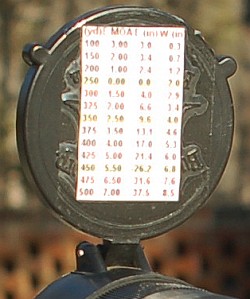
Another option is to place your ballistics card on the back of the front flip-up scope cover. This set-up is used by Forum member Greg C. (aka “Rem40X”). With your ‘come-up’ table on the flip-up cover you can check your windage and elevation drops easily without having to move out of shooting position.
Greg tells us: “Placing my trajectory table on the front scope cover has worked well for me for a couple of years and thought I’d share. It’s in plain view and not under my armpit. And the table is far enough away that my aging eyes can read it easily. To apply, just use clear tape on the front objective cover.”






 Scope-Cover Mounted Ballistics Table


