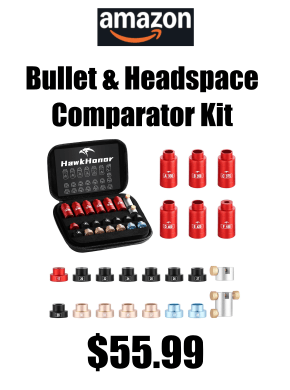
Have you recently purchased a new scope? Then you should verify the actual click value of the turrets before you use the optic in competition (or on a long-range hunt). While a scope may have listed click values of 1/4-MOA, 1/8-MOA or 0.1 Mils, the reality may be slightly different. Many scopes have actual click values that are slightly higher or lower than the value claimed by the manufacturer. The small variance adds up when you click through a wide range of elevation.
In this video, Bryan Litz of Applied Ballistics shows how to verify your true click values using a “Tall Target Test”. The idea is to start at the bottom end of a vertical line, and then click up 30 MOA or so. Multiply the number of clicked MOA by 1.047 to get the claimed value in inches. For example, at 100 yards, 30 MOA is exactly 31.41 inches. Then measure the difference in your actual point of impact. If, for example, your point of impact is 33 inches, then you are getting more than the stated MOA with each click (assuming the target is positioned at exactly 100 yards).
How to Perform the Tall Target Test
The objective of the tall target test is to insure that your scope is giving you the proper amount of adjustment. For example, when you dial 30 MOA, are you really getting 30 MOA, or are you getting 28.5 or 31.2 MOA? The only way to be sure is to verify, don’t take it for granted! Knowing your scopes true click values insures that you can accurately apply a ballistic solution. In fact, many perceived inaccuracies of long range ballistics solutions are actually caused by the scopes not applying the intended adjustment. In order to verify your scope’s true movement and calculate a correction factor, follow the steps in the Tall Target Worksheet. This worksheet takes you thru the ‘calibration process’ including measuring true range to target and actual POI shift for a given scope adjustment. The goal is to calculate a correction factor that you can apply to a ballistic solution which accounts for the tracking error of your scope. For example, if you find your scope moves 7% more than it should, then you have to apply 7% less than the ballistic solution calls for to hit your target.
NOTE: When doing this test, don’t go for the maximum possible elevation. You don’t want to max out the elevation knob, running it to the top stop. Bryan Litz explains: “It’s good to avoid the extremes of adjustment when doing the tall target test.I don’t know how much different the clicks would be at the edges, but they’re not the same.”
Should You Perform a WIDE Target Test Too?
What about testing your windage clicks the same way, with a WIDE target test? Bryan Litz says that’s not really necessary: “The wide target test isn’t as important for a couple reasons. First, you typically don’t dial nearly as much wind as you do elevation. Second, your dialed windage is a guess to begin with; a moving average that’s different for every shot. Whereas you stand to gain a lot by nailing vertical down to the click, the same is not true of windage. If there’s a 5% error in your scope’s windage tracking, you’d never know it.”
Verifying Scope Level With Tall Target Test
Bryan says: “While setting up your Tall Target Test, you should also verify that your scope level is mounted and aligned properly. This is critical to insuring that you’ll have a long range horizontal zero when you dial on a bunch of elevation for long range shots. This is a requirement for all kinds of long range shooting. Without a properly-mounted scope level (verified on a Tall Target), you really can’t guarantee your horizontal zero at long range.”
NOTE: For ‘known-distance’ competition, this is the only mandatory part of the tall target test, since slight variations in elevation click-values are not that important once you’re centered “on target” at a known distance.
The 250th Anniversary of the founding of the United States is just two days away. There will be fireworks and Stars and Stripes decorations around the nation on this special Fourth of July holiday.
Would you like to show your patriotism and honor America with the color scheme of your firearms? Well gun-makers Howa and Citadel now offer bold, patriotic colors for rifles, shotguns, and pistols. A variety of Howa rifles and Citadel guns are offered with handsome red, white, and blue USA Flag patterns. You can choose rimfire or centerfire rifles, shotguns, or handguns — all with a patriotic Stars and Stripes finish.
Howa’s USA Flag pattern firearms line-up includes the APC Steel and Carbon Fiber Flag Chassis rifle, the Mini Action Excl Lite, and the TSP X Chassis rifle. On the Howas and the Citadel Trakr rifles, the flag patterns are a rugged, protective Cerakote finish. Citadel Trakr .22 LR rimfire rifles are also available with USA Flag and Grayscale options for both semi-auto and bolt-action models. And Citadel now offers a very handsome LEVTAC Respect lever-action rifle with Stars and Stripes buttstock and handguard.
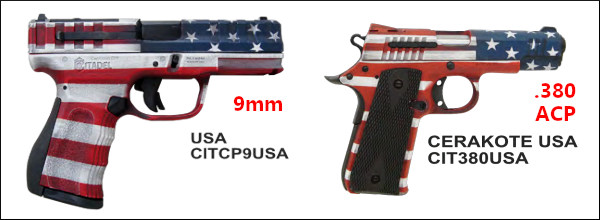
The Citadel handgun collection offers the USA Flag pattern in the Citadel .45 ACP full size 1911 pistol, the Citadel CP9 9mm series, and the Citadel 1911-style compact .380 ACP series.
Howa TSP X Chassis Rifle
The Howa TSP X Chassis rifle has a Cerakoted T-6 Aluminum Chassis and excellent adjustable, 2-stage HACT trigger. This rifle comes with a sub-MOA guarantee and Lifetime Warranty. The patriotic TSP X rifle is offered in four chamberings: 6.5 Creedmoor, 6.5 PRC, .308 Win, and 300 PRC.
CITADEL Stars and Stripes Shotguns
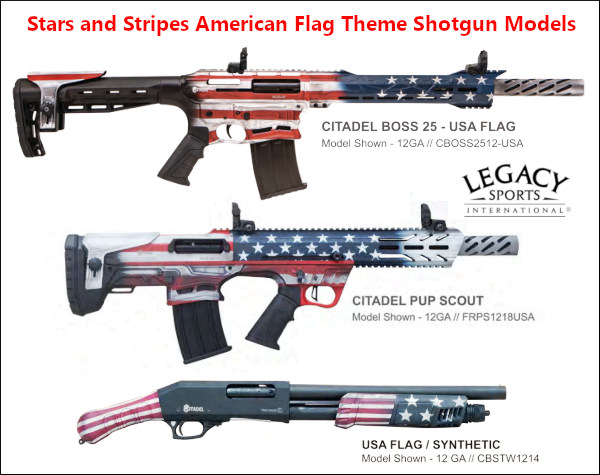
Legacy International offers three different 12ga shotguns with handsome Stars and Stripes stock coverings. The Citadel Boss 25 is a modern mag-fed shotgun with AR-type ergonomics. The Citadel Pup Scout also feeds from a detachable magazine, but located in a rear position behind the hand grip. This allows a more compact OAL even with a proper barrel length. Citadel’s smallest shotgun offering is the 12ga short-barrel pump-gun with 14.75″ barrel and 5+1 capacity.
CITADEL American Flag Pistol Collection
• 1911 .45 ACP (large photo) | • Centurian CP9 9mm Series | • 1911 .380 AUTO
PDF Product Catalog Available CLICK HERE to view full Howa/Citadel Product Catalog with all patriotic color options. The Citadel Trakr .22 LR Rimfires and Boss 25 shotgun are also available in the USA Flag and Grayscale options. Cerakoted ammo cans in the USA Flag and Grayscale Flag are available with the Citadel handguns.
Widener’s Reloading & Shooting Supply has published a helpful introduction to reloading powders. Widener’s online Guide to Smokeless Powders shows the various types of powders, and explains how the differences in powder kernel/flake size and shape, and burn rate affect performance. We recommend you visit Widener’s website and read the Powder Guide in full.
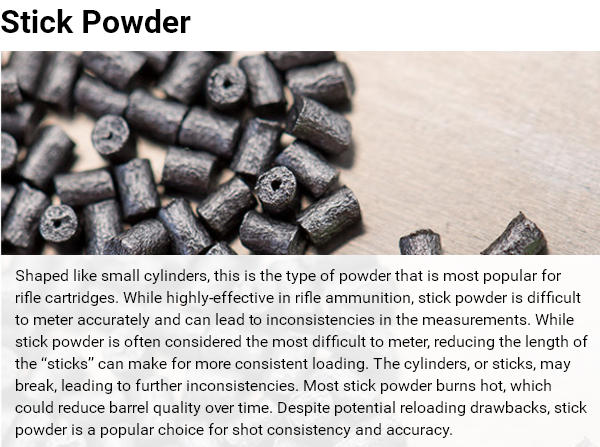
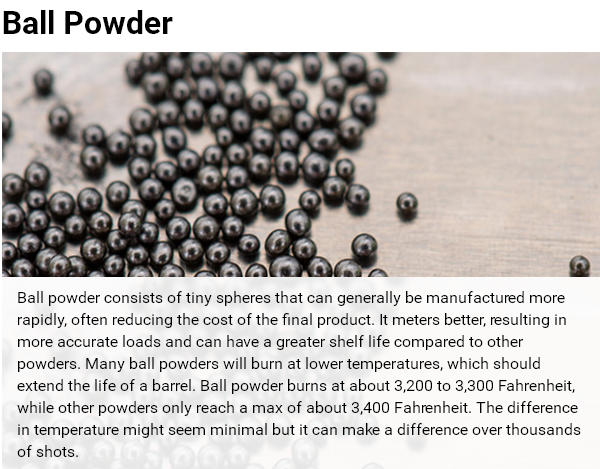
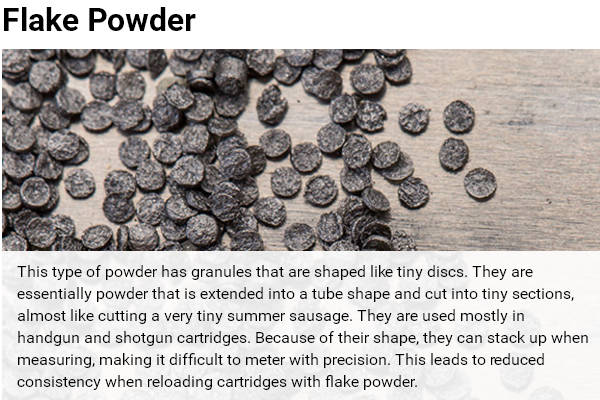
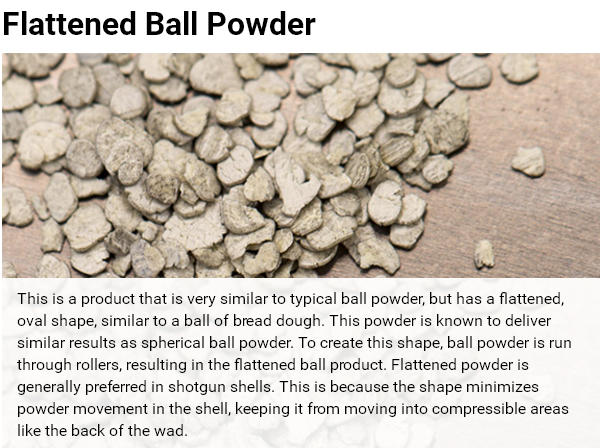
Take a close look at these illustrations which show the key differences between the four main powder types: extruded (stick) powder, ball (spherical) powder, flattened ball powder, and flake powder.
Burn Rate Basics
Widener’s Guide to Smokeless Powders also has a useful discussion of Burn Rate (a confusing topic for many hand-loaders). Wideners explains: “While a gun powder explosion in the cartridge seems instantaneous, if you slow it down you will actually find that each powder has a different ‘burn rate’, or speed at which it ignites.” This video shows powders with two very different burn rates. Watch closely.
Different burn rates suit different cartridge types notes Widener’s: “In general a fast-burning powder is used for light bullets and low-speed pistols and shotguns. Medium-rate powders are used for magnum pistols, while high-velocity, large bore rifle cartridges will need slow powders[.]
It should be noted that burn rate does not have a standardized unit of measurement. In fact, burn rate is really only discussed in comparison to other powders; there is no universal yardstick. Specifics will change by cartridge and bullet types[.]”
More and more folks are using Burris Signature Rings these days. These unique rings feature polymer inserts. That allows you to pre-load some elevation in your scope set-up, or you can center-up the windage. Additionally, the polymer inserts hold your scope securely without leaving marks on the tube. Lastly, some folks believe that Signature rings may offer advantages for benchrest competition. Rodney Wagner shot a world-record 600-yard group using Burris Signature Zee Rings (“Zee” denotes the Weaver-rail model). James O’Hara set multiple IBS 1000-yard records using Burris Signature Zee Rings. James will tell you he thinks “all his guns seem to shoot best with these rings”.
IBS World Record Set with Signature Zee Rings
Are Signature Zees good enough for competition? Absolutely. Some folks scoff at these Burris rings, given their modest price. A set of 1″-diameter Sig Zees cost $43.10 at Midsouth. But consider this, in 2013 Rodney Wagner shot the then-smallest 600-yard group in history, a 0.336″ 5-shot stunner, using Signature Zee Rings on his IBS Light Gun. It took five years for a smaller 600-yard group to be shot, a 0.311″ by bullet-maker Bart Sauter, using his IBS Heavy Gun. (See IBS 600-yard Records.) Here’s Rodney with his record-setting rifle, fitted with affordable Signature Zee 30mm rings.
Vendors Have Burris Signature Rings in Stock Now
Various models of Burris Signature Rings are available from many online vendors. NOTE: You may have to check with more than one seller to get the exact size, height, and model you prefer. But right now these vendors have pretty good selections of Signature Zees in stock now, including the popular 30mm High and 30mm Extra High models (each currently $59.37 at Midsouth). If you check all three sellers, you’ll probably find what you need.
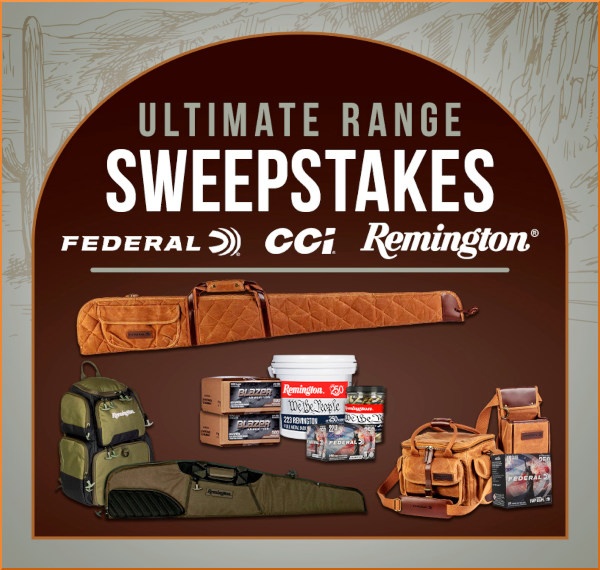
Ultimate Range Sweepstakes — FREE to Enter
Are you feeling lucky? MidwayUSA is currently running a cool contest with nearly $2800 in prizes. This Ultimate Range Sweepstakes includes excellent range bags, gun cases, plus a large selection of rifle, pistol, and shotgun ammo. Prize products are supplied by Federal, CCI, and Remington. ENTER Here.
You don’t have to pay a penny to enter — no purchase is necessary. Simply provide your name and email address. CLICK HERE for complete contest rules. The winner(s) will be determined by a random drawing by MidwayUSA on or about August 01, 2026.
Here is the PRIZE PACKAGE with Ammo, Gun Cases, and Gear:
One (1) Remington USA 250th We The People Edition .22 LR Ammo 33gr Plated Hollow Point Case of 2500
One (1) Remington USA 250th We The People Edition .223 Remington Ammo 55gr FMJ Case of 1000
One (1) Federal Premium Champion USA 250th Edition .22 LR Ammo 36gr Plated HP Case of 2500
Two (2) Federal Premium Top Gun USA 250th Edition 12 Ga Ammo 2-3/4″ #8 Lead Shot Case of 250
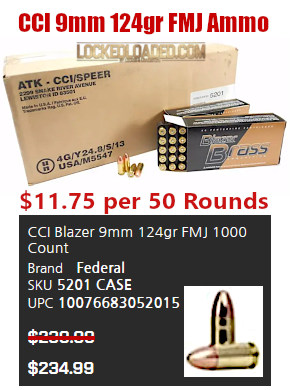
Two (2) CCI Blazer Brass 500-count boxes of 9mm Luger Ammo 115 Grain FMJ Ammo
One (1) Remington First in Field Scoped Rifle Case
One (1) Federal Premium Shotgun Case
One (1) Federal Premium Shell Pouch
One (1) Federal Premium Range Bag
One (1) Remington Range Backpack
One (1) Federal Heritage Patch Hat
One (1) CCI 75th Anniversary Hat
One (1) Remington Eagle Hat
One (1) CCI Trio Can Cooler
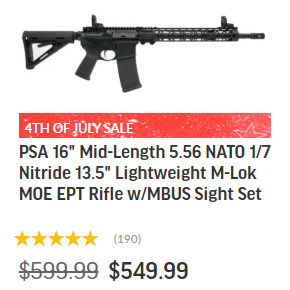
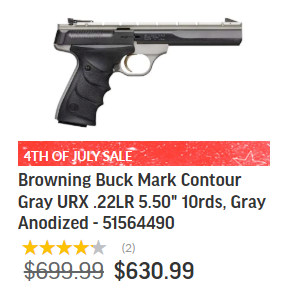
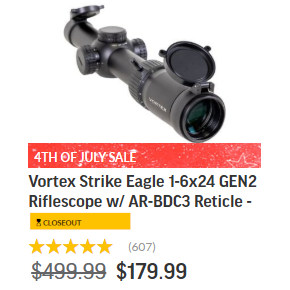
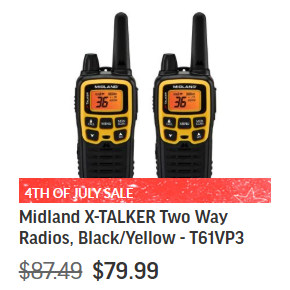
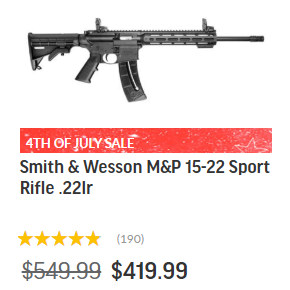
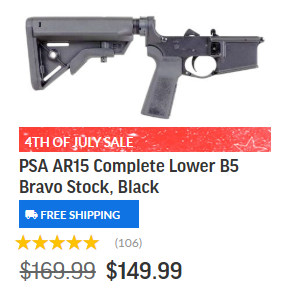
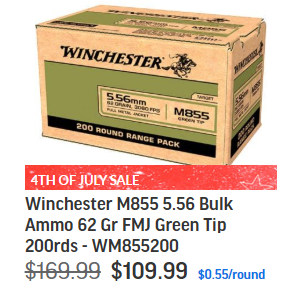
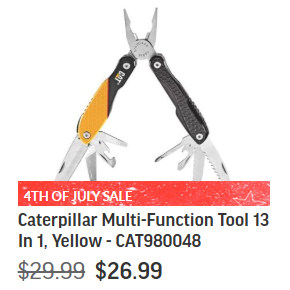
Palmetto State Armory is running an Independence Day Sale now through July 5, 2026. You’ll find major savings on popular guns, gear, and accessories. This is a great time to shop if you’re looking for ARs, tactical gear, and bulk ammo.
Palmetto State Armory Independence Day SALE Dozen Deals
Here are 12 great deals we found, with discounts up to 63%.
Along with these spotlighted Dozen Deals, there are hundreds of other products on sale — guns, ammo, optics, actions/lowers, stocks, bipods, knives, tools, hunting gear, camping gear and more. CLICK HERE to see ALL sale items.
Serious riflemen know that Krieger makes outstanding centerfire barrels that hold world records and have won many National Championships. But did you know that Krieger makes great rimfire barrels too? Well, Krieger does make outstanding .22 LR rimfire match barrels that can deliver impressive accuracy.
Sniper’s Hide moderator “Padom” recently tested a variety of rimfire ammo types, employing five different barrels: Krieger, Bartlein, Benchmark, Lilja, and Green Mountain. He tested at both 50 yards and 100 yards. FULL Rimfire TEST REPORT HERE.
Reporting on the 50-yard test, Padom posted: “Had a virtually dead calm day today for 50-yard RimX testing (Keystone Accuracy RimX barreled action with 1:16″ Krieger 20″ barrel). A few infrequent 3 mph gusts but pretty dead [calm] and the target showed. This Krieger just barely edged out the Bartlein by 0.003″ with a 0.177″ 6×5 with SK Rifle Match. The 10×5 was 0.198″. The best lots of Center-X weren’t far behind either. This is the first Krieger rimfire [barrel] I’ve shot and it didn’t disappoint.”
Padom noted: “Winds were much calmer tonight than this morning so the 100-yard Krieger test was a success. Winds were pretty consistent [at] 3-5 mph.”
Test Results at 100 Yards
Padom then tested ammo at 100 yards, again using his Krieger rimfire barrel: “To recap, the Krieger shot the best 50-yard results of the barrels tested so far, just barely beating the Bartlein but it was so close you can call the 50-yard results equal (.005). Well the Krieger beat all the barrels tested to date at 100 yards by a pretty good margin with Center-X. The 10×5 was incredible as well at just barely over 0.6″ showing the results were very consistent. A second lot of Center-X was right there with the previous 100-yard 6×5 best results just barely over 0.6. The third lot of Center-X shot a respectable 0.75″ 6×5. This Krieger sure is shooting very nicely. I’m really looking forward to shooting it at 300 and 400 yards[.]”
Components Tested: 20″ Krieger M24 barrel, .22 LR Match Eachus chamber 0.046 headspace, Zermatt RimX Action, Bix’N Andy TacSport Pro 2-Stage Trigger, RimX 10rd magazine, XLR Envy Pro Folding Chassis, Athlon Cronus BTR 4.5-29x56mm MIL scope.
Shooting Set-up: 100 Yards Prone with Bipod and Rear Bag.
On some internet shooting forums, self-declared “experts” advise new rifle shooters to stick to low-end factory rifles. These “experts” (many of whom don’t own a single really accurate rifle), claim that it will take years for a new shooter to learn how to shoot a rifle accurately. So, the argument goes, the accuracy offered by a precision-chambered rifle, with a custom barrel, is “wasted” on a new shooter.
We disagree with that viewpoint, at least when it comes to rifles shot from a rest. We’ve seen relatively new shooters, with help from a skilled mentor, do remarkably well with precision rifles right from the start. With a good bench gun, many new shooters can shoot well under 1 MOA on the first day. Certainly it takes time for a complete novice to learn how to handle the gun and to work the trigger smoothly. However, this editor has personally seen some inexperienced shooters try their hand at benchrest shooting, and within few month they are doing very well indeed at club shoots.
Accurate Rifles Reward Progress As Novices Build Skills
For bench shooting, we think a highly accurate rifle is a much better training device for a new shooter than a typical, cheap factory sporter. With a gun capable of 1.5-2.0 MOA at best, you can never really determine if a “flyer” is you or the gun. Conversely, when a novice shoots a gun that can put 5 shots through one ragged hole, if a shot goes way high or low, the shooter knows his aim, trigger control, or gun-handling is to blame. He (or she) can then correct the problem. And when the shooter does everything right, he or she will see a nice tight group on the target. The accurate rifle provides more meaningful feedback and it rewards progress. That helps the novice become a better shooter in a shorter period of time.
A while back, Forum Member Preacher and his “bunny hugger” niece from California proved this point. The young lady, with almost no shooting experience, took Preacher’s 6-6.5×47 and shot a sub-quarter-MOA, 3-shot group at 350 yards. Don’t tell her she needs to stick to a cheap factory rifle. Preacher reports: “My niece flew in from the west coast and came up to visit. When she saw a few of my full-blown varmint rifles, she wanted to shoot one. She did a super job even if she IS a ‘bunny hugger’. She pulled the 1.5 ounce Jewell on a few fired cases to check out the trigger pull and then got in behind the gun and put three shots into a 350-yard target with a one-inch circle.” We measured her group at 0.822″ (0.224 MOA). Don’t tell Preacher that accuracy is “wasted” on novices. He joked: “I sure don’t want her shooting at me ….”
Rifle Features BAT Action, Krieger Barrel, and Russo Laminated Stock:
For those who are interested, Preacher’s rifle features a BAT 3-lug action, 30″ Krieger 7.5-twist heavy contour barrel, and Russo stock (with clear coat by Preacher). Chambered in 6-6.5×47 Lapua, this gun “shoots the 108gr Bergers very well” according to Preacher. Yep, we agree with that — even when a novice “bunny-hugger” does the trigger-pulling.
At the request of our readers, we provide select “Deals of the Week”. Every Sunday afternoon or Monday morning we offer our Best Bargain selections. Here are some of the best deals on firearms, hardware, reloading components, optics, and shooting accessories. Be aware that sale prices are subject to change, and once clearance inventory is sold, it’s gone for good. You snooze you lose.
NOTE: All listed products are for sale to persons 18 years of age or older. No products are intended for use by minors.
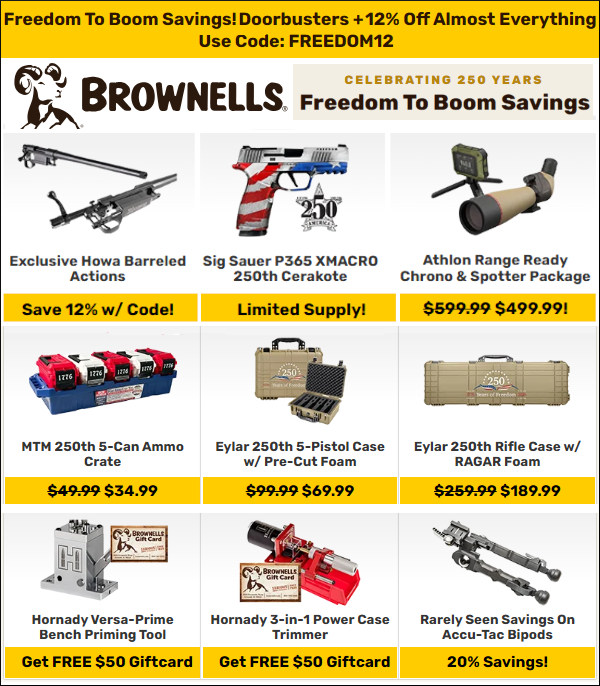
Brownells – Freedom Sale + 12% Savings with Code FREEDOM12
⏺️ » Major savings on products plus 12% OFF with CODE FREEDOM12
Brownells is running a major Freedom to Boom Sale this week in preparation for July 4 and the nation’s 250th anniversary. A wide variety of products are on sale, including Howa barreled actions, Athlon chronographs, and AccuTac bipods. PLUS you can save 12% on most products with code FREEDOM12.
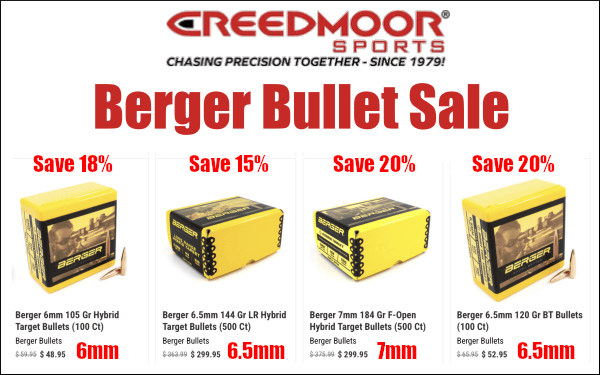
Creedmoor Sports — Berger Bullet Sale
⏺️ » Great Berger bullets for all popular calibers, 15-20% OFF
Need great match bullets? Check out the current Berger Bullets Bargain Bunker Sale at Creedmoor Sports. If you compete in PRS/NRL, Silhouette, or F-Class you probably shoot Berger Bullets and if you don’t you should probably try them. They rank among the highest quality, most consistent bullets available and have won more titles than just about any bullet out there.
As an Amazon affiliate, this site can earn revenues through sales commissions.
Protect Your Hearing — Wear Protection Whenever You Shoot
Noise-induced hearing loss and tinnitus are two of the most common afflictions for recreational shooters and hunters. Everyone knows that gunfire is loud, but very few people understand the repercussions that shooting can have on their hearing until it’s too late.
The better quality suppressors can reduce the noise of a gunshot by 20 to 35 decibels (dB). Good muffs or plugs will reduce sound by 23 to 33 dB. By decreasing the overall sound signature, suppressors help to preserve the hearing of recreational shooters and hunters. Even the most effective suppressors, on the smallest and quietest calibers (.22 LR) reduce the peak sound level of a gunshot to between 110 to 120 dB. To put that in perspective, according to the National Institute for Occupational Safety and Health (NIOSH), that is as loud as a jackhammer (110 dB) or an ambulance siren (120 dB). For normal caliber handguns and rifles, suppressed sound levels routinely exceed 130 dB, just shy of OSHA’s “hearing safe” threshold of 140 dB.
According to Dr. William W. Clark, the current Director of the Washington Univ. School of Medicine’s Audiology/Communication Sciences Program, a “serious threat to hearing comes from recreational hunting or target shooting”. This is in large part due to the fact that many people choose not to use traditional hearing protection devices like earplugs and earmuffs because they want to be able to hear their surroundings. Multiple studies have found that between 70 to 80% of hunters never wear earplugs or earmuffs, and nearly half of all target shooters don’t consistently wear traditional hearing protection. Thus, it should come as no surprise that for every five years of hunting, hunters become seven percent more likely to experience high frequency hearing loss.
This article is based on information from the American Suppressor Association (ASA). Since the ASA’s formation in 2011, three additional states have legalized suppressor ownership and 18 states have legalized suppressor hunting. For more information, visit www.AmericanSuppressorAssociation.com.


 Verifying Scope Level With Tall Target Test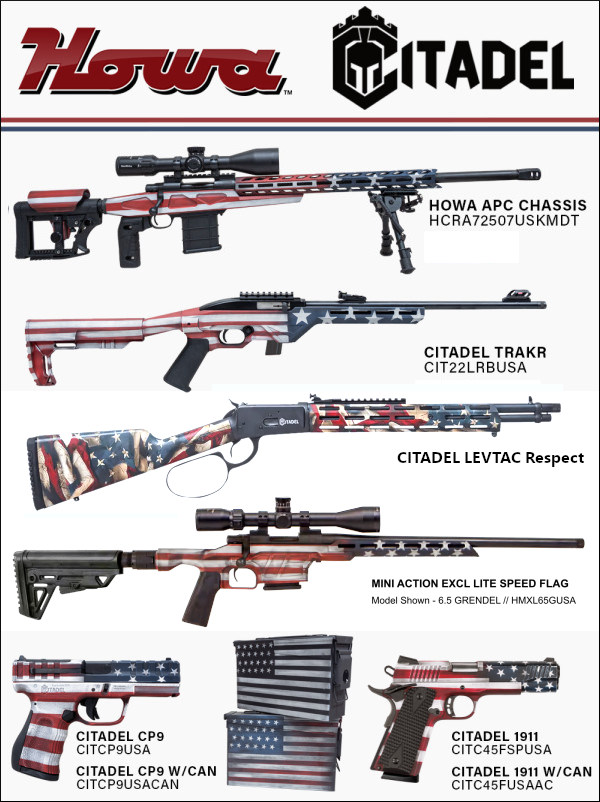




 More and more folks are using Burris Signature Rings these days. These unique rings feature polymer inserts. That allows you to pre-load some elevation in your scope set-up, or you can center-up the windage. Additionally, the polymer inserts hold your scope securely without leaving marks on the tube. Lastly, some folks believe that Signature rings may offer advantages for benchrest competition. Rodney Wagner shot a world-record 600-yard group using Burris Signature Zee Rings (“Zee” denotes the Weaver-rail model). James O’Hara set multiple IBS 1000-yard records using Burris Signature Zee Rings. James will tell you he thinks “all his guns seem to shoot best with these rings”.



 Test Results at 100 Yards