The last half-inch or so of your barrel is absolutely critical. Any damage (or abnormal wear) near the crown will cause a significant drop-off in accuracy. Here are ways you can check the end of your barrel, using a common Q-Tip.
Use Q-Tip for Barrel Inspection
To find out if you have a burr or damage to your crown, you can use an ordinary Q-tip cotton swab. Check the edges of the crown by pulling the Q-tip gently out past the edge of the crown. If you have a burr, it will “grab” the cotton and leave strands behind.
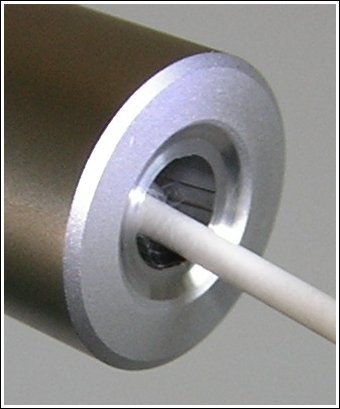
Larry Willis has another way to use a Q-Tip: “Here’s a neat trick that will surprise you with how well it works.” Just insert a Q-Tip into your barrel (like the picture below), and it will reflect enough light so that you can get a real good look at the last half inch of rifling and the crown of your barrel. In most cases you’ll find that this works much better than a flashlight. Larry tells us: “I’ve used this method about a jillion times. Q-Tips are handy to keep in your cleaning supplies anyway. This is a good way to judge approximately how well you are cleaning your barrel when you’re at the range. It’s also the best way to examine your barrel when you’re in the field.”
Garmin Ltd. (NYSE: GRMN) has acquired Applied Ballistics LLC, a leading provider of ballistic research, projectile data, and integrated solver technologies dedicated to enhancing accuracy. The acquisition will advance Garmin’s product offerings for tactical, shooting sports, and hunting markets.
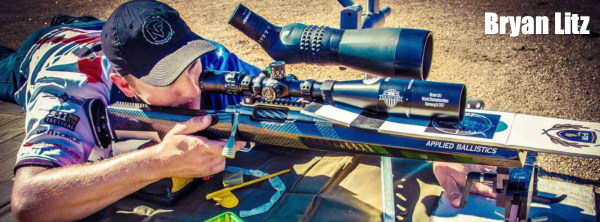
Applied Ballistics LLC was founded by Bryan Litz, a scientist and software expert who is also a top-level marksman who has won major championships. Bryan is both a great shooter AND a ballistics wizard. In 2015, Bryan Litz won the F-TR Mid-Range AND Long-Range National Championships hosted at Ben Avery. And at the 2014 Berger SW Nationals (SWN), Bryan took top honors among all sling shooters. If you only know Bryan Litz from his Applied Ballistics Books and DVDs, you may not realize that Bryan is also a great rifle shooter along with being an actual rocket scientist.
“Applied Ballistics is a natural complement to Garmin’s outdoor and tactical product portfolio. Building on a successful relationship spanning nearly 10 years, this acquisition brings industry-leading software, proprietary projectile data and precision firing solutions in-house. By bringing our teams together, we can accelerate innovation and deliver even more capable, integrated solutions to customers who depend on accuracy.” — Brad Trenkle, Garmin Co-Chief Operating Officer
Applied Ballistics develops professional-grade ballistic solvers and radar-validated projectile models for hunters, competitive shooters and other long-range customers. The company continues to expand its ecosystem of connected products, helping users improve accuracy, better understand their equipment and share trusted ballistic data across devices and applications—providing an unparalleled, science-based approach to long-range shooting.
Headquartered in Howard City, Michigan, the Applied Ballistics portfolio includes the Applied Ballistics Quantum App, a premier ballistic solver and data management program favored by top shooters worldwide.
How to Employ AB Quantum Software — Getting Started
In this video, Bryan Litz offers an informative guide on getting started with AB Quantum™. Bryan demonstrates the essential setup process: building an accurate profile, establishing your zero, and verifying the data at 100 yards. Bryan then uses the verified profile to shoot a successful group at 1000 yards.
About Garmin International Inc.
Garmin products have revolutionized the aviation, automotive, fitness, marine and outdoor markets. Garmin produces hand-held GPS units, Vehicle GPS systems, Smart watches, Marine Radars, Flight Displays, and many other products used by hunters, marksmen, boaters, pilots, and outdoor enthusiasts.
Garmin International, Inc. is a subsidiary of Garmin Ltd. which is incorporated in Switzerland, with its principal subsidiaries are located in the United States, Taiwan, and the United Kingdom. Garmin is a registered trademark of Garmin Ltd., all rights reserved.
Today we share some smart tips from a past F-Class and Sling Champion who is both a great shooter AND a ballistics wizard. Founder of Applied Ballistics LLC, Bryan Litz is the author of multiple books and creator of advanced Ballistics Software.
Bryan is also a highly skilled competitor. In 2015, Bryan Litz won the F-TR Mid-Range AND Long-Range National Championships hosted at Ben Avery. And at the 2014 Berger SW Nationals (SWN), Bryan took top honors among all sling shooters. If you only know Bryan Litz from his Applied Ballistics Books and DVDs, you may not realize that this guy is a also great marksman along with being an actual rocket scientist!
Given his impressive track record in both F-Class and Palma (Fullbore) out to 1000 yards, we asked Bryan if he had any advice for other long-range competitors.
First Bryan provided three tips concerning Ballistics, his special area of expertise. Next Bryan offered three more general tips about long-range competition — how to analyze your shooting, how to choose your ‘wind strategy’, and how to avoid the most costly mistakes, i.e. how to avoid the “train-wrecks”.
Bryan Litz won the 2015 F-TR Mid-Range and Long-Range Championships with this sleek rig:
Litz Ballistics Tips
Ballistics TIP ONE. If you’re having trouble getting your ballistic software to match actual drops, you need to look at a number of possible reasons. Here are some common issues that can cause problems.
Click Values Are Not Exact. Scopes and iron sights don’t always produce accurate adjustments. In other words, if your ballistics program predicts 30 MOA of drop, and you dial 30 MOA but hit low, it might be that your sight actually only moved 28 MOA (for example). To see if your sight is adjusting accurately, shoot a tall target at 100 yards and measure group separation when dialing your sight.
Barometric vs. Station Pressure. This is a commonly misunderstood input to ballistics programs. You can avoid this pitfall by remembering the following: station pressure is the actual measured pressure at your location, and you don’t need to tell the program your altitude when using station pressure. Barometric pressure is corrected for sea level. If you’re using barometric pressure, you also have to input your altitude.
Muzzle Velocity. Chronographs are not always as accurate as shooters think they are — your true MV may be off by 10-20 fps (or more). If your drop is different than predicted at long range, it might be because your muzzle velocity input is wrong.
Mixing Up BC (G1 vs. G7). Knowledgeable long range shooters know that the G7 standard is a more representative standard for modern LR bullets. However, using G7 BCs isn’t just a matter of clicking the ‘G7′ option in the program. The numeric value of the BC is different for G1 and G7. For example, the G1 BC of the Berger 155.5 grain Fullbore bullet is .464 but the G7 BC is .237. If you were to enter .464 but click on G7, the results would be way off.
Ballistics TIP TWO. A properly installed level is absolutely essential for long range shooting. Without a good level reference, your long range wind zero will be off due to minor canting of the rifle from side to side. You can verify that your level is installed correctly on a 100-yard ‘tall target’. Draw a plumb line straight up the target and verify that your groups track straight up this line as you go up in elevation.
Ballistics TIP THREE. If your long range ballistic predictions aren’t tracking, always come back and verify your 100-yard zero. Sometimes a simple zero shift can be misconstrued as errors in long range ballistics predictions.
Litz Competition Shooting Tips
Competition TIP ONE. Improving your scores in long range competition is a constant process of self-assessment. After each match, carefully analyze how you lost points and make a plan to improve. Beginning shooters will lose a lot of points to fundamental things like sight alignment and trigger control. Veteran shooters will lose far fewer points to a smaller list of mistakes. At every step along the way, always ask yourself why you’re losing points and address the issues. Sometimes the weak links that you need to work on aren’t your favorite thing to do, and success will take work in these areas as well.
Competition TIP TWO. Select your wind shooting strategy carefully. For beginners and veterans, most points are typically lost to wind. Successful shooters put a lot of thought into their approach to wind shooting. Sometimes it’s best to shoot fast and minimize the changes you’ll have to navigate. Other times it’s best to wait out a condition which may take several minutes. Develop a comfortable rest position so you have an easier time waiting when you should be waiting.
Competition TIP THREE. Actively avoid major train wrecks. Sounds obvious but it happens a lot. Select equipment that is reliable, get comfortable with it and have back-ups for important things. Don’t load on the verge of max pressure, don’t go to an important match with a barrel that’s near shot out, physically check tightness of all important screws prior to shooting each string. Observe what train wrecks you and others experience, and put measures in place to avoid them.
Looking down-range with F-TR rifle at Ben Avery Shooting Facility in Phoenix, Arizona.
Bullet Stability and Twist Rates
In this video, Bryan Litz talks about bullet in-flight stability and how to calculate barrel twist-rate requirements for long-range bullets. Bryan explains that bullet stability (for conventional projectiles) is basically provided by the spinning of the bullet. But this spin rate is a function of BOTH the nominal twist rate of the barrel AND the velocity of the projectile. Thus, when shooting the same bullet, a very high-speed cartridge may work with a slower barrel twist rate than is required for a lower-speed (less powerful) cartridge. For match bullets, shot at ranges to 1000 yards and beyond, Bryan recommends a twist rate that offers good stability.
You’ll find more expert information on long-range shooting and ballistics on the Applied Ballistics website and the Bryan Litz Ballistics Facebook page. Bryan’s most recent Facebook post talks about the Coriolis effect — the apparent drift of a rifle trajectory due to the rotation of the earth.
To learn more, we recommend you subscribe to the Applied Ballistics Science of Accuracy — with in-depth articles, brilliant podcasts, exclusive videos and more.
Ever wondered what the air around a moving supersonic bullet really looks like? Check out this video from the Bryan Litz Ballistics Facebook page. This is a Schlieren video* of a 6mm 109gr Berger LRHT bullet at about 2800 fps as fired from Francis Colon’s PRS rifle at the Applied Ballistics Lab.
Bryan Litz notes: “You can clearly see the compression (shock) wave at the front of the bullet. A compression wave is formed when the air has to move faster than the speed of sound to get out of the way, which is certainly the case for this bullet which is moving about 2.5 times the speed of sound (Mach 2.5).
That shock wave is the ‘snap’ you hear when bullets fly past you if/when you’re downrange. Also, compressing the air into a shockwave takes energy, and that energy comes directly out of the forward velocity of your bullet and gets converted into heat and noise as the shock wave forms and dissipates.
The turbulent wake at the base of the bullet shows where/how base drag applies. The third and smallest component of drag for a supersonic bullet is skin friction drag, which is a viscous boundary layer effect, and is the least visible in this image. So as you head to the range or the hunting stand, think about the absolute violence your bullets are committing in the atmosphere, before they even reach the target!”
Want to learn the basics of position shooting? Then you should check out an article by Gary Anderson, DCM Emeritus, in On the Mark digital magazine (Summer 2014, pp. 6-13). This article covers all the key elements: body position (prone, sitting, standing), sling use/adjustment, sight picture, aiming process, and trigger control. While this 8-page article was specifically written for Rimfire Sporter shooters, the techniques described by Anderson apply to all types of position shooting, whether you shoot air rifles, smallbore rifles, or centerfire rifles.
Here’s what Anderson says about aiming — how to keep your sights steady and get them centered on the middle of the target:
Trigger Contact and Center As soon as aiming at the target begins, the index finger must move from the trigger-guard to contact the trigger. It is important to get initial pressure on the trigger as soon as aiming begins. Then the shooter must focus on the sight picture and centering the sight picture movements over the aiming point. No one, not even champion shooters, can hold the aligned sights perfectly still. The sights are going to move a little bit or a lot, depending on the shooter’s skill level. The secret is to center those sight picture movements over the aiming point on the target (see trace illustration) before pulling the trigger.
When the sight picture movements on the target are centered, the last step in firing the shot is to add… smooth pressure on the trigger until the shot breaks.
Anderson also discusses the 5 Basics of Shot Technique:
Whether you should from the bench, or from prone, it’s great to have your cartridges in a convenient, easy-to-reach position. This article explains how you can build your own height-adjustable ammo caddy for a very low price (likely under $10.00). Credit Martin Tardif for this great Do-It-Yourself (DIY) project. Martin’s flex-arm caddy design works great for F-Open competitors as well as anyone who shoots with a pedestal front rest, either on the ground or from a bench. The ammo caddy attaches, via a flexible arm, to your front rest. The flexy arm allows you to position your ammunition close to your rifle’s feeding port. That makes it easy to grab cartridges and load them into the chamber without shifting your shooting position.
Kudos to Martin Tardif for his clever use of inexpensive materials when he crafted this ammo-caddy a few seasons back. The total cost of the whole project, according to Martin, was just $8.00! (With inflation, materials could run a bit more these days, but the project would still be very inexpensive.)
Martin Explains How to Build the Ammo Caddy
Here are some pics of my DIY P.L.A.B. (Port Level Ammo Block). I cannibalized the goose neck from a Craftsman bendy-style utility light and bought a 3.5″x 1″ Acetal disk on eBay. I then drilled out the disk to accept twenty .284 Winchester rounds and screwed the disk to the bendy arm. The arm, by itself, wasn’t sturdy enough to support my fully loaded ammo block, so I inserted a 1/8″-diameter steel rod cut to length into the arm before I screwed it to the disk. On this Bald Eagle rest, I wasn’t using the windage adjustment cable. That allowed me to secure the bottom end of the arm to the unused 5/16″ x 18 bolt hole for the cable. [Editor’s Note: For other pedestal rest types/brands you may need to drill a hole for the base of the flexy arm.]
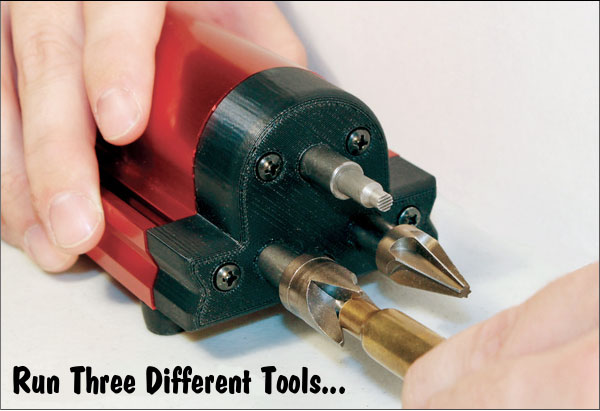
Nobody likes to spend hours manually chamfering cases and cleaning primer pockets. There are simple hand tools that will perform these tasks, but the process is time-consuming and tedious after a couple dozen cases. To speed up case prep duties, you can get one of the large, powered case prep centers. These function well, but frankly we didn’t want to give up that much precious space on our reloading bench. One good solution is Hornady’s compact Lock-N-Load Case Prep Trio (item 050160). This triple-threat tool packs a lot of functionality in a small package.
This cleverly-designed powered tool has a small footprint, yet it can perform three tasks as well as much more expensive, tower-style case prep units. The versatile Hornady Case Prep Trio is $139.99 at Brownells, $139.99 at Midsouth, and $155.95 on Amazon. We’ve used this machine and it works well. The only negative is that you will get metal shavings on your bench (unlike some of the larger case prep centers). We’ve seen some guys put a small pan under the power head — then you can just dump the shavings out of the pan.
With three active stations, you can chamfer, deburr and clean primer pockets without having to change tools. The Case Prep Trio ships with inside chamfer, outside chamfer, and deburr tools. You can also use the machine with other optional 8/32 threaded accessories such as primer pocket reamers, primer pocket uniformers, and case neck brushes. CLICK HERE to see all tool options. Conveniently, the Case Prep Trio has on-board storage for your tool-heads. User reviews have been very positive.
At the request of our readers, we provide select “Deals of the Week”. Every Sunday afternoon or Monday morning we offer our Best Bargain selections. Here are some of the best deals on firearms, hardware, reloading components, optics, and shooting accessories. Be aware that sale prices are subject to change, and once clearance inventory is sold, it’s gone for good. You snooze you lose.
NOTE: All listed products are for sale to persons 18 years of age or older. No products are intended for use by minors.
Sportsman’s Warehouse — Big September Sale
⏺️ » Big savings on hunting rifles, optics, packs and more
If you need gear for your fall hunt, definitely check out the major Outdoor Shooting Gear Sale running now at Sportsman’s Warehouse. There are big discounts up to 30% on hunting rifles, optics, rangefinders, hunting gear, carry packs and more. Save on products from leading brands including Smith & Wesson, Savage, Vortex, Leupold, and SIG Sauer.
MidwayUSA — Fall Bonanza Sale Plus FREE Shipping on $100+
⏺️ » Major savings on optics/hunting gear, FREE Shipping with $100+ orders
Right now MidwayUSA has a vast selection of gear on sale — everything a hunter might need for the fall hunting season. In addition to great deals on hunting rifles, you can save up to 64% on scopes, binoculars, trail cams, carry packs, gun cases, boots and more. Along with the big discounts, MidwayUSA is also offering FREE Shipping on $100+ orders.
As an Amazon affiliate, this site can earn revenues through sales commissions.
You can spend thousands on a rifle, but that expensive hardware won’t perform at its best if you have poor trigger technique. One key element of precision shooting is trigger control. Our friend Kirsten Joy Weiss has produced a good video that shows how to refine your trigger technique for better accuracy. In this video, Kirsten talks about the actual placement of a shooter’s index finger on the trigger. It is important to have the finger positioned optimally. Otherwise you can pull the shot slightly left or slightly right.
Kirsten tells us: “Finger placement on the trigger might not seem like a big deal, but it actually is. The reason for this is because, depending on where your index finger is placed on the trigger, [this] translates to different muscle interactions with the gun.” Watch this video to see Kirsten demonstrate proper finger placement (and explain problems caused by improper finger positioning).
When you pull the trigger, you only want to engage the last section of your finger, in order to avoid unwanted muscle engagement and to achieve a smooth shot. Remember there is a “sweet spot” between the crease (first joint) and the tip of the finger. If you position the trigger in that “sweet spot”, you should see an increase in your accuracy. Don’t make the mistake of putting the trigger in the crease of your finger, as shown below.
Effects of Incorrect Finger Placements
You want to place the trigger shoe between the end of your finger and the first joint. If you place the trigger on the very tip of you finger you’ll tend to push the rear of the rifle to the left when engaging the trigger, causing shots to go right (for a right-handed shooter). On the other hand, if you put the trigger in the crease (first joint), you’ll tend to bring the rear of the rifle to the right, causing shots to fall left. This is illustrated below for a right-handed shooter.
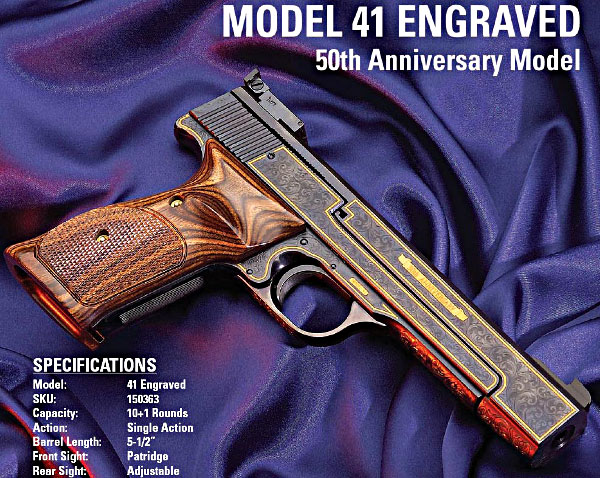
The Smith & Wesson Model 41 is a classic American rimfire target pistol. Beautifully crafted, the Model 41 boasts a superb trigger, comfortable grip, and excellent accuracy. New or used, a Model 41 is a fine addition to any firearms collection. We’ve shot a few Model 41s, and they will spoil you if you go back to a lesser rimfire pistol. First released commercially in 1957, a special 50th Anniversary Model (shown above top) came out in 2007 (hitting the market in 2008). Perhaps it should have been named the 60th Anniversary edition, as the first prototypes of the Model 41 were crafted way back in 1947. READ American Rifleman article about Model 41.
The Model 41 is one of those classic American designs that has stood the test of time. Many feel the Model 41 represents the apex of American .22 LR pistol design, much like the Colt Python is the “crown jewel” of double-action revolvers. One YouTube poster noted: “After [65] years the Model 41 is still near the top of the game in precision .22s. Very few if any of the current day pistols can match the workmanship, fit, and balance that makes having a Model 41 so enjoyable to own. S&W blew the center out of the 10 Ring with this one when they introduced it and continue to do so today.”
The Stunning 50th Anniversary Edition Model 41
Probably the most sought-after Model 41 is the handsome, machine-engraved 50th Anniversary Model, released in 2007. This was offered in a hardwood, glass-covered case. This would be a prized addition to any gun collection:
The 50th Anniversary Model was machine-engraved with Class A+ coverage, 24 carat gold striping, and special serial number range FYA0001 – FYA0500.
Of course, if you want a superb trigger in a .22 LR semi-auto pistol, look no further than the S&W Model 41. For $2000.00 to $3700.00 you can find the fully engraved, 50th Anniversary Model 41 in presentation case on various auction sights. First released in 2007, the engraved model 41 combines superior accuracy with stunning appearance.
Smith & Wesson Model 41 — An American Classic Rimfire Pistol
The Smith & Wesson Model 41 is an American classic — one of the great, iconic .22 LR target pistols. Accurate, well-balanced and built-to-last, model 41s have been in production for over 50 years. The Model 41 remains one of the most accurate pistols ever produced by Smith & Wesson.
Model 41 photo by Mightymoo01, creative commons released CC BY-SA 3.0.
Beautifully crafted, the Model 41 boasts a superb trigger, comfortable grip, and excellent accuracy. Whether an older classic or a newer model, the S&W Model 41 is something every gun owner would prize for target shooting. And “like new” high-grade models are now appreciating in value!
Smith & Wesson historian Roy Jinks recounts the development of the Model 41: “It was a difficult task to develop a competitive pistol that would meet the various needs of the top shooters. The final design was decided upon in 1956 and the new .22 target pistol was announced in Smith & Wesson’s 1957 Annual Report, stating: ‘Its design includes many advanced features, such as stocks equally suitable for right or left-hand shooters- a clean, crisp, trigger pull that is adjustable to individual preferences. The distribution of weight, together with the angle of the stocks, permits extremely steady off-hand holding. The precise micrometer sights are rigidly mounted on a one piece forged barrel to avoid any possible misalignment even after long usage.’ The handgun featured a 7 3/8-inch barrel equipped with a muzzle brake to help control recoil. The underside of the barrel was grooved to allow the addition of adjustable Olympic Style Barrel Weights. The trigger pull could be adjusted to allow for a 2-pound pull to meet the NRA Gallery Course requirement or increased to 3 pounds to meet the needs of the ISU International rules.
Smith & Wesson Model 41 with two extra slide/barrel assemblies, plus custom holster and mag holders. This sold on Cowan’s Auctions for $2640.00 in 2019.
Sales began in December of 1957 and the Model 41 was first cataloged in 1958. The factory was soon heavily back-ordered and [the Model 41] became the most popular auto-loading pistol offered by the company. In May of 1959 Smith & Wesson introduced a 5-inch lightweight barrel for the handgun to meet the demand of hunters[.] The line of Model 41s was further expanded in September of 1960 with the introduction of the Model 41-1 which fired .22 shorts for the International Rapid Fire Shooters. [I]n August of 1963 the company introduced the 5.5 inch heavy barrel. The last of the major barrel changes occurred in 1965 when the company produced the 5.5-inch heavy barrel with an extendable front sight to provide the shooter a longer sight radius. During the last 50 years the Model 41 has … established many records around the world. Today it is one of the classic target handguns[.]” READ MORE Model 41 History.
Field Test of Current Generation S&W Model 41
So how do modern production Model 41s shoot? Very well indeed, based on the results from popular gun Vlogger 22Plinkster. He took a new Model 41 to his test range and tested it for handling and accuracy. Watch the 22plinkster video below:
22plinkster runs of the most popular gun-centric YouTube channels. His videos have been watched by hundreds of thousands of firearms fans. Some of 22plinkster’s videos involve trick shots, but he’s actually a very competent marksman who has shot a vast collection of .22 LR/22 WMR pistols and rifles, making him a qualified rimfire expert.
Hickok45’s 30-Year-Old Model 41
Hickok45, a popular YouTube host, has been a fan of the S&W Model 41 since it was first released. In fact, back in 2020, Hickok45 celebrated his 30th year of ownership of this classic American rimfire. In this “Celebrating 30 Years” video, Hickok 45 demonstrates the qualities that have made the Model 41 so popular. He notes that it balances well, has an excellent trigger, and delivers superb accuracy. He observed: “What a great .22 LR pistol!”
Performance Center “Optics-Ready” Model 41
Do you prefer shooting pistols with a modern optic? Well check out the fully “Optics-Ready” S&W Performance Center Model 41. This modernized Model 41 PC has an integral Picatinny Rail mount for optics, plus adjustable target sights with a special skeletonized and removable front blade sight.
The Performance Center Model 41 sports an integral Picatinny-style equipment rail for easy installation of optics. Other standard features include an external thumb safety on the left side of the frame, custom wood target grips, and a blued finish. This full-size, 10-shot .22 LR pistol features a carbon steel frame and slide along with a 5.5-inch barrel. Measuring 10.5 inches in overall length, the Model 41 PC has an unloaded weight of 41 ounces. MSRP is $1763.00.
The S&W Model 41 History from Wikipedia
From Wikipedia: The Smith & Wesson Model 41 is a semi-automatic pistol developed by Smith & Wesson after World War II as a competitive target pistol. It was designed with a 105-degree grip angle, the same as the Colt M1911 pistol, to maintain a consistent grip angle.
Prototype and Production Models
In July 1947, two prototypes, numbered X-41 and X-42, were produced, tested, and improved for the next 10 years. In 1957, the Model 41 was made available to the public for sale when Smith & Wesson produced 679 units. At the end of 1958, they had built 9,875 Model 41 pistols. A lighter 5-inch (130 mm) barrel was offered in 1958 for field use. The Model 41-1 was introduced in 1960 and was chambered in .22 Short for International Rapid Fire competition. Only 1000 were made using light aluminum slides necessary for function with the lower powered .22 Short.
In August 1963, the 5-inch heavy barrel version came into the market. Stoeger’s Shooter’s Bible of 1964 shows a 7 3⁄8″ (190 mm) barrel grooved for Olympic center weights. The cocking indicator and 7 3⁄8″ barrel were dropped in 1978. The 7-inch (180 mm) barrel was introduced in 1978 with no provision for a muzzle brake. A 6-inch (150 mm) barrel was offered for a few months in 1991. In 1992, the Model 41 was dropped from production. In 1994, Smith & Wesson returned it to production as the Model 41 “New Model”.
The Model 41 Military Variant — S&W Model 46
In 1957, Smith & Wesson offered a “no frills” version of the Model 41, designated the Model 46. In 1959, it was selected by the U.S. Air Force for basic marksmanship training. About 4000 units were made in total: 2500 with a 7-inch barrel, 1000 with 5-inch barrels, and 500 with 5.5″ barrels. The pistol lacked the checkering, polished blue finish, and other refinements of the Model 41. It proved to be a commercial failure with consumers who preferred the more costly Model 41, and production ceased in 1966.


 The last half-inch or so of your barrel is absolutely critical. Any damage (or abnormal wear) near the crown will cause a significant drop-off in accuracy. Here are ways you can check the end of your barrel, using a common Q-Tip.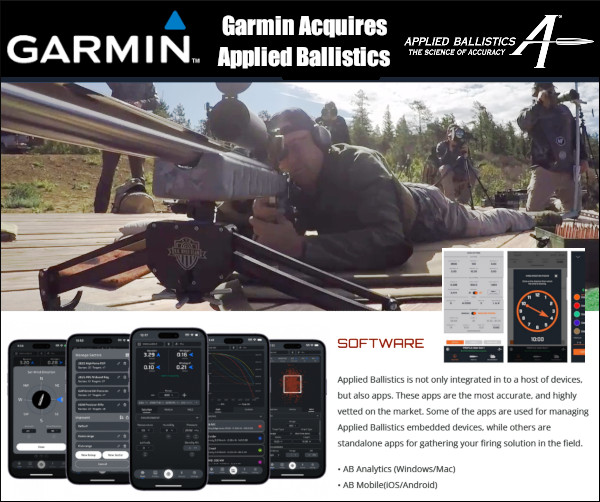




 As soon as aiming at the target begins, the index finger must move from the trigger-guard to contact the trigger. It is important to get initial pressure on the trigger as soon as aiming begins. Then the shooter must focus on the sight picture and centering the sight picture movements over the aiming point. No one, not even champion shooters, can hold the aligned sights perfectly still. The sights are going to move a little bit or a lot, depending on the shooter’s skill level. The secret is to center those sight picture movements over the aiming point on the target (see trace illustration) before pulling the trigger.












 Of course, if you want a superb trigger in a .22 LR semi-auto pistol, look no further than the S&W Model 41. For $2000.00 to $3700.00 you can find the fully engraved,


 The Performance Center Model 41 sports an integral Picatinny-style equipment rail for easy installation of optics. Other standard features include an external thumb safety on the left side of the frame, custom wood target grips, and a blued finish. This full-size, 10-shot .22 LR pistol features a carbon steel frame and slide along with a 5.5-inch barrel. Measuring 10.5 inches in overall length, the Model 41 PC has an unloaded weight of 41 ounces. MSRP is $1763.00.


