Hunting season kicks off this month in many parts of the USA. If you have a new hunting rifle or need to develop a load for your rig with a new choice of bullets and/or powder, this article can help. Ace shooter Keith Glasscock explains how to develop a good load for a hunting rifle or varmint rifle.
Keith is an outstanding competitive shooter, who has finished second at the F-Class National Championships (F-Open) multiple times. Keith is also a skilled wind coach who runs the popular Winning in the Wind YouTube Channel. Along with his interest in mid-range and long-range F-Class competition, Keith also enjoys game hunting and varmint adventures.
Developing accurate hand-loaded ammo for hunting and varmint rifles involves procedures that may be a bit different than load testing for a match rifle. You want to be efficient, and use the types of brass and bullets you’ll be using on the hunts. In two recent videos, Keith shows how he developed good, accurate loads for a .223 Rem varmint rifle and a .308 Win hunting rifle.
.223 Rem Load Development — Powder Charge and Seating Depth
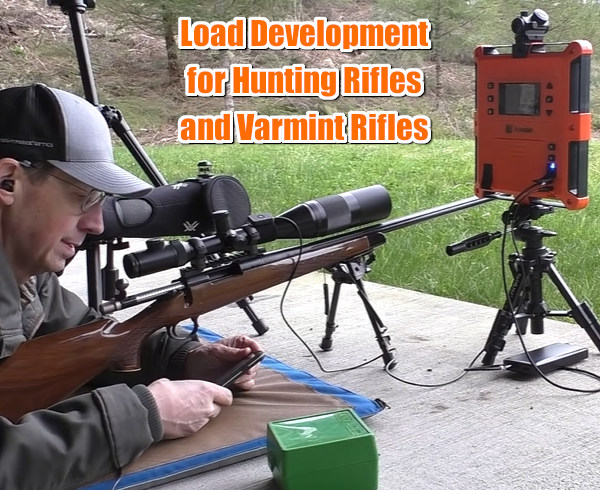
In the first video, Keith covers the load development process for a Remington 700 bolt-action varmint rifle chambered in .223 Remington. Keith starts by full-length sizing the brass. Then he experimented with powder charge weights, and came up with a promising load of 24.7 grains of Alliant AR Comp with Hornady 50gr A-Max bullets.
Next Keith experimented with seating depths (see 5:30-6:100) and found that accuracy improved as he changed OAL length in .005 increments. Keith ended up with 2.270″ with a 3-shot group in the twos! This video shows the importance of testing your bullet choice at various seating depths. Keith shoots this rig prone off bipod, which is similar to the bipod shooting he does in the varmint fields. Keith explains key factors to consider when optimizing the .223 Rem cartridge in a varmint rig. Velocity readings are made with a LabRadar unit.
Load Development for .308 Win Hunting Rifle
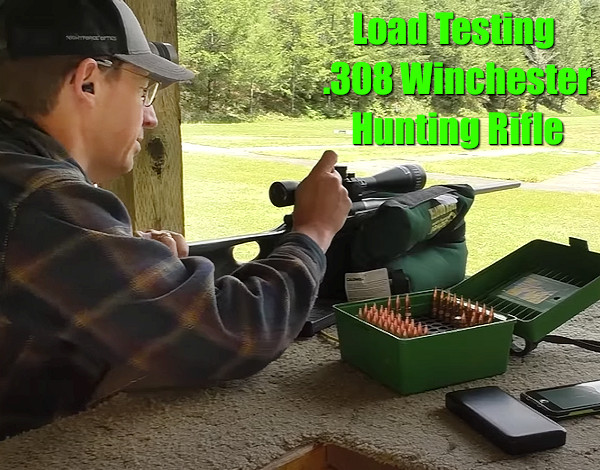
In a second video, Keith shows the process for load development with a .308 Winchester hunting rifle. Here Keith uses a large X-type sandbag for a front support. Again, he was shooting a Remington 700 bolt-action rifle, this time with Barnes TSX solid copper bullets, PPU Brass, Federal 210m primers, and AR Comp powder. Keith said the Barnes bullets were excellent — he commented that these bullets were “match quality in terms of precision”. Keith achieved some very small three-shot groups with AR Comp and the TSX projectiles. Keith did note that point-of-impact shifted up significantly with increases in charge weight (see 6:20-7:10). With thinner-contour hunting barrels, this is not unexpected. But POI change should be observed carefully during load development, as you may need to adjust your zero after completing testing.
Barnes Bullets has started a new Barnes Bullet Points podcast running on YouTube. Hosted by Barnes Bullets’ Marketing Mgr. Dale Evans, this podcast offers a behind-the-scenes look into the design and production of Barnes Bullets products along with use of Barnes Bullets in hunting and shooting sports.
The Barnes Bullet Points podcast will cover a variety of topics, blending technical and educational segments with real-world adventures and conversations with hunters and competitors. You can subscribe to the Barnes Bullets YouTube channel, follow on Spotify or Apple Podcasts. New podcasts will be released weekly. The first two podcasts are live now.
Episode 1: The History of Barnes
Barnes Podcast Number 1, The History of Barnes, was released last week. On the podcast, Evans is joined by Andrew Sparks and Gregg Sloan. The three men discuss Barnes Bullets’ origins, where it is today and what lies ahead. Together, they introduce both Barnes Bullets as a company and explain the Podcast goals.
Episode 2: Deep Dive into the Bullets
Podcast Episode 2 features Barnes bullet families. Listeners will learn more about the design features and performance of popular Barnes bullets. In this 75-minute podcast, Dale Evans is joined by Gregg Sloan and Mitchell Kukson. The three men discuss the features of Barnes TSX, TTSX, and LRX bullets. The podcast discusses how to select the optimal bullet type (for various scenarios), and the experts explain the performance you can expect to see from each. Watch this full 55-minute Podcast below:
“The Barnes Bullet Points podcast is a great resource for our loyal fans and end users to learn more about the brand, the products we offer and the people that help develop them”, said Evans.
Many of our readers have been interested in learning how modern bullets are made. While a “boutique” bullet-maker, supplied with appropriate cores and jackets, can craft bullets using relatively simple hand dies and manual presses, factory production is different. The major bullet-makers, such as Barnes, employ huge, complex machines to craft their projectiles on an assembly line.
Modern hunting bullets are made with a variety of sophisticated (and expensive) machines, such as Computer Numerical Control (CNC) lathes, giant multi-stage presses, and hydraulic extruding machines that draw lead ingots into lead wire. Barnes offers an “inside look” at the bullet production process in a series of videos filmed at its Mona, UT factory. We’ve embedded four videos from the series here. These videos can also be viewed on the Barnes Bullets YouTube Channel.
Milling Slots in TSX All-Copper Bullet
This video shows how the slots (between the drive bands) in the TSX all-copper bullet are cut. The slots reduce the bearing surface that contacts the rifling. This helps reduce friction and heat, extending the life of barrels used with all-metal, drive-band bullets:
Varminator Bullets Produced in Jumbo Transfer Press
Here is the transfer press used in the production of Varminator and MPG Bullets. The process begins with a giant spool of flat copper material. The copper is stamped into jackets and eventually the formed Varminator bullets are ejected one by one into a bucket.
CNC Lathe Turns Bullets Automatically
In the video below, a Bar-Feed CNC crafts mono-bloc bullets from metal bar stock. Barnes uses a small CNC lathe to turn .50-caliber bullets from brass bar stock. We’re not sure which bullet is being made in this video. The material looks to be sintered metal. In the close-ups you can gold-colored shavings from when the machine was previously used for CNC-turned brass bullets.
Accuracy Testing in 100-yard Tunnel
Barnes regularly tests bullet samples for accuracy. In the video below, a Barnes technician loads sample rounds and tests them for accuracy in a 100-yard tunnel. The rounds are shot through a special fixture — basically a barreled action connected to parallel rods on either side. This allows the testing fixture to slide straight back on recoil (see it move back at 1:07-08 minute mark).
Upside-Down Trigger — Application for Unlimited Benchrest Competition?
Note how the tester actuates the trigger, which points UPWARDS, just the opposite of a normal rifle. The technician lightly taps the upward-pointing trigger shoe with a metal rod. Could this upside-down trigger work in benchrest shooting — perhaps with railguns? It could make for an interesting experiment.
Story suggestion by EdLongrange. We welcome reader submissions.
At the request of our readers, we provide select “Deals of the Week”. Every Sunday afternoon or Monday morning we offer our Best Bargain selections. Here are some of the best deals on firearms, hardware, reloading components, optics, and shooting accessories. Be aware that sale prices are subject to change, and once clearance inventory is sold, it’s gone for good. You snooze you lose.
NOTE: All listed products are for sale to persons 18 years of age or older. No products are intended for use by minors.
1. Bullet Central — Bartlein Barrels In Stock
⏺ Avoid the wait — top-tier Bartlein barrels in stock
Getting competition-grade barrels typically requires long waits when ordering from the barrel-makers. But here’s good news — Bartlein Barrels are in stock now at Bullet Central in a wide variety of calibers and profiles. From straight 1.25″ profile to slim tapers there’s a quality Bartlein for most applications.
2. Midsouth — Peterson Brass in Stock with Savings
⏺ Great brass for popular cartridges including magnums
Midsouth now has a large selection of Peterson Brass in stock. Known for consistent quality and wide range of cartridge types, Peterson brass is very popular with hunters, PRS/NRL shooters, and high power competitors. Currently, 20 Peterson brass cartridge types are in stock now at Midsouth including 22 Creedmoor, 6mm Creedmoor, 6.5×47 Lapua, 6.5 Creedmoor, .260 Rem, 7mm-08, 7mm PRC, 28 Nosler, and a wide selection of magnums.
3. Powder Valley — Barnes Bullet Sale
⏺ Save 10% on excellent all-copper varmint and hunting bullets
Whether for hunting or target shooting, Barnes Bullets are quite popular, particularly where lead-containing ammo is prohibited. From all-copper hunting bullets to polymer-tipped competition bullets there’s something for everyone on sale now at Powder Valley. Barnes all-copper TSX bullets are a good option for game hunters who need non-lead bullets.
4. Creedmoor Sports — Redding Boss ProPak Kit, $284.95
⏺ Big discount on single-stage press and tools, 50% Off MSRP
This Boss ProPak combo combines popular Redding products into one neat, money-saving package for reloaders. The Redding Boss ProPak Kit combines a single-stage Redding Boss Press, Beam Scale, Powder Trickler, Case Prep Kit (with brushes), Deburring tool, Powder Funnel, and Case Lube Kit. Get all this for just $284.95, half the MSRP. Just add dies and start reloading.
5. Graf & Sons — Cutting Edge Bullets
⏺ Superb consistency and quality — great for ELR comps and LR hunting
Are you looking for NO-LEAD solids for hunting and ELR? Check out Cutting Edge Bullets at Grafs.com. These are machined from lead-free solid copper bar stock on a CNC swiss lathe. These are high-BC, solid bullets designed for target and hunting use. A unique feature of Cutting Edge Bullets is the patented SealTite™ band — a band slightly larger than caliber diameter around the bullet which was designed to eliminate fliers by preventing gas blow-by.
6. Amazon — Lyman Case Prep Xpress, $159.99
⏺ Great price on excellent 5-station case prep center
The popular Lyman Case Prep Xpress has five stations (with a high torque gear motor) so you can run multiple case prep tools on one machine. This allows you to chamfer cases inside and out, brush case-necks, clean/uniform primer pockets, and ream military crimps. The Case Prep Xpress ships with case neck brushes and multiple tool heads. Included with the machine are: Inside Deburr (VLD) Tool, Primer Pocket Uniformers (Sm/Lg), Primer Pocket Reamers (Sm/Lg), Primer Pocket Cleaners (Sm/Lg), Case Neck Brushes (.25, .30, .38, .45 Cal), and Clean-up Brush. A dump pan provides easy clean up of brass shavings.
⏺ Save $229 on solid hunting optic with good reviews
Need a very affordable yet reliable scope for your hunting rifle? Consider the Burris Fullfield E1 Rifle Scope 3-9x50mm, a real steal for $99.99 ($229 off). This has a handy Ballistic Plex E1 reticle with hold-over marks. The latest Burris Fullfield II riflescopes have upgraded windage/elevation knobs, a new integrated power ring, and an eyepiece that accepts flip-up lens caps.
8. Amazon — Frankford Arsenal Depriming Tool, $39.99
⏺ Convenient tool — no press needed to deprime anywhere
Decapping fired brass can be tedious when using a reloading press and decapping die. Make things easier with the Frankford Arsenal Platinum Series Hand Deprimer Tool. You can deprime cases while watching TV. This handheld unit features an easily removable spent primer catch tube and an assisted-ejection case holder for easy removal of deprimed cases. The handle is spring-loaded to return the deprimer to the start position automatically.
9. Palmetto SA — CMMG Bravo .22 LR Conversion Kit, $169.99
⏺ Save big buck$ by shooting .22 LR ammo in your AR15
Do you own an AR but want to shoot low-cost .22 LR ammo? A good, proven solution is the CMMG Bravo .22 LR AR Conversion Kit. With this kit you can use your AR15 in rimfire tactical matches. The Conversion Kit offers a bolt replacement and comes with three magazines that hold small rimfire rounds while fitting securely in a standard AR15 magwell. This kit is compatible with MIL-STD AR upper receivers.
10. Amazon — Frankford Arsenal Hinged Ammo Box, $2.95 and up
⏺ Compact, durable box with lid that lays flat when open
Frankford Arsenal Hinge-Top Ammo Boxes are now discounted. These see-through boxes are well-made with a good mechanical hinge and secure closure. The hinge design allows the lid to lie flat when open — it doesn’t spring back like some other ammo boxes. These boxes are made from durable, high-density polymer and the boxes can be stacked vertically in your loading room or during transport. NOTE: The $2.95 #509 box holds FIFTY (50) rifle rounds. The Amazon description incorrectly refers to Frankford’s larger #1009 100-rd capacity hinged box which costs $5.99.
At the request of our readers, we provide select “Deals of the Week”. Every Sunday afternoon or Monday morning we offer our Best Bargain selections. Here are some of the best deals on firearms, hardware, reloading components, optics, and shooting accessories. Be aware that sale prices are subject to change, and once clearance inventory is sold, it’s gone for good. You snooze you lose.
NOTE: All listed products are for sale to persons 18 years of age or older. No products are intended for use by minors.
1. Midsouth — Berger Bullets in Stock, Good Prices
⏺ Top-quality Berger bullets in stock now — order before they sell out
Berger bullets in popular calibers/weights have been in high demand. But Midsouth recently received a large shipment of .224, .243 (6mm), .257, .264 (6.5mm), .284 (7mm), .308 and .375-caliber Berger bullets. There are various weights in the popular calibers (e.g. 52gr, 73gr, 80gr, 85.5gr, and 90gr in .224). Over 40 Berger bullet types are in stock now, starting at $44.99 per 100. Grab these while you can.
⏺ Excellent precision reloading scale now $100 OFF
Need a high-quality reloading scale, but can’t afford an $800 A&D force restoration scale? Then you’re in luck. Right now you can get the excellent Creedmoor Sports TRX-925 scale for $249.95. This deal — a huge $100 savings off the regular $349.95 price — is for the first 249 customers only, so act soon. Note: The TRX-925 measures natively in GRAINS rather than grams, so it offers excellent precision.
3. Barnes Bullets — Barnes Match Burner Bullet Sale
⏺ Great prices on good match bullets, multiple calibers
If you’re looking for good target bullets at a good price, consider the Barnes Match Burners. On sale now direct from Barnes, these come in an assortment of calibers and bullet weights. Prices start at just $26.99 per hundred. For PRS/NRL we recommend the 6mm Match Burner 105gr HPBT, at $34.99 per hundred.
4. MidwayUSA — Vortex Optics on Sale, Save up to 40%
⏺ Huge discounts on popular Vortex scopes, spotters, binoculars
5. Graf & Sons — Ginex primers in Stock, $73/1000 for 5K
⏺ Reliable small rifle and small pistol primers at good prices
Primers are still hard to find and most are priced well over $100 per 1000. Give your wallet a break by picking up Ginex primers from Graf’s. Available in small rifle as well as small pistol sizes, these are quality primers offered in 5000-primer bulk packs, priced at $365.00 for 5K, which works out to $73.00 per thousand. User reports for these Ginex primers have been quite positive.
6. Midsouth — Triggertech Trigger Sale
⏺ Excellent triggers for competition and hunting rifles
Triggertech makes high-quality, reasonably-priced triggers that fit a wide selection of rifles. Right now Midsouth is running a Triggertech Sale with over 50 trigger types on sale — including triggers for Rem 700s (or clone) and ARs. Save 11% or more on a quality trigger and get FREE Shipping right now.
⏺ Unique design rechargeable muffs with behind-head strap
Ordinary electronic muffs can lose power at inopportune times. Save the aggravation and grab a pair of these Walker’s Rechargeable Firemax Ear Muffs. These Behind-the-Neck (BTN) muffs boast a 2000 mAH rechargeable lithium battery for over 200 hours of protection (way more than typical drop-in batteries). Simply charge your muffs before heading to the range. These Walker BTN muffs have a notable design — the primary padded strap runs BEHIND the ears, with a secondary, removable top strap. Many shooters will find this arrangement more handy and comfortable than conventional muffs with a bulky top strap.
8. EuroOptic — ZEISS Binoculars Sale, save $75-$150
⏺ Major discounts on high-quality ZEISS binoculars
ZEISS, the respected German optics maker, has launched a Spring into Savings event through participating ZEISS authorized retailers. This promotion runs through May 15, 2023, offering major instant savings on high quality ZEISS binoculars. And when you purchase ZEISS binoculars from EuroOptic.com, you get speedy RED Expedited Shipping. Here are the ZEISS Binoculars Spring Savings offers:
$150 Instant Rebate on ZEISS SFL 40 Binoculars
$100 Instant Rebate on ZEISS Conquest HD 42 and 22 Binoculars
$75 Instant Rebate on ZEISS Terra ED 42 and 32 Binoculars
9. Natchez — Ammo Sale (Multiple Brands)
⏺ Many popular ammo types at good prices
While it’s not one of the largest ammunition sales you’ll find on the web, this week’s Natchez Ammo Sale offers very significant discounts on a variety of popular cartridge types, with a good selection of manufacturers, including Hornady, Winchester, PMC, and Aguila.
10. Brownells — Ruger Max-9 FX Optics Ready 9mm, $349.99
⏺ Slim, smooth, 9mm Luger handgun with big discount
Ruger makes very reliable pistols and has excellent customer service. If you are looking for a very compact, easy-to-carry 9mm handgun, consider the Ruger Max-9 now $349.99 on sale at Brownells ($170 off MSRP). This particular pistol has a cool dark blue-gray optics-ready slide for easy mounting of small red dot sights. The MAX-9 also features a tritium fiber-optic day/night front sight.
11. Amazon — Splatter Stick-On Targets, $6.99/100ct Roll
⏺ 100 3″-diameter Adhesive Splatter Targets on roll
Splatter targets help you see bullet impacts clearly from a distance. Most splatter targets come in big sheets, but these handy 3″-diameter, stick-on splatter targets come on a convenient roll. Get a 100-count roll for just $6.99 on Amazon. These circular targets feature a black bullseye with red center and bright yellow rings. These targets are easy-to-peel and the roll can be stowed easily in a range bag.
Many of our readers have been interested in learning how modern bullets are made. While a “boutique” bullet-maker, supplied with appropriate cores and jackets, can craft bullets using relatively simple hand dies and manual presses, factory production is different. The major bullet-makers, such as Barnes, employ huge, complex machines to craft their projectiles on an assembly line.
Modern hunting bullets are made with a variety of sophisticated (and expensive) machines, such as Computer Numerical Control (CNC) lathes, giant multi-stage presses, and hydraulic extruding machines that draw lead ingots into lead wire. Barnes offers an “inside look” at the bullet production process in a series of videos filmed at its Mona, UT factory. We’ve embedded four videos from the series here. These videos can also be viewed on the Barnes Bullets YouTube Channel.
Milling Slots in TSX All-Copper Bullet
This video shows how the slots (between the drive bands) in the TSX all-copper bullet are cut. The slots reduce the bearing surface that contacts the rifling. This helps reduce friction and heat, extending the life of barrels used with all-metal, drive-band bullets:
Varminator Bullets Produced in Jumbo Transfer Press
Here is the transfer press used in the production of Varminator and MPG Bullets. The process begins with a giant spool of flat copper material. The copper is stamped into jackets and eventually the formed Varminator bullets are ejected one by one into a bucket.
CNC Lathe Turns Bullets Automatically
In the video below, a Bar-Feed CNC crafts mono-bloc bullets from metal bar stock. Barnes uses a small CNC lathe to turn .50-caliber bullets from brass bar stock. We’re not sure which bullet is being made in this video. The material looks to be sintered metal. In the close-ups you can gold-colored shavings from when the machine was previously used for CNC-turned brass bullets.
Accuracy Testing in 100-yard Tunnel
Barnes regularly tests bullet samples for accuracy. In the video below, a Barnes technician loads sample rounds and tests them for accuracy in a 100-yard tunnel. The rounds are shot through a special fixture — basically a barreled action connected to parallel rods on either side. This allows the testing fixture to slide straight back on recoil (see it move back at 1:07-08 minute mark).
Upside-Down Trigger — Application for Unlimited Benchrest Competition?
Note how the tester actuates the trigger, which points UPWARDS, just the opposite of a normal rifle. The technician lightly taps the upward-pointing trigger shoe with a metal rod. Could this upside-down trigger work in benchrest shooting — perhaps with railguns? It could make for an interesting experiment.
Story suggestion by EdLongrange. We welcome reader submissions.
Many of our readers have been interested in learning how modern bullets are made. While a “boutique” bullet-maker, supplied with appropriate cores and jackets, can craft bullets using relatively simple hand dies and manual presses, factory production is different. The major bullet-makers, such as Barnes, employ huge, complex machines to craft their projectiles on an assembly line.
Modern hunting bullets are made with a variety of sophisticated (and expensive) machines, such as Computer Numerical Control (CNC) lathes, giant multi-stage presses, and hydraulic extruding machines that draw lead ingots into lead wire. Barnes offers an “inside look” at the bullet production process in a series of videos filmed at its Mona, UT factory. We’ve embedded four videos from the series here. These videos can also be viewed on the Barnes Bullets YouTube Channel.
Milling Slots in TSX All-Copper Bullet
This video shows how the slots (between the drive bands) in the TSX all-copper bullet are cut. The slots reduce the bearing surface that contacts the rifling. This helps reduce friction and heat, extending the life of barrels used with all-metal, drive-band bullets:
Varminator Bullets Produced in Jumbo Transfer Press
Here is the transfer press used in the production of Varminator and MPG Bullets. The process begins with a giant spool of flat copper material. The copper is stamped into jackets and eventually the formed Varminator bullets are ejected one by one into a bucket.
CNC Lathe Turns Bullets Automatically
In the video below, a Bar-Feed CNC crafts mono-bloc bullets from metal bar stock. Barnes uses a small CNC lathe to turn .50-caliber bullets from brass bar stock. We’re not sure which bullet is being made in this video. The material looks to be sintered metal. In the close-ups you can gold-colored shavings from when the machine was previously used for CNC-turned brass bullets.
Accuracy Testing in 100-yard Tunnel
Barnes regularly tests bullet samples for accuracy. In the video below, a Barnes technician loads sample rounds and tests them for accuracy in a 100-yard tunnel. The rounds are shot through a special fixture — basically a barreled action connected to parallel rods on either side. This allows the testing fixture to slide straight back on recoil (see it move back at 1:07-08 minute mark).
Upside-Down Trigger — Application for Unlimited Benchrest Competition?
Note how the tester actuates the trigger, which points UPWARDS, just the opposite of a normal rifle. The technician lightly taps the upward-pointing trigger shoe with a metal rod. Could this upside-down trigger work in benchrest shooting — perhaps with railguns? It could make for an interesting experiment.
Story suggestion by EdLongrange. We welcome reader submissions.
Cutting out the middleman — that’s what Barne is doing by launching its own e-Commerce website. Yes, now you can purchase the full line of Barnes bullets directly from the manufacturer. However, Barnes ammunition will only be sold through commercial retailers — no online ammo sales.
The new e-commerce web store, Shop.barnesbullets.com, allows individual consumers the convenience of purchasing Barnes Bullets directly. This can help you find the most popular bullets that are sometimes in short supply on dealers’ shelves.
Direct Shipping for Most States
All items on the site can be shipped direct to a consumer’s residential address except certain jurisdictions (such as California), which are noted on the site. All purchasers must be of 21 years of age or older, and adult signature with photo ID will be required to verify this upon delivery. And right now Barnes is offering FREE Shipping on all orders over $99.00.
Set Up Your Own Account or Shop as Guest
Personal accounts can be created to store shipping addresses for speed of checkout, see order status, and order history. A guest checkout option is also available. After an order is submitted auto-generated emails will be sent for: order confirmation, invoice of purchase, processing status, and shipped status.
CLICK HERE to view a catalog of All Barnes products.
If you have questions about the new Barnes online store, contact Barnes Customer Service: customerservice@barnesbullets.com. Or Telephone: (435) 856-1000.
Many of our readers have been interested in learning how modern bullets are made. While a “boutique” bullet-maker, supplied with appropriate cores and jackets, can craft bullets using relatively simple hand dies and manual presses, factory production is different. The major bullet-makers, such as Barnes, employ huge, complex machines to craft their projectiles on an assembly line.
Modern hunting bullets are made with a variety of sophisticated (and expensive) machines, such as Computer Numerical Control (CNC) lathes, giant multi-stage presses, and hydraulic extruding machines that draw lead ingots into lead wire. Barnes offers an “inside look” at the bullet production process in a series of videos filmed at its Mona, UT factory. We’ve embedded four videos from the series here. These videos can also be viewed on the Barnes Bullets YouTube Channel.
Milling Slots in TSX All-Copper Bullet
This video shows how the slots (between the drive bands) in the TSX all-copper bullet are cut. The slots reduce the bearing surface that contacts the rifling. This helps reduce friction and heat, extending the life of barrels used with all-metal, drive-band bullets:
Varminator Bullets Produced in Jumbo Transfer Press
Here is the transfer press used in the production of Varminator and MPG Bullets. The process begins with a giant spool of flat copper material. The copper is stamped into jackets and eventually the formed Varminator bullets are ejected one by one into a bucket.
CNC Lathe Turns Bullets Automatically
In the video below, a Bar-Feed CNC crafts mono-bloc bullets from metal bar stock. Barnes uses a small CNC lathe to turn .50-caliber bullets from brass bar stock. We’re not sure which bullet is being made in this video. The material looks to be sintered metal. In the close-ups you can gold-colored shavings from when the machine was previously used for CNC-turned brass bullets.
Accuracy Testing in 100-yard Tunnel
Barnes regularly tests bullet samples for accuracy. In the video below, a Barnes technician loads sample rounds and tests them for accuracy in a 100-yard tunnel. The rounds are shot through a special fixture — basically a barreled action connected to parallel rods on either side. This allows the testing fixture to slide straight back on recoil (see it move back at 1:07-08 minute mark). Note how the tester actuates the trigger, which is oriented upwards, just the opposite of a normal rifle. The technician taps the upward-pointing trigger shoe lightly with a metal rod. Could this upside-down trigger orientation be useful in benchrest shooting — perhaps with railguns? It could make for an interesting experiment.
Story suggestion by EdLongrange. We welcome reader submissions.
Review by James D. Mock
Around the first of November, I received a call from Boyd Allen. During one our conversations about all things Benchrest, he mentioned that Barnes made conventional match bullets. This I did not know. Most hunters are familiar with the excellent Barnes premium hunting bullets, but many like me did not know that they make match bullets also, marketed as “Match Burners”.
After contacting the good folks Barnes to request some Match Burners for a review in Precision Shooting Magazine, I received a box of 6mm 68gr match bullets and a box of 6mm 105gr VLDs. By the time I got these, I learned that Precision Shooting would no longer print a magazine.
These bullets sat around the house for quite some time, but I finally got around to testing them. First of all I weighed many of the bullets and found that the nominal 68gr bullets averaged 68.07 grains and the 105s averaged 105.08 grain. The 68gr bullets were .845 inches long and measured .2432 on the body and .2435 on the pressure ring of these flat-base bullets. The VLDs measured 1.192 inches long with a diameter of .2433 at the largest point and the boat tail measured .180 long with a diameter at the base of .210.
Flat-Base 68gr Match Burners Prove Very Accurate
Although I shot the 68gr bullets in some fairly “strong” conditions, they performed well as you can see below. I loaded the rounds with 28.4 grains of the new Accurate LT-32 powder (from Western Powders).
Above is a target with three 3-shot groups shot with the 68-grainers. I chose the following seating depths: (from left to right) .020 off jam*; .010 off jam; and .005 off jam. Since then I have shot a few more groups, and have been pleasantly surprised.
Barnes Match Burner 105gr VLDs Perform Well
For the 105 VLDs I chose my Dasher with a 26.5″ Bartlein gain twist (1:8.25″ to 1:7.75″). Like the 68gr bullets, these VLDs were a pleasant surprise. I plan to shoot these bullets again as soon as the weather improves.
*Editor’s Note: The term “Jam” (or “Jam Length”) is used to describe a maximum practical bullet seating dimension, typically measured from base to bullet ogive. As James uses the term, “Jam” means the maximum functional length to which he can seat a bullet in his brass, with his selected neck tension, before the bullet starts to move backwards in the case (in the direction of casehead) when he closes the bolt. Thus, if James specifies a load that is “.010 off Jam”, this means that James has seated the bullet ten-thousandths shorter than maximum functional length in his gun. His bullets are still engaged in the rifling at “.010 off Jam”, and probably still touching the rifling at “.020 off Jam”. The “Jam” length is specific to James’ barrel and brass. In different barrels, “Jam Length” can vary according to numerous factors — bore dimensions, land configuration, neck tension, bullet geometry et cetera.





 Many of our readers have been interested in learning how modern bullets are made. While a “boutique” bullet-maker, supplied with appropriate cores and jackets, can craft bullets using relatively simple hand dies and manual presses, factory production is different. The major bullet-makers, such as




 Many of our readers have been interested in learning how modern bullets are made. While a “boutique” bullet-maker, supplied with appropriate cores and jackets, can craft bullets using relatively simple hand dies and manual presses, factory production is different. The major bullet-makers, such as
 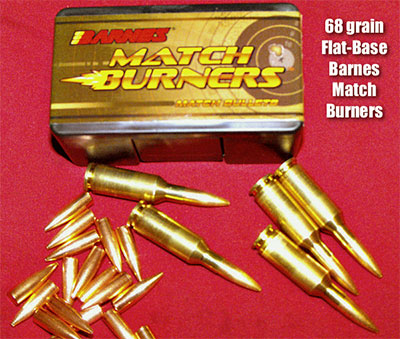 After contacting the good folks Barnes to request some Match Burners for a review in Precision Shooting Magazine, I received a box of 6mm 68gr match bullets and a box of 6mm 105gr VLDs. By the time I got these, I learned that Precision Shooting would no longer print a magazine.


