The NRA High Power National Championships begin in just a few days. One of the favorites this year is SGT Sherri Jo Gallagher, who won the High Power Title in 2010. Sherri is only the second women in history to win the National High Power Championship. The first was her mother, Nancy Tompkins. Sherri looks forward to the challenge of competing against the likes of defending champ Carl Bernosky, and past title holders Norman Houle, and David Tubb. Count on Sherri to turn in a strong performance at Camp Perry this year.
Along with competitive rifle shooting, Sherri has other important duties as a member of the U.S. Army Marksmanship Unit (USAMU). Sherri, the 2010 U.S. Army Soldier of the Year, helps train other service men and women in shooting skills. In the video below, Sherri explains her duties with the USAMU. She is proud of the role the USAMU plays in training U.S. Army soldiers.
‘Army Strong’ is a way to show that the Army is going to make you a better person. It’s going to turn you into a much better version of yourself — that you didn’t even know could exist. ‘Dream Strong’ to me would be setting high goals for yourself, and doing what it takes to achieve them. There are things I’ve done in the Army that I’ve never dreamed I could do. I’ve always wanted to be a good leader — to teach others the [marksmanship] skills that I have used my whole life. It’s incredibly gratifying. — SGT Sherri Jo Gallagher
GS Arizona, a top small-bore and centerfire shooter, uses the 6XC cartridge in some long-range matches. He has tried a variety of different types of brass for this cartridge, including necked-up 22-250 brass and Norma 6XC brass from David Tubb’s (Superior Shooting Systems). German’s measurements reveal significant differences in water capacity, as well as neck-wall thickness.
6XC Source Brass Dimensions
Case Capacity and Pressure Issues
GS has noted significant variances in capacity among the different “flavors” of brass. Norma-headstamp 6XC brass has 49.3 grains of H20 capacity, while Norma 22-250 brass holds only 47.8 grains of H20. Third-generation Tubb-brand 6XC brass is somewhere in the middle, with 48.6 grains of capacity. The tester did not have a chance to measure the high-quality Lapua 22-250 brass introduced in 2010. NOTE: These differences in case capacity are large enough that you MUST adjust your load to the brass type.
We ran a 6XC QuickLOAD simulation with 115gr bullets and H4350 powder. QuickLOAD predicted that the observed difference in case capacity can result in pressure differentials as much as 4,500 psi! In other words, if you switch from Norma 6XC brass to a lesser-capacity brass type, your pressures could rise 4,500 psi (using H4350 and 115gr bullets).
We recommend sticking with the Norma 6XC brass. It is available from DavidTubb.com for a reasonable $69.00 per 100 cases. These days, that’s cheaper than many other types of premium imported cartridge brass.
Neck Thickness and Chambering Issues
German noted that the different types of available brass varied quite a bit in neck-wall thickness — from 0.0121″ (Norma 22-250) to 0.0140″ (Tubb 3rd Gen). Consequently the diameter of loaded rounds also varied. Depending on the brass you chose, your loaded rounds could be 0.267″ at the neck or 0.271″ (with no-turn brass). That’s a huge difference and it’s something you need to take into account when you have your chamber cut for a barrel. For a cross-the-course rifle, you might want a chamber with at least .003″ total clearance over a loaded round. Obviously, to achieve that clearance, you’ll need to set chamber dimensions base on your preferred type of brass.
NOTE: The research for this story was conducted in 2010. Dimensions may have changed with more recent production, so you should double-check the case capacity of your own 22-250 or 6XC brass.
David Tubb’s impressive 2-disc DVD, “The Art & Technique of the Modern Match Rifle”, is a great resource for any position shooter. This 2-disc DVD provides over 4.5 hours of instruction and shooting demonstrations. We’ve watched the entire video and can assure you that it is excellent. Novice High Power and prone shooters who apply David’s methods should definitely improve their scores.
David has included highlights from that DVD in a shorter promo video. While the shorter video is a sales tool, it’s very informative in its own right. Watch the video and you’ll learn a great deal just by watching how David shoulders his rifle, and how he adjusts and maintains his shooting position. David shows examples of prone, sitting, and standing positions. In the short “trailer”, David also provides helpful tips on adjusting sights, and placing the spotting scope.
If you shoot Service Rifle, High Power, or prone, you can benefit from watching this short sampler video embedded above. The full 2-disc DVD is available for $49.95 from Creedmoor Sports or DavidTubb.com. With over 4.5 hours of content, the DVD covers all the across-the-course positions, the set-up and use of aperture sights and diopters, High Power and long range targets, the approach method in offhand, proper placement and use of spotting scopes. The DVD includes bonus footage of David shooting strings in all of the across-the-course positions. (NOTE: Creedmoor Sports is running a February DVD Special for a few more days — Buy two (2) DVDs and get a third for 10% off.)
$24.95 DVD Shows How to Set-Up and Maintain Tubb 2000 Rifle
If you want a High Power match rifle that works brilliantly for all positions, definitely consider the Tubb 2000, aka the T2K. Yes it’s very expensive, but since the year 2000, when the T2K was introduced, this design has won more High Power National Championships than any other bolt-action rifle. The video below showcases features of the T2K that allow it to perform so well in all High Power disciplines. With the T2K’s inline, low-profile action, the shooter can cycle the bolt without raising his head off the stock. That’s a huge benefit for the competitor, particularly in rapid-fire stage. Other tubeguns, such those built on Eliseo (CSS) chassis kits, share this quality, but the T2K also has an extremely easy-to-manipulate bolt (and a superb Anschütz trigger). Watch how quickly and easily David can cycle his T2K without upsetting his shooting position.
David has created an informative DVD about the Tubb 2000 rifle that shows how to assemble/disassemble the Tubb 2000 rifle, how to custom-fit the T2K to the shooter, and how to set up the adjustable buttstock for different shooting positions. This Tubb 2000 (T2K) DVD is available for $24.95 from DavidTubb.com.
Eleven-Time NRA National High Power Champion David Tubb knows a bit about long-range shooting. One of the key factors in long-range accuracy is making sure that the tilt/cant of your rifle does not change throughout your shot string. In the clip below, the first in McMillan’s Master Class Video series, David Tubb explains the importance of keeping your rifle level. He explains that, at 1000 yards, your Point of Impact can change dramatically by canting the rifle either right or left. David states that, when shooting at 1000 yards, if your rifle is level and your shot is centered-up on a 72″ (six-foot) square target, you can actually put your next shot OFF PAPER by canting your rifle. That means you can move Point of Impact (POI) three feet or more, just by canting your rifle! Bryan Litz confirms Tubb’s observation. Bryan tells us that, as a general rule of thumb (for common cartridges), a 1° cant will produce five (5) inches of lateral displacement at 1000 yards. Thus, if you cant your rifle just 8°, the POI would move 40″ from the center of the target, putting the shot off the edge of a 72″-wide target.
David explains that, after one of his students has made two or three 1000-yard, X-Ring hits with a LEVEL rifle, “then I’ll have him take his rifle, and cant it to the right. I’ll have him shoot a shot. He will MISS the six-foot-square frame off to the right. Then I’ll have him cant his gun to the left and shoot another shot. He will miss the six-foot-square frame to the left.”
Rifle Hold and Canting — Consistency Counts Remember that you must maintain the exact same amount of rifle cant from shot to shot. Yes, some iron sights shooters do tilt their rifle slightly to achieve a better hold or to index their sights better. However, these shooters do not change the tilt from shot to shot — the amount of cant remains the same on every shot.
When shooting prone with a scoped rifle it’s probably best to keep the rifle dead level, with the scope’s vertical crosshair straight up and down. Use a rifle-mounted bubble level to maintain a level hold, and avoid canting the gun either to the left or to the right. Affordable bubble levels that mount to your scope or scope rail can be purchased from Brownells and other vendors, starting at about $15.00.
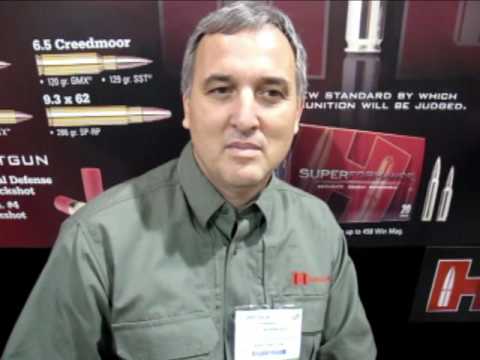
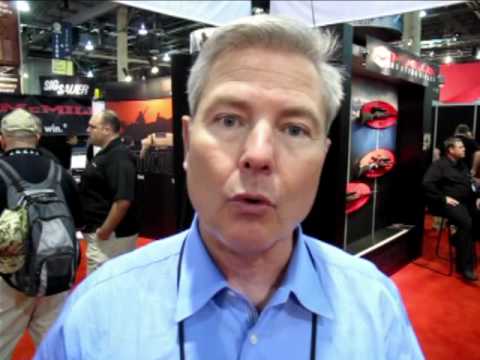
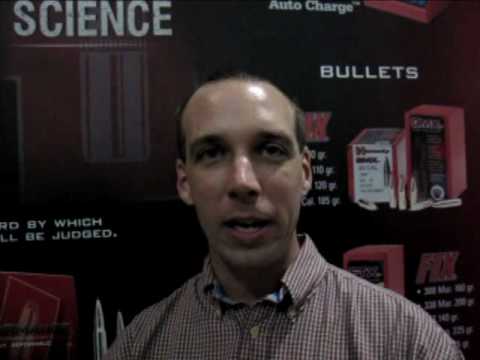
At the 2010 SHOT Show, we had the unique opportunity to corner three “superstars” of High Power shooting, and solicit their wind-reading secrets. In the three videos below (in alphabetical order), Carl Bernosky (9-Time Nat’l High Power Champion), David Tubb (11-time Nat’l High Power Champion and 7-time Nat’l Long -Range Champion), and John Whidden (2-Time Nat’l High Power Long-Range Champion) shared some of the wind-doping strategies that have carried them to victory in the nation’s most competitive shooting matches. This is GOLD folks… no matter what your discipline — be it short-range Benchrest or Long-Range High Power — watch these videos for valuable insights that can help you shoot more accurately, and post higher scores, in all wind conditions.
We were very fortunate to have these three extraordinarily gifted champions reveal their “winning ways”. These guys REALLY know their stuff. I thought to myself: “Wow, this is how a baseball fan might feel if he could assemble Babe Ruth, Hank Aaron, and Ted Williams in the same room, and have them each reveal their hitting secrets.” Editor’s Note: These interviews were conducted before Bernosky and Tubb won their most recent National Championships so the introductions may list a lower number of titles won.
David Tubb Won the Long-Range National Championship today, shoting a perfect 45 for 45 inside the 10-Ring during today’s Individual Palma Trophy Match. Tubb’s impressive performance secured David the 2011 Long Range High Power Rifle Championship, edging out 2010 LR Champion John Whidden. We believe this is David’s seventh individual long-range title. Tubb last won the Long-Range Championship in 2004, when he shot an “perfect” 1450-101X Aggregate, not dropping a point. Tubb has also won the NRA High Power National Championship 11 times.
Tubb Wins Title, Not Yielding to Whidden’s Strong Challenge
As he took his spot in the final round of the Palma Match, Tubb was stationed to the right of last year’s Long Range champ and 2011 runner-up John Whidden. Whidden, donning his favorite red cap, started with two well-placed sighting shots at 1,000 yards before jumping into the scoring phrase of the match. Tubb, waiting for the wind and that instinctive feeling that’s developed over time, took his first sighter after Whidden started scoring tens.
“Ten” shouted Whidden’s spotter. “X” rang out next. The race was on.
Tubb’s spotter echoed his counterpart’s calls with Tens and Xs of his own. But Whidden had the advantage … he was two shots ahead and two points behind. Scoring ten after ten after X, Whidden was applying the pressure to Tubb as he mounted a final charge. There was even a moment when The Pit mistakenly pulled Tubb’s target as he was about to fire. If there was ever an opportunity for a man to feel the pressure — this was it. I don’t know about the shooters, when when Whidden hit his 13th shot inside the ten ring, my heard started to pump a little bit faster.
The spotter’s calls grew louder and louder as the shooters kept firing and firing. Waiting for one to drop a point, slip outside the ten, make that fatal mistake that would allow the other a path to the championship. Ten, Ten, X, Ten … they just kept coming.
After Whidden Cleaned his Target, the Pressure Was On
Whidden finished clean. Tubb still had two shots to go. Whidden and his spotter silently shifted their scope and glasses to Tubb’s target. I inched a little closer. Hearing a noise, I turned to find an RSO peering over my shoulder to check on Tubb’s progress. The 14th shoot was an X. One shot left. A nine or ten meant Tubb would earn his first Long Range title in seven years. An eight meant we’d go to the X count and a seven or less would give the title to Whidden.
Whidden rose when the spotter cried out ten. The match and the championship was over. “Congratulations David. That’s some great shooting.”
Tubb accepted Whidden’s hand, allowed a smile and returned the admiration. Two shooters with almost a decade’s worth of Championships between them. But this one was for David Tubb. The end of a long road back to the title.
David Discusses his Championship-Winning Tubb 2000 Rifle
In the video below, David Tubb discusses his Tubb 2000 Rifle and the many records it has set. Over the past 11 years, Tubb 2000s have been used by 30 of the 33 “Top Three” finishers in the NRA High Power Championships — that’s a remarkable winning record:
David Tubb, 11-time National High Power Champion, won the prestigious Wimbleton Match at Camp Perry earlier this week, and David currently leads the field of competitors for the 2011 Long-Range Championship. John Whidden is close behind, but Tubb has been at the top of his game this year. Tubb credits much of his success to his wind-reading: “Honestly, my wind reading is the best it’s ever been and my prone skills are coming around.” If you want to learn more about David’s wind-reading methods and strategies, watch the video interview below, filmed at the 2010 SHOT show.
David Tubb on Reading the Wind
Tubb Wins Wimbleton Cup Match
David Tubb, shown below, earned his second Wimbledon Cup title after drilling ten shots inside the ten ring for a final shootoff score of 100 points with five Xs. The Wimbledon Cup is one of the oldest of all NRA trophies. First presented to the American rifle team attending the British matches at Wimbledon in 1875, the Cup now is awarded to the top shooter in a two-part, 1000-yard event. The highest scoring competitors from each initial relay are chosen to shoot in a second “shoot-off relay”. Shoot-off competitors fire three sighting shots and 10 record shots. In case of a numerical tie for winner, the winner is determined by a shot-by-shot elimination shoot-off without regard for Xs.
David Tubb looks downrange after scoring 100-5X in the shoot-off to win the Wimbleton Cup Title. The scoring board in the foreground replicates David’s shots on target. The yellow dots are for three sighters, while the red markers show David’s 10 shots for record.
Here are quick results from the Sunday matches at Camp Perry, Ohio. Today (Monday) at the 2010 National Matches, competitors will shoot one of three team matches. The actual High Power Rifle Championship commences Tuesday, August 10th.
Springfield M1A Match: Jack Pardy shot 483-12X to win the 4th Annual NRA Springfield M1A match, shooting 483-12X. Nick Till finished in second place, two points behind, with 481-23X. Shawn McKenna finished third with a 480-14X.
Whistler Boy Team Match: The “Gold” team of the North Carolina Rifle & Pistol Association took top honors with Robin Frazier and William McCraw shooting a combined 960-21X.
Second Amendment Match: Normal Houle and David Tubb of team Sierra Gold cleaned up the NRA 2nd Amendment match with a combined score of 997-51x.
Photos by NRA Media Relations courtesy the NRA Blog.


 The NRA High Power National Championships begin in just a few days. One of the favorites this year is SGT Sherri Jo Gallagher, who won the High Power Title in 2010. Sherri is only the second women in history to win the National High Power Championship. The first was her mother, Nancy Tompkins. Sherri looks forward to the challenge of competing against the likes of defending champ Carl Bernosky, and past title holders Norman Houle, and David Tubb. Count on Sherri to turn in a strong performance at Camp Perry this year.

 We ran a 6XC QuickLOAD simulation with 115gr bullets and H4350 powder. QuickLOAD predicted that the observed difference in case capacity can result in pressure differentials as much as 4,500 psi! In other words, if you switch from Norma 6XC brass to a lesser-capacity brass type, your pressures could rise 4,500 psi (using H4350 and 115gr bullets).
 David Tubb’s impressive 2-disc DVD, “The Art & Technique of the Modern Match Rifle”, is a great resource for any position shooter. This 2-disc DVD provides over 4.5 hours of instruction and shooting demonstrations. We’ve watched the entire video and can assure you that it is excellent. Novice High Power and prone shooters who apply David’s methods should definitely improve their scores.
 Remember that you must maintain the exact same amount of rifle cant from shot to shot. Yes, some iron sights shooters do tilt their rifle slightly to achieve a better hold or to index their sights better. However, these shooters do not change the tilt from shot to shot — the amount of cant remains the same on every shot.