An Important Anniversary Eighty-one years ago today, Allied forces crossed the English Channel and began the assault of Europe that meant the end of Nazi occupation and the end of WWII in the European Theatre. There are few of those assaulters left today, but we all owe them a debt of gratitude. They’re part of that “Greatest Generation” that preserved freedom in its time of greatest peril. And we thank them all. — The Shooting Wire
Back in 2014, Forum member Robert Chombart posted this message from his home in Normandy, France: “On the occasion of the 70th anniversary of D-Day, I … salute the memory of the thousands of American soldiers who sacrificed their youth to liberate France, with … particular [respect] for those who rest in Normandy ground.” Today, 80 years after that historic invasion day, it is important we never forget the sacrifice of those who gave their lives on the beaches of Normandy.
Today we should remember those who crossed the Channel to begin the liberation of Europe. Thousands of soldiers, sailors, and aviators gave their lives on June 6, 1944. Their sacrifice on “The Longest Day”, allowed people throughout Europe to enjoy freedom. We should remember those brave warriors, and never forget that freedom is not free — it requires continuing vigilance and sacrifice.
Back in 2014, a decade ago, Forum member Robert Chombart posted this message from his home in Normandy, France: “On the occasion of the 70th anniversary of D-Day, I … salute the memory of the thousands of American soldiers who sacrificed their youth to liberate France, with … particular [respect] for those who rest in Normandy ground.” Today, 80 years after that historic invasion day, it is important we never forget the sacrifice of those who gave their lives on the beaches of Normandy.
Today we should remember those who crossed the Channel to begin the liberation of Europe. Thousands of soldiers, sailors, and aviators gave their lives on June 6, 1944. Their sacrifice on “The Longest Day”, allowed people throughout Europe to enjoy freedom. We should remember those brave warriors, and never forget that freedom is not free — it requires continuing vigilance and sacrifice.
Back in 2014, Forum member Robert Chombart posted this message from his home in Normandy, France: “On the occasion of the 70th anniversary of D-Day, I … salute the memory of the thousands of American soldiers who sacrificed their youth to liberate France, with … particular [respect] for those who rest in Normandy ground.” Today, 79 years after that historic day, it is important we never forget the sacrifice of those who gave their lives on the beaches of Normandy.
Today we should remember those who crossed the Channel to begin the liberation of Europe. Thousands of soldiers, sailors, and aviators gave their lives on June 6, 1944. Their sacrifice on “The Longest Day”, allowed people throughout Europe to enjoy freedom. We should remember those brave warriors, and never forget that freedom is not free — it requires continuing vigilance and sacrifice.
If you are at the NRA Annual Meetings & Exhibits today, you might want to visit the Remington booth. 2016 marks Remington’s 200-year Anniversary, and Remington’s booth features displays showcasing the company’s rich history over the past two centuries. Layne Simpson notes: “When Eliphalet Remington II hammered out his first rifle barrel in his father’s commercial iron forge in 1816, little did he realize that 200 years later we would be celebrating such an exceptional milestone.”
NRA Publications has created a free 68-page eBook that traces the history of Remington, America’s oldest gunmaker. The book includes many well-researched historical articles, a company time-line, and the 2016 Remington Gun Guide. Get the FREE Remington 200th Anniversary Commemorative Book HERE: Remington History Book and 2016 Gun Guide.
The book contains many interesting feature stories. A fascinating article by Garry James, Remington Goes to War, covers the history of Remington firearms used by the American military. Interestingly, the first complete rifles built at the Remington factory were Model 1841 muskets contracted by the U.S. Army Ordnance Department in 1845.
In another in-depth article (featuring a fascinating, illustrated Remington timeline), NRA Museum Senior Curator Philip Schreier recounts the remarkable history of Remington firearms and ammunition. The From the Forge article by Layne Simpson highlights the key rifle models developed by Remington, from muskets to the legendary Model 700. Finally, John Zent writes about Remington’s manufacturing plants in Ilion, NY, and Huntsville, AL. Zent explains the processes (both traditional and ultra-modern) Remington uses to make all types of firearms.
Sam (L.E.) Wilson actively competed in benchrest matches until he passed. He’s shown here with an Unlimited benchrest rifle of his own design.
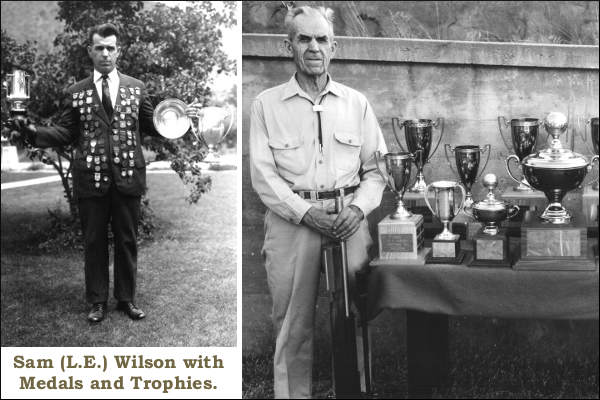
If you’ve used hand dies with an arbor press, chances are you’ve seen the L.E. Wilson company name. You may not know that the founder of L.E. Wilson Inc. was an avid benchrest competitor who pioneered many of the precision reloading methods we used today. Known as “Sam” to his friends, L.E. Wilson was one of the great accuracy pioneers who collected many trophies for match victories during his long shooting career.
The photo above shows Sam (foreground) with all of his children at a shoot. Behind Sam are Jim, Jack and Mary, shooting in the Unlimited Class. What do they say — “the family that plays together stays together”? Note the long, externally-adjusted scopes being used. Learn more about Sam (L.E.) Wilson and his company on the L.E. Wilson Inc. Facebook Page.
Unlimited Class was Sam’s favorite discipline, because in the “good old days” top competitors normally would craft both the rifle and the front/rear rests. This rewarded Sam’s ingenuity and machining/fabrication skills. In the “build-it-yourself” era, one couldn’t just order up an unlimited rail gun on the internet. How times have changed…
“A well regulated Militia, being necessary to the security of a Free State, the right of the people to keep and bear Arms, shall not be infringed.”
If you’re reading this, you’re probably a firearm owner (most of our Daily Bulletin readers are). But how much do you really know about the history of the Second Amendment to the U.S. Constitution? The Second Amendment itself contains only 27 words (printed above), but those words have a rich history behind them.
To illuminate the origins of the Second Amendment, and to explain how its interpretations have evolved over the years, Arizona Attorney, the journal for the State Bar of Arizona, has published a detailed two-part “Illustrated History” of the Second Amendment by attorney Robert J. McWhirter, an expert on the Bill of Rights.* Part One was just released, and Part Two will be published next month.
We think all gun owners should read McWhirter’s article, which is both entertaining and insightful. Don’t worry — this is not a dull “law school” treatise. McWhirter’s article features dozens of illustrated footnotes (some fascinating, some merely amusing). Here are some sample footnotes — you can see this is a treasure trove of Second Amendment trivia.
*The American Bar Association has just published Mr. McWhirter’s book Bills, Quills, and Stills: An Annotated, Illustrated and Illuminated History of the Bill of Rights.
A.P. Lane’s Gold Medal-Winning Colt Revolver
This Colt Officer’s Model revolver, factory-fitted with a skeletonized hammer, belonged to legendary Olympic shooter A. P. Lane, who was known as the “Pistol Wizard”. Lane used this Colt Revolver to win FIVE Olympic Gold Medals — three in 1912 and two in 1920.
A.P. Lane was one of the greatest pistol shooters of his generation. He shot scores that were typically 25-50 points higher than those of his competitors. And he exhibited true Corinthian spirit. At the 1912 Olympics, Lane shared his match ammunition with another competitor who used that ammo to capture the Silver Medal (Lane won the Gold).
This revolver, factory-fitted with a skeletonized hammer, was used by American A.P. Lane in winning five Olympic Gold Medals in the 1912 and 1920 Olympic Games. It’s a .38 caliber, Officer’s Model centerfire revolver from the early 20th century. Olympian A.P. Lane’s Gun can be found in Gallery 13, Firearm Traditions for Today, at the NRA National Firearms Museum in Fairfax, Virginia. The Museum exhibit includes a panoply of Lane pieces – his revolver, his five Gold Medals, and the five Olympic certificates that went along with them.
Kevin Thomas of Lapua USA recently acquired a bit of living history — a reproduction Model 1873 Trapdoor Springfield. Here is Kevin’s story of his new rifle and the legacy it carries.
This week marked the 138th Anniversary of Lt.Col. George Armstrong Custer’s historic ride into the valley of the Little Big Horn, along with 200+ men of the U.S. Seventh Cavalry. June 25, 1876 did not go well, as Custer and his men became a well-known, sad footnote in U.S. history. [Editor: Well it was sad for Custer fans. Native Americans have a different perspective.]
For years now, I’ve wanted one of the rifles Custer and his men carried that day, a Model 1873 Trapdoor Springfield, chambered for the 45/70 cartridge. I finally acquired one, when I walked into a gunstore a while back and saw a handsome repro Trapdoor sitting peacefully on the shelf. It called to me.
Somewhere in the distance, I could hear the bugle calls, the Sioux and Cheyenne war cries and the thundering of cavalry across the plain. It simply had to go home with me, and so it did. It seemed an especially insistent demand with this being the 138th anniversary and all, so I took it along to our regular Wednesday night practice session. All I can say is, I’m glad we don’t have to do rapid-fire with one of these in our matches today, because they do have a mule-like kick to them!
The Trapdoors were a cost saving measure that the Armory came up with at the end of the Civil War, to convert muzzle-loading Springfield muskets into breech-loading cartridge arms. A quick look will give several dead giveaways that many of the parts on the “new” rifle were actually interchangeable with the old 1861 and 1863 Springfield muskets. The parts that were altered or newly fabricated were relatively minor changes.
Above, you can see where these rifles got their name. Loading was done by flipping a lever which opened up a trap door that provided access to the chamber. Flipping that same lever and opening the trap door then ejected the case after firing.
Here is the opposite side, trapdoor open. The ring and slide on the side of the stock was to facilitate an attachment point for a lanyard that the troopers wore over their shoulders. Remember, they often used these while at a full gallop, not an easy feat!
Sixty-nine years ago today, on June 6, 1944, Allied forces stormed the beaches of Normandy as part of Operation Overlord, the largest amphibious invasion in history. The ultimate goal was the liberation of Europe. The Normandy invasion began with overnight parachute and glider landings, massive air attacks, and naval bombardments. In the early morning, amphibious landings on five beaches, code-named Juno, Gold, Omaha, Utah, and Sword commenced. During the evening the remaining parachute divisions landed. The D-Day Normandy landings were the first successful opposed landings across the English Channel in over eight centuries.
Thousands of soldiers, sailors, and aviators gave their lives on June 6, 1944, so that Europe could be liberated. We should remember those brave men, and never forget that freedom is not free — it requires continuing vigilance and sacrifice.
The folks at the NRA Museum have created a new 304-page, photo-illustrated history of firearms. With over 1500 photographs, this new book covers all types of firearms, from small handguns to large rifles. Illustrated are deringers, flintlocks, revolvers, semi-autos, machine guns, muzzle loaders, long rifles — and much more. Researched by the NRA’s historians, The Illustrated History of Firearms is a worthy addition to any gun aficionado’s library. You can pre-order the book now from Amazon.com for just $19.79 (list price is $29.99.) The NRA Museum will be releasing two companion volumes, also available through Amazon: Guns of the Wild West, and Guns of World War II.


 The book contains many interesting feature stories. A fascinating article by Garry James,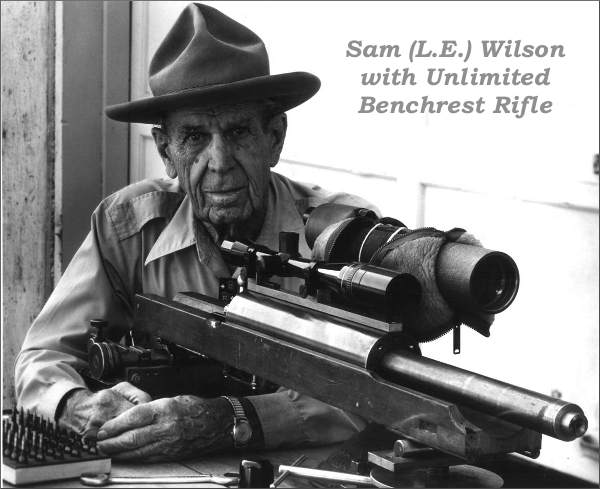

 “A well regulated Militia, being necessary to the security of a Free State, the right of the people to keep and bear Arms, shall not be infringed.”


 A.P. Lane’s Gold Medal-Winning Colt Revolver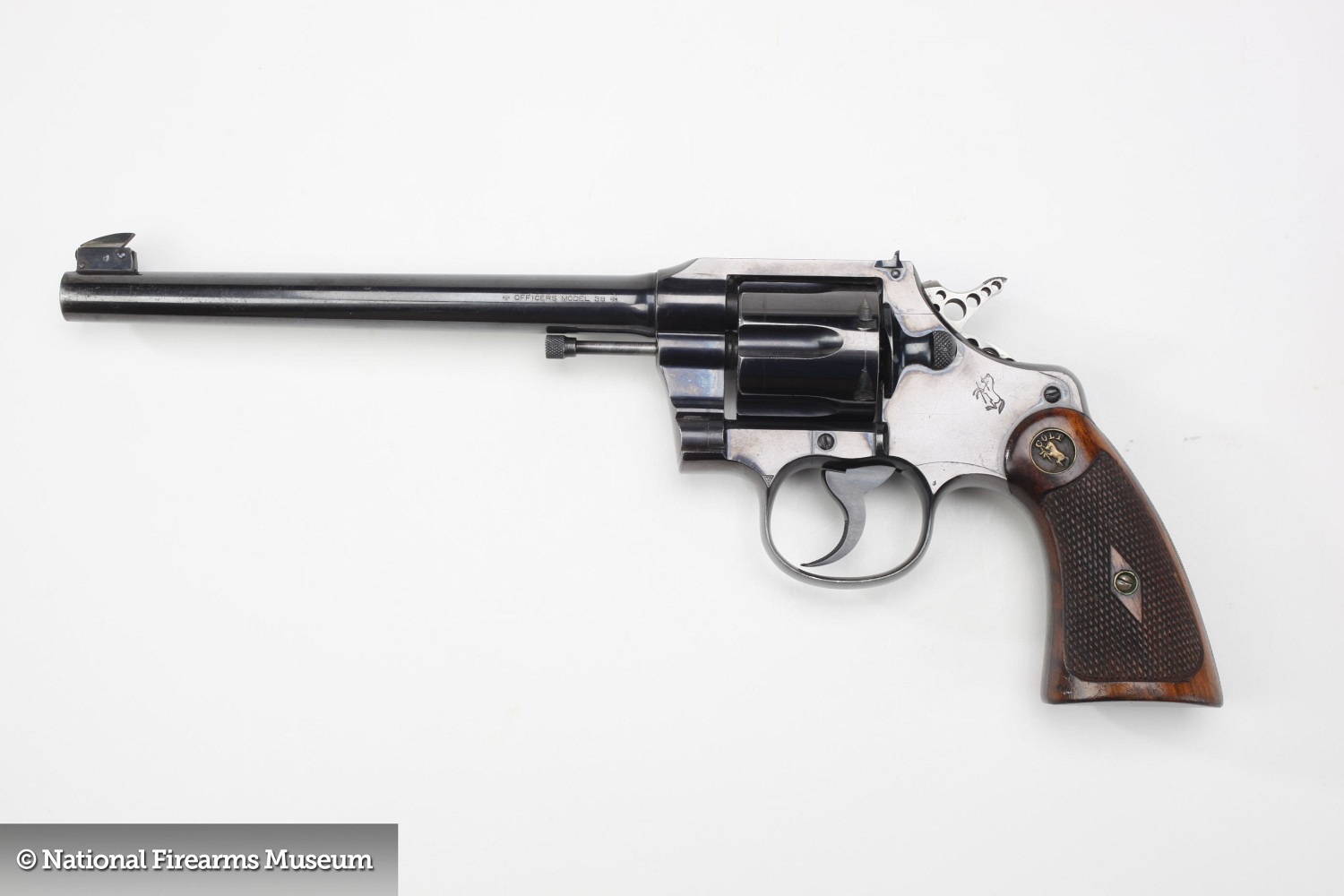


 Kevin Thomas of


 Sixty-nine years ago today, on June 6, 1944, Allied forces stormed the beaches of Normandy as part of Operation Overlord, the largest amphibious invasion in history. The ultimate goal was the liberation of Europe. The Normandy invasion began with overnight parachute and glider landings, massive air attacks, and naval bombardments. In the early morning, amphibious landings on five beaches, code-named Juno, Gold, Omaha, Utah, and Sword commenced. During the evening the remaining parachute divisions landed. The D-Day Normandy landings were the first successful opposed landings across the English Channel in over eight centuries.


