|
|
July 14th, 2010
This profile of disabled veteran Dwight Hayes (Sgt. U.S. Army, retired) first appeared in the NRA Blog. While competing in the Airgun match at the National Veterans Wheelchair Games in Colorado, Hayes was interviewed by NRA correspondent Lars Dalseide. Hayes’ strong will and his determination to serve others provides an inspiration for all of us.
 Sgt. Dwight Hayes — Overcoming Adversity by Lars Dalseide Sgt. Dwight Hayes — Overcoming Adversity by Lars Dalseide
Dwight Hayes is a regular at the Bracken Rifle & Pistol Range in San Antonio, Texas. With his Lone Star cap snugly in place, he goes to the range to work on guns, organize shoots, and gather with friends. It’s a long way from his time as a Special Forces Weapons Sergeant at Fort Bragg, North Carolina, but it’s time well spent.
“If you’re in San Antonio, Bracken is the place to be,” said Hayes. “Bracken and the folks at Alamo Mobility have been great to us disabled vets.” Working with disabled veterans is of great importance to Dwight. It’s an attitude he developed while hospitalized after a failed High Altitude Low Opening, or HALO, jump. Having more than a hundred such jumps under his belt, this one should have been all but routine.
 “I broke one of my rules,” smiled Hayes, adding: “Gotta stick to the rules.” “I broke one of my rules,” smiled Hayes, adding: “Gotta stick to the rules.”
So what are the rules?
“During a HALO jump, you’re okay if you can see the road. If you see the cars, you’re still okay. If you can make out the color of the car, you’re still okay. If you can tell the difference between a Ford and a Chevy, you’re still okay. If you can make out the gender of the driver, you’re still okay. But if you can make out the license plate, then you’re in trouble.”
Before there’s a chance to react, Dwight rocks his wheelchair with laughter and slaps my back. Apparently the story is a standard. “They love that one back at Audie Murphy.”
Hayes refers to the Audie Murphy Veterans Memorial Hospital back in San Antonio. According to Hayes, they have one of the best Spinal Cord Injury Centers in the country. It’s also where he spent two years recovering from his failed HALO jump. Now he goes there to comfort those new to the ward.
 “I know what it’s like,” Hayes said. “I know all about time alone, watching the walls, sitting in an empty hospital. I go there and get them out.” “I know what it’s like,” Hayes said. “I know all about time alone, watching the walls, sitting in an empty hospital. I go there and get them out.”
With assistance from Audie Murphy and the Paralyzed Veterans of America, Hayes and other vets do their best to take the patients out into field. Everything from deep sea fishing to time on the range (sponsored by Winchester) to hunting trips.
“They even have a deer lease,” said Hayes. “Got a doe and an eight-point buck last season.”
The main lesson he tries to pass on is perseverance. He shares this through the story of his injury, his rehabilitation, and his twenty-five years in the U.S. Army. “The injury occurred eighteen years in,” Hayes explained. “I was able to serve a full twenty-five because I successfully petitioned for reinstatement after demonstrating that I could still do my job. Maybe, some of the kids at Audie will hear that and know they can still be productive too.” And that, too, will be time well spent.
April 26th, 2010
On Wednesday, April 28, the Shooting USA TV show reprises its special “Old Sniper” broadcast. In this popular episode, 84-year old WWII veteran Ted Gundy, who served as a U.S. Army sniper in the Battle of the Bulge, meets with the U.S. Army Marksmanship Unit (USAMU) at Fort Benning. For a week, the “Old Sniper” (and his son) were honored as VIP guests of the USAMU at Fort Benning.

At the end of the show Gundy received a new replica of the 1903 Springfield A4 Sniper rifle. The rifle, complete with vintage-type scope, was presented by Val Forgett of Navy Arms. Then, shooting from a rucksack rest, Gundy proceeded to hit steel at 300 yards. CLICK HERE for Full Story with details.
 
This Shooting USA Special broadcast helps viewers remember our remaining WWII veterans, while showing the dedication and hard work of the modern-day USAMU. Broadcast times (on the Outdoor Channel) are shown below (check your local listings).
Eastern Time: 2:30 PM, 10:30 PM, 2:30 AM (Thursday); 4:30 PM (Saturday)
Central Time: 1:30 PM, 9:30 PM, 1:30 AM (Thursday); 3:30 PM (Saturday)
Mountain Time: 12:30 PM, 8:30 PM, 12:30 AM (Thursday); 2:30 PM (Saturday)
Pacific Time: 11:30 AM, 7:30 PM, 11:30 PM: 1:30 PM (Saturday)
February 18th, 2010
A touching episode of Shooting USA aired yesterday on the Outdoor Channel. Luckily, it will be repeated this Saturday, February 20th. In this show, 84-year old WWII veteran Ted Gundy, who served as a U.S. Army sniper in the Battle of the Bulge, meets with the U.S. Army Marksmanship Unit (USAMU) at Fort Benning. For a week, the “old sniper” (and his son) were honored as VIP guests of the USAMU at Fort Benning. This story was broadcast on the “Impossible Shots” segment of Shooting USA. CLICK HERE for Full Story with details.

Gundy, who lost his right leg to an artillery shell, can still wear his WWII uniforms. He regularly puts on his “dress greens” when attending funeral services of Army veterans, a service he renders as a member of the Missouri Honor Guard.
At the end of the show Bundy received a new replica of the 1903 Springfield A4 Sniper rifle. The rifle, complete with vintage-type scope, was presented by Val Forgett of Navy Arms. Then, shooting from a rucksack rest, Bundy proceeded to hit steel at 300 yards.

This Shooting USA Special broadcast helps viewers remember our remaining WWII veterans, while showing the dedication and hard work of the modern-day USAMU. The show can be pretty emotional at times, but it’s well worth watching. If you missed the Feb. 17th broadcast, the show will be repeated on Feb. 20th at the following times: 4:30 PM EST, 3:30 CST, 2:30 MT, 1:30 PT (check your local listings). You can also purchase a DVD of the Old Sniper broadcast for $9.95.
November 11th, 2009
4,734,991 Americans served in uniform during World War I. They fought on land and sea, in the first true global conflict. By the end of WWI over 15,000,000 soldiers and civilians worldwide had died in that conflict, including 120,000 Americans (as many from disease as from wounds). A thousand U.S. Soldiers died every DAY in the 3-week Meuse-Argonne offensive.
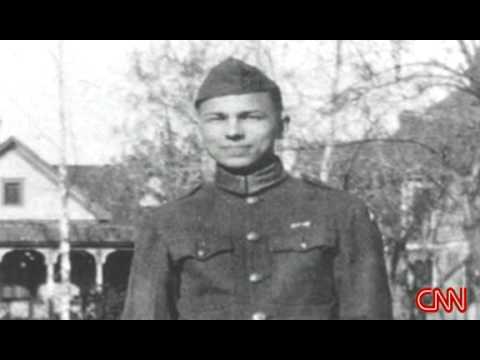
Frank Buckles — The Last Doughboy
This past July, Britain’s Harry Patch died at age 111. Patch had been the oldest soldier-survivor of the “War to End All Wars.” Now American Frank Woodruff Buckles, 108, Britisher Claude Choules, 108, and Canadian John Babcock, 107, stand as the last known veterans of World War I. Buckles lives quietly on a farm in West Virginia. He still remembers his service in the Great War, explaining why he joined the Army at age 16: “When your nation calls,” Buckles said, “you have to go”. (Read recent interview.)
Now, 91 years since the end of WWI, 108-year-old Army veteran Frank Buckles is our last living link with the American “Doughboys” who fought in Europe. His story is a profile in patriotism (and youthful exuberance). When only 16 years old, he tried to enlist in the U.S. Marines. They turned him down, so he joined the Army, lying about his age. He served in Britain and France as an ambulance driver, then helped escort German prisoners home to Germany after the surrender.
 
Following WWI, Buckles wanted to see the world, so he took work with a steamship company. That job placed him in the Philippines when the Japanese invaded. He was captured and interred in a prison camp for three years before being liberated. Below is a CNN feature on Frank Buckles. As all other American WWI vets have passed away, Buckles was honored as the last U.S. Soldier to fight in the “Great War”. To learn more about Frank Buckles and his experiences in WWI, CLICK HERE for a USAToday Feature Story. (Highly recommended–worth reading.)
May 25th, 2009
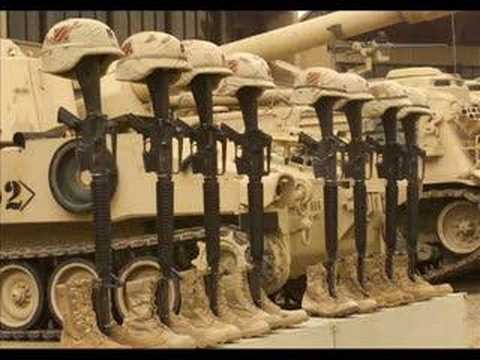
“…gather around their sacred remains and garland the passionless mounds above them with choicest flowers of springtime….let us in this solemn presence renew our pledges to aid and assist those whom they have left among us as sacred charges upon the Nation’s gratitude — the soldier’s and sailor’s widow and orphan.”
–General John Logan, General Order No. 11, 5 May 1868
From USMemorialday.org:
The “Memorial” in Memorial Day has been ignored by too many of us who are beneficiaries of those who have given the ultimate sacrifice. Often we do not observe the day as it should be, a day where we actively remember our ancestors, our family members, our loved ones, our neighbors, and our friends who have given the ultimate sacrifice. You can best honor those who died in the service of their country by…
– visiting cemeteries and placing flags or flowers on the graves of our fallen heroes.
– visiting memorial sites or attending memorial events.
– flying the U.S. flag at half-staff until noon (and by flying the ‘POW/MIA Flag’ as well).
– participating in a “National Moment of Remembrance” at 3 p.m. to pause and think upon the true meaning of the day.
- renewing a pledge to aid the widows, widowers, and orphans of our fallen dead, and to aid the disabled veterans.
|


