|
|
August 26th, 2016

John Whidden of Whidden Gunworks used the .243 Winchester cartridge to win the 2016 NRA Long Range Championship, his fourth LR title at Camp Perry. John selected the .243 Win because it offers excellent ballistics with manageable recoil. John says that, at least for a sling shooter, the .243 Win is hard to beat at long range. Yes, John says, you can get somewhat better ballistics with a .284 Win or .300 WSM, but you’ll pay a heavy price in increased recoil.
.243 Winchester — The Forgotten 6mm Cartridge for Long Range
by John Whidden, 2016 National Long Range Champion
My experience with the .243 cartridge for use as a Long Range High Power cartridge dates back about 10 years or so. After building a .300 WSM, I realized that the recoil was hurting the quality of my shots. The WSM shot great, but I couldn’t always execute good shots when shooting it. From here I built a 6.5-284, and it shot well. I also had a very accurate 6mmBR at the time, and my logic in going to the .243 Win was to get wind performance equal to the 6.5-284 with recoil similar to the 6mmBR. The experiment has worked out well indeed!

Championship-Winning Load: Berger Bullets, Lapua Brass, and Vihtavuori N160
For a load, currently I’m shooting Lapua brass, PMC primers (Russian, similar to Wolf), VihtaVuori N160 single-base powder, and Berger 105 grain Hybrid bullets. I switched to the Hybrid bullets fairly recently at the beginning of the 2015 season. Previously I shot the 105gr Berger hunting VLDs, and in testing I found that the Hybrids were just as accurate without having to seat the bullet into the lands. The velocity of this combination when shot through the excellent Bartlein 5R barrels (32” length) is around 3275 FPS.
For my match ammo, I seat the Berger 105 Hybrids well off the lands — my bullets are “jumping” from .035″-.060″. I only use one seating depth for ammunition for multiple guns (I know some benchrest shooters will stop reading right here!) and the bullets jump further in the worn barrels than in the fresh barrels. The bullets are pointed up in our Bullet Pointing Die System and are moly-coated. The moly (molybdenum disulfide) does extend the cleaning interval a little bit, probably 20% or so. The Lapua .243 Win brass is all neck-turned to .0125″ thickness.
Whidden’s .243 Win Ammo is Loaded on a Dillon
My loading process is different than many people expect. I load my ammo on a Dillon 650 progressive press using our own Whidden Gunworks dies. However powder charges are individually weighed with a stand-alone automated scale/trickler system from AutoTrickler.com (see below). Employing a high-end force restoration scale, this micro-processor controlled system offers single-kernel precision. The weighed charges are then dropped into the cases with a funnel mounted to the Dillon head.


The Lapua .243 Win brass is full-length sized every time, and I run one of our custom-sized expanders in my sizer die. The expander measures .243″ which yields the desired .001″ neck tension. In my experience, the best way to get consistent neck tension is to run an expander in the case neck at some point. When sizing the case neck by a minimal amount such as is the case here, I don’t find any negative points in using an expander in the sizer die.
In my experience, the keys to accurate long range ammo are top quality bullets and the most consistent neck tension you can produce. From these starting points, the use of quality components and accurate powder measurement will finish out the magic.
Great Ballistics with 6mm 105s at 3275 FPS
Running at an impressive 3275 FPS, Berger 6mm 105 grain Hybrids deliver ballistics that are hard to beat, according to John Whidden:
“My .243 Win shoots inside a 6.5-284 with 142-grainers. Nothing out there is really ahead of [the .243], in 1000-yard ballistics unless you get into the short magnums or .284s and those carry a very significant recoil penalty. In the past I did shoot the 6.5-284. I went to the .243 Win because it had similar ballistics but had much less recoil. It doesn’t beat me up as much and is not as fatiguing.

With the .243 Win, there’s no tensing-up, no anticipating. With the reduced recoil (compared to a 7mm or big .308), I can break and shoot very good quality shots. I find I just shoot better shots with the .243 than I ever did with the 6.5-284.”

August 17th, 2016
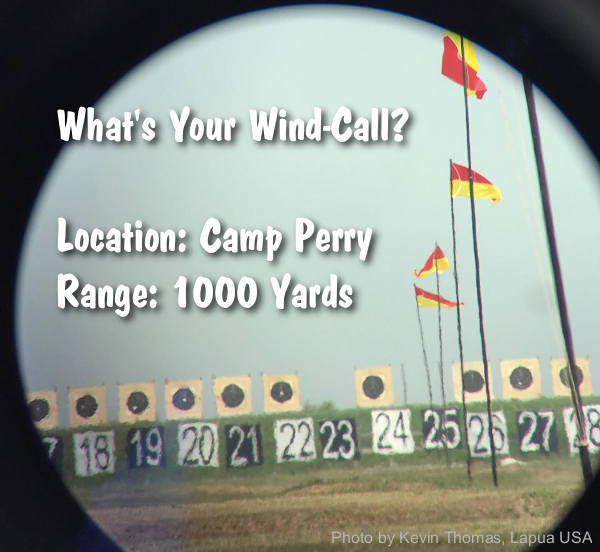
John Whidden of Whidden Gunworks won his fourth Long Range National Championship at Camp Perry this month. In this article, the first of a three-part series on Long Range competition, John shares his thoughts on wind strategies and keeping one’s composure in pressure situations. John tells us Camp Perry was very challenging this year: “The 2016 Long Range Championship will go down in my memory as one with quick wind changes that made it very easy to shoot a 9.”
How to Win at Long Range Shooting
(Or at least what worked at the 2016 National Championships)
by John Whidden, 2016 National Long Range Champion
The NRA Long Range National Championships at Camp Perry Ohio are now in the history books and the competitors are home and reflecting on what they could have done to improve their score. I think anyone who has ever competed always knows they could have done even better if they had changed this detail or that aspect. This is the case regardless of where a shooter places in the standings, even for the winners.

This year the winds were reasonably tough. We mostly have either headwinds or winds from the 2-3 O’clock positions with speeds often in the 9-11 mph range. The changes came quickly and we had to be on our toes. Fortunately the course of fire allows the shooters some options. For the 1000-yard matches, we typically have 33 minutes for preparation, an unlimited number of sighter shots, and then 20 shots for record. Many shooters will shoot about 3-5 sighters and complete the task in about 15 minutes.
The 2016 Long Range Championship was definitely a match where you had to fight for every point during the whole event.
In preparation for shooting by watching the wind, I realized that the quick changes were going to add to the difficulty. Given the conditions, I chose a strategy of choosing only one condition to shoot in and waiting during any changes away from my desired condition. This plan meant that I would have to be very patient and plan to use all of my 33 minutes allotted time if needed.
The sun was shining for most of the matches so we had mirage to look at. There are plenty of flags at Camp Perry and I was glad for them!
As the wind speeds get higher I think a shooter should study the appearance of the flags. Some people look at the flag, and some really LOOK at the flags. The difference is observing things like how many ripples are in the flag, how far the flag stands off the pole, the angle of the flag in a headwind or tailwind, and how high the tip of the flag is relative to where the flag is attached to the pole. These details make all of the difference.
Time Management and Patience
Patience in wind reading can be a virtue. Choosing a condition and being patient has probably yielded more success in my long range wind reading than any other method. It’s not the only way to go, but on a day when you have time available and patience on your side it can yield a win! It should be obvious now that keeping a timer and managing the available time along with the number of shots remaining is an important part of this.

September 23rd, 2015

Tech Tip by Doc Beech, Applied Ballistics Support Team
I am going to hit on some key points when it comes to bullet pointing. How much pointing and trimming needed is going to depend on the bullet itself. Specifically how bad the bullets are to begin with. Starting out with better-quality projectiles such as Bergers is going to mean two things. First that you don’t need to do as much correction to the meplat, but also that the improvement is going to be less. NOTE: We recommend you DO NOT POINT hunting bullets. Pointing can affect terminal performance in a bad way.
NOTE the change in the bullet tip shape and hollowpoint size after pointing:

Don’t Over-Point Your Bullets
What is important here is that you never want to over-point. It is far better to be safe, and under-point, rather than over-point and crush the tips even the slightest bit. To quote Bryan Litz exactly: “Best practice is to leave a tiny air gap in the tip so you’re sure not to compress the metal together which will result in crushing. Most of the gain in pointing is taking the bullet tip down to this point. Going a little further doesn’t show on target”. So in essence you are only bringing the tip down a small amount… and you want to make sure you leave an air gap at the tip.

Also keep in mind, bullet pointing is one of those procedures with variable returns. If you only shoot at 100-200 yards, bullet pointing will likely not benefit you. To see the benefits, which can run from 2 to 10% (possibly more with poorly designed bullets), you need be shooting at long range. Bryan says: “Typically, with pointing, you’ll see 3-4% increase in BC on average. If the nose is long and pointy (VLD shape) with a large meplat, that’s where pointing has the biggest effect; up to 8% or 10%. If the meplat is tight on a short tangent nose, the increase can be as small as 1 or 2%.” For example, If you point a Berger .308-caliber 185gr Juggernaut expect to only get a 2% increase in BC.

Should You Trim after Pointing?
Sometimes you can see tiny imperfections after pointing, but to say you “need” to trim after pointing is to say that the small imperfections make a difference. Bryan Litz advises: “If your goal is to make bullets that fly uniformly at the highest levels, it may not be necessary to trim them.” In fact Bryan states: “I’ve never trimmed a bullet tip, before or after pointing”. So in the end it is up to you to decide.
Pointing is Easy with the Right Tools
The process of pointing in itself is very simple. It takes about as much effort to point bullets as it does to seat bullets. We are simply making the air gap on the tip of the bullet ever-so smaller. Don’t rush the job — go slow. Use smooth and steady pressure on the press when pointing bullets. You don’t want to trap air in the die and damage the bullet tip. You can use most any press, with a caliber-specific sleeve and correct die insert. The Whidden pointing die has a micrometer top so making adjustments is very easy.
Bryan Litz actually helped design the Whidden Bullet Pointing Die System, so you can order the Pointing Die and Inserts directly from Applied Ballistics. Just make sure that you pick up the correct caliber sleeve(s) and appropriate insert(s). As sold by Applied Ballistics, the Whidden Bullet Pointing Die System comes with the die, one tipping insert, and one caliber-specific sleeve. To see which insert(s) you need for your bullet type(s), click this link:
February 1st, 2013
There is a new player in the field of elite die-makers: Whidden Gunworks. John Whidden’s Georgia-based company is producing outstanding full-length sizing dies and micrometer-top seater dies for 7/8-14 thread presses. The dies look great, work great, and produce very straight and accurate ammo. The Whidden dies are finished beautifully inside and out. They are priced competitively and they are available for popular “extreme accuracy” cartridges such as the 6PPC, 6mmBR, 6mmBRX, 6 Dasher, 6XC, 6.5×47, .260 Rem, .284 Win, and .308 Win (and more). If you are looking for a die set for your new precision rifle, you should definitely check out the Whidden dies. Two-die set, FL Sizer and Micrometer-top Seater, costs $184.99. Sizer die alone is $74.99, while Seater die alone is $109.99.
Many of our Forum members have started using Whidden dies — and they are reporting very positive results. I personally own and use a set of Whidden dies, and I am very, very impressed with them. Here’s my report:
Editor’s Report on Whidden Dies
 I have a set of Whidden Gunworks dies for my personal 6BRDX (a chambering similar to 6 Dasher but with longer neck). The dies are excellent and they produce very straight ammo. My loaded rounds (made with a Whidden bushing-type FL sizer and Whidden micrometer-top seater) are showing less than .0015″ run-out measured on the bullet, with the majority closer to .001″ run-out. (This is with Lapua Scenar L bullets, which have great jacket uniformity and concentricity.)
One thing I immediately noticed about the Whidden seater die is that there is a very close correspondence between the seater “hash marks” and true changes in seating depth. By this I mean when you dial a value change of 10 on the micrometer scale, you get very close to a .010″ change in seating depth. It is not perfect, but it is definitely more precise than most other micrometer-top seater dies I’ve used (both hand dies and 7/8-14 thread screw-in types).
 Cartridges loaded with my Whidden sizer and seater dies have proved very accurate. My 6BRDX is shooting in the mid-ones for five shots at 100 yards. I also have a micrometer-top Wilson inline seater die that was custom-bored with my chamber reamer. As far as I can tell, the ammo loaded with the screw-in Whidden seater is every bit as accurate as rounds loaded with the Wilson die using an arbor press. Additionally, with the Whidden micrometer die, I can hold extremely tight tolerances on base-to-bullet-ogive lengths.
In the past, with my 6mmBR, I favored an inline die because I thought it offered better control over seating depth. But given how well the Whidden seater works, I’m not sure I’d gain anything with my Wilson hand die. At least when used with a quality Harrell’s benchrest press, the Whidden seater gives up little or nothing to the hand die, and that’s big news in my experience.

You will like the look and feel of these Whidden dies. The finish inside and out is very, very good — the dies have a quality feel and run very smoothly. Both the sizer and seater have a fluted section — this offers a better “grip” when you’re screwing in the dies. The outside of the seater has a smooth, gloss-anodized finish — it exudes quality. The markings on the seater’s micrometer ring are crisp and very legible, with large, high-contrast white-on-black lines and numbers.
One other very cool feature of the Whidden sizing dies is that custom-sized tapered expanders will soon be offered. Whidden plans to offer expanders in .0005″ (one-half thousandth) increments. This is great if you have, say, a .265 bushing and a .266 bushing but you want just a little less neck tension than the .265 offers. With the tapered expander, I can use a 0.265 bushing followed by an 0.2655 expander — allowing more precise control of neck “grip”.

Whidden Die Features
- Die Dimensions well-matched to PT&G reamers used for match chambers.
- Sizing dies spec’d for easy chambering and extraction without overworking brass.
- All sizers include shoulder datum collar to measure shoulder “bump” and headspace.
- Neck bushing or no-neck bushing configurations.
- Bushing dies use standard Redding/Wilson type bushings.
- Neck diameter of non-bushing FL sizers can be set to customer specification.
- Extended threads on short cartridge sizer dies such as BRs.
- Coming soon: custom expander balls (in half-thousandth increments) to adjust neck tension and provide minimum working of the case neck.
- Seater: Floating sleeve on micrometer seater enhances concentricity of loaded rounds.
- Seater: Large, high-contrast markings for easy adjustment.
Custom Dies for Wildcats or Your Cartridge
- Custom-made for your wildcat or standard cartridge.
- Can work from fired brass or a chamber drawing to match your chamber exactly.
- Neck-bushing die, or no-bushing die with neck diameter bored to customer specification.
 Available Die Sets
Here is the current caliber list. Micrometer seaters are available in all calibers listed below except 22BR and 22 BRX.
Full-Length Sizer with Bushings
22 BR (No Seater Die)
22 BRX (No Seater Die)
6mm PPC
6mm BR
6mm BRDX
6mm BRX
6mm Dasher
6mm SLR
6mm XC
6×47 Lapua
.243 Win
6.5×47 Lapua
.260 Rem
6.5-284
.284 Win
7mm Shehane
.308 Win
.338 Edge
Full-Length Sizer (Non-Bushing)
22 BR
6MM BR
.243 Win
6×47 Lapua
.260 Rem
6.5 Creedmoor
6.5×47 Lapua
.308 Win

John Whidden Talks about Sizers, Seaters, and Expanders
 There are two sides to our die business. First we are stocking dies in many calibers that are of interest to those who visit this website (such as the 6PPC, 6mm Dasher, 6.5×47 Lapua, .260 Rem, 7mm Shehane, .308 Winchester). These dies are a good fit to the “match chamber” reamers and very few people with these calibers should have to have “Pure Custom” dies made. We have both sizers and micrometer-top seaters ready to go for the many cartridge types listed above. The sizer dies will include a shoulder datum collar that makes it easy to measure shoulder “bump” during the full-length sizing process. This is important to control headspace precisely.
On the “Pure Custom” side, we have a huge amount of flexibility. We can make one-of-a-kind sizers and seaters for wildcats in a short period of time and at an excellent price. We can work with the customer to make full-length sizers, neck sizers, shoulder bump dies, small base dies, or most anything else they can need. We can of course provide micrometer-top seaters for these cartridges as well. We can make non-bushing sizers with specific neck inside diameters tailored to customer specifications.
We will also be offering custom-sized expanders. These expanders will fit our dies as well as Redding dies. Our tapered expanders will be available in .0005” (one-half thousandth) increments for the common calibers. In our shop we have had excellent results using expanders in the dies as long as the expanders provided the correct amount of neck tension and didn’t overwork the brass. Expanders have gotten a bad reputation in recent years but we find them to be excellent tools when the same precision is applied to their use that careful handloaders apply to the rest of their process. Expanders can be most valuable for those who choose not to neck-turn their brass (because the expander pushes neckwall variations to the outside).
One last thing — many gunsmiths with their own wildcats (or “specialty” chambers) have asked us to provide dies for their customers. We gladly do batches of custom dies and encourage gunsmiths to contact us. — John Whidden
For more information visit WhiddenGunworks.com or call (229) 686-1911.
January 17th, 2011
For quite some time Whidden Gunworks has offered an excellent V-Block designed for Remington 700, Rem Model 7, or XP100/ XR100 actions. Whidden’s machined aluminum V-Block allows you to use multiple barreled actions in the same stock (provided action length and screw positions are the same).
 Now Savage owners can benefit from a V-Block set-up. Whidden Gunworks has started selling a new V-Block especially designed for Savage actions. Models are offered for the Savage Target action, Palma action, and Savage Short and Long Actions. You can’t really tell from the photo (at left), but the V-Block does have a milled recess for the Savage recoil lug.
Whidden’s V-Blocks have slightly raised ridges the run parallel to the barrel. These help provide a solid grip on the action, so you normally do NOT need to skim-bed the V-Block. Because V-Blocks have a flat bottom and straight sides, it is easy to inlet a stock to take a V-Block — nothing’s tricky. Whidden’s Savage V-Blocks are made of 6061-T6 aluminum, surface milled for epoxy adhesion, and individually inspected. John Whidden believes that a properly installed V-Block “is easier to install, simpler to inlet, more accurate, and more versatile than any action-mounting system available.” We don’t know about the accuracy part, but a V-Block can certainly help you leverage your stock investment by running multiple barreled actions in the same stock.
Right now, Whidden’s Savage V-Blocks are in short supply so you should order directly through Whidden Gunworks, by calling (229) 686-1911. You can order Whidden’s Rem-type V-Blocks for $113.95 through Creedmoor Sports or $109.95 through Brownells.com.
|


