NRABlog.comstory by Kyle Jillson
If you know a shooter aged 12-21 who would enjoy some shooting sports action this summer, the NRA is now accepting applications for its annual competitive Shooting Camps for Junior Shooters. These camps, run by the Coach Education Program, help young shooters develop their marksmanship skills. CLICK HERE for application info.
“These camps have everything you need to take your game to the next level,” said NRA National Coach Trainer Daniel Subia. “Each day will be filled with exercises designed to help you master your body positioning, breath, and trigger control to consistently shoot high scores. You’ll be tired at the end of each day, but you’ll leave a better shooter than you were before.”
Intermediate Junior Pistol Camp: June 26 – June 28
Held in Canton, Ohio, this camp is for beginning and intermediate shooters and is limited to 25 students. The camp registration deadline is June 1.
Intermediate Junior Rifle Camp: July 5 – July 10
Located in Camp Perry, Ohio’s Petraca Range, this camp features two admission periods for its 60 slots. The first admission period, open March 11 – April 30 is for junior shooters who have previously participated in an NRA Junior 3P or 4P Smallbore sectional match. The Second admission, open May 1, is open to all shooters.
Junior Advanced Competitive Smallbore Rifle Camp: July 6 – July 14
Held in Jericho, Vermont, this 9-day camp is a demanding training opportunity for advanced athletes and is limited to 20 students. The camp registration deadline is May 1. “[This camp] is like Top Gun for smallbore athletes. We take the best and make them better. We’re not leaving anything out. We will do everything possible to make sure that every marksman leaves this camp as a sharpshooter or better”, said Daniel Subia. “Attendees can expect a challenging, incredibly rewarding training experience that will prepare them for competition at the highest level.”
To learn more about these training camps and download the application package, visit the National Junior Shooting Camps webpage. Questions? Contact Daniel Subia at coaching[at]nrahq.org.
Shooting Sports USA (SSUSA) has produced a comprehensive calendar of major NRA-sanctioned firearms tournaments to be held this year. Below are schedules for the major 2015 National Championships. For regional and state events, you should download the full 78-page SSUSA Calendar. This covers Action Pistol, Bullseye Pistol, Air Rifle, Smallbore, Silhouette, High Power, and F-Class events. The Shooting Sports USA 2015 Calendar includes ten pages of important non-NRA events including NBRSA, FCSA (50-caliber), AAFTA (Field Target), IPSC, and IDPA championships.
July 7-12: National Pistol Matches
July 16-22: CMP High Power Rifle and Games Events
July 23-28: NRA High Power Rifle and Mid-Range Championship
July 29–August 2: NRA Long Range High Power Rifle Championship
August 3-7: NRA Fullbore Championship
August 7-14: World Target Rifle “Palma” Championship
2015 NATIONAL SILHOUETTE CHAMPIONSHIPS (Multiple Venues)
March 20-22: Air Rifle Baton Rouge, LA
June 29-July 2: Cowboy Rifle Raton, NM
July 6-7: Black Powder Cartridge Rifle (Scope) Raton, NM
July 9-10: Black Powder Cartridge Rifle Raton, NM
August 2-4: Smallbore Rifle Ridgway, PA
August 6-8: High Power Rifle Ridgway, PA
September 21-26: Black Powder Target Rifle Raton, NM
Program and entry cards for the Nat’l Silhouette Championships will be available online and via paper format after April 1, 2015. To register, write or call: NRA Silhouette Dept., 11250 Waples Mill Rd.,
Fairfax, VA 22030; (703) 267-1474 or silhouette [at] nrahq.org.
2015 NATIONAL SMALLBORE RIFLE CHAMPIONSHIPS — Bristol, Indiana
July 10-11: Metric 3-Position Championship
July 12-13: Conventional 3-Position Championship
July 15-18: Conventional Prone Championship
July 21-22 Metric Prone Championship
Online Registration for the Smallbore Championship starts April 1, 2015. For more information, please email hmoody[at]nrahq.org or lwenzell[at]nrahq.org, or write to: Lois Wenzell, 11250 Waples Mill Rd., Fairfax, VA 22030.
Walt Berger, a living legend in the benchrest world, was honored this past weekend at the Ben Avery Range outside Phoenix, AZ. At the start of the 2015 Cactus Classic Benchrest match, a “surprise” ceremony was held. Berger President Eric Stecker announced to the crowd that the 100/200-yard benchrest facility was being dedicated to Walt Berger, founder of Berger Bullets. Walt was genuinely surprised and moved by the special ceremony, which featured a color guard, and a fly-over. In the photo above, Walt is flanked by his grandson David Hamilton (left) and Eric Stecker (right).
As part of the range dedication ceremony, four vintage, WWII-era Warbirds flew over the range in diamond formation, streaming red, white, and blue smoke.
Shortly after the ceremony, the competitors got down to business…
It was an impressive “three-peat” for The West Virginia University (WVU) rifle team. The WVU Mountaineers clinched their third straight NCAA Rifle Championship this weekend in Fairbanks, Alaska. Remarkably, this victory was the West Virginia’s 17th NCAA Rifle Championship — and it was a great team performance. WVU’s 4702 team aggregate score is the second-best in NCAA Championships history. And if you are curious, this Mountaineers squad also holds the best-ever team score, a 4705 shot by WVU at the 2014 NCAA Championships.
“It was an amazing performance today,” said coach Jon Hammond. “Winning three titles back to back is unreal. We have stressed with them all year to focus on performance and not outcome. They did that today. No one did anything wrong yesterday, but they performed the right way today. All five of them shot incredible. We really tried to not think about point difference or score. That’s the nature of the sport. You can’t control the other teams.”
Top Air Rifle Performances
The Mountaineers shot a 2383 air rifle team score, the second highest in team and NCAA history, and also took home the top three places in the individual final. WVU’s Maren Prediger, who placed second in last year’s NCAA final, won the individual air rifle title, leading her squad to the team victory in the process. In the first relay Maren was on fire, shooting a near-perfect 598 (100-100-99-100-100-99) score. The Petersaurach, Germany, native scored 205.8 in the final, earning the 2015 air rifle individual title. This was Maren’s last match as a Mountaineer.
“For Maren to shoot a 598 air rifle in her last match is incredible,” Hammond said. “I can’t fault her on anything this weekend. It says a lot about her character to come back today and win. She’s a world-class air rifle shooter. For her to win the final after being so close last year is a huge credit to her. To do it during her final match is even better.”
Air Rifle Shooters at Alaska-Fairbanks’ Patty Center. (WVU Photo by Jason Colquhoun)
In a corner of the Blaser booth at the IWA show in Germany was a very special rifle — Blaser R8 Serial Number 100,000. This one-of-a-kind Blaser is blinged to the max, befitting its milestone status as the 100,000th R8. “Designed without compromise” this rifle features mind-blowing wood, and elaborate engraving. It is highly decorated with images of the Argali, a type of big-horned sheep.
CLICK Photo to See Large, Full-Screen Image (More Detail)
What’s in a number? Blaser tell us: “In serial number 100,000… Nothing short of perfection would be acceptable from the masters of wood and steel. Two internationally recognized artists were selected, each working in their unique mediums. Painter Rudi Kohl has drafted, in his signature style, a painstaking depiction of Argali, the king of wild sheep, in their natural habitat. Engraver Jürgen Göser was then responsible for implementation of the drafts. The master engraver went about his task in his usual manner, meticulously and with absolute attention to detail.” Skeletonized octagonal pistol grip cap and steel butt plate, inlayed with ebony, were then added to complete the frame.
This R8 has some interesting hardware. The barrel is a fluted octagonal tube, the first of its kind on a Blaser R8. Front and rear sights were custom-machined from billet to blend with the silhouette of the rifle. Both receiver and bolt housing were shaped and polished by hand.
Story Tip from EdLongrange. We welcome reader submissions.
Last month we showcased an Illustrated History of the Second Amendment by attorney Robert J. McWhirter. That fascinating article, published in Arizona Attorney magazine, explained the history and evolution of the Second Amendment in a novel way. McWhirter included dozens of annotations with images from old books, magazines, even stills from movies and television shows. This was certainly the most entertaining discussion of the Second Amendment ever published.
This month, Arizona Attorney released Part Two of McWhirter’s Illustrated History of the Second Amendment. Like Part One, this article is informative and chock full of fascinating historical footnotes. The footnotes are just as interesting as the main article, as they feature dozens of eye-catching graphics — everything from 18th century lithographs to modern movie posters. Click the Links below to read both Part Two and Part One:
Part Two of McWhirter’s illustrated history addresses interesting historical subtopics such as: Guns and Colonial Slavery, Militias and Minutemen, and the Founders’ concerns about Government Tyranny. If you have any interest in American history or Constitutional law, check out this article — it’s definitely worth a read. Part Two of McWhiter’s Illustrated History is available FREE online in digital, eZine Format.
Story Tip from German Salazar. We welcome reader submissions.
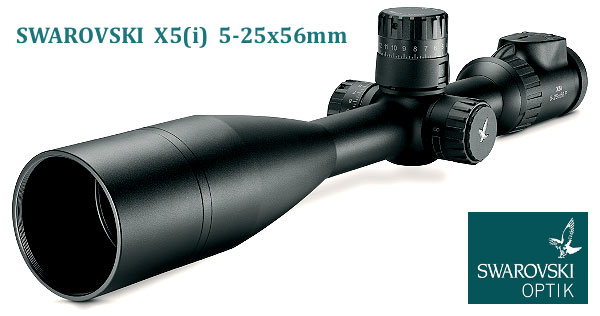
If you are looking for a premium riflescope with 25-26X max magnification, there are two impressive new options, and both come from Europe. Swarovski just announced its new X5 5-25x56mm scope while Leica has unveiled the new ER 6.5-26x56mm LRS. Intended for long-range shooting, both these scopes offer razor-sharp glass and some advanced features. The Swaro offers 20 MOA per revolution, plus a unique “Sub-zero” capability. The Leica has some interesting reticles and an attractive price.
Scope Brand/Model
Max Power
Elevation
Clicks
Tube
Lume
Est. Price
Swaro X5 5-25x56mm
25X
82 MOA
1/4 or 1/8 MOA
30mm
Optional
$3300/$3500(i)
Leica ER 6.5-26×56 LRS
26X
120 cm*
1/6 MOA*
30mm
No
$2089**
* This is at 100m for the Euro version with 0.5cm click values (1/6 MOA). Leica has not published MOA elevation. 120 cm at 100m works out to about 41 MOA at 100 yards.
** Based on €1990.00 (Euros) stated price. The actual price, as sold in the USA, could be higher.
Swarovski X5 5-25x56mm
Swarovski recently unveiled its new X5 series of second focal plane scopes for long-range shooting. There will be two models, a 3-18x50mm and a 5-25x56mm. Both are available in standard and illuminated versions, the latter designated as X5(i). Long-range reticles with be available with either 1 MOA or 2 MOA stadia hash-marks. The 5-25X model offers either 1/4-MOA or 1/8-MOA clicks.
Swaroski says: “The X5 series has been developed specifically with the long range shooter/hunter in mind. The newly-designed turrets allow for 20 MOA per revolution, have a viewing window to show the user what revolution he or she is on. At the heart of the X5(i) is a Spring Retention and Lever System that exerts the same pressure on both turrets from the inversion system regardless of positioning. This assures maximum accuracy and repeatability.”
Check Out Features of Swarovski X5 Riflescopes
The 5-25x56mm X5 has a lot of elevation travel — 82 MOA. And this is a rugged scope — the elevation, windage, and parallax turrets, as well as the inversion system are built with stainless steel components. This enhances component longevity and durability.
X5 Offers Dual Zeros (for Long Range and Short Range
The Swarovski X5 scopes boast a new “Subzero” Function. This innovative feature allows the shooter to instantly come down 10 MOA (40 clicks) from a pre-set zero. That’s a nice option for training, letting you quickly switch from near to far. The new X5(i) Rifle Scope will be available in two different models, X5(i) 3.5-18×50 and X5(i) 5-25×56, in Fall 2015. For more information, visit Swarovskioptik.com.
Leica ER 6.5-25x56mm LRS
With 26X magnification on tap, the ER 6.5-26x56mm LRS riflescope is suitable for long-range hunting as well as many target disciplines. The new Leica ER 6.5-26×56 LRS offers ultra-sharp glass with low color fringe (chromatic aberration). This is a big advantage when viewing high-contrast subjects such as black-on-white targets. Eye relief is ample, and the scope offers a -4 to +3 Diopter compensation. Three reticle options are offered including two Ballistic reticles with elevation lines and horizontal (windage) hash marks.
With a rugged, aluminum “mono-body” main tube, the Leica is waterproof and fog-proof. Like all of Leica’s ER riflescopes, the ER 6.5-26x50mm LRS features a high-tech glass coating process technology. The scope is bright, with 91% light transmission. The HD glass elements are precision-ground with a state-of-the-art laser-guided production process.
Leica Pricing is Attractive
The new Leica ER 6.5-25x56mm is priced competitively. At the IWA show in Germany this month, Leica said the scope should retail for about 1990.00 Euros, which works out to $2089.00 U.S. Dollars at current exchange rates. Even if the “as imported” price goes up for the U.S. Market, that makes the scope much less expensive than Swarovski’s X5 5-25x56mm scope, and less than some comparable US-made optics.
Congratulations to the University of Nebraska’s Rachel Martin, the new 2015 NCAA Smallbore Rifle Individual Champion! Competing at an indoor range in Alaska, Rachel fired a Final score of 453.3 to edge runner-up Ryan Anderson of the Univ. of Alaska Fairbanks (452.6). The NCAA Championship Air Rifle matches will be held this weekend. You can view Live target images and results on the CMP Match Results Webpage.
In an interview with NRABlog.com, Rachel gave credit to her Cornhusker team-mates for helping her secure the championship.
NRA Blog: Rachel Martin never wanted to learn how to shoot. But thanks to a little prodding from dad, she eventually found a passion for the sport. A passion that brought her the 2015 NCAA National Smallbore Rifle Championship.
“It’s a little overwhelming right now,” she said after winning the title.
Emerging from a crop of 48 shooters…this Nebraska sophomore blazed through the opening rounds to earn a spot in the coveted final round. It was there that she held steady until making her move for the win.
“I was so nervous going in. Luckily I talked to my teammates and they told me I was here because God let me be here so have fun with it. That’s all I needed to hear.”
Alaska Wins Team Smallbore Event
In Team competition, the University of Alaska Nanooks won the 2015 smallbore rifle team championship. West Virginia University (WVU) finished second and University of Nebraska placed third. Full team results can be downloaded via this link. Currently, in Saturday’s Team Air Rifle Competition, the “home team” Nanooks are leading by a narrow 3-point margin over the WVU Mountaineers.
Rachel Martin poses with Nanook, University of Alaska’s mascot, at 2015 NCAA Rifle Championships.
It Was Wicked Cold in Alaska
Yes it was cold in Fairbanks. A member of the Jacksonville State University (JSU) rifle team snapped this image on Thursday. The caption said it all: “It’s just easier to make a sign out of ice than paper here I guess. It was -35° F when we got to the range this morning!
ThoseShirts.com offers a selection of T-shirts with pro-gun rights messages. Priced at $19.95, these shirts allow you to show your support for the Second Amendment. The shirts’ themes range from serious (“The Bill of Rights is not negotiable”), to sarcastic (“Less Flower Power… More Firepower”). Below are some of the more popular designs printed on the back of the 100% preshrunk heavyweight cotton shirts (some designs are front + back).
Today is Friday the 13th. Oddly enough, this is the second month in a row with the 13th falling on a Friday. Does that mean double bad luck? For those of you who are superstitious — maybe you should avoid climbing ladders or using power tools today.
When it comes to shooting, there are many things that shooters chalk up to “bad luck”. In fact, most of these instances of “bad fortune” just come from a failure to anticipate problems. When you have a major, critical problem at a shooting match, i.e. a “train wreck”, this can be the end of your weekend. In this article, Ballistics Guru Bryan Litz talks about “train wrecks” and how to avoid them, even if you are shooting on Friday the 13th. As Bryan told us: “I don’t believe in superstition — we make our own luck!”
Urban Dictionary “Train Wreck” Definition: “A total @#$&! disaster … the kind that makes you want to shake your head.”
Success in long range competition depends on many things. Those who aspire to be competitive are usually detail-oriented, and focused on all the small things that might give them an edge. Unfortunately it’s common for shooters lose sight of the big picture — missing the forest for the trees, so to speak.
Consistency is one of the universal principles of successful shooting. The tournament champion is the shooter with the highest average performance over several days, often times not winning a single match. While you can win tournaments without an isolated stellar performance, you cannot win tournaments if you have a single train wreck performance. And this is why it’s important for the detail-oriented shooter to keep an eye out for potential “big picture” problems that can derail the train of success!
Train wrecks can be defined differently by shooters of various skill levels and categories. Anything from problems causing a miss, to problems causing a 3/4-MOA shift in wind zero can manifest as a train wreck, depending on the kind of shooting you’re doing.
Below is a list of common Shooting Match Train Wrecks, and suggestions for avoiding them.
1. Cross-Firing. The fastest and most common way to destroy your score (and any hopes of winning a tournament) is to cross-fire. The cure is obviously basic awareness of your target number on each shot, but you can stack the odds in your favor if you’re smart. For sling shooters, establish your Natural Point of Aim (NPA) and monitor that it doesn’t shift during your course of fire. If you’re doing this right, you’ll always come back on your target naturally, without deliberately checking each time. You should be doing this anyway, but avoiding cross-fires is another incentive for monitoring this important fundamental. In F-Class shooting, pay attention to how the rifle recoils, and where the crosshairs settle. If the crosshairs always settle to the right, either make an adjustment to your bipod, hold, or simply make sure to move back each shot. Also consider your scope. Running super high magnification can leave the number board out of the scope’s field view. That can really increase the risk of cross-firing.
2. Equipment Failure. There are a wide variety of equipment failures you may encounter at a match, from loose sight fasteners, to broken bipods, to high-round-count barrels that that suddenly “go south” (just to mention a few possibilities). Mechanical components can and do fail. The best policy is to put some thought into what the critical failure points are, monitor wear of these parts, and have spares ready. This is where an ounce of prevention can prevent a ton of train wreck. On this note, if you like running hot loads, consider whether that extra 20 fps is worth blowing up a bullet (10 points), sticking a bolt (DNF), or worse yet, causing injury to yourself or someone nearby.
3. Scoring/Pit Malfunction. Although not related to your shooting technique, doing things to insure you get at least fair treatment from your scorer and pit puller is a good idea. Try to meet the others on your target so they can associate a face with the shooter for whom they’re pulling. If you learn your scorer is a Democrat, it’s probably best not to tell Obama jokes before you go for record. If your pit puller is elderly, it may be unwise to shoot very rapidly and risk a shot being missed (by the pit worker), or having to call for a mark. Slowing down a second or two between shots might prevent a 5-minute delay and possibly an undeserved miss.
4. Wind Issues. Tricky winds derail many trains. A lot can be written about wind strategies, but here’s a simple tip about how to take the edge off a worse case scenario. You don’t have to start blazing away on the command of “Commence fire”. If the wind is blowing like a bastard when your time starts, just wait! You’re allotted 30 minutes to fire your string in long range slow fire. With average pit service, it might take you 10 minutes if you hustle, less in F-Class. Point being, you have about three times longer than you need. So let everyone else shoot through the storm and look for a window (or windows) of time which are not so adverse. Of course this is a risk, conditions might get worse if you wait. This is where judgment comes in. Just know you have options for managing time and keep an eye on the clock. Saving rounds in a slow fire match is a costly and embarrassing train wreck.
5. Mind Your Physical Health. While traveling for shooting matches, most shooters break their normal patterns of diet, sleep, alcohol consumption, etc. These disruptions to the norm can have detrimental effects on your body and your ability to shoot and even think clearly. If you’re used to an indoor job and eating salads in air-conditioned break rooms and you travel to a week-long rifle match which keeps you on your feet all day in 90-degree heat and high humidity, while eating greasy restaurant food, drinking beer and getting little sleep, then you might as well plan on daily train wrecks. If the match is four hours away, rather than leaving at 3:00 am and drinking five cups of coffee on the morning drive, arrive the night before and get a good night’s sleep.”
Keep focused on the important stuff. You never want to lose sight of the big picture. Keep the important, common sense things in mind as well as the minutia of meplat trimming, weighing powder to the kernel, and cleaning your barrel ’til it’s squeaky clean. Remember, all the little enhancements can’t make up for one big train wreck!




 In an interview with


 Today is Friday the 13th. Oddly enough, this is the second month in a row with the 13th falling on a Friday. Does that mean double bad luck? For those of you who are superstitious — maybe you should avoid climbing ladders or using power tools today.
 Train Wrecks (and How to Avoid Them)
 4. Wind Issues. Tricky winds derail many trains. A lot can be written about wind strategies, but here’s a simple tip about how to take the edge off a worse case scenario. You don’t have to start blazing away on the command of “Commence fire”. If the wind is blowing like a bastard when your time starts, just wait! You’re allotted 30 minutes to fire your string in long range slow fire. With average pit service, it might take you 10 minutes if you hustle, less in F-Class. Point being, you have about three times longer than you need. So let everyone else shoot through the storm and look for a window (or windows) of time which are not so adverse. Of course this is a risk, conditions might get worse if you wait. This is where judgment comes in. Just know you have options for managing time and keep an eye on the clock. Saving rounds in a slow fire match is a costly and embarrassing train wreck.


