Get the full scoop from the recent NRA Annual Meetings & Exhibits. This Sunday, May 7th, Tom Gresham’s Gun Talk Radio Show offers more reports from the NRA Convention in Atlanta. This latest episode was recorded last Saturday, April 29th at the NRA Show. During the three-hour-long show, Tom interviews representatives of Ruger, Smith & Wesson, Savage Arms, Sig Sauer, and more.
This show is worth checking out — Tom has a packed line-up from Big Name companies. Many new promotions or special discounts are discussed. Sunday’s guests include experts from Ruger, Sig Sauer, Liberty Safe, SB Tactical, Savage Arms, Aguila, Stag Arms, Springfield Armory, and Smith & Wesson, talking about new product releases, the latest news, deals and discounts, and even some just-announced giveaways!
In its 23rd year of national syndication, Tom Gresham’s Gun Talk® radio show airs live on Sundays from 2:00 PM-5:00 PM Eastern Time, and runs on more than 230 stations weekly. Listen live on a radio station near you (http://guntalk.com/stations), or via live streaming (http://guntalk.com/streaming). All Gun Talk shows can also be downloaded as podcasts at http://www.guntalk.libsyn.com, and Apple iTunes. Find out more athttp://www.guntalk.com.
How good is .22 LR rimfire ammo you just bought? Well, until now, you had to just cross your fingers and do your own testing (unless you could make the journey to the Eley or Lapua test centers). Now that’s changed. In a matter of seconds, you can access tons of test data for Eley rimfire ammo, seeing how any given lot has performed, and how consistent it has proven. You can view a wealth of data, including group size, percentage of shots within tenths of inches from center, velocity and more. There’s even a 50-shot consolidated group display that conveniently reveals large sample accuracy in a glance. With ELEY’s new web-based Lot Analyzer, you can easily compare various lot numbers, choosing the one that shows the best test results.
With the ELEY Lot Analyzer, simply enter any ELEY lot number into the online database. You’ll then see a heap of information including 10-Shot Groups, 50-Shot Groups, Average Velocity, Ballistics Coefficient, Shot Distribution graphs, and even the Eley Coin Test — the percentage of this lot capable of hitting a dime at 54.7 yards (50m). We believe the ELEY Lot Analyzer delivers the most comprehensive lot-specific ammo performance information ever provided by any ammunition manufacturer.
ELEY is to be commended for making this information available. Shown below are some of the data views available for ELEY Force ammo Lot 3H16-30356:
Try It Yourself with Lot Number 1016-02107
To see how the ELEY Lot Analyzer works first-hand, CLICK HERE and enter this lot number 1016-02107 (be sure to include the dash).
Lot Analyzer Data Available from 2015 Forward
We think the ELEY Lot Analzyer is great for the consumer. It is now possible to select a box of ammo from a store shelf, enter the ELEY lot number, and instantly see the performance of the ammunition. Get together with fellow shooters and compare your ELEY ammo. This service will be available for all ELEY lot numbers in the USA from 2015 forward. You can find the year of your ammunition by the third and fourth numbers in the lot. For example, if your lot number is 3016-30xxx, it is from the year 2016.
EDITOR’s NOTE — Test Center Performance vs. the Real World:
Our staff has tested rimfire ammo in both the ELEY and Lapua Test Centers, and then shot that same ammo later in competition at outdoor ranges. We learned something in the process. First, ammo can do well in a test tunnel, with a clamped test fixture, yet perform very differently outdoors on a real range. Likewise, ammo may shoot superbly in one rifle, yet perform so-so in another rifle, even when the barrels are from the same manufacturer.
We commend ELEY for providing the Lot Analyzer — this really does offer invaluable information to the consumer. This represents a big step forward. That said, you need to understand that factory test results cannot necessarily be duplicated in the real world. And we can confirm that some ammo which was less than stellar in the test tunnel actually shot superbly in real rimfire benchrest competition. LESSON: Even with the ELEY Lot Analyzer, you still need to do your own testing, with your own rifle, to verify .22 LR ammo performance.
The National Shooting Sports Foundation (NSSF) is pleased to announce the launch of its annual grants partnership with the Boy Scouts of America Councils. Through this partnership, BSA Councils can receive a portion of $100,000 in NSSF-provided grant funds to develop or expand their troop activities in target shooting and marksmanship. Target shooting programs continue to rank among Scouting’s most popular activities, teaching firearms and range safety, teamwork building and fundraising skills.
“This seventh year of supporting the BSA Council Grant Program … brings with it a new level of excitement,” said Zach Snow, NSSF Director, Range Services. “Safety and marksmanship training through the Boy Scouts is a time-honored introduction to the shooting sports. We’re looking forward to increased participation from Scouts pursuing [merit] badges in these activities and then taking those new skills afield for a lifetime of enjoyment.”
How Scouting Groups Can Apply for Grants
BSA Councils wishing to apply for grants should visit the grant guidelines and application procedures at nssf.org/bsagrant. Councils awarded funds through NSSF’s BSA Grant Program must use those grants to purchase of equipment and supplies for their shooting sports activities from an NSSF Member Retailer. The full list of these retailers is available at nssf.org/retailers/find. Examples of qualifying purchases are: ammunition, eye and ear protection, firearms, targets and shooting vests. For more information on this special program and qualifications, contact NSSF’s Zach Snow at zsnow@nssf.org or 203-426-1320 ext. 224.
Need a top-notch Ballistics App for your iPhone, iPad, or iPod? Start with Ballistic AE, the number 1 (i.e. most installed) App for iOS systems. Ballistics AE (Advanced Edition) is the most popular iOS ballistics program for many good reasons. Full-featured and easy to use, Ballistics AE has been refined over many years, and it supplies rock-solid solutions derived from JBM Ballistics solver (created by James B. Millard). Unlike some other Apps, Ballistics AE is STABLE on iPhones (with various OS levels). What’s cool is that Ballistics AE is now on sale for $12.99.
We’ve used the Ballistic AE program on an iPhone 5S, iPhone 6, and iPad, and it performed well. Here are some of the features we liked:
1. Mirrors output from online version of JBM Ballistics we often use for initial calculations.
2. Controls are simple to use and (mostly) intuitive.
3. Handy comparison feature lets you compare ballistics for different projectiles side by side.
4. Advanced Wind Kit allows you to account for complex wind situations.
5. Projectile and BC Database is very comprehensive.
6. Software is regularly updated to match Apple OS changes.
Comprehensive Projectile Info and BCs
Ballistics AE has very complete data libraries. The program includes 5,000 projectiles, factory loads, military loads, and performance data points from leading manufacturers, military testing, and performance testing.
Ballistic Coefficient libraries include the latest commercial BC data, plus Applied Ballistics’ (Bryan Litz) custom G7 BCs, plus G7 military coefficients from Aberdeen Proving Grounds.
These Videos Explain How to Set Up and Use Ballistic AE:
It’s great to see two important businessmen give back to the shooting sports. Kelly McMillan and Jim Borden are working together on a project — creating an F-Class Open rifle that can be loaned out to young shooters to help them get started with the sport. Great idea — we need to get more young folks involved in precision shooting. In F-Class (as well as benchrest) it seems we have an “aging population”. Engaging the next generation of shooters is vitally important.
“Big shout out to Jim Borden. He heard I want to build a mid-range/entry level F-Class rifle to be loaned out to new junior shooters interested in finding out whether they like competing in F-Class Open. He contacted me a couple of weeks ago and said he would like to be involved in this project and wanted to send an action on which to build this rifle. Oh boy, it has arrived. Borden’s [operation] has always been synonymous with quality firearms and components but this action is an example of quality craftsmanship in every aspect. Thanks Jim for doing what you do. Hope I can do this thing justice.”
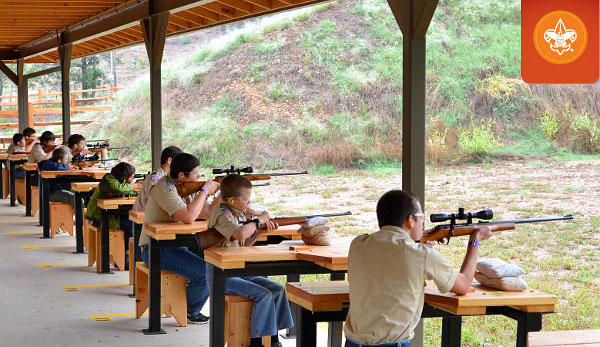
We’d like to see the looks on the faces of the juniors who’ll get to shoot this new rifle Kelly will be building. That’s like a Driver Training student getting to pilot a Ferrari. When this Editor got started in shooting, it was with very well-worn, hand-me-down 22 LRs at a local Boy Scout summer camp. We think it’s great that juniors will be able to sample something built with all-top-quality components.
Every Friday at 11:00 am, Kelly McMillan hosts the Talking Stock Radio Show on the Voice America Network. This week’s show features guest Robbie Barrkman, founder of The Robar Companies and CTI (Coating Technologies Inc.). If you have used any firearm product coated in NP3, you have Robbie to thank for it. Kelly will also interview Extreme Long Range (ELR) shooter Randy Powell from Thunder Ammo & Arms in Oklahoma.
Put twenty bucks back in your pocket. Or maybe forty on a big order. That’s how much you could save with this FREE Shipping offer from Brownells.com. There’s no minimum order, and this applies to nearly everything in stock (except heavy items and hazmat products). But you better act quick boys, this FREE Shipping deal is good for ONE DAY ONLY — May 4, 2017. Use Code M5S during check-out to get your order shipped for FREE.
Promotion codes for Shipping Offers apply to standard-rate shipping destinations in the United States and U.S. Territories only. Packages under 9 lbs. may ship with USPS final delivery, other orders will ship via ground service. Shipping surcharges still apply for: 2-Day or Overnight shipping; hazardous material fees; heavy weight charges; and acknowledgement of delivery for FFL items.
The National Benchrest Shooters Association (NBRSA) held its 600-Yard and 1000-Yard Benchrest Championships in April. Both events were held at the Sacramento Valley Shooting Center facility in Northern California. With significant rainfall in Spring 2017, the range was unusually green and pretty as you can see.
1000-Yard NBRSA Nationals, April 22-23, 2017
The 2017 NBRSA 1000-Yard National Championship was held at the Sacramento Valley Shooting Center last weekend. Congratulations to Richard Schatz, the 2017 NBRSA 1000 Yard National Champion. Richard, a past NBRSA Champ, also won Light Gun Score and Heavy Gun Group. Bill Johnston finished Second Overall, while Louie Tamagni secured Third Overall. Recently-crowned 600-Yard Champ Robert Hoppe won Heavy Gun Score at 1000, showing his ability at the longer distance. Congrats also to Dan Roberson who set a new Light Gun 3-Target Group National Record: 3.395. That’s 1/3 MOA at 1000 yards for three targets. That would be impressive at 300 yards. At 1000 yards, it is stunning.
CLICK HERE for a MS Word file with full 1000-Yard Match Results.
600-Yard NBRSA Nationals, April 19-20, 2017
The 2017 NBRSA 600-Yard National Championship was held at the Sacramento Valley Shooting Center April 19-20. Robert Hoppe shot superbly to win the 2017 Mid-Range Championship. Along with his overall title, Hoppe won Two-Gun Group, Two-Gun Score, Light Gun Group, and Heavy Gun Score. Mighty impressive shooting — Congrats Robert. Finishing Second Overall was Jamie Cardena, while Bert Croy took Third Overall. Jason Peterson had the Top Light Gun Score, while Richard Duncan won Heavy Gun Group. Terry Nunemaker shot the smallest group, a 1.087″ 5-shot, 50-1X. That was a stunning target, all shots centered. Congrats to 2017 Champ Robert Hoppe and all the “Top Guns”.
CLICK HERE for a MS Word file with full 600-Yard Match Results.
Photos courtesy Tanner Furniss and Canada Cummins.CLICK HERE for Match Gallery.
Good Guy Gets Top Job.Pete Brownell is the NRA’s new President. Pete was elected as NRA President by the NRA Board of Directors on May 1, 2017, capping off the 146th NRA Annual Meetings and Exhibits in Atlanta. Pete succeeds Allan D. Cors to become the 64th President of the NRA.
We applaud Pete Brownell’s election as NRA President. Your Editor has met and talked to Pete. He is a smart, hard-working, sincere, and focused individual who genuinely loves the outdoors and the shooting sports. He is “one of the good guys”, a true leader in our industry, who also cares about the average gun owner, and who has a clear vision for the future.
“It’s an honor and privilege to serve the 5 million members of the National Rifle Association of America”, said Brownell. “I’m a proud NRA member from day one who grew up with a passion for guns, our rich hunting heritage, and a passion to strengthen our Second Amendment.”
Brownell, whose entire life has been dedicated to the outdoors and shooting traditions, is the CEO of Brownell’s Inc., his family’s namesake business. Pete became the third Brownell to run the business when he assumed day-to-day operations from his father Frank, 72, who remains chairman of the board. Under their leadership, Brownells grew ten-fold from a “niche-specific supplier” of gunsmithing tools to an international company offering firearms, parts, ammo and accessories to shooters, hunters, gunsmiths and retailers worldwide.
Pete Brownell has already given years of service to the NRA. First elected to the NRA Board of Directors in 2010, Pete has served as chairman of the Membership Committee. Pete “rose in the ranks”, being elected as the NRA’s Second Vice President in 2013, and as First Vice President in 2015.
LaPierre, Powell, and Cox Retain Other NRA Top Leadership Roles
At the May 1st NRA Board of Directors meeting, the Board re-elected Wayne LaPierre as NRA Executive Vice President. Upon his re-election, LaPierre then reappointed Josh Powell as Executive Director of NRA General Operations, and Chris W. Cox as Executive Director of the NRA Institute for Legislative Action.
Story based on report by Jason Brown in NRABlog.com.
According to Military Times, the U.S. Special Operations Command (SOCOM) is considering replacing the 7.62×51 NATO in semi-auto sniper rifles with a mid-size 6.5 mm cartridge. The two leading candidates are the 6.5 Creedmoor and the .260 Remington. These 6.5 cartridges would deliver a flatter trajectory, better long-range ballistics, and reduced recoil compared to the 7.62×51 NATO (aka .308 Winchester). While the .260 Rem enjoys a case capacity edge over the 6.5 Creedmoor, in the real world, performance is similar — both cartridge types can push a 130gr bullet to velocities around 2900 fps. (See Sierra 6.5 CM Load Data.)
“Major Aron Hauquitz told Military Times Tuesday that SOCOM is in the preliminary stages of exploring a sniper rifle chambered in the 6.5 mm caliber. The two commercially available rounds being evaluated are the .260 Remington and the 6.5 mm Creedmoor.
Research shows that both rounds will ‘stay supersonic longer, have less wind drift and better terminal performance than 7.62 mm ammunition’, SOCOM officials said.
‘We’re purely in the exploratory phase’. Hauquitz said. ‘We’re trying to see if we can take a weapon that is 7.62 and give it greater range, accuracy and lethality.'”
The SOCOM representative indicated that test rifles in 6.5 Creedmoor and/or .260 Remington might be issued to test teams later this year, but there was no issue date in place yet. Hauquitz said the 6.5 mm exploration came out of preliminary results of the Small Arms Ammunition Configuration study, which assesses commercially available ammunition and new ammo technologies.
SOCOM Also Considering Polymer Cartridges
The Military Times report also revealed that SOCOM is considering polymer-cased rifle ammunition, with the goal of reducing load weight. SOCOM’s research shows that a polymer-cased mid-sized 6.5 mm cartridge could be one-third lighter than conventional brass-cased 7.62×51 ammo. That means the next-generation 6.5 mm ammo could “come in at 5.56×45 mm weight ranges”. While SOCOM is seriously looking at this new option, polymer-cased ammo will NOT be required for SOCOM’s new semi-auto rifle. In other words, if the polymer ammo is not ready, that “would not delay potential fielding of a 6.5 mm rifle” according to Maj. Hauquitz.
There’s a great interview with Bryan Litz of Applied Ballistics on Mia Rhode’s Life Of A Shooter’s Wife Blog. We recommend you read the full interview. Bryan offers many important insights that can benefit any precision shooter. It’s fascinating to learn about Bryan’s background and how he progressed in competitive shooting, starting with very basic equipment. As a “broke high school kid”, he got started on the cheap, paying for gear with wages from McDonald’s. Now he’s a globally-recognized expert in Ballistics and Long Range precision. You’ll enjoy reading the Full Interview. Here are some highlights…
LOASW: When did you first become interested in shooting?
Bryan: My first memories of shooting were at the age of about 9 or 10. Pellet rifle in the back yard. My Dad taught me to shoot, stressing the importance of accuracy. I was driven to hit targets, mostly small targets at long distance. My grandfather was on the All-Army shooting team back in the ‘50s, and was distinguished in both rifle and pistol. Shooting is part of my family’s DNA and I benefited from that from a young age.
LOASW: What sparked your interest in Competitive Shooting and how old were you when you started competing?
Bryan: Hunting groundhogs in the farm-fields of Pennsylvania through high school is where I truly connected with long-range shooting. My Dad heard of a competition range (The Original Pennsylvania 1000 Yard Benchrest Club in Williamsport, PA). So we visited there one summer and I immediately found my trusty 22-250 inadequate for the job of 1000-yard benchrest shooting. So I saved my McDonald’s wages until I could afford a 7mm Remington Magnum and began competing in my first matches at the age of 15.
Learning with Limited Resources…
… It was a huge mis-match to my situation because benchrest is a highly gear-driven sport, and the winners typically have many $1000s of dollars wrapped up in equipment. I was a broke high school kid who needed my parents to drive me to the range my first year, and my second year, I had to rely on fellow competitors to jump start my old pick-up truck that was always breaking down. Nevertheless I enjoyed the hell out of shooting 1000 yards. I can honestly say that I don’t have any more FUN shooting these days with all the best equipment as compared to those bad ‘ol days when I had maybe $900 total wrapped up in all my gear. Those who remember me from those early days might recall the home-made shooting rest and McDonalds French fry box that I carried all my gear in. Later when I picked up prone/sling shooting, my shooting mat was a piece of carpet (pink, no less), and my shooting coat was a military field jacket with belts sewn in it.
Money was probably my biggest challenge when I started out. I had plenty of fun with my budget kit, but was certainly constrained by lack of access to quality gear. I overcame this with hard work and making the most of what I had. Learning how to mitigate the deficiencies of my equipment was an important stepping stone which has been highly valuable even now when I’ve got better stuff. It’s a good skill to have, to be able to spot something about to come unraveled.
LOASW: What advice would you give to someone new to competitive shooting?
Bryan: Find a mentor, someone who lives near you who has experience and is willing to share it. You will cut years off your learning curve if you can get someone to share their experience with you who’s “been there done that”.


 The
The 


 LOASW: When did you first become interested in shooting?


