Eurooptic vortex burris nightforce sale


teslong borescope digital camera barrel monitor


As an Amazon Associate, this site earns a commission from Amazon sales.


February 3rd, 2026

Watch How Primers Are Made in Federal Factory Video

Federal Primer Priming Tool Magnum primers foil anvil primer construction reloading powder CCI

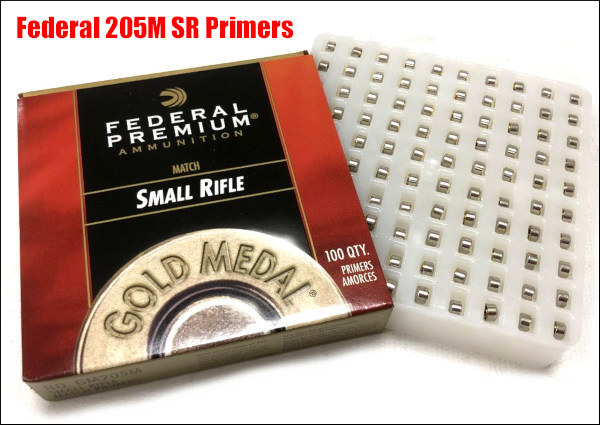
Do you know how gun primers are made — how the explosive elements are applied into those tiny cups? Find out by watching this video filmed at a Federal ammunition factory. It starts out with empty primer cups loaded, 1000 at a time, into trays using vibration (0:05 time-mark). While much of the process is automated, there is still a significant role played by production workers who apply a green, paste-like charging compound to the inside of hundreds of primer cups.

At the 0:17-second time-mark you can see the factory worker “charging” the primers with the priming compound. After the cups are filled, then the plate of cups “mates up with a plate of anvils” (0:40 time-mark). Then the primers are unloaded from trays and inspected.

Federal Primer Priming Tool Magnum primers foil anvil primer construction reloading powder CCI

Primer “Mysteries and Misconceptions” Article

There is an excellent article about primers on the Shooting Times website. This authoritative Shooting Times article explains the fine points of primer design and construction. The author reveals some little-known facts about primers and corrects common misconceptions. Here are some highlights:

Primer Priming Tool Magnum primers foil anvil primer construction reloading powder CCISize Matters
Useful Trivia — even though Small Rifle and Small Pistol primer pockets share the same depth specification, Large Rifle and Large Pistol primers do not. The standard pocket for a Large Pistol primer is somewhat shallower than its Large Rifle counterpart, specifically, 0.008 to 0.009 inch less.

Magnum Primers
There are two ways to make a Magnum primer — either use more of the standard chemical mix to provide a longer-burning flame or change the mix to one with more aggressive burn characteristics. Prior to 1989, CCI used the first option in Magnum Rifle primers. After that, we switched to a mix optimized for spherical propellants that produced a 24% increase in flame temperature and a 16% boost in gas volume.

Foiled Again
Most component primers have a little disk of paper between the anvil and the priming mix. It is called “foil paper” not because it’s made of foil but because it replaces the true metal foil used to seal early percussion caps. The reason this little disk exists is strictly a manufacturing convenience. Wet primer pellets are smaller than the inside diameter of the cup when inserted and must be compacted to achieve their proper diameter and height. Without the foil paper, the wet mix would stick to the compaction pins and jam up the assembly process.

Read Full Primer Story on ShootingTimes.com

Video find by Boyd Allen. We welcome reader submissions.
Permalink - Videos, Bullets, Brass, Ammo, Reloading No Comments »
February 3rd, 2026

Beretta Video Showcases 500 Years of Firearms Crafting

Beretta shotgun technology robot video Human

Today we feature a great video about firearms crafting produced by Beretta, a legendary Italian gun-maker. Founded in 1526, 500 years ago, Beretta has remained under family leadership for 16 generations. This year Fabbrica d’Armi Pietro Beretta celebrates 500 years as the world’s oldest, continuously-operating firearm manufacturer, founded in 1526 in Gardone Val Trompia, Italy. The five-century celebration started with a major event at SHOT Show 2026.


Video set to auto-play. Click speaker icon to hear sound.

Today’s featured movie, entitled “Human Technology”, is one of most impressive videos we’ve ever featured on this site. It’s that good. You’ll see an amazing blend of modern technology along with old-world artisanship — “a mesmerizing meld of the high-tech and the traditional”. (Daniel Xu, Outdoor Hub.)

“Human Technology is a singular and symbolic movie, its cast entirely made up of Beretta workmen, thus illustrating the perfect synthesis between craftsmanship and technology,” Beretta writes. This artistic movie by Ancarani Studio illustrates all the aspects of the manufacturing of a high-end Beretta shotgun. This video is a study in contrast. The movements of robotic assembly machines are juxtaposed with the centuries-old craftsmanship of stock carvers. Beautifully filmed and edited, this video should amaze and entertain anyone who loves fine firearms. (Full-screen HD Recommended.)

Beretta shotgun technology robot video Human

Beretta shotgun technology robot video Human

Beretta shotgun technology video Human

Beretta — Incredible history. Beretta was founded in 1526, five centuries ago. Remarkably, the enterprise is still owned by the Beretta family.

Beretta is now a huge gun industry company — the Beretta Holding Group now owns Sako, Tikka, Burris, Steiner, and Norma. Sako and Tikka were acquired in 2000, Burris Optics in 2002, and Beretta added Steiner-Optik and Norma via RUAG Ammotec. Beretta Holding provides a complete range of firearms, optics, and ammunition through these and a dozen other brands.

Permalink - Videos, Gunsmithing, New Product No Comments »
February 3rd, 2026

Sizing Die Shim Sets Allow Precise Control of Shoulder Bump

Sinclair Die Shims

When your cases become hard to extract, or you feel a stiff bolt lift when removing a cartridge, it’s probably time to full-length size your cases, and “bump” the shoulder back. We generally recommend bumping shoulders each time you reload, after the initial fire-forming. Benchrest and F-Class benchrest shooters, running relatively high pressures, typically full-length size every load cycle, bumping the shoulder .001-.003″. High Power shooters with gas guns generally full-length size every time, and may need to bump the shoulders .003″ or more to ensure reliable feeding and extraction.

Use Shims for Precise Control of Shoulder Bump
Some shooters like to set the “default” position for their full-length die to have an “ample” .003″ or .004″ shoulder bump. When they need less bump, a simple way to reduce the amount of shoulder movement is to use precision shims in .001″ (one-thousandth) increments.

Here are reports from Forum members who use the shims:

“Great product. I have my die lock ring(s) adjusted for the shortest headspace length on my multiple chambers 6BRs and 6PPCs. When needing a longer headspace, I just refer to my notes and add the appropriate shim under the lock ring. Keep it simple.” — F.D. Shuster

Mats Johansson writes: “I’ve been using [shims] since Skip Otto (of BR fame) came out with them. I set up my dies with the .006″ shim, giving me the option of bumping the shoulder a bit more when the brass gets old and hardens while still having room to adjust up for zero headspace, should I have missed the original setup by a thou or two. Hunting rounds can easily be bumped an extra .002-.003″ for positive, no-crush feeding. Being a safety-oriented cheapskate, I couldn’t live without them — they let me reload my cases a gazillion times without dangerous web-stretching. Shims are a must-have, as simple as that.” — Mats Johansson

Sinclair Die Shim Kit — Seven Shims for $14.99

Sinclair Die Shims

Sinclair Int’l (through Brownells) offers a seven-piece set of Sizing Die Shims that let you adjust the height of your die (and thereby the amount of bump and sizing) in precise .001″ increments. Sinclair explains: “Some handloaders will set their die up to achieve maximum sizing and then progressively use Sinclair Die Shims between the lock ring and the press head to move the die away from the shellholder. Doing this allows you to leave the lock ring in the same position. These shims are available in increments of .001″ and work very well.”

Seven Shims from .003″ to .010″
Sinclair’s $14.99 Die Shim Kit (item 22400) includes seven shims in thicknesses of .003, .004, .005, .006, .007, .008, and .010. For ease of use, shim thickness is indicated by the number of notches cut in the outer edge of each shim. Even without looking you can “count” the notches by feel.

Permalink Gear Review, Reloading No Comments »