The folks at F-TR Ireland send greetings from the Emerald Isle: “Wishing all our friends … around the globe all the very best. Beannachtai na Féile Phádraig! (that means “St. Patrick’s Day Blessing”.) Hope you all have a great St. Patrick’s Day … whether be you Irish by birth, heritage, or aspiration!”
Your Editor sends a Happy St. Patrick’s Day greeting to all our AccurateShooter.com Bulletin readers. As an Irish-American whose great-grandfather was born in County Donegal, I’m proud to wear green today. But lest readers think that Ireland is only a land of shamrocks, lucky leprechauns, and Riverdancers, be aware that Ireland has an active community of precision shooters. In 2011, the National Rifle Association of Ireland unveiled the beautiful new 1200-yard range in Tullamore, at the Midlands National Shooting Centre. Also in 2011 Tullamore was was the site of the first modern-era Creedmoor Cup Challenge Match between Irish and American Teams. The Yanks won that year, but that was just the beginning of a great rivalry.
Midlands National Shooting Centre of Ireland In the year 2000, the National Rifle Association of Ireland (NRAI) was formed. One of its primary goals was to promote fullbore target shooting in Ireland. The NRAI needed a home and that home was found on the bog of Derrymore in Blueball just outside Tullamore in County Offaly. In 2000, a 400-yard range was built on the site. Three years later the 600-yard “Windmill” range, the first of its kind in modern Ireland, was also built to allow for mid-range target shooting. The site was christened the Midlands National Shooting Centre of Ireland (MNSCI) and with it the story of Irish F-Class began. No sooner had the 600-yard range been built at the MNSCI, when the NRAI formed a national F-Class league bringing together like-minded shooters from all over Ireland.
Irish Rifle (Crafted by Enda Walsh of Custom and Precision Rifles Ireland)
Irish Shooting Range (National Shooting Center, Tullamore, Ireland)
Benchrest Competition in Ireland
Along with long-range and F-Class shooting, benchrest shooting (both rimfire and centerfire) is also popular on the Emerald Isle. Here are images from a major rimfire match sponsored by the National Rimfire Benchrest Association of Ireland (NRBAI).
This video shows a variety of .22 LR rifles shooting Ireland rimfire matches from the bench. It’s great to see the many different rifle types and front/rear rests.
Springtime is turkey hunting season throughout the USA. The official spring wild turkey hunting season is set regionally by each state. In a few states, turkey season has already commenced, while most other states open their turkey seasons in early April, with the spring seasons running for 3-5 weeks. CLICK HERE to read Outdoor Life Magazine’s Turkey Hunting Resource page. This includes articles on How to Hunt Turkeys, Best Turkey Calls, Turkey Hunting Camo Gear, and Recommended Turkey Loads.
Sportsman’s Warehouse has an online page about Spring Turkey Hunting. This has features on recommended shotguns, clothing & footwear, decoys & calls, blinds & chairs, and even turkey cooking. CLICK HERE for the Sportsman’s Warehouse Turkey Hunting Page.
And Sportsman’s Warehouse has an excellent, detailed “how to” article, the Beginner’s Guide to Turkey Hunting. That feature includes the Outdoor Dan video featured above.
Saturday Showcase Spring Turkey Hunting Videos
With over 2 million views, this Canada-in-the-Rough video shows effective turkey scouting, calling, and shooting. This action-packed turkey hunting compilation features 30 turkey kill shots with shotguns.
Get Zone — At the Ranch Turkey Hunting Videos
GetZoneHunting.com has a vast video library for hunters, with hundreds of helpful videos on all types of hunting. In time for spring turkey season, GetZoneHunting offers a big collection of turkey hunting videos: At the Ranch – Turkey. On that page you’ll find 13 turkey hunting “how-to” videos. Here are links to five GetZone Turkey Hunting videos with valuable information from skilled, experienced hunters. Click each of the photos below to watch those five videos on theGetZone site.
At the Ranch – Turkey offers solid advice for turkey hunters. These five videos will help you better understand turkey behavior and have success on your hunt. Click any photo to watch the particular video on the GetZone website. (Work Warning — When each GetZone video opens, it may immediately launch an annoying commercial with loud AUDIO!). There are eight more turkey hunting videos on GetZone’s Turkey Hunting HQ Page.
At the Ranch: Shot Placement for Turkeys — CLICK to Watch Video
At the Ranch: Turkey Hunting Essentials — CLICK PHOTO to Watch Video on GetZone.com
At the Ranch: The Differences Between a Jake and a Tom — CLICK PHOTO to Watch Video on GetZone.com
At the Ranch: Early vs. Late Spring Turkey Hunt — CLICK PHOTO to Watch Video on GetZone.com
At the Ranch: How to Plan a Turkey Hunt — CLICK PHOTO to Watch Video on GetZone.com
Free Printable Turkey Target from AccurateShooter.com
As a special bonus for our readers, here is a free, printable Turkey Target, so you can practice for your turkey hunting adventure, This special Turkey Bullseye Target was created by our friend and Forum member Pascal (aka “DesertFrog”). CLICK HERE for FREE Turkey Target.
When shooting pistols do your shots normally land smack dab in the middle of the target? If not, you may have some technique problems that are causing your shots to move off center. Top Shot Champion Chris Cheng has produced a good video for the National Shooting Sports Foundation (NSSF) that helps handgunners diagnose accuracy issues. By shooting 3-shot groups and looking at the pattern and location of the shots, you can see what you’re doing wrong (or right). Here are some examples. Note, this process works best for shooters whose shots fall typically in one target zone. If your shots are all over the target, your form is inconsistent and problems will be harder to diagnose.
1. Low Left — Jerking Trigger: Here we see three (3) shots at the 7 O’clock position. This shows that the shooter is jerking the trigger, meaning that the shooter is pulling the trigger too quickly and therefore forcing the barrel to drop when breaking the shot. This is a very common problem, particularly with novices who are reacting to the noise/recoil of the pistol.
2. 9 O’Clock — Too Little Trigger Finger: If we see three (3) shots at the 9 O’clock position, what this can be indicative of too little trigger finger on the trigger. And therefore with every shot, the shots are getting pushed to the left. Try moving your trigger finger on to the pad of your index finger. Also try dry firing drills.
3. High Left — Anticipating Recoil: In this next example, we see three shots around the 11 O’clock position. What could be happening here is that the shooter is anticipating the recoil, and is actually lifting the gun up when he shoots. We recommend slowing down, working on your breathing, and, again, do dry-firing drills.
4. 3 O’Clock — Too Much Trigger Finger: Finally, if you see three (3) shots at the 3 O’clock position, this can indicate that there is too much trigger finger on the trigger. Therefore when the shot breaks the shooter is pulling each shot to the right. Note: Each of these descriptions is for a RIGHT-handed shooter. If you are a left-handed shooter you’ll want to reverse those descriptions.
How fast can you shoot a bolt-action rifle? We doubt you can out-pace the ace “Stangskyting” shooters from Scandinavia. Some of these guys can run more than two rounds per second, including mag changes! That’s impressive. Bulletin reader C. Lemmermann from Denmark told us: “In Scandinavia we have this competition called ‘Stangskyting’. It’s similar to the ‘Mad Minute’ but we only have 25 seconds to hit the target [at] 200-300m distance with a 6.5×55 [target rifle].” In the Stangskyting video below a shooter named Børklop puts 16 rounds on target in just 25 seconds. (He starts with a round in the chamber and cycles through three, 5-round magazines).
Børklop’s performance, with just a sling and iron sights, is impressive. He’s shooting a Sauer 200 STR target rifle with 5-round magazine. Note that Børklop manipulates the Sauer’s bolt with his thumb and index finger, while pulling the trigger with his middle finger. As good as Børklop is, some Stangskyting competitors are even better. Roy Arne Syversrud from Oslo, Norway tells us: “The best shooters in Norway can do 21 shots in 25 seconds, changing the mag three times.”
Here’s another Stangskyting video. Check out the speed with which John Olav Ågotnes works that action — simply amazing!
This Guy Could Break the “Mad Minute” Record
Børklop’s rate of fire, 16 rounds in 25 seconds, is the equivalent of 38.4 rounds in 60 seconds. That’s a notable number because the record for the “Mad Minute”, a British Army marksmanship drill, is 38 rounds in one minute. That record was set in 1914 by Sergeant Instructor Alfred Snoxall, and still stands. So as you watch Børklop, keep in mind that Snoxall shot that fast for a full minute with a Lee-Enfield nearly 100 years ago!
Børklop has an average cycling time of 1.56 seconds per shot, starting with a round in the chamber. To beat the record of 38 rounds, he would need to make seven mag changes in sixty seconds. All those mag swaps could reduce his average time per shot, making it difficult to achieve 38 hits in a minute. But, if Børklop could use 10-round mags with his Sauer STR, this guy has the skills to break the record.
To emphasize the capabilities of the WWI-era British shooter who set the record, Snoxall shot as fast as Børklop does, but Snoxall reloaded with stripper clips. Snoxall’s SMLE (Lee-Enfield) rifle also had relatively crude open sights and the stock was far less ergonomic than Børklop’s Sauer STR stock.
Here’s another Stangskyting video showing John Ågotnes shooting rapidfire with his Sauer 200 STR (Scandinavian Target Rifle) chambered in 6.5×55. By our count, Ågotnes manages 17 shots within the 25-second time period. That rate of fire (17 in 25 seconds) equates to 40.8 rounds in one minute!
Creedmoor Sports is a leading vendor of products for competitive shooters and serious hand-loaders. Along with great gear, Creedmoor Sports provides informative content for its customers. The Creedmoor InfoZone provides Reloading Tips, Gear Reviews, Shooting News, and basic gunsmithing information.
Bill Gravatt, President of Creedmoor Sports, is an expert on reloading processes and gear. He developed many of the popular tools marketed by Sinclair Int’l, and he brings that expertise to Creedmoor Sports. Bill hosts a series of “how-to” videos produced for the Creedmoor InfoZone.
In this video, Bill Gravatt demonstrates several methods to clean your cases. Bill tells us: “Powder residue should be removed before you insert your cases into your reloading dies. There are several ways to clean your cases. Many shooters use a combination of various methods…”
1. Manual Cleaning — You can use 0000 Steel wool for the outside of the case and a Case Neck brush for the inside. A paper towel can remove any remaining residue. This is a handy way to clean if you load at the range.
2. Vibratory Tumbling — This traditional method works well, particularly for pistol brass. Experiment with both Corn Cob and Walnut media. You can get a brighter shine by putting a small amount of liquid brass polish in the media.
3. Wet Tumbling with Stainless Media — This process can get your brass clean inside and out. Do check to ensure no pins are stuck in the flash-holes. Watch for peening of case mouths that can occur over time.
4. Ultrasonic Cleaning — Ultrasonic cleaning works great for small parts as well as brass. The ultrasonic process removes all carbon and traces of lube, which can leave the inside of case necks too dry. To smooth bullet seating, try putting a tablespoon of Ballistol in the cleaning solution.
Cleaning Reloading Dies
Cleaning your reloading dies is something that many hand-loaders neglect. In this 60-second Tech Tip, Bill Gravatt provides some smart advice on cleaning your dies. Bill notes: “After heavy use, case lube and carbon can build up in your reloading dies. It’s important to keep them clean. Also, with new dies, give them a good cleaning before first use, because they ship with a corrosion inhibitor.”
1. Step 1 — Prior to cleaning, disassemble the die and spray it with a good degreaser. Do this with brand new dies too.
2. Step 2 – Take a patch and run it in the die to remove old lube and gunk. Don’t forget the decapping assembly and other internal parts.
3. Step 3 — After cleaning the die, but before reassembly, spray the die with a good corrosion inhibitor, such as Corrosion-X or Starrett M1.
U.S. Senator Mike Lee (Utah) has introduced notable new legislation, the National Constitutional Carry Act. Senator Lee’s U.S. Senate Bill restores the right to carry firearms in ALL 50 states. This bill would ensure that law abiding American citizens are able to carry around the country without fear of antigun states arbitrarily restricting or criminalizing their chosen self-defense tool. Residents of antigun states would no longer have to endure second class Second Amendment treatment, whether through outright hardware bans or policies that indirectly discourage the exercise of Second Amendment rights.
The Gun Owners of America (GOA) endorses the National Constitutional Carry Act. Erich Pratt, GOA Senior Vice President, issued the following statement: “In a time of war, Americans cannot afford to have the right to bear arms delayed by arbitrary state permitting processes. Public safety is threatened not only by ordinary criminals, but also bad actors working for foreign adversaries, and Americans need to be armed for the security of our free state. That’s why Gun Owners of America is proud to endorse Senator Mike Lee’s National Constitutional Carry Act. Under this GOA-backed legislation, the right to carry a firearm without a government permission slip will be fully restored, and unconstitutional states regulations on firearms, ammunition, and magazine size will be preempted.”
Here is GOA’s Minuteman Moment video analysis of the proposed National Constitutional Carry Act:
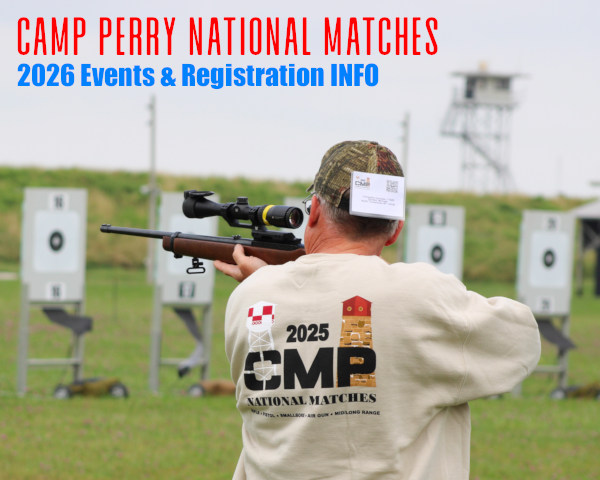
REGISTER Now for CMP 2026 National Matches at Camp Perry
Registration for the Civilian Marksmanship Program’s 2026 National Trophy Pistol and Rifle Matches is now. This year’s National Matches will run from July 12 through August 9, 2026. Review the new 2026 National Matches schedule and other event info on the CMP website at TheCMP.org/cmp-national-matches.
The CMP National Matches, held at the Camp Perry National Guard Training Base since 1907, is conducted via a partnership between the CMP and the Ohio National Guard. The National Matches include multiple indoor and outdoor events, with spectators welcome to watch this noteworthy, century-old competition.
Along with several competitive opportunities for adults and juniors of all experience levels, the National Matches features a variety of educational clinics for marksmen and women as well as retail selections from some of today’s leading industry vendors. Whether participating for the first time, a seasoned competitor or simply observing, the National Matches has something for everyone. All events are open to the public, free for viewing. Spectators are welcome to observe firing on the Camp Perry ranges at any time, with ample parking on-site.
Highpower, Service Rifle, and Vintage Rifle
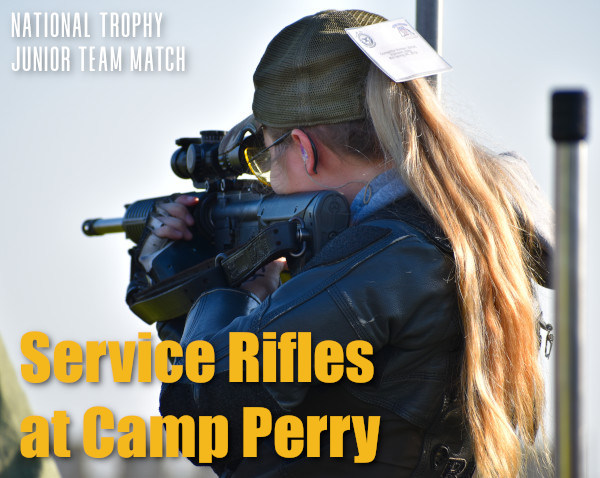
Introduced last year, the National Trophy Rifle series will again be held completely on electronic targets! The schedule of events includes prestigious matches like the President’s Rifle, Hearst Doubles, Rattle Battle, National Trophy Individual and National Trophy Team events. NOTE: The National Trophy Infantry Team Match will still be on paper targets.
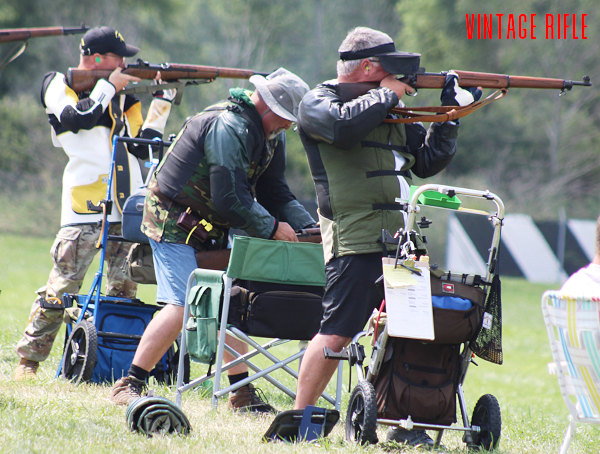
A paired Junior Team Match is also on the schedule for young competitors, along with an assortment of vintage and modern military rifle events like the John C. Garand, Springfield and Vintage Sniper matches for individuals at every stage of their marksmanship abilities. Additionally, the M14 Heritage Match is a major attraction.
CMP National Championship Rifle
The CMP National Championship series features three days of 800 Aggregate competitions and a 4-Person Team event. Awards are presented for the leading competitors of each day as well as for the culminating 2400 Aggregate (800×3).
Mid-Range and Long-Range Rifle
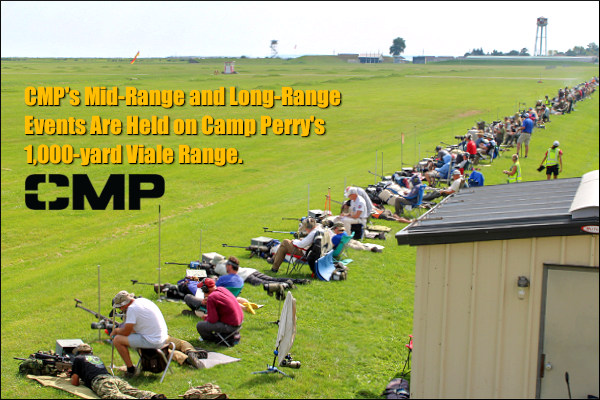
The CMP’s National Mid-Range and Long-Range series features both individual and team competitions, fired fully on CMP’s line of outdoor electronic targets. All Mid/Long-Range matches are open to Match Rifle, Service Rifle, Palma Rifle, F-Open, F-TR or AR Tactical categories fired from 600 yards (Mid-Range) and 1,000 yards (Long-Range).
New for 2026: The CMP has added a Mid/Long-Range category for this year: F-Class Practical. This “Practical” class is geared toward new competitors and has more affordable equipment standards. In addition, this summer an International 12-Person Team Match will be held, featuring teams from the United States, Great Britain and Canada. The event will feature a Palma course of fire: record shots at 800, 900 and 1,000 yards.
Rimfire Sporter Rifle
Highlighted as one of CMP’s most popular events, the Rimfire Sporter Rifle Match features .22 caliber competition in open sights (O-Class), telescopic (T-Class), tactical/unlimited (TU) and U.S. military rimfire training rifles (M-Class). The event is perfect for those just beginning in the sport or those looking for a unique challenge on the range.
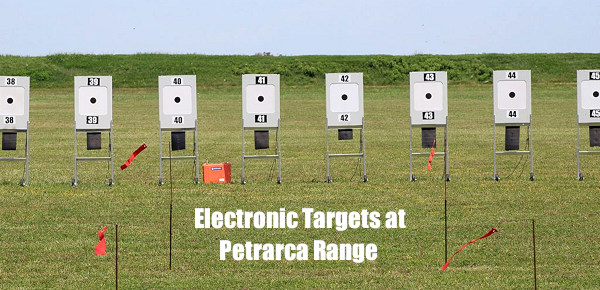
Like last year, the event will be fired completely on electronic targets! Competitors will be able to enjoy close parking and the covered structure of Petrarca Range.
Smallbore Rifle
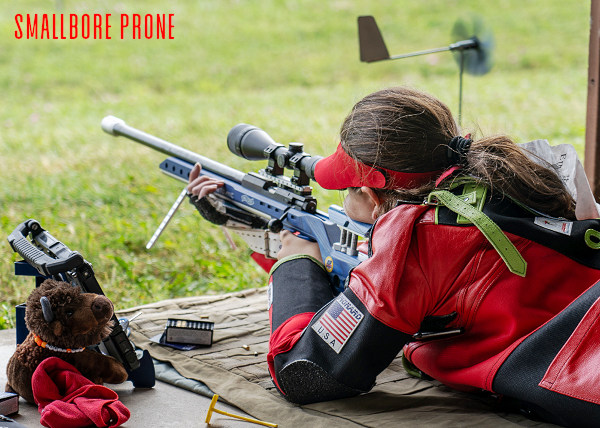
Likewise, the National Smallbore events will be fired on the same electronic targets as Rimfire Sporter — also setup on Camp Perry’s Petrarca Range. The schedule includes three-position and prone events, complete with an F-Class category for interested individuals.
National Air Rifle Championship
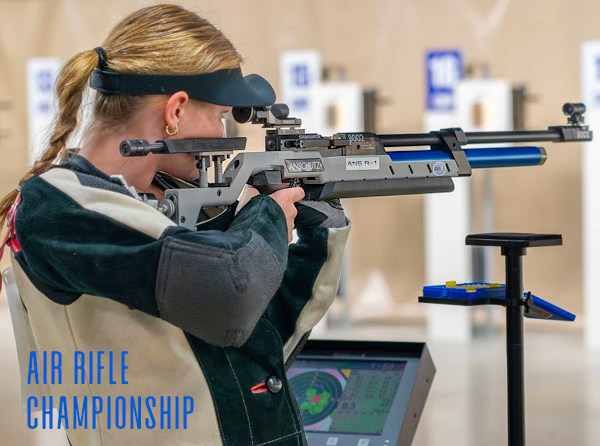
The National Air Rifle Championship (60 Shot and Team Match) for adults and juniors will be held at the same time as 3-position smallbore to accommodate those competitors wishing to fire in both events. These are sanctioned USA Shooting Designated Ranking Matches.
Pistol Events and Glock Challenge
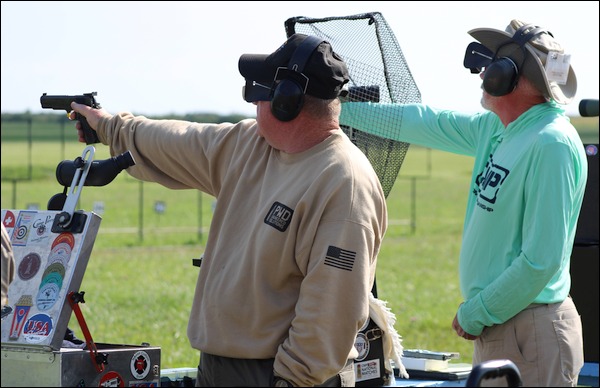
Fired this year on newly minted paper targets branded with CMP’s insignia, the National Pistol events include a mix of traditional matches like the President’s 100 Pistol, National Trophy Individual and National Trophy Team events, along with a series of 900 Aggregate matches for .22, Center Fire and .45 Pistol. The GSSF GLOCK National Challenge will be returning to the schedule in 2026 along with the Service Revolver EIC Match. The National Air Pistol Championship will be held in the evening to allow competitors to take part in the aggregate matches during the day.
National Matches Air Gun Events
For air rifle and air pistol competitors, the National Matches Air Gun events will be offered within the Gary Anderson CMP Competition Center’s 80-point indoor electronic target range – also located on Camp Perry. The air gun events are available through the entirety of the National Matches and appeal to those of any experience level, with supported bench options included.
Marksmanship Training Clinics and SAFS
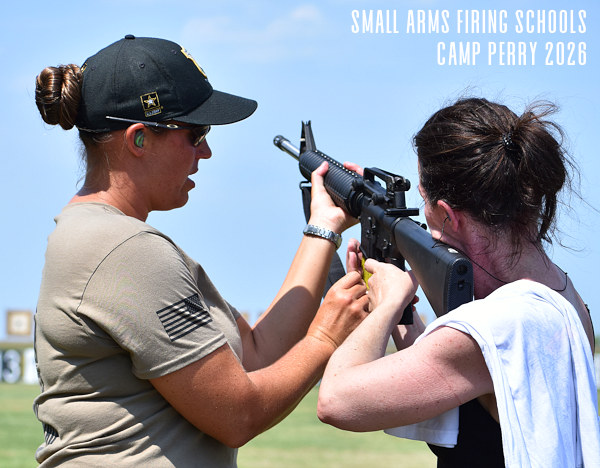
Image shows 2023 National High Power Rifle Champion Amanda Elsenboss (left) providing instruction. Amanda was, a former USAMU Team member, now serves in the National Guard.
Small Arms Firing Schools (SAFS) will be held for rifle, pistol and smallbore rifle. Participants in SAFS are trained by some of the top military instructors in the country on firearm safety and competition basics. All firearms and ammo are provided for the live-fire portion of the clinic. Other clinics during the National Matches include a Rimfire Sporter Rifle Clinic, the CMP Junior Rifle Clinic and the CMP Advanced Highpower Clinic, for more experienced competitors. Most clinics include both classroom and live-fire training on the range.
Sales at CMP Store
Behind the range, Commercial Row offers a variety of items for spectators and competitors – with an array of manufacturers selling used firearms, ammunition, competition gear, accessories, apparel and much more. The CMP North Store, located on the grounds of Camp Perry, allows even more buying opportunities at the Matches with a lineup of military surplus rifles, memorabilia and equipment needs.
Housing at Camp Perry
Housing for the National Matches is currently available on the grounds of Camp Perry. Accommodations include four-person huts, cottages, barracks, RV spaces and camp sites. Camp Perry housing info posted on the Camp Perry Lodging Center site. Also, if Camp Perry base housing is full, numerous hotels are available in the surrounding Port Clinton, Fremont, and Sandusky Ohio areas.
Rimfire tactical-style matches are now one of the fastest-growing types of rifle competition in the country. The USA has seen a big growth in rimfire tactical matches over the last six years. NRL22 and PRS Rimfire matches are held throughout the country. Right now there are probably ten times as many rimfire tactical matches as sanctioned PRS and NRL centerfire matches. The reason is simple — rimfire ammo is much less costly, and clubs can run challenging rimfire tactical matches at nearly any outdoor gun range that allows shooting out to 200+ yards.
The National Rifle League (NRL) started off sponsoring major centerfire tactical matches, similar to PRS competitions. That proved successful so the NRL added a .22 LR Rimfire series, called NRL22. The NRL22 rimfire discipline has been a major success, as rimfire guns are fun to shoot and ammo is very affordable. The most popular NRL22 matches have drawn up to 200 rimfire competitors. And now PRS has its own PRS .22 Rimfire series.
Precision Rimfire Match with Through-the-Lens Video
Here’s an interesting video featuring a top-tier .22 LR MDT-chassis rifle. The host, Pieter “Piet” Malan from South Africa, runs the excellent Impact Shooting YouTube Channel, which now has 320+ videos on target shooting and hunting. This video features a TriggerCam unit attached to the scope, so you can see hits on the targets, just as the shooter does.
NRL22 — Affordable, Challenging Rimfire Competition Series
NRL22 is a great way to get into competition shooting with minimal expense. There are currently eight (8) classes: Open, Base, Young Guns, Ladies, Air Rifle, Old Guns, Semi-Auto, and Adaptive. Base Class is for the budget-minded shooter — the combined MSRP of Rifle and Optic may not exceed $1650.00 (for example spend $800 on a rifle and $850 on a scope). That keeps the sport affordable. The other classes have no price limits on Rifle and Optic. The “Young Guns” division is for competitors 17 years or younger. Visit NRL22.com to find an NRL22 match near you. CLICK HERE for full NRL22 rules with 2026 updates.
Precision Rimfire Competition Match Report
This excellent video covers a big rimfire precision match, the King of 0.28 Miles event, held at the Rush Lake Range in MN. The video shows multiple stages with targets out to 300 yards, followed by a 465-yard challenge. Host Dave shot the match with a Vudoo Gunworks V22 rifle in a Grayboe Ridgeback stock, with a Trijicon Accupower 4.5-30x56mm FFP scope. The ammo was Lapua Center-X, a top-tier choice.
Rimfire Ammo Selection — Why Comparison Testing Is Important
Every gun and barrel is different, so you should test various ammo types in YOUR rifle. Additionally, you can benefit from lot testing with particular ammo types to optimize your ammo choice even more. If you’re serious about rimfire accuracy, lot testing can be very helpful, whether at your own rage or a testing center. There is no replacement for starting with a good lot of ammunition your rifle likes.
First Rimfire Precision Match — Lessons Learned
Here’s a helpful video for folks getting started in the Precision Rimfire game. Our buddy F-Class John, a top F-Open competitor (and YouTube video creator), is getting starting in the .22 LR precision discipline. Here he provides lessons learned from his first .22 LR precision match.
Tripod Review — Options for Precision Rimfire Shooters
The NRL22 match format is a great shooting discipline. NRL22 offers a high fun factor at relatively low cost. You don’t have to reload match ammo. A couple of 50-round boxes of .22 LR ammo will get you through the match. While some people bring lots of gear to matches, that’s by choice and not by necessity. You can keep it simple and still be competitive (and win).
Tips for NRL22 Competitors by Jonathan Ocab
I am a match director at my gun club and run our local NRL22 matches. People often ask me for tips for competing in NRL22. First, I recommend getting the course of fire for the month in advance and practicing those stages at the range. Here are other specific tips that should help NRL22 competitors improve their gun-handling and match results.
1. Dry Fire Practice — If you are not able to do live fire practice at the range, I encourage shooters to practice their shooting positions at home via dry fire. Setup props or barricades with pasters or other faux targets on a wall in the garage or inside the house and run through each stage.
2. Scope Magnification Level — The most common issue I see with newer shooters in NRL22 is the tendency to maximize their scope magnification. The timer will start, and the shooter gets into position on a target, but the scope is set to 15x or higher and the shooter can’t find the target. The shooter lowers the magnification, locates the target, and then increases the magnification again, takes the shot, transitions to another target, and repeats the process of decreasing magnification, locating target, etc. Novice NRL22 shooters should try using the mid-range magnification. Try shooting 7x-12x and learn to balance field of view and target image.
Emil Praslick III is widely recognized as one of the greatest wind wizards on the planet — a master at identifying wind value and direction, and predicting wind cycles. As coach of the USAMU and top civilian teams, Emil has helped win many high-level championships. In the three videos we feature today, Emil, who works with Capstone Precision Group (Berger, Lapua, SK, Vihtavuori) and Team Applied Ballistics, explains how to determine wind direction and velocity using a variety of indicators. Praslick, now retired from the U.S. Army, was an 18-time National and 2-time World Champion coach with the USAMU.
Video ONE: Wind Theory Basics — Understanding “Wind Values”
In this video from UltimateReloader.com, Emil explains the basics of modern wind theory. To properly understand the effect of the wind you need to know both the velocity of the wind and its angle. The combination of those variables translates to the wind value. Emil also explains that the wind value may not be constant — it can cycle both in speed and velocity. Emil also explains some of the environmental conditions such as mirage that can reveal wind conditions.
Video TWO: Determining the Direction of the Wind
Key Point in Video — Find the Boil
Emil explains how to determine wind direction using optic. The method is to use spotting scope, riflescope, or binoculars to look for the “Boil” — the condition in mirage when the light waves rising straight up. The wind will generate that straight-up, vertical boil in your optics when it is blowing directly at you, or directly from your rear. To identify this, traverse your scope or optics until you see the boil running straight up. When you see that vertical boil, the direction your optic is pointing is aligned with the wind flow (either blowing towards you or from directly behind you).
Video THREE: The No Wind Zero Setting
In this second video, Emil defines the “No-Wind Zero”, and explains why competitive shooters must understand the no-wind zero and have their sights or optics set for a no-wind zero starting point before heading to a match. In order to hit your target, after determining wind speed and direction, says Emil, “you have to have your scope setting dialed to ‘no wind zero’ first.”
Coach of Champions — Emil Praslick III
SFC Emil Praslick III, (U.S. Army, retired) works with Berger Bullets and Applied Ballistics. Emil served as the Head Coach of the U.S. National Long Range Rifle Team and Head Coach of the USAMU for several years. Teams coached by Emil have won 33 Inter-Service Rifle Championships. On top of that, teams he coached set 18 National records and 2 World Records. Overall, in the role of coach, Praslick can be credited with the most team wins of any coach in U.S. Military history.
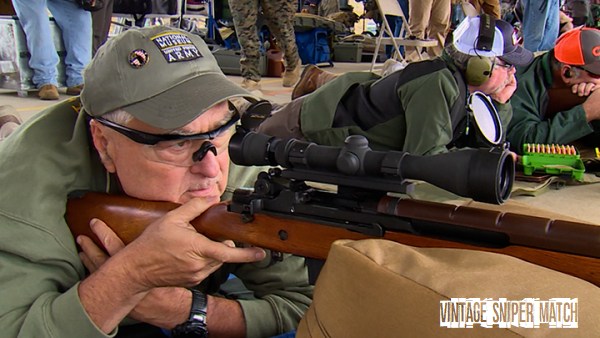
The March 4, 2026 episode of Shooting USA TV features the Vintage Sniper Rifle match at Talladega Marksmanship Park in Alabama. Vintage Sniper competitions use period correct battle rifles with older-style optics. Teams of two engage targets at three hundred and six hundred yards. “It’s a match that brings … a nostalgic competitor out. You’ll see World War II time-period rifles, sniper-type rifles that were used during World War II, [and] Korean War era”, noted Mark Johnson of the CMP. “The optics are either original optics or current reproduction of old optics.”
Shooting USA SHOW TIMES: This Shooting USA Episode airs Wednesday, March 4, 2026 at 9:00 PM Eastern and Pacific; 8:00 PM Central on the Outdoor Channel. In Canada, Shooting USA is broadcast on the Sportsman Canada Channel. If you miss the regular broadcast, you can stream the show online at any time on Vimeo for $0.99 per episode.
Vintage Sniper Rifle matches have proven popular with competitors of all ages, from 18 to 80. These matches are conducted with two-man teams, using vintage rifles with scopes. Most shooters use bolt-action rifles such as the 1903 Springfield and Swedish Mauser, but there is also a semi-auto class popular with Garand shooters. Along with today’s Shooting USA episode, you can watch a previous Vintage Sniper match on YouTube. Click the arrow below to start the 48-minute show:
Vintage Sniper Rifle Competition at Talladega
The Vintage Sniper Match at the CMP’s Talladega Marksmanship Park is a popular two-man team event, for shooter and spotter, using military rifles in service up to 1953. One added challenge is the time limit. The team has only 20 seconds to complete each shot — That’s 20 seconds for the spotter to read the conditions, and for the shooter to pull the trigger.
Who can identify this vintage European rifle, with its unusual scope mount?




 In the year 2000, the National Rifle Association of Ireland (NRAI) was formed. One of its primary goals was to promote fullbore target shooting in Ireland. The NRAI needed a home and that home was found on the bog of Derrymore in Blueball just outside Tullamore in County Offaly. In 2000, a 400-yard range was built on the site. Three years later the 600-yard “Windmill” range, the first of its kind in modern Ireland, was also built to allow for mid-range target shooting. The site was christened the Midlands National Shooting Centre of Ireland (MNSCI) and with it the story of Irish F-Class began. No sooner had the 600-yard range been built at the MNSCI, when the NRAI formed a national F-Class league bringing together like-minded shooters from all over Ireland.