Here at AccurateShooter.com, we’re more about rifles than pistols. But we know that the majority of our regular readers own handguns, and many also have concealed carry (CCW) permits. Our editors also enjoy shooting pistols, both rimfire and centerfire. Accordingly, we try to provide helpful insights for the pistoleros out there. We found a great article on the Shooting Illustrated website that showcases a huge variety of holsters — 30 in fact. Each holster is illustrated, with pros and cons explained. These are all EDC holsters, meaning those designed for “Every Day Carry”.
Shooting Illustrated calls this article “HolsterPallooza” and it really does provide a ton of helpful information. Most other holster reviews on the web may feature a half-dozen holsters at the most. In this Holsterpallooza article you can see 30 holsters, with a wide variety of materials, designs, and applications. There are small molded IWB holsters for CCW, conventional on the belt holsters, leather shoulder holster rigs, and even ankle holsters. This is a great place to start if you are in the market for a holster.
Here’s sample of the many holster options reviewed, an innovative hybrid IWB holster constructed with leather over Kydex. That gives you the “best of both worlds” — the secure fit/retention of a molded Kydex shell, with an attractive leather exterior.
Shooting Illustrated explains: “As the interface between your gun and your body, the holster is a vital component of your carry rig. In many cases, the circumstances of your daily life will determine the method of carry you choose. This, in turn, will determine what type of holster you need, which may end up determining the handgun you carry. Therefore, choosing the method and type of holster may be as, or even more important than, choosing a firearm.”
Hickok 45 Reviews CCW Holsters:
If you want to see even MORE holsters for “Every Day Carry” (EDC), check out this video from Hickok 45. This popular YouTube host looks at 15 different IWB holsters from a number of manufacturers. Hickok 45 examines many hybrid holsters that combine Kydex or plastic with leather for increased comfort. He has his favorites… and they might not be what you’d expect. NOTE: As this video has been watched over 810,000 times, you may also want to read the viewer comments. There are many helpful suggestions from CCW holders who carry daily.
Today is October 31st, Halloween (originally “All Hallows Eve”). That means it’s pumpkin time. Just how much fun can you have with pumpkins? Watch these two videos and find out. In the first video, the RatedRR team sends a few orange gourds to pumpkin heaven using Det Cord, C4, and binary explosives. The sequence starting at the 2:00 minute mark in the first video is truly amazing. WARNING: DO NOT TRY THIS AT HOME!
Watch Pumpkin Blasting with Explosives
In the next video, a pumpkin carved as a Death Star serves as the target for a .50 caliber rifle (looks like a Barrett M82 .50 BMG). As you may guess, the pumpkin Death Star suffers the same fate as the Hollywood version in Star Wars. NOTE: At the 0:42 mark in the video, a graphic displays “30,000 FPS”. That’s the high-speed camera’s frame-per-second rate, NOT the projectile velocity in feet-per-second.
Watch .50 BMG Rifle vs. Death Star Pumpkin
Warning: These demonstrations were carried out on closed ranges by experienced professionals certified to use explosives. Possession of C4 and Det Cord may be a violation of various Federal, State, and local laws. Detonating cord and C4 are classified as high explosives and are regulated by the BATFE. Don’t even think about trying to repeat these stunts on your own.
Tomorrow is October 31st, Halloween (originally called “All Hallows’ Evening”). That means kids in costumes will be ringing doorbells as soon as it gets dark. No doubt some of you proscrastinators will wait ’til the last minute to set out your Halloween decorations and Jack-O-Lanterns. Don’t worry, in the video below, our friend, 3-Gun ace Taran Butler, shows how to carve a pumpkin in just about 5.5 seconds, give or take a tenth. Taran performed this feat of speed-carving with his trusty Infinity handgun, chambered in 9mm Major.
What Are the Origins of Halloween?
Halloween or Hallowe’en (a contraction of “All Hallows’ Evening”), also known as All Hallows’ Eve, is a yearly celebration observed on October 31, the eve of the Western Christian feast of All Hallows (or All Saints). According to many scholars, it was originally influenced by western European harvest festivals and festivals of the dead with possible pagan roots, particularly the Celtic Samhain. Others maintain that it originated independently of Samhain and has Christian roots.
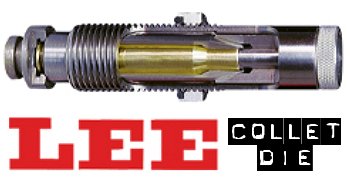
For those who prefer to neck-size their brass (rather than full-length-size), the LEE Collet Die is a popular, inexpensive option. It works by having collet tangs or “fingers” press the neck against a central mandrel. The benefit is that you get a very straight neck, which is sized consistently from top to bottom. Canadian shooter Jerry Teo explains: “LEE Collet Dies produce sized cases with very low runout (measured runout is under .001″ using a Sinclair concentricity gauge). You also don’t get the build-up of brass at the base of the neck, as can happen with bushing neck dies. The neck-shoulder junction stays nice and crisp.”
TIP ONE — Adjusting Tension
LEE Collet dies don’t have a specific mechanical adjustment for neck tension. But you CAN easily modify the die to provide more or less tension. If you want to adjust the neck tension using a Lee Collet die, you can simply chuck the mandrel in a drill and reduce the diameter with some sand-paper (to increase neck tension) or you can order a mandrel the next caliber larger and turn it to whatever diameter you want (the larger the mandrel diameter, the less the neck tension). You can also order custom mandrels from Lee sized to any diameter you want.
Regarding neck tension, Boyd Allen makes an important point: “The only way to properly get more neck tension with collet dies is to either reduce the diameter of the mandrel, or order a smaller-diameter mandrel from Lee. I remind folks that adjusting the die position to have more toggle at the top of the ram stroke (not the factory recommended method), or leaning on the press handle with more force than recommended will NOT increase neck tension.”
Lee also offers Custom Collet Dies, made from two fired cases. Lee offers custom standard collet dies for $70.00 (plus S/H) and custom large collet dies for $160.00 (plus S/H). CLICK HERE to ORDER.
TIP TWO — Polish and Tune for Easy Case Removal
Some users have complained that their Collet Dies grab the case-neck too firmly, making the case hard to remove. There are solutions to this problem. First inspect the collet fingers and smooth the inner surface up a bit with polishing compound or an extra-fine sanding pad. Second, you can open up the fingers a little bit. LEE recommends that if your Collet Die is sticking, take a steel punch and tap the fingers apart a little bit so that the natural “unloaded” position is wider. Lastly, you should lightly lubricate the outside of the collet fingers (see arrows) before you re-assemble the die. This will ensure they slide smoothly. Also, to prevent the collet fingers from closing too tight, never load up the die with your press without putting a case in place first. Without a case neck between the collet fingers and the mandrel, the collet can clamp itself too tight as you raise the ram.
TIP THREE — Always Have a Case Inside When Operating Collet Die
Our friend Boyd Allen tells us that you need to follow directions and NEVER operate the die without a case inside. Boyd explains: “This is because doing so will spring the quadrents of the collet inward so that they interfere with the insertion of a case, and the user will have to figure out how to undo the damage if the die is to operate properly. This advice would not be needed if everyone read the instructions before using the die…. but many times, they don’t. Another thing that I tell new users is to take the die apart so that they will have a better chance of understanding how it works.”
TIP FOUR — Size Twice and Spin Your Case 1/8th Turn
After reaching fully “down” on your press handle, withdraw the case about an inch and manually rotate it about 1/8th (NOT 1/4 or 1/2) turn while still in the shell-holder, then size again. This will place the die’s collet petals on the four “high spots” of the case neck and will result in a rounder, more evenly-sized neck with slightly more bullet tension. This takes only about one second more per case and is well worth the slight extra effort. (We thank reader Stonecreek for this smart tip).
Here’s a good video that explains how to use a Lee Collet Die to Neck-Size .243 Win brass:
Here’s a cool contest courtesy of Pyramyd Air. Win a pick-your-own prize package worth up to $3000.00. The winner selects any combination of products from Pyramyd Air’s entire inventory — air rifles, scopes, pellets, targets — you name it. You can even choose a set of products that cost more than $3000 — you just pay the difference. Act soon — the entry deadline is November 10, 2018.
This Backyard Brawl contest is a bit unusual. To enter you need to shoot a set of mini silhouettes and then make a video. The silhouette targets are free with code BRAWLER (shipping extra). Once you receive the targets, knock ‘em down with your airgun, and upload a video to YouTube or Vimeo.
How to Enter Backyard Brawlin’ Contest
Order Air Venturi Airgun Slynger Metal Silhouette Targets, FREE with promo code BRAWLER (shipping extra). Then upload a video of you shooting the targets with an air rifle or air pistol. Contest ends November 10, 2018. Limit one entry per person. All entrants will receive $5 in Bullseye Bucks at Pyramyd Air. Winner will be announced the week of November 12, 2018.
Backyard Brawl Contestant Videos
Here are two videos recently uploaded by Backyard Brawl contest entrants. You’ll see some pretty good shooting with interesting airguns. Can you make a more entertaining video?
Here Matt Coulter shoots a .22 Caliber Royale with JSP Express Jumbo pellets at about 580 fps.
In this video, UpNorthAirGunner shoots a Benjamin Marauder .177 Field & Target, a Broom-Handle Mauser clone full-auto BB Pistol, and a Seneca “Dragon Claw” .50 caliber air rifle.
The Rimfire Challenge is just about the most fun you can have with .22 LR pistols and rifles. This week Shooting USA TV features the 2017 Rimfire Challenge World Championship hosted at the Cavern Cove Rimfire Range in Woodville, Alabama. This major match attracts hundreds of competitors from around the nation. It’s fast and fun with instant feedback from ringing plates indicating hits. The Rimfire Challenge Championship is family-friendly event that’s great for all skill and experience levels.
Shooting USA TV Airs Wednesday Night on the Outdoor Channel:
9:00 PM Eastern and Pacific; 8:00 PM Central
The 2017 Rimfire Challenge World Championship brought 350 competitors to Alabama from as far as California and Washington State to shoot .22 LR rimfire pistols and rifles on 14 challenging stages, all with steel plate targets. The Challenge is designed to attract first-time competitors. “Our mission is to promote, protect and preserve hunting and the shooting sports. And to see all these young kids out here with their parents and their families all shooting together and enjoying the shooting sports. That’s what it’s all about, ” says Tisma Juett with the NSSF.
The Challenge offers plenty of action, with fourteen (14) stages of fire — each with a wide variety of steel plates. There is no set pattern or design, so each stage is different. You need to be fast AND accurate — you get penalty points for missing any plates. Scores are based on time for each stage, with add-ons for penalties. As with most action shooting games — it’s always best to shoot “clean” (no misses), even if you slow down a little bit.
At the 2016 NSSF Rimfire Challenge Championship Smith & Wesson was on hand with demo rifles and pistols. See the action in the S&W-produced video above. Competitive shooting is one activity in which entire families, both oldsters and youngsters, can come together in a supervised setting to enjoy the spirit and camaraderie of competition.
NSSF Rimfire Challenge Basics
The Rimfire Challenge is a two-gun event so you need a rifle and a handgun (which can be either a semi-auto pistol, or revolver). There are two divisions: 1) Open — Any firearm (pistol or revolver in handgun class) with scopes, optical sights, light gathering scopes, battery powered optics or lasers; and 2) Limited — Pistols and rifles with iron sights, adjustable metallic sights, and/or fiber optic. Bolt-action rifles and lever-action rifles are allowed, but self-loading (semi-auto) rifles are most popular because they can shoot quickly.
Many different stage designs can be employed at Rimfire Challenge matches. Here are two examples from the Rimfire Challenge Suggested Courses of Fire:
Rimfire Rifle of Choice: S&W M&P 15-22
If you want to shoot both Limited and Open class, a very good rifle choice rifle is the Smith & Wesson M&P 15-22. The feel, weight, and controls will be familiar to any AR owner. These 15-22s have been refined over the years and now are very reliable. Shoot it in Limited Class with the standard iron sights. Then fold down the sights and attach a 1-4X optic to shoot Open Class.
Rimfire Challenge Organizational Change for 2018
The National Shooting Sports Foundation (NSSF) announced that, starting in January, 2018, the NSSF Rimfire Challenge will be transitioned to a new organization: the Rimfire Challenge Shooting Association. Originally developed by Ruger’s Ken Jorgenson, TV host Michael Bane and the late Nelson Dymond, the program was first known as the Ruger Rimfire Challenge. NSSF took over the the program in 2014, changing its name to the NSSF Rimfire Challenge. The new organization will be led once again by Ken Jorgensen and Michael Bane.
Probably the most popular centerfire rifle round in the Western Hemisphere is the .223 Remington and its metric match, the 5.56x45mm. Though many folks use “.223 Rem” and “5.56×45″ interchangeably, there are some meaningful differences in specifications for the original .223 Rem and the 5.56x45mm cartridge, as adopted by the U.S. military and NATO armies. The default chamber throats are slightly different and the .223 Rem is rated at 55,000 PSI vs. 62,366 PSI for the 5.56x45mm.*
.223 Rem vs 5.56x45mm — Key Differences
There is a truly outstanding, very thorough article on the subject, published by LuckyGunner.com.** This involved extensive testing, with pressure monitors, of 5.56x45mm ammo in .223 Rem chambers. Those tests revealed the peak pressures. Here is one of the ammo test charts:
NOTE: “The observed chamber pressure for Federal XM855 5.56mm ammunition in a .223 Rem chamber exceeded .223 maximum pressures, but not by a massive amount. The ninth shot (the red line) was an underpowered cartridge which exhibited significantly lower velocity and pressure than the other rounds, so it was excluded from the average velocity and pressure numbers for this chamber.”
And if you’re curious, LuckyGunner also fired .223 Rem ammo in a 5.56x45mm NATO-chambered AR15 rifle. As you would expect, the peak pressures were significantly lower, but the .223 Rem ammo still cycled the semi-auto AR-platform rifle perfectly well:
UltimateReloader.com Explains .223 Rem vs. 5.56x45mm
To explain the key differences between the .223 Rem and 5.56x45mm cartridges our friend Gavin Gear of UltimateReloader.com has created a very thorough 12-minute video. This covers the cartridge specifications and explains key considerations for hand-loaders. Gavin also addresses the oft-asked question “Can I shoot 5.56x45mm ammo in my .223 Rem chamber?” Gavin’s video is definitely worth watching. In fact, this is one of the most popular videos Gavin has ever created — it has been watched over 300,000 times on YouTube.
What Exactly Is the 5.56x45mm NATO Cartridge?
The 5.56×45mm NATO is a rimless bottle-necked intermediate cartridge family standardized by NATO with development work by FN Herstal. It consists of the SS109, SS110, and SS111 cartridges. Under STANAG 4172, it is a standard cartridge for NATO forces as well as many non-NATO countries.
Bullet diameter: 5.70 mm (0.224 in)
Maximum pressure (EPVAT): 430.00 MPa (62,366 psi)
Maximum pressure (SCATP 5.56): 380.00 MPa (55,114 psi)
Case length: 44.70 mm (1.760 in)
Rifling twist: 178 mm or 229 mm (1 in 7 in)
Parent case: .223 Remington (M193)
Ammo-Maker Federal Premium Compares .223 Rem and 5.56x45mm
Here is a video from ammo-maker Federal Premium explaining the difference between .223 Remington and 5.56x45mm NATO. Federal states that you may experience excessive pressures when firing a 5.56x45mm in a standard .223 Remington chamber:
One leading gunwriter has addressed the question of shooting 5.56x45mm ammo in .223 Rem chambers. He advocates caution (for more info, SEE pressure tests by LuckyGunner.com):
“I have received a slew of questions — many from first time AR-type rifle buyers — about the .223 Rem and the 5.56×45 mm NATO cartridges. Can I shoot 5.56×45 mm NATO in my .223 and vice-versa? Are these the same cartridge?
Externally, the two cartridge cases are identical. The main differences are that 5.56×45 mm NATO operates at a higher chamber pressure (about 60,000 PSI versus 55,000 PSI on the .223 Rem.) and the 5.56’s chamber is slightly larger than that of the .223 Rem. Also, the throat or leade is longer in the 5.56×45 mm chamber. What does this mean? You should not shoot 5.56×45 mm NATO out of a rifle that is chambered in .223 Rem. And be aware that some .223 Rem. ammunition will not reliably cycle through some AR-style .223 Rem. rifles, but it usually does. As a matter of fact, I have not encountered any difficulty with current .223 Rem. loads cycling through a 5.56 mm AR-style rifle.” – Mark Keefe, Editor, American Rifleman
* According to the official NATO proofing guidelines, the 5.56×45mm NATO case can handle up to 430.0 MPa (62,366 psi) piezo service pressure. The U.S. SAAMI lists Maximum Average Pressure (MAP) for the .223 Remington cartridge as 55,000 psi (379.2 MPa) piezo pressure with deviation of up to 58,000 psi (399.9 MPa). The chamber for military 5.56×45mm NATO has a longer throat prior to the bullet contacting the rifling which results in lower pressures when firing 5.56×45mm NATO ammunition. If 5.56×45mm NATO is used in rifles chambered for .223 Remington the bullet will be engraving the rifling when chambered. which can increase pressures past SAAMI Max levels. NOTE: The C.I.P. standards for the C.I.P. civilian .223 Remington chamber are much closer to the military 5.56×45mm NATO chamber.
** The full-length LuckyGunner article is well worth reading. It even provides specifications for a number of .223 Rem reamer types, and compares the original .223 Rem, the 5.56x45mm NATO, and the modern .223 Wylde chamberings.
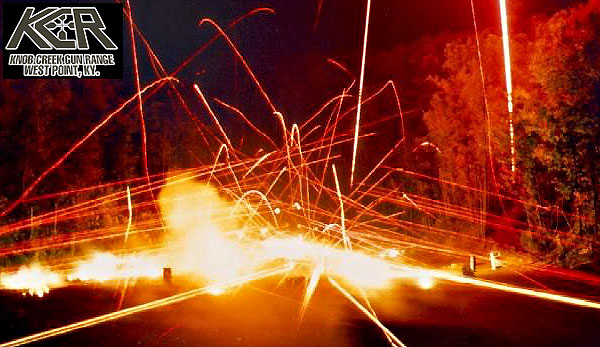
Twice a year, select-fire fans head to the Knob Creek Gun Range in West Point, Kentucky, for the nation’s largest Machine Gun Shoot. A bi-annual event, the Machine Gun Shoot is typically held on the second weekend of both April and October. The latest Machine Gun Shoot is happening RIGHT NOW. It started on Friday, October 12th and runs all weekend through Sunday the 14th. The highlight of every Machine Gun Shoot is the Saturday Night Shoot, where scores of guns send regular and tracer bullets down-range. An estimated 1.25 million rounds will be expended during the October Night Shoot.
Participants are machine gun dealers, collectors and enthusiasts from all over the country. The Machine Gun Shoot itself consists of three days of machine gun shooting, dealer displays, shooting competitions and the spectacular Saturday Night Shoot. Participants shoot at a wide variety of used appliances, abandoned vehicles, and barrels of fuel with pyrotechnic charges attached. The pyrotechnic charges are set off by bullet impacts, creating large mushroom clouds and fireballs. With the tracers and explosive fireballs, this is an amazing experience. Check out the video:
Click Triangle to Watch Knob Creek Machine Gun Shoot Video (Warning: Very Loud Audio)
A few seasons back, Top Shot Season 4 Champ Chris Cheng was on hand to record the firepower. Chris writes: “About an hour before dark, folks are out on the range setting up all sorts of explosives while a crowd builds, anxiously awaiting what we all know is coming. The lights go out, and the next thing you know machine guns are going off for almost 20 straight minutes. This year’s October 2013 edition did not disappoint. Check out the video below — other than the beginning, my favorite part is at the 5:50 mark [when a Mini-Gun opens fire from the right].”
Beretta, makers of fine shotguns, rifles, and pistols, also owns Finnish rifle-maker SAKO. In this article, which first appeared in the Beretta Blog, hunting guide Mia Anstine writes about her visit to the Sako factory and her live-fire shooting test to secure her hunting permit. CLICK HERE for full story.
Visiting the SAKO Factory in Finland, by Mia Anstine
What a joy to wake up in Finland and prepare for a tour of Sako. I enjoyed a European breakfast with a view of downtown Helsinki. Shortly I joined the hosts and writer’s group, and we boarded the bus for a ride to Riihimaki, to the manufacturing facility.
Sako built its original manufacturing facility during World War I. To this day they still utilize the original buildings but have also grown over the years to include larger production areas and updated equipment.
Video shows Sako Rifle-Making and Hunting in Finland’s Backcountry (worth watching):
Beretta Holding’s acquisition of the Sako company brought additional opportunity for growth. The company added state-of-the-art machinery which has aided in increased production. However, they’ve still maintained their signature quality-built products by keeping the human element integrated throughout the production line.
After a quick tour of the Sako facility, we headed to the shooting range. We shot a number or Sako and Tikka rifles, but first, we sighted in our hunting rifles in preparation for a brown bear and moose hunt. I would be hunting with a Sako model 85 Hunter chambered in 9.3 mm. (Editor: For fans of this big 0.366 caliber, Sako offers both 9.3x62mm and 9.3x66mm Sako chamberings).
Hunters Must Pass Marksmanship Tests
To hunt bear in Finland, you must first pass a hunting test as well as shooting test. The timed, live-fire event [requires] five rounds in the kill zone of a brown bear at 100 meters. Of course, the ever-courteous Finns had ladies go first, so I felt more than a bit of pressure, and I know I shot a bit faster than necessary. Regardless, I cycled rounds and passed with ease.
Next, we headed to a different bay at the shooting range where we experienced the hunting test from days of old. In this test, we shot from standing position at a moose target. First, we shot three rounds in the kill zone, from 100 meters, and then three at the moose target as it raced by, from right-to-left and left-to-right, at 20 kilometers per hour. While this test is no longer required, it was a pleasure to try our hands at it.
Have you ever wondered how Olympic-class position shooters hold their aim so steady? Those bulky shooting coats help, but there is a lot of bio-mechanics involved also. Top shooters employ their body structure to help support the weight of their rifles, and to steady their aim. This interesting video, produced by GOnra Media, demonstrates rifle hold and body alignment for prone, standing, sitting, and kneeling positions. Olympic Gold Medalist Jamie Corkish (formerly Jamie Gray) demonstrates the proper stance and position of arms and legs for each of the positions. Ideally, in all of the shooting positions, the shooter takes advantage of skeletal support. The shooter should align the bones of his/her arms and legs to provide a solid foundation. A shooter’s legs and arms form vertical planes helping the body remain stable in the shooting position.
Jamie Corkish, London 2012 Gold Medalist in Women’s 3 X 20, has retired from top-level competitive shooting. However, Jamie remains involved in the shooting sports as a Public Relations/Marketing representative for ELEY, a leading maker of rimfire ammunition. Jamie also works with shooting clubs and educational institutions to promote smallbore target shooting.
Images are stills from GOnraMedia video linked above.


 Tomorrow is October 31st, Halloween (originally called “All Hallows’ Evening”). That means kids in costumes will be ringing doorbells as soon as it gets dark. No doubt some of you proscrastinators will wait ’til the last minute to set out your Halloween decorations and Jack-O-Lanterns. Don’t worry, in the video below, our friend, 3-Gun ace
 TIP ONE — Adjusting Tension
 TIP TWO — Polish and Tune for Easy Case Removal