Metal Madness is a great rimfire shooting discipline where shooters engage dozens of steel targets set up in a grid. This fun, action shooting contest for all skill levels runs at the Grand Rivers Shooting Range in Kentucky. Next month, on June 28-29, 2025, the Metal Madness Shooting Sports Association (MMSSA) will hold its major event of the year, the Metal Madness Homecoming match at the Grand Rivers range.
Metal Madness is a fun and challenging form of rimfire shooting. Whether you’re young or just young at heart, you’ll love the satisfying ping of hitting steel targets — no prior experience or special equipment required. Most .22 firearms will do just fine! To learn more about Metal Madness, visit MMSSA.net. Watch the video below to learn about the course of fire and the scoring system. There are ten lanes with five targets in each lane.
MMSSA is a rimfire shooting sport offering the instant gratification of ringing steel targets. No special or fancy “raceguns” are needed — most any .22 LR firearm will work.
What is Metal Madness?
Metal Madness is a speed and accuracy-based shooting sport where participants shoot rimfire rifles or pistols at steel plates. Each competitor will shoot through 10 stages, moving to a new shooting lane each time. Each lane has randomized numbered metal plates, which must be shot in numerical order.
Scoring is time-based, plus penalties for missed plates or shooting plates out of sequence. With misses costing 2 seconds each, hitting plates in the proper order is extremely important. The eight fastest times from ten lanes fired are added together for each shooter’s bracket time.
This video shows action at the 2024 Metal Madness Homecoming event held last June in Kentucky.
$40 Per Entry — Prizes for Registered MMSSA Members
At the June 2025 Metal Madness Homecoming event, competitors will fire through 10 different shooting lanes, with each lane featuring multiple steel targets. Entry fee is $40.00. Competitors may participate in multiple sessions, with the same gun or different guns. All .22 caliber firearms are allowed to shoot Metal Madness. Membership is required to participate in MMSSA prize events. Prizes are drawn (by random picks) on Sunday afternoon at the end of the event. CLICK HERE to Register.
Grand Rivers Shooting Range Address: 787 Dover Road, Grand Rivers, Kentucky
Credit our buddy Joe Friedrich for this simple yet effective accessory for your benchrest rifle. Joe shoots a .22 LR benchrest rig with a barrel tuner. When he added weights to his tuner, he found his rifle no longer balanced well. He wanted to add some weight in the rear without drilling holes in the stock. He also wanted the weight to be removable, and easily placed on another rifle in his stable. He wanted a weight that could be moved from gun to gun as needed.
At a local sporting goods shop Joe found a 1.5-lb ankle weight that comes in a padded, tubular elastic cover. It’s like a 1.5-lb sausage in a soft, stretchy nylon cover. (Imagine a really fat, heavy bungee cord). Joe simply attached a plastic zip tie at the end to make a loop that fits perfectly over his buttstock. CLICK HERE for full-screen photo.
To “tune” the rifle’s balance, Joe just slides the ankle weight fore and aft on the stock. We have tried this moveable ankle weight on a variety of different BR stocks (including a McMillan Edge) and it worked perfectly. This is a great invention, and would work with sporter rifles and ARs just as well.
NOTE: Obviously, this ring will increase the measured weight of your rifle. So, if you are competing in a registered match with weight restrictions, you have to ensure that your rifle still makes class weight limits with the ankle weight ring in place.
The NRA has released the dates of major competition shooting events this summer and fall. Here is the schedule for NRA national championships in 2025. For each event you’ll find a link for event registration. Spanning multiple disciplines — from High Power and Smallbore Rifle to Precision Pistol and Silhouette — this year’s championships will draw elite shooters from around the country. From the NRA National High Power Rifle Championship to the F-Class Fullbore Long-Range Championship, here’s the full schedule for NRA’s national competitions in 2025.
Register now for your favorite national events. Whatever your discipline — whether you shoot High Power, Smallbore, Precision Pistol, F-Class or Silhouette — there’s a competition for you. F-Class Shooters take note — this year’s Mid-Range Nationals and Long-Range Nationals will be held in different locations:
Mid-Range F-Class at Port Malabar Rifle and Pistol Club, Palm Bay, Florida
Long-Range F-Class at Bridgeville Rifle and Pistol Club, Bridgeville, Delaware
Photo by Mel Dixon from 2024 NRA National High Power Rifle Long-Range Championships.
NRA National High Power XTC Championship June 1-7, 2025 Winnequah Gun Club Lodi, Wisconsin competitions.nra.org
NRA National High Power Mid-Range Championship June 4-8, 2025 Oklahoma City Gun Club Arcadia, Oklahoma okcgunclub.org
National Muzzle Loading Rifle Association National Spring Shoot and NRA Muzzleloading Nationals June 14-22, 2025 Walter Cline Range Friendship, Indiana nmlra.org
NRA National High Power Long-Range Championship July 2-6, 2025 Alliance Rifle Club Malvern, Ohio targetscore.com
The 2025 High Power Long-Range Nationals will be held July 2-6, 2025 at the Alliance Rifle Club in Malvern, Ohio.
NRA National Precision Pistol Championships July 6-10, 2025 Cardinal Shooting Center Marengo, Ohio redfeatheroutfitters.com
NRA National Smallbore and High Power Rifle Silhouette Championships July 20-26, 2025 NRA Whittington Center Raton, New Mexico silhouettenationals.com
NRA National Conventional Smallbore Championships July 20-29, 2025 Cardinal Shooting Center Marengo, Ohio redfeatheroutfitters.com
NRA National F-Class Championship August 2-9, 2025 Winnequah Gun Club Lodi, Wisconsin winnequahgunclub.org
NRA National Lever-Action Silhouette Championship August 6-9, 2025 Ridgway Rifle Club Ridgway, Pennsylvania competitions.nra.org
National Black Powder Cartridge Rifle Championship August 15-22, 2025 Walter Cline Range Friendship, Indiana nmlra.org
Spirit of America National Fullbore Rifle Championship September 5-12, 2025 Bald Eagles Rifle Club, NRA Whittington Center Raton, New Mexico baldeaglesrc.org
National Muzzle Loading Rifle Association National Championship Shoot September 13-22, 2025 Walter Cline Range Friendship, Indiana nmlra.org
NRA World Shooting Championship September 30 to October 4, 2025 Camp Atterbury, Indiana wsc.nra.org
NRA National F-Class Fullbore Mid-Range Championship October 8-12, 2025 Port Malabar Rifle and Pistol Club Palm Bay, Florida competitions.nra.org
NRA National F-Class Fullbore Long-Range Championship October 22-26, 2025 Bridgeville Rifle and Pistol Club Bridgeville, Delaware competitions.nra.org
Visit the NRA Competitive Shooting Division website to learn more about this year’s slate of NRA National Championships.
2025 NRA National Matches Calendar
Here is the 2025 NRA National Matches Calendar showing major championship events and dates. Different events are indicated by various colors: Red for High Power Across the Course, Yellow for High Power Mid-Range, Green for High Power Long-Range, Dark Red for Smallbore and Blue for Pistol. Click the Calendar to ZOOM for easier reading.
For years we have touted the advantages of Burris Signature rings, with polymer Pos-Align Inserts. PRS/NRL shooters take note — this technology is available in a beefier, heavy-duty ring system for tactical rifles. The impressive Burris XTR Signature Rings offer six (6) clamping bolts per ring plus strong, dual steel base-clamps that self-center on Weaver or Picatinny rails. These aluminum XTR Signature Rings provide strength and holding power, plus the key benefits of Pos-Align inserts. As impressive as XTR rings are — they aren’t that expensive, with 1″-diameter XTRs starting at about $87.00 per pair (30mm and 34mm XTRs cost a bit more).
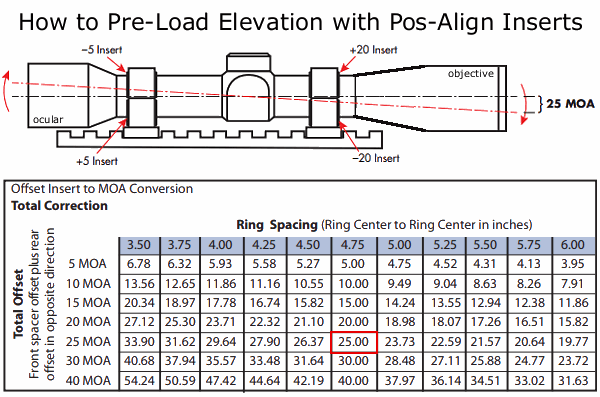
The polymer inserts in Signature rings perform three key functions. First, the inserts provide full, uniform scope-to-ring contact, with no need for lapping. You get a very secure “grip” on your scope without ring marks. Second, the Pos-Align inserts can provide elevation “pre-load”. With eccentric (offset) inserts, you can raise the back of the scope relative to the front, gaining up to 54 MOA of built-in elevation, without the need for expensive tapered bases. Third, the offset inserts can be rotated clockwise or counter-clockwise to shift point of impact. This lets you zero your rifle easily while keeping the turrets in the center of their travel.
Burris XTR Signature Rings are offered in 1″, 30mm, and 34mm diameters, and three (3) different heights: 1″, 1.25″, and 1.5″. Each ring set includes two sets of concentric inserts and one set each of the following offset inserts: +/-5 MOA, +/-10 MOA, +/-20 MOA. These allow you to “pre-load” elevation and/or center up your cross-hairs.
– Pre-load Elevation. No need for expensive tapered bases for long-range shooting.
– Correct misalignment caused by off-center receiver holes.
– Correct for bases or rings being slightly off-center.
How to Pre-load Elevation
To add elevation, set the Pos-Align Offset Inserts to raise the rear of the scope and lower the front. As long as there remains sufficient clearance between the front objective bell and the barrel, Burris recommends lowering the front of the scope the most and raising the rear of the scope the least. The amount of actual elevation “pre-load” will depend on the ring spacing (see chart). In the illustration, with 4.75 inches between ring centers, a +/- 20 MOA pair in the front combined with a -/+ 5 MOA pair in the rear will yield +25 MOA of total elevation. (If the rings are positioned further apart, you’ll get less elevation pre-load.)
Using Inserts to Adjust Point of Impact in Any Direction
Although it is convenient and most understandable to refer to the ring inserts as a “bottom” or “top” insert, the inserts may be rotated to any angle within the scope rings. This allows the shooter to correct the point-of-impact in any direction. The drawings below show how the inserts can be rotated to induce both elevation and windage changes at the same time.
Product tip from Boyd Allen. We welcome reader submissions.
The 2025 NRA World Shooting Championship will take place at Camp Atterbury, Indiana, September 30 through October 4, 2025. This eighth NRA World Shooting Championship will have both professional and amateur divisions. Approximately $250,000 in cash and prizes are available to the field of competitors, with $25,000 awarded to the “World Shooting Champion” and $1,000 going to the winner of each stage of competition. This unique competition features multiple disciplines shot with firearms supplied by sponsors. All of the guns are provided and stage firearms become prizes. There are also cash prize awards for the top Pro Class competitors. SEE NRA World Championship Program.
Registration for the 2025 NRA World Shooting Championship is now open. Register via the NRA Shooters Portal: Competitor.nra.org. Competitors are encouraged to register soon to secure their spot, as this match has filled up quickly in past years. Learn more about the NRA World Shooting Championship at wsc.nra.org.
The NRA World Shooting Championship runs 9/30/25 through 10/4/2025. Presented by Walther Arms, this challenging event involves rifle, pistol, and shotgun shooting with a dozen disciplines — from short-range action pistol to long-range rifle.
The NRA World Shooting Championship
This championship is designed to test individuals through multiple different challenging disciplines over four days of shooting (Team Shoot Day 4). Competitors compete in Professional and Amateur categories for cash and prizes of over $250,000. Walther and other sponsors will supply ALL firearms equipment and ammunition required for the 12 stages of competition.
To do well, competitors must be highly proficient in all shooting skills — rifle, pistol, shotgun, both rapid fire and precision. The 2025 stages are: Precision Standing Air Gun, Sporting Clays, NRA Precision Pistol, NRA America’s Rifle Challenge LVL2, FITASC, NRA ARC 2-Gun, PRS Rimfire, Biathlon, IDPA, SASS (Cowboy Action), PRS, and USPSA.
Six Side Matches
There are also six (6) side matches with different disciplines including falling plates. The event also has a Team Shoot.
MidwayUSA Foundation hosted a donation drive throughout the month of April and raised an astounding $643,237 for youth shooting teams. Thanks to the Foundation’s matching program, funded by Larry and Brenda Potterfield, every dollar is matched, providing a total impact of $1.28 million. These funds help youth shooting teams cover essential expenses such as ammunition, targets, entry fees, and safety equipment, ensuring the participation of young athletes in shooting sports.
The Foundation also provided an additional $80,000 in endowment awards. West Virginia University’s Rifle Team (WVU) raised over $120,000 to earn the top prize of $15,000. “We are delighted to be the winners of the April Donation Drive, and we have to thank our donors for making that happen,” said Head Coach Jon Hammond. “The Foundation provides an amazing resource to junior and youth shooting programs[.]”
The teams that rounded out the top five include:
2nd Place: Kanabec County Clay Busters [MN] – winning an additional $12,500
3rd Place: Prescott Bird Busters [AZ] – winning an additional $10,000
4th Place: Battle Ground Academy [TN] – winning an additional $7,500
5th Place: Pillager Clay Target Team [MN] – winning an additional $5,000
The MidwayUSA Foundation is a 501(c)(3) public charity working to sustain and grow youth shooting sports by providing long-term funding to youth shooting teams. Every donation is tax-deductible. The Foundation supports all shooting disciplines. To learn more about the MidwayUSA Foundation visit MidwayUSAFoundation.org.
MidwayUSA Foundation S.E. Program Manager Jeff McClure stated: “Helping teams and organizations grow their accounts through participation in our incentive programs is top of the list. Where else can teams open an account, be provided multiple ways to grow that account, and have all donations matched?” WVU’s Head Coach added: “The generosity of the Potterfield family is incredible, as well as the vision … to help all these junior shooting programs across the USA. We highly recommend all programs have a MidwayUSA Foundation account and work hard to build it year over year.”
A.P. Lane’s Gold Medal-Winning Colt Revolver
This Colt Officer’s Model revolver, factory-fitted with a skeletonized hammer, belonged to legendary Olympic shooter A. P. Lane, who was known as the “Pistol Wizard”. Lane used this Colt Revolver to win FIVE Olympic Gold Medals — three in 1912 and two in 1920.
A.P. Lane was one of the greatest pistol shooters of his generation. He shot scores that were typically 25-50 points higher than those of his competitors. And he exhibited true Corinthian spirit. At the 1912 Olympics, Lane shared his match ammunition with another competitor who used that ammo to capture the Silver Medal (Lane won the Gold).
This revolver, factory-fitted with a skeletonized hammer, was used by American A.P. Lane in winning five Olympic Gold Medals in the 1912 and 1920 Olympic Games. It’s a .38 caliber, Officer’s Model centerfire revolver from the early 20th century. Olympian A.P. Lane’s Gun can be found in Gallery 13, Firearm Traditions for Today, at the NRA National Firearms Museum in Fairfax, Virginia. The Museum exhibit includes a panoply of Lane pieces – his revolver, his five Gold Medals, and the five Olympic certificates that went along with them.
Editor’s Note: The CMP National Matches at Camp Perry are less than a month away. This article covers key points for rifle competitors at major matches. To do well, you want to be an “informed competitor” with a positive attitude and full knowledge of the course of fire and match rules.
Don’t Be “That Guy” (The Bad Apple on the Firing Line)
By SFC Norman Anderson, USAMU Service Rifle Team Member
You know the guy, he’s still talking at the coffee jug when his preparation period begins, then his magazines aren’t loaded when the command “STAND” is given, and finally, he doesn’t know the rules when he argues with the block officer as his target comes up marked “9 and No”. Although this guy might be the highlight of the “after match” activities, he is the proverbial bad apple on the firing line. With this example fresh in your mind, let’s go over how not to be “that guy”.
While the sport of High Power shooting is a hobby for most, all are passionate about performance throughout the day. In order to achieve your maximum performance each and every day, it is essential that you conduct yourself as a professional competitor. As a competitor, you have a personal responsibility to know the course of fire as well as the rules and procedures that apply to it and to be prepared to follow them. Knowing this will not only make you a better competitor, but it will enable you to resolve situations with other targets besides your own. So what does all this mean? I’ll explain…
Know the Course of Fire
Know the course of fire. It sounds easy enough, as we all shoot plenty of matches, but it’s more than that. If you think about it, how many people in the pits, for example, do not really know what is happening on the firing line? This leads to targets being pulled early during a rapid fire string or missing a shot during a slow fire string. In cases like this, the result is the same, delays in the match and upset competitors. To avoid being “that guy,” it is imperative that you stay tuned to the events as the day progresses. When you are at the range shooting a match, be at the range shooting the match.
At any firearms competition — be sure you know (and understand) the course of fire.
Know the Rules
Now, let’s discuss rules. As you have probably heard more than once, the rulebook is your best friend. Here is why. I can virtually guarantee that most competitors know some of the rules based only on the old “this is how we do it at home” adage. The funny part of that is, the same green NRA rulebook and orange CMP rulebooks are used to govern High Power matches all over the country.*
It is vital that all shooters be familiar with the rules as they are written, not with “how they are applied at home”. This creates consistency and continuity in how matches are conducted, from local club matches to state tournaments to National Championships. Knowledge is power when it comes to scoring targets under contention, what to do in the case of a malfunction, or even how to file a protest correctly. These rules are in place for a reason and it benefits everyone to both know and operate by these rules.
Maintain Composure and Humility — Exhibit Good Sportsmanship
One aspect of competing that cannot be forgotten is bearing. As I mentioned earlier, you must be prepared for both good and bad to happen. All too often we all see “that guy” (or that “that guy’s” gear) flying off of the firing line in disgust. Remember that we all must maintain our composure and humility in all conditions, not matter what happens. After all, it’s just a game. To put it into perspective, if it were easy, attendance would be a lot higher. Sportsmanship must be displayed in an effort to keep from ruining the day for all those around you. It doesn’t cost anything to smile, and smiling never killed anyone. So turn that frown upside down and keep on marching, better days will come.
Like a Boy Scout — Always Be Prepared
Lastly, I would like to cover preparedness. Being prepared goes beyond simply having your magazines loaded and a zero on your rifle. It means approaching the firing line, knowing what you are about to do, being ready for what is going to happen (good or bad), and being ready for the results. If you approach the firing line to merely shoot 10 shots standing in your next LEG match, you are not going to be pleased with the result. You must be prepared mentally and physically, not only for the next stage, but also the next shot. By being prepared physically (equipment ready), you give yourself peace of mind which is an essential part of being prepared mentally, and by being prepared mentally, you are less likely to become distracted and are more likely to maintain focus for each and every shot.
Conclusion — Informed Competitors Make for Better Matches
The culmination of these efforts results in a shooter that knows how to be ready for success on the range, but also and perhaps more importantly, a shooter who knows what it means to be a competitor. When you have a range full of competitors who know and follow the rules and proper match procedures, the match runs smoothly, everyone shoots well, and a good time is had by all. In the end, isn’t that what it’s all about?
* After this article was originally written, the CMP separated its rules into multiple Rulebooks, which can all be downloaded from the CMP.org/rulebooks page:
The CMP Highpower Competition Rules 2025 (28th Ed.) for CMP-sponsored and sanctioned matches for Highpower Rifle events in National Trophy Matches, Excellence-In-Competition (EIC) Matches, CMP Cup Matches and other CMP-sanctioned competitions.
The CMP Pistol Competition Rules 2025 (28th Ed.) for CMP-sponsored and sanctioned Pistol Matches in the National Matches, National Trophy Matches, Excellence-In-Competition (EIC) Matches, and other CMP-sanctioned competitions.
This summer the Civilian Marksmanship Program (CMP) will host Smallbore and Air Gun events during the annual CMP National Matches in Port Clinton, Ohio. The National Matches, held at the Camp Perry National Guard Training Base since 1907, is conducted through a partnership between the CMP and the Ohio National Guard. All events are open to the public, with spectators allowed.
The National Smallbore and National Air Gun phases run in tandem, along with the National Pistol series, to allow athletes the option of competing in a variety of disciplines during their Camp Perry visit. Additional Aggregate events have been included for those firing in air rifle and three-position smallbore competitions, with challenging elimination team matches also part of the Air Gun and Smallbore schedules.
This year’s rimfire (smallbore) matches are scheduled for July 9-19, 2025. There will be iron sights and “any sights” (scoped) prone events as well as 3×20 (three-position) individual and team matches. All smallbore events are held on Camp Perry’s Petrarca Range, featuring a covered firing line and CMP’s own outdoor electronic targets. See below:
Air Rifle and Air Pistol Events at Camp Perry
For air rifle and air pistol competitors can attend the National Air Gun Championships, held on the electronic target range within the Gary Anderson CMP Competition Center. There will be two days of training sessions, followed by two days of 60-shot competitions. The Air Rifle events will run July 10-13, while Air Pistol will follow on July 14-17.
About the CMP National Matches:
The 2025 CMP National Matches will include the CMP National Trophy Pistol and Rifle Matches, National Games Matches, National Smallbore Matches, National Air Gun Championships, and the National Mid-Range and Long Range Matches. The month-long summer series also includes a variety of educational clinics for all experience levels.
To learn more about the upcoming CMP National Matches and review the National Matches schedule, visit the CMP website at thecmp.org/cmp-national-matches.
When most shooters think of biathlon, they imagine the winter sport which combines cross-country skiing with rimfire rifle shooting. Now there’s a new type of biathlon, a true “run and gun” competition with rifles and pistols. The Gun Run competitors move on foot over natural terrain, with 5-8 shooting stages over the course, typically 5 km (about 3 miles).
The Gun Run is a two-gun, centerfire biathlon. It is designed to test your physical fitness, marksmanship, and equipment. Competitors will carry their rifle, pistol, ammunition, mags and anything they believe they need to complete the course. They will travel over various distances depending on the match — but most often a 5 kilometer marked course consisting of natural terrain, roads, and trails. There will be anywhere from 5 to 8 shooting stages. There are night events, two-person team events, and even a land navigation event where you must use map and compass to complete the course.
The Gun Run is not a CrossFit competition and it’s not USPSA. This is a challenging event that test personal fitness and marksmanship with both rifle and pistol.
How to Participate in The Gun Run Events
Click below for the list of The Gun Run 2025 Events with links to sign-up pages. The next competition is the Gun Run Land Nav slated for May 24, 2025 at DeWitt’s Outdoor Sports in Ellerbe, North Carolina. This is a special, more challenging event. Instead of following a 5k course marked with signs, competitors will navigate an unknown distance course using a map and compass. After, that, the next Gun Run event will be held June 21, 2025 at The Sawmill Training Complex in Laurens, SC 29360.
Origins of The Gun Run
This isn’t a new concept … matches like this originated in Texas 20 years ago and have spread all over the country. Prior to that, Colonial Era Americans would gather on the village green sometimes multiple times a week and conduct close order drill with rifle marksmanship competitions. Shooting is as old a past time for this country as this country is old.
Fitness Challenge
Carrying all your gear in 90 degree weather up and down hills is not easy. Having the best gear and being a good marksman can help but having a level of fitness where you can maneuver with gear on is extremely important. The end result of all of this is improving your training plan. Whether it be physical or on the range, every event you compete in should give you areas to work on. Sometimes new kit needs to be bought but most often it is our fitness that needs the most improvement.


 Credit our buddy Joe Friedrich for this simple yet effective accessory for your benchrest rifle. Joe shoots a .22 LR benchrest rig with a barrel tuner. When he added weights to his tuner, he found his rifle no longer balanced well. He wanted to add some weight in the rear without drilling holes in the stock. He also wanted the weight to be removable, and easily placed on another rifle in his stable. He wanted a weight that could be moved from gun to gun as needed.




 The MidwayUSA Foundation is a 501(c)(3) public charity working to sustain and grow youth shooting sports by providing long-term funding to youth shooting teams. Every donation is tax-deductible. The Foundation supports all shooting disciplines. To learn more about the MidwayUSA Foundation visit
 A.P. Lane’s Gold Medal-Winning Colt Revolver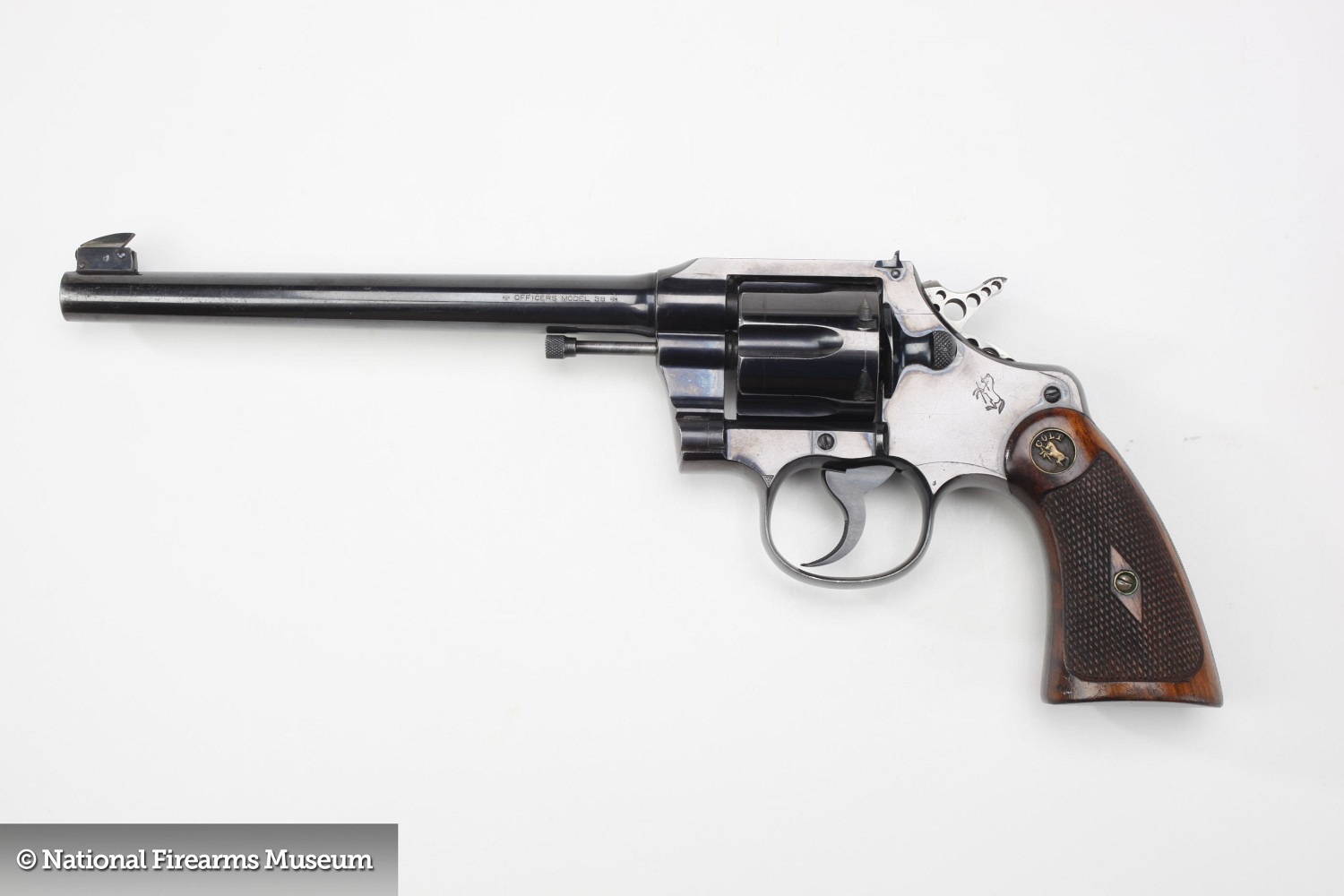


 Know the Rules


