The National Muzzle Loading Rifle Association (NMLRA) hosts its annual Spring Shoot from Saturday, June 11 through Sunday, June 19. The 9-day gathering will take place at the 600-acre NMLRA facility in Friendship, Indiana, with shooting events at the Walter Cline Range. Events will include daily black powder shooting competitions, early American living history demonstrations, special museum displays, youth activities, vendors’ displays, gunmaker demonstrations and much more.
Competitive shooting with muzzle-loaders is the focus of the NMLRA Spring Shoot. Matches include competition for every kind of front-loading firearm: rifles, pistols, shotguns, slug guns and chunk guns. As in recent years, the NRA National Muzzle Loading Championships will be held in conjunction with the NMLRA event at Friendship’s expansive Walter Cline Range.
The NMLRA National Firearms Museum located in the historic Rand House (circa 1876) will host special museum displays throughout the event. The exhibit will feature numerous Civil War-era carbines. In addition, the NMLRA Gunmaker’s Hall will be open daily during the week, exhibiting some of the finest examples of modern gun building by today’s master craftsmen.
Highlighting this year’s event will be the dedication and grand opening of the NMLRA Education Building, a project that has been years in the making. The new NMLRA Education Building includes an auditorium, several shops, classrooms, a kitchen, machine- and wood-working shop, and library/museum.
The NMLRA Complex in Friendship, Indiana
As the historic national center of muzzleloader shooting, education and competition in the U.S., the NMLRA headquarters and range complex are located on nearly 600 acres in rural and scenic southeastern Indiana. The Friendship facilities are an easy drive from nearby Cincinnati, Ohio, as well as the metropolitan areas of Louisville, Kentucky and Indianapolis, Indiana.
Photos courtesy National Muzzle Loading Rifle Association, all rights reserved by NMLRA.
The latest edition of the CMP’s ‘On the Mark’ newsletter for young competitive shooters has been released as a FREE, downloadable PDF file. In this Spring 2011 edition, you’ll find many items of interest including an excellent instructional article by Gary Anderson, Director of Civilian Marksmanship-Emeritus. The 4-page story is entitled: Three-Position Shooting — Teaching the First Steps. Here’s a sample from the story, Anderson’s discussion of target shooting order:
Target Bull Firing Order
Anderson writes: “When firing starts, each shooter should have a plan for the order in which the sighter and record bulls are fired. Each record bull is numbered from one to ten, but the bulls do not need to be fired in that order. Indeed, to shoot them in numerical order is one of the least efficient ways to do this. The firing order should be designed to minimize movements from one record bull to the next. The illustration (on right) shows one recommended firing order that begins with the lower sighter bull, continues to the upper sighter bull and then proceeds around the target in a counter-clockwise direction.”
In addition to the Gary Anderson article, this month’s edition of On the Mark features extensive coverage of Collegiate shooting events, and the National Junior ROTC Championships.
If you or someone you know is a young shooter looking to mix some top-notch coaching with summer fun, then look no further than the NRA Junior Shooting Camps. Each summer, the NRA offers a Junior Pistol Camp and a Junior Smallbore Rifle Camp at Camp Perry in Northern Ohio. The slideshow below shows the 2010 Junior Smallbore Rifle Camp.
Both Pistol and Rifle programs are conducted as five-day camps offering expert instruction by NRA Certified Coaches. Both camps are geared towards intermediate shooters, but beginners are accepted on a space-available basis. Open to youths 12-18 years of age, these camps provide young people with the chance to improve their shooting skills under the guidance and supervision of experienced coaches.
The Junior Pistol Camp will be held July 12-16 and the Junior Smallbore Rifle Camp will be held July 23-27, both in conjunction with the National Matches at Camp Perry. The Junior Pistol Camp is limited to 50 shooters and will focus on conventional and international pistol shooting, while the Junior Smallbore Rifle Camp is limited to 72 shooters and centers on 3 and 4-position rifle shooting.
Advanced registration (by June 15) is just $200.00, standard registration (after June 15) is $225.00. This includes training materials and administrative fees, but does not cover travel or lodging costs. First-time campers for the Junior Pistol Camp only are eligible for tuition and travel reimbursement of up to $500.00 per individual thanks to the generous support of the Ohio Gun Collectors Association.
Information packets and registration forms for both camps can be downloaded online, or call 703-267-1411 for more information. You can also view the new Junior Pistol Camp brochure online. If you know a junior who would like to attend a shooting camp, submit an application right away!
The Civilian Marksmanship Program (CMP) now has its own CMP Facebook Page. There you’ll find the latest match results, links to interesting stories, and info on special rifle and ammo sales. The Facebook format actually works really well for the CMP — visitors can quickly find the latest new items and stories of interest. For example, here’s a cool article about two Virginia High School Girls who shot in the first official CMP Vintage Sniper Rifle Team Match on 10 May, at Camp Butner, NC: High-Schoolers at Butner.
New CMP Rulebook Released
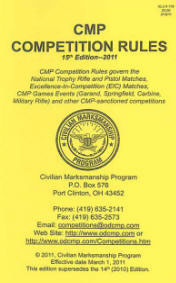
New for 2011, the 15th edition of the CMP Competition Rules is now available. The CMP is the national governing body for Service Rifle, Service Pistol and CMP Games shooting events and the CMP Competition Rules is the official rulebook for these events that are a popular and important part of the national competitive shooting scene. The 15th Edition Rulebook also provides all the rule changes for Service Rifle, as well as the governing rules for the new Vintage Sniper Rifle Competition. The new rulebook, in PDF format, can be downloaded from the CMP website at: http://www.odcmp.com/Competitions/Rulebook.pdf.
CMP Scoring App Now Available for Android Smart-Phones
Also, the CMP Scoring App, which has been available for iPhones since September 2010, is now available for Android OS smartphones in the Android App Marketplace. This $4.99 CMP App features an easy-to-use interface that allows for quick recording of your score after each string. The CMP App calculates your shooting percentages automatically to let you know how you are doing throughout the event. You can also enter notes and record conditions. The CMP App was recently updated so it can be utilized with all shooting disciplines. This application is sponsored and endorsed by the Civilian Marksmanship Program.
The Original PA 1000-Yard Benchrest Club in Williamsport, PA, will hold a Father’s Day Fun Shoot with cash prizes on Saturday June 18, 2011 (starting at 8:00 am). This will be the first-ever match of its kind at Williamsport, the first and largest 1000-Yard Benchrest Club in the country. Entry is open to everyone. All net proceeds from this match are going directly to pay off the massive pit rebuild Williamsport recently completed. There will be 50% payback of fees to shooters, as well as door prizes. CLICK HERE for entry Form (Pre-registration recommended).
Father’s Day Fun Shoot and 1000-Yard Scramble
50% payback to top 10% of shooters in each class; there will also be door prizes.
Free lunch for every paid shooter (hot dog and drink)
Relays picked at 8am (random drawing). Match Starts at 9:00 am.
Pit crew will be provided, shooters need not pull pits.
Dinner will be provided for $7 if desired. Other concessions available.
THREE Classes – Light Gun, Heavy Gun, and Factory
Light-Gun and Heavy-Gun per Williamsport rules. Factory class rifles must include: factory barrel and receiver and stock. (Rechamber, trigger, re-crown, brake etc. are OK.)
ROUND COUNT: The total round count (per rifle) is 50-75 rounds.
ENTRY FEE: $75 per gun (each shooter may enter up to 1HG, 1LG and 1 factory)
Williamsport Father’s Day Fun Shoot — Course of Fire:
Stage 1: 3-Shot and 5-Shot Groups at 1000 yards.
– Shot in one sitting with a short break between groups.
– 12 shooters per relay, with points given for each group and score.
– Approx. 18 rounds, 48 points possible.
Stage 2: 10-Shot Group at 1000 yards
– Same scoring as Stage 1.
– Approx. 18 rounds, 24 points possible.
Stage 3: Clay Birds at 1000 Yards.
– Three targets each: rabbit/skeet/mini clay-birds for each shooter in 3×3 arrays.
– Shooters have 2-3 minutes to break as many as you can (no shot limit).
– Approx. 10-20 rounds, 36 possible points.
Grand Finale – “Scrambled Eggs”
– Top 12 scorers from EACH CLASS go to final relay to shoot eggs on the bank at 1040 yards. Note: this is shot in the evening for the best conditions.
– Factory class will shoot eggs at 600 yards.
– Two-minute sighters on bank at skeet, then 2 minutes to try and break eggs.
– Cash prizes awarded for breaking the egg (separate from the 50% payback).
– Approx 10-15 rounds.
Report by Forum member James Mock
Not only did Gene win the 2-gun at Chippewa SS Warm-up, and the “Heartbreak award for one bad group that cost him last year’s SS; BUT he has now won the BIG ONE. The 2011 Super Shoot champion is Gene Bukys. He persevered after shooting a 1 1/4 inch group at 200 yards. Congratulations to Gene! — James
Further Super Shoot Results will be provided as soon as available. Photo courtesy James Mock.
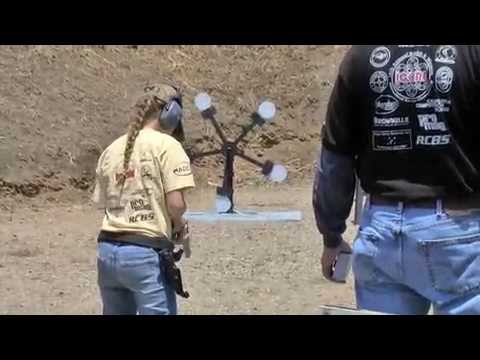
While a few specialty events will be held this afternoon prior to tonight’s Awards Ceremony, the 2011 Bianchi Cup category winners have been named. Congratulations to Doug Koenig, the 2011 Bianchi Cup Overall Champion. Jessie Abbate of Team Smith & Wesson won the Women’s Division, while Rob Leatham was the Production Champion. Other divisional Champions are listed below:
2011 Bianchi Cup Champion: Doug Koenig
Production Champion: Rob Leatham
Womens’ Champion: Jessie Abbate
Metallic Champion: Rob Vadasz
Junior Champion: Tiffany Piper
Senior Champion: Chuck Thomey
Service Champion: Kevin Worrell, USMC
Lawman Champion: Bruce Piatt
Newcomer: Nigel Gordon
In the video below you can watch John Pride, four-time Bianchi Cup champion, shoot the Moving Target Event yesterday. Pride shot a 474-28x in the event and went on to finish with a 1822-133x overall in this year’s Bianchi Cup. (Warning: Loud volume — turn down your speakers in work setting.)
In the next video (below), Heribert Bettermann and teammate Dirk Borchardt of the German National Team compete in the Falling Plate event. Heribert finished with an excellent 480-66x. The Bianchi Cup draws many competitors from outside the United States. Teams from Australia, New Zealand, Japan and Germany made the long journey to Columbia, Missouri to compete in this prestigious competition.
The kickoff of the 2011 Steel Safari is just a week away, and things are heating up! Temperatures at this long-range field match are always right around 100-degrees, but this year there will be more competitors than ever (38) and a better prize table than ever before. Match organizers expect strong competition this year, as there will be many seasoned Steel Safari “alumni” competing, including recent Steel Safari Top-5 finishers. The Steel Safari takes place this year on June 3rd, 4th, and 5th at the Blue Steel Ranch located near Logan, NM. Zak Smith is the match director. You can learn more about match details and courses of fire at www.SteelSafari.com.
A true field match with no “square-range” in sight, competitors may need to use improvised and non-standard shoot positions to make shots.
The match showcases practical rifle shooting in the field. Competitors locate small and medium-sized steel targets (often hidden), range them, and engage with one shot only, under a challenging time limit. Some movement on the clock is required, and shoot positions are always improvised, the best you can do while on a reverse incline, over a rock face, shooting down a gully, or leaning out the side of a truck. To add to the challenge, these shooting stations are distributed over two different 3-mile courses in rugged desert terrain. Despite this simple general description, there are a host of individual skills that a competitor must master to place well at this match.
Besides being a test of rifle shooting skill, it also stresses rifle and gear setup and reliability, and individual concentration and mettle. After hiking around in the desert for six hours, it takes talent, determination, and good field skills to find six targets out in the terrain, range them accurately, and then quickly make the shot from sometimes very difficult shooting positions.
Rugged precision bolt rifles such as this Accuracy International are typical at the Steel Safari. The .260 Remington is one of the most common cartridges in the Winner’s Circle.
A variety of rifles, calibers, and scopes will be used at the match, but most competitors employ more or less similar gear. First, an accurate rifle is critical. Bench-rest accuracy is not required; one MOA is sufficient, but one-half-MOA is preferred. Almost everyone shoots their own hand-loads with premium bullets from Sierra, Berger, or Lapua. Ballistic data, or “dope,” completes the triad with the rifle and ammunition. Most shooters laminate a small card and tie it to their rifle or scope, or use a retractable “pathfinder” available from Allison Machine Tool or Leupold. Long-range ballistic data isn’t useful unless the target distances can be determined, and the best tool for that is a laser range-finder. Since many laser range-finders are monocular units with limited field of view, a good set of binoculars can be a life-saver when trying to find that hidden target.
Many of the world’s best wheelgunners will be in California the first week in June. The 20th Annual Smith & Wesson Int’l Revolver Championship (IRC) takes place June 2-5 at the Hogue Action Pistol Range in San Luis Obispo, CA. This is the 12th consecutive season that San Luis Obispo Sportsmen’s Assn. hosts the IRC, the highlight of the ICORE revolver shooting season. Nearly 200 ace revolver shooters, from the USA as well as 6 foreign countries, are expected to compete. According to Ron Joslin, IRC match director: “This is the highlight of our competition season. It’s where everybody in ICORE comes together to determine who is the best. This is our Superbowl, and it’s been that way for [two decades] now.”
The man to beat in Open Class will be legendary pistolero Jerry Miculek of Team Smith & Wesson. Jerry has won every IRC in which he has competed. When it comes to wheelguns, Miculek is the fastest man on the planet. Also competing will be past Ladies Open Division winner Julie Golob, and past Limited Division Champion John Bagakis.
Along with the adult classifications, the IRC features divisions for Junior shooters. The junior events are always crowd-pleasers. Some of these youngsters are definitely future champions in the making. The video below shows the 2009 IRC Junior Shoot-Off for the overall Junior Title.
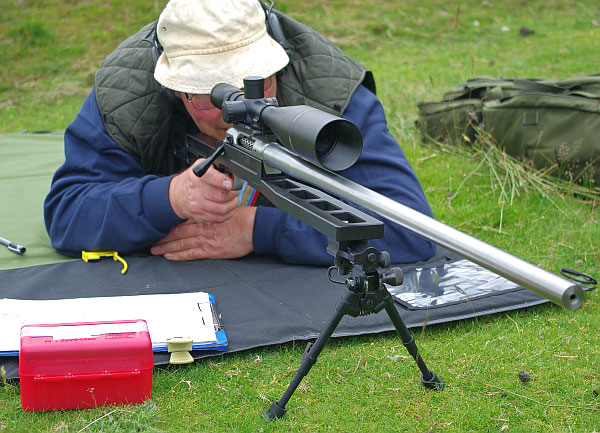
At a recent Great Britain F-Class Association Match at the Blair Atholl Glen Tilt range, AccurateShooter Forum member Laurie Holland shot a 96-9V for twenty shots, tying the British F-TR single match record. Laurie accomplished that feat with a Savage-actioned .223 Remington. Laurie proved that the little .223 Rem can be competitive, even at 1000 yards. The Blair Atholl range, 1,000′ ASL in the southern Scottish Highlands, has been described by a top international rifle coach as ‘the world’s second most difficult range for wind’ (behind Trentham in New Zealand). Many British F-Class shooters were therefore surprised when Laurie Holland took his Savage-based .223 Rem F/TR rifle to the range earlier this month to compete in the season’s second GB F-Class Association league round. The event consisted of five, 1000-yard matches over a weekend (three 15-round stages on the Saturday, and two 20-round matches on Sunday). Forty-eight registered GB FCA shooters turned up, split 50/50 between F-Open and F-TR categories.
Though heavy rains were expected, Saturday was dry. However, the predominately 5 o’clock wind grew progressively stronger throughout the day, swinging through 20 or 30° with irregular gusts and lulls. With the range situated on a steep and uneven valley-side, wind changes affect elevation markedly in addition to the usual lateral movements. A gust can send the bullet high and left, while a lull moves POI low and right.
After Matches 1 and 2 Laurie was at the bottom end of the top 10 shooters in the class, but he surged to the lead in the day’s final match that saw the most difficult wind conditions. Laurie’s 66-2V score topped second place Adam Bagnall (reigning GB F-TR league champion) by seven points, and was also better than many F-Open scores. Laurie and his .223 were now tied (on points) with F-TR world champion Russell Simmonds for the overnight lead. Both had 183 points but Laurie was leading by five V-Bulls to one. As chance would have it, Russell and Laurie had been squadded to shoot together on the second detail of Sunday morning’s 20-round Match 4. NOTE: Brits employ a different system for F-Class targets. Target Rings have a 1 through 5 value, with a “V” (rather than “X”) for a dead-center hit. The maximum score possible on a twenty-round match would be 100-20V.
Laurie used the Savage successfully in the 2010 F Class European Championship meeting seen here shooting for GB in the second placed GB F/TR ‘Blue’ Team.
What followed was a classic two-man duel. Laurie explains: “While the F-Open boys on the first detail were still shooting, we had a short but violent rainstorm that really spoiled their day, this finishing just as they took their last shots. As the rain cleared, the wind apparently died too, the flags hanging limp, so we didn’t delay getting set up to take maximum advantage of the conditions. Russell and I both found the Bull / V-Bull on shot 1. Russell drilled five consecutive Vs, while I had two Bulls and three Vs. I began to think I might just hold Russell on points, but he’d hammer me on V-count. We started to find something was moving the bullets about, but there was no way of reading this on the sodden flags or even by the sway of the tops of some tall silver birch trees near the firing point, these usually proving very sensitive. It was a case of watching the plot develop, use intuition, and watch where Russell’s shot went before I took mine. (Remember, we have two competitors to each target taking shots alternately — no string shooting in the UK.)
Kongsberg electronic scoring monitor. This system gives near instant shot marking and lets spectators watch competitors’ performance in real time.
Crowd Watches Two-Man Duel — Laurie Ties Record in Match 4
With the Kongsberg electronic scoring machines, a flashing circle on the target shows the most recent shot, with its numerical Ring Value on the right side of the screen. All of our Fours came up as 4.9s, just leaking out! I was very reluctant to touch the scope knobs knowing just how easily a quarter-MOA ‘click’ can overdo the correction in these conditions and increasingly aimed low and left as the match progressed. As we reached the end we guessed our scores must be close, and amazingly I was getting more Vs now than Russell and his .308. However, neither of us knew we were tied on shot 19, both having dropped four points, and scored eight Vs, so the last shot would be crucial. Russell told me afterwards he sensed the wind had maybe picked up marginally, briefly considered aiming off a little further left, but decided to stick with his previous aim that had given him a ‘V’ – crack, 4.9 at 3 o’clock! My shot 19 had been a Four in exactly the same spot and I eased the Sightron’s reticle dot over to the bottom left corner of the Bull ring – crack, V.0 at six o’ clock for 96.9v total. Just to our right, Adam Bagnall had also shot 96, but with eight Vs, so I won the match and equaled John Cross’s GB F/TR record 20-round 1,000-yard score shot last summer. This increased my overall lead to 1 point. As the shooting concluded, we heard a rising murmur behind and turned to discover we had a substantial audience, mostly of ‘Open’ competitors, who’d been following our progress — electronic scoring not only gives an instant result, but makes shooting a spectator sport!
I’d like to say the fairy tale had a happy ending, but I blew my lead in the final four shots of the final match and ended up fourth in F-TR class, Russell taking the top spot. So, the .223 Rem will have to wait a little longer to get its first GB F-TR league round win.”
Despite faltering in the last match, Laurie still earned two stage medals and posted the highest F-TR V-count (15) in what had been a low scoring weekend. Laurie’s impressive performance with a .223 Rem now has many people reconsidering the Mouse Gun cartridge’s utility in British long-range F-TR competition.


 The National Muzzle Loading Rifle Association (NMLRA) hosts its annual Spring Shoot from Saturday, June 11 through Sunday, June 19. The 9-day gathering will take place at the 600-acre NMLRA facility in Friendship, Indiana, with shooting events at the Walter Cline Range. Events will include daily black powder shooting competitions, early American living history demonstrations, special museum displays, youth activities, vendors’ displays, gunmaker demonstrations and much more.


 The latest edition of the CMP’s
  Target Bull Firing Order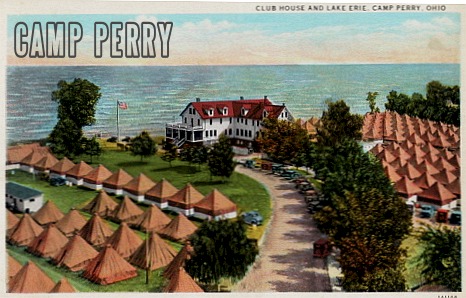

 New CMP Rulebook Released
 CMP Scoring App Now Available for Android Smart-Phones


 Many of the world’s best wheelgunners will be in California the first week in June. The 20th Annual Smith & Wesson Int’l Revolver Championship (IRC) takes place June 2-5 at the