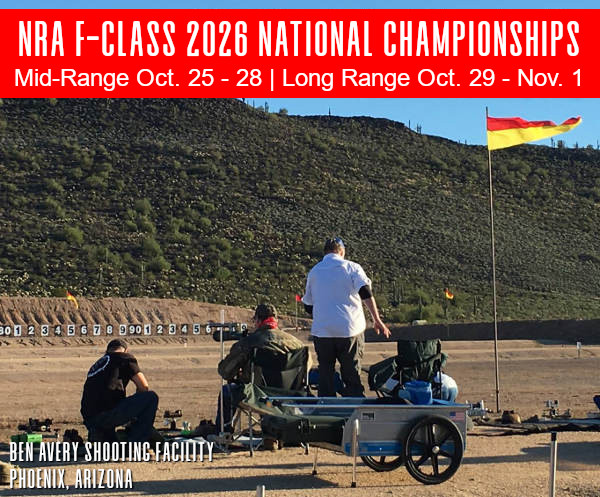
The 2026 NRA F-Class National Championships kick off tomorrow, October 25, at the Ben Avery Range outside Phoenix, Arizona. There are two divisions: F-Open and F-TR. The F-Class Championships have two segments, Mid-Range and Long Range. The Mid-Range Championships run October 25 through October 28, while the Long Range Championships commence on October 29 and conclude on Sunday, November 1st. See details of the 2026 F-Class Championships, including the course of fire, on the Desert Sharpshooters 2023 F-Class Nationals Program page.
For this Saturday Video Showcase, we feature seven F-Class videos. These segments cover F-Class equipment, reloading, load testing, marksmanship, wind-reading and competition.
WICKED WINDS — At Ben Avery with 18-30 mph Winds
Long-range F-Class shooters will tell you that the winds can be the biggest challenge in a match. And things can get pretty wild at times as the Ben Avery range in Phoenix, site of the 2022 NRA F-Class National Championships. In this video, shooters fight through extremely strong 18-30 mph winds at 600 yards. In these kind of extreme conditions, a major unexpected gust can send your bullet off-target.
Wind-Reading for Long-Range Competition
In this excellent video Keith Glasscock explains how to read the wind and even predict wind changes in cycling conditions. Keith notes that you should look at environmental features and mirage, not just wind flags. Keith is one of America’s best wind gurus — he was a team wind coach and he has finished second three times in F-Open division at the F-Class National Championships.
F-Class Competition — On the Firing Line at 2020 Nationals
This 12-minute video by F-Open ace Erik Cortina shows the action at the 2020 F-Class Nationals held at the Ben Avery Range outside Phoenix. Erik, who shoots with F-0pen Team Lapua, explains how team competition differs from the individual matches. Wind calls are made by the team’s wind coach. The shooter focuses on the trigger pulling.
Here’s a modern F-Open rifle with SEB Mini front rest on the Ben Avery firing line. Note the metal side-bars on the front of the forearm. These metal fittings extend the stock’s “wheelbase” while also lowering the rifle’s center of gravity.
Front Rest Options for F-Open (and Benchrest) Competition
If you are shopping for a front rest, definitely watch this comprehensive 42-minute video from start to finish. This is probably the most informative video about premium shooting rests available on YouTube. Top F-Class shooter and video-maker F-Class John covers a wide selection of front rests, with some observations about coaxial bipods as well. John covers the impressive new SEB NEO-X, the easy-to-transport SEB Mini-X, the excellent Rodzilla Rest, the innovative 21st Century Hybrid Rest, the sleek Italian Lenzi Rest. At the end of the video John reviews the very affordable Caldwell Fire Control Rest ($269.99 on Amazon), explaining how it can be a decent choice for shooters on a limited budget.
Trigger Trio — Evaluation of Three Trigger Types for F-Class Rifles
In this video, F-Class John evaluates three triggers that are popular with F-Class competitors: Bix’N Andy, Flavio, and TriggerTech Diamond. John talks about the pros and cons of each trigger type and offers advice for mounting and pull-weight adjustment. The Italian Flavio triggers are sold by Bruno Shooters Supply, Bix’N Andy triggers can be purchased from Bullet Central, and the TriggerTechs are offers by MidwayUSA and Area 419.
Load Development Procedures for F-Class — Seating Depth
In this video, 2023 NRA Mid-Range National Champion John Masek (aka “F-Class John”) explains how he does load development in an efficient and reliable manner. He specifically focuses on testing for optimal seating depth. With 229,000 views, this is the most-watched video on F-Class John’s popular YouTube channel. Viewers have praised this video: “This was a great video, really appreciate the explanation about how you bracketed the jump and why you chose the closest.”
F-Class Competition at Bisley Range in the UK
Every wondered what F-Class competition is like in England? There are different staging rules and different targets with “V” for a center hit vs. “X” at USA F-Class matches. This video covers the 2015 F-Class Championship held at the famed Bisley Range in England, UK. To learn more about F-Class in the UK, For more on F-Class, visit NRA.org.uk.
Here is the sleek, carbon-stocked .308 Win rifle Bryan Litz used to win both the 2015 Mid-Range AND
Long-Range F-TR Championship at the Ben Avery Range in Phoenix, Arizona.
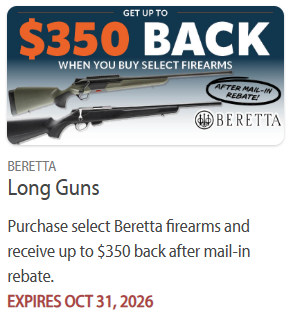
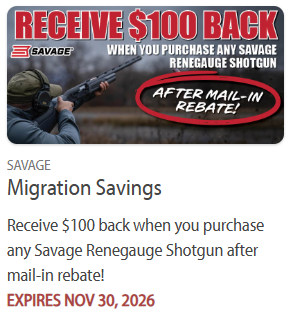
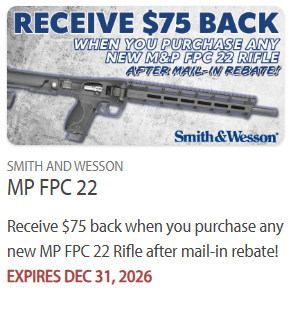
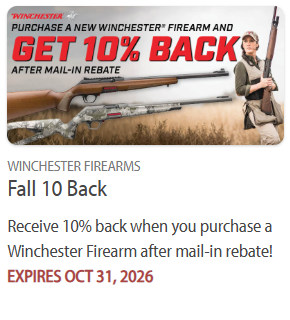
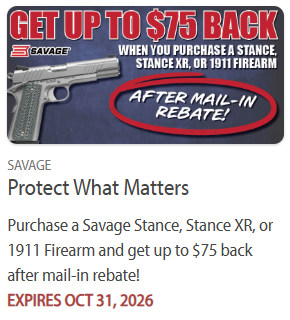
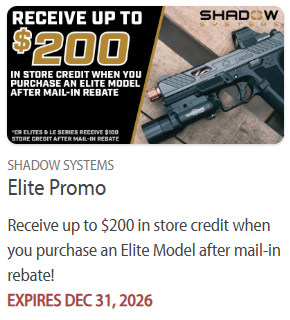
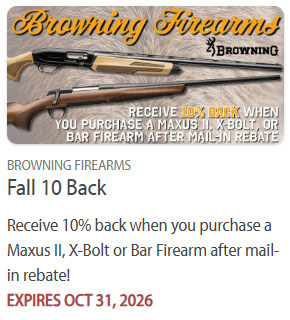
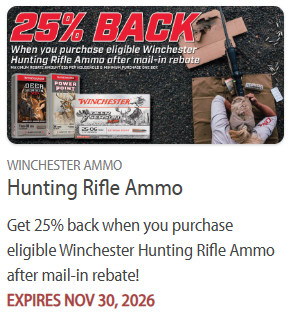
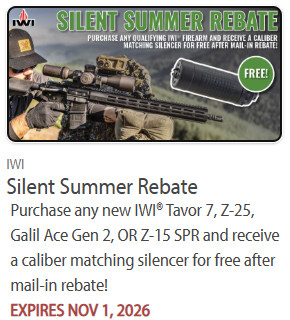
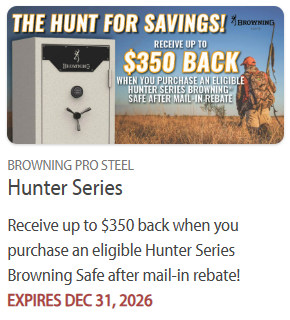
We’ve found a dozen great discount/rebate programs. These specials can save you big bucks on rifles, pistols, shotguns, ammo, and shooting accessories. Some of these rebates are worth $100 or more. For example you can get up to $350 off a Beretta Long Gun and save $100 on a Savage shotgun. And there are $75 Rebates on Savage pistols and a S&W M&P FPC22 rifle. And there is a deal with a free silencer (suppressor) with purchase of an IWI rifle. Click each box below to access the discount page.
NOTE: Some of these promos are good through the end of December 2026, but some expire on October 31, 2026, a week from now. So check the dates. If you snooze you lose.
Rio 2016 World Cup Photo Courtesy ISSF and Team USA
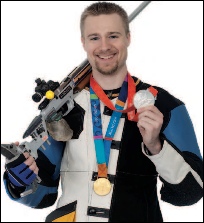
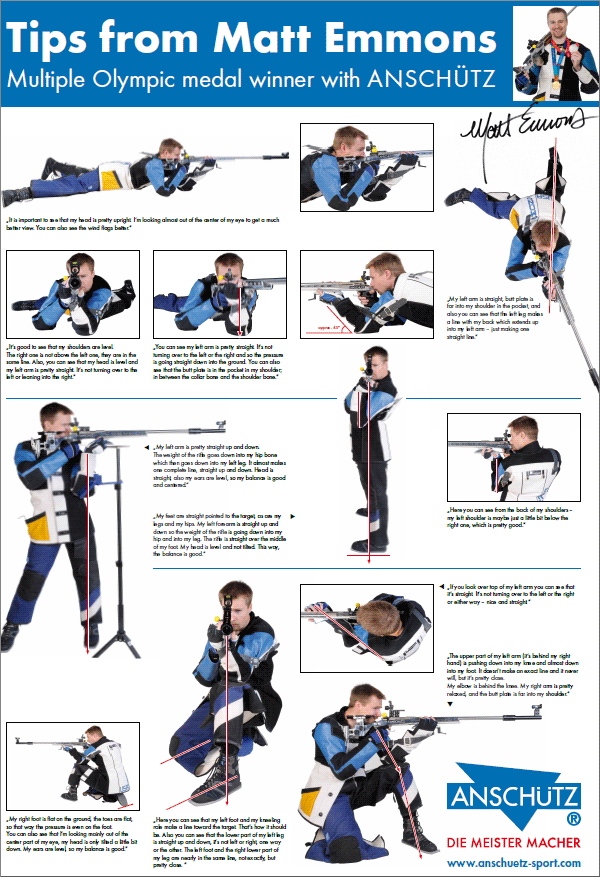
Would you like to try smallbore position shooting? Here are some tips from one of the best 3P shooters on the planet, Olympian Matt Emmons.
Matt Emmons competed in the Three-Position Event at the Rio Olympics, his fourth Olympic appearance. Matt has competed on the U.S. National Team since 1997, medaling in three Olympic games: Gold in 2004 in Men’s 50m Prone; Silver in 2008 in Men’s 50m Prone; and Bronze in 2012 in Men’s 50m 3X40. Although his specialty is Men’s 3-Position rifle, Emmons’ World Championship and Olympic Gold are in Men’s 50m Prone. He usually shoots an Anschütz or Bleiker .22LR rifle, with Eley Tenex ammo.
Winning Gold with a Borrowed Rifle
There is a fascinating story behind Matt’s 2004 Gold Medal, won with a “loaner” rifle. In April 2004, just prior to the Olympic Team Trials, Emmons discovered his rifle had been severely sabotaged in the supposedly secure locker room at the United States Olympic Training Center. The precisely tuned barrel and action were heavily damaged. “I unpacked my gun and I noticed that something wasn’t right,” Emmons said. “Sure enough, somebody had done something to it. I shot it and I couldn’t get the shell out. Emmons said it could not have been an accident: “Oh no, no,” Emmons said. “Somebody took a screwdriver and went in.” Emmons went on to the 2004 Summer Olympics using a rifle belonging to using his former University of Alaska Fairbanks teammate, Amber Darland. With that borrowed rifle he won the Gold Medal in 50m prone. Emmons never found out who the saboteur was, but said “I’d like to know so I could shake their hand and say thanks.”
In this Olympic Channel Video, Matt explains 50m 3-Position Shooting.
Here are shooting tips from Matt, courtesy Anschütz. Click image below to launch a full-screen PDF file.
CLICK Photo to Load Large PDF File
Here Matt Shows the Kneeling Position. The other two positions are Standing and Prone.
Three Sets of Hardware for Three Positions
You may be surprised to find that Matt often totes three complete sets of rifle parts to important matches — three buttplates, three cheekpieces, and three Centra sights with adjustable irises. Matt told Shooting Sports USA that he travels with “three sets for three positions. Our final is so fast that I need three sets of everything to allow a fast change-over between positions.” Matt carries his gear in an an Anschütz sport bag: “It’s similar to the big Ogio duffels with wheels, but lighter. I’ve worked with AHG/Anschütz for many years and I like their bag because all of my junk fits in it.”
NRA F-Class National Championships 2026
Sunday, October 25 – Sunday, November 1, 2026
Sponsored by the Desert Sharpshooters Rifle Club and the National Rifle Association
The 2026 United States F-Class National Championships commence Sunday, October 25, 2026 at the Ben Avery Shooting Facility (BASF) in Phoenix. For 2026, the Nationals combine both Mid-Range and Long-Range competitions in one extended mega-match. The Mid-Range U.S. F-Class Nationals take place October 29 – November 1, 2026, with all shooting at 600-yard targets. The Long Range F-Class National Championships then run Thursday, October 20 through Sunday October 23, 2022. All Long Range matches are at 1000 yards. The competitions will have two different divisions: F-Open and F-TR (Target Rifle). Registration is now closed for both Mid-Range and Long-Range Championships.*
NRA F-Class Mid-Range National Championship 25 October – 28 October, 2026
NRA F-Class Long Range National Championship 29 October – 1 November, 2026
The range should be open for practice on Saturday 10/24/2026.
Located on 1,650 acres in north Phoenix, Ben Avery is one of the nation’s largest publicly operated shooting facilities. A City of Phoenix “Point of Pride,” the facility has received a five-star rating from the National Association of Shooting Ranges. A camping area is available for competitors. Contact Ben Avery Shooting Range Camping to reserve a camping spot.
You’ll see some serious hardware on the firing line at Ben Avery. Here’s a modern F-Open rig with a handsome maple stock. The gun, belonging to David Mann of Texas, shoots as good as it looks.
Eligibility: Any competitive shooter. NRA membership is not required to compete in this match. However, non-NRA members cannot set National Records.
* Advance Entries are required: All entries must be paid in advance. Entries Closed 4:00 PM on 10/19/26. Entries after 10/19/26 are considered late entries and may be accepted to fill vacancies on existing relays only. An additional $20.00 will be charged for late entries.
I have seen it time and time again, shooters on the line wrestling with their rifle trying to get the bolt closed while the wind is switching. They were too focused trying to get their bolt to close and getting their rifle settled back on the bags that they missed the wind switch. Bang… Eight! The straw that broke the camel’s back for me was at the 2017 Canadian Nationals. I was paired up with a young girl and she would try really hard to close the bolt on her rifle. The majority of the time she would get it to close, but often times she could not even get the round to chamber. She was focused on her rifle the entire time rather than on the conditions. When we completed our strings, she had five rounds that did not chamber our of 15! That is way too many!. I told her she needed to think about Full-length sizing with 0.002″ shoulder bump, or Controlled Full-length Sizing like I call it. I told her not to worry about losing accuracy. I told her that I full-length size all my rounds and asked if she noticed how smooth my bolt was and noticed my score. She said yes, they were both great!
Controlled Full-length Sizing Does NOT Harm Accuracy
I have found that Controlled Full-length Sizing does NOT hurt accuracy or shorten brass life. I find that I can focus much more on the conditions when I don’t have to think about chambering a round nor extracting it. It has become second nature. After firing, I keep my head welded to the stock, I open the bolt by placing my thumb on top of stock and rotating hand upwards. I reach in and retrieve spent case, place it back in ammo box, and pick up another loaded round and put in chamber. I verify conditions and when ready, I push the bolt in and close it with my index and middle finger.
With Controlled Full-length Sizing you “bump” the shoulder around .002″ for bolt guns.* Image courtesy Sinclair International which carries a variety of Full-length dies.
Whidden Full-Length Sizing Dies by AccurateShooter.com Editor
For proper full-length sizing, you want a quality die that’s a very good match to your chamber. For our project rifles we usually turn to Whidden Gunworks which offers both bushing and non-bushing FL dies. And if you want the hot new option, check out Whidden’s patent-pending, click-adjustable FL-sizing die. This gives instant, precise control over shoulder bump. It works great.
*With gas guns, such as the AR10, you may want to increase shoulder bump to .003″ or more. With some benchrest cartridges, .0015″ bump may prove optimal. But .002″ is a good starting point.
Burris Signature Rings with polymer inserts are an excellent product. The inserts allow you to clamp your scope securely without ring marks. Moreover, using the matched offset inserts you can “pre-load” your scope to add additional elevation. This helps keep the scope centered in its elevation range while shooting at long range. Additionally, with a -20 insert set in the front and a +20 insert set in the rear, you may be able to zero at very long ranges without using an angled scope base — and that can save money. (To move your point of impact upwards, you lower the front of the scope relative to the bore axis, while raising the rear of the scope.)
Insert Elevation Values and Ring Spacing
People are sometimes confused when they employ the Burris inserts. The inset numbers (-10, +10, -20, +20 etc.) refer to hundredths of inch shim values, rather than to MOA. And you need the correct, matched top/bottom pair of inserts to give you the marked thousandth value. Importantly, the actual amount of elevation you get with Burris inserts will depend BOTH on the insert value AND the spacing between ring centers.
Forum member Gunamonth has explained this in our Shooters’ Forum:
Working with Burris Signature Rings
Burris inserts are [marked] in thousandths of an inch, not MOA. To know how many MOA you gain you also need to know the ring spacing. For example, with a -20 thou insert set in the front and a +20 thou insert set in the rear, if the ring spacing is 6″, the elevation change will be approximately +24 MOA upwards.
Here’s how we calculate that. If you have a 2 X 0.020″ “lift” over a distance of 6 inches (i.e. 0.040″ total offset at 0.5 feet) that’s equivalent to 0.080″ “lift” over 12 inches (one foot). There are 300 feet in 100 yards so we multiply 0.080″ X 300 and get 24″ for the total elevation increase at 100 yard. (Note: One inch at 100 yards isn’t exactly a MOA but it’s fairly close.)
Here’s a formula, with all units in inches:
Total Ring Offset
——————– X 3600 = Change @ 100 yards
Ring Spacing
(.020 + .020)
—————– X 3600 = 24 inches at 100 yards
Ring Spacing: 6 inches
NOTE: Using the above formula, the only time the marked insert offset will equal the actual MOA shift is when the center to center ring spacing is 3.60″. Of course, you are not required to use 3.60″ spacing, but if you have a different spacing your elevation “lift” will be more or less than the values on the inserts.
Sherri Jo Gallagher, the second woman in history to win the NRA High Power National Championship, sports Eye Protection at Camp Perry. The first lady High Power Champion was Sherri’s mother, Nancy Tompkins.
In response to a Bulletin article about Protective Eyewear, one of our Canadian readers posted a personal story. His account demonstrates the importance of wearing eye protection whenever you shoot — no matter what type of firearm you are using — even air rifles. We hope all our readers take this to heart. All too often at rifle matches we see shooters, even some top competitors, risking their vision by failing to wear eye protection.
Eye and Hearing Protection are now MANDATORY for Highpower Rifle competitors and Pistol shooters in all CMP-affiliated matches. The 2020 CMP Highpower Rifle, Pistol, and CMP Games Rulebooks all contain the following rule: “All competitors and competition officials are required to wear appropriate eye and hearing protection when on shooting range firing lines during highpower rifle or pistol firing. All competitors must comply with this requirement before they can participate in a CMP sponsored or sanctioned competition. Competitors are responsible for selecting their eyewear and hearing protection.”
Eye Protection — Lesson Learned by Nicholas from Canada
As a boy on a mixed farm on the plains the first shooting stick I owned was a Red Ryder BB gun. My Dad bought it for me as I showed a keen interest in the shooting and hunting sports. I was about 9 years old at the time.
We had literally thousands of sparrows in our large farm yard and they liked to roost on the steel railings in the barn loft. I took to slowly thinning out their ranks by flashlight at night as these little winged pests settled in the farm buildings.
One evening as I slayed sparrow after sparrow in the barn loft — with about a dozen farm cats following me to consume these easy meals, I fired at another bird centered in my flashlight beam.
However, my aim was a bit low — and the copper pellet hit the steel beam square on. Instantly I felt a sharp pain as the BB bounced back and hit me squarely between the eyes on the bridge of my nose – drawing blood from the partial penetration into the skin. A half inch either way and I’d have lost an eye!
Never, never, never shoot at any target with a steel background with any firearm, even a BB gun – is the hard lesson I learned, and wear the best shooting glasses that money can buy!
PLEASE REMEMBER THAT!!
Editor’s Comment: Among competitive pistol shooters, the use of safety eyewear is universal. You’ll never see Rob Leatham, Julie Golob, or Jerry Miculek competing without eye protection — for good reason. The handgun sports’ governing bodies effectively enforce mandatory eye protection policies. We wish the same could be said for competitive rifle shooting. We often see benchrest, High Power, and F-Class competitors shooting without eye protection. We’ve heard all the excuses, yet none of them trump the safety considerations involved.
We recommend that all shooters and hunters employ eye protection whenever they use firearms or are at a location where live fire is taking place. You only have two eyes. A tiny bullet fragment or ricochet is all it takes to cause permanent blindness in one or both eyes. As rifle shooters, we place our eyes a couple inches away from a combustion chamber operating at pressures up to 70,000 psi. I know quite a few guys who will religiously put on safety glasses when running a lathe or a drill press, yet the same guys won’t use eye protection when shooting their rifles — simply because it is “inconvenient”. That’s nuts. It doesn’t matter is you are a cub scout or a multi-time National Champion — you should wear eye protection.
I will give you a personal example. A year ago I was shooting a 9mm pistol. One of the cartridges had a primer burst outward blowing small particles, some brass, and a piece of the pistol’s extractor right back into my eyes. Thankfully I was wearing good wrap-around safety glasses. No injuries at all. But without those safety glasses, this could have been very serious. I always wear safety glasses with ALL firearms. Shown below is the same kind of primer blow-out I experienced, but with a .270 Win rifle cartridge.
Be wise — protect your eyes. To learn more about eyewear safety standards, and to learn about the latest options in ANSI Z87-certified protective eyewear, read our article on Eye Protection for Shooters.
We created the above target 15 years ago. Since then it has been used by tens of thousands of shooters. It has proven very popular as a load development target, since all your load data fits neatly in the boxes under each target. In fact this target is being employed by both rifle-makers and barrel-makers (including Criterion) to test their products. The target was designed for aiming efficiency. The diamonds have 1/2″ sides and you can align your reticle cross-hairs on the horizontal and vertical lines. It is a clean design that is easy to see even at 200 yards with a 20X scope. When we test, we usually crank in a little elevation, setting the point-of-impact higher, so that our shots fall in the gray circles. That way you leave the red diamonds intact for precise aiming. CLICK HERE to download Load Dev target.
We also use these two targets for load development and precision practice. The circle dot target can also be used for informal rimfire competition at 50 yards.
Right-Click Each Target to Download Printable PDFs.
How to Print Your Targets
Most of us have access to a printer at home or at work. That means you can print your own targets. You’ll find hundreds of free target designs online, including dozens of downloadable targets on our AccurateShooter.com Target Page. If you’re feeling creative, you can design your own target with a computer drawing program such as MS Paint.
Paper Stock Is Important
If you want your self-printed targets to show shots cleanly (and not rip when it gets windy), you should use quality paper stock. We recommend card stock — the kind of thick paper used for business cards. Card stock is available in both 65-lb and 110-lb weights in a variety of colors. We generally print black on white. But you might experiment with bright orange or yellow sheets. Forum Member ShootDots report: “They sell cardstock at Fed-Ex Kinko! I use either Orange or Yellow. That makes it easy to see the bullet holes clearly.” NOTE: Test before you use the 110-lb Cardstock. On some printers, with the heavier 110-lb card stock, you will need to have the paper exit through the rear for a straighter run.
Here are some Target-Printing Tips from our Forum members:
“Staples sells a 67-lb heavy stock that I have settled on. I use the light grey or light blue, either of these are easy on the eyes on bright days. I have used the 110-lb card stock as well and it works fine. It’s just a little easier to print the lighter stuff.” (JBarnwell)
“Cardstock, as mentioned, works great for showing bullet holes as it doesn’t tear or rip like the thin, lightweight 20-lb paper. I’ve never had a problem with cardstock feeding in the printer, just don’t stick too many sheets in there. If I need three targets, I load only three card stock sheets”. (MEMilanuk)
“20-lb bond works pretty well for me if I use a spray adhesive and stick the entire back of the paper’s surface to the backer board.” (Lapua40X)
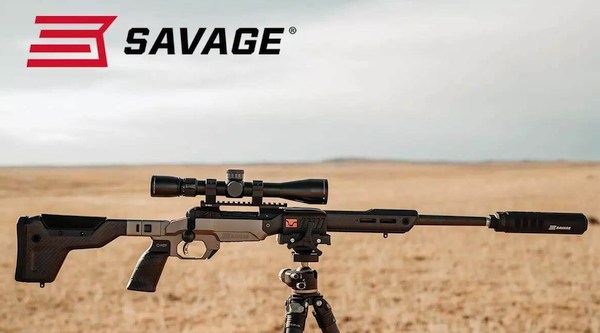
Smith & Wesson Brands, Inc. (“Smith & Wesson”, Nasdaq SWBI), a U.S.-based leader in firearm manufacturing and design, today announced that it has acquired Savage Arms (“Savage”) by merger from an indirect subsidiary of JDH Capital I, L.P. (“JDH”). The price of the acquisition is listed at $160,000,000 in stock value and cash.
The transaction combines two iconic American firearm manufacturers with leading capabilities across distinct segments of the firearms market. Savage’s strength in hunting and bolt-action rifles is highly complementary to Smith & Wesson’s leadership position in handguns and growing presence across other long gun categories, creating a broader product portfolio.
Savage has been producing firearms for more than 130 years and is one of the world’s largest manufacturers of hunting, competition and target shooting centerfire and rimfire rifles and shotguns.
According to Shooting Times: “The combined company [S&W plus Savage Arma] will immediately rank as the largest commercial firearms manufacturer in the United States, with a full-line product offering spanning handguns, revolvers, rifles, shotguns, and suppressors. Savage brings roughly $160 million annual net sales and a dedicated, skilled workforce of approximately 500 to the Smith & Wesson family, strengthening the combined company’s position at a moment when consumer demand for American-made firearms across every category remains strong.”
Mark Smith, President and Chief Executive Officer of Smith & Wesson, commented, “The acquisition of Savage is a transformative step for Smith & Wesson and an important milestone in our strategy to be the undisputed market leader in the firearm industry. Savage’s brand heritage, culture, and longstanding reputation for performance and innovation align closely with our own, and the business meaningfully expands our presence in the hunting category. By bringing these two companies together, we have created a broader, stronger platform with significant opportunities to better serve our customers, accelerate innovation, realize operating efficiencies and drive long-term value for our stockholders.”
Michael Fertitta, Managing Director of JDH, commented, “Savage has a storied history spanning more than 132 years, and we are incredibly proud of the business and brand the Savage team has built. Smith & Wesson is a natural partner for Savage given the complementary strengths of the two companies and their shared commitment to quality, innovation and serving the firearms community. We are excited about the potential of the combined business and look forward to participating in its continued success as a significant Smith & Wesson stockholder.”
Transaction and Company Details
• Acquisition Date: October 21, 2026
• Deal Value: $160 million in cash and stock
• Previous Owner: JDH Capital I, L.P. (which becomes a Smith & Wesson stockholder)
• Savage Headquarters: Westfield, Massachusetts
• Savage Workforce: Approximately 500 employees
• Annual Net Sales (Savage): Roughly $160 million
Strategic Impact
• Product Complementarity: Merges Smith & Wesson’s handgun leadership with Savage’s footprint in bolt-action and hunting rifles.
• Market Scale: Creates one of the largest combined commercial U.S. firearm manufacturers, spanning handguns, revolvers, centerfire/rimfire rifles, shotguns, and suppressors.
Ask 10 shooters about barrel cleaning and you’ll get 10 different opinions. This reflects that fact that different fouling problems demand different solutions. For example, solvents that work well for copper may not be the best for hard carbon (and vice-versa). To come up with the right solution, first you must understand the nature of the fouling in your barrel.
John Krieger Interview with AccurateShooter at SHOT Show:
The debate about the proper care of a match barrel is a hot one, spiked with folklore and old wives’ tales, Lohman said. He and his staff set out to set the record straight: “We tried to interject some science into the discussion of cleaning a match barrel,” he explained. In his article, Lohman writes:
Why worry about a little barrel fouling when the throat is subjected to a brutal 5,600° F volcano at 55,000 PSI? To investigate these and other questions about taking care of a match barrel, we spoke with a dozen experts and share their knowledge in this first of a series of articles.
After listening to folks who shoot, build barrels or manufacture cleaning solvents for a living, we concluded that even the experts each have their own unique recommendations on how to care for a match barrel. But they all agree on one thing — the gun will tell you what it likes best. Because the life expectancy of a match barrel is about 1,500 to 2,500 rounds, the objectives of cleaning one should include: preserve accuracy, slow the erosion, and remove fouling — all without damaging the gun. This article doesn’t claim that one cleaning method is better than the next. Rather, we set out to interject a little science into the discussion and to share some lessons learned from experts in the field.
For more Shooting Sports USA articles, visit www.ssusa.org.



 Matt Emmons competed in the Three-Position Event at the Rio Olympics, his fourth Olympic appearance. Matt has competed on the U.S. National Team since 1997, medaling in three Olympic games: Gold in 2004 in Men’s 50m Prone; Silver in 2008 in Men’s 50m Prone; and Bronze in 2012 in Men’s 50m 3X40. Although his specialty is Men’s 3-Position rifle, Emmons’ World Championship and Olympic Gold are in Men’s 50m Prone. He usually shoots an Anschütz or Bleiker .22LR rifle, with Eley Tenex ammo.


 In response to a Bulletin article about

 Eye Protection — Lesson Learned
 Editor’s Comment: Among competitive pistol shooters, the use of safety eyewear is universal. You’ll never see Rob Leatham, Julie Golob, or Jerry Miculek competing without eye protection — for good reason. The handgun sports’ governing bodies effectively enforce mandatory eye protection policies. We wish the same could be said for competitive rifle shooting. We often see benchrest, High Power, and F-Class competitors shooting without eye protection. We’ve heard all the excuses, yet none of them trump the safety considerations involved.


 How to Print Your Targets