New from Howa, is the Howa Actuator Controlled Trigger (HACT). This two-stage-style trigger system lightens the trigger pull weight, and reduces the amount of trigger creep. HACT trigger units will fit all Howa M-1500 rifles that were previously equipped with a three-position safety. The HACT trigger assembly is a completely redesigned trigger and sear unit with a lighter, two-stage-style trigger pull. HACT pull-weight range is 2.5 to 3.8 pounds; the factory default setting is 3 pounds.
Writing for the Western Outdoor News, WONews.com, Steve Comus has field-tested the new HACT Trigger. Steve writes: “I always liked two-stage triggers, because of the way I could take-up the slack and then actually know when the rifle was going to go off. The take-up on the [HACT] trigger was fast and easy. The crisp, positive release when pressure was put on during the second stage [reminded me] of some of the target rifles I shot through the years.”
HACT Retrofit Kit Coming in Mid-2012
The HACT trigger will eventually be available as a retrofit for existing Howa 1500 and Weatherby Vanguard Rifles. According to Legacy Sports Int’l Marketing VP Andy McCormick, the retrofit kits “should cost under $100.00 MSRP and should fit all Howa and Weatherby Vanguard short-action rifle with the current three-position safety… and that includes most of these rifles sold in the last 5 or 6 years”. Trigger Kits will be packaged with instructions. McCormick expects much interest in the HACT retrofit kit: “It’s a great two-stage trigger. I would say the HACT trigger kit will be available as a single accessory item by mid-summer 2012. Stay tuned to LegacySports.com for updates.”
Howa Detachable Magazine Kit, Just $98.00 Complete
The recently-introduced Detachable Box Magazine (DBM) Conversion Kit for Howa and Weatherby Vanguard rifles has proven extremely popular. This $98.00 kit includes new plastic floorplate and trigger housing plus either a 5-round or 10-round polymer magazine (as the customer prefers). The DBM Kit saves 1/4 lb. of weight as compared to hinged bottom metal. Made for target shooters and varmint hunters, these POLYMER BODY magazines allow you to turn your 4-round box magazine into a high-capacity DBM system. Conversion kits are currently available for .204, .223, 22-250, .243, 7mm-08, and .308 Win short action Howa rifles. These kits will also fit most late-model, short action Weatherby Vanguard Rifles.
You may not know it, but Whidden Composites, run by two-time National Long-Range Champion John Whidden, produces a nice series of hunting, F-TR, match, tactical, and general purpose gunstocks. These high-grade stocks all feature advanced composite construction, Whidden Gunwork’s signature V-blocks, three installed sling swivels, and a Pachmayr® Decelerator pad. Epoxy construction ensures that these stocks are stiff AND light. John explains: “All of our stocks are crafted with epoxy from core to finish. The core is an expanded epoxy blended to a density that perfectly balances weight, strength, and rigidity. The outer shell is an epoxy coating that is incredibly durable — but light enough to carry all day. The textured epoxy external coating forms a handsome, tactile finish that is great to hold.”
Built-in V-Block Standard, with Many Options Available
The latest stock design from Whidden Composite Works is the model 175 Tactical/F-TR stock. This unit offers a long, rigid fore-end, with a straight comb and straight buttstock toe. This makes it very well-suited for prone shooting with a rear sand-bag and front bipod. The design is ambidextrous so it can be used by either right- or left-handed shooters (with appropriate inlet). Five color choices are offered: black, silver, reddish brown, tan, and green. Base price, inletted for Rem 700 long- or short-action, is a reasonable $549.00 — remember that includes deluxe buttpad and the versatile V-block which allows one stock to be used with multiple barreled actions.
For the model 175, Whidden offers a number of options: $100 Fore-end Rail, $125 Adjustable Cheek piece, $135 Rear Monopod, and $75 Picatinny Bipod Rail. The sling attachments can also be flush-mounted for $10.00 per slot. For just $30.00 over the base price, Southpaws can order a left-hand version of the model 175 stock. Whidden Composites can also inlet for detachable bottom metal and for non-Rem actions (Tikka, Winchester, Sako, etc.), but it does cost more for these non-standard inlets.
Product Tip by EdLongrange. We welcome reader submissions.
How would you like to be able to shoot a rimfire rifle or pistol that only makes 25% as much noise as a standard .22 LR gun? And no, we’re not talking about a suppressor-equipped firearm. CCI claims that its new Quiet-22 rimfire ammo “generates one-quarter the perceived noise level of standard velocity .22 LR rounds.” So this stuff is very quiet indeed, and it’s also affordable — a 50-round box sells for under $4.00 at major online vendors.
CCI’S 710 fps Quiet-22 Ammo only produces 68 Decibels (dB) of sound at the shooter’s ear (compared to 132-139 dB for a standard .22LR). How do we put that in perspective? Consider this: 68-70 dB is the noise level inside a typical family sedan cruising at 70 mph. For additional comparisons, a typical alarm clock ringer produces 80 dB of noise, while a hair dryer can deliver 90 dB. The sound levels at rock concerts can top 115 dB, and a chain saw can hit 125 dB.
To achieve its low sound levels, CCI’s Quiet-22 ammo sacrifices both speed and energy. Rated velocity is just 710 fps, and the 40gr LRN bullet only has about 36 ft-lbs of energy at 100 yards. So this ammo may not be a great choice for varminting, except for very small prey. On the other hand the ammo could be ideal for short-range plinking and fun shooting. For paper punching, CCI notes that Quiet-22 ammo offers better performance than an air rifle with similar noise levels. CCI’s Quiet-22 Ammo may also be perfect for areas where shooting is allowed, but noise pollution is a concern.
Do You Need To Wear Muffs?
CCI says you can shoot this ammo without hearing protection. The 68 dB report of this ammo is well below the 85 dB(A) noise level at which OSHA requires hearing protection in the workplace. However, remember that, when you’re at a range with other shooters, you must shield your ears from the noise produced by other firearms. So even if you use Quiet-22 ammo, you’ll need muffs/plugs if other shooters nearby are using conventional rimfire and centerfire ammo.
Rade Tecnologías SL, through its USA subsidiary Radetec, has developed a fired-shot counting system for pistols and long guns that offers immediate benefits for soldiers and LEO personnel. Down the road, we envision how an automatic shot-counting system could benefit Multi-Gun and High Power competitors. Firing one shot too few in a course of fire can lose a match, and firing one too many can have the same result — or worse yet, a DSQ.
Two Display Options for Pistols Radetec’s SpeedShot shot-count system employs a sensor in a special, dedicated magazine which outputs to either a digital or LED light display. Both the numeric display and color-changing LED light indicate rounds left in the magazine. For pistols, Radetec will market custom grips which incorporate the shot-counter display modules. Currently, Radetec systems are available for Beretta, Glock, Smith & Wesson M & P, and 1911-platform pistols. The digital-numeric display on these grips indicates the actual number of rounds left in the magazine. The total number of rounds fired can also be accessed.
The SpeedShot counting system is powered by a 5-year lithium battery. Pistol systems feature special Radetec grips with embedded electronics for each make/model of firearm, one magazine, and a user’s manual. MSRP is $160 for either the digital-numeric model or the LED display version.
For 2012, Pierce Engineering Ltd. plans to offer Titanium (Ti) versions of its popular Remington-footprint custom actions. Just 42% the weight of steel, Titanium is light yet very strong, with a strength to weight ratio of 1.5+. By producing action bodies from Titanium, Pierce Engineering is able to shave eight ounces (8 oz.) off the weight of a long action (compared to 4140 steel). What’s more, Pierce is now working on Titanium internals and Titanium bolt handles. This could bring the total weight savings to nearly one pound (16 ounces).
John Pierce tells us: “To add to weight reduction we will offer a Titanium recoil lug and install a Titanium handle to the bolt, and possibly a lightened firing pin assembly. I really want to get close to a one-pound reduction overall.”
The new Pierce Titanium actions were inspired by customer requests. One domestic customer wanted an ultra-light action for a sheep rifle, while an Aussie buyer requested a Ti XP action for a silhouette pistol build. John Pierce reports: “After many requests and having a bar of Titanium lying on the shelf for more than three years, [I decided] well ‘Why not have a go?'”
Price and Ordering Info
What will the new Titanium actions cost? Expect to pay an extra $350.00 or so above the cost of Pierce’s stainless and chrome-moly actions. John Pierce explains: “Titanium does cost a lot more and Titanium offers challenges in machining and special tooling. We are estimating that a Ti action will sell in the range of $350.00 more than the steel counterpart.” For more info, visit PierceEngineeringLtd.com, email jpierceltd [at] tds.net or call (517) 321-5051. You can also write to the address below:
Here’s a sneak preview of the new March FX 5-40x56mm tactical scope from Kelbly.com. This FFP scope features a 34mm main tube, side focus adjustment (10 yards to infinity), and 24 milrads elevation travel (about 94 inches at 100m), with 0.05-milrad click values. The March FX will be offered in both a non-illuminated basic version (weight: 860gm or 30.3 oz.), and a higher-priced illuminated version (weight: 890gm or 31.4 oz.), with four brightness levels. So how much will these babies cost? MSRP for new March FX has not yet been announced, but we expect to get pricing info at SHOT Show in January.
First Focal Plane Reticle and Huge Magnification Range
Yes the FX features a First Focal Plane (FFP) milrad-type Reticle. This means that the ranging stadia (hash marks) remain constant relative to the target at all magnifications. So, you can range your targets using the milrad system at any power settings. That’s a big deal for tactical shooters. This new FX scope also offers an 8 times power range — the highest magnification ratio in any FFP rifle scope made to date. Is that valuable? Our tactical shooting buddies say yes.
On some tactical courses of fire, you can definitely use the full 40X magnification on precision targets at 800-1000m. However, for target spotting and close-range multiple target courses of fire, the 5X magnification, with its wide field of view, definitely comes in handy. AccurateShooter.com’s “Master Fabricator” Mark LaFevers currently uses a 12-42X Nightforce NXS in tactical matches. He likes the Nightforce but he tells us that: “The NXS I’m using with its minimum 12X does not open up enough for some of the close, multiple-target stations.” Overall, Mark was very intrigued by the new March FX: “I like the March’s 34mm tube and first focal plane design which allows ranging at all magnifications. Depending on the price, this scope would be a contender for the kinds of unknown distance, tactical competitions I’ve been doing. For benchrest, on the other hand, you really need a more finely-graded MOA-based adjustment system, in my opinion.”
Story Tip by EdLongrange. We welcome reader submissions.
21st Century Shooting’s all-new Concentricity Gauge looks like a winner. The cartridge case rides on four spinning rollers that allow smooth turning movement with low drag. These rollers are far superior to a set of V-Block supports, or even some ball-type supports.
The amount of eccentricity (run-out) is measured with a high-quality horizontal dial test indicator. In this application, a horizontal indicator works better than the typical vertical dial indicator with spring-loaded shaft used in most other concentricity gauges. We think that, with 21st Century’s new Concentricity Gauge, you can measure cases faster, with less effort, and greater repeatability. In addition, this device can measure the INSIDE of the case neck, not just the OUTSIDE.
Overall, this is a very impressive new tool that is unquestionably superior to many other Concentricity Gauges on the market. Given the capabilities of this device, the price is reasonable: $169.00 including Horizontal Indicator. The Gauge by itself costs $125.00, while the Indicator alone sells for $59.00.
Click Photos below to view larger Images
Why the New 21st Century Concentricity Gauge Works So Well
21st Century explains the advantages of its new design: “At 21st Century Shooting, our goal to modernize an industry that has seen little change over the years. The new concentricity gauge is a perfect example. Most conventional concentricity gauges use what is called a height indicator gauge (Dial Indicator with vertical shaft). Although economical, this type of gauge was not intended for the purpose of measuring rotating diameters. The vertical-style indicator can produce inaccuracies due to indicator rod flex and bounce.
Our new Concentricity Gauge uses a horizontal dial test indicator. This type of gauge was designed specifically for checking rotating diameters and in fact is exactly the type of gauge used in the machining industry for decades to measure run out — the very thing that we as hand loaders are striving to minimize or eliminate.
Additionally, our new gauge uses Stainless Steel turning rollers as opposed to fixed bearings or V-block style case supports. You will especially appreciate the roller supports that glide on linear guide-ways. Plus, with a simple push of a button you can adjust the case support base width. No tools are needed to move the base on the built-in guide-ways.”
Product tip from EdLongrange. We welcome reader submissions.
Following up on the success of its Zombie-Max ammunition, Hornady has introduced a new line of Z-Max Varmint Bullets fitted with “slime green”-colored plastic tips. What can we say — it’s a gimmick but it sells. P.T. Barnum would be proud. Hornady will initially offer seven (7) types of Z-Max bullets, in calibers .172 through 7.62 (.310), with weights from 20 grains to 123 grains.
Alexander Arms is now shipping production 17 HMR AR15 rifles and 17 HMR upper receiver kits. The complete rifles are the only semi-auto rifles specifically designed to reliably shoot the 17 HMR cartridge. Alexander Arm’s 17 HMR rifle does not employ a reworked .22LR rimfire action. Instead the gun features a new bolt assembly design purpose-built built to work with the 17 HMR cartridge. This is good news for varmint hunters who want semi-auto capability for fast follow-up shots in the varmint fields.
The complete rifle comes standard with a straight fluted 18″ stainless barrel, A1 flash-hider, free-floating composite hand guard and two molded-plastic 10-round magazines. Options include a spiral-fluted barrel and MK3 railed upper receiver. Alexander Arms’ 17 HMR ARs will be offered in both fixed stock and collapsible-stock versions. The upper receiver kit includes all the ancillary items needed to convert existing AR15 lowers to work with the 17 HMR cartridge.
17 HMR Basics
If you are not familiar with the 17 HMR, it is a popular varmint cartridge effective out to 200 yards or so. With typical muzzle velocities of 2550-2650 fps, the little 17 HMR packs much more punch than a .22LR, while bucking the wind much better. CLICK HERE for Varmint Al’s 17 HMR webpage, which provides a comprehensive analysis of 17 HMR ballistics, kinetic enegy, and effectiveness on small varmints.
Video Showing Alexander Arms 17HMR Bolt Cycling in Slo-Mo
On its website, Alexander Arms reports: “Our initial production run will be 500 units. We are extremely pleased with this [17 HMR] caliber. With help from Hornady, this unit has been extensively tested and has proven itself to be very capable in the field. At the recent Big 3 Event, we ran two rifles out to ranges of 400 yards and despite windy conditions… the guns performed well. While running guns at the Big 3 we had an opportunity to run one of the rifles with the excellent magnum rimfire silencer from Thunderbeast Arms Corp. The rifle exhibited a slight shift in zero and ran without a hitch for the two days of the event. This unscheduled test provided a quick insight into the flexibility of the rifle and everyone agreed that this combination would serve well for any varminting purposes.”
An Italian company, CompBullet, has produced a radical new line of CNC-machined projectiles with a cavity in the bullet base connected to ports (holes) placed radially around the bullet’s circumference. Currently CompBullet offers six bullet types: 9mm (100 gr), .40 cal (155 gr), .44 Cal (200 gr), .45 Cal (200 gr), and .30 Caliber Rifle (125 gr). CompBullet’s pistol projectiles have one row of radial ports, while the longer rifle bullets have two rows, resembling the porting on a muzzle brake.
Italy’s CompBullet makes many claims about its new, patented ported bullets. Supposedly the ported, cavity-base bullets go faster than conventional bullets, yet generate less recoil. CompBullet also claims that its radical projectiles produce less smoke and reduced flash on exiting the muzzle. We are skeptical of many of CompBullet’s claims. We also have some concerns about bullet integrity and potential safety issues — at least when used in high-velocity applications.
Velocity
Compbullet claims that gases exiting the radial ports “lubricate” the bullet as it travels down the bore, yielding enhanced velocity. However, if any gas is actually able to exit the holes while the bullet is in the rifling (it’s not clear that in-barrel venting really occurs), then this will simply serve to REDUCE the gas pressure pushing on the base of the bullet. If anything, the bullet should go slower than a conventional projectile, not faster.
Jet Effect
CompBullet projectiles have a cylindrical cavity in the base. CompBullet claims that hot gases will shoot out the bottom of the bullet (like a rocket) and this increases velocity. But this runs contrary to the bullet-maker’s claim that the hot combustion gas moves forward and out the vents. But what, you might ask, if there are powder kernels that have migrated into the cavity and ignite inside the bullet? That might indeed cause gas to move both forward and rearward. However, the force of any rearward gas jet would be minimal compared to the main pressure flow pushing from behind, at least while the bullet is in the barrel.
Reader’s Comment: Hope the holes are small enough so the powder doesn’t fall out if the round is tipped over or something. It’s a good idea for custom salt and pepper shakers though!” –Josh
Recoil Reduction
Muzzle brakes reduce felt recoil and muzzle lift, on both pistols and rifles. However, they are attached to the gun. We’re not sure how gas blowing out the sides of a bullet is going to have any effect on recoil, because that action occurs after the bullet has left the muzzle. It IS possible that some in-barrel venting from the bullet’s ports may occur (if the ports aren’t blocked by the rifling), but that, as explained above, will only serve to reduce pressure pushing on the base of the bullet and hence reduce velocity. To the extent CompBullet projectiles deliver less felt recoil (if they do), it’s probably because they have lower velocity. If CompBullet projectiles actually fly faster (than do conventional bullets), that would be easy to demonstrate with chronograph tests. However, CompBullet provides NO CHRONOGRAPH DATA on its website. Without such data, we remain unconvinced.
Safety Issues
With a CompBullet projectile, there is the potential for powder to shift from the cartridge case into the bullet’s central cavity, prior to ignition. If this occurs, and the kernels inside the bullet do not fire off prior to the bullet leaving the barrel, there is the possibility of an explosive fragmentation of the bullet once it leaves the muzzle. We don’t know if this could actually happen, but there’s a word for a small, metal container filled with gunpowder — a grenade.
Bullet Integrity
A conventional jacketed bullet can fly apart when the combination of heat, friction, and spinning force stresses the bullet’s construction. With the CompBullet projectile, you have a bullet that is heated from the inside out, with numerous weakening holes drilled in the structure.
Accuracy
We discussed the effect of radial ports on a bullet with Bryan Litz, chief Ballistician for Berger Bullets. He said: “this ported bullet design is interesting, but I can’t see how it would have any usefulness for precision shooting. If flaming gas really jets out the ports, and the outflow of every port is not perfectly uniform, then this will quickly cause a reduction of bullet stability, which won’t help accuracy at all.” Bryan also wondered if drag from the gas out-flowing from the ports might slow down bullet spin-rate. With less rpm, spin-stabilization would be reduced. “Unstable bullets are not accurate”, Bryan added.
Flash Signature
There does appear to be some evidence of a smaller smoke “cloud” on bullet exit and a reduced flash signature, if the photos on the CompBullet website can be believed. We would like to see an actual comparison between conventional ammo and CompBullet ammo, using identical powder charges. CompBullet’s photos do not provide a comparison with ammo loaded with non-ported bullets. We cannot confirm that flash is reduced unless we can see photos of both ported and non-ported bullets, shot with the same powder loads, in the same lighting conditions. See sequence below with 9x21mm pistols:
The inventor of the CompBullet ported projectile is Alain Della Savia, a IPSC Grand Master and 6-time Italian National Revolver Champion. He was inspired by the recoil reduction offered by ported handguns. He hoped to develop a new kind of ammo that had reduced recoil, while still satisfying the IPSC “power factor” requirements. His solution was to build ports in the bullets themselves, using CNC-machining methods: “After a year of experiences, [Alain] found the right balance between materials and internal compensation system inside the bullet.”


 New from Howa, is the Howa Actuator Controlled Trigger (HACT). This two-stage-style trigger system lightens the trigger pull weight, and reduces the amount of trigger creep. HACT trigger units will fit all Howa M-1500 rifles that were previously equipped with a three-position safety. The HACT trigger assembly is a completely redesigned trigger and sear unit with a lighter, two-stage-style trigger pull. HACT pull-weight range is 2.5 to 3.8 pounds; the factory default setting is 3 pounds.

 You may not know it, but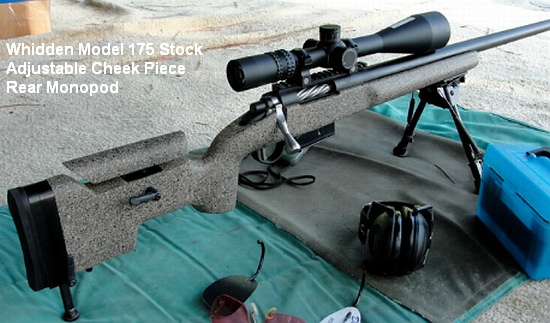

 How would you like to be able to shoot a rimfire rifle or pistol that only makes 25% as much noise as a standard .22 LR gun? And no, we’re not talking about a suppressor-equipped firearm. CCI claims that its new

 Radetec’s SpeedShot shot-count system employs a sensor in a special, dedicated magazine which outputs to either a digital or LED light display. Both the numeric display and color-changing LED light indicate rounds left in the magazine. For pistols, Radetec will market custom grips which incorporate the shot-counter display modules. Currently, Radetec systems are available for Beretta, Glock, Smith & Wesson M & P, and 1911-platform pistols. The digital-numeric display on these grips indicates the actual number of rounds left in the magazine. The total number of rounds fired can also be accessed.


 17 HMR Basics


