Airport photo by Politikaner under Creative Commons License.
Thanksgiving is almost here. We know many readers will soon be traveling to spend the holiday with family members. If you will be flying with firearms this November, you should read this article. You need to familiarize yourself with current Federal Regulations on gun transport before you get anywhere near an airport. Thankfully, the Transportation Security Administration (TSA) has a web page that states the important requirements for airline passengers traveling with firearms* and/or ammunition.
You’ll want to visit the TSA Firearms and Ammunition webpage, and read it carefully. In addition, before your trip, check the regulations of the airline(s) with which you will fly. Some airlines have special requirements, such as weight restrictions.
Here are the TSA’s key guidelines for travel with firearms:
More Airline Travel Tips from Tom McHale
Tom McHale has written an excellent article for the Beretta Blog, Ten Things You Need to Know about Flying with Guns. We suggest you visit the Beretta Blog to read this informative story. Here are two of Tom McHale’s Travel Tips:
Weigh your gun case and ammunition
Most airlines will allow up to 11 pounds of ammunition. And, like any luggage, you will be charged more for any baggage weighing more than 50 pounds. This sounds like a lot, but when traveling to the Crimson Trace Midnight 3 Gun competition last year, my case with shotgun, rifle, pistol and ammunition tipped the scale past the 50 pound mark.
Pack ammo in the same locking case
This is another area that’s misunderstood and full of internet myth. Your ammo just needs to be stored in some type of safe container and not loose. Technically, you can keep ammunition in magazines, but I wouldn’t recommend it. It meets the letter of the law storage requirement, but too many airline and TSA agents will give you grief. Use a plastic ammo box or original cardboard packaging and you’ll be fine carrying that in the same lockable case as your gun.
*SEE United States Code, Title 18, Part 1, Chapter 44. A “firearm” is defined as: any weapon (including a starter gun) which will, or is designed to, or may readily be converted to expel a projectile by the action of an explosive; the frame or receiver of any such weapon; any firearm muffler or firearm silencer; and any destructive device. As defined by 49 CFR 1540.5 a loaded firearm has a live round of ammunition, or any component thereof, in the chamber or cylinder or in a magazine inserted in the firearm.
Looking for culinary inspiration for your holiday gatherings? The NRA Blog offers three special (and delicious) Wild Game Recipes for your family feasts: Honey Mustard Planked Wild Turkey Breast, Mushroom-Stuffed Wild Boar Roast with Black Truffle Sauce, and BBQ Brined Pigeon. These recipes come from some of the country’s best chefs, and they all seem mouth-watering. You’ll find a full list of ingredients plus step-by-step cooking tips.
One of the many advantages to hunting is the assortment of game you can gather that lasts for an extended period of time. Just because it’s Thanksgiving doesn’t mean you have to stick with a whole turkey from the store and a ham hock.
We have three unique spins on wild game recipes that will suit your dining table perfectly. Even if you’re one of those hunters who enjoys a quick hunt the morning of Thanksgiving, these recipes will make your holiday more delicious than ever. — NRABlog.com
Need to find an FFL near you (or near a destination to which you’ll be traveling)? Then check out this handy FFL Finder App from Huntgeek.com. This easy-to-use, inexpensive Mobile App locates FFLs throughout the country. FFL Finder sells for 99 cents ($0.99) for Apple iOS or Android OS.
This App helps sellers as well as buyers. When you sell a firearm to a resident of another State, Federal law requires the shipment to be received and logged by an FFL. This App helps you quickly identify a reputable FFL near your purchaser. It can also help you identify a gunsmith FFL if you are away from home on a hunting trip: “Great app to find gun shops when you travel outside your home area.”
With FFL Finder, you instantly get mapped results of FFL holders near your location (via GPS) or by selecting an area on a map. You can quickly find a variety of nearby FFLs you can contact to compare their transfer rates and policies. If you need to ship a gun out of state, the program quickly finds an FFL who can receive the firearm. And if you are traveling away from home for a match, or a hunting trip, the App can find locations where you can obtain ammo, supplies, and replacement parts. That’s reassuring. Imagine you are traveling and your firearm breaks, or your optics fail, so you need spare parts or a new scope immediately. The FFL Finder App can help you source what you need.
Think Vegas in January, baby — yes, we’re talkin’ about SHOT Show (Jan. 23-26, 2018). Registration for the National Shooting Sports Foundation’s 2018 SHOT Show is now open for all Attendees, Exhibitors, and Media. Register online now at Shotshow.org. The SHOT Show hotel booking system is also active. It’s a good idea to reserve rooms early to get the best rates. SHOT Show organizers have negotiated deeply discounted rates at dozens of Las Vegas hotels, with prices as low as $56 per night. However, some of the most popular affiliated hotels are already sold out. And sometimes you can get better deals through websites such as Priceline and Trivago.com.
Scheduled for January 23-26 in Las Vegas, the big gun industry convention is just two months away. While registering, attendees can enroll in SHOT Show University, and/or sign up for other educational offerings. Sorry, the Industry Dinner is already sold out.
SHOT Show is NOT open to the general public. To attend you need to have an affiliation with a gun industry company, retailer, or media outlet. That said, thousands of non-professionals attend each year, receiving credentials from gun shops, parts distributors, retailers and the like.
SHOT Show tip from EdLongrange. We welcome user submissions.
Wintertime, the season of cold and damp, is right around the corner. There’s already snow on the ground in some parts of the country. If you want your fine firearms to remain pristine and rust-free through the winter months, it’s wise to protect then while they are stored in a safe. You should protect blued surfaces with a rust-blocker. In addition, we recommend storing guns in protective sleeves. Our take on Bore-Store Gun sleeves is simple: They work great, so buy them and use them — for ALL your valuable firearms.
These thick, synthetic-fleece sacks cushion your guns, preventing nicks and scratches. The breathable fabric wicks away moisture, and the fibers are coating with corrosion inhibitors. I personally use Bore-Stores for in-safe storage with all my guns, and I have never had one of my guns rust inside a Bore-Store, even when I lived a stone’s throw from the ocean.
Bore-Stores are offered in a wide range of sizes, so you can find something to fit everything from a Snub-nosed revolver to a 32″-barrelled 50 BMG. Rifle-size Bore Stores can be purchased for $12.00 – $21.00 from Brownells. For long F-Class or tactical rifles, we recommend the 10″x52″ Scoped Shotgun Bag, Brownells item 132-000-003. You can also order direct from the Bore-Store manufacturer, Big Spring Enterprises, www.BoreStores.com. Big Spring will also craft custom sizes on request.
Consider Military-Style, Triple-Layer Bags for Long-Term Storage
While we prefer Bore-Stores for regularly-used guns, if you have heirloom firearms that will be kept in storage for very long periods without seeing any use, you may want to grease them up and place them in the thin, but rugged three-layer storage bags sold by Brownells. The bags are made from a three-layer laminate of polyester, aluminum, and polyethylene film, with a shiny silver exterior. Though the laminate is thin, the Brownells storage bags are puncture-resistant, and have a 0% moisture transmission rating so moisture can’t get inside. These bags are also resistant to petroleum-based chemicals and they won’t break down even in contact with soil or moisture.
Here’s one VITAL bit of advice for using these bags. Be absolutely sure, before you seal up the bags, that your guns are DRY and that all metal surfaces have been coated with an effective anti-corrosive, such as BoeShield T9 or Eezox. Brownells’ storage bags are inexpensive. A three-pak of 12″x 60″ rifle sacks (item 083-055-003WB) costs just $22.99 — under eight bucks a gun. That’s cheap insurance for rifles and shotguns that may cost thousands of dollars.
Get Your Guns Out of Foam-lined Cases — They Are Rust Magnets
Just about the worst thing you can do in the winter (short of leaving your rifle outside in the rain) is to store firearms in tight, foam-padded cases. The foam in these cases actually collects and retains moisture from the air, acting as the perfect breeding ground for rust.
Remember, those plastic-shelled cases with foam interiors are for transport, not for long-term storage. Don’t repeat the mistake of a wealthy gun collector I know. He stored four valuable Colt Single Action Army (SAA) revolvers in individual foam-padded cases, and locked these away in his gun safe. A year later, every one of his precious SAAs had rusted, some badly.
Report based on story By Ashley Brugnone, CMP Writer
The CMP Travel Games will see some big changes in 2018. The Civilian Marksmanship Program (CMP) has revamped its 2018 Travel Games schedule by adding matches and establishing its own Classification System. Starting in 2018, ALL additional Travel Games matches will be held on Electronic Targets, the CMP will take over the Creedmoor Cup Matches, and all matches will now follow CMP High Power Rifle Competition Rules. Moreover, all the Individual Service Rifle Matches will now count towards the new CMP Classification System.
Electronic Targets to Be Used for Additional Travel Games Matches
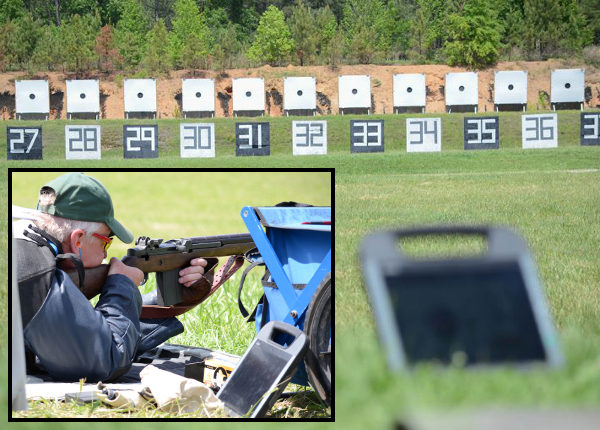
In 2018, the CMP will take over the Creedmoor Cup Matches and add new events to the CMP Oklahoma and New England Games. All additional matches will use the CMP’s Electronic Target System. This shows shot location instantly on monitors next to each shooter. The Electronic Targets also eliminate the need for pit duty, so matches run more quickly and there is less work for competitors.
New Events Added to the CMP Travel Games
Additional matches added to the Travel Games include Excellence In Competition (EIC) events that will count towards the Distinguished Rifleman Badge. All regular CMP events, such as the Small Arms Firing School, various vintage rifle competitions, Vintage Sniper Match, Rimfire Match, Carbine Match, and pistol matches (except Western), will still be included on the Travel Games schedule.
File photo from 2015 Oklahoma CMP Games. Check schedule for 2018 dates.
Match Changes for CMP 2018 Travel Games:
Oklahoma CMP Cup & CMP Games Matches — two 80-Shot (800 Aggregate) Matches and a 4-Man Team Match.
Eastern CMP Cup & CMP Games Matches — The three Creedmoor 80 Shot Matches will now be changed to three 80-Shot CMP Cup Matches (800 Aggregate). A 4-Man Team Match and EIC Rifle Match will still be fired.
New England CMP Cup & CMP Games Matches — two 80-Shot (800 Aggregate) Matches and a 4-Man Team Match.
Western CMP Cup & CMP Games Matches — The three Creedmoor 80-Shot Matches will now be changed to two 100-Shot (1000 Aggregate) Matches. A 4-Man Team Match and EIC Rifle Match will still be fired.
“On that day, let us solemnly remember the sacrifices of all those who fought so valiantly, on the seas, in the air, and on foreign shores, to preserve our heritage of freedom, and let us reconsecrate ourselves to the task of promoting and enduring peace so that their efforts shall not have been in vain.”
– 1954, President Dwight D. Eisenhower, Veterans Day proclamation.
On the 11th hour, of the 11th day, of the 11th month of 1918, bugle calls signaled the ‘cease fire’ ending the First World War. (The official Armistice was signed earlier that morning.) To those who endured it, WWI was the “Great War”, “the War to End All Wars.” Tragically, an even greater conflict consumed the world just two decades later.
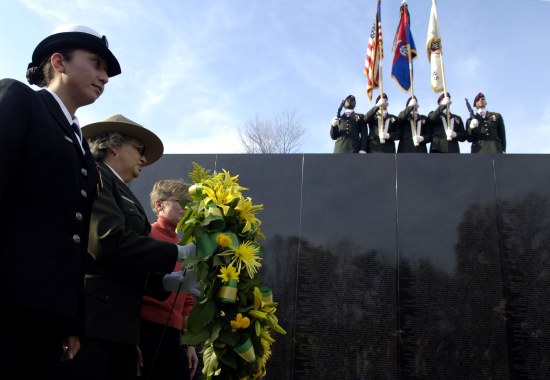
Today, 99 years after the end of WWI, Americans mark the anniversary of the WWI Armistice as “Veterans Day”. In Canada it is known as Remembrance Day. On this solemn occasion we honor all those who have served in the military in times of war and peace.
While more WWII veterans pass away each year, there are still over 21.8 million veterans in the United States. Take time today to honor those soldiers, sailors, and airmen who have served their nation with pride. Today we remember that… “All gave some, and some gave all.”
Former Secretary of Veterans Affairs Dr. James Peake asked Americans to recognize the nation’s 21.8 million living veterans and the generations before them who fought to protect freedom and democracy: “While our foremost thoughts are with those in distant war zones today, Veterans Day is an opportunity for Americans to pay their respects to all who answered the nation’s call to military service.”
On Veterans Day we especially need to remember the seriously wounded combat veterans. These men and women summon great courage every day to overcome the lasting injuries they suffered in battle. Some of these soldiers have lost limbs, yet volunteered to return to combat duty. That is dedication beyond measure.
National Veterans Day Ceremony
The Veterans Day National Ceremony is held each year on November 11th at Arlington National Cemetery. The ceremony commences precisely at 11:00 a.m. with a wreath laying at the Tomb of the Unknowns and continues inside the Memorial Amphitheater with a parade of colors by veterans’ organizations. The ceremony is intended to honor and thank all who served in the U.S. Armed Forces. Major regional ceremonies and events are also held throughout the country.
Finding Peace On The Other Side Of War NRA Blog Storyby Catherine Parks, Divide Camp Volunteer
For combat veterans there is a great divide between life pre-war and life post-war. Soldiers prepare, train and are equipped to go to a war zone, but, upon returning home, physically and psychologically injured veterans struggle to assimilate back into a normal life. Divide Camp, located in northeastern Oregon, honors the service of post 9-11 combat veterans through small-group outdoor adventures. The non-profit camp offers hunting, fishing, and other recreational activities. Learn More HERE.
Divide Camp provides lodging, home-cooked meals and transportation at no charge to the veterans served. The camp features 40 acres of remote forestland, six cabins, a shop and an outdoor picnic shelter. In 2014, The NRA Foundation funded its first grant to Divide Camp — $15,000 for an Action Trackchair — to allow amputee veterans to traverse the mountain terrain.
Another grant in 2015 funded pistol range construction, safety gear and targets. Initial range work for a competition 3-D archery course shootable from a Trackchair began with funding from an NRA Foundation grant in 2016.
How Divide Camp Helps Rebuild Lives
Army veteran Jose Martinez stepped on an improvised explosive device in Afghanistan. Following numerous surgeries and months of therapy, Jose was fitted with prosthetics, which allowed him to walk. Still, extreme depression set in and two suicide attempts followed. On his first day at Divide Camp, Jose used the new all-terrain wheelchair to hunt. “I missed the first couple of times, but my friends didn’t give up on me and Divide Camp didn’t give up on me, and I got one the next morning,” Jose said. “Elk hunting was one of the best experiences I’ve ever had. How many amputees in California can say they shot an elk?” Jose stayed in a new cabin built to accommodate veterans with disabilities.
Just being in nature is an amazing healer
Julie Wheeler, Divide Camp executive director, has served as a critical incident stress worker to help others prevent post-traumatic stress disorder. She is familiar with what happens when people are exposed to high stress and trauma. “I know it takes a long time to overcome,” Julie said. “I think they need help beyond what’s provided by the Department of Veterans Affairs, which is drugs and therapy. Just being in nature is an amazing healer.”
We support Hunters for the Hungry, a program that feeds needy families in the USA. Hunters for the Hungry (HFTH) is an NRA program that gives back to communities by supplying meals throughout the country. The NRA works closely with state agencies that supervise meat donations. Since the program’s inception, Hunters for the Hungry has brought millions of pounds of venison to homeless shelters, soup kitchens, and food banks across the United States. This program has been in place for 24 years. In 2013, HFTH affiliates donated 2.6 million pounds of meat, equating to 10.3 million meals.
Hunt and Help Others
Many American hunters are able to harvest more than they can eat or share with friends and family. Through Hunters for the Hungry you can help share your bounty with those in need.
Donation Rules and Regulations
All donated game must be field dressed and legally harvested. Note that each state has different rules and regulations for donations, please check with your local drop off location prior to donating.
To learn more about Hunters for the Hungry, call (800) 492-4868 (option3) or email hservices@nrahq.org for more information.
Many hunters work with organizations dedicated to the cause of helping the hungry, such as Hunters for the Hungry, Farmers & Hunters Feeding the Hungry, Hunt to Feed, and Buckmasters, among others. The game meat satisfies shelters’ need for nutritious food items. Dave Williams, who manages food resources for a Georgia food bank, said that “Deer venison is such a low-fat, high-protein item, agencies greatly appreciate getting it.” Another recent news report pointed out that one deer can feed up to 200 people. Ground venison is a versatile food, with cooks using it in pasta sauces, chili, tacos, meatloaf, burgers and other dishes.
Dave Emary is concluding his 24-year career at Hornady. Although retiring from full-time duties, Emary will continue with Hornady as a consultant. AccurateShooter.com wants to acknowledge Dave’s decades of important work in the gun industry. Brilliant, dedicated, and forward-thinking, Dave has been one of the top minds in our industry for many years. He will be missed. He can claim credit for many of the most important innovations in cartridge and bullet design in recent decades.
Ask Dave Emary what he liked best about his job as senior ballistics scientist at Hornady, and he’d tell you that it was finding better ways to do things. “At the heart of me, I’m a tinkerer,” Emary said.
To borrow an expression from aeronautics, this Air Force veteran is inclined to “push the envelope,” to think outside the box. “I’m not one willing to just go with the status quo,” Emary said.
Over his 24-year tenure with the company, Emary helped accomplish some of the biggest breakthroughs at Hornady. Although Emary said he was merely in the right place at the right time, the list of projects he influenced in one way or another is a long one.
Dave Emary the Innovator
Fans of Hornady products will quickly recognize the names of ammunition lines such as Critical Defense®, Precision Hunter™ and LEVERevolution®, or cartridges like the 6.5 Creedmoor and 17 HMR, but those are just a few of the dozens Emary worked on after being hired as bullet/ammo lab manager in 1994. For his groundbreaking work, Emary was honored as one of Outdoor Life’s Top 25 for Innovation in 2007.
Emary came by his interest in ballistics naturally, growing up on a farm near Wakeman, Ohio, where he began shooting when he was 10 years old. His dad had a .22, and he shot a lot of small game, rocks and other targets of opportunity.
In this 2008 video, Dave Emary talks about the “new” 6.5 Creedmoor cartridge.
Father And Son at the Vintage Sniper Match
Dave Emary was a key figure in starting the CMP’s Vintage Sniper Rifle Match. Dave was instrumental in bringing the new match to fruition and he says his father was his inspiration. Below, Dave Emary and his father Robert reflect on the success of the first Vintage Sniper Rifle Team Match held at Camp Perry.
Robert Emary (above right) was a decorated World War II scout sniper who parachuted into Holland after the Normandy Invasion and fought all the way to the Eagle’s Nest. (Photo: CMP The First Shot)
Dave Emary was a competitive shooter. This photo shows Dave (left) and “Gunny” R. Lee Ermey (right) shooting the Vintage Sniper Team Match at Camp Perry. (Photo: NRA Blog)
Q and A with Dave Emary
There is an interesting interview with Dave Emary on the Hornady Blog. Dave shares some insider knowledge on how new cartridge types are developed and SAAMI/CIP standardized. And Dave also comments on his favorite new and old cartridges:
Q: Which Hornady rounds have you helped design?
A: This list gets pretty long, Light and Heavy Magnum, A-MAX Match bullets, V-MAX bullets and the Varmint Express line, 450 Marlin, 17 HMR, 204 Ruger, 17 M2, LEVERevolution bullets and ammunition, 308 and 338 Marlin Express, Ruger Compact Magnums, Critical Defense bullets and ammunition line, 6.5 Creedmoor, Critical DUTY bullets and ammunition, Superformance propellants and ammunition. There’s probably some I’ve forgotten.
Q: What is your personal favorite caliber and why?
A: I love the 6.5 Creedmoor. It provides exceptional accuracy along with being very easy and comfortable to shoot. The external and terminal performance offered by 6.5 mm bullets for the ease of shooting is unmatched. At this point in time it is the only bolt action hunting rifle I own. I occasionally pick it up rather than my lever guns to go hunting. It almost seems unfair hunting with it because of how accurate and flat it shoots and how effective it is.
Q: Which historic calibers do you admire and which is the greatest in your view?
A: It’s hard to look past the .303 British and 8×57 because of their tremendous historic significance. I would also rate the .30–06 in with the previous two. The other cartridge I think really started the present day commercial sporting ammunition designs is the 30–30 Winchester. It was one of the first high velocity, smokeless, commercial offerings and lead the way for cartridge development that eventually far eclipsed it.
Dave Emary’s Background — Physics, Astronomy, Air Force Service, and Ballistics
After earning his Bachelor of Science in physics from Bowling Green State University, Dave worked for a year at the National Radio Astronomy Observatory’s Karl G. Jansky Very Large Array in New Mexico before joining the U.S. Air Force. In the Air Force, he earned a second bachelor’s degree, in aeronautical/astronomical engineering. He served for six years, rising to the rank of captain.
After the Air Force, Emary worked at the New Mexico Institute of Mining and Technology’s Energetic Materials Research and Testing Center (EMRTC), the largest ordnance-testing facility in the U.S. outside the government. “That’s where I really got into the ballistics side of things,” Emary said. Among other things, research by Emary and his colleagues led to the development of the electromagnetic railguns now being used by the U.S. Navy that launch projectiles at 4,500 mph.
From there, he went to work for St. Marks Powder in Florida, the nation’s largest gun propellant producer. There, his work caught the attention of Steve Hornady, who offered Emary a job. “Dave had built a reputation as an innovative thinker and problem solver, and I wanted those qualities for our team,” Hornady said.
Dave Emary Returns to EMRTC as Engineering Director
Although he has retired from Hornady, Dave Emary will still use his skill set and vast ballistics knowledge in a new job at a familiar place — as Director of Engineering at the Energetic Materials Research and Testing Center. EMRTC is internationally recognized in explosives research and testing. For Emary, it’s just his way of easing into retirement.
“I feel incredibly blessed to have been able to be a member of this industry, Hornady Manufacturing and to have been afforded the opportunities I have been given,” Emary said. “I thank the Lord every day for the success I have had, which has been enormously aided by many other people.” — Dave Emary





 Here’s one VITAL bit of advice for using these bags. Be absolutely sure, before you seal up the bags, that your guns are DRY and that all metal surfaces have been coated with an effective anti-corrosive, such as BoeShield T9 or Eezox. Brownells’ storage bags are inexpensive. A three-pak of 12″x 60″ rifle sacks (item 083-055-003WB) costs just $22.99 — under eight bucks a gun. That’s cheap insurance for rifles and shotguns that may cost thousands of dollars.
 Remember, those plastic-shelled cases with foam interiors are for transport, not for long-term storage. Don’t repeat the mistake of a wealthy gun collector I know. He stored four valuable Colt Single Action Army (SAA) revolvers in individual foam-padded cases, and locked these away in his gun safe. A year later, every one of his precious SAAs had rusted, some badly.