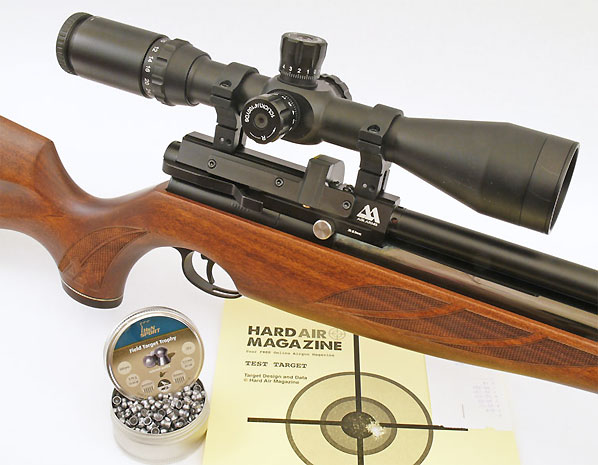
An outfit in Washigton State, Box to Bench Precision, has developed an oversize (23.5″ x 30″) precisely-scaled target designed for load development and scope testing. This target is very innovative. On the target you’ll find various clusters of aim points for various tasks. Upper left are orange aiming spots for testing various powder charges. In the upper right quadrant are more red aim points to be used when testing bullet seating depth. Running down the center of the target is a vertical line with horizontal marks showing precise MOA and Mil heights at 100 yards — use this feature to verify your click values.
And there’s more. In the lower right quadrant (far right) are three black targets to be used for chrono work. With these you can record cold velocity, hot barrel velocity and a “Final Velocity”. Over in the lower left quadrant, in the left-most column, are three dot targets for zeroing and recording group size with load data. Finally, four more black/white targets can be used for a scope box test (aka “shooting the square”). With a box test, you move from target to target, clicking in sequence to each corner of the square in sequence, evenutally returning to your original aim point. If your scope tracks correctly, the last box test shot should end up right on top of the first shot.
Record the Entire Load Development Process on One Target
For those used to shooting at conventional bulleyes or benchrest targets, this target may seem confusing, but it can really help organize and simplify the process of load development. We like the idea of having a single, durable target that performs double-duty — serving for load development as well as scope checking. And we like the fact that the target is pretty strong — the maker says: “The target is Tear-Resistant and Water-Proof”. We’d expect a maker based in the Pacific NW to design a target that can handle wet weather.
How to Order
So how much does all this target technology cost? A single, 23.5″ x 30″ target costs $6.99. A pack of three targets costs $19.47, while a five-target pack runs $29.95 (which works out to $5.99 per target). Targets ship in a durable cardboard tube. If you like what you see and want to order these targets, visit the Box To Box Precision Online Store.
NOAA photo of flooding after Hurricane Floyd in 1999. The Colt Python Revolver once belonged to Elvis Presley (Rock Island Auction).
Firearms owners who have seen their guns and stored ammunition submerged by flood waters in storm-wracked areas are probably wondering if their firearms and ammunition can be salvaged and safely used. To answer these questions, the NSSF and the Sporting Arms and Ammunition Manufacturers’ Institute (SAAMI®) created two documents outlining the proper response to submersion of guns and ammo. If you’ve got wet guns and/or ammo, download these two PDF files and read them carefully.
The SAAMI document “Guidance on Firearms That Have Been Submerged or Exposed to Extensive Amounts of Water” points out two major concerns about firearms that have been exposed to water: parts susceptible to moisture and rust damage such as metal parts, wood stocks and grips, and optics; and, secondly, infiltration of the action, barrel and safety systems by grit, silt and other foreign debris.
#1 Always unload firearms before beginning any treatment process.
It’s important to limit moisture and corrosion damage to the component parts of the firearm. This can be accomplished by disassembling the component parts and using up to two coats of a moisture-displacing lubricant such as Hoppes #9 MDL or WD-40 to clean and stabilize the parts while, importantly, following the product’s directions so as not to damage, for instance, plastic or synthetic parts. Another tip is to allow wood stocks and grips to air-dry and not be force dried by exposure to heat.
The document emphasizes that once the firearm has been thoroughly dried, consideration must be given to having the firearm inspected and serviced by the manufacturer, an authorized service center, or a qualified gunsmith before putting the firearm back in service.
Dealing with Ammunition That Was Submerged
Bottom Line, if your ammo has been submerged — DON’T USE IT. SAAMI explains why…
To help firearms owners determine what to do with ammunition that has been affected by water and moisture, SAAMI offers another helpful document, “Guidance on Ammunition That Has Been Submerged in Water.” This document covers differences in moisture resistance between centerfire, rimfire and shotshell ammunition, and potential hazards associated with “drying out” cartridges, including possible deterioration and damage to cartridges due to drying methods.
Another serious hazard that could result from using compromised ammunition is the potential for a bore obstruction due to partial ignition of either the priming compound or the propellant powder charge, or both. Firing a subsequent round through an obstructed barrel can result in bodily injury, death and property damage.
SAAMI provides the following cautionary conclusion: “It would be impossible to ascertain for certain the extent of the deteriorating affect, if any, the water may have had on each individual cartridge. Therefore, the safe answer is that no attempt be made to salvage or use submerged ammunition. The ammunition should be disposed of in a safe and responsible manner. Contact your local law enforcement agency for disposal instructions in your area.”
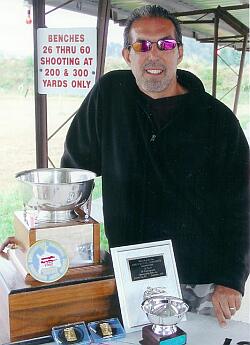
Today’s the day — you’ll want to tune in to Kelly McMillan’s Taking Stock Radio Show today, Friday, September 8, 2017. The broadcast will feature highly-respected gunsmith and Hall of Fame Benchrest Shooter Thomas ‘Speedy’ Gonzalez. The Radio Show, which streams on the internet, runs 9/31/2017 at 11:00 AM Pacific Time on VoiceAmerica Sports Channel.
Speedy and Kelly will discuss a variety of topics, including gunsmithing, stock design/manufacture, the past/present/future of Benchrest and F-Class competition, and how Benchrest reloading/tuning methods have influenced other disciplines. Speedy will also discuss how the standards for precision shooting have evolved in recent years. The quest for accuracy is never-ending. CLICK HERE to LISTEN.
Here’s an F-Open rifle Speedy built for a competitor at the recent F-Class World Championships in Canada.
Along with Speedy, this week Kelly McMillan interviews Phillip Naman, host of the Firing Line Radio Show, a California-based radio show covering a wide range of firearms topics, including hunting, gun rights, gun gear, shooting events, legislation, and gun safety.
You can also access last week’s episode, which features USA F-TR Team Captain Ray Gross, and Derek Rodgers, the newly-crowned F-TR World Champion.
About McMillan Fiberglass Stocks
Kelly McMillan is the president of McMillan Fiberglass Stocks (MFS). This company began in 1973 when Gale McMillan starting crafting benchrest stocks at home in his carport/garage. In 1975 MFS hired its first employee, Kelly McMillan. By 1979 Kelly was made a partner, and by 1984 Kelly was in charge of running the stock shop. Since that time MFS has continued to grow with innovation and design. Today McMillan Fiberglass Stocks has a 15,000 sq/ft facility and 65 employees.
Team Applied Ballistics will soon release a new DVD on the science, skills, and strategy required for successful Extreme Long Range (ELR) shooting. The new DVD features a reality-style documentary following Team Applied Ballistics in the 2017 King Of 2 Mile (KO2M) competition. Team AB has now won this prestigious event two years in a row. Team shooter Mitchell Fitzpatrick won the KO2M title in 2016, followed by team-mate Derek Rodgers in 2017.
Bryan Litz tells us: “Applied Ballistics is proud to announce the release of our latest DVD: ELR Shooting With Applied Ballistics. With lessons learned from our successful 2016 KO2M campaign, you can see how the AB ELR team developed our equipment and approach through practice and careful analysis. Learn the essential elements of ELR competition from the top team in the sport.”
This documentary, filmed over the course of a year, shows Team Applied Ballistics preparing for, and competing in, the 2017 KO2M match. This presentation includes interviews from all Team AB members, along with tips on ELR shooting.Pre-Order the ELR DVD and Save $5.00 (Pre-Order Price $19.95)
2017 K02M Match-Winning Performance on Video
The video below shows Team Applied Ballistics shooter Derek Rodgers winning the 2017 King of 2 Miles event. This excellent video combines firing line and target-cam views. You can see the strings-of-fire at 2667 and 3028 yards. Then Watch Derek, after four misses, hit the last target with his fifth (and final) round! That plate was set at a mind-numbing 3368 yards (1.91 miles). Derek had Paul Phillips as a spotter and Emil Praslick as a wind coach — a very powerful team and it showed.
If you want to learn more about ELR shooting and how team Applied Ballistics achieves great results in ELR competition, we recommend an excellent article just released byShooting Sports USA. SSUSA’s Editor John Parker interviewed Team Applied Ballistics members Bryan Litz and Paul Phillips. Both men said that successful Extreme Long Range shooting requires solid team-work.
Bryan Litz (center) conferring with Team AB members Emil Praslick (L) and Doc Beech (R).
Paul Phillips explained: “ELR is very difficult. It requires a great shooter with 1/2-MOA accuracy, a really good wind coach and spotter to see impacts, trace and the ability to quickly negotiate and engage the targets. It’s one fluid team working together.”
Bryan Litz, Applied Ballistics founder, concurred: “Of all the various precision rifle disciplines, ELR shooting is particularly suited to a team approach. All aspects of ELR shooting are both highly challenging as well as critical to success. One individual is typically not able to stay on top of all the variables effectively enough to hit targets at extreme ranges all by themselves.”
Litz says superior wind-reading skills are vital in the ELR game: “One of the important challenges of hitting targets at long range is reading the wind. All the shooters on our team can read wind, but when we’re shooting a match, we put our strongest wind-reader in this position for all shooters. Emil Praslick is arguably the best in the world at putting a number on the wind. He’s got a well-rehearsed process that works in all scenarios. When Emil isn’t available, someone else on our team will apply his process and focus specifically on the wind.”
Report and Photos courtesy NRABlog.com
The first-ever NRA Carry Guard Expo was held August 25-27, 2017 at the Wisconsin Center in Milwaukee. More than 14,000 visitors attend the Expo, billed as the ultimate assembly of education, training, and products dedicated to concealed carry, personal protection, and home defense. While this is not a handgun-focused website, we know that many of our readers have carry permits, and probably the vast majority own a pistol or two.
At the Expo, over 160 Exhibitors displayed their latest product lines for concealed carry, personal protection and home defense. The exhibit floor spread across nearly 100,000 square feet of the Wisconsin Center.
The Carry Guard Expo hosted 124 seminars with more than 6,400 guests participating in a variety of teaching/learning sessions. Seminar topics included: home defense, active threat protection, concealed carry tactics and much more.
Concealed Carry Permit Seminar
One Expo highlight was a seminar which covered the Utah Concealed Carry Weapon Course. Utah’s Concealed Carry Permit is now recognized in 60% of the USA, with 33 other states granting reciprocity. Seminar participants who completed the course left the Expo with enhanced abilities to protect themselves while traveling. The 4-hour seminar was hosted by Dave Matthews.
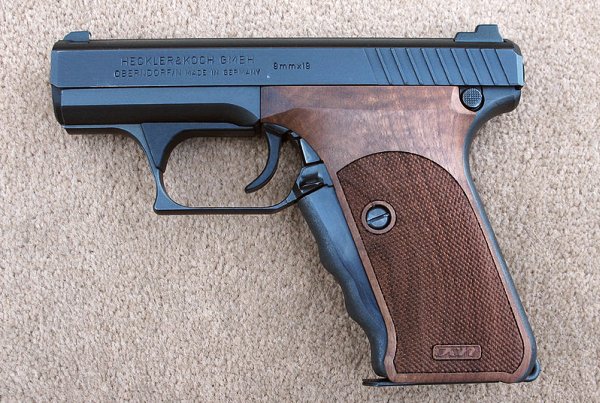
Many experts consider the Heckler & Koch P7m8 one of the very best carry pistols ever. On HK’s famous fixed-barrel “squeeze-cocker”, the striker is cocked by squeezing the grip, and then de-cocked when pressure on the grip is released.
The IBS Groups Nationals has a 4-man team competition based on the HV Grand Aggregate results. The 2017 winning team was a “Murderer’s Row” consisting of Wayne Campbell, Billy Stevens, Bart Sauter, and Larry Costa. Each boasts Hall of Fame and/or multiple World Team accomplishments. Hamming it up in the background is HOF shooter Jack Neary.
2017 IBS Group Benchrest National Championships
Holton Gun & Bow Club, Holton, Michigan
August 14-19, 2017
Report by Jeff Stover, IBS President
This year the 2017 IBS Group Benchrest Championship was held at the Holton Gun & Bow Club, in Holton, Michigan. This is a pretty facility boasting an impressive firing line with forty (40) concrete benches. Monday morning in western Michigan saw the Heavy Bench (HB) shooters hauling their big railguns to the line. Hall of Fame and multiple World Team shooter Wayne Campbell shot a nice .1858 aggregate for five 10-shot groups. The only other “Teen Agg” was Iowa’s Dave Coots with a .1978. Wayne’s win foretold what was to come the rest of the week.
Wayne Campbell and Jeff Summers Put on a Show
On Tuesday, the bag guns came out for Light Varmint (LV) and Sporter (SP). Mr. Campbell maintained his mojo, shooting yet another “Teen Agg”. Wayne’s .1788 edged fellow HOF member Larry Costa’s .1854. The Light Varmint 100 was also contested on Tuesday. Peter Smith shot a very fine .1658 to beat out Canadian Bill Mitchell at .1960.
Wednesday was reserved for Heavy Varmint (HV) at 100 yards. Holton is Bob Scarbrough’s home range, but he can shoot “lights out” anywhere. Nevertheless, his .1518 had to be satisfying. Wayne Campbell, still on fire, laid down a .1694. In third place, Tennessean Jeff Summers posted a .1800. Mr. Summers is always near the top of any benchrest leader board. He is coming off another Super Shoot win. Most of the time Jeff does not win the small group of the day, but he wins many Aggregates. He is one of the most mistake-free shooters in the game.
File photo courtesy Holton Gun & Bow Club
Benchrest for Group Basics — Four Classes at Nationals
IBS group competition is contested at 100 and 200 yards. At the National Championships, it takes thirty targets of five shots each and ten targets of 10-shot groups to win a “4 Gun Nationals”. That includes four (4) gun classes: Light Varmint, Heavy Varmint, Sporter, and Unlimited. For all practical purposes, the first three are known as “bag guns” while the heavy bench rifles are “railguns”.
In fact, most competitors shooting a bag gun opt for a single rifle, which has been benchrest standard for decades: a 10.5-lb rifle chambered in 6PPC. This can compete in three classes: Sporter, Light Varmint, and Heavy Varmint. The fourth class shot at the Nationals is Unlimited (aka Heavy Benchrest or “HB”). This class features the big, heavy railguns — the most sophisticated Benchrest rigs of all which shoot 10-shot groups at 100 and 200 yards.
For the IBS Nationals, group-shooting competition features 100-yard targets for the first three days followed by three days at 200 yards. Six days total. It is done this way to require only one change of wind flags. Nationals competition requires “full rotation”. That means that every time a shooter goes to the line for the next match target, he or she must move a requisite number of benches to the right. At the end of the day a shooter will shoot across the full width of the line. Some ranges offer unique properties that render some parts of the range harder or easier to shoot small groups. Bench rotation is important to even out those factors.
Thursday was set for 200 yards. Starting off was Heavy Bench (HB), the big railguns. Upper Midwest shooter, Mark Buettgen shot steadily for a .2406 Agg, aided by a small .378. His largest group was a .527. Consistency wins bench matches. Lee Hachigian drove in from the Detroit area with his railgun to be next to the winner with a .2608.
On Friday, two Aggs were shot, Light Varmint and Sporter. Larry Costa nearly nicked a Teen Agg to win LV 200 with a .2027. Lurking high in the standings once again was Jeff Summers and his .2352. Wayne Campbell was not asleep. He was merely third at .2480. The Sporter competition was won by the best benchrest shooter of all time, Tony Boyer. Tony shot a .2287 to edge Billy Stevens. Mr. Boyer added another Hall of Fame point. His 170 points are 120 more than the next shooter (Lester Bruno, no slouch!) in the ranking.
Benchrest legend Tony Boyer added another Hall of Fame point to his amazing total. (File photo from 2016 IBS Group Nationals in Weikert, PA)
The HV guns came out to contest 200 yards on the last day of the Nationals. Jeff Summers worked a .1868 to the winner’s circle. The always tough Larry Costa was close at .1929.
At the IBS Group Nationals, shooters compete for Grand Aggregate (100+200) honors in four classes: LV, HV, Sporter, and HB. In addition, there are multi-gun titles: 2-Gun (all HV and LV targets in 100 & 200); 3-gun (all HV, LV, SP in 100 & 200), and 4-gun (all HV, LV, SP and Heavy Benchrest in 100 & 200).
The Grand Aggregate (100+200) winners were:
Heavy Varmint: Bob Scarbrough, Jr. (.1824)
Light Varmint: Jeff Summers (.2313)
Sporter: Wayne Campbell (.2119)
Heavy Bench: Lee Hachigian (.2374)
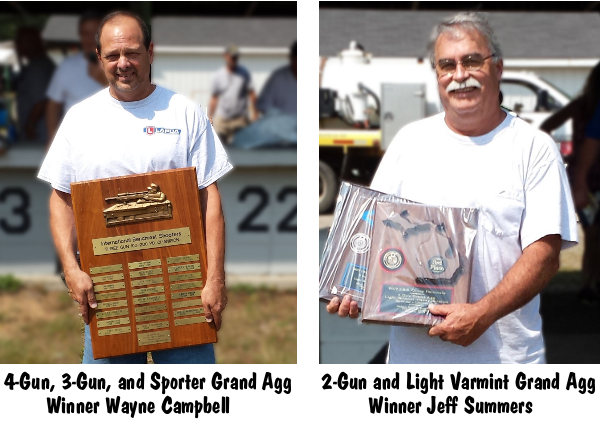
In the prestigious multi-gun competition, Jeff Summers won the 2-Gun. Wayne Campbell added more HOF points by winning BOTH the 3-Gun AND the 4-Gun. With his impressive 3-Gun and 4-Gun victories, the talented Mr. Campbell claimed the title of Top Overall shooter after six days of trigger-pulling.
2017 IBS Nationals Powderpuff Exhibition Shoot
For decades, IBS hosts an exhibition shoot on the afternoon of a day when only one Aggregate is contested instead of two. It is called the Powderpuff and is intended to allow family members and others who do not shoot competitively to give benchrest shooting a try. Each shooter is assisted by a coach who instructs the shooter. World-class shooters such as Billy Stevens and Bob Scarbrough give their time and talents to assist the novice competitors. There is no time limit to rattle the inexperienced shooters.
File Photo from previous Powderpuff Event at 2015 IBS Group Nationals
The competition is financially supported by the IBS President’s Fund. This year, at Holton in Michigan, we had four youth and 11 adult competitors. Chris Jeffers won the adult category with a nice .204″ group, while Jake Henderson put his five shots into a .244″ to win the youth division. Congratulations to all the Powderpuff competitors — we hope this inspires them to get more involved in Benchrest shooting.
The White Horse Center Range near Peeltree, West Virginia, will host the 2017 National IBS 1000-Yard Nationals from September 1-3, 2017. This will be a great match — over 100 shooters have signed up so far, including many of the nation’s top 1K benchrest aces. It’s not too late to sign up. You can register (on-site) up until 5:00 pm on Friday, September 1. The current match fee is $90.00 per gun class, or $175.00 for both classes (Light Gun and Heavy Gun). The White Horse 1000-yard range will be open on Friday for sight-in and practice.
This record-setting offset (assymetical) Heavy Gun belongs to talented shooter Mike Gaizauskas.
2016 IBS 1000-Yard Overall (2-Gun) Champion Tom Mousel (below) will travel to West Virginia to defend his title this weekend at White Horse. Last year Tom posted a stunning 3.356″ Group Agg to win Light Gun Group as well. That’s a 1/3 MOA Agg at 1000 yards — truly remarkable precision.
The Deep Creek Tracker stock, with adjustable “keel”, is the hot ticket now in the 17-lb Light Gun class.
Match Schedule and Fees The 1K Nationals will be a 3-target Aggregate match for both Light Gun (LG) and Heavy Gun (HG) with six (6) targets total. Practice and Sight-in will be available Friday (9/1/2017). NOTE: There will be a $10.00 per target fee during practice days. Match fees for the Nationals are now $90 per gun ($45 per gun for juniors). All registrations MUST be received by 5:00 pm Friday, September 1st. No walk-up registrations will be accepted on match days.
How to Get There
The Center is located 9.7 miles south on State Route 20 from I-79, exit 115 or 10.1 miles north of Route 20 from Buckhannon. Look for a brown and yellow Dept. of Natural Resources sign on Route 20. Take Crouse Road to the next sign, turn right at the sign, and proceed up the hill to the Center. Map coordinates are: 39°, 7′, 11″ North latitude; 80°, 13′, 4″ West longitude. The White Horse Center website has information on area hotels and campgrounds.
Registration has opened for the 2018 Berger Southwest Nationals at the Ben Avery Range in Phoenix, Arizona. This is a GREAT match, the best in the West by far. The match runs February 5-11, 2018. By all means, attend if you can. The Grand Agg filled up last year, so we recommend you register soon.
Berger’s SWN team reports: “Registrations for the 2018 Southwest Nationals open on Sunday, August 27th, at 6:00 am (PST). CLICK HERE for the Match Program (it is also available on the Desert Sharpshooters website and Berger Bullets website). We are also moving to an online registration this year, and entry fees will be paid online. Please note that due to our capacity limitations, each stage of the match is listed as a separate event. Please be sure to enter each of the stages you plan to participate in. This will allow us to include as many people as possible. If you have any questions, send email to michelle.gallagher [at] bergerbullets.com.”
Rekindle Old Friendships and Meet New Friends
Some shooters come to to the SW Nationals for the swag (the prize table is amazing). Others come for the sunshine (think warm 75-85° weather). And even more folks come to try out their shiny new toys and to test their skills against the nation’s best shooters.
But we’d say the number one reason most folks make the pilgrimage to Ben Avery every year is the camaraderie — the chance to connect with friends, rekindling connections that may go back decades. Fundamentally, then, the Berger SWN is about the people. For many of us, this is the only time of the year when we get a chance to meet fellow shooters from distant corners of the USA (and other nations).
Compete Against the Best
If you want to test your mettle against some of the best shooters in the world, get yourself to Ben Avery in February. Here you can compete, shoulder to shoulder, against the best Sling and F-Class shooters on the planet. Guys like Derek Rodgers (newly-crowned F-TR World Champion), John Whidden (reigning Long Range National Champion), Nancy Tompkins (the first women to win the National High Power Championship), and Kenny Adams (past World F-Open Class Champion). If you want to play in the Big Leagues, Ben Avery is the place. Having said that, novice shooters will enjoy the experience as well, because you’ll find that these top shooters are (almost universally) happy to share their knowledge.
Just to whet your appetite, here are videos from recent Berger SW Nationals. Yes, this match is as much fun as it looks!
Berger SW Nationals 2017
The North-by-Southwest team set new National Records in winning the 2017 F-TR team event.
Berger SW Nationals 2016
Berger SW Nationals 2015
The Brain Trust — Experts Galore
The best minds of the shooting world come to Ben Avery every year. Got a question about ballistics? Well, Ballistics Guru Bryan Litz (photo below) will be happy to answer your questions between relays. Want some expert advice about wind reading? Seek out Mid Tompkins (usually found hanging around the club-house) or Emil Praslick, one of the most knowledgeable wind coaches on the planet. And if you have a gunsmithing question, you’ll find some of the top barrel-fitters and stock makers, including Doan Trevor and Gary Eliseo.
We like air rifles both for fun shooting and for competition. However, so many options are now available that is easy to get over-whelmed with the choices. Thankfully, there is a good book that helps air rifle shooters make informed decisions about air guns and gear. Steve Markwith’s new title, Air Rifles: A Buyer’s and Shooter’s Guide offers a wealth of useful information. This 154-page paperback book is now available for $12.95. The book is also offered as a FREE Kindle download for Amazon Prime and Kindle Unlimited members. Check it out — you may be able to get the book for free.
“This is a very informative book explaining the ins and outs of air rifles, their capabilities and limitations. I highly recommend this book to anyone considering purchasing an air rifle for marksmanship practice or small game hunting.” – L. Stanek, Verified Amazon Reviewer
Read Free Sample Chapters Online
If you go to Amazon.com and click on the cover of this book, you can view a FREE preview with extensive samples from many chapters. The book covers all the most important types of air rifle systems, both pre-charged pneumatics and other self-charging guns. Markwith reviews the wide variety of pellets available, offering suggestions for particular applications. You’ll also find a useful discussion of Airgun Power, Range, and Accuracy. This will help you pick the right air rifle for your application.
Markwith explains the many attractions of airguns. They are not considered firearms (in most jurisdictions) so they can be purchased at local shops or mail-order outlets without FFL fees or background checks. You’ll find a huge online selection of airguns at PyramydAir.com that can ship direct to you — no FFL required. Air rifles are also quiet and very inexpensive to shoot. While .177 and .22 caliber air rifles are most common, there are also larger-caliber airguns offered for hunting or special applications.
Sierra Bullets has been acquired by Clarus Corporation (NASDAQ: CLAR) for the sum of $79,000,000, “subject to a post-closing working capital adjustment”. Sierra is one of the world’s leading producers of bullets for hunters, sportsmen, and target shooters. With revenues topping $30,000,000 per year, Sierra has long been a major force in the firearms world. Clarus, formerly Black Diamond Inc., is a Utah-based holding company which “seeks opportunities to acquire and grow businesses that can generate attractive shareholder returns”. Clarus also owns Black Diamond Equipment, Ltd., maker of outdoor equipment/clothing for the climbing, skiing and mountain sports markets.
StreetInsider.com reports: “The transaction is expected to be immediately accretive to Clarus’ earnings per share. For the unaudited 12 months ended June 30, 2017, Sierra’s total revenues were approximately $32 million with EBITDA of approximately $12.5 million, representing a purchase price multiple of approximately 6.3x EBITDA. Sierra has a strong cash flow profile, generating free cash flow conversion of approximately 95% with limited ongoing capex requirements.”
“The team at Sierra has continued building on a 70-year legacy dedicated to the highest-level of precision in design, world-class manufacturing and quality control,” said Warren B. Kanders, executive chairman of Clarus. “These attributes have cultivated a diverse customer base of enthusiasts and industry OEMs that drive high recurring revenue and strong cash flow, which we expect to maximize through the utilization of our net operating loss carry forwards.”
Sierra’s President Pat Daly commented: “Our team takes great pride in developing and manufacturing the most precise and accurate bullets in the world. This is supported by our deep institutional knowledge of highly-specialized manufacturing processes that have produced leading products and created a significant competitive advantage. As the only pure-play bullet brand, it was important for us to partner with a team that shares our values and commitment to excellence, and we are excited to join the Clarus family. I look forward to staying on to continue driving our brand growth.” All senior management are expected to remain with Sierra under Clarus’ ownership.
About Sierra Bullets
Founded in 1947 in California, Sierra Bullets is an American manufacturer of bullets. Based in Sedalia, Missouri since 1990, Sierra manufactures a wide range of bullets for both rifles and pistols. Sierra’s product line, recognized by iconic “green box” packaging, includes popular brands such as MatchKing, GameKing, and BlitzKing. Sierra bullets are used for precision target shooting, hunting, and defense purposes. For more information, visit SierraBullets.com.
News Tip from Boyd Allen. We welcome reader submissions.


 Today’s the day — you’ll want to tune in to Kelly McMillan’s






 The
The 


 The 1K Nationals will be a 3-target Aggregate match for both Light Gun (LG) and Heavy Gun (HG) with six (6) targets total. Practice and Sight-in will be available Friday (9/1/2017). NOTE: There will be a $10.00 per target fee during practice days. Match fees for the Nationals are now $90 per gun ($45 per gun for juniors). All registrations MUST be received by 5:00 pm Friday, September 1st. No walk-up registrations will be accepted on match days.