by Glen Zediker
Most good shooters use mirage as their leading indicator to spot changes in the wind. With well-designed stand, the scope can be set it up where you can see the wind with the left eye and see the sight with the right without anything more than a visual focus shift. That gets the shooter back on the trigger with the least chance of missing another change. In the photo below e you can see 11-time National High Power Champion David Tubb using a spotting scope set up for his left eye.
David Tubb sets up his spotting scope so he can easily see through it with his LEFT eye, without shifting his head and body position.
There are resources that give clues or evidence of wind direction and strength: wind flags, observation of grass and trees, and mirage.
Almost always I use mirage as my leading indicator. Mirage (heat waves) is always present but you’ll need a scope to read it. For 600 yards I focus my scope about halfway to the target. Mirage flows just like water and the currents can be read with respect to wind speed as well, but it’s not clearly accurate beyond maybe a 15 mph speed. The thing is that mirage shows changes, increases or decreases, and also direction shifts, really well.
A couple more things about mirage flow: when mirage “boils,” that is appears to rise straight up, either there’s no wind or the scope is dead in-line with wind direction. And that’s a quick and accurate means to determine wind direction, by the way, move the scope until you see the boil and note the scope body angle. Here’s another tip — the boil can predict when a “fishtail” wind is about to change, a boil precedes a shift.
You don’t need to spend big bucks for an effective spotting scope to view mirage. You can get the Vortex 20-60x60mm Diamondback angled spotting scope for just $399.99 from Midsouth. That’s complete with 20-60X zoom eyepiece. Though inexpensive, the Vortex Diamondback is popular with many competitive shooters and hunters. No, it doesn’t offer the sharpness of an 80mm Kowa Prominar or Swarovski spotting scope, but you’ll pay $2400+ just for the body of those high-end optics.
Choice of EyePiece — Wide-Angle LERs Work Well
I use a long-eye-relief 20X to 25X wide-angle eyepiece. That setup shows the flow best. And pay attention to where the wind is coming from! See what’s headed your way, because what’s passed no longer matters. That’s true for any indicator. Right to left wind? Read off the right side of the range.
Once I get on target then all I am doing is watching for changes. It’s really uncommon to make a big adjustment between shots. The fewer condition changes you are enduring, the easier it is to keep everything on center. That’s why I shoot fast, and why I start at the low point in a wind cycle.
Making Corrections with Limited Sighters
Here’s a Tip for NRA High Power matches where only two sighters are allowed: “Make a full correction off the first sighting shot location! Even if there are minor changes afoot, that’s how to know how well you assessed condition influence pre-shot. Don’t second-guess. After the second sighter you should be on target and then simply watching for changes. Pay attention, correlate visible cues to the results of prior shots, and if in doubt, click into the wind.”
Information in this article was adapted from material in several books published by Glen Zediker and Zediker Publishing. Glen is an NRA High Master who earned that classification in NRA High Power Rifle using an AR15 Service Rifle. For more information and articles visitZedikerPublishing.com.
The next time a shooter comes up to you at the range, and says: “My rifle shoots one-third MOA all day long”, challenge him to put a first-round hit on a 1/2 MOA plate at 1000 yards. There’s a difference between shooting small groups at close range (Precision) and “on-target” Accuracy at long range.
Article by Applied Ballistics, LLC
Just how much better is a 0.5 MOA rifle vs. a 1 MOA rifle? Is it worth chasing quarter-MOA if you have half-MOA rifle? This is an important question. If you look across Facebook you will find scores of shooters posting 1/3-MOA or 1/4-MOA shot groups [usually at 100 yards]. Some of those guys are spending countless hours trying to chase that golden quarter-MOA group.
Don’t take this statement the wrong way, having a good, consistent rifle is a key to success. But accuracy is extremely important to long range shooting. Having a precision (0.5 MOA) rifle, but not having put the time in to practice accuracy (hitting a 0.5 MOA plate first shot at 1000 yards) is counter-productive. [Editor: By this, we mean that you can have a rifle capable of shooting small groups at 100 yards, but you won’t see that gun’s full potential unless you can practice and perfect the skills of long-range shooting. Successful long range shooting demands more than precision alone.]
What if, your goal was to produce 5-shot, sub-half-MOA groups at 1000 yards instead of 100 yards? Think about how much more you would be including in the learning process, especially that all-important factor: managing the wind! Here is a good article that talks about Precision vs. Accuracy: Hitting Targets at Long Range.
This is not intended to say that precision is not important; rather it is intended to show that balance is important. You can use WEZ to do your own studies on this very subject, and it might be surprising to the shooter just how much you don’t gain by chasing precision over accuracy. Two books which cover this subject really well are Accuracy and Precision for Long Range Shooting and Modern Advancements in Long Range Shooting Vol 2.
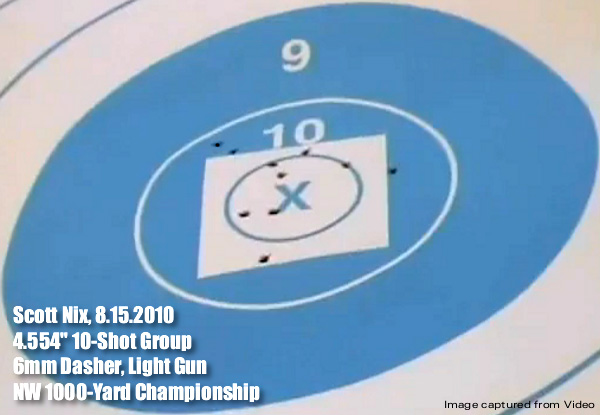
Here’s a stunning combination of Precision (small group) WITH accuracy (centered on target). Yep that’s ten shots at 1000 yards, all in the middle of the target:
Video Demonstrates Amazing 1000-Yard Accuracy AND Precision
Watch the video. You can see the group form up, shot by shot. It’s pretty amazing. Scott’s first shot (at the 45-second mark of the video) was right in the X-Ring, and four of Scott’s first five shots were Xs. That’s drilling them!
Comments
“Accuracy with precision is the route for me. It is not an either/or game. If I have a precision rifle (0.25 MOA or less) and I practice to be accurate, then high scores will be the result — Jim Borden
“I would agree for PRS, hunting, and to a certain extent F-Class. However, for 1000-yard IBS benchrest competition, 0.5 MOA groups in good conditions will almost always loose the relay.” — James B
“Another thought is that [at 1000 yards] a 1 MOA gun with single-digit standard deviations [may] out shoot a 0.5 MOA rifle with standard deviations of 20+ fps.” — Beard Owens
“Both… you need both: Accuracy AND Precision. I competed in varmint matches — we shot small silhouettes at 600 yards. I started with a factory .260 Rem rifle that was 0.8 MOA on a good day. I typically hit 8-9 of 20 targets, but rarely nailed the small chickens — which had a hit zone just 4″ in diameter. I then started using a semi-custom 6mmBR rifle that could reliably deliver 1/4 MOA at 100 yards (honest). My hit count on the silhouettes zoomed to 15-18, and suddenly the chickens were going down. In that game — small targets at 600 yards — there was no substitute for precision.” — Paul McM
There an excellent YouTube channel, THLR.NO, that offers videos for long-range hunters and marksmen. The channel’s creator, Thomas Haugland, is a serious, knowledgeable shooter, who takes his rifles out into the field, in all conditions. The THLR.NO channel offers solid advice on scopes, reticles, wind-reading, field positions, and much more. Haugland’s team puts a wide variety of gear through serious field tests — every thing from suppressors to packs to the latest electro-optical hardware. In addition the THLR.NO channel provides good advice on stalking techniques and hunting skills. Here are some recent videos that can help any rifleman.
How to Shoot Better with a Hunting Rifle
This “must-watch” video has great practical advice for hunters. It illustrates proper hand-hold and head position, and shows how to stay steady when breaking the shot. Even competition shooters can learn a few things. One viewer notes: “This was very informative. The footage through the scope showing how one’s position moves the sight alignment was particularly helpful.”
How to Gauge Wind Speed and Hold Off Using Reticles
This field video shows how to observe natural indicators — trees and vegetation — to estimate wind velocity. Then it shows how to calculate hold-offs using the reticle hash-marks. Thomas shoots a fast-cycling Blaser R93 rifle with Norma 6XC ammunition.
If you like these three videos, there are hundreds more on the THLR.NO YouTube channel. In addition, there is an excellent long-format video, Longrange Shooting 2, available on DVD or Vimeo on Demand. This impressive outdoors video features Thomas Haugland and Ulf Lindroth. Here is a preview:
The Civilian Marksmanship Program (CMP) has issued important rule changes for 2020. These cover Highpower Rifle (Centerfire), Smallbore Rifle (Rimfire), and Pistol. In addition, there are CMP Games rules changes. READ RULE CHANGES HERE.
The big news is that Eye and Hearing Protection are now MANDATORY for Highpower Rifle competitors and Pistol shooters in all CMP-affiliated matches. The 2020 CMP Highpower Rifle, Pistol, and CMP Games Rulebooks all contain the following rule:
“All competitors and competition officials are required to wear appropriate eye and hearing protection when on shooting range firing lines during highpower rifle or pistol firing. All competitors must comply with this requirement before they can participate in a CMP sponsored or sanctioned competition. Competitors are responsible for selecting their eyewear and hearing protection.”
Let there be no confusion, the CMP’s rule change notice adds: “The CMP and its sanctioned match sponsors will actively enforce this rule in 2020″.
In 2020, all CMP centerfire rifle and pistol shooters must employ Eye Protection and Hearing Protection.
Other important Rules Changes include:
1. Expansion of CMP Pistol Program rules for 3-Gun Match Pistol events.
2. Establishment of Smallbore Rifle Distinguished Badges.
3. Substantial reworking of rules for electronic scoring targets.
4. Rule Regarding “Resting” Magazine on Arm during Prone.
No More Mag Resting in Prone Position
Of note to Service Rifle and M1A shooters is a new rule that attempts to restrict a common practice of using the rifle magazine to support the gun on the arm while shooting prone. A few competitors were resting M1A or M16/AR magazines on their sling arms or shooting jacket sleeves. The prone position rule has been strengthened to state that while “a magazine may touch the shooting jacket sleeve … it may not rest on the jacket sleeve, jacket elbow pad, arm or ground. Competitors must control their prone positions to make they are not using the magazine to support the rifle in prone. Competitors can make sure their prone positions are not questioned by keeping the bottoms of rifle magazines visibly clear of sleeves or arms.
Smallbore Rifle Distinguished Badges
The Distinguished Rifleman Badge has been a treasured honor among highpower rifle shooters. Now this important award will be available to smallbore shooters as well. The Distinguished Badge Program, which dates back to the first Distinguished Marksman Badges awarded by the Army in 1884, is being expanded in 2020 to award two new badges for excellence in Smallbore Rifle competitions.
CMP 2020 Rules: Highpower, Smallbore, Pistol, CMP Games
Report based on article by Gary Anderson, DCM Emeritus
The CMP Competition Rulebooks that will govern CMP sponsored and sanctioned Highpower Rifle, Pistol, CMP Games and Smallbore Rifle competitions in 2020 have been approved by the CMP Rules Committee and are now posted on the CMP website. The 2020 rulebooks went into effect on the 1st of January. All four rulebooks can be downloaded from the CMP Competition Rulebooks webpage.
The most important changes in the 2020 Rules include a major expansion of CMP Pistol Program rules that now provide for 3-Gun Match Pistol events, the establishment of Smallbore Rifle Distinguished Badges, a change in eye and hearing protection use in Highpower Rifle and Pistol Matches from “strongly urged” to “required”, a substantial reworking of rules for electronic scoring targets and several rule clarifications in each of the four disciplines. All changes from the 2019 Rules can easily be identified in the new rulebooks because they are shown in underlined, red text (printed Rulebooks will have underlined text). A detailed summary of 2020 Rule Changes is presented at the end of this article.
Here are some 2020 CMP Rulebook changes that merit further explanation:
The U.S. Army Marksmanship Unit (USAMU), in cooperation with Shooting USA TV, has created a series of instructional Pro Tip pages covering a wide range of shooting disciplines. All totaled, there are more than 50 USAMU Pro Tips. Most relate to rifle marksmanship but there are also numerous tips for shotgunners and pistol shooters. Each Pro Tip entry includes multiple photos and 6-15 paragraphs, in an easy-to-follow format. Many Pro Tips also include an instructional video produced by Shooting USA. Here are three Pro Tip videos, and links to seven more Pro Tip web pages.
USAMU TOP TEN PRO TIPS
1. Reading the Wind with SGT Sherri Gallagher.
Apart from gravity, wind has the most pull on the bullet as it travels down range. Being able to accurately read the wind and mirage will greatly enhance your performance on the rifle range. National Champion, SGT Gallagher gives you some of her tips.
2. Angle Shooting with SFC (Ret.) Emil Praslick.
SFC Praslick shows you how to determine the angle to your target, and then how to include that to change your data necessary to hit your target on the first shot.
3. Rifle Grip, Stance and Body Position for 3-Gun with SFC Daniel Horner.
Professional 3-gun marksman SFC Daniel Horner, U.S. Army Marksmanship Unit (USAMU), give tips on how to properly handle a semi-automatic rifle, including grip, stance and body position.
As part of the NRA Mentor Program, the NRA offers a helpful video about using sights. This covers all types of sighting systems — blade sights, aperture sights, V-notch sights, red dot sights, shotgun bead sights, and telescopic sights with reticles. For new shooters, this video can be helpful — it explains sight basics in very clear and comprehensible terms. And even for experienced shooters, this can provide some helpful tips on sight alignment, particularly when shooting pistols.
Additional information about using sights is contained in the NRA’s free Guide for New Shooters. This helpful 14-page digital publication provides the key firearms safety rules, explains range etiquette, and even has a section on gun cleaning. CLICK HERE to download Guide for New Shooters.
Training With Lasers — Trigger Control
Training with laser sights helps diagnose and improve trigger control errors by showcasing the importance of “surprise break” and follow-through. Working with gun-mounted lasers, which put a red or green dot right on the target, can quickly diagnose errors such as recoil anticipation, jerking the trigger, and breaking the wrist. This video shows how handgunners can use pistol-mounted lasers to correct bad habits and shoot more consistently.
The Civilian Marksmanship Program (CMP) invites young men and women shooters to apply for CMP scholarships for the 2020-2021 school year. The CMP offers $1,000 one-year scholarships to current high school seniors. Since 2005, CMP has awarded over $1 million in scholarship grants. Last year, the CMP awarded over $160,000 in scholarship money. Winning scholarship recipients, in their senior year of high school, came from JROTC schools, 4-H groups, and other shooting clubs.
CMP Scholarship Application Deadline is March 20, 2020
CMP Scholarships are based on merit. Candidates are high school seniors involved with a team or club participating in rifle or pistol marksmanship competitions. Applicants must provide rifle or pistol competition history, list of awards, and future goals in the shooting sports. Applicants must also provide academic GPA and an official high school transcript (3.0 Minimum GPA Required).
Applications are Being Accepted Now for 2020-2021
The CMP is now taking scholarship applications for the 2020-2021 freshman college year. Scholarships are one-year awards that may be used to fund any accredited, post-secondary education or vocational program. (Note: Students planning to enroll in a military academy are not eligible).
The deadline for CMP Scholarship Application is March 20, 2020. Learn more about the program at the CMP Website Scholarship Page. If you have any questions, please contact Kathy Williams at 419-635-2141, ext. 709, or email kwilliams [@] thecmp.org.
New Year’s Eve is just four days away. Perhaps you’ve been getting ready for the big event, getting Champagne (and sparklers) to celebrate the New Year, and the opening of a new decade. 2020 will also be a Presidential election year, by the way — so make sure you’re registered to vote.
Recently at Thorton Winery in Temecula, California, a champagne vintner, we were shown the best way to open a champagne bottle. We were told you should hold the bottle nose up at an angle then rotate the BOTTLE slowly while holding the cork. That works great… but it’s not as stunning as the way sharpshooter Kirsten Joy Weiss opens a bottle of bubbly.
A former competitive smallbore rifle shooter, ace trigger-puller Kirsten Joy Weiss tried a special New Year’s trick shot a few seasons back. In keeping with the festive New Year’s spirit, Kirsten attempted to shoot the cork off a champagne bottle. After a few unsuccessful tries, she managed to hit the cork with at least two shots. But alas the cork did not fly. She actually hit the cork, but it did not release. That was surprising…
Undaunted, Kirsten changed her strategy, aiming for the neck of the bottle. This duplicates the process of “sabering” a champagne bottle — a method of liberating the bubbly by slashing off the end of the neck with a blade. Aiming for the neck of the bottle, Kirsten successfully blew off the top of the bottle. (Apparently, when “sabering” it is actually the pressure within the champagne bottle which does most of the work).
In these days of Smart Phones, WiFi-equipped cars, and Alexa digital assistants, conventional books may seem old-fashioned. But for presenting a wide range of information, with charts, tables, photos, and a handy index, there is much to be said for conventional paper publications. These can be used anywhere and anytime, even where there is no cell service. You can annotate the pages with your own comments, and make simple, manual bookmarks for your most-used pages.
One resource we use regularly is the Cartridge Comparison Guide, a remarkably comprehensive 340-page spiral-bound book. Covering over 250 cartridges, the 2nd Edition of the Cartridge Comparison Guide covers most available factory cartridges from .17 caliber all the way up to .50 caliber. This resource also compiles cartridge data from major manufacturers Barnes, Federal, Hornady, Norma, Nosler, Remington, Sierra, Swift, Weatherby, and Winchester. If you shoot factory ammo, you should definitely get the Cartridge Comparison Guide.
Shooters putting together a print-format resource library will have many good choices. Creedmoor Sports has a large library of books in stock, with many currently on sale. On the Creedmoor Sports Book/Video page, you will find dozens of great offerings. You can search by format, author, price, and even shooting discipline. In addition, while you’re visiting Creedmoor Sports, you’ll find many tools and shooting accessories on sale.
Here are six of Creedmoor Sports’ most popular book titles:
Here’s an interesting book for gun owners. Get away from the TV and test your skills on these gun-centric crossword puzzles. The Shooters Book uses terms and names relating to firearms, their use, and development. At 178 pages, this crossword puzzle/word search book offers something for all firearm enthusiasts. Each crossword puzzle has correlated word searches included to help solve it.
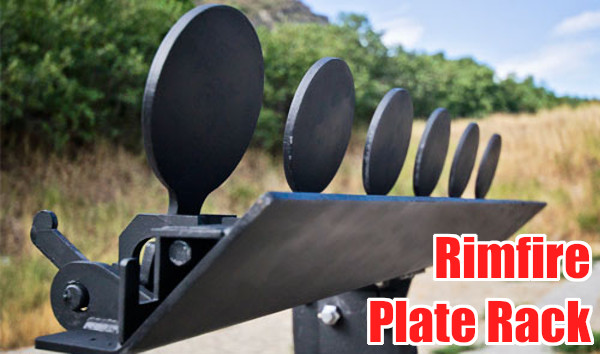
The Action Target Sport Plate Rack is specifically designed for .22 LR Rimfire shooting. This rack features six 4″-diameter plates that reset with a provided cable.
Shooting plates is fun. You get immediate feedback — “instant gratification” when you make a hit. When shooting steel inside 100 yards, we like to use .22 LR rimfire guns. The ammo is inexpensive, noise levels are lower (though you still need ear protection), and at close ranges there are fewer issue with ricochets and bullet splash-back. Additionally, for busy folks who don’t have time to reload, you can pick up a .22 LR rifle or pistol, grab a couple $5 boxes of ammo, and get to the range in a few minutes. The convenience means it is easier to shoot every week if you like.
Above, SFC Joel Turner from the USAMU’s Action Shooting Team offers a few pointers on how to shoot plates quickly and accurately. He’s using a centerfire pistol, but the same principles apply for rimfire handguns. Click speaker icon to activate audio.
New .22 LR CP33 Pistol is Great for Plates
If you like shooting plates, one of the better new handguns for the job is Kel-Tec’s CP33. We tested this interesting handgun at the 2019 SHOT Show Media Day at the Range, and were impressed. The pistol is big, but balances well. The sights are easy to see, and the full-length rail lets you easily mount a variety of optics. The trigger is surprisingly good — better than 90% of rimfire handguns out there. For the plates game, this “quad-stack” gun can handle long stages without mag changes. The standard clear-sided CP33 magazine holds 33 rounds of .22 LR ammo.
If you are interested in an affordable, but very accurate, high-capacity semi-auto rimfire pistoldefinitely consider Kel-Tec’s new CP33. 22 Plinkster agrees — this is a nice pistol. In his video review below 22 Plinkster reports: “This handgun has been 100% reliable IF I load the magazine the right way… and it’s pretty dog-gone accurate.”
Shooting Sports USA (SSUSA) tested Keltec’s CP33 with a variety of ammo. The CP33 consistently shot about one-half-inch for five shots “from a 25-yard sandbag bench rest using the iron sights.” SSUSA noted that the gun disassembles quickly and easily by removing one central pin. SSUSA’s tester, Chris Christian, was impressed with the gun, saying it balanced well and the sights aligned naturally.
SSUSA notes: “The rapid growth of rimfire competition in Steel Challenge has prompted some gun makers to enter the fray. Kel-Tec is one, and their new CP33 .22 LR pistol has a lot of potential.”
GunsAmerica also reviewed the Keltec CP33, which it called “The Most Innovative Gun of 2019″. Reviewer Riley Baxter liked the ergonomics and sights. He tested a variety of ammo, getting the best results with Norma Match-22. Baxter concluded: “I thoroughly enjoyed every moment that I spent shooting the KelTec CP33[.] The magazines took a little bit of trial and error… but once I had this down, the CP33 ran reliably and loading 33 rounds took no time at all. This is a gun that I would recommend to anyone who may be interested in buying a .22 pistol[.]”


Making Corrections with Limited Sighters



 The Civilian Marksmanship Program (CMP) invites young men and women shooters to apply for CMP scholarships for the 2020-2021 school year. The CMP offers $1,000 one-year scholarships to current high school seniors. Since 2005, CMP has awarded over $1 million in scholarship grants. Last year, the CMP awarded over $160,000 in scholarship money. Winning scholarship recipients, in their senior year of high school, came from JROTC schools, 4-H groups, and other shooting clubs.


 A former competitive smallbore rifle shooter, ace trigger-puller Kirsten Joy Weiss tried a special New Year’s trick shot a few seasons back. In keeping with the festive New Year’s spirit, Kirsten attempted to shoot the cork off a champagne bottle. After a few unsuccessful tries, she managed to hit the cork with at least two shots. But alas the cork did not fly. She actually hit the cork, but it did not release. That was surprising…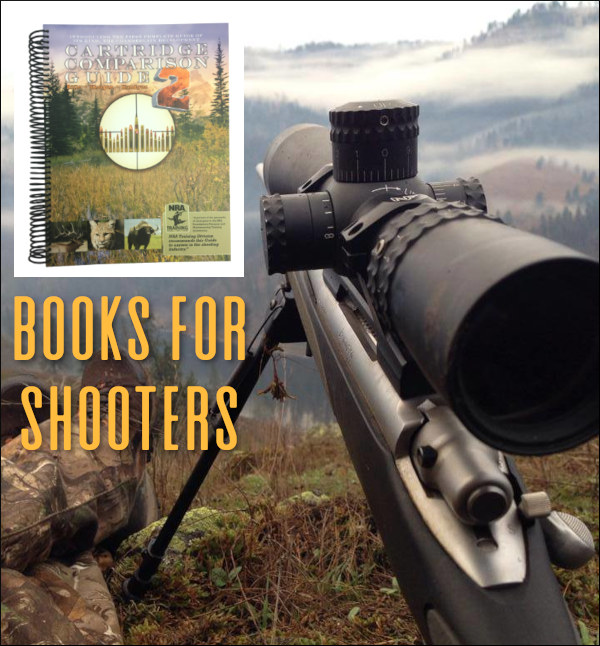
 One resource we use regularly is the