|
|
July 9th, 2010
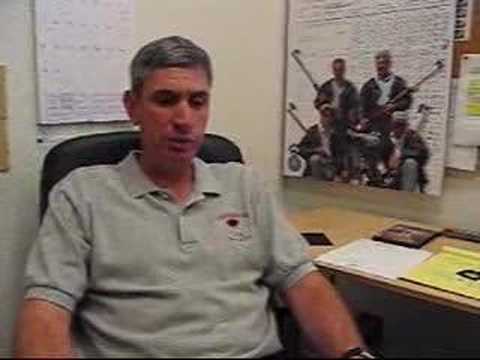
Dennis DeMille is a past Camp Perry National Champion, and one of the nation’s top High Power shooters. Since retiring from the U.S. Marine Corps, Dennis has served as the General Manager of Creedmoor Sports in Oceanside, California. With his decades of competitive experience, Dennis has a wealth of knowledge. In this three-minute interview, Dennis shares insights into the High Power shooting game. He discusses the most effective ways to train for competition, the fundamentals of good marksmanship, and how to recognize and perfect your natural point of aim. Dennis also offers solid advice on how to get the best “bang for your buck” when choosing shooting accessories for High Power and Across the Course competition.
Creedmoor Sports Now Carries Phoenix Sights and Accessories
Phoenix Precision builds high-quality, affordable sight systems for iron sights competitors. Phoenix products have become popular as they deliver excellent precision and repeatability, while costing considerably less than some other premium sights.
 The Phoenix Precision rear sight, offered as either top-mount or side mount, costs $379.95. This unit offers three (3) minutes per knob revolution, with quarter-minute clicks, 70 minutes of elevation adjustment and 60 minutes of windage. It features stainless guide pins and lead screws, with a black anodized aircraft aluminum body. The Phoenix rear sight accepts Anschutz and Gehmann accessories. The Phoenix Precision rear sight, offered as either top-mount or side mount, costs $379.95. This unit offers three (3) minutes per knob revolution, with quarter-minute clicks, 70 minutes of elevation adjustment and 60 minutes of windage. It features stainless guide pins and lead screws, with a black anodized aircraft aluminum body. The Phoenix rear sight accepts Anschutz and Gehmann accessories.
Phoenix offers a companion front sight system in three different heights: ultra-high for T2K and Eliseo tubeguns, medium-high for AR spaceguns, and low for traditional prone rifles. The $184.95 Phoenix front sight features a fully adjustable 360° leveling bubble which may be positioned either above or below the aperture. The front sight mounts on any barrel with an end diameter of .750″ (call for .812″ or .920″), and accepts all standard 22mm inserts. As shown below, Phoenix also offers extra clamp-mounts for $59.95, and a 2″-long Delrin front shade for $17.50 that easily attaches to any 22mm iris.
June 19th, 2010
16-year-old Kelsey Moral from Sharpsburg, Georgia looks like any other teenage precision air rifle shooter. But unlike most teen shooters, Kelsey has cerebral palsy. For Kelsey the pain has always been there, and therapy has always been a way of life. “I was born with a mild case of spastic cerebral palsy,” Kelsey says. About 80% of the approximately 800,000 CP sufferers in the US fall into Kelsey’s type, known as spastic diplegia, which primarily affects leg muscles.
Kelsey’s condition is characterized by having one or more tight muscle groups which limit movement. That’s why she walks with a limp and has difficulty getting into and out of shooting positions. “Prior to joining the [East Coweta HS JROTC] rifle team, she would never tell anyone what her disability was,” Kelsey’s mother Janice said. “By no means is CP going to get the best of me,” Kelsey said emphatically. “Thankfully, it only affects my legs,” Kelsey explained. “Because of my CP, I have had some hurdles to overcome. Some days my legs hurt so bad, I can hardly stand it – other days they’re okay.”
Kelsey’s first appearance in a big match came in February at the Marine Corps JROTC Championship at Camp Perry. Though she finished in the middle of the pack, she scored second highest on her high school team in the postal qualifier leading up to the Service Championship, scoring 277 out of a possible 300 in Three-Position Air Rifle (3PAR).

Kelsy Moral (center) with mother Janice (right) and USMC coach Msgt Joel Skinner (left).
Kneeling Position is a Challenge
The MCJROTC Service Championship marked the first time Kelsey was able to get into the kneeling position for an important match. Though she cannot completely flex her legs, Kelsey was able to achieve a stable position and fire the match. “Because of my muscle tone, I have not been able to kneel. So for about a year I shot standing twice. One day I decided that I really wanted to kneel like everyone else. Some days I can’t kneel at all; my legs just won’t let me. I’m in physical therapy and I work hard everyday with exercises to help me kneel more comfortably. Sometimes I worry that I’ll fall over because I feel unstable.”
Kelsey’s coach, USMC MSGT Joel Skinner, is proud of Kelsey’s remarkable progress: “She is a really determined young lady and continues to improve at every match.” Kelly explained: “Coach Skinner has helped me a lot to stabilize myself while kneeling – I have a long way to go, but I work everyday at it. I strive to shoot in every match possible as I know this only builds my experience and my strength. Being on the rifle team has been great, because it has built my confidence up – I like being part of a team.”
Original Report by Steven Cooper for ODCMP.com | CLICK HERE to Read More…
June 12th, 2010
 Why is it vital to get more women involved in the shooting sports? Consider this: in recent state and federal elections there has been a significant gender gap in voting patterns. Compared to men, a much higher percentage of women (particularly unmarried women) vote for liberal anti-gun candidates. For example, 56 percent of women voted for Obama versus 49 percent of men. In recent years, anti-gun politicians have relied on this gender gap to secure electoral victories. If we want to reverse this trend, we need to increase the number of women who look favorably on Second Amendment rights and the shooting sports. Why is it vital to get more women involved in the shooting sports? Consider this: in recent state and federal elections there has been a significant gender gap in voting patterns. Compared to men, a much higher percentage of women (particularly unmarried women) vote for liberal anti-gun candidates. For example, 56 percent of women voted for Obama versus 49 percent of men. In recent years, anti-gun politicians have relied on this gender gap to secure electoral victories. If we want to reverse this trend, we need to increase the number of women who look favorably on Second Amendment rights and the shooting sports.
 That’s why we were pleased to learn about a milestone reached by the NRA’s Women on Target (WOT) program which runs instructional shooting clinics for women. Women on Target Clinic Coordinator Elizabeth Hellmann recently revealed that the Women on Target program has passed the 50K mark: “As of [6/9/2010], more than 50,000 women have attended clinics… Please raise your coffee mugs and join me in saying, ‘Here’s to the next 50,000 happy customers!'” That’s why we were pleased to learn about a milestone reached by the NRA’s Women on Target (WOT) program which runs instructional shooting clinics for women. Women on Target Clinic Coordinator Elizabeth Hellmann recently revealed that the Women on Target program has passed the 50K mark: “As of [6/9/2010], more than 50,000 women have attended clinics… Please raise your coffee mugs and join me in saying, ‘Here’s to the next 50,000 happy customers!'”
If you want to Host a Women’s Clinic at your Club, the NRA website offers info on Instructional Shooting Clinics and other Women on Target programs, such as women’s-only hunts.
June 11th, 2010
We know many of our readers will be headed off to Camp Perry, Ohio for the NRA National Rifle Championships soon. To succeed at Perry, given the high level of competition, you’ll need solid wind-reading abilities. We’ve found an article by Sgt. 1st Class Emil Praslick III, USAMU Service Rifle coach, that can help you make better wind calls in competition.
SFC Praslick is considered one of the best wind gurus in the United States, if not the world. He has authored an excellent two-part article on wind reading that is available on the CMP (Civilian Marksmanship Program) website. Both articles contain helpful illustrations, and are “must-read” resources for any long-range shooter–not just Service Rifle and Highpower competitors.
Click to Read Articles:
Reading the Wind (Part One) | Reading the Wind (Part Two)
 Part One covers basic principles, tactics, and strategies, with a focus on the 200-yard stages. Emil writes: “There are as many dimensions to ‘wind reading’ as there are stages to High Power competition. Your tactical mindset, or philosophy, must be different for the 200 and 300 yard rapid-fire stages than it would be for the 600 yard slow-fire. In the slow-fire stages you have the ability to adjust windage from shot to shot, utilizing the location of the previous shot as an indicator. Additionally, a change to the existing conditions can be identified and adjusted for prior to shooting the next shot.” Part One covers basic principles, tactics, and strategies, with a focus on the 200-yard stages. Emil writes: “There are as many dimensions to ‘wind reading’ as there are stages to High Power competition. Your tactical mindset, or philosophy, must be different for the 200 and 300 yard rapid-fire stages than it would be for the 600 yard slow-fire. In the slow-fire stages you have the ability to adjust windage from shot to shot, utilizing the location of the previous shot as an indicator. Additionally, a change to the existing conditions can be identified and adjusted for prior to shooting the next shot.”
In Part Two, Praslick provides more detailed explanations of the key principles of wind zeros, wind reading, and the “Clock System” for determining wind values: “The Value of the wind is as important as its speed when deciding the proper windage to place on the rifle. A 10 MPH wind from ’12 o-clock’ has No Value, hence it will not effect the flight of the bullet. A 10 MPH wind from ‘3 o’clock’, however, would be classified as Full Value. Failure to correct for a Full Value wind will surely result in a less than desirable result.”

Praslick also explains how to identify and evaluate mirage:
Determine the accuracy of the mirage. Mirage is the reflection of light through layers of air that have different temperatures than the ground. These layers are blown by the wind and can be monitored to detect wind direction and speed.
Focus your scope midway between yourself and the target, this will make mirage appear more prominent. I must emphasize the importance of experience when using mirage as a wind-reading tool. The best way to become proficient in the use of mirage is to correlate its appearance to a known condition. Using this as a baseline, changes in mirage can be equated to changes in the value of the wind. Above all, you must practice this skill!
Click HERE for more excellent instructional articles by Emil Praslick and other USAMU Coaches and shooters.
June 7th, 2010
 David Tubb’s instructional DVD, “The Art & Technique of the Modern Match Rifle”, is a great resource for any High Power or position shooter. This 2-disc DVD provides over 4.5 hours of instruction and shooting demonstrations. We’ve watched the entire video and can assure you that it is excellent. Novice High Power and prone shooters who apply David’s methods should definitely improve their scores. David Tubb’s instructional DVD, “The Art & Technique of the Modern Match Rifle”, is a great resource for any High Power or position shooter. This 2-disc DVD provides over 4.5 hours of instruction and shooting demonstrations. We’ve watched the entire video and can assure you that it is excellent. Novice High Power and prone shooters who apply David’s methods should definitely improve their scores.
David has included highlights from that DVD in a shorter promo video. While the shorter video is a sales tool, it’s very informative in its own right. Watch the video and you’ll learn a great deal just by watching how David shoulders his rifle, and how he adjusts and maintains his shooting position. David shows examples of prone, sitting, and standing positions. In the short “trailer”, David also provides helpful tips on adjusting sights, and placing the spotting scope.
If you shoot Service Rifle, High Power, or prone, you can benefit from watching this short sampler video. The full 2-disc DVD is available for $49.95 from Creedmoor Sports or Superior Shooting Systems. With over 4.5 hours of content, the DVD covers all the across-the-course positions, the set-up and use of aperture sights and diopters, High Power and long range targets, the approach method in offhand, proper placement and use of spotting scopes. The DVD includes bonus footage of David shooting strings in all of the across-the-course positions.
June 6th, 2010
 Ireland has adopted some very tough gun laws recently, but we’re glad to see that our Irish shooting friends are still “fighting the good fight” and bringing new shooters into the sport. In fact, Ireland’s National Association of Sporting Rifle and Pistol Clubs (NASRPC) has begun a training program for lady shooters. Ireland has adopted some very tough gun laws recently, but we’re glad to see that our Irish shooting friends are still “fighting the good fight” and bringing new shooters into the sport. In fact, Ireland’s National Association of Sporting Rifle and Pistol Clubs (NASRPC) has begun a training program for lady shooters.
The Irish Sports Council has scheduled a Women on Target program to encourage more female participation in sport shooting. Declan Keogh, an NRA-Certified Instructor, has scheduled his first clinic on Saturday June 19th, 2010. The class is being hosted by the Hilltop Shooting Club in Tithewer, Newtown Mountkennedy, County Wicklow. The clinic is a part of the Irish Sports Council’s Women In Sport program. The three-hour class will include basic pistol instruction and .22LR target shooting. Instructors will cover the NRA’s rules for safe gun handling and teach shooting fundamentals. The program costs €20, which covers ammo, program materials, and refreshments.
CLICK HERE for Irish Women on Target Application and Information Form. PDF
CLICK HERE for lastest Ireland NASPRC Newsletter. PDF
This issue contains a detailed Guide to Regulations Governing International Travel with Firearms.

May 25th, 2010
 This July, Trinidad State Jr. College (TSJC) in Colorado will offer a unique 5-day instructional course on F-Class equipment and shooting skills. Slated for July 5-9, 2010, the F-Class Seminar will be taught by F-Class guru Larry Bartholome, Captain of Team Berger/Norma and current member (and past Captain) of the U.S. F-Class Open Team. Spots are still open for the course, but you should register right away. This July, Trinidad State Jr. College (TSJC) in Colorado will offer a unique 5-day instructional course on F-Class equipment and shooting skills. Slated for July 5-9, 2010, the F-Class Seminar will be taught by F-Class guru Larry Bartholome, Captain of Team Berger/Norma and current member (and past Captain) of the U.S. F-Class Open Team. Spots are still open for the course, but you should register right away.
Trinidad’s course will cover every aspect of F-Class shooting: selecting the best equipment and caliber, load development and ammo testing, reloading for long range, how to shoot a match, doping the wind at long-range, team shooting, mental conditioning, and match-winning strategies. While most of the course will consist of class work on the Trinidad campus, there will be range sessions July 8 and 9 at the NRA Whittington Center Range (Raton, NM), located just 20 miles south of Trinidad, CO. During these sessions there will be demonstrations and students will practice their long-range shooting skills at distances out to 1000 yards.
Larry told us: “This is not a gunsmith class, but rather a class that will cover all aspects of F-Class shooting. I think this will be a good opportunity for a person who wants to learn F-Class from the ground up, to do so in a short period of time. I feel a person could come into the class knowing next to nothing about F-Class and long-range shooting and leave [the seminar] knowledgeable enough to be very competitive at even a world level.”
The Rocky Mountain Palma Championships and Long-Range Regional will be held at the NRA Whittington Center July 10-15, 2010 and students may want to compete in all or part of those matches after the class concludes. Whittington charges $15/day range fee for any non-members who use the range.

 Openings Still Available for July F-Class Course Openings Still Available for July F-Class Course
There are still some places available for the F-Class seminar. If you’re interested, sign up soon by contacting Trinidad State Jr. College at 1-800-621-8752, ext. 5541, or log on to NRA.Trinidadstate.edu. No tools are required for the seminar. However, while a couple of F-Class rifles will be available for limited range use, students may want to bring their own rifles and ammo. All students should contact Larry Bartholome to confirm the students’ rifles are appropriate for use at 1,000 yards as F-Class rifles. Email Larry at: Lbart [at] elp.rr.com.
Trinidad State Jr. College summer courses cost $325.00 for continuing education and $393.90 for out-of-state Credit. On-Campus Housing is offered for a reasonable $100.00 per week. CLICK HERE for the TSJC/NRA Summer Course Registration Form (PDF).
May 13th, 2010
 Open Range Day in Phoenix, AZ is a special NRA program providing shooting opportunities for persons with disabilities. Under the direction of Vanessa Ross, NRA Disabled Shooting Services Manager, the 2d Annual Open Range Day was a great success. Art Merrill, a freelance writer for Shooting Illustrated, provides this on-the-spot report from Phoenix’s Ben Avery Shooting Facility. Open Range Day in Phoenix, AZ is a special NRA program providing shooting opportunities for persons with disabilities. Under the direction of Vanessa Ross, NRA Disabled Shooting Services Manager, the 2d Annual Open Range Day was a great success. Art Merrill, a freelance writer for Shooting Illustrated, provides this on-the-spot report from Phoenix’s Ben Avery Shooting Facility.
Open Range Day Report (by Art Merrill)
Vanessa’s safety briefing Saturday morning was the no-nonsense pronouncement we’re used to hearing from rangemasters – except for the “sip & puff” part: “Always always always keep the gun pointed in a safe direction! Keep your finger away from the trigger until you’re ready to shoot. If you’re using the sip & puff trigger mechanism, don’t put it your mouth ’til you’re ready to shoot. If you need help, if you have a question, don’t be stubborn – ask a volunteer.”
Indoor Air Rifle Shooting Popular
The air rifles appealed to a lot of shooters today, and not just because it was indoors, sheltered from the 95-degree desert spring. Every shooter enjoys hitting reactive targets, in this case, air rifle metallic silhouette targets. But there are other reasons, as well: “I don’t like loud bangs,” Ashleigh Justice said. “I liked the .22 pistol, but the .38 was too much.”
Ashleigh had never shot a firearm before today. What motivated her to come out to Open Range Day? “I was afraid of guns. I wanted to get over it,” she said. “My husband shoots and I was tired of the anxiety I felt around guns.” Beyond that, however, was a desire to push the envelope of her disability to achieve something more: “I want to be good at something that takes skill more than physical ability”, she said. Looks like she found it: she, too came away from the firing line talking about the possibility of a regular air rifle competition.
 Shooting Provides Important Challenge Shooting Provides Important Challenge
For Mike Tagliapetra, it’s all about challenge. You can feel it in his handshake even before he talks about competing in marathons and even a triathlon – using his wheelchair. Mike’s motivation, a quote from writer Ella Wheeler Wilcox, is boldly emblazoned on his business card: “There is no chance, no destiny, no fate that can hinder or control the firm resolve of a determined soul.”
Open Range Day is winding down now, and the shooters are all going home. They had different motivations for being here and yet, because every participant said they want to return again next year. Something about the shooting sports is satisfying all of their motives. If there’s a common denominator to these motives, it’s the desire for challenge and the satisfaction of success – and empowerment – that comes from it. In the shooting sports, yes, there’s only one match winner; but every time we approach the firing line we are competing, not only against others, but also with ourselves to accomplish our personal best.
Contributions from many businesses made Open Range Day possible. Sponsors included: Birchwood Casey (targets), Colt (firearms), Davidson’s (Weatherby shotguns), Kowa (spotting scopes), Lapua (ammo), Pyramid Air (pellets), Ruger (firearms), Savage Arms (rifles), White Flyer (trap targets), and Winchester (ammo). Symbius Medical catered lunch, and Arizona’s Game & Fish Department made its world-class facility available for the event.
May 12th, 2010
 CMP efforts to develop the new National Match Air Rifle (NMAR) shooting discipline continue to advance. The CMP has created a new 30-shot NMAR Sporter-Garand Course especially for new and recreation-oriented shooters (as well as cross-over military rifle shooters). A special NMAR webpage is now posted on the CMP website to provide a handy, complete source of updated information. A revised edition of the CMP Guide to National Match Air Rifle with the latest rule changes was recently released and can be downloaded from the CMP website. The National Matches Air Gun Events Program featuring a month of daily NMAR opportunities during the National Matches has also just been released. CMP efforts to develop the new National Match Air Rifle (NMAR) shooting discipline continue to advance. The CMP has created a new 30-shot NMAR Sporter-Garand Course especially for new and recreation-oriented shooters (as well as cross-over military rifle shooters). A special NMAR webpage is now posted on the CMP website to provide a handy, complete source of updated information. A revised edition of the CMP Guide to National Match Air Rifle with the latest rule changes was recently released and can be downloaded from the CMP website. The National Matches Air Gun Events Program featuring a month of daily NMAR opportunities during the National Matches has also just been released.
 General Information for NMAR Competitors General Information for NMAR Competitors
Download the CMP Guide to National Match Air Rifle (PDF) for additional details. This 20-page booklet contains NMAR Rules, Courses of Fire, Firing Procedures and Range Commands, Safety Definitions and Regulations, and Range Officer Commands along with information on how to get started in NMAR and how clubs can run NMAR Matches.
A new Sporter-Garand Course has been added. This course of fire closely duplicates the popular 30-shot John C. Garand Course that is fired outdoors (with as-issued military rifles). The Sporter-Garand Course is fired with Sporter Class rifles only. All three stages of this course are fired on the AR-SR (200-yard reduced) target. This new course is designed expressly for new and inexperienced shooters and for Military Rifle shooters who want a rifle event that duplicates what they will shoot outdoors.
NMAR Rules and Guide Updated
A few rule changes were recently adopted after experiences from earlier NMAR matches were evaluated. The latest NMAR rules that are listed in the CMP Guide to National Match Air Rifle (PDF), on the CMP website. Front sight inserts in Sporter Class rifles can now be either posts or rings (apertures). It turned out that so many shooters, especially juniors, were coming to NMAR matches with aperture experience only so the change was adopted.
May 11th, 2010
 New optical technology from the Idaho National Laboratory could make a big improvement in non-telescopic iron sights. INL’s new “MicroSight” uses a Zone Plate design to focus light so that BOTH front sight-blade AND the target appear in sharp focus. This technology could be a major breakthrough for iron sights shooters, particularly older shooters whose eyes have difficulty focusing at multiple distances. The INL MicroSight’s wafer-thin optical element is only about 1/4″ in diameter, and it has been successfully adapted for match-type rear iris sight systems. Initial tests show the MicroSight can help iron sights users shoot better scores, with less eye fatigue. The technology could aid hunters and soldiers, too, either as a primary aiming device or as a lightweight backup for other types of sights. New optical technology from the Idaho National Laboratory could make a big improvement in non-telescopic iron sights. INL’s new “MicroSight” uses a Zone Plate design to focus light so that BOTH front sight-blade AND the target appear in sharp focus. This technology could be a major breakthrough for iron sights shooters, particularly older shooters whose eyes have difficulty focusing at multiple distances. The INL MicroSight’s wafer-thin optical element is only about 1/4″ in diameter, and it has been successfully adapted for match-type rear iris sight systems. Initial tests show the MicroSight can help iron sights users shoot better scores, with less eye fatigue. The technology could aid hunters and soldiers, too, either as a primary aiming device or as a lightweight backup for other types of sights.
By Mike Wall, INL Communications and Governmental Affairs
The human eye has trouble focusing on both a firearm’s front sight blade and the much more distant target at the same time. Idaho National Laboratory’s innovative gunsight technology, the MicroSight, helps the eye solve this problem. The MicroSight, a disc smaller than a dime, brings both the target and the iron sight into simultaneous focus, giving marksmen a better sight picture. The new sight has national-security applications, as it could improve safety and performance for American soldiers. Millions of target shooters and hunters should also benefit.

“The MicroSight gives you much of the performance you’d get out of a holographic or telescopic sight,” says INL engineer David Crandall, who developed the technology. “But it’s more reliable, much lighter-weight and much cheaper.” The alternating rings on zone plates bring faraway and nearby objects into focus simultaneously.
The Magic of Zone Plates — Concentric Rings Using Diffraction
Crandall is not an optics specialist. Most of his past work tended toward infrastructure engineering, like nuclear projects with INL’s Advanced Test Reactor. But Crandall is a highly accomplished target shooter — he’s a member of the U.S. national long-range rifle team — and he’s come up with several other shooting-related inventions. He patented a rifle-stabilizing shooting sling, and a small, powerful breaching shotgun that could help law-enforcement personnel storm buildings more effectively.

One day, Crandall was leafing through an optics textbook, and he stumbled across a section on “zone plates.” Zone plates are optical devices that resemble lenses. But whereas lenses focus light using refraction — essentially, changing the direction of light waves by changing their speed — zone plates use diffraction. Diffraction describes how waves bend, break up, spread out and interfere with each other as they encounter obstacles. The diffraction of sound waves, for example, explains how you can hear someone’s voice from around a corner.
Zone plates focus light via a set of concentric rings that alternate between transparent and opaque. The transparent sections let some light waves pass through unchanged, focusing objects that are far away (basically, at infinity). But light passing the edges of the opaque rings gets diffracted, which brings nearby objects into focus. The seemingly impossible result: sharp images of distant and near objects, simultaneously.

Zone plates aren’t new. Frenchman Augustin-Jean Fresnel worked out their underlying scientific principles in the early 1800s. [Editor’s NOTE: A.J. Fresnel also invented the Fresnel lenses used in light-houses and theatrical spotlights.] But it took Crandall, with his shooter’s eye, to recognize the potential zone plates held for improving gunsights. “Competitive shooters are always looking for an edge, for something better,” Crandall says. “You have to, when you’re going against the best in the world.”
Crandall took his idea to INL’s technology transfer division, which also saw the promise and agreed to fund his research. He eventually found his way to phased zone plates. Phased zone plates replace the opaque rings with transparent glass of varying thickness. This accomplishes the same goal — diffraction — but does so without losing as much light, yielding brighter images. After much tinkering, Crandall came up with the MicroSight. CLICK HERE for giant-sized photo of MicroSight element.
A Smaller, Cheaper, More Robust Sight
Without help from zone plates, the human eye cannot focus on two different planes at the same time. So shooters using only standard-issue iron sights see either a blurry target or a blurry sight. The MicroSight isn’t the only gunsight technology that can overcome this problem, of course. Telescopic sights magnify targets, bringing them into close, crisp focus. And holographic sights project a red dot onto an image of the target, showing clearly where the shot will land.
But telescopic and holographic sights have their drawbacks. For one thing, they tend to be bulky. Both types of sight can add one or two pounds to the weight of a rifle — not a trivial concern for hunters or soldiers who must lug their weapons for miles over rough terrain. Further, both are complex instruments with fragile components. They can break, especially if dropped or banged against a rock or tree. Red-dot sights require batteries, which can die. And neither one is cheap: most red-dot sights cost more than $100, and high-quality telescopic ones can run $1,000 or more.
 MicroSight Should Be Versatile and Affordable MicroSight Should Be Versatile and Affordable
The MicroSight, on the other hand, is tiny — its zone plate is thin and only about 1/4″ in diameter — and relatively cheap. Crandall says the sight should cost significantly less than red-dot and telescopic sights when Apollo Optical Systems, which licensed the technology, takes it to market. The company is currently working with gunsight manufacturers to design and develop various MicroSight versions. In the future, some of these versions might add refractive power to the zone plate, achieving some level of target magnification. Crandall foresees other possible applications as well, such as in handguns and night-vision goggles. In any situation that requires taking the long and the short view at the same time, this new INL technology could provide a major advantage.
Article and graphics courtesy Idaho National Laboratory (INL), www.inl.gov.
|


