This Sunday we showcase a top choice for PRS/NRL Production Division competition. Savage Arms has adapted its Impulse straight-pull action for the tactical market. Savage’s Impulse Elite Precision combines the award-winning* Savage Impulse straight-pull action with a precision MDT aluminum alloy chassis. The ability to shoot faster, with less rifle movement, is potentially a game-changer for the tactical/precision rifle competitions where stages run “on the clock” and fast follow-up shots are very important. And with a $2499.00 MSRP (for 6mm Creedmoor and .308 Win), and $2719.00 for 6.5 Creedmoor, the Impulse Elite Precision qualifies for the PRS Production Division, which is now capped at $3000 for rifle and $2500 for optic under 2023 PRS Rules (2.3.1). The 2022 PRS Production rifle max price was $2500.00.
The Savage Impulse Elite Precision in the Field
This Savage Arms video shows an Impulse Elite Precision rifle being fired in the field, shooting off a tripod at steel targets. There are good close-ups showing the rifle being shot and cycled rapidly. Starting at 00:19, watch how quickly the operator can cycle the action in just about 1 second. If you are considering purchasing an Impulse Elite Precision, definitely watch this video:
The new Impulse Elite Precision features a straight-pull action fitted in a ACC (adjustable core competition) chassis from Modular Driven Technologies (MDT). With a full-length ARCA rail, the Impulse Elite Precision can be easily customized for individual balance preferences. You can add weight and accessories on the fore-arm easily through the ARCA mounts. And the rear section offers adjustable length of pull and cheekpiece height. The ambidextrous bolt can be fitted on either right or left sides.
This Impulse straight-pull action is bedded in an Adjustable Core Competition chassis from Modular Driven Technologies (MDT). From its full-length ARCA rail to its nitride coatings, the Impulse Elite Precision is optimized for the PRS/NRL game.
Seven Chamberings Offered for Impulse Elite Precision
The Impulse Elite Precision is offered in seven chamberings: 6mm Creedmoor, 6.5 Creedmoor, 6.5 PRC, .308 Win, .300 PRC, .300 Win Mag, and .338 Lapua Magnum. MSRP for the rifle in 6mm Creedmoor and .308 Win (both with 26″ barrels) is $2499.00. In 6.5 Creedmoor and 6.5 PRC, also with 26″ barrels, the rifle retails for $2719.00. For the bigger chamberings, .300 PRC, .300 Win Mag, and .338 LM, which have 30″ barrels, MSRP is $2799.00. Effective January 1, 2023, the max allowed price for PRS Production Class is $3000.00 (Rule 2.3.1 update).
“The Elite Precision has changed the way Savage shooters think about long-range capability,” said Jessica Treglia, Senior Brand Manager for Savage Arms. “The addition of the Impulse straight-pull action is going to add a new element of speed to an already efficient rifle. When split times are an important aspect of the competition, Impulse Elite Precision will be a game-changer.”
Savage Impulse Straight-Pull Action — Overview
Savage’s Impulse series of straight-pull bolt rifles is the first American-designed and crafted straight-pull centerfire rifle. The new Impulse features an innovative Hexlock bolt-locking mechanism with six spherical bearings that move radially outward into a ring in the barrel extension, thereby locking the bolt in place. That barrel extension is held in the receiver assembly by four cross-bolts on the lower front section. Ahead of the barrel extension is a conventional recoil lug and a familiar Savage barrel nut.
Innovative Hexlock Bolt System in New Savage Impulse
When the bolt is closed, the Hexlock system holds it in place instead of conventional lugs. With the Hexlock, six (6) hardened steel bearings lock the bolt in place inside the receiver’s barrel extension. Savage says “As pressure increases, Hexlock’s hold tightens, ensuring that there can be no rearward movement of the bolt. Once the round has left the barrel, the pressure subsides, and the action can safely open again with the straight pull of the bolt handle.”
Savage Impulse — Hexlock System (Bolt Locks in Barrel Extension)
* Hunting Version of Impulse Named 2021 Rifle of the Year — The Savage Impulse straight-pull hunting rifle won the coveted NRA American Hunter 2022 Golden Bullseye Award as Rifle of the Year. Previously, Guns & Ammo magazine editors also named Savage’s Impulse the 2021 Rifle of the Year.
SHOT Show 2023 is right around the corner, with the annual NSSF Gun Industry convention opening its doors to dealers and media on Tuesday, January 17, 2023. Thousands of new products will be unveiled for the first time at SHOT Show 2023, including hundreds of new rifles. Today’s Saturday Movie showcase features a number of new (or nearly-new) rifles that will be on display at SHOT Show 2023 in Las Vegas. This showcase gives our readers a chance to preview some of the newest hunting, precision, and tactical rifles on the market even before retail buyers get to handle them at SHOT Show display booths.
Five Best New Generation Precision and Sniper Rifles for 2023
This Survival Gear video showcases five newer model precision/tactical rifles offered in 2022 and some new offerings for 2023. The models are: 1. SIG Sauer Cross PRS (1:01 time-mark); Scopes Poweryz (2:25); Tikka T3X Tac A1 (3:18); Kelbly’s Nanook MG (4:48, shown below); and IWI US DAN (6:05).
The video hosts based his choice on function, reliability, and accuracy: “When pulling together this list of the best precision rifles and sniper rifles, I considered a few different criteria. The list highlights modern rifles with proven track records that are currently in use. It includes some new precision rifles that are coming online right now.”
Three Impressive Modern Rifles — Including a Cool Ultralight
This 10-minute Central Gear video covers three fairly interesting rifles. PRS/NRL fans will like the Daniel Defense Delta 5 Pro Precision Rifle, a modern mag-fed chassis rig for PRS/NRL competition. Hunters should check out the impressive Gunwerks Skunkwerks Lite SabR rifle. Designed for easy field carry by hunters, the limited-edition Lite Sabr features an ultra-light magnesium metal chassis and a folding buttstock. The third rifle, also from Gunwerks, is a modern muzzleloader for hunters.
Fierce Arms 5.8-Pound Mountain Reaper Ultralight
This video covers just one rifle, the Fierce Arms Mountain Reaper. But we think this new ultralight rig will definitely appeal to hunters who need a light rifle. With an 18″ barrel, the Mountain Reaper weighs just 5.8 pounds! The Mountain Reaper features an ultra-light magnesium chassis, carbon-wrapped barrel, and carbon M-Lok forearm. It also boasts a quick-deploying, push-button-lock folding stock and premium Bix ‘N Andy trigger. Seven chamberings are offered starting at $3399.00 MSRP.
Three New Bergara Rifles for 2023
With over 620,000 subscribers, the Backfire YouTube Channel is very popular. It has earned a strong following for its multi-product comparison tests and straight-talk “No BS” reviews. In this video, Backfire reviews three new rifles from Bergara: The Bergara B14 Squared Crest, The Bergara Wilderness Ridge Carbon, and the Bergara HMR Carbon. All three products are well suited for hunting and varminting.
Five New Rifles for 2023 — Wide Variety of Platforms
The five rifles featured in this video have just hit the market. Most of these were first revealed at the NASGW (Nat’l Assn. Sporting Goods Wholesalers) EXPO a few months ago. Many will also be showcased soon at SHOT Show 2023 next week. The five featured rifles are: 1) Traditions Shed Horn .50 Cal Muzzleloader (1:02 time-mark); 2) Rock River Arms LAR22 (3:19); Mossberg Patriot Predator (5:47); Live Free Armory Challenger (8:28); and Pioneer Arms 556 (11:05). Two of these five choices are AR-type rifles, and one is an AK variant underfolder. The reviewer notes: “Here are five of the best new rifles introduced at NASGW 2022 … to keep an eye out for in 2023.”
Top AR-Platform Rifles for 2023
AR-platform “Modern Sporting Rifles” continue to be top sellers because of their affordability and versatility. An AR rifle can be used for Service Rifle competition, 3-Gun games, varmint hunting, and of course, home defense. This video features 15 modern-generation AR-platform rifles. Most of these rifles will be on display at SHOT Show in Las Vegas starting Tuesday January 17, 2023.
For the very first day of 2023 we present a precision rifle built with a relatively new cartridge — the 6GT. Developed by George Gardner of G.A. Precision and Tom Jacobs of Vapor Trail Bullets, the 6GT was designed to have the efficiency of a 6mm Dasher without the need for case forming. It was also designed with a longer case body so it feeds better from magazines. Even with the added capacity, the 6GT is still very efficient, and can achieve good velocities with less powder than a 6mm Creedmoor.
Today’s Sunday Gunday feature rifle was smithed and tested by Gavin Gear of UltimateReloader.com. Gavin did all the gunsmithing — chambering the barrel, fitting the muzzle brake, and even laser engraving the barrel. In building this 6GT rifle, Gavin used top-tier components: BAT TR action, Krieger 28″ 1:7.5″-twist 4-groove 6mm barrel, TriggerTech Diamond Rem 700-compatible trigger, and Area 419 Hellfire Muzzle Brake. The barreled action was then fitted in a handsome and rugged MDT ACC Chassis. On top is a Zero Tech 4.5-27×50mm FFP Trace Advanced scope in 30mm Hawkins Precision high rings.
We recommend you watch the video above — it covers the rifle build, load development, and then features some remarkable shooting sequences across snowy hills in the Pacific Northwest. Gavin’s team actually used a drone to capture overhead footage of the location.
After developing a promising load with Berger 109gr LRHT bullets, Varget powder, and Alpha brass, Gavin literally headed for the hills to test his new rifle at longer ranges, shooting from bipod. His load had shot well under half-MOA at 100 yards in testing so he was hoping he could hit multiple steel targets positioned at 340 yards, 760 yards, and 1000 yards. Indeed he did, proving the rifle’s great accuracy and Gavin’s fine trigger-pulling skills. You can see the hits at these time points in the above video:
340 Yards — 18:15 time | 760 Yards — 19:00 time | 1000 Yards — 19:54 Time
Gavin’s 6GT Hit Highlights on Steel out to 1000 Yards
Building Gavin’s 6GT Precision Rifle
Gavin Gear did all the gunsmithing on this project, using his own Precision Matthews TL-1660 lathe for the chambering with an Alpha carbide 6GT reamer. The barrel work took about four hours total. Shown below is the reamer cutting the chamber, which was finished with a 0.170″ freebore and 0.270″ neck diameter. For other brands of brass you might want the chamber to have a larger 0.272″ neck diameter.
Chambering the Krieger barrel with Alpha carbide 6GT reamer, 0.170” freebore, .270″ neck diameter.
This project when smoothly, with Gavin able to install the barreled action in the MDT Chassis and fit the buttstock in an hour or so. So total build time was about five hours. One nice “finishing touch” on the project was laser engraving the 28″ Krieger barrel — a process you can see in the video below.
Laser engraving of Krieger 28″ barrel.
About the 6GT — Sort of a 6 Dasher on Steroids
6GT Cartridge Design Features
The 6GT was designed to have an optimal length and capacity for mag-fed PRS/NRL tactical rifles. The 6GT is longer than a 6mmBR and 6 Dasher, but shorter than a 6mm Creedmoor and 6.5×47 Lapua. That gives the 6GT ample case body length to feed reliably from a magazine, while the case capacity is sufficient to run popular powders at reasonable pressures. It has a 35-degree shoulder angle.
On paper the 6GT seemed like the perfect cartridge for PRS- and NRL-style centerfire competition. It has the low recoil of a 6 Dasher, with good feeding and mag compatibility. With the 6GT, a competitor can push 6mm 105gr bullets at 3000+ FPS or run heavier bullets at ~2950 FPS. With this 28″ Krieger barrel, Gavin actually achieved 3004 FPS running 109gr Bergers.
Gavin started with quality Alpha Munitions brass. The cases were then annealed with an AMP Annealer and trimmed to length with a Henderson powered trimmer (see video below). After sizing with a Forster Co-Ax press, Federal SR Primers were seated using a Primal Rights competition seater. Next the powder was measured with an A&D FX120i force restoration scale. Finally, the Berger 109gr LR Hybrid Target bullets were seated with a Forster Micrometer die, again using the smooth Forster Co-Ax press.
Initial Load Testing with Berger and Hornady Projectiles
Before it got cold and snowy, Gavin did load development, shooting from a bench with a Sinclair front rest. The Krieger cut-rifled barrel was accurate right from the start and Hodgdon Varget powder proved to be a very good choice for the 6GT.
Gavin’s 6GT boasts a MDT ACC short action chassis with SRS-X Elite buttstock, vertical grip, and MDT CKYE-POD Bipod.
Gavin did initial load testing with both Hornady 110gr A-Tip Match and Berger 109gr Long Range Hybrid Target bullets. The Berger 109gr LRHT bullets were the most promising. A variety of charge weights were tested, with Gavin settling on 34.6 grains of Varget. This delivered fine accuracy with a 3004 FPS muzzle velocity. Group size measurements with this load are shown in the chart. At 100 yards, four three-shot groups averaged 0.361 MOA, and the rifle produced a nice 0.387 MOA (0.405″) five-shot group.
———————————————— Winter Wonderland for Shooters ———————————————–
Coming Soon — Ultimate Reloader Rifles Business
Gavin Gear is in the process of opening his own gunsmithing business. He will be offering a variety of custom-built rifles for multiple disciplines — hunting, PRS/NRL, ELR, and other competitive disciplines. Gavin explains: “Ultimate Reloader is gearing up to do custom rifle work for the general public starting (hopefully) in Spring 2022. We will most likely start with complete custom rifle builds using parts from our inventory. We will focus on high-end, bolt-action rifle builds and gunsmithing, primarily Remington 700 and clones. We will entertain limited gunsmithing work outside of complete builds (i.e. chambering, muzzle threading).
One Shooters’ Forum member asked: “What makes an AR accurate? What parts on an AR can really affect accuracy — such as free-floating handguards, barrels, bolts, bolt carriers?” He wanted an honest, well-informed answer, not just sales pitches. Robert Whitley posted a very detailed answer to this question, based on his experience building/testing scores of AR-platform rifles. Robert runs AR-X Enterprises, which produces match-grade uppers for High Power competitors, tactical shooters, and varminters.
Building an Accurate AR — What is Most Important
by Robert Whitley
There are a lot of things that can be done to an AR to enhance consistent accuracy, and I use the words “consistent accuracy” because consistency is a part of it (i.e. plenty of guns will give a couple great 5-shot groups, but won’t do a very good 10- or 20-shot groups, and some guns will shoot great one day and not so good on others).
Here are 14 key things we think are important to accuracy.
1. Great Barrel: You’ll want a premium match-grade barrel, well-machined with a good crown and a match-type chambering, true to the bore and well cut. The extension threads must also be cut true to the bore, with everything true and in proper alignment.
2. Rigid Upper: A rigid, heavy-walled upper receiver aids accuracy. The typical AR upper receiver was made for a lightweight carry rifle and they stripped all the metal they could off it to make it light to carry (which is advantageous for the military). The net result are upper receivers that are so thin you can flex them with your bare hands. These flexible uppers are “strong enough” for general use, but they are not ideal for accuracy. Accuracy improves with a more rigid upper receiver.
3. True Receiver Face: We’ve found that truing the receiver face is valuable. Some may argue this point but it is always best to keep everything related to the barrel and the bore in complete alignment with the bore (i.e. barrel extension, bolt, upper receiver, carrier, etc.).
4. Barrel Extension: You should Loctite or glue the barrel extension into the upper receiver. This holds it in place all the way front to back in the upper receiver. Otherwise if there is any play (and there typically is) it just hangs on the face of the upper receiver completely dependent on the face of the upper receiver as the sole source of support for the barrel as opposed to being made more an integral part of the upper receiver by being glued-in.
5. Gas Block: You want a gas block that does not impose pointed stress on the barrel. Clamp-on types that grab all the way around the barrel are excellent. The blocks that are pinned on with tapered pins that wedge against the barrel or the slip on type of block with set screws that push up from underneath (or directly on the barrel) can deform the bore inside of the barrel and can wreck the accuracy of an otherwise great barrel.
6. Free-Float Handguard: A rigid, free-float handguard (and I emphasize the word rigid) really makes a difference. There are many types of free-float handguards and a free-float handguard is, in and of itself, a huge improvement over a non-free-float set up, but best is a rigid set-up. Some of the ones on the market are small diameter, thin and/or flexible and if you are shooting off any type of rest, bipod, front bag, etc., a rigid fore-end is best since ARs want to jump, bounce and twist when you let a shot go, as the carrier starts to begin its cycle before the bullet exits the bore.
7. Barrel Contour: You want some meat on the barrel. Between the upper receiver and the gas block don’t go real thin with a barrel (we like 1″ diameter if it’s workable weight-wise). When you touch off a round and the bullet passes the gas port, the gas system immediately starts pressuring up with a gas impulse that provides vibrations and stress on the barrel, especially between the gas block back to the receiver. A heavier barrel here dampens that. Staying a little heavier with barrel contour through the gas block area and out to the muzzle is good for the same reasons. ARs have a lot going on when you touch off a round and the gas system pressures up and the carrier starts moving (all before the bullet exits the bore) so the more things are made heavier and rigid to counteract that the better — within reason (I’m not advocating a 12-lb barrel).
8. Gas Tube Routing Clearance: You want a gas tube that runs freely through the barrel nut, through the front of the upper receiver, and through the gas key in the carrier. Ensure the gas tube is not impinged by any of them, so that it does not load the carrier in a stressed orientation. You don’t want the gas tube bound up so that when the gas tube pressures up it immediately wants to transmit more force and impulse to the barrel than would normally occur. We sometimes spend a lot of time moving the gas block with gas tube on and off new build uppers and tweaking gas tubes to get proper clearance and alignment. Most gas tubes do need a little “tweaking” to get them right — factory tubes may work OK but they typically do not function optimally without hand-fitting.
9. Gas Port Tuning: You want to avoid over-porting the gas port. Being over-gassed makes the gas system pressure up earlier and more aggressively. This causes more impulse, and increases forces and vibration affecting the top end and the barrel. Tune the gas port to give the amount of pressure needed to function properly and adequately but no more.
10. Front/Back Bolt Play: If accuracy is the game, don’t leave a lot of front/back bolt play (keep it .003″ but no more than .005″). We’ve seen factory rifles run .012″ to .015″ play, which is OK if you need to leave room for dirt and grime in a military application. However, that amount of play is not ideal for a high-accuracy AR build. A lot of front/back bolt play allows rounds to be hammered into the chamber and actually re-formed in a non-consistent way, as they are loaded into the chamber.
11. Component Quality: Use good parts from a reputable source and be wary of “gun show specials”. All parts are NOT the same. Some are good, some are not so good, and some aftermarket parts are simply bad. Don’t be afraid to use mil-spec-type carriers; by and large they are excellent for an accuracy build. Also, remember that just because a carrier says “National Match” or something else on it does not necessarily mean it’s any better. Be wary of chrome-plated parts as the chrome plating can change the parts dimensionally and can also make it hard to do hand-fitting for fit and function.
12. Upper to Lower Fit: A good upper/lower fit is helpful. For quick and dirty fit enhancement, an Accu-Wedge in the rear helps a lot. The ultimate solution is to bed the upper to a specific lower so that the upper and lower, when together, are more like one integral unit. For the upper receivers we produce, we try to get the specs as close as we can, but still fit the various lowers in the market place.
13. Muzzle Attachments: Don’t screw up the muzzle (literally). Leave as much metal on the barrel at the muzzle as you can. People like to thread the muzzle for a flash hider, suppressor, muzzle brake, or some other attachment, but if you really want accuracy, leave as much metal as you can there. And, if you have something that screws on, set it up so that it can be put on and have it stay there without putting a lot of torque and stress on it right where the bullet exits the bore. If you are going to thread the end of the barrel, make it concentric with the bore and make sure what you screw on there is as well. For all muzzle attachments, also ensure that the holes through which the bullet passes through are dead true to the bore. Many aftermarket screw-on things are not so good that way. Anything that vents gas should vent symmetrically (i.e. if it vents left, it should vent equally right, and likewise, if it vents up, it should vent down equally). Uneven venting of gas can wreck accuracy.
14. Quality Ammunition: Ammo is a whole story by itself, but loads that are too hot typically shoot poorly in an AR-15. If you want accuracy out of an AR-15, avoid overly hot loads. Shown below are test groups shot with four (4) different uppers, all with moderate loads. These four uppers all pretty much had the same features and things done to them as explained in this article, and they all shot great.
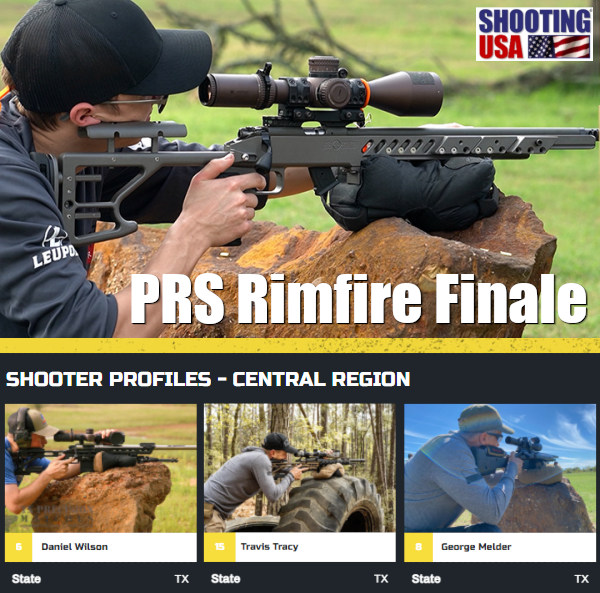
Precision Rifle Series (PRS) 22 Finale on Shooting USA
This week Shooting USA showcases the first-ever PRS Rimfire Finale. This new rimfire discipline is akin to Precision Rifle Series (PRS) centerfire tactical competition, but shot with .22 LR rimfire rifles. The inaugural PRS Rimfire Finale drew nearly 150 competitors to Texas, where shooters could compete without the cost of expensive centerfire ammo and without the need for a 1000-yard range. SEE: PRS Rimfire Series Info.
Shooting USA SHOW TIMES: This Shooting USA Episode airs Wednesday, December 21, 2022 at 9:00 PM Eastern and Pacific; 8:00 PM Central. If you miss the regular broadcast, you can stream the show online at any time on Vimeo for $0.99 per episode.
PRS Rimfire Finale — Nearly 150 Shooters in Texas
PRS and NRL tactical matches are among the fastest-growing competitive shooting disciplines. And rimfire tactical disciplines are actually growing even faster (than centerfire PRS/NRL) because .22 LR ammo is much cheaper than centerfire ammo, and there are many more ranges where rimfire matches can be held. PRS Rimfire offers the same kind of fun without the high cost of centerfire ammo and/or countless hours spent hand-loading. Rimfire PRS also offers generally less expensive rifles, and a whole lot less recoil. That’s why PRS Rimfire (as well as NRL22) has become so popular. And in the first year of the PRS Rimfire series, the Finale drew close to 150 competitors. The Finale Match was held at the Triple C Shooting Facility in College Station, Texas.
The Triple C Shooting Facility hosted the First Annual PRS Rimfire Finale. At this excellent Texas venue, match directors set out 20 unique courses of fire. There were the standard props you’d expect to see at any Precision Rifle match — tractor tires, wire spools, concrete culverts, and even cross tie bunkers. And the target placements were certainly challenging. Many of the stages had cross-course target lay-outs. This makes wind-reading much more challenging, especially with the relatively slow, low-BC .22 LR cartridges used in PRS rimfire competition.
Tune in to Shooting USA TV on Wednesday 12/21/22. You’ll enjoy the coverage of this popular PRS rimfire sport that is growing rapidly. Notably, the National Rifle League (NRL) now conducts many more NRL22 matches than NRL centerfire matches. And competitors of course are drawn by the fun/challenge of a tactical match with much lower ammo costs — $0.15-$0.25/rd vs. $1.00/rd or more (counting brass, primer, bullets, powder, and barrel wear). And there are many more viable venues, because you only need a 300-yard (max) range to conduct a rimfire tactical match.
OK, you’ve paid the tax stamp and acquired your new suppressor (aka “silencer” or “moderator”). Do you still need to wear earplugs or muffs? Absolutely. Even with that expensive new “can”, your rifle could be generating over 140 decibels (dB) of noise — about the same as as an unmuffled 9mm pistol shot. That’s loud enough to create permanent hearing loss with repeated exposure.
Firearms Are Loud: 140 dB to 175 dB
Audiology group ASHA explains: “Exposure to noise greater than 140 dB can permanently damage hearing. Almost all firearms create noise that is over the 140-dB level. A small .22-caliber rifle can produce noise around 140 dB, while big-bore rifles and pistols can produce sound over 175 dB. Firing guns in a place where sounds can reverberate, or bounce off walls and other structures, can make noises louder and increase the risk of hearing loss. Also, adding muzzle brakes or other modifications can make the firearm louder. People who do not wear hearing protection while shooting can suffer a severe hearing loss with as little as one shot[.] Audiologists see this often, especially during hunting season when hunters and bystanders may be exposed to rapid fire from big-bore rifles, shotguns, or pistols.” Source: ASHA, Recreational Firearm Noise Exposure.
Suppressors, On Average, Reduce Noise Levels about 30 Decibels
In an article for Ammoland, gunwriter Sam Hoober says that you can expect about 30 decibels (dB) of noise reduction from the average suppressor: “Looking at a few different products, SilencerCo attests their suppressors reduce the sound pressure of a 9mm gunshot to anywhere from 125.7 dB to 131.5 dB, depending on the model. Advanced Armament Co, another popular supplier, attests a 23 dB to 33 dB reduction or down to 127 dB. Liberty Suppressors, another manufacturer, attests a reduction of 24 dB to 38 dB, depending on model and other factors. In short, we can presume something on the order of 30 dB of attenuation as an average.”
Using that 30 dB number you can quickly discern that you’ll still need hearing protection — good hearing protection — when shooting any suppressed firearm (even a .22 LR). “Spikes of 130 dB and more can result in permanent hearing damage instantly”. Source: NRA Blog.
The Myth of the “Quiet” .22 LR
The NRA Blog notes that “many rimfire shooters, particularly those using the beloved .22 Long Rifle cartridge, argue that the small .22 LR caliber doesn’t produce enough sound to damage your hearing”. So, is that really true. or is it a myth?
In fact, a .22 LR can be much louder than you think — a .22 LR pistol can produce sound levels of 134 dB. That’s well above the normal human pain threshhold.
Sound Levels for Common Noises:
9mm Luger pistol: 160 dB
Jet aircraft engine (near): 140 dB
.22 LR pistol: 134 dB
Normal human pain threshold: 120 dB
Noisy Nightclub: 110 db
Riding Motorcycle at 65 mph: 103 db
Power Lawnmower: 95 dB
Hearing damage possible: 85 dB (sustained for 8+ hours)
Ringing Telephone: 80 dB
Normal conversation: 60 dB
The Risk of Hearing Loss
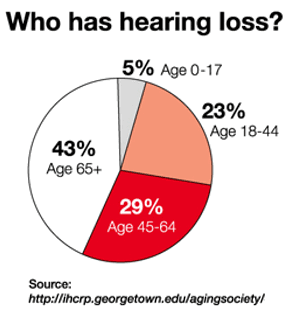
Hearing loss can be progressive and irreversible. If you are a shooter, this is serious business. As the NRA Blog cautions: “You may not even realize you’re harming your hearing. Hearing loss occurs gradually, and can go effectively unnoticed until symptoms become severe. By then, the damage is done.”
Nobody wants to go deaf. But we often see shooters without effective hearing protection when they are walking around a few yards behind the firing line. That’s bad — even if you are away from the firing line, gunshot noises can damage your hearing. You MUST use effective hearing protection every time you go to the range. Good foam earplugs costs mere pennies but they can prevent deafness in your later years. Many folks also wear muffs over plugs.
Congratulations to Lapua’s Chris Simmons, who won the 2022 Precision Rifle Series (PRS) Rimfire season with a total score of 689.803.
Simmons was crowned the 2022 Champion this past weekend at the PRS Rimfire Finale hosted by the TX Precision Matches in Navasota, Texas. Competing with Lapua Center-X .22 LR ammunition, Simmons had three podium finishes in the series this year. He took first place at the July-Alabama Precision Rimfire Challenge, first at the Caroline Shooters Group PRS rimfire Series, and second place at the Atlantic Coast Regional Rimfire Finale. In addition to his recent PRS overall rimfire championship, Simmons won the NRLX22 Rimfire National Championship title for the second consecutive year. Having won BOTH both the PRS Rimfire title AND the NRLX22 crown in the same year, Chris is arguably the world’s most successful rimfire tactical competitor.
“The PRS Rimfire Series is a year-long marathon of single matches that comes down to two days of shooting against the best shooters in the country,” commented Simmons. “Consistency wins championships and using Lapua products helps me achieve success with consistency.”
Simmons’ Lapua Center-X .22 LR ammunition is matched to his firearms at Lapua’s Rimfire Performance Center. Specific lots of ammunition are tested at 50 and 100 meters simultaneously, identifying the best performing ammunition in a particular rifle. This service is available to any shooter who wishes to gain a competitive advantage. You can schedule testing at Lapua’s Rimfire Performance Centers. There are two testing facilities — one in Mesa, Arizona, and the other in Marengo, Ohio.
About Lapua
Lapua produces high-quality rimfire and centerfire cartridges and components for civilian and professional use. Lapua is a part of the Capstone Precision Group, exclusive U.S. distributor for Berger, Lapua, Vihtavuori and SK-Rimfire products. For more information, visit Lapua.com.
Interview with NBRSA 3-Gun and Tackdriver Champ Bart Sauter
Bullet-maker Bart Sauter is one of the world’s best benchrest shooters. He won the 2022 NBRSA 3-Gun National Championship this year, and he also has won the multi-class Tack Driver event two years in a row. Plus he has set small-group world record at 600 yards. In this very informative interview, Bart talks about bullets, equipment selection, match preparation, and shooting techniques. We think every benchrest shooter should watch this video.
Master at Work — Sauter in Action
If you want to see how a world-class bench shooter runs his rifle, check out this short video showing Bart Sauter in action. He runs five shots in about 9 seconds.
Interview with 6-Time Nat’l Long Range Champion John Whidden
CLICK HERE for full 81-minute interview with John Whidden.
John Whidden of Whidden Gunworks is one of the greatest American marksman in history. Shooting sling rifles, John has won the U.S. Long Range National Championship a remarkable six times. He has also won a Palma World Championship, and this summer John won the 2022 Smallbore Prone U.S. National Championship. While a humble individual, John has superb shooting skills and unrivaled mental toughness. In this interview, John talks about the challenges of competition and what motivates him to excel. John also talks about the products he has developed for Whidden Gunworks.
Interview with Tod Hendricks, 2021 F-Open National Champion
A member of Team Lapua/Brux/Borden, Tod Hendricks has been one of the most talented and consistent F-Open competitors for many years. He used his mental toughness and wind-reading skills to capture a National Championship in 2021. In this wide-ranging interview with his team-mate Erik Cortina, Tod reveals what it takes to win in F-Open these days, covering equipment, ammo quality, and match preparation.
Brux Barrels is a machine tool company located in Lodi, Wisconsin, specializing in premium, custom, cut-rifled barrels. Brux barrels have set some impressive benchrest records, and have won championships in multiple disciplines. In this video Erik Cortina interviews Ken Clemens of Brux. They discuss the production process at Brux, from the selection of top-quality steel blanks to the final hand-lapping procedures.
Interview with Lanny Bassham, Olympic Gold Medalist and Author
Erik Cortina recently interviewed noted author and Olympic Gold Medal-winning shooter Lanny Bassham. Erik asked Lanny about his book With Winning in Mind. Lanny discussed the “mental game” in the shooting sports and Lanny’s program for visualization of a winning performance. Lanny explains that after you have mastered your rifle skills, and learned to read the wind, it is important to adopt a winning mentality and to visualize success. Lanny should know. He won a shooting Gold Medal in the Olympics along with 22 world individual and team titles.
Interview with Lindsey Paul, Queen of 2 Miles
Lindsey Paul is the only women to win the King of Two Miles ELR competition, becoming the first-ever QUEEN of Two Miles, shooting a .375 CheyTac. In 2021, the talented lady Texan beat a field of top competitors, including past KO2M Champions, all guys. Lindsey had a truly outstanding performance, including 3 hits in 5 shots at the max distance, 2.0 miles (3520 yards). In this interview, Lindsey, who works in the law enforcement field, talks about the Extreme Long Range (ELR) game, and she also explains what it’s like to shoot the heavy-recoiling .375 CheyTac.
Interview with Frank Galli — Founder of Sniper’s Hide
The founder of the popular Sniper’s Hide Forum, Frank Galli is an online pioneer and living legend in the tactical shooting sports world. A former U.S. Marine Scout-Sniper, Frank (aka “Lowlight”) runs a very active Forum with over 180,000 members. Along with moderating his Forum, Frank runs training clinics and hosts regular podcasts. Frank is also the author of the book Precision Rifle Marksmanship: The Fundamentals, an excellent resource for PRS/NRL competitors as well as tactical marksmen.
BONUS Videos — Two Great Tech and Reloading Videos
How to Find Jam Point on your Barrel
Loading for F-Class
Erik Cortina produces his own line of EC Barrel Tuners and Tuner Brakes. These have been used successfully by many top shooters. View the full line of Cortina Precision products at: ShootSmallGroups.com.
Story by Paula Crenshaw
Congratulations to Team Lapua’s Allison Zane for winning overall Top Lady for the 2022 Precision Rifle Series (PRS). Zane, who scored a 169 at the PRS Pro Series Finale, clinched the Top Lady title for the third consecutive year. That’s an impressive “Three-Peat” for the Ladies’ title.
The 2022 PRS Pro Series Finale was held November 5-6 at the K&M Precision Rifle Training Complex in Finger, TN. The Finale brings together the best of the best within the PRS Pro Series to crown the annual champion. Competitors must qualify to attend the Finale. Out of 260 competitors, Zane finished Top Lady and placed 27th overall.
At the PRS Finale, Zane competed in the Open Division and used Lapua 6mm Creedmoor cartridge cases loaded with Berger 109gr Long Range Hybrid Target (LRHT) bullets. This combination was a favorite among the attendees competing in this year’ Finale. Zane’s next big match is the AG Cup in Finger, Tennessee.
Zane Competed with Team USA This Summer in France
This past summer Zane competed with the U.S.A. precision rifle team in France at the Precision Rifle World Championships. That event, held at the at France’s Bitche Military Camp in August, saw competitors from 26 countries including: Australia, Austria, Canada, Chile, Czech Republic, France, Georgia, Germany, Great Britain, Greece, Hungary, Indonesia, Ireland, Italy, Lithuania, Namibia, Norway, Poland, Slovakia, Slovenia, South Africa, Spain, and Sweden.
About representing the USA at the Precision Worlds, Allison said: “I am beyond excited and humbled to have been selected by the U.S. Precision Rifle Association as a member of the first U.S. Precision Rifle Team competing in the inaugural World Championship. I can’t think of a greater honor in this sport I love, than the opportunity to represent the United States of America on an international level.”
Zane competed at the worlds with a 6mm Creedmoor rifle shooting Lapua brass and Berger 109gr LRHT bullets. Her precision rifle was built by Short Action Customs using a Defiance Machine Ruckus Tactical action, Modular Driven Technologies (MDT) ACC chassis system, Vortex Razor HD Gen III 6-36×56 scope, Hawk Hill Custom Marksman Contour barrel with MDT brake, and Huber two-stage trigger.
The Second Amendment Foundation (SAF) this week filed a federal lawsuit challenging the constitutionality of Delaware’s new ban on so-called “assault weapons” on the grounds the legislation — House Bill 450 — violates the Second Amendment. The lawsuit is named Gray et. al. v. Jennings. Joining SAF in this legal action are the Firearms Policy Coalition, DJJAMS LLC (Delaware gun dealer), and two private citizens, Gabriel Gray and William Taylor. Named as a defendant is Delaware Attorney General Kathy Jennings. The lawsuit was filed in U.S. District Court for the District of Delaware.
The oppressive new Delaware statute, House Bill 450, lists dozens of firearms described generically as “assault long guns” and 19 handguns described as “assault pistols,” plus so-called “copycat” firearms. Those who acquire such arms or bring them into Delaware can be charged with a Class D felony, punishable by up to eight years in prison.
Among the listed banned rifles are popular semi-auto firearms used in Service Rifle and Vintage Sniper Team competitions: Springfield M1A, Colt AR-15, FN FAL, HK 91/93/94, Ruger Mini-14 (folding), SKS, Steyr AUG, Valmet M76/78 and dozens more. READ House Bill 450 Full Text (PDF)
Beyond the specific list of banned guns, House Bill 450 broadly outlaws any “Copycat Weapon”. This can include ANY semi-auto rifle with a pistol grip and flash suppressor (or folding stock). The prohibited “Copycat” firearms are defined as follows:
A. A semiautomatic centerfire rifle that can accept a detachable magazine and has any 2 of the following:
1. A folding stock.
2. A grenade launcher or flare launcher.
3. A flash suppressor.
4. A pistol grip that protrudes conspicuously beneath the action of the weapon.
B. A semiautomatic centerfire rifle that has an overall length of less than 29 inches.
C. A semiautomatic shotgun that has a folding stock.
D. A shotgun with a revolving cylinder.
Delaware Statute Defies U.S. Supreme Court Decision in NYSRPA v. Bruen
“One week after the Supreme Court handed down its landmark Bruen decision in June”, noted SAF Executive Director Adam Kraut, “Delaware Gov. John Carney signed House Bill 450, which we believe is clearly unconstitutional. Yet this new statute categorically bans the protected conduct of possessing, self-manufacturing, transporting, importing, selling, transferring, purchasing, receiving and lawfully using constitutionally protected arms that are in common use across the nation.”
“By adopting this statute after the Supreme Court’s Bruen ruling, Delaware is clearly ignoring the court, and the Second Amendment”, noted SAF founder and Executive Vice President Alan M. Gottlieb. “This case cuts right to the heart of our mission, which is to defend the rights of gun owners by challenging egregious gun control laws in court.”
SYNOPSIS of HB450: The Delaware Lethal Firearms Safety Act of 2022 prohibits the manufacture, sale, offer to sell, transfer, purchase, receipt, possession, or transport of assault weapons in Delaware, subject to certain exceptions. One exception is that the Act does not prohibit the possession and transport of firearms that were lawfully possessed or purchased before the effective date of this Act; although for these firearms there are certain restrictions relating to their possession and transport after the effective date of this Act. There are also exceptions for law-enforcement and military personnel in the course of their official duties, and a limited exception for retired law-enforcement personnel. Finally, a person lawfully in possession of an assault weapon prior to the passage of this Act may lawfully transfer the weapon to a member of their family, through inheritance or otherwise.


 This Impulse straight-pull action is bedded in an Adjustable Core Competition chassis from Modular Driven Technologies (MDT). From its full-length ARCA rail to its nitride coatings, the Impulse Elite Precision is optimized for the PRS/NRL game.


 5. Gas Block: You want a gas block that does not impose pointed stress on the barrel. Clamp-on types that grab all the way around the barrel are excellent. The blocks that are pinned on with tapered pins that wedge against the barrel or the slip on type of block with set screws that push up from underneath (or directly on the barrel) can deform the bore inside of the barrel and can wreck the accuracy of an otherwise great barrel.




 The Risk of Hearing Loss


