The MidwayUSAPro Series Competition Shooting Mat is now on sale for just $49.99, through the end of March, 2013. That’s 51% off the regular $102.99 price. This mat is bigger and better than MidwayUSA’s original shooting mat, with many enhancements. The Pro Series mat measures a full 73.5″ x 35.5″ and the padding is thicker. There is a zippered pocket on the front extension flap to hold ammo or log book. The rubberized contact areas are tan now (rather than black) so they don’t get so hot in the sun. And the designers added webbing “pockets” for bipod feet so you can pre-load the ‘pod with forward pressure. MidwayUSA has done a good job improving a mat that was already a good deal for the money. At $49.99 on sale (through 3/31/2013), this Pro Series mat is a great deal.
MidwayUSA Buyer Reviews:
Five Stars: Great upgrades to the original. It’s bigger in every direction, and the padding is twice as thick. The new knee and elbow pads won’t get as hot as the black material on the old one did, and the new material is “grippier” than the old stuff too. The bi-pod stop is a nice touch if you shoot F-T/R. — Bob M., Missouri, 10/6/2010.
Five Stars: As a competitive shooter my mat is important. The mat I replaced had been with me for about twenty years. It had been with me through the famous weather at Camp Perry, the winds and sand of Grayling 1000 yard matches. My Midway mat arrived shiny and new, full of stuffing, stiff and green. At my next match I found I liked the feel of the mat, it has handles! The rocks and sand on the firing line were not as sharp. The rubber is well-placed. It has proven to be rugged and quite up to the task. I am seeing more Midway mats at matches. A good thing. — Tom, Michigan, 12/26/2012.
Four Stars: I purchased this mat for a 2-day Appleseed event this fall. Good overall quality and more than wide and long enough for my frame. The only drawback and reason for me giving it 4 stars instead of 5 is that the padding is insufficient when placed on top of a rocky surface. I wasn’t looking for a sleeping mat mind you, but you feel every single rock underneath the mat when shooting prone (especially on the elbows), kneeling and when transitioning between positions. Best to use another pad underneath if you are using it on a rocky surface. Most of the other mats out there have the same drawbacks so this is still a great choice at a very decent price. — Chris S., Illinois, 1/6/2013.
Five Stars: This is a great mat for the money. It’s larger, thicker, and stickier than my old one. I could use larger knee area friction pads, but that’s the only complaint. The elbow area is huge and that’s what’s best. Much cooler in the sun, too. Rolls up and rolls out easy. The double-adjustable carry strap has built in loops I use for carrying a rolled up foul weather cover. The fold-out front fly is large and useful. This is a good looking, hard working mat. — Steve R., Illinois, 10/11/2010
Got a billion dollars burning a hole in your pocket? Bushnell Outdoor Products (Bushnell) is up for sale according to Reuters. Bushnell, which has annual revenues of $450 million, is going to be sold off by its current owners, MidOcean Partners (private equity firm). Reuters reports that Kansas-based Bushnell could be sold lock, stock and barrel in a billion-dollar deal. The potential buyer(s) have not been revealed.
Bushnell was founded in 1948. The company makes scopes, binoculars, GPS units, laser rangefinders, GameCams, eyewear, and other outdoor gear. Bushnell is the parent of many other outdoor product brands, including: Bollé, Butler Creek, Final Approach, Hoppe’s, Millett, Night Optics, Primos, Serengeti, Simmons, Stoney Point, Tasco, and Uncle Mike’s. Last year the Bushnell group of companies had $100 million in earnings before taxes, interest, and depreciation.
Earlier this week, the Washington Times published a special 12-page feature on gun rights. This special section was funded and sponsored by the Second Amendment Foundation (SAF).
The section includes reprints of articles from other sections of the Washington Times, plus commentary by SAF founder and Executive Vice President Alan M. Gottlieb. Also included is Ted Nugent’s famous open letter to Vice President Joe Biden, several articles by Washington Times Senior Editor for Opinion Emily Miller, commentary from Col. Oliver North, and SAF’s Alan Gottlieb, public service advertisements from SAF and a commentary by Dr. Michael Brown with Doctors for Responsible Gun Ownership and more.
This special section also features essays by Texas Congressman Kevin Brady and William Perry Pendley, president of the Mountain States Legal Foundation.
“Our special section should provide readers in the Washington metro area that includes the White House, Congress and key opinion makers, a new and enlightening perspective on Second Amendment issues,” Gottlieb observed, “It is important for citizens to understand what the Second Amendment means to them as individuals, and as a community”.
The Second Amendment Foundation (www.saf.org) is the nation’s oldest and largest tax-exempt education, research, publishing and legal action group focusing on the Constitutional right to privately own and possess firearms. Founded in 1974, The Foundation has grown to more than 600,000 members and supporters and conducts many programs designed to better inform the public about the consequences of gun control.
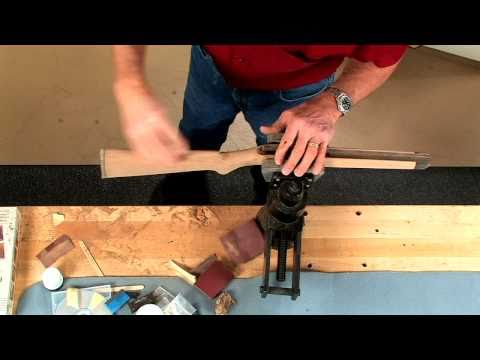
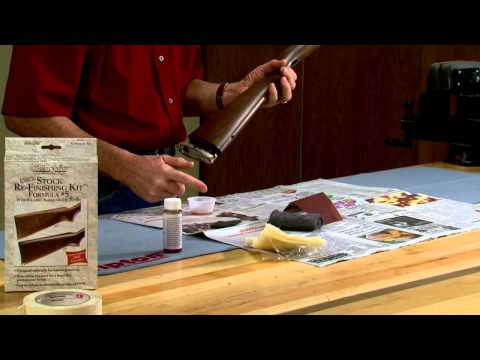
In a series of YouTube videos, Larry Potterfield of MidwayUSA shows how to prepare, finish, and polish a wood gunstock. The first video covers sanding, sealing, and filling. The second video shows how to apply a multi-coat finish by hand, with light sanding between coats. In the third video, Larry applies a final polish to his project stock. The principles illustrated in these videos can be applied to most types of stocks. However, keep in mind that Larry is working with a hardwood stock.
By contrast, with a typical Rutland laminated stock, the finishing process is somewhat different and (usually) more time consuming. You’ll probably have to do more aggressive sanding, and the sealing process can be more time-consuming because laminates typically have very porous surfaces that soak up a lot of sealant. You may have to do multiple sealant passes with aggressive sanding in-between. Alternatively, you can use multiple coats of high-solids clear coat to fill the pores.
How to Prepare a Riflestock for Finishing
How to Apply a Multi-Coat Finish
How to Polish the Finish on a Riflestock
Clear-Coating Your Stock
While you can put an oil-type finish on a Rutland laminate, we think these often look best finished with an automotive clear coat. Rub-on finishes can cause small changes in stock coloration. If you want to preserve the colors in your laminated stock, a quality, spray-on clear-coat is probably the best way to go. CLICK HERE for expert tips on how to prep and clear-coat a laminated stock.
In California, you can get a “Save the Whales” custom license plate. Meanwhile in the great state of Pennsylvania, you can now get a handsome, custom plate that helps raise money for the shooting sports. Thanks to Friends of NRA committees throughout Pennsylvania, PennDOT now offers NRA-specialized license plates. The Keystone State joins a growing list of states with NRA-themed plates. Revenues from the plates (after PennDOT takes its share) will help fund NRA Foundation programs.
Proceeds go to the NRA Foundation, the country’s leading charitable organization in support of the shooting sports. Since its inception in 1990, the NRA Foundation has awarded more than $140 million in grants. Grants awarded by the foundation provide essential program funding for youth education, law enforcement training, hunter education, conservation, firearms and marksmanship training and safety, and much more.
This past weekend, top pistol shooters from 28 states, one U.S. territory and three foreign nations competed at the 2013 Smith & Wesson IDPA Indoor National Championships in Springfield, Massachusetts. Robert Vogel successfully defended his Stock Service Pistol division title for the sixth straight year. Second place in the SSP division went to Rob Tate who claimed first Master and the High Military Veteran title.
In another impressive performance, our friend Randi Rogers won the High Lady title for the fifth year in a row. You go girl! Randi Rogers also claimed second Master. High International title went to Luis Ricardo Zanotti of Venezuela.
Vogel Dominates SSP Division
Vogel, the first IDPA shooter to claim the sport’s Distinguished Master classification in all three pistol divisions, won all but two stages in the championship to outpace his nearest competitor by nearly 30 seconds and finish with a final time of 154.37. That’s dominance. In addition to winning the SSP title, Vogel earned High Law Enforcement and High Industry honors.
“Bob Vogel is riding an incredible win streak in IDPA that extends back to the 2007 IDPA Nationals.” said Joyce Wilson, executive director of IDPA.
The National Shooting Sports Foundation (NSSF) has produced a video in which management and employees of three Connecticut-based companies, O.F. Mossberg & Sons, Stag Arms, and Ammunition Storage Components, talk about the importance of their jobs and how their companies contribute to the Constitution State’s economy.
This video was produced in response to Connecticut Gov. Dannel Malloy’s recent call for severe new gun control laws. An NSSF statement noted: “We are troubled by the Governor’s apparent change in attitude[.] We do not believe a rush to quick-fix legislation is likely to produce real public safety solutions, while it holds the clear potential to hurt good-paying manufacturing jobs in our state.”
NSSF and member companies based in Connecticut and western Massachusetts have been working for several weeks to help educate legislators, the media and the public not only about the economic impact of the firearms industry in the Constitution State, but also what measures are most effective at keeping firearms out of the hands of criminals and unauthorized individuals. To that end, NSSF President Steve Sanetti authored an op-ed in The Hartford Courant, entitled “Focus on Gun Access, Not Gun Ban”.
Connecticut has a long tradition of arms-making. In 1848, on a site overlooking the Connecticut River in Hartford, Samuel Colt built the Colt’s Patent Firearms Manufacturing Company factory. A larger factory, called the Colt Armory, was added in 1855. The 1850s were a decade of phenomenal success for Colt’s Connecticut-based enterprise.
Colt’s Mfg. was the first to widely commercialize the total use of interchangeable parts throughout a product. A leader in assembly line practice, the company was a major innovator and training ground in manufacturing technology. Colt’s armories in Hartford trained several generations of toolmakers and machinists, who had great influence in American manufacturing. Prominent examples included F. Pratt and A. Whitney, and Henry Leland (who would end up at Cadillac and Lincoln).
Many of our readers want a custom rifle that looks as good as it shoots. When it comes to wood stocks, one of the most prized materials is fine Turkish Walnut. You’ll find a wide selection of Turkish Walnut blanks at the HunterBid.com website. Hundreds of selections are available at auction. Prices start as low as $150.00. The finest blanks sell for $1,000 or more. You’ll find both one-piece blanks (for rifles) and two-piece blanks (for shotguns). Most blanks are 36″ or shorter, but some longer Mannlicher blanks are available. Here are two examples from past auctions. The first is an exhibition-grade blank, the second a low-priced blank that still exhibits excellent figure.
New blank selections are added to the website every other day. The operators of HunterBid report: “If you are interested in any of our blanks in Hunterbid auctions, but you do not like the bidding process, please give us a call (603) 433-8908 or send us an e-mail. We will help you choose a blank that suits you, and even close the auction for you and ship your purchase the same day.” HunterBid.com is run by Chiron Inc., which is 100% owned by the Ergin family who are of Turkish origin. Chiron maintains warehouses in Dover, NH and Istanbul, Turkey.
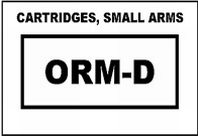
The days of the “ORM-D: Small Arms Cartridges” labels for ammo shipments are numbered. The Dept. of Transportation (DOT) is phasing out the current ORM-D ammo labels, replacing them with a larger striped diamond label that does not mention “Small Arms Cartridges”. This change is designed to harmonize U.S. shipping rules with United Nations standards. You can start using the new “Limited Quantity” diamond labels for ammo shipments right now, but the new labels are not yet mandatory. You can continue to use the old ORM-D “Cartridges, Small Arms” labels until December 31, 2013. As of January 1, 2014 you MUST use the Striped Diamonds.
OFFICIAL UPS RULES — Elimination of ORM-D Classification In an attempt to harmonize and align with international standards, the DOT has amended the 49CFR regulations regarding the ORM-D classification. Effective January 19, 2011, with the publication of the HM-215K final rule, the hazard class of ORM-D is being eliminated. Those materials may still be shipped classified as a limited quantity (“Ltd Qty”). In conjunction with ORM-D hazard class elimination in HM-215K, limited quantity ground shipments will no longer require shipping papers when prepared under the new rule. This includes those materials previously classed as Ltd Qty that required shipping papers via ground transport.
Ground Ltd Qty Marking
Air Ltd Qty Marking
NOTE: These illustrations are not true to scale. The actual default Ltd Qty Diamond label to be used for ammo shipments is much larger, about 5″ per side. A smaller 2″ per side version of the Ltd Qty striped diamond can be used on smaller packages.
There is a transition period for shippers to comply with the new classification, marking and labeling requirements. Until December 31, 2013 a limited quantity package containing a consumer commodity as defined in 171.8 may be reclassed as ORM-D, or until December 31, 2012 for ORM-D-Air material. UPS began accepting materials with the new markings effective April 1, 2011. Note: To be in compliance with TDG, Standard (ground) Ltd Qty shipments to Canada prepared under HM-215K require the verbiage ‘Limited quantity’ or ‘Ltd qty’ to also be marked on the carton.
Download OLD and NEW Label Formats
On the Parallax Curio and Relic Forum, a thread includes PDF samples of both the new Diamond Ltd Qty Labels and the current ORM-D Labels. The thread explains: “The good news is the new label doesn’t have any indicator that the package contains ammunition. The bad news is the new label is gigantic compared to the old ORM-D label. You are required to use one of the larger labels on one side of any package containing ammunition. If the package is too small for one of the larger labels then you are permitted to use one of the smaller labels instead. Because of the size requirement in the regulations, you only get two of each label on standard piece of printer paper.”
If you want to still use the ORM-D Small Arm Cartridges Labels until the new Diamond Labels are mandatory, here are links to PDF sheets of ORM-D labels. These PDFs have many rows of labels per page so you can save printer paper. The black version and blue version will use up more printer ink, so you might want to use the white version to be more economical.
The Nightforce NP-2DD (Double Dot) reticle is popular with both match shooters and long-range varminters. The uncluttered reticle gives you an unobstructed view of the target — and that’s especially important for 1000-yard shooting. You can also use the “gap” between center dot and horizontal lines to judge wind hold-off (this “gap” is 1.1 MOA at 42X and 2.0 MOA at 22X). Some guys use the lower dot for hold-overs when shooting at different distances. At 22X the second dot is 8 MOA lower than the top dot. At full 42X power, the lower dot is 4.3 MOA lower than the top dot.
Clicking Elevation vs. Hold-Over with Double Dots If you have a Nightforce scope with NP-2DD reticle should you click for elevation changes, or hold-over using the second dot? The answer is: “It depends”. Danny Biggs, multi-time U.S. F-Class F-TR National Champion, offered this advice is our Shooters’ Forum: “There is nothing wrong with [using] the NP-2DD ‘over and under’ dots. Try it, and if it works for you, fine. However [in most situations] I would not bother to use it. Rather, I just click up/down the elevation going from 600 to 1,000 yards.
There is one exception though where I regularly use the lower dot! That is for 1,200-yard shooting — a fad at the Midwest Palma Championships held annually up at Lodi, WI. Here I fully employ [the hold-over method].
Following the 1,000-yard match, I click up 2-3 minutes of elevation depending on the load being used for my 7mm RSAUM, go to 42 power, and use the ‘lower’ dot. For me, the lower (and smaller diameter dot) at 42 power provides a preferable aiming dot for the much diminished size/appearance (at 1200) of the 1,000-yard target face. In this instance, I’m really not too lazy to just ‘click up’. By using the smaller aiming dot I ‘uncover’ the 10/X rings as much as possible as they are obscured by the larger upper dot. [This also allows] a better hold on the rings horizontally for windage purposes.” — Danny


 Earlier this week, the Washington Times published a special 12-page feature on gun rights. This special section was funded and sponsored by the Second Amendment Foundation (SAF).



 This past weekend, top pistol shooters from 28 states, one U.S. territory and three foreign nations competed at the 2013 Smith & Wesson IDPA Indoor National Championships in Springfield, Massachusetts. Robert Vogel successfully defended his Stock Service Pistol division title for the sixth straight year. Second place in the SSP division went to Rob Tate who claimed first Master and the High Military Veteran title.
 Vogel Dominates SSP Division

 The National Shooting Sports Foundation (NSSF) has produced a video in which management and employees of three Connecticut-based companies, O.F. Mossberg & Sons, Stag Arms, and Ammunition Storage Components, talk about the importance of their jobs and how their companies contribute to the Constitution State’s economy.


 In an attempt to harmonize and align with international standards, the DOT has amended the 49CFR regulations regarding the ORM-D classification. Effective January 19, 2011, with the publication of the HM-215K final rule, the hazard class of ORM-D is being eliminated. Those materials may still be shipped classified as a limited quantity (“Ltd Qty”). In conjunction with ORM-D hazard class elimination in HM-215K, limited quantity ground shipments will no longer require shipping papers when prepared under the new rule. This includes those materials previously classed as Ltd Qty that required shipping papers via ground transport.





 If you have a Nightforce scope with NP-2DD reticle should you click for elevation changes, or hold-over using the second dot? The answer is: “It depends”. Danny Biggs, multi-time U.S. F-Class F-TR National Champion, offered this advice is our


