We have always liked Tikka actions, and now there is a great re-barreling option for Tikka T3 owners. Criterion Barrels Inc. (CBI), makers of “pre-fit” barrels for Savage, Remington, and Rem-clone actions, also produces Tikka pre-fits. These pre-chambered barrels for Tikka T3 actions will be headspaced with a barrel nut, just like a Savage.
Click image for full-screen version
Criterion’s Tikka T3 pre-fit barrels can be purchased through Solid Accuracy, a respected Texas-based outfit that sells high-end scopes, stocks, barrels and other rifle components. Solid Accuracy states: “Each Solid Accuracy/Criterion pre-fit barrel features a hand-lapped bore and meets extreme quality control standards. Utilizing a proven barrel nut design, these barrels can be swapped in just a few minutes using only a barrel nut wrench and the appropriate headspace gauge set. Solid Accuracy offers finished lengths up to 30″ with multiple contour options.” Current price for T3 and T3X Barrels is $495.00 which includes Barrel Blank, Barrel Nut and Wrench, and Barrel Threading with Thread Protector for the muzzle.
These Tikka pre-fits were first introduced in 2017, and the accuracy results were impressive. Solid Accuracy’s initial test rifle featured a Tikka T3 action mounted in a KRG X-Ray chassis, with Criterion barrel chambered in 6.5 Creedmoor. The group below was shot with a stout load of H4350 and Sierra 140 grain MatchKings seated .009″ in the lands.
Criterion is proud of how well the Tikka pre-fit project turned out. These barrels work great in the Tikka platform. One of Criterion’s staffers was so impressed with the initial test results that he is built his own Tikka T3 rifle, with a Criterion pre-fit of course…
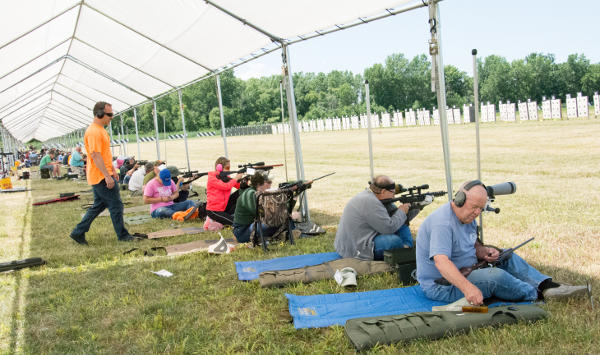
The CMP’s 2024 National Rimfire Sporter Match took place yesterday, July 13th, 2024 on the Viale Range at Camp Perry. Hundreds of participants took part in this major summer rimfire competition. Click HERE for 2024 Match Photos. One of the most popular events at Camp Perry, the Rimfire Sporter Match attracts hundreds of shooters from 8 to 80 years, novices as well as experienced competitors. It is a great event for shooters who want to have fun without spending a small fortune on rifle, optics, gear and ammo. Along with the major annual Camp Perry event, other Rimfire Sporter matches are held throughout the country in connection with the CMP’s Travel Games.
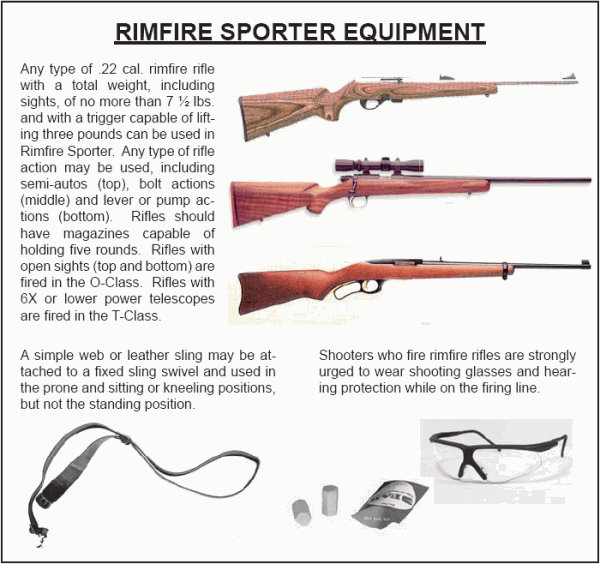
The CMP Rimfire Sporter discipline is for .22 LR smallbore (rimfire) rifles that weigh 7 1/2 pounds or less. Firing is done at 25 and 50 yards in prone, sitting, and standing positions, in slow and rapid-fire modes. Even with the vast number of competitors, the Rimfire Sport match proceeds efficiently. The CMP now has a special smart-phone App that helps speed up scoring. SEE 2024 Results.
Each summer, the major National Rimfire Sporter Match attracts hundreds of shooters to the shore of Lake Erie at Camp Perry. This year’s Rimfire Sporter Match at Camp Perry was held on Saturday, July 13, 2024. The CMP National Rimfire Sporter Rifle Match offers shooters a recreation-oriented competition where they use affordable, smallbore sporter rifles with either scopes or iron sights. All you need are a .22 LR rifle, sling, and ammo. Competitors will need a total of 60 rounds to fire the Rimfire Sporter Match plus any sighters or range alibis.
Three Classes for Rimfire Sporter
Rimfire Sporter competitors can fire in three different rifle classes. The O-Class rifles must have open sights. T-Class rifles have 6-power max scopes or receiver sights. The third class is TU Rimfire Class (Tactical and Unlimited). Competitors may enter in Single or Double Entry options and then select the rifle class(es) in which they will fire. Firing is done at 25 and 50 yards in prone, sitting and standing positions, in slow and rapid-fire modes. For each Class, awards are offered to High Juniors, High Seniors, and High Women as well as Overall Winners.
Rifles used during the competition may be manually operated or semi-automatic, shot hand-held with sling allowed. Competitors will complete slow fire prone, rapid fire prone, slow fire sitting or kneeling, rapid fire sitting or kneeling, slow fire standing and rapid fire standing shot sequences. Firing is done at 25 and 50 yards on a target with a 1.78″ ten-ring. The target is simple enough for a beginner to hit, yet challenging enough. See explanation of course of fire below. Competitors must supply their own quality ammunition for this match. For more info about the Rimfire Sporter Match, CLICK HERE.
The CMP Rimfire Sporter Rifle Match is an inexpensive, fun-oriented competition using .22 caliber sporter rifles (plinking and small game rifles). To compete, all you need is a basic rifle, safety gear, and ammunition. No fancy, high-dollar rifles are required. Many junior and senior clubs make the National Rimfire Sporter Match an annual tradition — bringing together marksmen of all ages. SEE 2024 CMP Games Rules PDF.
If there is a single CMP event at Camp Perry every summer that offers the highest level of shooter satisfaction, the most diverse group of competitors, and the lowest cost of entry, that would have to be the annual Rimfire Sporter Match. Shooters run a huge range of ages from young juniors to seniors in their 70s and 80s. And persons with disabilities can compete as well, with Adaptive Shooting Programs for physically-challenged competitors.
Each year, the Rimfire Sporter Match attracts hundreds of shooters to the shore of Lake Erie at Camp Perry. The CMP National Rimfire Sporter Rifle Match offers shooters a recreation-oriented competition where they use affordable, smallbore sporter rifles with either scopes or iron sights. All you need are a .22 LR rifle, sling, and ammo.
Rifles may be manually operated or semi-automatic, in three classes: the standard “O Class” for open-sighted rifles, “T-Class” for telescope-sighted rifles, and the “TU Class” for Tactical and unlimited rifles.
Rimfire Sporter Course of Fire
Competitors will complete slow fire prone, rapid fire prone, slow fire sitting or kneeling, rapid fire sitting or kneeling, slow fire standing, and rapid fire standing shot sequences. To learn more about the National Rimfire Sporter Match, CLICK HERE.
Rimfire Sporter Match Basics
The CMP Rimfire Sporter Rifle Match is an inexpensive, fun-oriented competition using .22 caliber sporter rifles (plinking and small game rifles) commonly owned by most gun enthusiasts. To compete, all you need is a basic rifle, safety gear, and ammunition. No fancy, high-dollar rifles are required.
The event is shot with standard sporter-type, rimfire rifles weighing no more than 7 ½ lbs, with sights and sling. Rifles may be manually-operated or semi-automatic. Shooters with manually-operated actions are given extra time in the rapid-fire stage to compensate for the difference.
There are three classes of competition — the standard “O Class” for open-sighted rifles, “T-Class” for telescope-sighted and rear aperture-sighted rifles and “Tactical Rimfire” class, which is a .22 caliber A4 or AR15 style rifle. Firing for all classes is done at 25 and 50 yards on a target with a 1.78″ ten-ring and an 18″ outer one-ring. Even new shooters can get hits on this target, but it’s still tough enough that a perfect 600×600 score has only been accomplished once as far as we know (Go to 2024 Results).
The Civilian Marksmanship Program (CMP) has a CMP Guide to Rimfire Sporter Shooting. This FREE, 48-page digital publication covers equipment, positions, course of fire, rules, scoring and much more. You’ll find helpful “how-to” sections on aiming, sight picture, hold control, and trigger control. Reading these instructional sections can benefit any prone or three-position competitive shooter.
Ever wanted to see how Nosler bullets and cartridges are made? Here’s your opportunity. The Rocky Mountain Elk Foundation (RMEF) has produced a video (“Quality First”) that offers a behind-the-scenes look inside Nosler’s Oregon factory that produces bullets, brass, and ammunition.
Video Showcases Nosler Production Facility and Ballistics Lab
RMEF representatives were provided with unprecedented access into Nosler’s famously-guarded manufacturing plant to show the technology used by Nosler to produce bullets and ammunition. The “Quality First” video showcases Nosler’s complex production processes that include technologically advanced machinery, and stringent quality control measures.
After the intro, this video illustrates Nosler’s bullet construction techniques with an excellent animation sequence. The video then showcases the Nosler ballistics lab, inspection room, and packaging line. The video shows the bullet construction techniques followed by a ‘walk-though’ in the factory, showing the machinery used to make bullets, brass, and ammunition.
Information Resources — Load Data and Nosler Blog
The Nosler website also features comprehensive LOAD DATA, plus informative content in the Nosler Blog. The Load Data page works well on smartphones. Go to the Load Data Index Page, then simply scroll down to a caliber. Then select your cartridge type and bullet weight(s). The rifle listings are quite comprehensive, covering .17 caliber up to .458 caliber. Here is an example of Nosler load data for the 6mm Creedmoor with popular 105-107gr bullets.
Precision Benchrest and F-Class shooters favor premium brass from Lapua, Norma, Peterson, or RWS. (Lake City also makes quality brass in military calibers.) Premium brass delivers better accuracy, more consistent velocities, and longer life. Shooters understand the importance of good brass, but many of us have no idea how cartridge cases are actually made. Here’s how it’s done.
The process starts with a brass disk stamped from strips of metal. Then, through a series of stages, the brass is extruded or drawn into a cylindrical shape. In the extrusion process the brass is squeezed through a die under tremendous pressure. This is repeated two or three times typically. In the more traditional “draw” process, the case is progressively stretched longer, in 3 to 5 stages, using a series of high-pressure rams forcing the brass into a form die. While extrusion may be more common today, RWS, which makes some of the most uniform brass in the world, still uses the draw process: “It starts with cup drawing after the bands have been punched out. RWS cases are drawn in three ‘stages’ and after each draw they are annealed, pickled, rinsed and subjected to further quality improvement measures. This achieves specific hardening of the brass cases and increases their resistance to extraordinary stresses.” FYI, Lapua also uses a traditional draw process to manufacture most of its cartridge brass (although Lapua employs some proprietary steps that are different from RWS’s methods).
After the cases are extruded or drawn to max length, the cases are trimmed and the neck/shoulder are formed. Then the extractor groove (on rimless cases) is formed or machined, and the primer pocket is created in the base. One way to form the primer pocket is to use a hardened steel plug called a “bunter”. In the photos below you see the stages for forming a 20mm cannon case (courtesy OldAmmo.com), along with bunters used for Lake City rifle brass. This illustrates the draw process (as opposed to extrusion). The process of draw-forming rifle brass is that same as for this 20mm shell, just on a smaller scale.
River Valley Ordnance explains: “When a case is being made, it is drawn to its final draw length, with the diameter being slightly smaller than needed. At this point in its life, the head of the draw is slightly rounded, and there are no provisions for a primer. So the final drawn cases are trimmed to length, then run into the head bunter. A punch, ground to the intended contours for the inside of the case, pushes the draw into a cylindrical die and holds it in place while another punch rams into the case from the other end, mashing the bottom flat. That secondary ram holds the headstamp bunter punch.
This video employs DEFORM-2D software to show the draw process for brass casings.
The headstamp bunter punch has a protrusion on the end to make the primer pocket, and has raised lettering around the face to form the headstamp writing. This is, of course, all a mirror image of the finished case head. Small cases, such as 5.56×45, can be headed with a single strike. Larger cases, like 7.62×51 and 50 BMG, need to be struck once to form a dent for the primer pocket, then a second strike to finish the pocket, flatten the head, and imprint the writing. This second strike works the brass to harden it so it will support the pressure of firing.”
Thanks to Guy Hildebrand, of the Cartridge Collectors’ Exchange, OldAmmo.com, for providing this 20mm Draw Set photo. Bunter photo from River Valley Ordnance.
To help serve America’s many millions of new gun owners, Winchester has created a good online information site for first-time ammunition and firearms buyers as well as those just getting started in the shooting sports. Winchester’s New Shooters Site has many helpful articles plus a series of videos.
What type of handguns, holsters, and gear do female shooters prefer? That question was answered by a survey of lady shooters at SHINE 2024, the Annual Conference of the “A Girl & A Gun” organization. The SHINE 2024 event took place this past May at the Cameo Shooting and Education Complex near Grand Junction, Colorado. The 706 lady attendees ranged in age from 17 to 78 and hailed from 45 different states. The 700+ lady shooters included both novices and seasoned shooters — 28% of the attendees were relatively new shooters, 41% were intermediates, and 31% were advanced. The annual event sold out last September and had more than 500 women on the waiting list.
All the participants were required to go through a ‘Gear Check’ process where their handguns, belts, holsters, and mag pouches were all reviewed and function checked. In total, the 706 women brought 976 handguns for training. For today’s article, we reveal the favored handguns, holsters, sights/optics, and other accessories. Glock was the #1 gun choice with 22.75% with Walther a close second at 20.29%. CLICK HERE for complete gun/product survey results.
Handgun Choices by Lady Shooters
Leading Pistol Brands
GLOCK / 22.75%
SIG Sauer / 20.29%
Walther / 17.01%
Smith & Wesson / 9.63%
Heckler & Koch / 5.94%
CZ / 5.33%
Springfield / 4.51%
Canik / 4.41%
Staccato / 3.48%
Ruger / 0.82%
Beretta / 0.61%
Shadow Systems / 0.61%
Kimber / 0.51%
STI / 0.51%
Wilson Combat / 0.51%
Taurus / 0.41%
FN / 0.31%
Favorite Pistol Models
Walther PDP-F / 17.23%
GLOCK 19 / 11.56%
Sig Sauer P365XL / 5.44%
GLOCK 34 / 4.54%
GLOCK 43X / 4.31%
HK VP9 / 4.31%
Sig Sauer P320 / 4.31%
Sig Sauer P365 / 3.85%
GLOCK 17 / 3.40%
Walther PDP / 3.40%
GLOCK 48 / 2.49%
GLOCK 45 / 2.27%
Smith & Wesson M&P Shield EZ / 2.27%
Smith & Wesson M&P 2.0 / 1.81%
Shooting Gear and Accessories Choices
Holster Brands
Comp Tac / 17.16%
Haven Defense / 7.59%
BladeTech / 6.27%
We The People / 5.83%
Black Scorpion / 5.72%
Safariland / 4.40%
PHLster / 3.52%
Dara / 3.19%
Alien Gear / 2.42%
Blackhawk / 1.98%
Hearing Protection
Walker / 36.09%
Howard Leight / 13.00%
Axil / 11.62%
AKT1 Sport / 5.96%
Peltor / 4.28%
Iron Sights Vs. Pistol-Mounted Optics
While there are more pistol-mounted optics each year, they still have not yet surpassed iron sights among women. 54.4% of the ladies’ pistols had iron sights compared to 45.6% of the handguns which were fitted with Red Dot-type slide-mounted optics.
Training Sessions at AG & AG SHINE Conference
During this shine event, training sessions were run at the Cameo Shooting and Education Complex. With 28 live-fire bays, 25 field classrooms, a 5-Stand course, and 2,003-yard rifle range, 3D archery loops, and natural terrain for other training options, AG & AG was able to provide training classes on a wide variety of shooting and self-defense topics.
The 2024 F-Class National Championships is just one month away. The event will be held in Lodi, Wisconsin from August 10th through the 17th, 2024 at the Winnequah Gun Club. The Mid-Range Championships run August 10-13, while the Long Range Championships run August 14-17.
We know many of our readers will be attending the F-Class National Championships, and a good percentage of them will be flying in from around the country. For these F-Class competitors, and other readers who will be flying with firearms this summer, we provide this article with practical tips for transporting your rifles.
Traveling with Firearms — Important Advice
Savage Arms offers a series of Shooting Tips in the Savage Blog. Here is a helpful article from Team Savage Shooter Stan Pate. This covers how to ship your rifle safely, and then re-establish zero properly when the gun is reassembled after transport.
Traveling with firearms can be stressful. You must comply with multiple regulations and then trust your expensive guns to airline baggage handlers. And after arrival you’ll need to put your rifles back together and confirm the zeros. This article offers helpful travel advice from Team Savage shooter Stan Pate. Pate has traveled the globe competing with match rifles. Here he shares his tips for making trips easier on you and your firearms.
Easier Air Travel With Firearms
TSA isn’t nearly as careful with your rifles as you are. Proper storage before sending your firearm up a conveyer belt and into the belly of a plane is critical. Stan Pate spends lots of time each year traveling the skies and has devised a system for keeping his rifle safe when going to and from.
“Never travel with your firearm completely assembled,” Pate cautions. “A fully assembled firearm is much heavier [as a total unit] than one that has been broken-down and stored [in separate sections]. More weight creates more in-the-case movement, which can result in damage. I learned this the hard way years ago. My rifle was actually broken in half when traveling to an international competition. Record your torque settings, use those settings during reassembly and your return to zero should be no problem.”
“Be sure to check on current TSA rules and regulations before travel to be aware of any changes that may effect how you pack your rifles,” says Pate.
Rifle Reassembly and Resetting Zero
The quicker you can reestablish your zero, the quicker you can relax and stop worrying about if your rounds are going to hit their mark during competition. Pate, over the years, has developed a system for rifle reassembly and getting back to zero as quickly as possible. While his torque settings may not be the same as yours, the process can still be used.
“The barreled-action goes back on the stock, and then I tighten all three receiver screws finger tight,” says Pate. “Next, I tighten the front two receiver screws down to 35-inch pounds. The rear receiver screws on this particular rifle likes 15-inch pounds. [Note: Proper torque settings will vary with your action and stock type. Most actions have TWO screws, not three.] Scope attachment comes next, and I follow manufacturer settings when tightening it down. All that’s left to do now is go zero your rifle.”
This video explains an efficient method to Re-Zero your rifles
Though the worst shortages are behind us, quality ammunition remains pricey, particularly for popular cartridge types such as .22 LR, 9x19mm (9mm Luger), .357 Mag, .45 ACP, 6mm Creedmoor, .308 Win, and large-caliber hunting rounds. And 12ga shotgun ammo remains in short supply. In this article we list 15 reliable online sources for factory-loaded ammo. You may want to bookmark this page so you can quickly scan and price-check multiple vendors. In addition, you can use a service such as AmmoSeek.com. NOTE: There are complex laws restricting online ammo purchases by California residents.
Why Should You Shop for Ammo Online?
By shopping online for ammo, you can save money, get a wider selection, and often get bulk discounts. GunDeals.com explains the advantages: “Online purchases will save you a lot of money, and that is the biggest advantage, but that is not all, it will also save your time, deliveries are usually really fast, but one of the most important advantages is definitively the huge selection. You will be able to find any ammo brand online[.]” With online retailers you can quickly compare prices, and you will often get a discount on a large order (300 rounds or more) that is not available in local stores. Note, with some large vendors such as Cabela’s and Sportsman’s Warehouse you can order online then pick up in a local store.
Are There Restrictions on Online Ammo Purchasing?
In most (but not all) U.S. states is it legal to order ammunition online to be shipped to your residence. However, you MUST check your State and local laws and regulations. In some states and/or cities, it is ILLEGAL to purchase ammunition online for shipment across state lines with direct delivery. For example, in California, all ammo must be purchased from a licensed ammo dealer/vendor with a state background check (so much for the Second Amendment)*. Likewise Washington DC, Hawaii, and Alaska do not allow online ammunition purchases. And there are restrictions in New York City.
*In some instances ammo can be purchased online from an out-of-state seller who will then ship to an authorized, in-state California vendor who may transfer the ammo for a fee with background checks as required by CA law.
Good news from MDT — it now offers its popular Field Stock Chassis System for CZ 455, Savage MKII, and Tikka T1X rimfire barreled actions. These stocks allow for free-floating barrel, and have adjustable cheek height and length of pull. These Field Stock Chassis Systems are polymer with aluminum V-Blocks precisely machined for particular actions. The fore-ends fit M-LOK accessories. Bolt right-hand bolt and left-bolt configurations are offered, with polymer stocks in black or flat dark earth (FDE) colors.
The new CZ 455, Savage MKII, and Tikka T1X variants of the MDT Field Stock Chassis System are available now for $299.95. For more details, visit the MDT Sporting Goods Website.
Key Features of MDT Rimfire Field Stock Models
Tailored Fit for CZ 455, Savage MKII, and Tikka T1X: Ensures perfect integration with the CZ 455, Savage MKII, and Tikka T1X rimfire rifles, enhancing their performance and ergonomics. Adjustable Buttstock: Offers an adjustable cheek riser and adjustable length of pull, providing a custom fit for improved ergonomics. Free-Floating Barrel Design: Maximizes accuracy by minimizing contact interference from the chassis. V-Block Bedding System: Stabilizes the action and improves shot consistency. The V-block is crafted to precisely fit CZ 455, Savage MKII, and Tikka T1X rimfire rifles.
Durable Materials: Built with quality materials designed to withstand varied environmental conditions while maintaining comfort. Fore-end Attachment Options: M-LOK fore-end accepts accessories for hunting and competition.
In the archives of The First Shot (the CMP’s Online Magazine), SGT Walter E. Craig of the USAMU discusses physical conditioning for competitive shooters, particularly High Power competitors. Fitness training is an important subject that, curiously, is rarely featured in the shooting sports media. We seem to focus on hardware, or esoteric details of cartridge reloading. Yet physical fitness also matters, particularly for High Power shooters. In his article, Craig advocates: 1) weight training to strengthen the Skeletal Muscle System; 2) exercises to build endurance and stamina; and 3) cardiovascular conditioning programs to allow the shooter to remain relaxed with a controlled heart beat.
SGT Craig explains: “An individual would not enter a long distance race without first spending many hours conditioning his/her body. One should apply the same conditioning philosophy to [shooting]. Physical conditioning to improve shooting skills will result in better shooting performance[.] The objective of an individual physical training program is to condition the muscles, heart, and lungs thereby increasing the shooter’s capability of controlling the body and rifle for sustained periods.”
In addition to weight training and cardio workouts (which can be done in a gym), SGT Craig advocates “some kind of holding drill… to develop the muscles necessary for holding a rifle for extended periods.”
For those with range access, Craig recommends a blind standing exercise: “This exercise consists of dry-firing one round, then live-firing one round, at a 200-yard standard SR target. For those who have access only to a 100-yard range, reduced targets will work as well. Begin the exercise with a timer set for 50 minutes. Dry-fire one round, then fire one live round and without looking at the actual impact, plot a call in a data book. Continue the dry fire/live fire sequence for 20 rounds, plotting after each round. After firing is complete, compare the data book to the target. If your zero and position are solid, the plots should resemble the target. As the training days add up and your zero is refined, the groups will shrink and move to the center.”
Fitness training and holding drills help position shooters reach their full potential. Here is 6-Time U.S. National Long Range Champion John Whidden.
Training for Older Shooters
Tom Alves has written an excellent article A Suggested Training Approach for Older Shooters. This article discusses appropriate low-impact training methods for older shooters. Tom explains: “Many of the articles you will read in books about position shooting and the one mentioned above are directed more toward the younger generation of shooters in their 20s. If you look down the line at a typical high power match these days you are likely to see quite a few folks who are in their middle 30s and up. Many people in that age range have had broken bones and wear and tear on their joints so a training program needs to take that into account. For instance, while jogging for an extended period for heart and lung conditioning may be the recommended approach for younger folks, it may be totally inappropriate for older people.”




 Precision Benchrest and F-Class shooters favor premium brass from


 The headstamp bunter punch has a protrusion on the end to make the primer pocket, and has raised lettering around the face to form the headstamp writing. This is, of course, all a mirror image of the finished case head. Small cases, such as 5.56×45, can be headed with a single strike. Larger cases, like 7.62×51 and 50 BMG, need to be struck once to form a dent for the primer pocket, then a second strike to finish the pocket, flatten the head, and imprint the writing. This second strike works the brass to harden it so it will support the pressure of firing.”


 In the archives of


