There is an all-new precision reloading press on the market. L.E. Wilson — a company famed for its dies, gauges, and case trimmers — has introduced an impressive new Wilson Single Stage Press for use with standard 7/8th threaded screw-in reloading dies. The action is very smooth with the press rod guided by a linear bearing. This press is available right now at Precision Reloading for $1134.00. And this new L.E. Wilson press will be available very soon at Creedmoor Sports for $1134.00, with back-orders permitted.
Wilson Single Stage Reloading Press Features
— Precision made in the USA
— Billet aluminum and stainless steel all made in house
— Three-rod design keeps press in complete alignment
— Four large mounting holes to attach firmly to bench
— Press rod is guided by LINEAR BEARING for smooth sizing/seating
— Positive stop machined into base of press to help square to benchtop
— Handle swaps easily from right to left hand just by unthreading handle
— Spent primer handling — primers collect in cavity in press rod
— Accepts most standard shell holders
— Works with most 7/8 die brands
— Hard anodized finish
Are sound suppressors useful in competition shooting? In some disciplines, and in venues where sound “moderators” are permitted, the answer is “yes”. In a past edition of Shooting Sports USA eZine, you’ll find an interesting article about the use of sound suppressors (aka “cans”). The article explores the use of suppressors in Europe and in tactical matches in North America. You’ll also find an explanation of the rules and regulations governing suppressor ownership and use in the United States.
Shooting Sports Editor Chip Lohman tests three rifles from the bench and found that sound suppressors did not harm accuracy. In fact, all three test rifles (one each in .223 Rem, .308 Win, and .338 Lapua Magnum), shot slightly better 5-shot groups at 200 yards when a suppressor was fitted to the barrel. However, the suppressors did alter point of impact. Interestingly, velocity standard deviation (SD) values were lower with suppressors in place for all three test rifles. This observation calls for further study.*
So the use of suppressors in competition could be a good thing. However, in the United States, current NRA rules prohibit the use of sound suppressors. NRA Rule 3.16.1 subsection (a) states: “Sound Suppressors are not authorized for use in High Power competition.” In addition, there are some practical problems with suppressors — the heat rising off of a naked suppressor can create mirage problems (that’s why some shooters wrap their cans with a cover).
Despite such issues, now commonly see suppressors on rifles used in tactical matches and PRS/NRL events. For example, many competitors in the Steel Safari field challenge match use suppressors. The photo below shows our friend Zak Smith competing in the Steel Safari with his suppressed Accuracy International rifle.
Commentary — What Can We Conclude?
Obviously, this three-rifle SSUSA test was not definitive. One well might observe different results with different types of suppressors, fitted to different kinds of rifles. Mounting a suppressor to any barrel will certainly affect harmonics and “tune”. But this SSUSA study does suggest that tactical shooters, who are allowed to use suppressors in competition, may find that the benefits of suppressors (significantly reduced recoil and less noise) outweigh any meaningful accuracy loss, at least in PRS-type matches.
NOTE: The article cautions that one should not extrapolate too much from the SD numbers, given the low number of test shots. Chronograph-maker Ken Oehler, when asked to comment on the SD values stated: “[You should] report the observed SDs, but draw no conclusions until… you can do more testing with larger sample sizes.”
Qualifications to Obtain a Suppressor
To legally obtain a suppressor, you must fill out Federal Forms and pay a $200 fee to the ATF. You must also pass BATFE background checks and otherwise comply with Federal and state laws. States can regulate suppressor ownership or use, so be sure to check the laws in your area. On the federal level, the process to acquire a suppressor is regulated under the National Firearms Act of 1934.
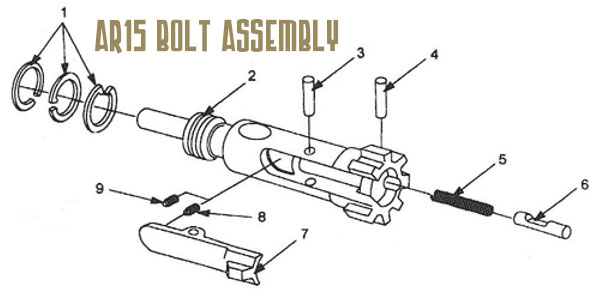
AR-platform rifles can be maintenance-intensive beasts. But some AR owners make the situation worse by not regularly cleaning important small parts, or by using too much oily/greasy lubricants in the wrong places. A properly maintained and lubricated AR15 can shoot hundreds of rounds (between cleanings) without a problem. If you learn where (and where not) to apply lubricant, you’ll find that your AR will run more reliably and the task of cleaning the bolt and bolt carrier will be less of a burden.
Here is a good video that explains AR-15 Cleaning and Maintenance. In this 30-minute NSSF video, Gunsite Academy instructor and gunsmith Cory Trapp discusses the proper way to clean and maintain the AR-15 carbine. Very knowledgeable, Trapp provides rock-solid advice for AR owners. Along with cleaning procedures, this video explains how to inspect key components and how to function-test your AR before each shooting session.
If you want to keep your black rifle running smoothly and reliably, you must clean it regularly and follow the correct maintenance procedures. Here’s another good video that explains how to properly disassemble and clean AR-platform rifles.
Take-Down and Full Cleaning of AR15 by Jerry Miculek
Here ace shooter Jerry Miculek takes down and cleans an AR-platform rifle belonging to his daughter Lena. This is a good video because Lena’s rifle was “run hard and packed up dirty” so you can see where carbon and grease build up. This 35-minute video is very thorough. Jerry is one of the nation’s top action carbine shooters, so listen carefully to his advice on cleaning and lubrication.
When shooting targets, the closer to the center the better the result. But this is not necessarily true when it comes to using jags and patches. There are some good reasons to try spiking your patches away from the center. This Creedmoor Sports Tech Tip explains why you may want to spike (puncture) your patch away from the center. CLICK HERE to order patches and Swab-Its cleaning bore tips from Creedmoor Sports.
You begin to push your first patch down the barrel and you notice it is extremely tight and then it jams! How can this be? A commonly overlooked solution to remedy the frustrating occurrences of overly tight or jammed patches is what we like to call “Side-Spiking”. Side-Spiking is super simple and works!
“Side-Spiking”, as the words suggest, refers to moving your patch spiking position from the center of the patch towards the corner of a square patch or the edge of a round patch.
Moving From Center-Spiking To Side-Spiking
The closer toward the edge of the patch you spike your jag, the looser the patch will be when pushed down the bore.
Important: Be careful to not go to the very edge of the patch. Leave enough patch material to fully cover the first set of rings on your jag as this insures your jag is properly centered in the bore and that no contact with the rifling will occur.
Proper Side-Spiking Location Creedmoor Sports recommends side spiking all wet patches. This allows for a looser patch in the bore which removes gross powder fouling and leaves more cleaning solution behind to start working on the remaining fouling.
When a tighter patch is needed, simply move your spike closer toward the center of the patch. The closer to the center of the patch you get, the tighter the patch will become in the bore. The objective is to have a snug-fitting patch that allows you to smoothly push your rod down the bore. Remember you do not need to end up in the center of the patch!
Bore-Tech Patch Size Selection Chart Recommends Patch Sizes by Caliber:
Whether you should from the bench, or from prone, it’s great to have your cartridges in a convenient, easy-to-reach position. This article explains how you can build your own height-adjustable ammo caddy for under ten bucks. Credit Martin Tardif for this great Do-It-Yourself (DIY) project. Martin’s flex-arm caddy design works great for F-Open competitors as well as anyone who shoots with a pedestal front rest, either on the ground or from a bench. The ammo caddy attaches, via a flexible arm, to your front rest. The flexy arm allows you to position your ammunition close to your rifle’s feeding port. That makes it easy to grab cartridges and load them into the chamber without shifting your shooting position.
Kudos to Martin Tardif for his clever use of inexpensive materials. The total cost of the whole project, according to Martin, was just $8.00! (With Bidenflation, materials could run a bit more these days, but the project would still be very inexpensive.)
Martin Explains How to Build the Ammo Caddy
Here are some pics of my DIY P.L.A.B. (Port Level Ammo Block). I cannibalized the goose neck from a Craftsman bendy-style utility light and bought a 3.5″x 1″ Acetal disk on eBay. I then drilled out the disk to accept twenty .284 Winchester rounds and screwed the disk to the bendy arm. The arm, by itself, wasn’t sturdy enough to support my fully loaded ammo block, so I inserted a 1/8″-diameter steel rod cut to length into the arm before I screwed it to the disk. On this Bald Eagle rest, I wasn’t using the windage adjustment cable. That allowed me to secure the bottom end of the arm to the unused 5/16″ x 18 bolt hole for the cable. [Editor’s Note: For other pedestal rest types/brands you may need to drill a hole for the base of the flexy arm.]
“Freedom is never more than one generation away from extinction. We didn’t pass it to our children in the bloodstream. It must be fought for, protected, and handed on for them to do the same, or one day we will spend our sunset years telling our children and our children’s children what it was once like in the United States where men were free.” — Ronald Reagan
Today marks the 23rd anniversary of a tragic day in American history. Much like December 7th, 9/11 remains a “date which will live in infamy”. On this 11th day of September 2024, we think it is good for Americans to honor the sacrifice of the first responders who went to the World Trade Center (WTC) and who lost their lives. And we must remember all those who died as the towers collapsed. It is also a good time to remember those key values for which this nation stands — freedom, liberty, and justice for all. In a modern world where media sources and politicians seek to divide Americans and create hostility, the shared memory of 9/11 can perhaps serve to unite us.
Forum member Charlie NC posted: “Everybody remembers where they were when the attacks happened, and the emotions they felt. God bless the victims who died that day, and those who followed in the pursuit of justice. But at a terrible time our country was more united than at any other point in my lifetime. Hopefully may we regain that harmony again under better circumstances.”
Remembrance from 23 Years Ago — Days Before the Attack
Forum member David Joe was in New York City in September 23 years ago. David had actually been in the World Trade Center with his family just a few days before the attack. Here is his perspective on how the tragedy of 9/11 has changed life in America…
23 Years Ago at the World Trade Center…
Twenty-three years and a week ago, my wife, son, and unborn daughter spent five hours at the World Trade Center. We ate, took pictures everywhere, watched the tilting platform movie, pressed souvenir pennies, went to the top, talked to the employees and watched birthday flowers being delivered up the escalator to one of them. And that’s what we first thought about on the morning of 9/11…
By the evening of 9/11, I knew the world was different, and always would be. In all the years that have gone by, families like mine eventually travelled again, grew up and recognized at least once a year, the magnitude of the events of that day. Some think about it all the time and became more vigilant, and that is certainly, I hope, good.
Other families were directly involved daily in preventing terrorism from coming home again. Thousands of families lost relatives that day, and many more in the years after.
Want to learn the basics of position shooting? Then you should check out an article by Gary Anderson, DCM Emeritus, in On the Mark digital magazine (Summer 2014, pp. 6-13). This article covers all the key elements: body position (prone, sitting, standing), sling use/adjustment, sight picture, aiming process, and trigger control. While this 8-page article was specifically written for Rimfire Sporter shooters, the techniques described by Anderson apply to all types of position shooting, whether you shoot air rifles, smallbore rifles, or centerfire rifles.
Here’s what Anderson says about aiming — how to keep your sights steady and get them centered on the middle of the target:
Trigger Contact and Center As soon as aiming at the target begins, the index finger must move from the trigger-guard to contact the trigger. It is important to get initial pressure on the trigger as soon as aiming begins. Then the shooter must focus on the sight picture and centering the sight picture movements over the aiming point. No one, not even champion shooters, can hold the aligned sights perfectly still. The sights are going to move a little bit or a lot, depending on the shooter’s skill level. The secret is to center those sight picture movements over the aiming point on the target (see trace illustration) before pulling the trigger.
When the sight picture movements on the target are centered, the last step in firing the shot is to add… smooth pressure on the trigger until the shot breaks.
Anderson also discusses the 5 Basics of Shot Technique:
Target Sports USA is running a major contest now through November 1, 2024. The Grand Prize is a 2024 Ford F-150 4×4 Crew Cab truck with custom wheels, truck cover, lift-kit and more. The truck is worth $50,174 and the truck accessories are worth $5,484. Along with that Grand Prize, there are three other major prizes plus travel benefits:
Second Prize: QuietKat eBike worth $4800 plus $470 worth of 9mm ammo.
Third Prize: Camp Chef WoodWind 36 Pellet Grill worth $1200 plus $470 worth of 9mm ammo.
Fourth Prize: Camp Chef Flat Top 900 Grill worth $900 plus $470 worth of 9mm ammo.
Bonus Benefits: AMMO+ Day event Travel and Accommodations Package
Prize Pool aggregate value for the Grand Prize to Fourth Prize levels is $63,967.94. Combined with the estimated $12,000 travel expenses (for winners), the Total Prize Pool is worth $75,967.94.
The winner will be announced on November 16, 2024. You have until November 1, 2024, to enter for the chance to win a prize. All Target Sports USA AMMO+ members are automatically entered to win. Ammo+ membership is NOT required to enter the contest. You can also enter by submitting a written entry card. NO Purchase or Paid Membership is required. CLICK HERE for Contest Entry Rules.
Details of Grand Prizes and Travel Packages
The four confirmed eligible winners will attend a special AMMO+ Day Event and participate in a random drawing where each winner is to win one of the following prizes:
• One Grand Prize Winner is to be awarded a 2024 FORD F-150, 4X4 Styleside Crew Cab, WIL2, White Color exterior black interior colored pickup truck that includes a V6 Ecoboost engine with custom 17-inch Silver Steel Wheels, Rims, Tinted Windows, Weather-Tech Mats, a RealTruck TruXedo Sentry CT Tonneau Truck Cover and a Lift-Kit. Approximate KBB vehicle value is $50,173.94 with accessories valued at $5,484.00. Total Grand Prize Pool ARV is $55,657.94.
• One Second Prize Winner is to be awarded a QuietKat Apex Pro eBike MSRP $4,800.00 plus two cases of 9mm New Republic ammo valued at $470.00. Total Second Prize Pool ARV is $5,270.00.
• One Third Prize Winner is to be awarded a Camp Chef WoodWind 36 Pellet Grill MSRP $1,200.00 plus two cases of 9mm New Republic ammo valued at $470.00. Total Third Prize Pool ARV is $1,670.00.
• One Fourth Prize Winner is to be awarded a Camp Chef Flat Top 900 Grill MSRP $900.00 plus, two cases of 9mm New Republic ammo valued at $470.00. Total Fourth Prize Pool ARV is $1,370.00 (USD).
• The AMMO+ Day Event Travel and Accommodations Package:
In addition to the above Prizes, four AMMO+ Day Event Travel/Accommodations Packages are awarded with estimated value of $3,000 per winner (may vary based on winner locations).
Total Prize Pool for the Grand Prize to Fourth Prize levels is $63,967.94, plus estimated travel expenses at $12,000.00 makes the Total Prize Pool value $75,967.94.
Non-Member Mail-in Method of Entry (AMOE)
Enter by legibly hand printing on a 3”x 5” or 4″ x 6″ postcard or paper, in black or blue ink, your first name, last name, mailing address, city, state, zip, day and evening phone numbers with area code (to be used for winner notification), e-mail address (if available) and date of birth. Mail each postcard separately in a hand-printed first class stamped #10 business size envelope to: Compliance / Target Sports AMMO+ Day Truck Giveaway IV, P.O. Box 468, Stonington, CT 06378. NOTE: The return address on the envelope must also be hand-printed with the sender’s full name and address.
You can spend thousands on a rifle, but that expensive hardware won’t perform at its best if you have poor trigger technique. One key element of precision shooting is trigger control. Our friend Kirsten Joy Weiss has produced a good video that shows how to refine your trigger technique for better accuracy. In this video, Kirsten talks about the actual placement of a shooter’s index finger on the trigger. It is important to have the finger positioned optimally. Otherwise you can pull the shot slightly left or slightly right.
Kirsten tells us: “Finger placement on the trigger might not seem like a big deal, but it actually is. The reason for this is because, depending on where your index finger is placed on the trigger, [this] translates to different muscle interactions with the gun.” Watch this video to see Kirsten demonstrate proper finger placement (and explain problems caused by improper finger positioning).
When you pull the trigger, you only want to engage the last section of your finger, in order to avoid unwanted muscle engagement and to achieve a smooth shot. Remember there is a “sweet spot” between the crease (first joint) and the tip of the finger. If you position the trigger in that “sweet spot”, you should see an increase in your accuracy. Don’t make the mistake of putting the trigger in the crease of your finger, as shown below.
Effects of Incorrect Finger Placements
You want to place the trigger shoe between the end of your finger and the first joint. If you place the trigger on the very tip of you finger you’ll tend to push the rear of the rifle to the left when engaging the trigger, causing shots to go right (for a right-handed shooter). On the other hand, if you put the trigger in the crease (first joint), you’ll tend to bring the rear of the rifle to the right, causing shots to fall left. This is illustrated below for a right-handed shooter.
Here’s a cool product that makes it easier to stow and/or transport your precious cleaning rods. Sure you can tuck a single rod in a gun case, but what if you want to carry a variety of rods to the range? This affordable MTM Gun Cleaning Rod Case (CRC) holds up to four (4) rods securely, and keeps solvent residues off your fine firearms. Click Here for Product Specs from MTM Case-Gard website.
MTM’s bright red Cleaning Rod Case (CRC) will hold four rifle or shotgun cleaning rods up to 47″ long. Each rod is held in an individual slot and there are foam inserts on either end, making transportation secure and rattle-free. You don’t have to worry about the rods banging into each other. We like the fact that MTM has cleverly included multi-sized “corrals” to hold patches from large to small. Plus there is plenty of room to hold jags and brushes.
We’ve used this cleaning rod case, now just $21.99 at Midsouth, and can recommend it. Forum member TIMO agrees: “Just received one, 100% worth the investment. Got it from Midsouth Shooters Supply.”
MTM explains the benefits: “Long gun enthusiasts no longer have to fumble and search for miscellaneous cleaning equipment since it will all be in an easy to access container.”
MTM V.P. explains Gun Cleaning Rod Case Features:
MTM Cleaning Rod Case Features:
— Holds four rifle or shotgun cleaning rods up to 47.5″ long
— Padding holds rods in their own individual slots (Max handle diam. 1.4″)
— Compartments for storing patches, jags, and brushes
— Made of rugged polypropylene plastic
— Has hanging hole for wall storage
— Room for bore guides





 “Side-Spiking”, as the words suggest, refers to moving your patch spiking position from the center of the patch towards the corner of a square patch or the edge of a round patch.


 As soon as aiming at the target begins, the index finger must move from the trigger-guard to contact the trigger. It is important to get initial pressure on the trigger as soon as aiming begins. Then the shooter must focus on the sight picture and centering the sight picture movements over the aiming point. No one, not even champion shooters, can hold the aligned sights perfectly still. The sights are going to move a little bit or a lot, depending on the shooter’s skill level. The secret is to center those sight picture movements over the aiming point on the target (see trace illustration) before pulling the trigger.


