Looking for a superb illustrated coffee table book about guns? Yes there is such a thing, a great book we highly recommend — The Illustrated History of Fireams (2nd Edition). This full-color 320-page hardcover book features more than 1,700 photos compiled by NRA Museums curators Jim Supica, Doug Wicklund, and Philip Schreier. This Second Edition includes 300 photos more than the original, plus dozens of new profiles of important persons who influenced firearms development.
This follow-up to the best-selling original NRA Museums book is loaded with great images, historical profiles, and technical data on old, new, and currently-manufactured firearms that have changed history. Covering the earliest matchlocks to modern match-grade superguns and everything in between, The Illustrated History of Firearms provides a fascinating education on how guns evolved, where they originated and how they worked.
The Illustrated History of Firearms, 2nd Edition
– Authored by the experts at the NRA Firearms Museums
– Published by Gun Digest Books
– 9 ½ x 11 1/2 inches, hardcover with dust jacket
– 1,700 full-color photos
– 320 Pages
– Price: $49.99 (MSRP); $29.33 on Amazon
The Illustrated History of Firearms, 2nd Edition (hard-cover) is available from Amazon direct for $29.33. Amazon also lists lightly used versions of the book starting at $9.71 (plus $3.99 shipping) from a variety of other book vendors. You’ll also find the book at major bookstores such as Barnes & Noble, but it’s probably easier to purchase online.
This hefty 516-page book covers “Pistols, Rifles, Revolvers, Machine And Submachine Guns Through History”. This major resource is illustrated with 1100 photographs, and covers the whole spectrum of guns.
Priced at $31.36 on Amazon, this book would make a great gift for a gun collector, and could be a nice addition to a local gun club library. The Illustrated World Encyclopedia of Guns has proven very popular with buyers, earning 83% five-star ratings on Amazon among verified purchasers.
Historic American Arms — Teddy Roosevelt’s Lever Guns
These two lever action rifles, owned by President Theodore Roosevelt, are part of the NRA Museum collection. First is a Winchester 1886 rifle known as the tennis match gun because Roosevelt used winnings from a tennis match to buy it. Below that is a suppressed Winchester model 1894 rifle. Roosevelt liked to shoot varmints around Oyster Bay (Long Island, NY) with this gun so he wouldn’t disturb his neighbors — the Tiffany and Du Pont families.
About the NRA Museums
The NRA opened the original National Firearms Museum at its Washington DC Headquarters in 1935. In 2008 the Francis Brownell Museum of the South West opened at the NRA’s Whittington Center in Raton, NM. Then, in 2013, the National Sporting Arms Museum opened at the Bass Pro Shops store in Springfield, MO. Every year, at these three museum facilities, over 350,000 persons visit to see the impressive exhibits and many of America’s most famous firearms. For more information, visit www.NRAMuseum.org.
It’s easy to lust for those rare showpiece rifles at high-end auctions, but the author cautions readers to target the best deals, stick to your plan, and honor your monetary limits.
Buying at Gun Auctions — Be Crazy, Crazy Good
By Dave Buffington
“They’re crazy!” — You hear that all the time about live gun auctions. People love to rant about how people pay too much money for too many guns at too many auctions. It’s natural. And wrong.
I’ve been attending live gun auctions regularly for more than a decade — as many as 40 a year. I’ve learned that for every item that sells for a silly price, several sell for fair money and some — more than a few — have turned out to be great buys.
Two years ago, I bought a competition-grade STI 1911 in excellent condition for $670 at a live auction. And at the height of the gun-buying frenzy a while back, I scored a highly desirable, rarely-found Anschütz 54.18 MSR in new-in-box condition for just $1,800. I then flipped that Anschütz for $3,000 just two weeks later. That $1200 gain represents a 66% profit — not bad for a little savvy shopping at an auction.
This beautiful SAKO L461 Vixen was a great auction buy … and it is half-MOA accurate as well.
Sweet SAKO L461 Score at Auction
Can you score an awesome deal at a live auction? Absolutely. Above is a .222 Rem SAKO L461 Vixen I got at auction for $1500.00 including Leupold Vari-X II 3-9x40mm scope. Note the highly-figured stock. My SAKO L461 is the “deluxe” model with rosewood forearm tip and grip cap. A similar .222 Rem SAKO L46 (below) with fairly plain wood (and no scope) is selling for $3995.95 at the Custom Shop, a Montana purveyor of fine firearms. I got my SAKO for 38% of the Custom Shop price! SAKO fans will note that the L461 has an internal top-loading 5-shot magazine while the older L46 has a 3-round removable clip. And most folks believe that the newer L461 model (like mine) has a better trigger.
Compare the author’s $1500 Auction-purchased SAKO L461 (above) with this $3995.00 Custom Shop Inc. SAKO L46. This is proof that live auctions can deliver some impressive bargains:
Can you make a mistake? Yes, I’ve bought junk and paid too much for it. But I’ve learned that knowledge is the best vaccine against gun buying mistakes. That’s our next topic.
Know The Auctions
Finding live auctions takes a bit of research, especially during the pandemic. But estates still need to be settled, collections still need to be shrunk and so, guns still need to be sold. Read your local newspaper and shoppers guides. Use online auction search services like AuctionZip.com.
And once you’ve found an auction, know the auctioneer’s rules. Some do background checks. Some don’t. Some charge sales tax. Some don’t. Some charge a “buyer’s premium”. Some don’t. If you’re not sure, ask.
Know Your Targets — Stick to Your List and Avoid Impulse Buys
Especially at the all-gun auctions, it’s easy to be entranced by all the handsome-looking hardware, but some of my worst gun buys have been the impulse buys made at auctions.
So start with a list of guns you want — for target shooting, collecting, whatever — and stick to it. Get to know those guns, research them and for goodness sake, know the potential pitfalls. Some Winchester 52s are prone to the “crack of death”. Certain Brownings from the late 60s and early 70s are afflicted with “salt wood”. You need to know which ones.
Know The Bidding Process
Auction newbies tend to worry a lot about how to bid. I know I did. But don’t. Remember, it’s the job of the auctioneer to get your bid, and once a good auctioneer spots you as a bidder, believe me, he won’t lose you.
The key is to get spotted. So don’t be shy. The auctioneer will likely start the bidding at some reasonable number. As a matter of theater, he’ll then start going down until someone actually bids. Then he’ll start going up again. When you’re ready to jump in, raise your hand and make sure the auctioneer spots you. If you’re not sure, shout something. (“Here!” works fine.) After that, don’t fuss about technique. Just nod yes or no the next time the auctioneer looks at you. (Ziegler Auction photo by Nathan Merkel)
Do understand one small but important detail: The price the auctioneer calls is the price he is looking for, not the price he has. For example, if you’ve bid $250, you’ll then hear him calling for the next increment up — such as “$300, $300, do I hear $300?”.
Misunderstanding that process can lead you to bid against yourself. 99% of auctioneers won’t let it happen, but as I can attest, it’s still embarrassing.
Know Your Price Limits
Auction fever is much like buck fever. You’re struggling to be still while you’re heart is doing its best rendition of “Wipe Out”. So you must, absolutely must, agree with yourself on the maximum price you’ll bid for a gun before the bidding starts. And be sure that maximum price reflects the true purchase cost, including sales tax, background check fees, and the buyer’s premium, if any.
Sticking to that limit is critical. First, because you don’t want to end up spending the mortgage money, but also, because there’s always another opportunity around the corner.
For example, on a cold, damp day last fall, I went to a small outdoor auction in hopes of getting a good buy on a Mauser-made, numbers-matching K98k. Ha! Despite the fact there were fewer than 50 bidders braving the drizzle, the gun sold for a whopping $3,200. (I bailed at $1,500.)
Is this the K98k that sold for $1,200? Or $3,200? The Karabiner 98 kurz (German for “carbine 98 short”), often abbreviated Kar98k or K98k, is a bolt-action rifle chambered for the 7.92×57mm Mauser cartridge.
But just two weeks later, I went to a warm, dry indoor auction with more than 200 bidders in the building. Yet I still managed to get a Mauser-made, numbers-matching K98k for just $1,200, a difference of a whopping $2,000. Crazy? Yes… Crazy good.
Creedmoor Sports is a leading vendor of products for competitive shooters and serious hand-loaders. Along with great gear, Creedmoor Sports provides informative content for its customers. The Creedmoor InfoZone provides Reloading Tips, Gear Reviews, Shooting News, and basic gunsmithing information.
Bill Gravatt, President of Creedmoor Sports, is an expert on reloading processes and gear. He developed many of the popular tools marketed by Sinclair Int’l, and he brings that expertise to Creedmoor Sports. Bill hosts a series of “how-to” videos produced for the Creedmoor InfoZone.
In this video, Bill Gravatt demonstrates several methods to clean your cases. Bill tells us: “Powder residue should be removed before you insert your cases into your reloading dies. There are several ways to clean your cases. Many shooters use a combination of various methods…”
1. Manual Cleaning — You can use 0000 Steel wool for the outside of the case and a Case Neck brush for the inside. A paper towel can remove any remaining residue. This is a handy way to clean if you load at the range.
2. Vibratory Tumbling — This traditional method works well, particularly for pistol brass. Experiment with both Corn Cob and Walnut media. You can get a brighter shine by putting a small amount of liquid brass polish in the media.
3. Wet Tumbling with Stainless Media — This process can get your brass clean inside and out. Do check to ensure no pins are stuck in the flash-holes. Watch for peening of case mouths that can occur over time.
4. Ultrasonic Cleaning — Ultrasonic cleaning works great for small parts as well as brass. The ultrasonic process removes all carbon and traces of lube, which can leave the inside of case necks too dry. To smooth bullet seating, try putting a tablespoon of Ballistol in the cleaning solution.
Cleaning Reloading Dies
Cleaning your reloading dies is something that many hand-loaders neglect. In this 60-second Tech Tip, Bill Gravatt provides some smart advice on cleaning your dies. Bill notes: “After heavy use, case lube and carbon can build up in your reloading dies. It’s important to keep them clean. Also, with new dies, give them a good cleaning before first use, because they ship with a corrosion inhibitor.”
1. Step 1 — Prior to cleaning, disassemble the die and spray it with a good degreaser. Do this with brand new dies too.
2. Step 2 – Take a patch and run it in the die to remove old lube and gunk. Don’t forget the decapping assembly and other internal parts.
3. Step 3 — After cleaning the die, but before reassembly, spray the die with a good corrosion inhibitor, such as Corrosion-X or Starrett M1.
There’s a nice article in the Western Powders Blog that any varminter will enjoy. In this hare-raising tale, gunwriter Jim Waddell explains how he used a self-loading Savage A17 rifle to take care of a serious jack rabbit problem on a rancho in California. “[My friends] purchased a huge amount of acreage that had some existing alfalfa fields and [surrounding sagebrush]. Sagebrush is home to jack rabbits. Lots of jack rabbits. The previous owner of this property didn’t do any varmint or predator control[.] The ink wasn’t dry on the escrow papers before [my friends] started asking for help shooting rabbits. A problem in taking these critters is it has to be done at night when they come out to feed as they lay low in the bush during the daylight hours.”
Savage A17 Comes to the Rescue
Initially Waddell and some friends took on the jack rabbit hordes using Ruger 10/22s and a .44 Magnum Marlin lever gun. Neither option was ideal. The .44 Magnum just couldn’t keep up the desired shooting pace (it took too long to reload) ant the .22 LRs were too anemic. So Waddell decided to give the more potent 17 HMR a try. He acquired a Savage A17 and went back for a second bunny-busting session. He came away convinced that the 17 HMR cartridge in the semi-auto Savage works great for small varmint control.
NOTE: This is in an older internet archive so it may take a minute or so to load.
Waddell writes: “I wanted more than a .22 after seeing the problems my pals had with their [10/22] bullets not anchoring the rabbits. Armed with my new Savage A17 it was time to head back to the alfalfa fields. This time my hunting partner was Dan, my son-in-law from Seattle. We hunted for four nights. Each night was either raining, windy or both. My question about whether or not rabbits would be out in the weather was answered immediately. They were everywhere. As miserable as the weather was, we got all the shooting we wanted and that Savage rifle was up to the task. We got so many rabbits it was impossible to count.” CLICK HERE for the full account of Waddell’s jack rabbit adventures on the California rancho. It’s worth a read. Here is a sample:
Wabbits, Wabbits Everywhere — Even Running Right at You
I couldn’t believe my eyes when I saw a sea of rabbits as far as the lights would shine and when the light beams hit the bunnies, they became confused and as often as not, would run right at the lights so a good percentage of our shots were literally in spitting distance. It was also a new experience shooting at targets that are running TOWARD you. Most of us who’ve done much hunting for game or varmints have experienced moving targets but how many of those targets are coming at you?
Sources for Best Deals on 17 HMR Ammunition
With 17 HMR ammunition it definitely pays to shop around. This spring (March 2026) we’ve found a 50-count box of 17 HMR ammo as low as $10.10 and as high as $19.99. A typical price currently is about $13.99-$16.99, as you’ll see at Midsouth. You can check multiple vendors’ 17 HMR ammo prices at once on the AmmoSeek.com and BulkCheapAmmo.com websites. Here are some of the best deals we found on 3/10/2026 on BulkCheapammo.com starting at $10.10 per 50-rd box:
The Vernal Equinox (March 20, 2026) is the official start of Spring. With spring commencing in just 10 days, here’s your chance to prepare for some springtime fun shooting. Here are six “fun and games” targets that can provide some fun springtime shooting opportunities, both indoors and outdoors. While each requires good conventional marksmanship skills — hitting a small aiming point — there are other strategies involved, such as playing darts or hitting the right combination of poker cards. Most of us started shooting as kids, just plinking for fun. Here’s an opportunity to be like a kid again — to spend a day at the range just having fun with friends and family members.
Dartboard Target with Colored Rings
This printable Dartboard Shooting Target has the numbers inside the outer dartboard ring to allow a larger target. With this target you can shoot for the center bull, or actually play pub-style dart games, aiming for numbers and particular rings. If you don’t know how to play traditional dart games, visit NiceDarts.com for complete darts rules. One popular game is “Around The World”. The object is to hit the numbered zones, starting with number 1. Then you try for 2, 3, and so on. After hitting all the numbers 1 through 20, then hit the bullseye to win. CLICK HERE for Other Dart Board Color combinations.
Atomic Target — Aim for Protons, Neutrons, and Electrons
The Atomic Target was originally created as a contest for our readers. The design is by Michael Forester of Auckland, New Zealand. First aim for the bigger green and red neutrons and protons, then try your luck with the smaller, more challenging blue electrons. You can also use the four black and yellow Atomic warning symbols as bullseye targets.
Slot Machine Jackpot Target
Enjoy a little Las Vegas-style fun on your next trip to the range. This cool Slot Machine Target has four sets of slot machine patterns each with three rows of three symbols. Connect three in a row to win — and hit the Jackpot! This is one of many colorful, free targets available from Targetz.com.
Poker Target — Get the Best Hand
Poker players will enjoy this target. With this playing card-themed poker cards target, each shooter takes five shots and the one with the highest hand wins. You can also shoot for four-of-a-kind, against the clock, fastest four (without a mistake) wins.
Flies in Circles Target
Now you can boast to your buddies that you hit a fly on your target — 16 times. On this target, 16 flies with bright red eyes are arranged in a inside circles, 16 to a page. There are various ways to use the fly targets. Some shoot to hit the head only — so aim for those red eyes. There are 11 other variations of this Fly Target available on the Targets.WS website.
And here three FREE fun targets, courtesy the NRA Blog. Right-Click for printable PDFs.
At the request of our readers, we provide select “Deals of the Week”. Every Sunday afternoon or Monday morning we offer our Best Bargain selections. Here are some of the best deals on firearms, hardware, reloading components, optics, and shooting accessories. Be aware that sale prices are subject to change, and once clearance inventory is sold, it’s gone for good. You snooze you lose.
NOTE: All listed products are for sale to persons 18 years of age or older. No products are intended for use by minors.
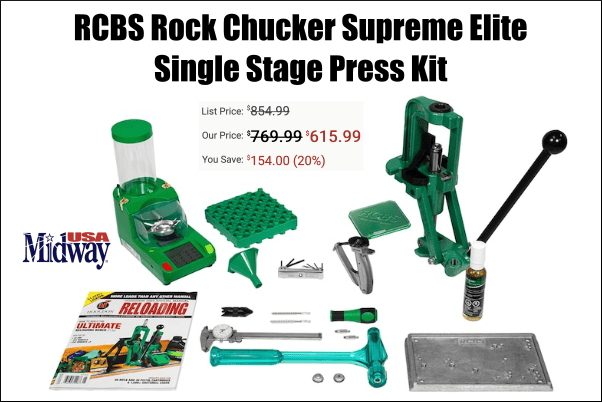
MidwayUSA — RCBS Rock Chucker Reloading Combo Kit, $615.99
⏺️ » Great RCBS Combo Set with electronic Powder Scale/Dispenser
The RCBS Rock Chucker Supreme Elite Press Kit features nearly everything you need to get started reloading. This kit includes the ChargeMaster Link Electronic Powder Scale/Dispenser plus the rugged Rock Chucker Supreme single-stage press. This kit also includes pretty much everything else you need (except dies): hand priming tool, powder funnel, inside/outside chamfer tool, dial caliper, loading block, case lube, base plate, bullet removal tool, primer pocket brushes, and load manual.
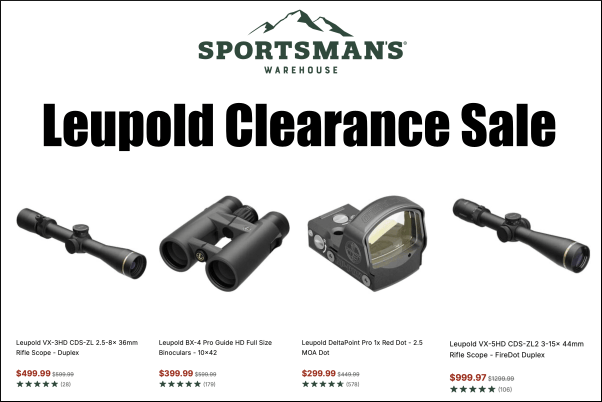
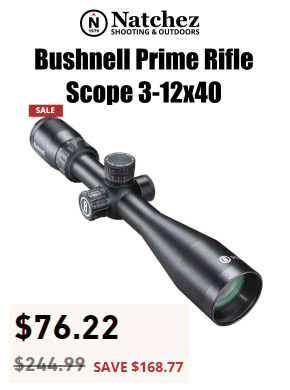
Sportsman’s Warehouse — Leupold Optics Sale
⏺️ » Save big bucks on Leupold scopes, binocs, LRFs, spotting scopes, red dots
Whether you’re looking for a rifle scope, spotting scope, binoculars, laser rangefinder, or red dot optic, you can find it now at at the Leupold Optics Sale over at Sportsman’s Warehouse. This is a great time to pick up quality optics for that next hunt or trip to the range all at prices up to 25% off.
As an Amazon affiliate, this site can earn revenues through sales commissions.
U.S. Senator Mike Lee (Utah) has introduced notable new legislation, the National Constitutional Carry Act. Senator Lee’s U.S. Senate Bill restores the right to carry firearms in ALL 50 states. This bill would ensure that law abiding American citizens are able to carry around the country without fear of antigun states arbitrarily restricting or criminalizing their chosen self-defense tool. Residents of antigun states would no longer have to endure second class Second Amendment treatment, whether through outright hardware bans or policies that indirectly discourage the exercise of Second Amendment rights.
The Gun Owners of America (GOA) endorses the National Constitutional Carry Act. Erich Pratt, GOA Senior Vice President, issued the following statement: “In a time of war, Americans cannot afford to have the right to bear arms delayed by arbitrary state permitting processes. Public safety is threatened not only by ordinary criminals, but also bad actors working for foreign adversaries, and Americans need to be armed for the security of our free state. That’s why Gun Owners of America is proud to endorse Senator Mike Lee’s National Constitutional Carry Act. Under this GOA-backed legislation, the right to carry a firearm without a government permission slip will be fully restored, and unconstitutional states regulations on firearms, ammunition, and magazine size will be preempted.”
Here is GOA’s Minuteman Moment video analysis of the proposed National Constitutional Carry Act:
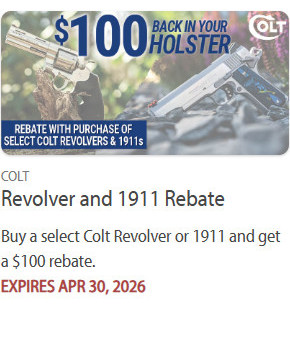
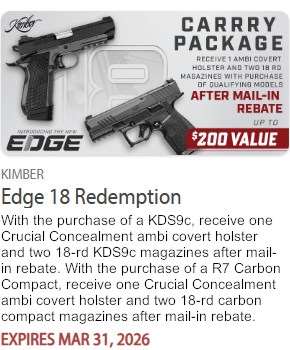
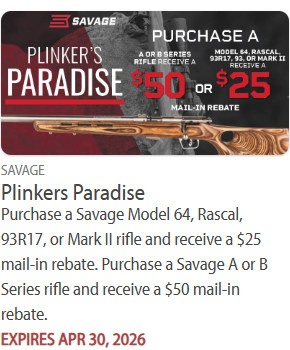
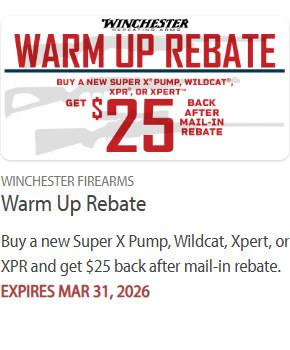
You can save big bucks on guns and gear with factory rebate programs. But with the end of 2025 fast approaching, many great shooting industry rebate programs are about to expire. Many major rebates on rifles, pistols, optics, and ammunition require purchases no later than December 31, 2025.
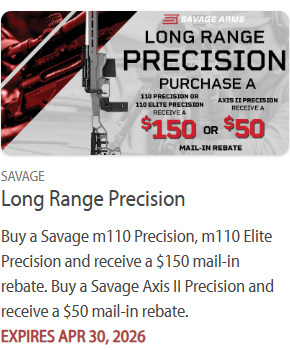
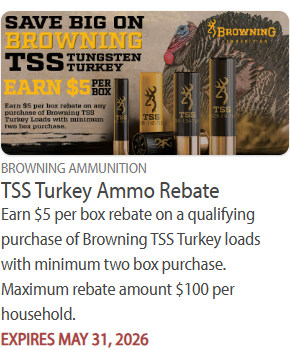
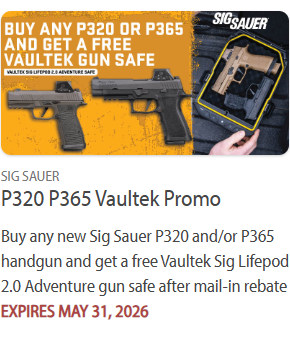
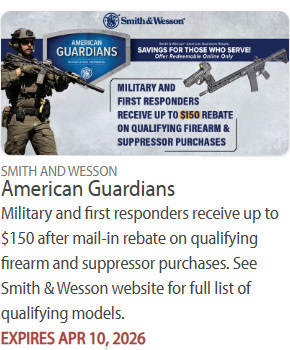
If you are in a buying mood (maybe to get a new gun as gift to yourself), check out these notable rebate offers. We showcase ten great discount/rebate programs. These rebates can save you big bucks — up to $200 — on rifles, pistols, shotguns, ammo, or gear. For example you can Save $200 on Beretta pistols, $150 on Savage rifles, and $150 on Kimber pistols. Note: Most of these promos are good through April 30 or later, but a few expire sooner.
REGISTER Now for CMP 2026 National Matches at Camp Perry
Registration for the Civilian Marksmanship Program’s 2026 National Trophy Pistol and Rifle Matches is now. This year’s National Matches will run from July 12 through August 9, 2026. Review the new 2026 National Matches schedule and other event info on the CMP website at TheCMP.org/cmp-national-matches.
The CMP National Matches, held at the Camp Perry National Guard Training Base since 1907, is conducted via a partnership between the CMP and the Ohio National Guard. The National Matches include multiple indoor and outdoor events, with spectators welcome to watch this noteworthy, century-old competition.
Along with several competitive opportunities for adults and juniors of all experience levels, the National Matches features a variety of educational clinics for marksmen and women as well as retail selections from some of today’s leading industry vendors. Whether participating for the first time, a seasoned competitor or simply observing, the National Matches has something for everyone. All events are open to the public, free for viewing. Spectators are welcome to observe firing on the Camp Perry ranges at any time, with ample parking on-site.
Highpower, Service Rifle, and Vintage Rifle
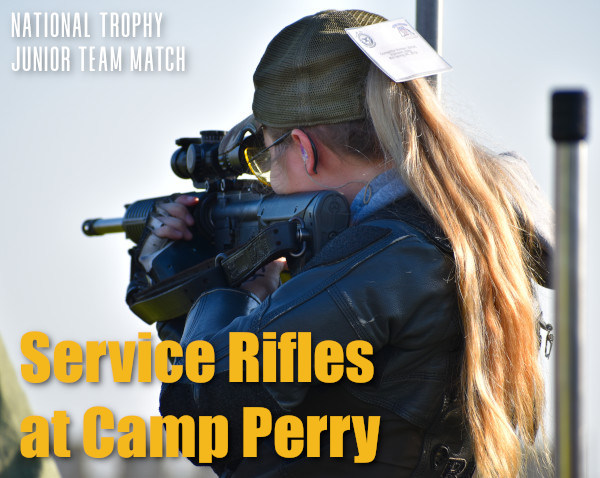
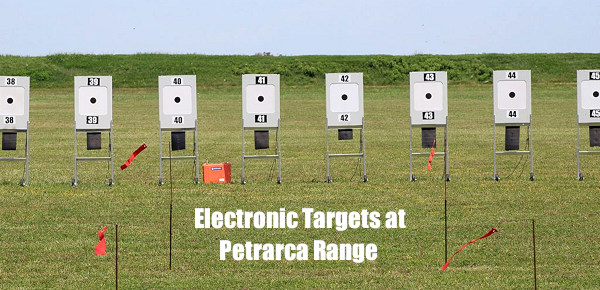
Introduced last year, the National Trophy Rifle series will again be held completely on electronic targets! The schedule of events includes prestigious matches like the President’s Rifle, Hearst Doubles, Rattle Battle, National Trophy Individual and National Trophy Team events. NOTE: The National Trophy Infantry Team Match will still be on paper targets.
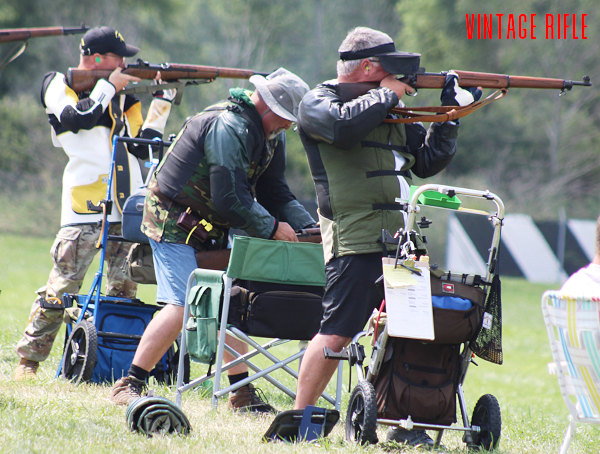
A paired Junior Team Match is also on the schedule for young competitors, along with an assortment of vintage and modern military rifle events like the John C. Garand, Springfield and Vintage Sniper matches for individuals at every stage of their marksmanship abilities. Additionally, the M14 Heritage Match is a major attraction.
CMP National Championship Rifle
The CMP National Championship series features three days of 800 Aggregate competitions and a 4-Person Team event. Awards are presented for the leading competitors of each day as well as for the culminating 2400 Aggregate (800×3).
Mid-Range and Long-Range Rifle
The CMP’s National Mid-Range and Long-Range series features both individual and team competitions, fired fully on CMP’s line of outdoor electronic targets. All Mid/Long-Range matches are open to Match Rifle, Service Rifle, Palma Rifle, F-Open, F-TR or AR Tactical categories fired from 600 yards (Mid-Range) and 1,000 yards (Long-Range).
New for 2026: The CMP has added a Mid/Long-Range category for this year: F-Class Practical. This “Practical” class is geared toward new competitors and has more affordable equipment standards. In addition, this summer an International 12-Person Team Match will be held, featuring teams from the United States, Great Britain and Canada. The event will feature a Palma course of fire: record shots at 800, 900 and 1,000 yards.
Rimfire Sporter Rifle
Highlighted as one of CMP’s most popular events, the Rimfire Sporter Rifle Match features .22 caliber competition in open sights (O-Class), telescopic (T-Class), tactical/unlimited (TU) and U.S. military rimfire training rifles (M-Class). The event is perfect for those just beginning in the sport or those looking for a unique challenge on the range.
Like last year, the event will be fired completely on electronic targets! Competitors will be able to enjoy close parking and the covered structure of Petrarca Range.
Smallbore Rifle
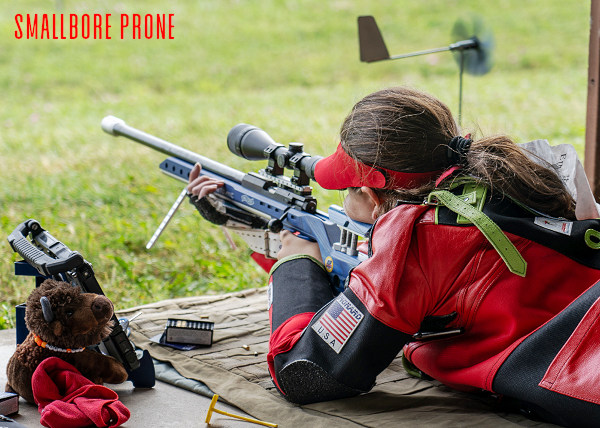
Likewise, the National Smallbore events will be fired on the same electronic targets as Rimfire Sporter — also setup on Camp Perry’s Petrarca Range. The schedule includes three-position and prone events, complete with an F-Class category for interested individuals.
National Air Rifle Championship
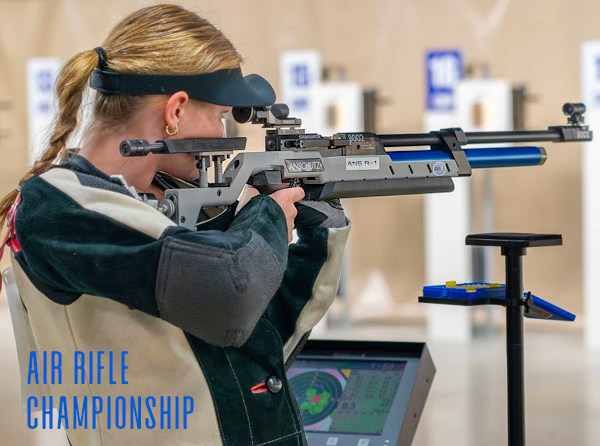
The National Air Rifle Championship (60 Shot and Team Match) for adults and juniors will be held at the same time as 3-position smallbore to accommodate those competitors wishing to fire in both events. These are sanctioned USA Shooting Designated Ranking Matches.
Pistol Events and Glock Challenge
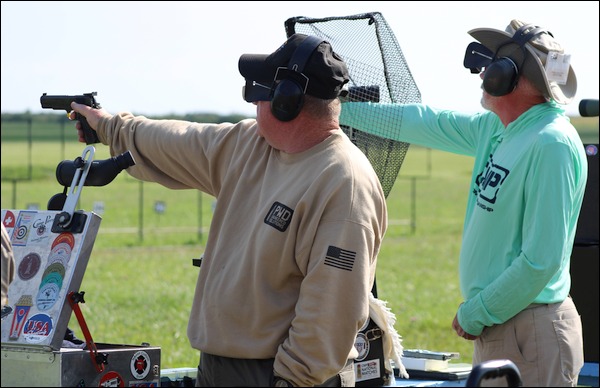
Fired this year on newly minted paper targets branded with CMP’s insignia, the National Pistol events include a mix of traditional matches like the President’s 100 Pistol, National Trophy Individual and National Trophy Team events, along with a series of 900 Aggregate matches for .22, Center Fire and .45 Pistol. The GSSF GLOCK National Challenge will be returning to the schedule in 2026 along with the Service Revolver EIC Match. The National Air Pistol Championship will be held in the evening to allow competitors to take part in the aggregate matches during the day.
National Matches Air Gun Events
For air rifle and air pistol competitors, the National Matches Air Gun events will be offered within the Gary Anderson CMP Competition Center’s 80-point indoor electronic target range – also located on Camp Perry. The air gun events are available through the entirety of the National Matches and appeal to those of any experience level, with supported bench options included.
Marksmanship Training Clinics and SAFS
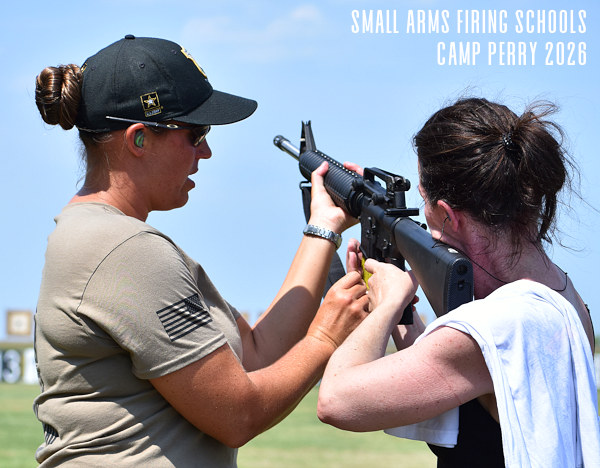
Image shows 2023 National High Power Rifle Champion Amanda Elsenboss (left) providing instruction. Amanda was, a former USAMU Team member, now serves in the National Guard.
Small Arms Firing Schools (SAFS) will be held for rifle, pistol and smallbore rifle. Participants in SAFS are trained by some of the top military instructors in the country on firearm safety and competition basics. All firearms and ammo are provided for the live-fire portion of the clinic. Other clinics during the National Matches include a Rimfire Sporter Rifle Clinic, the CMP Junior Rifle Clinic and the CMP Advanced Highpower Clinic, for more experienced competitors. Most clinics include both classroom and live-fire training on the range.
Sales at CMP Store
Behind the range, Commercial Row offers a variety of items for spectators and competitors – with an array of manufacturers selling used firearms, ammunition, competition gear, accessories, apparel and much more. The CMP North Store, located on the grounds of Camp Perry, allows even more buying opportunities at the Matches with a lineup of military surplus rifles, memorabilia and equipment needs.
Housing at Camp Perry
Housing for the National Matches is currently available on the grounds of Camp Perry. Accommodations include four-person huts, cottages, barracks, RV spaces and camp sites. Camp Perry housing info posted on the Camp Perry Lodging Center site. Also, if Camp Perry base housing is full, numerous hotels are available in the surrounding Port Clinton, Fremont, and Sandusky Ohio areas.
Todd Jarrett is one of the world’s best handgun shooters. A multi-time World Champion, Todd knows a thing or two about semi-auto pistols, particularly 1911s and 1911-based raceguns. Jarrett has been IPSC Open Division World Champion, has won the Steel Challenge World title four times (Limited Division), and has won than 100 Area championships, as well as many other action shooting events. Jarrett is the only USPSA Triple Crown Winner and he holds four USPSA National titles: Open, Limited, Production, and Limited-10. Jarrett revealed in an interview that between 1988 and 2001 he shot about 1.7 million rounds during practice: “I had a gun in my hand for two hours every day for 10 years to develop my skill level”.
In the video below, Todd explains how to get the proper grip on your handgun, and how to employ a proper stance. We’ve watched many videos on pistol shooting. This is one of the best handgun instructional videos we’ve seen. Todd explains, in easy-to-understand terms, the key elements of grip and stance. One very important point he demonstrates is how to align the grip in your hand so that the gun points naturally — something very important when rapid aiming is required. If you watch this video, you’ll learn valuable lessons — whether you shoot competitively or just want to have better control and accuracy when using your handgun defensively.
Recommended Thumbs-Forward Shooting Grip for 1911s
“Shooting semiautomatic pistols using the thumbs-forward method really becomes useful … where speed and accuracy are both needed. By positioning the thumbs-forward along the slide (or slightly off of the slide) you are in essence creating a second sighting device: wherever your shooting thumb is pointing is where the pistol is pointing. This makes it incredibly fast to draw the pistol, get your proper grip, and press forward to the target without needing to hunt around for the front sight.” — Cheaper Than Dirt Blog.





 Know The Bidding Process
 Know Your Price Limits