The online video format is a superior method of presenting information on reloading techniques, rifle maintenance, marksmanship skills, scope operation and much more. But with millions of videos on YouTube, it can be hard to cherry-pick the best videos for serious shooters and competitors. That’s why we offer this Saturday at the Movies Series. Each week we will select a variety of very informative videos by knowledgeable shooters and handloaders. Here are our first five Saturday Select videos for 2022.
Reading the Wind — How to Determine Wind Speed
Keith Glasscock is a top-tier F-Class shooter who has finished second at the F-Class Nationals multiple times. Keith is also a highly-respected wind coach with a background in commercial aviation — so he really understands wind and weather. In this video Keith explains the best techniques for reading the speed of the wind. He notes that you can’t simply rely on the Kestrel in your hand because the wind speed can vary significantly between the firing line and the targets. Keith shows how to look at multiple signs (including flags, grass movement, and mirage) to better understand wind velocity. See more of Keith’s videos on his Winning in the Wind YouTube channel.
Rodzilla T-Rex Front Rest Review — State-of-the-Art Beast
In this video our friend F-Class John reviews the impressive T-Rex front rest from Rodzilla.This recently-introduced joystick front rest from Rodzilla really represents significant innovation. The new T-Rex offers impressive capabilities based on the innovative design by creator Rod Brackage (the “Rod” in Rodzilla”> that can truly take your shooting experience to the next level. F-Class John used this rest in F-Open competition and really likes it. CLICK HERE for John’s full review with three videos and many more photos.
How BAT Actions Are Made and BAT Factory Tour
Note: This has loud music as the start — lower volume if at work.
Ultimate Reloader’s Gavin Gear is a skilled and respected video producer. This Ultimate Reloader video shows how top-end BAT rifle actions are crafted with modern CNC machinery. This is one of Gavin’s most popular videos, with 763,000+ views. If you are interested in accurate rifles for benchrest, F-Class, Long Range, or PRS/NRL you should definitely watch this video. Visit Gavin’s YouTube Channel to see dozens of other informative, well-made videos.
Protect Your Dog’s Hearing with Mutt Muffs
Do you take your dog(s) hunting, or to the shooting range? Well dogs need hearing protection too! Loud gunshots from pistols, rifles, or shotguns can cause permanent hearing damage to your canine. Prevent canine hearing loss with Mutt Muffs — protective earmuffs designed especially for dogs. In the Precision Riflecraft video, the host shows how to fit Mutt Muffs to your dogs and help your canines tolerate the muffs in place. Available in five sizes (XS, S, M, L, XL), these cost under $60 on Amazon.
How to Use Ballistics Solvers — Bryan Litz Lesson
A past national F-TR champion, Bryan Litz is a brilliant engineer and trained rocket scientist. He is also the founder of Applied Ballistics LLC (AB), the world’s leading source of ballistics software. AB software now comes integrated into some Kestrel handheld wind-reading units, with accompanying Applied Ballistics Apps that run on your mobile devices. In this short video Bryan explains how to use ballistics solvers to determine your bullet’s drop and drift at long range. If you don’t have the AB App on your smartphone you can also use the excellent JBM Ballistics Solver, available FREE on the internet.
If the battery on your safe’s electronic lock is more than a year old, or if it is not giving you the right voltage, replace it today!
Well it’s a New Year folks — 2022 is here, so change those Gun Safe Keypad Batteries!
By this time, many of our readers have stashed their guns away in the safe for the remainder of the winter. It’s easy to just tuck the guns away and forget about them. But there’s something you should do before you shut the safe door. If you have a safe with an electronic keypad, you should replace the battery every year as a precautionary measure. Trust us, you don’t want to come back in a few months and find that the keypad memory is kaput, and you’re locked out. That can lead to frustration and an expensive locksmith visit.
Here’s a true story. I have one safe with a Sargent & Greenleaf (S&G) keypad. A couple years back, in early December, I went to get into the safe. I punched in the correct combination, but all I got was a rapid “beep, beep, beep, beep” after I finished the last combination entry. I tried again to ensure I entered the combination correctly (I did). But again, the locking system responded with multiple rapid beeps indicating something was wrong. And the safe would not open. Now I was worried….
I popped out the battery holder (which slides in from the bottom of the keypad housing on the door). I removed the battery and tested it with a volt-meter. The 12-month-old Duracell 9-volt battery only registered 6.1 volts.
Low voltage was the problem. I went down to the store and got a couple new 9V batteries. I tested the new batteries and both measured 9.4 volts output. I slipped one of the new 9V batteries into the keypad housing, punched in the combination and everything worked OK again. Eureka.
Most electronic locks for safes WILL “remember” the combination for a period of time even when the battery is low (and the keypad’s “brain” should retain the combination when you remove the battery for replacement). However, a dead battery, or extended periods of low voltage can give you problems. Don’t rely on wishful thinking…
A while back, our friend Vince Bottomley in the UK wrote an excellent article for Target Shooter Magazine. Vince offers “solid-gold” advice for new F-TR and F-Open shooters. Vince reviews the cartridge options, and offers suggestions for a shooter’s first (and hopefully affordable) F-Class rifle. Vince also reviews various bipod choices for F-TR and discusses optics options (from $300 to $3000).
Getting Started in F-Class by Vince Bottomley
As membership secretary of a large club, one of the questions I’m frequently asked – “What’s the best way to get started in F-Class?” My club has an F-Class shoot every couple of weeks at ranges from 300 to 1000 yards and, not surprisingly, it’s very popular.
F-TR or Open Class?
From a shaky start way back in 2004, the F-TR Class is now proving as popular as Open Class and, at GBFCA League shoots and club shoots, many shooters choose to start with a 308, shooting off a bi-pod – in other words F-TR. In Open Class, the 7mm WSM soon established itself as the “must have” cartridge – if you wanted to win but, the WSM’s appetite for barrels eventually brought another 7mm cartridge into play – the 284 Winchester. This 50-year-old stalwart was revived a decade or so ago as the 6.5-284 and indeed this cartridge found some favor with F-Class pioneers – before the potency of the WSM was discovered. If you don’t mind shelling out for a couple of barrels per year (barrel life is about 750 rounds with the WSM) go for the 7mm WSM but, if you require a decent round-count, then opt for the .284 Win and learn to read the wind a bit better!
F-TR Rifle at the Ben Avery Shooting Facility in Phoenix, Arizona.
Scopes for F-Class
If you will be shooting 1000 yards then I would recommend at least 32 power and preferably a variable – like the 8-32. The cheapest “usable” scope in this range is the Sightron 8-32x56mm SIII. It’s a great scope for the money and at under $1000 (in the USA) it’s half the price of some of its competitors. It’s also light – at 1.5 lbs – and there are some great reticles for the F-Class shooter – like the LRMOA.
Springfield Armory’s new 9mm SA-35 pistol has been chosen as the NRA’s American Rifleman Handgun of the Year, and 2022 Golden Bullseye Winner. The NRA Publications Golden Bullseye Awards acknowledge important new products. The winners are selected by a committee of NRA Publications staff, representing more than a century of collective experience in the shooting and hunting industry.
Compared to the classic Browning Hi-Power pistol on which it is based, the new SA-35 offers enhanced controls, modern sights, improved feed ramp design, beveled mag-well, and increased 15-round capacity. Additionally, the SA-35 dispenses with the magazine disconnect as found in the original design. This provides the ability for magazines to drop freely. The new SA-35 also features forged steel parts for strength and durability.
“We are incredibly proud that the SA-35 has been given this prestigious award,” said Dennis Reese, CEO of Springfield Armory. “With this pistol, we have taken a revered design and updated it for today’s shooters.”
Springfield Armory’s new SA-35 semi-auto pistol takes advantage of modern materials and manufacturing techniques, while retaining the appeal of the J.M. Browning’s original P-35 design. The 9mm features a forged carbon steel frame and slide and a cold hammer-forged barrel.
Enhancements include subtle but significant changes to barrel feed ramp and extractor geometry to ensure the SA-35 will work with today’s defensive rounds. A factory-tuned trigger, 15-round flush-fit magazine, beveled magazine well, re-contoured “no-bite” hammer design, modern Tactical Rack sights, extended thumb safety and more round out the package. The SA-35 is compatible with the original pistol’s design, ensuring access to the broad selection of aftermarket parts and accessories available.
Guns America has done a thorough Review of the new Springfield Armory SA-35.
The modern SA-35 is based on the original Browning Hi-Power, aka the P-35. The Browning Hi-Power military pistol, considered the best 9mm handgun of all time by some collectors, is one of the most widely-used handguns in history, and is found in over fifty countries.
The initial Browning Hi-Power design came from John Moses Browning, but was then finalized by Dieudonné Saive at Fabrique Nationale (FN) in Belgium. Browning died in 1926, several years before the design was finalized. There have been many variants based on the Browning Hi-Power and many clones as well. See: Top Ten 9mm Handguns of All Time.
The Civilian Marksmanship Program (CMP), starting this month, have authorized CMP League Matches at CMP-affiliated clubs throughout the USA. This will give shooters the ability to enjoy CMP-type competitions at their local ranges. The new CMP League Match Program will be open to any CMP-Affiliated Clubs. Participants’ average scores will be computed by CMP’s Competition Tracker, with awards distributed to the top competitors from around the country.
Beginning January 2022, the CMP will sanction a series of simulated head-to-head rifle, pistol, and CMP Games events for competitors to participate in from their home ranges. A CMP sanctioned match is an event hosted or sponsored by a CMP affiliated organization, where match sponsors agree to use CMP Competition Rules in conducting CMP Highpower Rifle, CMP Pistol and CMP Games competitions. Types of League Matches and available timeframes will include:
Rifle: March 15 – June 15 and/or August 15 – November 15
50 shot National Match Course (Non-EIC) (Full or Reduced)
4X20 (80 shots, Individual) (Full or Reduced)
Pistol: Outdoor Pistol League May 1 – October 31; Indoor Pistol League November 1 – April 30
30 Shot National Match Pistol Course (full or reduced)
900 Pistol Aggregate (.22 Rimfire, Centerfire, .45 Caliber or Service Pistol)
CMP Games Type Match: March 15-June 15 and/or August 15 – November 15
30 Shot As-Issued Military Rifle Course | Carbine | Rimfire Sporter
How to Get Your Local Club Involved
Interested clubs will need to fill out an application and also submit a match program. Once approved, the match director will be sent a spreadsheet to record official scores that will be compared among other participating clubs. Fees for these events include $10 per league to sanction, plus $2 per competitor.
CMP League INFO, including applications and match instructions, can be found on the CMP website at CMP.org/competitions/cmp-league-matches. Or call CMP Competition Support at 419-635-2141, ext. 714.
The Great American Outdoor Show returns to Pennsylvania in February 2022. The big event, the world’s biggest consumer outdoor activity show, takes place February 5-13, 2022 at the Pennsylvania Farm Show Complex in Harrisburg, Pennsylvania. The Great American Outdoor Show will feature nearly 1,100 exhibitors in nine halls covering 650,000 square feet. In the booths will be shooting sports manufacturers, boat and RV dealers, hunting and fishing retailers, and more than 400 outfitters and boat captains.
“After a brief hiatus due to pandemic restrictions, we are thrilled to once again gather in Dauphin County for the world’s largest outdoor show. Next month, the nation’s best outfitters, outdoor experts, and retailers will gather in Harrisburg for a show you will not want to miss!” said Joe DeBergalis, NRA Executive Director of General Operations.
Many Hands-On Activities at the Show, Plus Nearly 200 Seminars
Visitors can expect to enjoy a wide variety of outdoor gear and family activities, including testing their archery skills for prizes in the 3D Bowhunter Challenge, experiencing world-class fishing lessons from pro anglers at the 5,000-gallon Hawg Tank, participating in almost 200 hunting and fishing seminars, and meeting their favorite celebrities and outdoor personalities. To learn more about the 2022 Great American Outdoor Show (GAOS), including guest appearances, special events, and ticket sales, visit Greatamericanoutdoorshow.org or visit the GAOS Facebook Page.
Field Test and Hunt Review by Colton Reid
Dawn breaks. It’s a brisk 28 degrees. I sit concealed amongst a grove of fallen trees near the edge of a steep decline where I can see the canyon below and opposing hillsides. Snow blankets the mountainous slopes with patches of fir and naked aspen woven into the landscape. The soft glow of sunrise brightens southeastern slopes and illuminates a solitary statue of orange and green on an adjacent ridge. His presence alerts an already wary elk of the danger that moved in the night before.
It is second rifle season in Colorado and I have a cow elk tag in hand. I would love to say this is not my first rodeo, but in many ways it is. I’m on my first hunt in pursuit of an elk and my first hunt in Colorado. It is, however, the second test of my newest piece of hunting equipment — Leica’s latest, state-of-the-art Geovid 3200.COM 10×42 rangefinding binoculars.
Early morning light in Colorado, on a hunt for elk…
These laser rangefinder binoculars I purchased for myself from the good people at EuroOptic.com. I should note that I am not sponsored by EuroOptic or Leica. I happen to know a few people at EuroOptic and they are a knowledgeable friendly group who use the gear they sell.
When I evaluate optics I have a clear priority in how I rank them. At the top of the list is optical quality. That is, how clear is the optical image? How crisp are the edges? Can I resolve and distinguish similar small items? Anyone who has been hunting in the great American West knows that most of your time is spent behind optics of some sort, so it is best to buy optics that make it easier to spot your target and are easy on your eyes.
Second on the list is a combination of weight and durability. I tend to hunt rugged backcountry terrain, so weight is a big consideration for my trips. But if something is feather light but breaks when you sneeze? That isn’t good either. So a combination of a robust rubberized body with modest additional weight is desired. And since the Geovid 3200.COM is a combination optic, i.e. it includes a laser rangefinder, then that helps with weight since I don’t need a separate LRF.
Third on this list is the rangefinder’s performance. By performance I mean mostly accuracy and precision of the measurement. I can live with a max of 500 yards, as long as the measurement is correct and repeatable to within a handful of yards. If, however, the measurement is off by 10% (50 yards in the case of a 500-yard reading) or measurement to measurement varies by say 20 yards, then that will dramatically affect my ability to make an ethical shot.
The Geovid’s laser ranging beam showed excellent precision. Here it picks up a single male pronghorn (not broadside) at nearly 400 yards. The return was immediate.
Other considerations such as ergonomics or comfort are less important to me because they start to move away from “functional” requirements. That is, they don’t make a big difference when it comes to spotting and harvesting an animal. So while I do think about “nice to have” features when selecting equipment, they are of lower consideration than the functional requirements.
With my framework for evaluation laid out then, here is my assessment. The Leica Geovid 3200.COM 10x42s are high-quality rangefinding binoculars — well made, with good materials, and a thoughtful design. They weigh a mere 34.6 ounces (about 2 lbs.) and are built to withstand more than a few falls. They also come with both objective and ocular lens caps. Even though they are built tough, I would not take these into the field without some sort of binocular case. I personally use a Badlands Bino case (see top and bottom photos) but there are plenty of other good options.
This 6-minute Leica factory video shows the technical features and operations of the Geovid 3200.COM series of rangefinding binoculars. Worth watching:
The glass is amazing — remarkably good (and I have high standards). The image is extremely crisp, noticeably better than my tried and true pair of Swarovski Habicht 10×40 Porro prism binoculars. This matters because the exaggerated hand motion observed in higher power optics, aka “shake”, initially made me dizzy. Leica does offer a lower power unit, the Geovid 3200.com 8×42, for those who prefer less magnification. One could argue that the optics being too sharp means they aren’t a good fit, however, my philosophy is to get the best gear possible and figure out how to use it to the max potential. My solution here was an ultralight tripod to stabilize the image when glassing or if weight is a factor I place my arms on my knees while leaning against a tree or rock. Scouting with these binoculars over long periods on a stable platform is a pleasant experience. Shown belong is the Geovid mounted on my tripod.
The Geovids present a bright, crisp image, with excellent distance distinction (pop out effect) — all characteristics of high quality optics. The image at the edge of the field of view is less sharp, but that is typical, even for scientific glass. Because the binocular image quality is so good, the image quality change when I go to my spotting scope is a much shorter jump than with previous binoculars. That means I can resolve more items with the binoculars and therefore only go to my Swarovski spotting scope when I really want to clarify something. Overall A+ optics.
Over 950 yards — yes that is what we were looking for…
The rangefinder is top shelf. One innovation I like about these rangefinding binoculars is that Leica put the laser source outside of the optic tube. That means the source is unimpeded by additional optics allowing for more power transmission and reflection. They also implemented the patented Perger prism which incorporates the rangefinder into the base optical design as opposed to using extra optics to “modify” a non-laser rangefinder configuration. As an engineer I love the idea of function integration and minimizing components. It usually makes for a more efficient and superior performing design.
One other impressive feature is the ability to link to a rangefinder program. The Leica website explains: “Thanks to Bluetooth® connection, [the Geovid 3200.com] can be paired to either the Leica Hunting App to adjust and manage quickly and easily on the fly, or to a LINK-enabled Kestrel windmeter to get results from the Kestrel right in your Range Finder[.] In addition, users will benefit from various integrated atmospheric sensors, such as temperature, air pressure and inclination sensors, producing angle-compensated distance measering for shooting uphill or downhill with maximum precision.”
Testing Laser Ranging Performance
To test the Geovid’s laser rangefinder I did my usual measurement of different objects near my house and checked the accuracy with Google earth. I was able to consistently range larger objects (trees, hills, rocks) out to about 2200 yards, which is longer than I would ever shoot, but good when planning where to move for my next vantage point. I was also able to range a large reflective target (pedestrian overpass) out to a staggering 3300+ yards (see below).
In this video, the Geovid ranges a concrete pedestrian overpass at distance of 3334 yards.
I suspect the max range I can consistently get with large, non-reflective objects is somewhere around 2400 yards, but didn’t have the opportunity to test that specific distance. The rangefinder had some trouble at shorter distances and through thick branches. Around 25 to 45 yards I would get several yards variation when ranging tree trunks. Tall grass and a nest of tree branches would also interfere with the measurement. I would either get a slightly incorrect reading or no reading at all. This might come up if I am trying to range a buck bedded in tall grass. That is a drawback for me because that is a typical situation in archery. My workaround was to range nearby objects and estimate the handful of yards separation between the ranged item and target.
Summary: Geovid 3200.COM Rangefinding Binoculars Are Excellent
In summary, the Leica Geovid 3200.COM rangefinder binoculars are excellent in all key respects. The glass is top-notch and the rangefinding performance is very impressive. The modern Bluetooth connectivity is a plus. These Leica Geovids offer a slightly better price point than their equivalent competitors and are the optics I bought with my own money. I doubt you will be disappointed.
New for 2022 — Leica Geovid Pro 32 RangeFinding Binoculars
Smaller, Lighter, with Applied Ballistics and GPS Mapping Integration
Trading on the success of the Geovid 3200.COM series, on 1/6/2022, Leica announced a new smaller, lighter version, with enhanced software — the Leica Geovid Pro 32. Weight 30.6 ounces, this is about 4 oz. lighter than the original, and 0.83 inches shorter. With notably smaller objective lenses (32mm for the Pro 32 vs. 42mm with the Geovid 3200.com) these new Geovid Pro 32s should be easier to hold for extended periods, but they may give up a bit of low light capability compared to their bigger brothers.
The other big news is enhanced software in the Pro 32: “Leica Geovid Pro was built ground up to combine the on-board atmospheric sensors with NEW on-board Applied Ballistics[.] The Geovid Pro comes standard with Applied Ballistics Ultralight … upgradable to Applied Ballistics Sportsman or Elite. The Geovid Pro 32 now also offers advanced GPS tracking connectivity, Leica ProTrack, to guide the user to the target based on the last ranged measurement. The Geovid Pro 32 is the first premium rangefinder to feature GPS mapping integration through BaseMaps, Google Maps and Garmin mapping.”
Here is a simple, low-cost way to get reliable readings of case headspace when you “bump” the shoulder back on your 6BR, .243 Win, or .308 Win brass. Credit Boyd Allen for this tip. First, you’ll need one .45 acp case (.40 SW works too), with primer removed. Make sure the pistol case is trimmed square and that it is round. We recommend you first size it, trim it and chamfer. Next, take the .45 acp (or .40 SW) case and slip it over the neck of a fired, unsized rifle case with the primer removed. Align the two cases between the jaws of your calipers and note the length from rim to rim (See photo below, with striped case).
OK, now you have the length for a fired rifle case BEFORE sizing. Next, take a full-length sized rifle case (without primer) and do the same thing, placing the pistol case over the neck of the FL-sized case (Bottom Photo). The difference between the two numbers is the amount of “bump” or set-back you are applying to the shoulder. Here the difference is .0015″. The amount of bump you need varies with your chamber and your load, but .0015-.002″ is a good initial setting. By using this simple tool, you can avoid bumping the shoulder too much. This will also help you set-up the depth of your full-length die to get the proper amount of bump each time.
Other Pistol Brass Types Work Too: Some folks have used this method but they prefer to work with 10mm or .40 SW brass rather than a .45 acp, because slightly smaller-diameter pistol cases may conform to the shoulders of their sized rifle cases a bit better. That works fine — use whatever pistol brass case works best for your rifle brass. We got very repeatable results with .45 acp brass but the method also works with 10mm or .40 SW brass. Just be sure the pistol brass has been sized, trimmed, chamfered, and de-burred.
Article based on report by Gary Anderson, DCM Emeritus
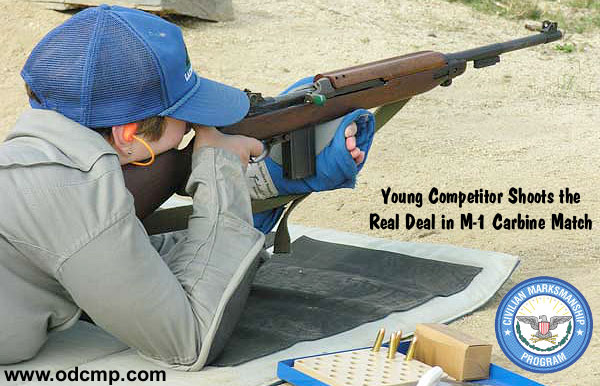
The CMP has posted updated 2022 rulebooks on the CMP website. The CMP competition program began in 1996 with two disciplines, Service Rifle and Service Pistol. CMP competitions have now grown to include separate disciplines for Service Rifle, Service Pistol, .22 Rimfire Pistol, Service Revolver, As-Issued Military Rifle (Garand, Springfield, Vintage Military Rifle, M1 Carbine, Modern Military Rifle, Vintage Sniper Rifle), As-Issued Pistol (M9, M1911, M&P Service Pistol) and Rimfire Sporter Rifle competitions where the CMP is the national governing body. The CMP also issues rules for Match Pistol (3-gun pistol), Long-Range and Mid-Range Rifle, Smallbore Rifle (position and prone), Air Rifle, and Air Pistol to govern events it conducts in conjunction with the National Matches, CMP Competition Games, and other match sanctioning programs.
To govern all these target rifle and pistol disciplines, the CMP now publishes five different rulebooks. Here are links to download the 2022 editions of these rulebooks:
If anyone has questions about any 2022 CMP Competitions Rulebooks, contact the CMP Competitions Department at competitions@thecmp.org or (419) 635-2141, ext. 714 or 729. For Smallbore Rule questions, contact (419) 635-2141, ext. 730 or bdonoho@thecmp.org. For Air Rifle/Air Pistol questions, please contact (419) 635-2141, ext. 702 or airgun@thecmp.org.
Photo courtesy Jonathan Ocab, who himself earned the Distinguished Rifleman Badge.
Here are the Highpower (Centerfire) and Smallbore (Rimfire) Rifle Rules Changes for 2022. Other changes (e.g. Pistol Rules Changes) are provided below that:
CMP HIGHPOWER RIFLE COMPETITION RULE CHANGES
The CMP Highpower Rifle program includes 1) traditional Service Rifle events conducted according to National Trophy Match rules (no sighters, starting rapid-fire series from standing), 2) Highpower Rifle events conducted according to CMP Cup Match rules (with sighters, starting rapid-fire in position), 3) Long-Range Rifle (prone and F-class events at 800, 900, and 1000 yards) and Mid-Range Rifle (prone and F-class events at 600 yards). The CMP program for Mid- and Long-Range competitions now includes: 1) Match Rifle Prone Long-Range, 2) Service Rifle Prone Long-Range, 2) F-Class Long-Range, 3) AR Tactical Long-Range, 4) Prone Mid-Range, F-Class Mid-Range 6) AR Tactical Mid-Range, and 7) Service Rifle Mid-Range events.
There are no major changes in the 2022 Highpower Rifle rules, but there are several technical changes that competitors and match sponsors will want to note. For example, Eye and Ear Protection is now required during Pit Duty:
Rule H2.6.9. Residency requirements for National Trophy Team Matches were changed to allow competitors who live in states that do not enter teams to join and compete for a team from an adjoining state. Competitors who wish to take advantage of this authorization must apply to CMP Competitions for annual approvals.
Rule H3.6.2. The rule requiring the wearing of eye and hearing protection on active Highpower Rifle ranges was clarified to also require wearing eye and hearing protection when in Highpower Rifle target pits.
Rules H3.8.2 & H6.5. Firing times for rapid-fire series on electronic targets are clarified. To equalize firing times between pit-operated and electronic targets, 3 seconds are added to electronic target firing times to compensate for the time it takes for pit-operated targets to rise from the pits to their fully elevated positions.
Rule H3.9.3 c). The allowance for an extra sighter when CMP Cup Matches at 600 yards are interrupted for more than 3 minutes was extended to also apply in all Long-Range events at 800, 900, and 1000 yards.
Rule H3.10.1. A CMP sanctioned Highpower Rifle match may be fired on ranges that have both electronic and pit-operated targets if random squadding is used. A new rule clarifies that for Service Rifle EIC Matches, all Non-Distinguished competitors must fire on the same type of target.
Rule H3.10.9. A procedure for correcting scores recorded in error was added.
Rule H3.10.10 h). A procedure for handling shots that were inadvertently not recorded was added.
Rule H3.10.11 b). If there is a missing shot with no evidence of a crossfire or off-target miss and it is confirmed that the competitor fired all ten shots, the competitor will be given the score of the lowest value hit for the missing shot. The previous requirement that the nine visible hits all had to be nines or tens was dropped.
Rule H5.2.2. F-Class Mid-Range 600-yard 3×20 competitors will be allowed unlimited sighters before the first 20-shot stage.
Rule H6.6.6 d). A procedure was added for allowing a sighter in matches where electronic targets are used for events where an additional sighter may be authorized after an interruption.
SMALLBORE RIFLE COMPETITION RULE CHANGES
The first CMP Smallbore Rifle Competition rulebook was released in 2018. These rules were used to conduct National Matches Smallbore Rifle Position and Prone Championships in 2018, 2019 and 2021. (The 2020 Championship was cancelled due to covid.) One of the most encouraging 2021 National Matches developments was an increase in competitors in the National Matches Smallbore Rifle Position Championship and the high percentage of those competitors who were juniors. Entries were up 44%, with 137 competitors. An impressive 88% of those competitors were juniors!
There are no significant Smallbore Rifle rule changes for 2022, but there are a couple of program developments to note:
Smallbore Rifle Distinguished Badges. Smallbore Distinguished Badges were introduced in 2020, but Covid prevented this new award opportunity from getting off the ground. With a new Camp Perry Open Smallbore Rifle event in May, the National Matches Smallbore Championship in July, and the expectation that there will be sanctioned Smallbore EIC Matches in 2022, the first presentation of Smallbore Distinguished Badges could occur in the coming year.
Smallbore Position Course of Fire. The CMP Smallbore Rifle rulebook mandates that Smallbore Rifle Position EIC Matches be 3×40 120-shot courses of fire, but if the pending ISSF change to 3×20 three-position events is finalized, CMP Smallbore Position EIC Matches likely will be changed to recognize 3×20 courses of fire as EIC Matches later in 2022.
Junior Age Limit Change. Since the Smallbore Rifle matches attract a high percentage of juniors, the age group rule change that extends junior eligibility to the day of a competitor’s 21st birthday, intermediate junior eligibility to the 18th birthday and sub-junior eligibility to the 15th birthday will impact many juniors who compete in these matches.
Savage Arms has won a second major award for its innovative Savage Impulse straight-pull hunting rifle. This is the only straight-pull centerfire rifle currently produced by a major U.S. manufacturer. The rifle has won the coveted NRA American Hunter 2022 Golden Bullseye Award as Rifle of the Year. Previously, Guns & Ammo magazine editors named Savage’s Impulse the 2021 Rifle of the Year.
“The new Savage Impulse is more than just a good first attempt at an American-made straight-pull,” wrote American Hunter magazine’s Associate Editor David Herman. “It is a rifle that can take long-range precision shots with ease, yet is in its element stacking lead in rapid fashion. It would make an excellent addition to any serious hunter’s arsenal.”
Beth Shimanski, Savage’s Marketing Director, says the design is a game-changer for hunters: “The speed of Impulse’s straight-pull action has changed the way Americans think about hunting rifles. This design combines everything Savage has learned about accuracy and reliability with innovation that provides marksmen and women with new capabilities with new capabilities.”
Savage’s Impulse series of straight-pull bolt rifles is the first American-designed and crafted straight-pull centerfire rifle. The new Impulse features an innovative Hexlock bolt-locking mechanism with six spherical bearings that move radially outward into a ring in the barrel extension, thereby locking the bolt in place. That barrel extension is held in the receiver assembly by four cross-bolts on the lower front section. Ahead of the barrel extension is a conventional recoil lug and a familiar Savage barrel nut.
Savage Impulse Straight-Pull Rifle — Overview
Savage claims the new system offers the cycling speed of a semi-auto, with the accuracy of a bolt-action. However, based on the videos that Savage has posted, the cycling of the Impulse’s straight-pull bolt does not seem to be as smooth as some European straight-pulls, such as the Blaser R8, Merkel RX Helix, and Strasser RS 14. We’ve tried those Austrian/German rifles and you really can cycle them very smoothly. From the video the Savage Impulse appears to require somewhat more muscle and effort. Watch below. The video will launch at the 15-second mark for a comparison between the Impulse and a conventional Savage bolt-action:
Savage Speed Comparison — Impulse vs. Regular Bolt Action
Savage says: “Conventional bolt-actions require four steps to cycle the bolt. Impulse simplifies the process with a simple back-and-forth motion.”
Advantages of Straight-Pull Cycling System
What is the advantage of a straight-pull system? You should be able to cycle faster, and (ideally) maintain your cheek-weld and target view. Savage says: “The smooth bolt throw allows a shooter to cycle rounds intuitively, without the need for the standard four changes-of-direction common to a conventional bolt’s path-of-travel. Impulse reduces split times and allows a shooter to manipulate the bolt without losing [his] cheek weld. The bolt travels out and back and shooters don’t have to take their eyes off the target.” Sounds good, but if you watch the above videos, it’s not as wonderful as claimed. That said, if one slows down a bit, a straight pull should allow the shooter to maintain his cheek weld.
When the bolt is closed, the Hexlock system holds it in place instead of conventional lugs. With the Hexlock, six (6) hardened steel bearings lock the bolt in place inside the receiver’s barrel extension. Savage says “As pressure increases, Hexlock’s hold tightens, ensuring that there can be no rearward movement of the bolt. Once the round has left the barrel, the pressure subsides, and the action can safely open again with the straight pull of the bolt handle.”
Savage Impulse — Hexlock System (Bolt Locks in Barrel Extension)
The cleverly-designed, modular Impulse bolt can be disassembled without tools. And the bolt-handle can be moved to either side easily. Impulse barrels are connected via barrel extension which is held in the action/receiver by a lower-side four-bolt barrel clamp.


 Well it’s a New Year folks — 2022 is here, so change those Gun Safe Keypad Batteries!






 Savage Arms has won a second major award for its innovative


