Serious riflemen know that Krieger makes outstanding centerfire barrels that hold world records and have won many National Championships. But did you know that Krieger makes great rimfire barrels too? Well, Krieger does make outstanding .22 LR rimfire match barrels that can deliver impressive accuracy.
Sniper’s Hide moderator “Padom” recently tested a variety of rimfire ammo types, employing five different barrels: Krieger, Bartlein, Benchmark, Lilja, and Green Mountain. He tested at both 50 yards and 100 yards. FULL Rimfire TEST REPORT HERE.
Reporting on the 50-yard test, Padom posted: “Had a virtually dead calm day today for 50-yard RimX testing (Keystone Accuracy RimX barreled action with 1:16″ Krieger 20″ barrel). A few infrequent 3 mph gusts but pretty dead [calm] and the target showed. This Krieger just barely edged out the Bartlein by 0.003″ with a 0.177″ 6×5 with SK Rifle Match. The 10×5 was 0.198″. The best lots of Center-X weren’t far behind either. This is the first Krieger rimfire [barrel] I’ve shot and it didn’t disappoint.”
Padom noted: “Winds were much calmer tonight than this morning so the 100-yard Krieger test was a success. Winds were pretty consistent [at] 3-5 mph.”
Test Results at 100 Yards
Padom then tested ammo at 100 yards, again using his Krieger rimfire barrel: “To recap, the Krieger shot the best 50-yard results of the barrels tested so far, just barely beating the Bartlein but it was so close you can call the 50-yard results equal (.005). Well the Krieger beat all the barrels tested to date at 100 yards by a pretty good margin with Center-X. The 10×5 was incredible as well at just barely over 0.6″ showing the results were very consistent. A second lot of Center-X was right there with the previous 100-yard 6×5 best results just barely over 0.6. The third lot of Center-X shot a respectable 0.75″ 6×5. This Krieger sure is shooting very nicely. I’m really looking forward to shooting it at 300 and 400 yards[.]”
Components Tested: 20″ Krieger M24 barrel, .22 LR Match Eachus chamber 0.046 headspace, Zermatt RimX Action, Bix’N Andy TacSport Pro 2-Stage Trigger, RimX 10rd magazine, XLR Envy Pro Folding Chassis, Athlon Cronus BTR 4.5-29x56mm MIL scope.
Shooting Set-up: 100 Yards Prone with Bipod and Rear Bag.
With the civil disorder, rioting, and looting happening in major U.S. cities, many Americans are getting very serious about armed self-defense. But if you own defensive firearms, you definitely need to train with them. Indoor ranges are most convenient for those who live near urban centers, where the biggest threats to public safety currently exist. This article talks about indoor firearms training and the proper procedures you should follow at indoor ranges.
This Video Covers Basic Gun Range Safety Rules and Etiquette
FIVE IMPORTANT SAFETY PROCEDURES for Indoor Ranges
1. Follow the Three Fundamental Rules for Safe Gun Handling
ALWAYS keep the gun pointed in a safe direction. ALWAYS keep your finger off the trigger until ready to shoot. ALWAYS keep the gun unloaded until ready to use.
2. Follow ALL Range Officer Instructions
ROs are the first and final authority on any range and their decisions are generally final. Arguing with a Range Officer may just get you thrown out.
3. Don’t Bother Others or Touch Their Guns
Respect other shooters’ privacy unless a safety issue arises. Do NOT engage other shooters to correct a perceived safety violation unless absolutely necessary – inform the RO instead. NEVER handle or touch another shooter’s firearm without their permission!
4. Know Your Range’s Rules
Review and understand any and all range rules and requirements/expectations. For example, what is the range’s maximum rate of fire? Are you allowed to collect your brass?
5. Know What To Do During a Cease Fire
IMMEDIATELY set down your firearm, pointed downrange, and STEP AWAY from the shooting booth (or bench). Range Officers do not want shooters trying to “secure/unload” their firearms in a cease fire situation — they want the shooters separated from their guns instantly.
BAD RANGE BEHAVIOR — Five Things NOT to Do at the Range
Here are the five worst behaviors we’ve seen at indoor ranges. These behaviors are both dangerous and inconsiderate. Any one of these behaviors can get you permanently banned from an indoor range.
1. Sweeping other individuals after loading a weapon behind the firing line is very bad. All your weapons should be empty until you reach your shooting station.
2. Turning the handgun sideways while trying to clear a malfunction or insert/remove a magazine. This will point the muzzle at a fellow shooter. Or, after shooting a gun, the shooter fails to clear the weapon and then places the gun somewhere near the shooting station with the muzzle in an unsafe position.
3. Reacting unpredictably when firing a high recoil handgun. We’ve seen people take a second shot by accident with the muzzle way off target.
4. Not obeying range commands — in particular continuing to shoot during called cease-fires.
5. Poorly aimed shooting that hits target frames or carriers, causing ricochets.
Double-Up on Hearing Protection When Shooting Indoors
When shooting indoors we recommend quality muffs with earplugs underneath, offering double protection. When inside an enclosed range, with other shooters blasting away right next to you, you really need effective hearing protection. But you also need to hear range commands and be able to communicate. That’s why we recommend electronic muffs with plugs underneath.
For pistol shooting, we like the latest Howard Leight Impact Pro Muffs. These offer an impressive 30 dB Noise Reduction Rating (NRR). In addition, these muffs are pretty comfortable and offer Headphone Functionality so you can connect to your smartphone, MP3 player, or other audio device. These muffs are a good value. They are currently offered for $39.50 on ALLMAX.
Summer Solstice 2020 was June 20th, and July’s nearly here. That means “peak heat” summer conditions. It’s vitally important to keep your ammo at “normal” temps during the hot summer months. Even if you use “temp-insensitive” powders, studies suggest that pressures can still rise dramatically when the entire cartridge gets hot, possibly because of primer heating. It’s smart to keep your loaded ammo in an insulated storage unit, possibly with a Blue Ice Cool Pak if you expect it to get quite hot. Don’t leave your ammo in the car or truck — temps can exceed 140° in a vehicle parked in the sun.
To learn more about how ambient temperature (and primer choice) affect pressures (and hence velocities) you should read the article Pressure Factors: How Temperature, Powder, and Primer Affect Pressure by Denton Bramwell. In that article, the author uses a pressure trace instrument to analyze how temperature affects ammo performance. Bramwell’s tests yielded some fascinating results.
For example, barrel temperature was a key factor: “Both barrel temperature and powder temperature are important variables, and they are not the same variable. If you fail to take barrel temperature into account while doing pressure testing, your test results will be very significantly affected. The effect of barrel temperature is around 204 PSI per F° for the Varget load. If you’re not controlling barrel temperature, you about as well might not bother controlling powder temperature, either. In the cases investigated, barrel temperature is a much stronger variable than powder temperature.”
This Editor had the personal experience of 6mmBR hand-loaded ammo that was allowed to sit in the hot sun for 45 minutes while steel targets were reset. The brass became quite warm to the touch, meaning the casings were well over 120° on the outside. When I then shot this ammo, the bullets impacted well high at 600 yards (compared to earlier in the day). Using a Magnetospeed, I then chron-tested the sun-heated ammo. The hot ammo’s velocity FPS had increased very significantly — all because I had left the ammo out in the hot sun uncovered for 3/4 of an hour.
Powder Heat Sensitivity Comparison Test
Our friend Cal Zant of the Precision Rifle Blog recently published a fascinating comparison test of four powders: Hodgdon H4350, Hodgdon Varget, IMR 4451, and IMR 4166. The first two are Hodgdon Extreme powders, while the latter two are part of IMR’s Enduron line of propellants.
The testers measured the velocity of the powders over a wide temperature range, from 25° F to 140° F. Hodgdon H4350 proved to be the most temp stable of the four powders tested.
NRA Cancels WSC and NRA Police Shooting Championships Due to COVID-19
No big money this year at the NRA World Shooting Championship — the event has been cancelled. And Likewise the NRA Police Shooting Championship will not take place in 2020. This is the Year of Pandemic, and two more major shooting events have fallen victim to COVID-19.
Yesterday the National Rifle Association (NRA) issued the following statement:
Due to the circumstances surrounding the COVID-19 pandemic and the many ensuing federal and state safety regulations and mandates, the NRA has made the difficult decision to cancel the NRA World Shooting Championship and the NRA National Police Shooting Championships. Both events were scheduled to be held in mid September 2020 in West Virginia and Mississippi respectively.
We share your disappointment that both these competitions that attract participants from across the globe had to be canceled. The NRA wishes everyone good health and the best of luck. Stay safe and healthy.
The WSC was a big deal. It attracted top multi-gun competitors such as Jerry Miculek, Dan Horner, Doug Koenig, and Bruce Piatt. The winner took home a fat check for $25,000. This unique 3-day multi-gun match tests competitors’ skills across twelve challenging stages involving nearly every major shooting discipline for rifles, shotguns, and pistols. This major match attracted both sponsored Pros and “regular Joes”. Shooters were split into two groups: a Professional Division for sponsored shooters, and the Amateur Division for non-sponsored competitors. All firearms, optics, and ammo were provided by match sponsors for both divisions.
This video shows features of past NRA World Shooting Championship
All Equipment Was Supplied at NRA World Shooting Championship
“What makes this event very unique, especially to a professional shooter, is all the equipment is supplied. You have to leave your ego at home and just try to adapt as best you can to the equipment that you have supplied.” — Jerry Miculek
WSC stages encompassed everything from trap to bullseye pistol to PRS-style precision rifle. There was even a cowboy action stage with Henry “Golden Boy” lever-action rifles.
CCRKAB Hopes Millions of New Gun Owners Can Aid Second Amendment Battle
First concern over the COVID-19 pandemic spurred a huge increase in gun purchases. And the civil unrest, rioting, and looting that followed the death of George Floyd caused countless citizens to seek armed self-protection. COVID-19 and the riots convinced millions of Americans to become gun owners for the first time. These citizens wanted to protect their families, homes, and businesses. The Citizens Committee for the Right to Keep and Bear Arms (CCRKBA.org) hopes that these new gun owners may aid the fight to preserve the Second Amendment and gun rights in the USA.
“Look at all of the new people who suddenly decided to exercise their Second Amendment rights to keep and bear arms”, observed CCRKBA Chairman Alan Gottlieb. “We’ve witnessed something that is nothing short of a sea change… about gun ownership. We’ve heard anecdotal reports from all over the country about people flocking to gun shops who had never before owned a firearm. Now that they are gun owners, we expect them to be very protective of their rights”.
March, April, and May 2020 saw record numbers of background checks, according to FBI data and information from industry sources. For example in April 2017, gun sales set an all-time record — up 71% from the pervious year.
Gottlieb added: “We welcome all of these new gun owners to the firearms community… many of them are minorities, especially black and female citizens … from all age groups. They can… gain a new understanding of our efforts to protect the one fundamental right that actually protects all of the other rights.”
“This new wave of gun owners could become a formidable force during this year’s election,” Gottlieb noted. “From now on, we expect millions of new gun owners to pay closer attention to candidates, and reject those who would trample on their Second Amendment rights. With legions of new gun owners ready to protect these newly-discovered rights, it could be a pretty scrappy election year…”
Do primer types make a significant difference in accuracy or vertical dispersion at long range? The answer is “maybe”. Here’s one anecdotal study that tracked vertical variance among six different primer types. The tester is a good shooter with a very accurate rifle — four of the six 4-shot groups were under 2″ at 500 yards. This test doesn’t settle the question, but does suggest that it may be worth trying a few different primer types with your match ammo.
Here is a very interesting test for the 6 BRA (6mmBR Ackley) cartridge. Forum member James Phillips, a talented long-range benchrest shooter, tested SIX different primer types from three different manufacturers. To help determine vertical dispersion, James set his target out at 500 yards. He then proceeded to shoot 4-shot groups, in order, with each primer type. Velocities were recorded with a chrono. The photo above shows the results. James says: “I’ll retest the best two for accuracy and consistency with 10 shots each”. CLICK HERE for full-screen target photo.
As you can see, ALL the groups are pretty impressive. The smallest groups, 1.253″, was shot with CCI 400 primers. Next best (and very close) was CCI BR4, at 1.275″ for four shots. The “flat line” winner was the Remington 7.5, at upper left. There was almost no vertical. If you are intrigued by this interesting primer test, you can join the discussion in this Primer Test FORUM THREAD.
Primer Brand
Group Size
Velocity
Extreme Spread
Std Deviation
Remington 7.5
1.985″ 4 shot
2955 FPS
8 FPS
4.0 FPS
Federal 205M
2.200″ 4 shot
2951 FPS
11 FPS
4.8 FPS
Sellier Bellot SR
1.673″ 4 shot
2950 FPS
14 FPS
5.9 FPS
CCI 450M
2.341″ 4 shot
2947 FPS
14 FPS
6.6 FPS
CCI 400
1.253″ 4 shot
2950 FPS
3 FPS
1.3 FPS
CCI BR4
1.275″ 4 shot
2949 FPS
15 FPS
6.9 FPS
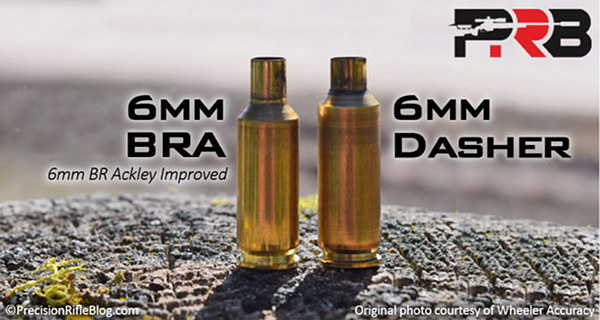
CARTRIDGE: 6mmBR Ackley, aka 6 BRA. Parent case is 6mmBR Norma. The 6 BRA is fire-formed to create a 40-degree shoulder and less body taper. Capacity is increased, but the neck is longer than a 6mm Dasher. The capacity is enough to get to the 2950+ FPS accuracy node. Some shooters say the 6 BRA is more forgiving than the 6mm Dasher. The 6 BRA is certainly easier to fire-form.
TEST REPORT — Conditions, Shooting Method, Loading Method
Tester James Phillips posted this report in ourShooters’ Forum:
Conditions: The testing was done in the morning over flags. The flags never moved or even twitched. I had as perfect conditions as I could have asked for. It was overcast so no mirage and no wind. There were no other shooters, just me.
Test Procedure: Each shot was precisely shot at my pace and centered the best possible using my Nightforce 15-55X scope. I did not use the round-robin method. Each four-shot group with the same was shot at one time. Then I moved onto the next primer. Everything felt right for each and every shot fired today. Of course I could repeat the test tomorrow and it could be exact opposite of today’s test. We can chase this forever. But [soon] I’m going to test the BR4 and 400 primer… for best accuracy and consistency for 10 shots each.
How Rounds Were Loaded: Each load was weighed to one (1) kernel of powder. So I know that’s as good as I can weigh them. Each bullet seating force was within 1# on my 21st Century hydraulic arbor press.
Previous Initial Load Testing: All groups were shot with 31.1 grains of H4895. During initial load testing I settled in on the Sellier & Bellot primer to finalize everything as it showed more promise over the CCI 450 Magnum I also tried. I was actually surprised to have seen the higher ES and SD from that primer today along with the vertical shown. [Editor: Look carefully — one shot from the CCI 450 is right in the center black diamond, stretching the vertical. By contrast the Rem 7.5 had almost no vertical.]
Groups Shot at 500 Yards with 6 BRA
Velocity and NODE Considerations: I was about 5-6 FPS above what appeared to been my optimum velocity of 2943-2945 FPS, so I’ll test 5 shots of 31.0 and 5 of 31.1 and see what happens from there. I can only assume my velocities where higher due to the higher humidity and of course temps were 5 degrees warmer this morning as well. It wasn’t far off but I noticed it.
This post essentially puts twenty bucks in your pocket if you need a chronograph. You see the MagnetoSpeed Sporter Chrono typically costs around $179.00 from most vendors. But right now MidwayUSA is running a special — the true “shopping cart price” is $159.99. That’s $20.00 cheaper than Midway’s regular price, and $19.01 cheaper than the lowest price we found anywhere else. But this special “Shopping Cart Discount” may not last long, so you may want to act quickly. We confirmed Midway’s $159.99 price on the morning of June 28, 2019.
Strapped on your barrel, the MagnetoSpeed Sporter records velocities accurately without requiring any hardware to be placed downrange. Everything is self-contained at your shooting station, so you no longer have to waste time setting up tripods and aligning the bullet path through old-fashioned chrono skyscreens. For most shooters, the MagnetoSpeed Sporter is all they need — they don’t need to spend $380.00 for the Deluxe MagnetoSpeed V3 Model. Here’s a video review which compares the Sporter to the more expensive V3 chronograph.
Each Wednesday, the U.S. Army Marksmanship Unit publishes a reloading “how-to” article on the USAMU Facebook page. A while back, the USAMU’s reloading gurus looked at the subject of case lubrication. Tasked with producing thousands of rounds of ammo for team members, the USAMU’s reloading staff has developed very efficient procedures for lubricating large quantities of cases. This article reveals the USAMU’s clever “big-batch” lube methods. For other helpful hand-loading tips, visit the USAMU Facebook page on upcoming Wednesdays.
Rapid, High-Volume Case Lubrication
Today’s topic covers methods for quickly applying spray lube to cartridge cases prior to sizing. A typical order for this shop may be 25,000 rounds, so [speeding up] the lubrication process can be a real time-saver. While your ammunition lots probably aren’t this large, the efficient methods discussed here may help save a considerable amount of time over your handloading career. Our case lubrication rates range from 1500-1600 cases per hour, to 2400-2500 cases per hour, depending on caliber.
This shop uses virgin brass, whereas most home handloaders use fired brass, which necessitates some small changes at times. These will be discussed as they arise. Begin with fired brass that has been tumbled clean.
Ensure as much tumbling media as possible is removed from the brass, as when it gets into a size die, it can dent cases significantly. This is a good time to round out dents in the case mouths using a tapered tool to prevent damage from the decapping stem.
First, dump the clean cases into a large box or reloading bin. Shake the bin back and forth so that many cases are oriented with the mouths up. Next, pick up as many cases as is convenient with the mouths “up”, from natural clusters of correctly-oriented cases. With 7.62mm-size cases, this is usually 3-4, and with 5.56mm cases, this can be up to 8-10. Place the cases into the rack slots, mouth-up. Doing this in groups rather than singly saves considerable time. Once these clusters have been depleted, it will be time to re-shake the bin to orient more cases “up.”.
This photo shows a case lubrication rack made by a USAMU staffer.
Naturally, adjust the spacing to best fit the calibers you reload. We have found this size … convenient for handling through the various phases of case lubrication/transfer to progressive case feeders for processing. Note that the 1/2-inch angle does not cover much of the critical case area at the base, just forward of the extractor groove, where most re-sizing force will be exerted. As the USAMU uses virgin brass, less lubrication is required for our brass than would be needed for Full Length (FL) sizing of previously-fired brass.
NOTE: The amount applied using our rack is easily enough for our purpose. If using fired brass, be sure to adequately lube this base area to avoid having cases stick in the full-length sizing die.
Using a spray lube, coat the cases adequately, but not excessively, from all sides. Be sure to get some lube into the case mouths/necks, in order to reduce expander ball drag and case stretching/headspace changes. The spray lube this shop uses does not harm primers or powder, and does not require tumbling to remove after lubing.*
Take a close look at the photo above. The USAMU shop uses a common kitchen turntable, which allows the rack to be rotated easily. We place this in a custom-made box which prevents over-spray on to floors and walls.
Angled Box Method for Smaller Cases to be Neck-Sized
A refinement of the above method which especially speeds processing of 5.56x45mm cases is as follows. A small cardboard box which holds about 100 cases is fitted with an angled “floor” secured by tape. With the smaller 5.56mm cases, usually about 8-10 cases per handful can be picked up, already correctly-oriented, and placed into the box together. This prevents having to place them into the rack slots, saving time.
HOWEVER, note that this does not allow nearly as much lube access to the case bodies as does the rack. For our purposes — neck-sizing and setting neck tension on new brass, this works well. If using this procedure with fired brass, take steps to ensure adequate lube to prevent stuck cases.
As always, we hope this will help our fellow handloaders. Good luck, and good shooting!
*A two-part test performed here involved spraying primed cases heavily, while getting more lube into the case mouth/body than even a careless handloader would likely apply. The second part of the test involved literally spraying considerable quantities of the lube directly into the cases, drenching the primers. After a several-day wait to allow the lube to penetrate the primers, they were then fired in a test barrel. All fired normally; no unusual reports were noted. This bolstered confidence that normal amounts of the lube would not adversely affect our ammunition, and we have been pleased with the results over several years.
Dennis DeMille shows a young competitor at the CMP Western Games how to adjust his leather sling.
If you want to learn more about setting up your sling properly for position shooting, here are some tips from Dennis DeMille, a past Service Rifle Champion. Dennis explains how to choose a sling, and how to adjust it to fit properly.
The Benefits of Dry-Fire Training
Once you know how to set up your sling properly, you’ll want to practice. Dennis DeMille stresses the importance of dry-fire practice with sling and shooting coat. Dry-Fire training is essential to the sling disciplines. Dennis DeMille, a national Service Rifle Champion, told us that, for every minute he spent in actual competition, he would spend hours practicing without ammunition. While in the USMC, Dennis would practice in the barracks, working on his hold and dry-firing:
“The most important thing is to spend time off the range practicing. Most of what I learned as a High Power shooter I learned without ammunition — just spending time dry firing and doing holding exercises. Holding exercises will really identify the weak parts of your position. The primary purpose of dry firing is to get you used to shooting an empty rifle. If you can shoot a loaded rifle the same way you shoot an empty rifle then eventually you will become a High Master.”
SFC Brandon Green, 2018 Nat’l High Power Champion. Brandon, one of the nation’s best “hard-holders”, demonstrates proper use of sling in prone position.
Setting-Up a Leather Service Rifle Sling for Competition
So you made the mistake of disassembling your leather service rifle sling, or are intimidated about how to use one? In this Creedmoor Sports InfoZone video, former Creedmoor G.M. Dennis DeMille explains how to set up and use a sling. The covers the basics — Dennis starts with a totally disassembled leather service rifle sling and shows you how to set it up properly.
Tip: “Many shooters shy away from using a leather sling because they have never been taught how to use one. That’s unfortunate. In my opinion a leather sling offers more support than a web sling, which is important when competiting with the heavier than normal rifles.”
Configuring the Sling for the Standing (Offhand) Position
In this second in a series of Creedmoor InfoZone videos on the setup and use of the leather service rifle sling, Dennis DeMille details how to configure and best utilize the leather service rifle sling while shooting from the standing position.
Tip: “Putting the Frogs in different hole will change the amount of added elevation a sling provides.”
Looking at Sling Types — Comparing the Features
In this video Dennis showcases a large variety of shooting slings. He explains the strong points of each type so you can choose the sling best suited to your discipline and shooting style.
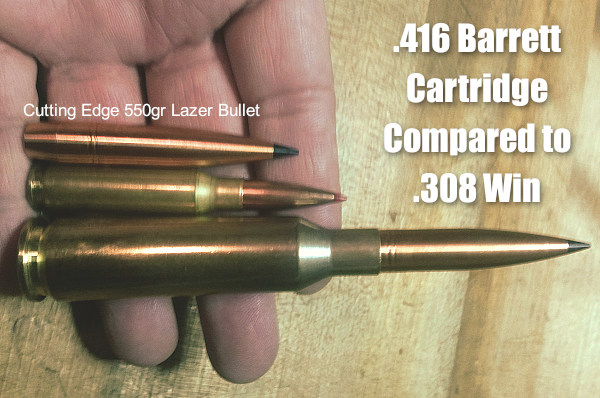
In the ELR game, particularly the King of 2 Miles (KO2M), it’s “go big or go home”. The top shooters run large-capacity cartridges that push large-caliber, ultra-high BC bullets at very high velocities. Bullets launched by cartridges such as the .416 Barrett can sustain supersonic velocities at Extreme Long Ranges — and that’s what it takes to win. The .416 Barrett can launch a 550-grain solid bullet at 3000+ FPS.
Photo from ELR Competitor Corbin Shell.
2018 and 2019 Kings of 2 Miles Loaded on RCBS Presses
So how do you load jumbo cartridges such as the .416 Barrett? It takes a big, heavy, super-strong reloading press. We’ve learned that the last two Kings of 2 Miles, Paul Phillips (2019) and Robert Brantley (2019) both loaded their KO2M ammo on RCBS AmmoMaster .50 BMG presses. Phillips loaded .416 Barrett ammo, while Brantley loaded custom .416 MCS rounds.
In 2018, Robert Brantley topped the field using his custom .416 MCS loads perfected on the AmmoMaster .50 BMG Press. This year, Brantley took a close second to 2019 KO2M winner Paul Phillips. Both Phillips and Brantley use the AmmoMaster .50 BMG single stage press kit and RCBS .416 Barrett dies to hand-load for extreme long-range. “My ammo has been much more consistent after switching to the RCBS press and dies,” remarked Phillips, who runs the Global Precision Group. Brantley said he uses RCBS products for most of his reloading needs — from the dies and AmmoMaster, to the ChargeMaster and Brass Boss. His custom .416 MCS loads launch a 550-grain bullet more than 3,100 fps.


 Test Results at 100 Yards


 To learn more about how ambient temperature (and primer choice) affect pressures (and hence velocities) you should read the article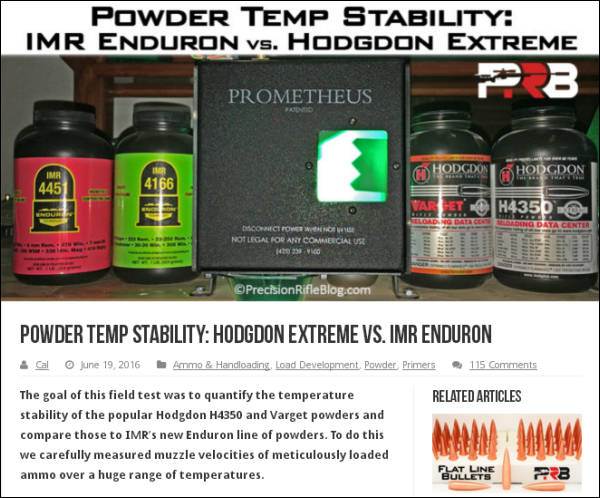






 The Benefits of Dry-Fire Training