At the request of our readers, we provide select “Deals of the Week”. Every Sunday afternoon or Monday morning we offer our Best Bargain selections. Here are some of the best deals on firearms, hardware, reloading components, optics, and shooting accessories. Be aware that sale prices are subject to change, and once clearance inventory is sold, it’s gone for good. You snooze you lose.
1. McMillan Fiberglass Stocks — Big Sale, up to 33% Off
Are you looking for a very high-quality, premium fiberglass stock for your next hunting rifle or tactical rifle project? Now’s a great time to buy — McMillan Fiberglass Stocks is running a Major Stock Sale with substantial savings — up to 33%. Currently 19 popular models are on sale including A3, A4, A5, Z-10, Game Scout, XTR, McMillan Hunter and more. NOTE: While this sale was set to end Monday, May 4, 2020, the McMillan website still lists sale prices for many of the items — but don’t delay. See all sale stocks at McMillanUSA.com.
Here’s a great-looking compact Modern Sporting Rifle Kit for hunters. This is a good value, with Remington R15 Upper and Lower finished in Mossy Oak Breakup Camo. Parts include Bushmaster 2-Stage Match Trigger, Aluminum handguard, and Yankee Hill Flash Hider. Price is great — just $399.89. But take note — this Kit is NOT ready to shoot. This Rem Kit is sold without bolt carrier group, charging handle, and magazine. But those are easy to purchase (or borrow from another AR-platform gun). So remember, buyers must supply their own bolt carrier group, charging handle, and magazine. It’s still an excellent value.
3. EuroOptic — Nikon Riflescope Closeout Sale
Nikon’s decision to stop selling riflescopes has created an amazing opportunity. If you’re in the market for a hunting or tactical scope, check out EuroOptic’s Nikon Closeout Sale. EuroOptic has a big selection — Tactical Closeouts starting at $99, ProStaff Closeouts starting at $109, and Nikon BLACK scopes discounted up to 40% off. Choose MOA or MRAD versions with a variety of reticle options. NOTE: The BLACK FX1000/X1000 Series Nikons are quality tactical scopes proven in PRS/NRL competition. (FX1000s are FFP.) You’d have to pay hundreds more to do much better. At just $449.95, 40% off the original price, the 4-16x50mm FX1000-FFP MRAD is a steal!
4. Midsouth Shooters — Big Rimfire Ammo Sale, All Types
Ranges are starting to open up, so grab your gear and go. It’s always fun to shoot rimfire rifles, as quality training ammo (such as SK or Norma) can be a tenth the cost of factory centerfire ammo — 12 cents/rd vs. $1.20/rd or more. Midsouth Shooters has a wide selection of rimfire ammo from Aguila, CCI, Hornady, Federal, Lapua, Norma, SK, and Winchester. There are many varieties of the most popular rimfire ammo types: .17 HMR, .22 LR, .22 Short, and .22 WMR. Midsouth also has some .17 Mach2 and .17 WSM.
5. Natchez — RCBS ChargeMaster Lite, $219.99
Do you need an electronic powder scale and dispenser? Check out this great deal at Midsouth Shooters Supply. Suggested retail for the ChargeMaster Lite is $299.99. Amazon’s best price for this unit is $289.99. But now you can get it for just $219.99 at Natchez. So you can save $70.00 with this sale! Put the money saved into bullets or powder. The RCBS ChargeMaster Lite is the modern second generation Scale/Dispenser, descended from the original ChargeMaster. The ChargeMaster Lite features an easy-to-use LCD touchscreen. Dispenser precision is plus/minus 0.1 grains. The unit comes with twin check weights and a convenient plastic cover for the powder pan.
We’ve shot the Ruger SR9 9mm pistol and we like the ergonomics MUCH better than a Glock. The SR9 is comfortable with a slim, ergonomic grip, reversible backstrap, and narrow stainless slide. The Ruger SR9 also includes ambidextrous manual safety and magazine release, built-in Picatinny rail, and adjustable high-viz 3-dot sight system. If you are looking for a standard 9x19mm pistol (4.14″ barrel), this is a great value — $249.97 at Sportsman’s Warehouse
7. MidwayUSA — Packs of Sight-In Targets or Spots, $3.74 Each
Here are two target products we really like, both deeply discounted this week. The Caldwell Shooting Spots Combo 12-Pack offers BOTH 1″ diameter and 2″ diameter day-glo orange self-adhesive dots with inner diamonds. You get 36 big dots plus 72 small dots in the 12-Pack for just $3.74. For Load Development we like the Caldwell 9-Diamond Sight-in Target 10-Pack. Each sheet has NINE blue double diamonds inside circles. The 16″ wide paper backer also has boxes for your load data, chronograph values, gun info, and group sizes. You can also get the 9-Diamond 10-Pack for just $3.74.
8. Brownells — Wipeout Foam Cleaner, $14.99
Walking the firing line of the Berger SW Nationals this year, one cleaning product was mentioned over and over again and for good reason. Sharp Shoot R Wipe-Out foaming bore cleaner is a no-nonsense, easy-to-use bore cleaner that does a great job. We get best results with two applications of Wipe-Out after some wet patches. If you’re tired of long brushing sessions, give Wipe-Out a try — it really reduces brushing required. This is a great deal. The same 5 oz. can is $24.95 on Amazon.
Young people are the future of our sport. Every shooter should have an extra pair or two of kid-sized earmuffs for those days when you have the chance to bring a young person to the range. Right now MidwayUSA has a great deal on Caldwell Youth Ear Muffs. For just $11.24, these 23 NRR-rated Youth Muffs are available in three kid-pleasing colors: Hot Coral (Red/Orange), Neon Blue, and Neon Green.
Report by Jay Christopherson
2020 Berger SW Nationals F-Open Champion Team Member, Team Lapua-Brux-Borden
I’ve been shooting F-Class for about 9 years now. In fact, I shot my very first match, a 600-yard mid-range match, using a 6mm Dasher, on March 19, 2011. My first relay was a 188-4X and my overall score was 582-19X. I remember shooting a really nice group in the 9-ring, because I dialed the scope the wrong way and I shot lots of “verification” shots before making adjustments. I also remember wondering if that was a good score for that range in those mostly calm conditions (it wasn’t). I’ve tracked every match I’ve ever shot and I’ve come a long way since then. I’ve always been a competitive person and F-Class gave me an outlet to indulge both my competitiveness and my fondness for details. In what other individual sport does a thousandth of an inch (or less!) become important? Or a tenth of a grain?
Some of my greatest pleasures in this sport come not necessarily from winning a match (though I won’t turn that down), but in identifying something small in what I am doing that has a material effect on paper. Maybe it’s a tiny change in seating depth. Maybe it’s a slightly modified strategy for making wind calls. Maybe it’s a tiny position or hold change. Whatever it is, when it works, there’s no better feeling.
I have a full-time job to go with this hobby, so finding the time for productive training is difficult. You have to really plan ahead to maximize the time you spend reloading, developing loads, and training at the range. To that end, I invest a lot of time in reducing the things that I do at the loading bench. I load ammo on a progressive press, though modified to produce ammo to my standards. I don’t clean brass. I don’t do a lot of things that most shooters would call traditional in the loading room. Because frankly, I don’t have the time between family, work, and other interests.
If it doesn’t make a difference on paper, I mostly don’t do it. Still, there are one or two loading habits I’m trying to get rid of. I also pre-seat all my ammo for matches — whatever I show up at the match with, is what I have. I don’t clean my rifle between days at the match. I had well over 200 rounds without cleaning by the time the last shot was fired at the 2020 SWN. It took a lot of time for me to get comfortable with that. That works for what I do, but I wouldn’t dare try it with any other loads or rifles, at least, not without a lot of testing to be comfortable. My original 6MM Dasher shooting Reloder 15 couldn’t go that many rounds without cleaning and building up a carbon ring. Unfortunately, I learned a tough lesson on that one my first year.
I do all my own gunsmithing, including chambering, bedding, and stock work. I’m no Keith Weil, Alex Wheeler, or some of those other guys, but I feel pretty good about the work I do. I know that when there’s a mistake or imperfection, it’s MY mistake and I can live with that. I like to keep things as minimal as possible, so I shoot off a SEB Mini (no mods) and SEB rear bag.
I also shoot with a spotting scope at Long Range, using a Kowa TSN-663 with 25X LER eyepiece and a relatively new spotting scope stand by Rod Brakhage who is a fine F-Class shooter himself. I really like how smooth and adjustable it is on the ground compared to some other rigs I’ve used.
The 284 Wheeler — Slightly Modified .284 Win
This year at the SWN, I shot a 284 Wheeler, which is a straight .284 Win that has some small modifications designed by Alex Wheeler. I think that the work and experimentation that Alex does with reamer design really shows up on paper. In 2019 I was testing the reamer in a couple barrels, looking for the right load. I shot some great relays and team practices with it that year, but this was the first time I brought enough ammo to shoot the entire week with it. Coupled with Berger’s 7MM 180 grain Hybrid Target bullets which I point to increase BC consistency, and Lapua brass, it’s an effective combination. In particular, the brass has lasted me for 13 firings with no signs of fatigue, so I expect I’ll be able to use it at Worlds in 2021 and beyond.
I also shot the entire 2020 SWN with a Vortex Golden Eagle 15-60x52mm scope, my preferred scope for individual matches. It’s a rock-solid reliable scope in my experience, with a great eye box, reliable and repeatable mechanical controls. The Vortex ECR-1 reticle has quickly become my favorite reticle. All four of my Open rifles are built on Borden BRMXD actions, Brux barrels, and sitting in X-Ring F-Open stocks, which are Robertson clones (more on that below). I’ve tried to make each of my rifles as much of an identical clone as possible.
I am not sponsored by anyone as an individual shooter, only through team sponsorship with Lapua-Brux-Borden. Which means that for individual matches, I am free to use what I think gives me the best opportunity to win for individual matches. In practice, the only difference tends to be the scope that I use, as mentioned above.
Jay Christopherson F-Open Rifle Specifications:
Cartridge: 284 Wheeler (variant of .284 Winchester)
Optics: Vortex Golden Eagle 15-60x52mm
Stock: X-Ring F-Open Stock with R.A.D.
Barrel: Brux 1:9″-twist, 32″-long barrel
Action: Borden BRMXD action
Trigger: Flavio Fare
Q: What was your biggest challenge at the 2020 Berger SWN?
Jay: The biggest challenge for me at this year’s SWN was purely mental. At past SWN matches where I had done well, I was trying to focus on not thinking about the different things going on around me. Where I was ranked on the score sheet. How well other shooters were doing. How many points or Xs I was ahead (or behind). Being worried about conditions or whether my ammo would hold up. And so on. And sooner or later, I think those things break your focus.
Going into a relay calculating the points or Xs that you can’t afford to drop is a recipe for losing. It’s like trying NOT to picture a pink elephant with purple dots when somebody challenges you try to not think of a pink elephant with purple dots. In previous SWN events, I came up just short three times in a row, for one reason or another. So, in 2020 I went in with a mental game plan.
Mental Game Plan — Envisioning Success
I pictured what it would take to be successful and what winning would feel like. First relays, then days, and then the match. I started that process months before the match actually happened. I thought about who I was shooting against and how much pressure there was to make every shot count. I thought about how I had performed or reacted in similar situations in the past. And I planned out what I would do and how I would handle those things. I strived to be neither negative nor positive — I wanted to be neutral. I wanted to be ready to win, instead of being surprised by it.
Q: What gear/hardware items give you an edge over the competition?
Jay: There’s no single piece of gear that I can think of that gives someone an edge over somebody else. It all sort of works — it’s more about being consistent with whatever hardware you have. But one piece of new gear that I tried out at the SWN was a single-piece scope mount called the Alphamount (photo below), by Richard Near of NEAR Manufacturing.
I think scope mounts are the most overlooked piece of equipment in F-Class right now — whether they be improperly aligned, improperly torqued, or just plain junk. I think people put a lot of blame on their scopes that can be traced back to mounts. The Alphamount (and single-piece mounts in general) are something that I believe in now, having done a lot of testing. It worked out OK for me at the SWN.
Action for Back-Up Rifle Is Glued and Screwed into Stock
One of the new things I am trying this year is a “glue and screw” action set-up. At the 2019 US F-Class Nationals in Raton, we got rained on a little and when I pulled my rifle apart, I found water between the bedding and action (the bedding is about 2 years old). At the SWN, I found that something had moved enough that I could torque the front action screw and bind the bolt. Not good, but luckily this was my backup rifle that I shot for Mid-Range (badly) and not my lead rifle. There could have been stock movement or other factors as well, but there was no question the bedding had shrunk when I stuck a dial indicator on it and found that my pillars were now standing proud.
Some people had been goading me to try a “glue-and-screw” procedure. Since I had nothing better to do during the COVID-19 lockdown, I pulled out the Dremel, scuffed up the action and bedding, removed the recoil lug, and glued the action into the stock. I’ve had it out a couple times since and it seems to be shooting well, but we’ll see how it holds up and what sort of difference it might make as time goes on.
Q: What is your advice to newcomers in F-Class and Long Range competition?
Jay: Find a nemesis. Someone local who puts in the same effort that you do and is as competitive as you are. Be friends, share info, but work your behind off to make sure you win on match day. I guarantee you someone reading this knows what I’m talking about. The best thing you can do is have someone who pushes you to perform better each time out. You love to win against them, but not as much as you hate to lose to them.
Q: What do you like most about Long Range and F-Class competition?
Jay: I like the challenge of F-Class — it’s a nice blend of working to get the most out of your equipment and the most out of yourself as a shooter. You can have the greatest shooting rifle in the world and it won’t matter a bit if you can’t be consistent pulling the trigger or making good wind calls. By the same token, you can be the greatest wind caller and most consistent trigger puller in the world — but it won’t matter a bit if you can’t wring the best possible performance out of your rifle for that tiny little target at 1000 yards. I like Long Range because everything is magnified — there are rarely easy shots.
Q: What do you prefer, individual events or team matches?
Jay: Team matches. No contest. Most of the reason I travel to matches is for the team events. But just throwing together a team of great individual shooters is not enough to consistently win. You have to operate as a team, which at times means subsuming your own individual goals for the good of the team. I’ve gone into big matches knowing that my team rifle is my best rifle by a mile — but knowing that the best thing for the team’s current and future success is for me to not burn that barrel out (or burning up known good components) in the individual events. And that’s fine with me. Being part of a team of shooters with the same goal, with the same drive, the same focus on team rather than individual — and able to deliver the goods — that’s the reason why I do this.
Q: What kind of stock do you use and how does it behave?
Jay: I use an X-Ring Open stock, which is basically a Robertson clone. I’ve been using X-Ring for about 4 years now. I’ve been through a lot of different stocks to find the one that fits me and the way I like to shoot, and X-Ring has done that for me. There’s a lot of focus recently on lowering the center of gravity and extending the stock length through various methods to solve problems like torque, jump, etc. — those are just problems that I don’t experience or, at least, that don’t bother me while I’m shooting. So, I don’t tend to worry about them. The X-Ring fits nicely and runs very well in the bags that I use. I do think that you have to spend some time finding the right bag setup for the stock you are using. I have at least 9 different rear bags that I have tested at one time or another until I settled on my current bag.
Q: Do you have any specific Gun Handling Tips for F-Open shooters?
Jay: As for gun handling, I prefer a light hold — my cheek indexes off the stock with a very light touch and my trigger hand indexes off the stock also with a light touch so that I have a consistent trigger finger position. What I do is in the style of “free recoil”, but is NOT fully “free recoil”, since I DO lightly touch the stock. For the butt, I run the R.A.D. recoil reducer at its lowest setting, which means that I can barely touch off for indexing purposes and still not interrupt the recoil pulse because the R.A.D. absorbs it. This was a suggestion that Will McCloskey made to me a couple years ago in place of leaving space.
This video, from a past Berger SWN, illustrates Jay Christopherson’s shooting style. He employs a very light touch on the gun. The front rest is a SEB Mini. If this Facebook video doesn’t load,CLICK HERE.
My hold for F-Class has evolved over time into what it is now. There are lots of successful shooters that are using varying degrees of holds, from light to hard. Again, It all sort of works — the most important part is that whatever you do is consistent and repeatable, hence my touch points that ensure my head, shoulder, and trigger finger are in the same position every time. There are shooters out there that will rant about “the fundamentals of shooting” and insist that your legs have to be a certain way, your cheek has to be a certain way, your breathing has to be done a certain way. I’m sure that’s valid for what they do and I’m fine with them looking down on me for it, but I do what produces results for me. For certain, my position and hold when shooting sling is completely different. All it means is that you have to be prepared to adapt.
PARTING SHOT — Have Guns, Will Travel
Here is one of Jay’s other F-Open Rifles. When traveling he separates the stock from the barreled action. He uses a custom-cut foam piece that holds the components very securely. Note the separate slots for barreled action, stock, scope (in rings), bolt assembly, and spotting scope.
Looking for a superb illustrated coffee table book about guns? Yes there is such a thing, a great book we highly recommend — The Illustrated History of Fireams (2nd Edition). This full-color 320-page hardcover book features more than 1,700 photos compiled by NRA Museums curators Jim Supica, Doug Wicklund and Philip Schreier. This Second Edition includes 300 photos more than the original, plus dozens of new profiles of important persons who influenced firearms development.
This follow-up to the best-selling original NRA Museums book is loaded with great images, historical profiles, and technical data on old, new, and currently-manufactured firearms that have changed history. Covering the earliest matchlocks to modern match-grade superguns and everything in between, The Illustrated History of Firearms provides a fascinating education on how guns evolved, where they originated and how they worked.
The Illustrated History of Firearms, 2nd Edition
– Authored by the experts at the NRA Firearms Museums
– Published by Gun Digest Books
– 9 ½ x 11 1/2 inches, hardcover with dust jacket
– 1,700 full-color photos
– 320 Pages
– Price: $39.99
The Illustrated History of Firearms, 2nd Edition is available at gundigeststore.com, Amazon ($34.95), Barnes & Noble and most other major booksellers.
Historic American Arms — Teddy Roosevelt’s Lever Guns
These two lever action rifles, owned by President Theodore Roosevelt, are part of the NRA Museum collection. First is a Winchester 1886 rifle known as the tennis match gun because Roosevelt used winnings from a tennis match to buy it. Below that is a suppressed Winchester model 1894 rifle. Roosevelt liked to shoot varmints around Oyster Bay (Long Island, NY) with this gun so he wouldn’t disturb his neighbors — the Tiffany and Du Pont families.
About the NRA Museums
The NRA opened the original National Firearms Museum at its Washington DC Headquarters in 1935. In 2008 the Francis Brownell Museum of the South West opened at the NRA’s Whittington Center in Raton, NM. Then, in 2013, the National Sporting Arms Museum opened at the Bass Pro Shops store in Springfield, MO. Every year, at these three museum facilities, over 350,000 persons visit to see the impressive exhibits and many of America’s most famous firearms. For more information, visit www.NRAMuseum.org.
In an unprecedented move, the central government of Canada, without parliamentary vote or debate, has banned a vast number of rifles, including most modern mag-fed, semi-auto rifles currently for sale. This action banning the firearms was done by Prime Minister Justin Trudeau via “Order-in-Council”, with no political debate and no vote of elected representatives. It was essentially an Executive action, rule by fiat, like a decree issued by a dictator.
Starting now, around 1,500 models of long-arms have become illegal to sell, transport, import or use in the Canada, according to CBC News.
“The government implemented the ban immediately, and without the need for legislation in Parliament, by reclassifying about 1,500 firearm models as prohibited. In the meantime, a two-year amnesty is now in effect for Canadians who own the banned firearms and government officials said gun owners will also have the option to be ‘grandfathered’ in with weapons they currently own, although no details were available for that program yet”. Source: NationalPost.com
Nova Scotia Killer Posed as Police Officer
This action came in response to the Nova Scotia killings by a madman, Gabriel Wortman, who dressed in a police uniform and used vehicles with law enforcement markings and lightbars. Wortman was NOT licensed to possess his weapons and had obtained his firearms illegally. According to Global News: “During the shooting, the gunman was traveling in a replica police vehicle and wearing an authentic police uniform.”
Canadian Investigators said Gabriel Wortman had several semi-automatic handguns and at least two semi-auto rifles, which may have been AR-type rifles, but we are not certain about the exact configurations of Wortman’s long guns. Notably, most if not all of Wortman’s guns were already ILLEGAL for Wortman to own under existing Canadian laws. The crazed shooter had violated multiple firearms laws already on the books, and did NOT possess his weapons legally (it is believed he sourced them from outside Canada). AR-type rifles required a special permit in Canada. And of course he violated multiple laws in impersonating a law enforcement officer.
Trudeau Exploits Nova Scotia Shooting to Ban Guns without Normal Legislation
Prime Minister Trudeau used the Nova Scotia mass killing as the impetus to fulfill his campaign promises to ban so-called “assault-type” weapons. Seven months ago, Trudeau pledged to ban modern semi-auto rifles, which he called “assault rifles”. Trudeau opportunistically leveraged the mass shooting to execute his plan with no public debate and no vote by elected officials.
Trudeau’s actions were criticized by many in Canada. Conservative Leader Andrew Scheer declared: “Taking firearms away from law-abiding citizens does nothing to stop dangerous criminals who obtain their guns illegally”. Alberta Premier Jason Kenney stated: “Today’s order does little to target criminals … instead, Ottawa is singling out law-abiding gun Canadians who purchased their property legally”. And Alison de Groot, Director of the Canadian Sporting Arms and Ammunition Association, said Trudeau’s gun ban “will strand somewhere between $200 to $300 million worth of pre-paid merchandise in stores”. READ MORE.
Q: Would a Ban on Semi-Auto Rifles Have Prevented the Nova Scotia Tragedy?
A: No. The killer Gabriel Wortman also used pistols, and could have been just as deadly with a pump shotgun. And nine of the 22 killed “died in house fires” set by Wortman. (Source: RCMP per Reuters.) Remember that fact — 40% of the victims were burned to death: “Of the 22 people killed, 13 were shot and nine died in house fires.” Source: CNN.com.
The real reason for the high kill count was that Gabriel Wortman was an insane maniac wearing a police uniform and driving a police car. The important questions to ask are how did he get the uniform and why were vehicles sold complete with police markings?
Terms of Canada’s Broad New Gun Ban
Under the Canadian gun ban, owners of prohibited firearms now have two years to turn in their rifles. According to CTV News: “Owners will also have the ability to be compensated through a buyback program, though the details of these options have yet to be outlined. Gun owners must be in compliance with the law by April 2022. Those who have not disposed of any banned firearms by that time may face sanctions under the Criminal Code.”
Was Trudeau’s massive gun ban necessary? Consider this comment from a Canadian gun owner: “Handguns and AR15s in Canada [were] highly regulated already. To get the license you go through a 2-day course. There was a 3- to 6-month wait for your application. Spouse must sign. No history of metal disorders. [Authorities conduct] phone interviews with credible people who know you. When you get your licence you must join a shooting club[.] Now you have your restricted license … and a government issued travel licence.”
Here is a list of all the firearms that have been banned (without Parliamentary vote) by Trudeau’s government. This includes AR15-platform rifle, AR10 rifles, Ruger Mini-14s, Semi-Auto M14-type rifles, and many other varients. Some big bolt-action guns will banned as well. ELR Researcher notes: “Read down to section 96: ‘Any firearm capable of discharging a projectile with a muzzle energy greater than 10,000 joules[.]’. Well 10,000 joules is 7375 foot-pounds, meaning [this would ban] ALL firearms chambered for most commercially-available .408 CheyTac, .416 Barrett, and .50 BMG ammo.”
Use the scoll bar (on right) to move through the list of prohibited firearms.
Are you looking for a very high-quality, premium fiberglass stock for your next hunting rifle or tactical rifle project? Now’s a great time to buy — McMillan Fiberglass Stocks is running a Major Stock Sale with substantial savings — up to 33%. McMillan posted: “[Here’s our] first sale of the year and it’s a big one! McMillan has decided to empty out the stocks on our online retail store. Browse the stocks on the site for a chance to grab one at major discounts.” NOTE: Don’t delay — this sale ends Monday, May 4, 2020 at 11:59 pm. Here are some of the stocks on sale. A dozen other types are available at McMillanUSA.com.
Berger Ballistics Experts in 10-Part Podcast Series
Bryan Litz and Emil Praslick III will be featured guests on a 10-part Sniper’s Hide Podcast series about Ballistics. These 10 Podcasts will be delivered through The Everyday Sniper podcast platform. The series will help listeners learn more about Ballistic Coefficients (BCs), why BC consistency is important, and how BC effects both accuracy and precision.
In this 10-part series, Bryan Litz of Applied Ballistics and Wind Wizard Emil Praslick talk with Sniper’s Hide head honcho Frank Galli. Along with Ballistics, the ten podcasts will cover a variety of shooting-related topics including: long range shooting, precision rifle builds, training, wind effects, industry updates, and more.
The 10-part podcast series begins May 1, 2020. Each podcast is an in-depth discussion of Berger’s bi-weekly “No-BS BCs” ballistics articles, penned by Bryan Litz, Berger’s Chief Ballistician. In Episode One Litz defines BC and its purpose. Episode Two explains how BC can vary with velocity (and why that’s important). As the series continues, examining the key requirements for successful long range shooting, the experts explain why BC consistency is the most important factor in long-range bullet performance. Learn more about “The Everyday Sniper” BC podcast series at NoBSBC.com.
“This is a great opportunity to open up our platform to Berger with Bryan and Emil. Giving people this kind of access through the partnership is a Masterclass opportunity for anyone interested in long range shooting”, stated Frank Galli.
Podcast Schedule and Topics
5/1 What is a Ballistic Coefficient?
5/15 Variation in BC with Velocity
5/29 BC Effect on Accuracy, Short and Long Range
6/12 BC and Performance
6/26 Shot to Shot Consistency – Sources of BC Inconsistency
7/10 BC Effect on Precision, Short and Long Range
7/24 Comparing BCs
8/7 SC of BC, Bell Curve
8/21 Mfg. Effects on BC, Accuracy and Precision
9/4 MV-BC Trade Off and Different Brands
Here are some of the Ballistics Topics available on the Berger Website:
To learn more about Berger’s No-BS BCs and to read Bryan Litz’s bi-weekly articles, visit NoBSBC.com and Bergerbullets.com.
Lapua Re-Opens Ohio Rimfire Performance Center Capstone Precision Group has announced the re-opening of the Lapua Rimfire Performance Center (LRPC) at the Cardinal Shooting Center in Marengo, Ohio. Due to Covid-19 restrictions enacted in Ohio, the LRPC has been closed since March 23, 2020.
Patterned after the world-renowned Lapua Performance Center in Germany, both the Cardinal and existing location in Mesa, AZ give shooters the opportunity to test various types, and lots of Lapua ammunition, under tightly controlled conditions. Fully instrumented, with state of the art Meyton/Bollman electronic targeting systems, the centers offer the unique ability to test ammunition at both 50 and 100 meters, simultaneously with a single string.
Testing Resumes Monday May 4, 2020 | Customer Visits Begin May 11, 2020
Beginning May 4, 2020, Lapua will test customer rifles that are shipped to the LRPC. The following Monday, May 11, 2020, the Performance Center will open for customers with appointments to bring their firearms on site with safety restrictions in place.
“We’re extremely excited to re-open our second Performance Center, and the safety of our customers is our first priority. We have placed safety measures in place to keep our customers safe while we provide them with world class service”, said Adam Braverman, Director of Sales and Marketing.
Luke Johnson, Rimfire Test Center Manager, stated, “Lapua’s Second Performance Center in the United States will provide increased opportunity for competitors to find some of the highest quality rimfire match ammunition. We are eager to have our customers see our new facility, and are taking precautions to keep them and our employees safe.”
Customers interested in testing at the new Lapua Rimfire Performance Center, may call (480) 695-0744, email rimfiretesteast@capstonepg.com , or fill out an appointment request at www.capstonepg.com/rpc/.
The February 2013 edition of Shooting Sports USA magazine has an interesting feature by Glen Zediker. In this Transporting Success, Part I article, Zediker explains the advantages of loading at the range when your are developing new loads or tuning existing loads. Glen, the author of the popular Handloading for Competition book, discusses the gear you’ll need to bring and he explains his load development procedure. In discussing reloading at the range, Glen focuses on throwing powder and seating bullets, because he normally brings enough sized-and-primed brass to the range with him, so he doesn’t need to de-prime, re-size, and then re-prime his cases.
Zediker writes: “Testing at the range provides the opportunity to be thorough and flexible. You also have the opportunity to do more testing under more similar conditions and, therefore, get results that are more telling. Once you are there, you can stay there until you get the results you want. No more waiting until next time.”
Zediker starts with three-shot groups: “I usually load and fire three samples [with] a new combination. I’ll then increase propellant charge… based on the results of those three rounds, and try three more. I know that three rounds is hardly a test, but if it looks bad on that few, it’s not going to get any better.”
Glen reminds readers to record their data: “Probably the most important piece of equipment is your notebook! No kidding. Write it down. Write it all down.”
There’s More to the Story…
Editor’s Note: In Zediker’s discussion of loading at the range, he only talks about throwing powder and seating bullets. In fact, Glen opines that: “there is little or no need for sizing.” Well, maybe. Presumably, for each subsequent load series, Zediker uses fresh brass that he has previously sized and primed. Thus he doesn’t need to de-prime or resize anything.
That’s one way to develop loads, but it may be more efficient to de-prime, re-size, and load the same cases. That way you don’t need to bring 50, 80, or even 100 primed-and-sized cases to the range. If you plan to reload your fired cases, you’ll need a system for de-priming (and re-priming) the brass, and either neck-sizing or full-length sizing (as you prefer). An arbor press can handle neck-sizing. But if you plan to do full-length sizing, you’ll need to bring a press that can handle case-sizing chores. Such a press need not be large or heavy. Many benchresters use the small but sturdy RCBS Partner Press, on sale now at Amazon for $77.99. You may even get by with the more basic Lee Precision Compact Reloading Press, shown in Zediker’s article. This little Lee press, Lee product #90045, retails for under $35.00.
While Long Range Benchrest, F-Class, and ELR competitors may want to measure their powder charges very precisely using expensive Force Restoration scales, for many shooting disciplines, a good thrown charge will do the job. And now, with Forster’s very smooth and precise new Bench Rest Powder Measure, many shooters may want to try throwing their charges. We honestly think you may be surprised at how accurate and repeatable this new measure is…
If you’ve been looking for a simple, efficient way to measure and throw your powder charges, you should give Forster’s Bench Rest® Powder Measure a try. The design of the cast-iron constructed tool features a long, narrow, powder charge reservoir that minimizes shearing, even with long extruded powders. Forster says, with most powders, and a little operator practice, this new Bench Rest Powder Measure can “achieve repeatability within 1/10th of one grain while throwing a charge every 4 seconds.”
Here are comments from two early testers:
“Forster’s Powder Measure throws the IMR stick powders I use (IMR 4895, 4064, 4320) easier and more accurately than the other measures I have owned, those being Redding, Hornady, Belding & Mull.” – Chris Straughn, longtime reloader and tool aficionado
“Forster’s Bench Rest Powder Measure is a welcome addition to any bench. The precision design and CAST IRON construction of this measure is part of the Forster tradition. The heart of the measure is the measuring chamber contained in the massive cast iron Charging Arm. The mass of the arm in conjunction with the small Cutting Surface in the measure itself provides for the smoothest rotation of any measure on the market. Large IMR extruded powders do not impede the smooth operation of the Bench Rest Powder Measure making it the most repeatable measure on the market.” — Vernon Smith, engineer and reloader since 1974
The Powder Measure (order number 010631) and optional Stand (order number 017941) are now available for sale and ready for immediate shipment. You can purchase direct from Forster or from leading retailers Grafs & Sons, and Midsouth Shooters.
We learned last week that the CMP had closed the Camp Perry CMP Championship Matches. Now the NRA has followed suit, cancelling the Pistol, Smallbore, and High Power National Championships slated for summer 2020 at Camp Perry (Pistol) and Camp Atterbury (Rifle). We know readers will be disappointed. The NRA High Power Championships were slated for mid-August — over three months away. Many shooters were hoping some normalcy would be restored by then. However the potential health risks of having hundreds of shooters in close proximity lead to the cancellation decision. On 4/29/2020, the NRA stated:
Due to the current state of affairs surrounding COVID-19, the uncertainties associated with this pandemic at present, and shutdowns across our country that have impeded vital preparatory work, the National Rifle Association has made the difficult decision to cancel the 2020 NRA Precision Pistol Championships scheduled for July 1-5, 2020), 2020 NRA High Power Championships scheduled for August 9-25, 2020, and the 2020 NRA Smallbore Championships scheduled for July 23-August 4, 2020.
We are trying to make the best of the current situation by moving forward with range construction and other improvements as we look towards the 2021 NRA National Championships season. The NRA is also exploring the feasibility of hosting a variety of new NRA events at Camp Atterbury (if conditions are favorable) [in] the state of Indiana later this year.
We share your disappointment that we had to cancel these competitions. The NRA wishes everyone good health and the best of luck. Stay safe and healthy. For more information, visit Competitions.NRA.org.
The NRA had previously cancelled all sanctioned matches through April 30, 2020. Read story HERE.


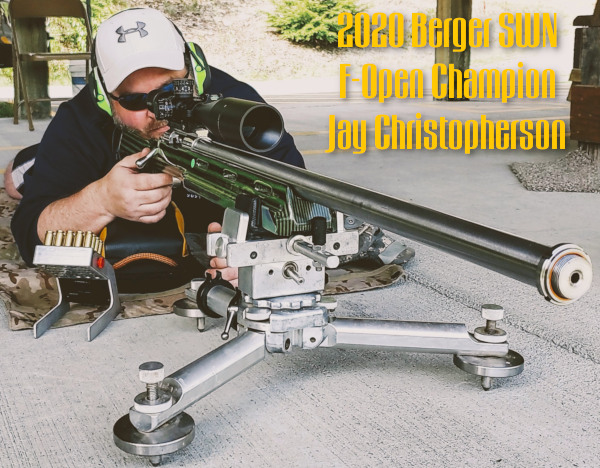

 I do all my own gunsmithing, including chambering, bedding, and stock work. I’m no Keith Weil, Alex Wheeler, or some of those other guys, but I feel pretty good about the work I do. I know that when there’s a mistake or imperfection, it’s MY mistake and I can live with that. I like to keep things as minimal as possible, so I shoot off a SEB Mini (no mods) and SEB rear bag.




 There’s More to the Story…


