Thursday 2/6/2020 was the first Team Day at the Berger Southwest Nationals (SWN). Dozens of squads competed in F-TR, F-Open, and Sling Divisions. This 4-Man Palma Team Match had 15 shots for record each at 800, 900, and 1000 yards. This is a real test of wind-reading and marksmanship. Phil Kelley reports: “Tricky conditions challenged great teams throughout the day.” We first want to congratulate Team Lapua Brux Borden (LBB), with a convincing Thursday win in the F-Open Division. We were especially proud of this performance because Team LBB member Jay Christopherson serves as AccurateShooter.com’s system administrator. Congrats to Jay (far right below) and his team-mates including David Christian, Tod Hendricks, Pat Scully, Erik Cortina (Captain), and Bob Sebold (Coach).
Team Lapua Brux Borden Archive Photo from 2019 at last year’s Berger SWN.
In the F-TR division, Team USA Independence took top honors with a 1773-83X total for four shooters: Ian Klemm, Wade Fillingame, Fritz Braun, and Luke Ramsey.
In the Sling Division, Team USNRT Milanovic took top honors with 1782-82X, finishing three points ahead of Team USNRT Gill. Captain/Coach Oliver Milanovic lead the team with 449-30X.
In team competition, the shooter relies on his coach and spotter.
Berger SWN 600-Yard Mid-Range Match Results
In the Mid-Range match, Tod Hendricks topped the F-Open field with 598-37X, a dominant performance. Jim Fowler finished second with 596-20X, and our own Product Tester John Masek was third with 595-33X. John, aka “F-Class John” in our Forum, prepares our Deals of the Week, and does product reviews. Here is his latest Teslong Borescope Review.
In the F-TR Division, the top three shooters all finished with 584 points. However, Mid-Range Champion Scott Harris (584-30X) tallied a huge X-Count advantage over second-place Doug Boyer (584-21X), and third-place Ian Klemm (584-20X). Congrats to all three men.
In the Sling Division, Randy Teissedre won with 597-33X, followed by Mike Kelley with 593-30X, and Larry Sollars with 592-32X.
High Winds for Mid-Range Match on Wednesday
It was windy and cold to start the day for the 600-Yard, Mid-Range Match on Wednesday at the Ben Avery Range in Phoenix. Capstone’s Adam Braverman posted: “Nice full value wind to start the Mid-Range portion of the SW Nationals sponsored by Capstone Precision Group. 38 degrees felt like 27!”
There is an excellent article about primers on the Shooting Times website. We strongly recommend you read Mysteries And Misconceptions Of The All-Important Primer, written by Allan Jones. Mr. Jones is a bona fide expert — he served as the manager of technical publications for CCI Ammunition and Speer Bullets and Jones authored three editions of the Speer Reloading Manual.
This authoritative Shooting Times article explains the fine points of primer design and construction. Jones also reveals some little-known facts about primers and he corrects common misconceptions. Here are some highlights from the article:
Size Matters
Useful Trivia — even though Small Rifle and Small Pistol primer pockets share the same depth specification, Large Rifle and Large Pistol primers do not. The standard pocket for a Large Pistol primer is somewhat shallower than its Large Rifle counterpart, specifically, 0.008 to 0.009 inch less.
Magnum Primers
There are two ways to make a Magnum primer — either use more of the standard chemical mix to provide a longer-burning flame or change the mix to one with more aggressive burn characteristics. Prior to 1989, CCI used the first option in Magnum Rifle primers. After that, we switched to a mix optimized for spherical propellants that produced a 24% increase in flame temperature and a 16% boost in gas volume.
Foiled Again
Most component primers have a little disk of paper between the anvil and the priming mix. It is called “foil paper” not because it’s made of foil but because it replaces the true metal foil used to seal early percussion caps. The reason this little disk exists is strictly a manufacturing convenience. Wet primer pellets are smaller than the inside diameter of the cup when inserted and must be compacted to achieve their proper diameter and height. Without the foil paper, the wet mix would stick to the compaction pins and jam up the assembly process.
Redding has a new tool that can make it easier to measure case neck and bullet run-out. Redding’s new Slant Bed Concentricity Gauge features a tilted, 4-point case support. The “Slant Bed” design moves the bearing surface down and away from the user, making case rotation easier. Redding explains: “Pushing down with the index finger is a natural movement as opposed to rolling on a flat which requires the movement of the entire arm. It improves both the ease of case rotation and the maintenance of proper alignment for reading.”
The orientation of the Dial Indicator also improves ergonomics. The fixed vertical indicator stand places the indicator face at the optimal sight angle of 30°, reducing the possibility of off-center readings. Precision stainless steel bearings provide single-point contact with the cartridge case. Bearing sliders on stainles guideways allow quick and easy linear adjustment for cartridge length.
Redding’s new Slant Bed tool is affordable — $124.19 with 1″ Dial Indicator. The tool ships set-up for right-handers, but quickly converts for left-hand use.
- Ergonomic Design — Ships complete with large 1″x.001″ dial indicator
– Fixed indicator position — Dliminates set-up errors
– Precision stainless steel bearings mounted on linear guideways accept cartridge sizes from .17 Hornet to .408 CheyTac.
– Supplied with non-skid rubber feet or use direct mounting holes
– Easily converted to left-hand arrangement
Redding Product Description:
The new Slant Bed Concentricity Gauge features a large, easy-to-read dial indicator which quickly mounts in a factory aligned base dead-on the centerline of the case. No additional indicator alignment is needed. The uniquely angled design of the slant bed also better positions the dial indicator for easier reading as opposed to older designs. Additionally, the Gauge can be transitioned from right-handed use to left-handed by using a provided set of mounting holes on the base. Simply remove the mount screws and transfer the working sections from one end to the other. Left-handed users no longer need to struggle to get accurate readings.
At SHOT Show and Media Day at the range, hundreds of new pistols were on display. We were pleased to see a variety of new .22 LR rimfire choices. For training, fun plinking, and target work, a .22 LR pistol offers many advantages. First, the ammo is inexpensive — you can get decent ammo for under $3.00 a box these days. In addition, barrel life is excellent with the little .22 LR cartridge. Finally, .22 LR has very low recoil, and less noise than centerfire cartridges — though you should still always wear eye and ear protection when shooting rimfire handguns.
Here are five new-for-2020 .22 LR Handguns from Browning, Ruger, Keltec, and Glock. Though it appears to have some reliability issues, we included the new Glock 44, because many of our Forum members asked about this new handgun.
Browning Buck Mark Limited Edition Buck Mark Plus Vision
This is a new Limited Edition of Browning’s classic Buck Mark semi-auto rimfire pistol. This features a ported barrel shroud. Along with the blue version shown, this new pistol is offered with a Red or Black finish. This Editor shot this Buck Mark Plus Vision Ltd. Edition on Range Day and were impressed. It balances well, has a great trigger, and was very accurate. See Full Review on GunsAmerica.com. With lots of close-up photos, the GunsAmerica Digest review provides very complete information on the Limited Edition Series Plus Vision Buck Mark.
Ruger Mark IV .22 LR with 10″ Barrel
This new Ruger Mark IV has a serious sight radius — the 10-inch barrel is near twice the length of the Mark IV’s typical 5.5-inch barrel. Even Ruger’s Mark IV Hunter and Competition models only offer a 6.88″ barrel. These new 10″-barrel guns still use the standard Mark IV one-button takedown for quick and easy field-stripping. The upper receiver comes drilled and tapped to mount Weaver- or Picatinny-style rails for optics. These new long-barrel Mark IVs will be available soon from Guns.com.
Ruger Lite Rack LCP II .22 LR Pistol
For SHOT Show 2020, Ruger introduced a new ultra-compact .22 LR pistol, the LCP II “Lite Rack”. This rimfire version of Ruger’s popular .380 ACP pocket pistol gets its name from the easy-to-charge slide. Initial testing shows this little rimfire has a decent trigger and good accuracy. With a 10+1 capacity, the Lite Rack .22 is very reliable, as you can see in this .22 Plinkster video. If you’re interested in a “Deep Cover” .22 LR carry pistol, the Lite Rack LCP II, with its $319.99 street price, may fit the bill.
Keltec P17 — Compact, Budget-Priced .22 LR Pistol
Keltec’s new P17 rimfire pistol is lightweight, easy to handle, and features a fiber optic front sight and an adjustable rear. Priced at just $199.95 MSRP, the .22 LR P17 has 16+1 round capacity and ships with three, 16-round magazines. This is a small pistol — it weight just 14 ounces and OAL is 6.65″. Keltec states: “The new, affordable P17 pistol makes range days a lot less expensive and far more fun.” With low cost .22 LR ammo and a 16+1 capacity, this should be fun to shoot.
Glock 44 — Glock’s First-Ever .22 LR Handgun
Glock surprised the world with its new Glock 44, with a form factor similar to the Glock 19. Glock’s first rimfire handgun has a 4.02″ barrel and 7.28″ OAL so most G19 holsters will work with the G44. There is minimal muzzle flip, accuracy is good, and the trigger is decent. OK, that’s the good stuff. The negatives? There have been reliability issues with bulk-type, inexpensive .22 LR ammunition. Reviewer .22 Plinkster was disappointed with his G44. He had dozens of malfunctions with bulk .22 LR ammo (see 9:00 time-mark) and the gun shot high with normal sight alignment (9:20 time-mark). He says the new G44 needs further development: “I… had high hopes for the Glock 44 when it was released. Hopefully, Glock will remedy some of the issues with this handgun.” And in the Pew-Pew Tactical video below you’ll see a malfunction at 6:50. The reviewer stated: “I struggled with the rounds that were cheaper and lighter, but I didn’t struggle with hot stuff or the good stuff.” Lesson — if you are considering the G44, be sure to use quality, hotter .22 LR ammo such as CCI Mini-Mags.
Readers — if you reload with Accurate-brand 2495, 4064, or 4350 powders, check your containers now! Accurate Powder is recalling certain lots of these powders in both 1-lb and 8-lb containers. This is serious. The manufacturer says: “The use or storage of this product may result in combustion, fire damage, and/or possible serious injury or property damage.” The problematic powders being recalled were manufactured for Western Powders Inc. prior to 10/1/2016, but they may have been sold anytime after that.
Check the Lot Number on the back or bottom of the containers. The lot number is the last digit or last two digits (right-most digits). Here are the recalled lots:
Accurate 2495 Lots 2-17 | Accurate 4064 Lots 2-16 | Accurate 4350 Lots 2-22
If you have any of the affected powder you should fill the container immediately with WATER. Then contact Western Powders at 406-234-0422 or customerservice@westernpowders.com .
Accurate Powders Recall Notice for 2495, 4064, 4360 Powders
Recall tip from EdLongrange. We welcome reader submissions.
You Should Inspect Your Powder Supplies Now
This Powder Recall was first announced in November 2019, but we are repeating it now for our readers who may still be unaware of the issue. Some of our Forum members have observed some powder degradation with affected lots. But they also report that the refunds were handled promptly and fairly.
Member Snert noted: “I went through my inventory and found an 8-pounder and a 1-pounder, 2495 and 4350 respectively. The 4350 was going….changing color and stunk, red mist. The 2495 hadn’t obviously gone, but was part of the recall.
I called and the process is easy. Read the tags and tell em what you have. Write down the info they give you. Take a photo of the product and tag, send your contact info and a claim number. I found that they are sending me back more money than I paid. Very fair refund. I was happy with the customer service. Stand-up guys who were helpful. I’d buy from them again.” READ FORUM Recall thread.
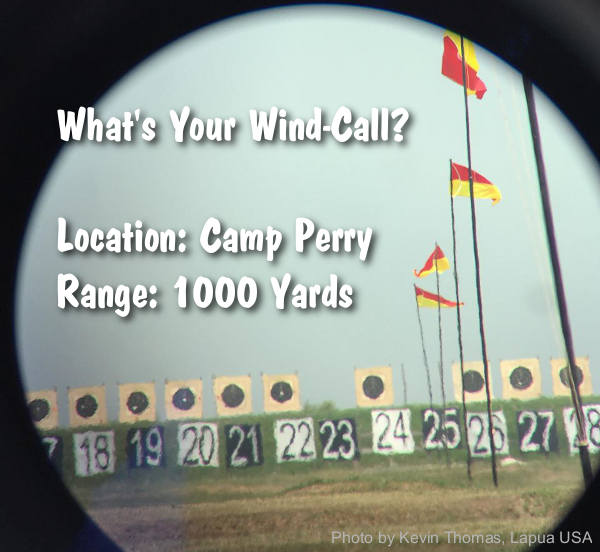
Readers often ask for a good, authoritative resource on doping the wind and reading mirage. Many of our Forum members recommended M.Sgt. Jim Owens’ Wind-Reading Book. With 22 sets of wind charts, this 166-page resource is offered for $14.95 in print format or $12.95 in CD format.
Owens’ Reading the Wind and Coaching Techniques clearly explains how to gauge wind speeds and angles. Owens, a well-known High Power coach and creator of Jarheadtop.com, offers a simple system for ascertaining wind value based on speed and angle. The CD also explains how to read mirage — a vital skill for long-range shooters. In many situations, reading the mirage may be just as important as watching the wind flags. Owens’ $12.95 CD provides wind-reading strategies that can be applied by coaches as well as individual shooters.
NOTE: The Wind DVD product is completely different than Owens’ $12.95 CD. The DVD is like an interactive class, while the CD is basically an eBook.
Played straight through, the DVD offers about 75 minutes of instruction. M.Sgt. Owens says “You will learn more in an hour and fifteen minutes than the host learned in fifteen years in the Marine Corps shooting program. This is a wind class you can attend again and again. [It provides] a simple system for judging the speed, direction and value of the wind.” The DVD also covers mirage reading, wind strategies, bullet BC and more.
The 2020 Berger Southwest Nationals, one of the biggest (and best) rifle competitions of the year, kicks off Wednesday, February 5, 2019 at the Ben Avery Range outside Phoenix, Arizona. The big match continues through Sunday, February 9th. This match attracts the top F-Class and sling shooters in the country, along with many talented foreign competitors. See Desert Sharpshooters SWN Facebook Page.
Here’s a state-of-the-art F-Open rig with sleek, low-profile, Speedy-designed Shurley Brothers stock:
Talk to the competitors and many will tell your that the SWN is their favorite match of the year. For those in Northern states, the chance to enjoy some Arizona sunshine is a big draw, along with the quality of the competition, and the camaraderie.
The 2020 Berger SWN event commences today with a Mid-Range, 600-yard Match:
Capstone Precision Group Makes This Event Possible
The Berger SW Nationals are made possible through the principal support of Berger Bullets and Lapua, both part of the Capstone Precision Group, which also distributes Vihtavuori powder and SK Ammunition in the USA. Berger and Lapua both generously donate prizes for 2020 SWN competitors.
Bird’s Eye Ben Avery — A Look at the Range
If you’ve never visited the Ben Avery Facility north of Phoenix, Arizona, here is a video shot in 2016 that shows the 1000-yard range (including drone footage). The desert range at Ben Avery is something special — check out this “birds-eye view”. This video also includes an interview with Derek Rodgers, F-TR World Champion, King of 2 Miles, and the only man who who has earned both F-Open AND F-TR USA National titles.
Event Schedule for 2020 Berger SWN
Wednesday, 5 February 2020, 9:00 AM
Mid-Range Match – Three 20-shot matches at 600 yards. (Divisions – Palma, Any Rifle-Any Sight, F-Open, F-TR)
Thursday, 6 February 2020, 9:00 AM
4-Man Palma Team Match – 15 shots for record at 800, 900, and 1000 yards. (Divisions – Palma, F-Open, F-TR)
Friday, 7 February 2020, 8:30 AM – Start of Grand Agg
Individual Palma Match – 15 shots for record at 800, 900, and 1000 yards. (Divs – Palma, F-Open, F-TR)
Swap Meet at 1000-Yard Line after conclusion of Day’s Match
Saturday, 8 February 2020, 8:30 AM
Individual 1000 Yard Matches – Two 20-shot matches at 1000 yards. Any Rifle-Iron Sight (Any sight for F-Class shooters). (Divisions – Palma, Any Rifle-Iron Sight, F-Open, F-TR)
4 Man Team Match – 20 shots at 1000 yards. Any Rifle-Iron Sight (Any sight for F-Class shooters). (Divisions – Palma, Any Rifle-Iron Sight, F-Open, F-TR)
Banquet Dinner – Approximately 5:00 pm at Indoor Range.
Sunday, 9 February 2020, 8:30 AM
Individual 1000 Yard Matches – Two 20-shot matches at 1000 yards. Any Rifle-Any Sight (Any sight for F-Class shooters). (Divisions – Palma, Any Rifle-Any Sight, F-Open, F-TR)
Awards Ceremony at the Indoor Range.
Sling Shooters in Palma Division
For the Palma division, the cartridge of choice is the .308 Winchester (7.62.x51). This versatile cartridge is still capable of extreme accuracy. Never underestimate a skilled sling shooter with a good Palma rifle. Below is multi-time NRA National Long-Range Champion John Whidden in action. John’s rifle features a centerfire action in an aluminum Anschutz small-bore stock.
Didn’t get enough gun stuff in Sin City during SHOT Show? Then head to Reno, Nevada for the biggest hunting/safari show of the year. The 48th Annual Safari Club International (SCI) Hunters’ Convention kicks off today, Wednesday, February 5, 2018, at the Reno Sparks Convention Center. The big event runs through Saturday, February 8, 2018. Over 20,000 hunters and sportsmen are expected to attend this year. Ask any member who has attended the SCI Convention, and you will likely hear, “You have to go! It is the ultimate hunters’ market/showcase.”
This year’s convention will have almost 1,100 companies in over 450,000 square feet of exhibit space. Thirty-two countries from six continents are represented under one roof where members come to book hunts, meet outfitters, and shop for guns, hunting equipment, and outdoor gear. There will be dozens of seminars covering hunting techniques, care for gear/equipment, and ways to prepare wild game.
Impressive Selection of Auction Items This Year
The SCI show is famed for its gun, safari, and outdoor art auctions which raise money for the organization. At this year’s Convention, exotic firearms, once-in-a-lifetime hunts, and fine collectibles will be auctioned. Net proceeds from the auctions are used by SCI to promote conservation and game management efforts worldwide. CLICK HERE for Auction Preview Guide.
Here are some of the hunts which will be auctioned:
And here is one of the most impressive firearms to be auctioned at the 2020 show, a classic “Big Five” Double Rifle from Krieghoff International, valued at $18,690.
The SCI convention boasts “the largest display of wildlife art at one venue anywhere in the world” according to Ammoland.com. The work of scores of painters, sculptors, and taxidermists will be on display. There will be auctions of wall paintings and sculpture items, such as this Bronze Buck:
Guided Hunts in Exotic Destinations
At the SCI Convention, hundreds of top guides and outfitter services are showcased in the Outfitters Hall. You will find hunting guides who can literally take you to the ends of the earth to find prize game. From the Arctic to Africa to New Zealand’s Southern Alps, you will find “dream hunts” to pursue.
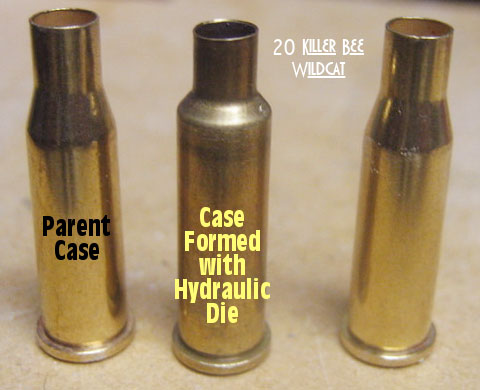
Are you a confirmed wildcatter? Do you like to experiment with custom cartridge types? Or do you just like the extra performance you can get from a specialty cartridge such as a 20 Vartarg or 22-250 AI? Well, if you love wildcat cartridges, you’ll probably enjoy this book. Now available for the first time since 2003, The Handloader’s Manual of Cartridge Conversions explains the processes and tools needed to convert standardized brass into hundreds of different rifle and pistol cartridge types. A vast variety of case designs are covered — from vintage cartridge types to modern, cutting-edge wildcats.
This classic reference guide has been revised with an easy-to-search format, complete with a full index of hundreds of cartridges. This book belongs on the shelf of any hand-loader who enjoys making and shooting wildcat cartridges. However do note that much of the text is unchanged from earlier editions. For some cartridge types, the author recommends “parent” brass brands that are no longer available. In other situations, there may be more convenient conversions now offered. Nonetheless this is an important resource. As one verified purchaser explains: “Great reference for making the cartridges that are hard to get or no longer in production. Offers an alternative to the the time, expense and effort of having to re-chamber a classic. Saves ‘Grandpa’s shooters’ from becoming safe queens.”
The 2020 Berger Southwest Nationals kicks off 2/5/2020 at the Ben Avery Range outside Phoenix, AZ. The big event starts with a 600-yard Mid-Range Match. Many of the nation’s most talented F-Class and sling shooters will be there. But no matter what your skill level, it is still possible to make major mistakes that can spoil the day and/or put you out of the running for the entire match. This article aims to help competitors avoid the big errors/oversights/failures, aka “train wrecks”, that can ruin a match.
Photo by Sherri Jo Gallagher.
In any shooting competition, you must try to avoid major screw-ups that can ruin your day (or your match). In this article, past F-TR National Mid-Range and Long Range Champion Bryan Litz talks about “Train Wrecks”, i.e. those big disasters (such as equipment failures) that can ruin a whole match. Bryan illustrates the types of “train wrecks” that commonly befall competitors, and he explains how to avoid these “unmitigated disasters”.
Urban Dictionary “Train Wreck” Definition: “A total @#$&! disaster … the kind that makes you want to shake your head.”
Success in long range competition depends on many things. Those who aspire to be competitive are usually detail-oriented, and focused on all the small things that might give them an edge. Unfortunately it’s common for shooters lose sight of the big picture — missing the forest for the trees, so to speak.
Consistency is one of the universal principles of successful shooting. The tournament champion is the shooter with the highest average performance over several days, often times not winning a single match. While you can win tournaments without an isolated stellar performance, you cannot win tournaments if you have a single train wreck performance. And this is why it’s important for the detail-oriented shooter to keep an eye out for potential “big picture” problems that can derail the train of success!
Train wrecks can be defined differently by shooters of various skill levels and categories. Anything from problems causing a miss, to problems causing a 3/4-MOA shift in wind zero can manifest as a train wreck, depending on the kind of shooting you’re doing.
Below is a list of common Shooting Match Train Wrecks, and suggestions for avoiding them.
1. Cross-Firing. The fastest and most common way to destroy your score (and any hopes of winning a tournament) is to cross-fire. The cure is obviously basic awareness of your target number on each shot, but you can stack the odds in your favor if you’re smart. For sling shooters, establish your Natural Point of Aim (NPA) and monitor that it doesn’t shift during your course of fire. If you’re doing this right, you’ll always come back on your target naturally, without deliberately checking each time. You should be doing this anyway, but avoiding cross-fires is another incentive for monitoring this important fundamental. In F-Class shooting, pay attention to how the rifle recoils, and where the crosshairs settle. If the crosshairs always settle to the right, either make an adjustment to your bipod, hold, or simply make sure to move back each shot. Also consider your scope. Running super high magnification can leave the number board out of the scope’s field view. That can really increase the risk of cross-firing.
2. Equipment Failure. There are a wide variety of equipment failures you may encounter at a match, from loose sight fasteners, to broken bipods, to high-round-count barrels that that suddenly “go south” (just to mention a few possibilities). Mechanical components can and do fail. The best policy is to put some thought into what the critical failure points are, monitor wear of these parts, and have spares ready. This is where an ounce of prevention can prevent a ton of train wreck. On this note, if you like running hot loads, consider whether that extra 20 fps is worth blowing up a bullet (10 points), sticking a bolt (DNF), or worse yet, causing injury to yourself or someone nearby.
3. Scoring/Pit Malfunction. Although not related to your shooting technique, doing things to insure you get at least fair treatment from your scorer and pit puller is a good idea. Try to meet the others on your target so they can associate a face with the shooter for whom they’re pulling. If you learn your scorer is a Democrat, it’s probably best not to tell Obama jokes before you go for record. If your pit puller is elderly, it may be unwise to shoot very rapidly and risk a shot being missed (by the pit worker), or having to call for a mark. Slowing down a second or two between shots might prevent a 5-minute delay and possibly an undeserved miss.
Photo by Sherri Jo Gallagher.
4. Wind Issues. Tricky winds derail many trains. A lot can be written about wind strategies, but here’s a simple tip about how to take the edge off a worse case scenario. You don’t have to start blazing away on the command of “Commence fire”. If the wind is blowing like a bastard when your time starts, just wait! You’re allotted 30 minutes to fire your string in long range slow fire. With average pit service, it might take you 10 minutes if you hustle, less in F-Class. Point being, you have about three times longer than you need. So let everyone else shoot through the storm and look for a window (or windows) of time which are not so adverse. Of course this is a risk, conditions might get worse if you wait. This is where judgment comes in. Just know you have options for managing time and keep an eye on the clock. Saving rounds in a slow fire match is a costly and embarrassing train wreck.
5. Mind Your Physical Health. While traveling for shooting matches, most shooters break their normal patterns of diet, sleep, alcohol consumption, etc. These disruptions to the norm can have detrimental effects on your body and your ability to shoot and even think clearly. If you’re used to an indoor job and eating salads in air-conditioned break rooms and you travel to a week-long rifle match which keeps you on your feet all day in 90-degree heat and high humidity, while eating greasy restaurant food, drinking beer and getting little sleep, then you might as well plan on daily train wrecks. If the match is four hours away, rather than leaving at 3:00 am and drinking five cups of coffee on the morning drive, arrive the night before and get a good night’s sleep.”
Keep focused on the important stuff. You never want to lose sight of the big picture. Keep the important, common sense things in mind as well as the minutia of meplat trimming, weighing powder to the kernel, and cleaning your barrel ’til it’s squeaky clean. Remember, all the little enhancements can’t make up for one big train wreck!



 As a separate product, Owens offers a




 Train Wrecks (and How to Avoid Them)


 4. Wind Issues. Tricky winds derail many trains. A lot can be written about wind strategies, but here’s a simple tip about how to take the edge off a worse case scenario. You don’t have to start blazing away on the command of “Commence fire”. If the wind is blowing like a bastard when your time starts, just wait! You’re allotted 30 minutes to fire your string in long range slow fire. With average pit service, it might take you 10 minutes if you hustle, less in F-Class. Point being, you have about three times longer than you need. So let everyone else shoot through the storm and look for a window (or windows) of time which are not so adverse. Of course this is a risk, conditions might get worse if you wait. This is where judgment comes in. Just know you have options for managing time and keep an eye on the clock. Saving rounds in a slow fire match is a costly and embarrassing train wreck.


