Barrel-maker Dan Lilja’s website has an excellent FAQ page that contains a wealth of useful information. On the Lilja FAQ Page as you’ll find informed answers to many commonly-asked questions. For example, Dan’s FAQ addresses the question of barrel life. Dan looks at factors that affect barrel longevity, and provides some predictions for barrel life, based on caliber, chambering, and intended use.
NOTE: This article was very well-received when it was first published last year. We are reprising it for the benefit of readers who missed it the first time.
Dan cautions that “Predicting barrel life is a complicated, highly variable subject — there is not a simple answer. Signs of accurate barrel life on the wane are increased copper fouling, lengthened throat depth, and decreased accuracy.” Dan also notes that barrels can wear prematurely from heat: “Any fast varmint-type cartridge can burn out a barrel in just a few hundred rounds if those rounds are shot one after another without letting the barrel cool between groups.”
Q. What Barrel Life, in number of rounds fired, can I expect from my new barrel?
A: That is a good question, asked often by our customers. But again there is not a simple answer. In my opinion there are two distinct types of barrel life. Accurate barrel life is probably the type most of us are referencing when we ask the question. But there is also absolute barrel life too. That is the point where a barrel will no longer stabilize a bullet and accuracy is wild. The benchrest shooter and to a lesser extent other target shooters are looking at accurate barrel life only when asking this question. To a benchrest shooter firing in matches where group size is the only measure of precision, accuracy is everything. But to a score shooter firing at a target, or bull, that is larger than the potential group size of the rifle, it is less important. And to the varmint hunter shooting prairie dog-size animals, the difference between a .25 MOA rifle or one that has dropped in accuracy to .5 MOA may not be noticeable in the field.
The big enemy to barrel life is heat. A barrel looses most of its accuracy due to erosion of the throat area of the barrel. Although wear on the crown from cleaning can cause problems too. The throat erosion is accelerated by heat. Any fast varmint-type cartridge can burn out a barrel in just a few hundred rounds if those rounds are shot one after another without letting the barrel cool between groups. A cartridge burning less powder will last longer or increasing the bore size for a given powder volume helps too. For example a .243 Winchester and a .308 Winchester both are based on the same case but the .308 will last longer because it has a larger bore.
And stainless steel barrels will last longer than chrome-moly barrels. This is due to the ability of stainless steel to resist heat erosion better than the chrome-moly steel.
Barrel Life Guidelines by Caliber and Cartridge Type
As a very rough rule of thumb I would say that with cartridges of .222 Remington size you could expect an accurate barrel life of 3000-4000 rounds. And varmint-type accuracy should be quite a bit longer than this.
For medium-size cartridges, such as the .308 Winchester, 7×57 and even the 25-06, 2000-3000 rounds of accurate life is reasonable.
Hot .224 caliber-type cartridges will not do as well, and 1000-2500 rounds is to be expected.
Bigger magnum hunting-type rounds will shoot from 1500-3000 accurate rounds. But the bigger 30-378 Weatherby types won’t do as well, being closer to the 1500-round figure.
These numbers are based on the use of stainless steel barrels. For chrome-moly barrels I would reduce these by roughly 20%.
The .17 and .50 calibers are rules unto themselves and I’m pressed to predict a figure.
The best life can be expected from the 22 long rifle (.22 LR) barrels with 5000-10,000 accurate rounds to be expected. We have in our shop one our drop-in Anschutz barrels that has 200,000 rounds through it and the shooter, a competitive small-bore shooter reported that it had just quit shooting.
Remember that predicting barrel life is a complicated, highly variable subject. You are the best judge of this with your particular barrel. Signs of accurate barrel life on the wane are increased copper fouling, lengthened throat depth, and decreased accuracy.
Benchrest Barrel Life — You May Be Surprised
I thought it might be interesting to point out a few exceptional Aggregates that I’ve fired with 6PPC benchrest rifles with barrels that had thousands of rounds through them. I know benchrest shooters that would never fire barrels with over 1500 shots fired in them in registered benchrest matches.
I fired my smallest 100-yard 5-shot Aggregate ever in 1992 at a registered benchrest match in Lewiston, Idaho. It was a .1558″ aggregate fired in the Heavy Varmint class. And that barrel had about 2100 rounds through it at the time.
Another good aggregate was fired at the 1997 NBRSA Nationals in Phoenix, Arizona during the 200-yard Light Varmint event. I placed second at this yardage with a 6PPC barrel that had over 2700 rounds through it at the time. I retired this barrel after that match because it had started to copper-foul quite a bit. But accuracy was still good.
Teslong Borescopes Update — WiFi and Rigid Rod Versions Product Report by F-Class John
Not more than a few months after the Teslong corded borescope hit the market to massive applause they’ve released a cordless WiFi-enabled corded version as well as a rigid rod model — two new models with important new features/functionality. When I originally reviewed the Teslong borescope I was blown away with the value, clarity, and ease of use. SEE Review HERE. That original Teslong really was a game changer in the borescope market. The large number of forum threads springing up since the Teslong release shows that that digital borescopes have finally found a large and enthusiastic customer base.
IMPORTANT: Guys — Watch the Videos!!! John does a great job showing the set-up and use of these Borescopes. You really need to WATCH THE VIDEOS! They show much more than we can illustrate with still images.
Despite all the love people have shown for the original, plug-in Teslong borescope, one common complaint was that it could not be used with smartphones or small tablets. With that in mind, Teslong surprised the market with the release of a cordless WiFi version that works with just about any device that has a WiFi connection. The new WiFi unit, which is in very high demand, costs around $75, just $25 more than the original plug-in version. NOTE –YES this WiFi unit DOES work with both iOS (Apple) and Android smartphones and tablets. However, you may wish to try a couple different Apps.
To use the WiFi Teslong, simply download Teslong’s viewer App, turn the unit on and connect to the Teslong WiFi in your device settings. While it does take a couple steps to connect each time, you are rewarded with a cordless version that can be used at home or the range equally well. Watch the video and you can see how the Wifi unit is set up and how it is used to inspect both a barrel and a sizing die. Do watch the video — it explains all. Along with live video feed, the WiFi control handle has a button to record still images.
Important — some guys had initial problems getting the WiFi image to display on their smartphones but that was normally just a software configuration issue. If you are patient, and follow the instructions, you should be fine. Some older guys had to enlist the aid of a 10-year-old grandkid. Note, as of 1/29/2020, the WiFi Version is temporarily out of stock on Amazon, but it can be ordered for $74.99 from the Teslong Webstore.
New Teslong Rigid Rod Borescope
Along with the WiFi version, Teslong has also released a borescope with the lens mounted on the end of a rigid metal shaft — a configuration similar to classic optical borescopes such as the Hawkeye. This new “shafty” Teslong has the same electro-optical sensors, connectors, and adjustable light as the original Teslong. However, this new rigid rig now uses a solid rod instead of a flexible cable. Having a solid rod makes using the unit much easier since you’re not fighting the cable. The rod also makes rotating the unit inside the bore more intuitive as it lacks the cable spring back of the flexible version.
Located on the borescope is an inch scale allowing the user to easily to measure how far into the bore they’ve gone for easy identification of any issues later. The whole unit comes in a nice heavy-duty cardboard tube that makes it easy to store and I can see it lasting as long as the unit itself.
Why choose the rigid Teslong? Importantly, the lack of a tethered cord allows you to rotate the unit more easily inside the barrel. Compared to the original corded Teslong, I did find that running the rigid borescope down the barrel without the mirror provided a larger view. That may be beneficial to some users. Overall, the optical clarity and definition remain excellent — certainly on par with the original unit.
General Teslong Borescope User Tips
The new Wifi and Rigid Teslong borescope share some basic features with the original plug-in, corded Teslong. All three devices feature a mirror on the end that screws on and has a jam nut to keep it in place and can be adjusted for focal length based on the caliber and they’re now including several extras in case of damage or loss. While they’ve always been good about replacing them free of charge there is a wait time, so the inclusion of extras is a nice bonus.
SUMMARY — Both WiFi and Rigid Teslong Borescopes Perform Well, Are Great Values
Overall these two new units are great additions to Teslong’s lineup giving users two great units to choose from. While most folks may gravitate to the WiFi version, I think there’s room for all three models (WiFi, Corded Plug-in, Rigid Plug-in).
Many people may find the corded or rigid versions more practical for around the house where they don’t necessarily need the cordless version and don’t want to worry about keeping it charged all the time. For any range use or out of town matches the WiFi with its smaller footprint and ability to work with any electronic device will probably make more sense and will help justify the additional cost. In the end, the amazing thing is that no matter which version you choose you’ll have a great borescope that will help improve your shooting.
How and Why to Create a Dummy Round
When you have a new custom rifle built, or a new barrel fitted to an existing rifle, it makes sense to create a dummy round. This should have your preferred brass and bullet types, with the bullet positioned at optimal seating depth. A proper dummy round helps the gunsmith set the freebore correctly for your cartridge, and also ensure the proper chamber dimensions.
Respected machinist, tool-maker, and gunsmith Greg Tannel of Gre-Tan Rifles explains: “I use the dummy round as a gauge to finish cut the neck diameter and throat length and diameter so you have [optimal] clearance on the loaded neck and the ogive of the bullet just touches the rifling.” He recommends setting bullet so the full diameter is just forward of the case’s neck-shoulder junction. “From there”, Greg says, “I can build you the chamber you want… with all the proper clearances”.
Greg Tannel has created a very helpful video showing how to create a dummy round. Greg explains how to measure and assemble the dummy and how it will be used during the barrel chambering process. Greg notes — the dummy round should have NO Primer and No powder. We strongly recommend that every rifle shooter watch this video. Even if you won’t need a new barrel any time soon, you can learn important things about freebore, leade, and chamber geometry.
This has been a very popular video, with 244,000 views. Here are actual YouTube comments:
That is the best explanation I’ve ever seen. Thank you sir. — P. Pablo
Nice video. You do a very good job of making this easy for new reloaders to understand. I sure wish things like this were available when I started reloading and having custom rifles built. Once again, great job, and your work speaks for itself. — Brandon K.
Beautiful job explaining chambering clearances. — D. Giorgi
Another Cool Tool — The Stub Gauge
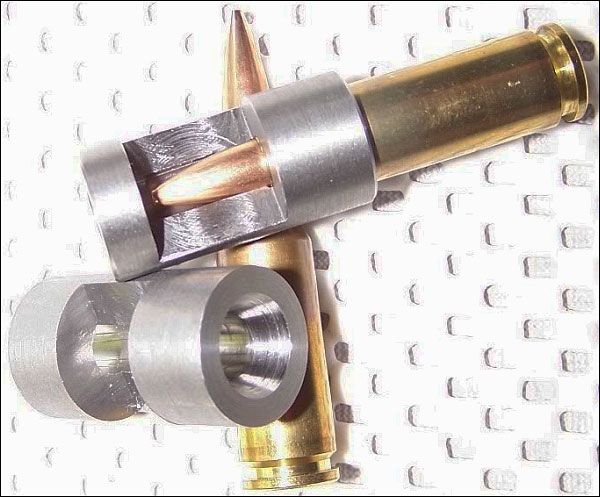
When you have your gunsmith chamber your barrel, you can also have him create a Stub Gauge, i.e. a cast-off barrel section chambered like your actual barrel. The stub gauge lets you measure the original length to lands and freebore when your barrel was new. This gives you a baseline to accurately assess how far your throat erodes with use. Of course, as the throat wears, to get true length-to-lands dimension, you need take your measurement using your actual barrel. The barrel stub gauge helps you set the initial bullet seating depth. Seating depth is then adjusted accordingly, based on observed throat erosion, or your preferred seating depth.
M1 Garand Springfield Armory July 1941 production. Facebook photo by Shinnosuke Tanaka.
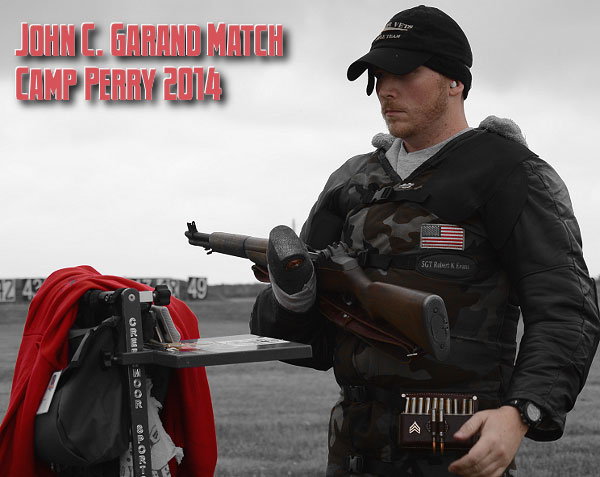
My father carried a Garand in WWII. That was reason enough for me to want one. But I also loved the look, feel, and heft of this classic American battle rifle. And the unique “Ping” of the ejected en-bloc clip is music to the ears of Garand fans. Some folks own a Garand for the history, while others enjoy competing with this old war-horse. Around the country there are regular competition series for Garand shooters, and the CMP’s John C. Garand Match is one of the most popular events at Camp Perry every year. This year’s Garand Match will be held Saturday, August 1, 2020. SEE CMP 2020 NM Calendar.
The CMP also has a John C. Garand Match each June as part of the D-Day Competition at the Talladega Marksmanship Park. Here’s a video from the inaugural Talladega D-Day Event in 2015. This year’s Talladega D-Day Matches run June 3-7, 2020.
Watch Prone Stage from the Inaugural Talladega D-Day Match in 2015
M1 Garand Manual
Recommended M1 Garand Manual
Among the many M1 Garand manuals available, we recommend the CMP’s U.S. Rifle, Caliber .30, M1: ‘Read This First’ Manual. This booklet covers take-down, reassembly, cleaning, lubrication, and operation. The manual, included with CMP rifles, is available for $3.25 from the CMP eStore. The author of Garand Tips & Tricks says: “It’s one of the best firearms manuals I’ve seen. I highly recommend it.”
M1 Garand Slow-Motion Shooting Video
What really happens when an M1 Garand fires the final round and the En-Bloc clip ejects with the distinctive “Ping”? Well thanks to ForgottenWeapons.com, you can see for yourself in super-slow-motion. The entire cycling process of a Garand has been captured using a high-speed camera running at 2000 frames per second (about sixty times normal rate). Watch the clip eject at the 00:27 time-mark. It makes an acrobatic exit, spinning 90° counter-clockwise and then tumbling end over end.
2000 frame per second video shows M1 Garand ejecting spent cartridges and En-bloc clip.
M1 Garand History
Jean Cantius Garand, also known as John C. Garand, was a Canadian designer of firearms who created the M1 Garand, a semi-automatic rifle that was widely used by the U.S. Army and U.S. Marine Corps during World War II and the Korean War. The U.S. government employed Garand as an engineer with the Springfield Armory from 1919 until he retired in 1953. At Springfield Armory Garand was tasked with designing a basic gas-actuated self-loading infantry rifle and carbine that would eject the spent cartridge and reload a new round. It took fifteen years to perfect the M1 prototype model to meet all the U.S. Army specifications. The resulting Semiautomatic, Caliber .30, M1 Rifle was patented by Garand in 1932, approved by the U.S. Army on January 9, 1936, and went into mass production in 1940. It replaced the bolt-action M1903 Springfield and became the standard infantry rifle known as the Garand Rifle. During the World War II, over four million M1 rifles were manufactured.
Precision Rifle fans should watch Shooting USA this week. On Wednesday, January 29th, Shooting USA offers a special full-hour edition devoted to the inaugural Armageddon Gear AG Cup Invitational. The first-ever AG Cup showcased an all-star line-up of tactical talent. Twenty of the nation’s top PRS/NRL marksmen were invited to a two-day event at the Arena Training Facility in Georgia. $41,000 in prize money was up for grabs, with the overall match winner guaranteed twenty thousand ($20,000) in cash!
Shooting USA runs on the Outdoor Channel Wednesdays 9:00 PM Eastern and Pacific, 8:00 PM Central.
No Outdoor Channel on cable? Then you can subscribe to Stream the Broadcast on the internet.
During this week’s Shooting USA special, John Scoutten and Armageddon Gear’s Tom Fuller report the action and interview top precision rifle shooters. The Grand Prize of $20,000 was awarded for the best overall score, based on accuracy and time. In addition, the winner of each of the 20 stages received a $1000 cash prize — serious money. During the show, you can watch the competitors adapt to challenging stage set-ups and weather conditions. With $1000 at stake for each stage, a single miss can cost big money on the firing line.
Side Match with TN Twister Target
At the inaugural AG Cup, there was a side match with a $500 prize for the competitor who hit all five TN Twister Target plates in the shortest time. The side-match employed a modular target system from Innovative Target. This system can mount TN Twister or TN Revolver multi-plate rigs, which bolt on to the IRT Head. This provides interesting challenges quite different from a static PRS plate target.
Arena Training Facility — 2300 Acres
The 2300-acre Arena Training Facility is a premier shooting facility with multiple shooting ranges from 50m to 2100m. Arena’s 1000-yard covered Known Distance range offers multiple benches, steel and paper targets out to 1000 yards. On Arena’s UKD (unknown distance) range shooters can engage steel out to 2300 yards. This 2100m UKD range boasts a 3-Story Shooting Tower, Air-Conditioned Shoot House, and multiple Positional Challenges.space.
Armaggedon Gear — Tactical Accessories Armageddon Gear, founded by former U.S. Army Ranger Tom Fuller, sells support bags, gun cases, slings, suppressor covers, scope covers, and a wide variety of other accessories popular with the PRS/NRL crowd. Armageddon Gear now provides products to the U.S. Military, Law Enforcement, as well as PRS/NRL competitors.
Are you ready to upgrade from a Dillon, Hornady, or RCBS progressive press? Then you should check out the advanced ammunition production machines from Mark 7, a division of Lyman Products. Whether you choose a manual Mark 7, or an autodrive-equipped unit, you will be stepping up to a whole new level of precision and productivity.
The Mark 7 Evolution is a 10-stage manual loading press with many features not normally found with traditional progressives. The Mark 7 Evolution can be upgraded with additional sensors and an Autodrive that can significantly increase production rate. After you acquire a Mark 7 Evolution, you can later upgrade to the Autodrive and other enhancements. The Mark 7 Evolution 10-stage Manual Loading machine costs $2,995.00 while the Mark 7 Evolution Autodrive upgrade is $1,994.95. Optional sensors include a Wired Remote Stop, DecapSense, SwageSense, PrimerSense, PowderCheck, BulletSense, and a Primer Orientation Sensor.
The Evolution comes with an 11-inch case feeder, a mechanical powder measure, and a standard stacked priming system. It supports calibers from .380 ACP to .30-06 Springfield and works on new and used brass. It also supports one-pass rifle/pistol processing and loading. The manual hand-operation is ambidextrous and the handle itself was designed by a medical device engineer for an ergonomic hold and a smooth press operation. The Evolution is manufactured from CNC-machined aluminum and steel for consistent and precise loading every time.
Increase Production Output with Mark 7 Evolution Autodrive
The Mark 7 Evolution Autodrive increases bullet production for up to 3,500 rounds an hour* by automating the Evolution manual press. It comes with a 10-inch high definition tablet and mount and JamSense and TorqueSense sensor systems.
The Autodrive features a high-torque motor, maintenance-free timing belt drive, and CNC-grade planetary gearbox. It is microprocessor-controlled with a digital clutch making it adjustable on the fly. All features are monitored through a computer with downloadable software upgrades. Production rates are user-selectable up to 3,500 rounds/hour (depending on model).
At the request of our readers, we provide select “Deals of the Week”. Every Sunday afternoon or Monday morning we offer our Best Bargain selections. Here are some of the best deals on firearms, hardware, reloading components, optics, and shooting accessories. Be aware that sale prices are subject to change, and once clearance inventory is sold, it’s gone for good. You snooze you lose.
1. Sportsman’s Warehouse — Ruger American Predator with Optic, $579.97
2. Bruno Shooters Supply — Jewell Trigger Discounts, FREE S/H
Browse the forums and you’ll see that Jewell triggers continue to dominate the competition market and for good reason. They’re reliable, cost-effective, and easily adjustable (down to a couple ounces for some models). If you’re in the market for a new trigger head over to Bruno’s for the new lower prices and free shipping on all Jewell triggers in stock.
3. Grabagun — Ruger Precision Rimfire, $359.99
The Ruger Precision Rimfire is impressive for the $359.99 retail price. The barrel attaches with an AR15-style barrel nut, which aids accuracy. The trigger adjusts down to 2.4 pounds. American Rifleman Magazine got 0.56″ average 5-shot groups with Eley Contact Target ammo at 50 yards. This rimfire rig offers a turn-key .22 LR solution for NRL22 competitors, and modular rifle fans. The Ruger Precision Rimfire rifle offers adjustable cheekpiece and length of pull, AR-style grip, free-floating M-Lok fore-end, and an 18″ barrel (1:16″ twist) pre-threaded for brakes or suppressor.
4. Amazon — Mitutoyo Digital Calipers, $102.65
Precision reloading demands quality measuring devices. And you’ll definitely need quality calipers for a multitude of measuring tasks. Whether you’re measuring bullets, brass, or any other components, you need a precise and repeatable set of calipers. Yes you can get cheap calipers, but if you can afford it, we think it make sense to get quality calipers. These Mitutoyo digital calipers are about as good as you can get. Grab a pair for $102.65 and never question your measurements again.
5. Area 419 — Blem Product Sale — Big Savings
Area 419 offers some of the best AutoTrickler parts, muzzle brakes and other PRS equipment on the market. Now you can grab all kinds of gear during the Area 419 Blem Sale. You’ll find great savings on fully functional products that may have slight cosmetic flaws or blemishes that don’t negatively impact performance/function in any way. Since you may scratch these tools during normal use in short order, why not enjoys significant savings by getting a blem version?
6. Palmetto State Armory — Smith & Wesson M&P 9mm, $299.99
Smith & Wesson continues to make some of the best handguns on the market. Here’s your chance to pick one up at a super-affordable price. Palmetto State Armory (PSA) is selling the 9mm Smith & Wesson M&P Shield for only $299.99. You can save up to $200 compared to other sellers, making this an exceptional deal on a very good handgun with a stellar S&W lifetime warranty.
7. Amazon — Walker Razor Slim Ear Muffs, $39.08
We can’t stress enough the importance of proper hearing protection — even just a few minutes of high-decibel excessive sound exposure can cause permanent hearing loss. Plugs or conventional muffs work great, but electronic muffs offer major advantages — you can hear range commands and converse with fellow shooters while still protecting your hearing. Here’s a great deal — get Walker’s Razor Slim Electronic Hearing Protection Muffs with Sound Amplification and Suppression for less than $40. These quality electronic muffs have a 23 dB Noise Reduction Rating (NRR).
8. Grizzly Industrial — Bald Eagle Slingshot Rest, $129.97
Maybe you’re just getting into F-Class or just need a good stable front rest to shoot from and don’t want to spend a ton of money on one. Don’t worry because Grizzly now has the Bald Eagle BE1129 aluminum slingshot rest for an amazingly low $129.97 close-out price. Just add your favorite front bag and you’re ready to go with a competition quality elevation adjustable rest. They also have the Bald Eagle BE1209 – Big Fifty Rest on sale now for $176.97 close-out price. With a much wider span and cast-iron legs, the Big Fifty is designed for larger guns up to .50 caliber. Either way, these rests are a great value.
9. Amazon — Jialitte Scope Bubble Level, $10.99
All serious rifle shooters need a scope level. This nicely designed Jialitte Scope Bubble Level features a 30mm milled inside diameter, plus an inner insert ring so it will also fit 1″-diameter main tubes — that dual-diameter versatility is a nice feature. We also like the way the unit is nicely radiused, and has a low profile in the middle. Price is just $10.99 with free shipping. User reviews have been very positive. You could easily pay $35.00 or more for a 30mm scope level.
There are important safety and behavior rules you need to follow at a gun range. Sometimes bad range etiquette is simply annoying. Other times poor gun-handling practices can be downright dangerous. The NRA Blog has published a useful article about range safety and “range etiquette”. While these tips were formulated with indoor ranges in mind, most of the points apply equally well to outdoor ranges. You may want to print out this article to provide to novice shooters at your local range or club.
8 Tips for Gun Range Etiquette
Story by Kyle Jillson for NRABlog
Here are eight tips on range etiquette to keep yourself and others safe while enjoying your day [at the range]. Special thanks to NRA Headquarters Range General Manager Michael Johns who assisted with this article.
1. Follow the Three Fundamental Rules for Safe Gun Handling
ALWAYS keep the gun pointed in a safe direction.
ALWAYS keep your finger off the trigger until ready to shoot.
ALWAYS keep the gun unloaded until ready to use.
This NSSF Video Covers Basic Gun Range Safety Rules:
2. Bring Safety Gear (Eye and Ear Protection)
Eye and Ear protection are MANDATORY for proper safety and health, no matter if “required” by range rules or not. It is the shooter’s responsibility to ensure proper protection is secured and used prior to entering/using any range. Hearing loss can be instantaneous and permanent in some cases. Eyesight can be ruined in an instant with a catastrophic firearm failure.
3. Carry a Gun Bag or Case
Common courtesy and general good behavior dictates that you bring all firearms to a range unloaded and cased and/or covered. No range staff appreciates a stranger walking into a range with a “naked” firearm whose loaded/unloaded condition is not known. You can buy a long gun sock or pistol case for less than $10.
4. Know Your Range’s Rules
Review and understand any and all “range specific” rules/requirements/expectations set forth by your range. What’s the range’s maximum rate of fire? Are you allowed to collect your brass? Are you required to take a test before you can shoot? Don’t be afraid to ask the staff questions or tell them it’s your first time. They’re there to help.
5. Follow ALL Range Officer instructions
ROs are the first and final authority on any range and their decisions are generally final. Arguing/debating with a Range Officer is both in poor taste and may just get you thrown out depending on circumstances.
6. Don’t Bother Others or Touch Their Guns
Respect other shooters’ privacy unless a safety issue arises. Do NOT engage other shooters to correct a perceived safety violation unless absolutely necessary – inform the RO instead. Shooters have the right and responsibility to call for a cease fire should a SERIOUS safety event occur. Handling/touching another shooter’s firearm without their permission is a major breech of protocol. Offering unsolicited “training” or other instructional suggestions to other shooters is also impolite.
7. Know What To Do During a Cease Fire
IMMEDIATELY set down your firearm, pointed downrange, and STEP AWAY from the shooting booth (or bench). The Range Officer(s) on duty will give instructions from that point and/or secure all firearms prior to going downrange if needed. ROs do not want shooters trying to “secure/unload” their firearms in a cease fire situation, possibly in a stressful event; they want the shooters separated from their guns instantly so that they can then control the situation as they see fit.
8. Clean Up After Yourself
Remember to take down your old targets, police your shooting booth, throw away your trash, and return any equipment/chairs, etc. Other people use the range too; no one wants to walk up to a dirty lane.
Volquartsen Summit rifle in Victor Company Titan aftermarket stock in Kryptec Camo.
There were thousands of rifles on display at SHOT Show 2020 in Las Vegas. We saw scores of ARs, and countless metal chassis rifles. But there were plenty of excellent field rifles with more conventional stocks. Here are our Editors’ “Pick Six” — a half-dozen stocked rifles which impressed us with their design, components, features, and “bang for the buck”. Many of these rigs feature aluminum actions and/or carbon-wrapped barrels for weight savings. We’re please to see rifle-makers employing modern materials to reduce weight for hunting rifles carried in the field.
Seekins Precision — Havak Element Super-Light
During Industry Day at the Range we met our friend Stan Pate, an ace F-Class shooter and avid hunter who was on assignment for Guns.com. Stan told us to check out the Seekins Precision Havak Element. This rifle features a high-grade 7075 aluminum action, spriral-fluted barrel, and carbon composite stock. With those components it weighs just 5.5 pounds without optics! The action also has a unique built-in bubble level (see below).
Stan Pate praised the Seekins Havak Element: “One thing I appreciate is quality. There’s something you can tell about a rifle as soon as you put it in your shoulder and cycle the bolt a few times and try the trigger. And then you shoot this rifle… it’s VERY accurate and just a solid hunting rifle. The tolerances [are] tighter than normal production rifles, which gives you a high-end rifle feel. And the accuracy follows through with that perception. The action is quite stout and ‘smooth as butter’.”
Christensen Arms — Ranger 22 Rimfire
At SHOT Show 2020, Christensen Arms showcased an impressive new .22 LR rimfire rifle, the Ranger 22. With an aluminum action, high-quality carbon-composite stock, and 18″ carbon-wrapped barrel, the Ranger 22 is quite light and easy to carry. This would be a great field-carry rifle for small varmints. The Ranger 22 features a Trigger Tech match-grade trigger, and Picatinny scope rail. Weight is 5.1 pounds, and there are a varity of finish options. Christensen Arms offers a sub-MOA 50-yard accuracy guarantee. MSRP is $795.
Browning — X-Bolt Hell’s Canyon Max Long Range
One of the more interesting factory rifles at SHOT Show was Browning’s limited edition X-Bolt Hell’s Canyon Max Long Range rifle. This Max LR Model features Cerakote Burnt Bronze finish on metal parts, and A-TACS TD-X Camo stock finish. The Heavy Sporter-contour 26″ barrel includes a removable muzzle brake. We like the stock design, which has a flat, straight toe for riding in a rear bag and nice ergonomics with an adjustable comb. Currently this is offered in 6.5 Creedmoor only. We hope other chamberings, such as 6XC or 6mm Creedmoor, will be offered in the future, as we think this could be an excellent long-range varmint platform, with a handy detachable magazine.
Volquartsen Summit Straight-Pull Rifle in .17 WSM
Since it was first introduced as a .22 LR, we liked the straight-pull, toggle-bolt Volquartsen Summit rifle. The Summit action is reliable and the rifles are well-built. In 2019 Volquartsen added the .17 Mach 2 (.17 HM2) to the Summit series. Now, for 2020 Volquartsen is addding the larger .17 WSM cartridge, which offers peak performance for a rimfire rifle. With the addition of the .17 WSM chambering, the Summit is now a bonafied option for small-critter varminting out to 200+ yard. This round has far less drop than a .22 LR and retains critter-busting energy even at 200 yards. The .17 WSM Summit boasts a 1:8.25″-twist 20″ barrel, with threaded muzzle. Conveniently, the Summit takes standard Ruger 6-round magazines. Choose either AS-1 Ambi Stock or Laminated Wood Sporter Stock (shown above). MSRP starts at $1,553.00. NOTE: Volquartsen’s .22 LR and 17 Mach 2 Summits currently list for $1225.00 in Magpul stocks, about $330 cheaper.
Savage 110 UltraLite with Carbon-Wrapped Barrel
Fitted with a Proof Research carbon-wrapped stainless barrel, Savage’s new 110 UltraLite rifle weigh under 6 pounds (without optics). It’s impressive that Savage could deliver a sub-6-pound rifle with 22″ to 24″ barrels. Part of the secret is a skeletonized receiver and fluted bolt. A full selection of chamberings will be offered: .308 Win, 6.5 Creedmoor, 6.5 PRC, .270 Win, .280 Ackley Improved, 28 Nosler, .300 WSM, and .30-06 Springfield. All 110 UltraLites come with grey AccuFit stocks with adjustable comb height and length of pull (LOP). Depending on the chambering, 110 UltraLite rifles weigh between 5.8 and 6 pounds. MSRP for the 110 UltraLite is $1499. We expect street price to be around $1300.00.
Howa Mini Action Full Dip Camo Rifles
Howa’s Mini Action rifles offer a compact platform and faster cycling for cartridges such as the .223 Rem and 6.5 Grendel. At SHOT Show, Howa displayed Mini Action rifles with “Full Dip” camouflage in three patterns: Kryptek Highlander, Yote, and Kratos. The hydro-dip camo covers the rifle from butt to muzzle, including stock, action, barrel, scope, and even rings. Hunters will appreciate the “full coverage”. Howa Mini Action “Full Dip” camo rifles are currently available in .223 Rem, 6.5 Grendel, and 7.62×39 chamberings, all with 20″ heavy barrels. Nikko Sterling GamePro 3.5-10×44mm scopes are included on these Howa Mini Action camo rifles, which are guaranteed to shoot sub-MOA. If you’re looking for a light-weight hunting rig for varmints or coyotes, this is a good choice.
Jessie Harrison — one of the greatest female pistol shooters on the planet. In the video below, Jessie offers good tips on safe handgun mag changes.
One of our Forum members asked: “Are there any good books on pistol marksmanship? I’m looking for a book that covers techniques and concepts….” Here are six recommended titles that can make you a better pistol shooter. These books run the gamut from basic handgun training to Olympic-level bullseye shooting.
Good Guidebooks for Pistol Shooters
There are actually many good books which can help both novice and experienced pistol shooters improve their skills and accuracy. For new pistol shooters, we recommend the NRA Guide to the Basics of Pistol Shooting. This full-color publication is the designated student “textbook” for the NRA Basic Pistol Shooting Course.
Serious competitive pistol shooters should definitely read Pistol Shooters Treasury a compilation of articles from World and National Champions published by Gil Hebard. You could work your way through the ranks with that book alone even though it is very small. It is an excellent resource.
If you’re interested in bullseye shooting, you should get the USAMU’s The Advanced Pistol Marksmanship Manual. This USAMU pistol marksmanship guide has been a trusted resource since the 1960s. Action Shooters should read Practical Shooting: Beyond Fundamentals by Brian Enos, and Practical Pistol by Ben Stoeger. Brian Enos is a well-known pistol competitor with many titles. Ben Stoeger is a two-time U.S. Practical Pistol shooting champion. Last but not least, Julie Golob’s popular SHOOT book covers pistol marksmanship, along with 3-Gun competition. Julie holds multiple national pistol shooting titles.





 Good Guidebooks for Pistol Shooters


