Tumblers and walnut/corncob media are old school. These days many shooters prefer processing brass rapidly with an ultrasonic cleaning machine. When used with the proper solution, a good ultrasonic cleaning machine can quickly remove remove dust, carbon, oil, and powder residue from your cartridge brass. The ultrasonic process will clean the inside of the cases, and even the primer pockets. Tumbling works well too, but for really dirty brass, ultrasonic cleaning may be a wise choice.
Our friend Gavin Gear recently put an RCBS Ultrasonic cleaning machine through its paces using RCBS Ultrasonic Case Cleaning Solution (RCBS #87058). To provide a real challenge, Gavin used some very dull and greasy milsurp brass: “I bought a huge lot of military once-fired 7.52x51mm brass (fired in a machine gun) that I’ve been slowly prepping for my DPMS LR-308B AR-10 style rifle. Some of this brass was fully prepped (sized/de-primed, trimmed, case mouths chamfered, primer pockets reamed) but it was gunked up with lube and looking dingy.”
UltimateReloader.com Case Cleaning Video (7.5 minutes):
Gavin describes the cleaning exercise step-by-step on UltimateReloader.com. Read Gavin’s Cartridge Cleaning Article to learn how he mixed the solution, activated the heater, and cycled the machine for 30 minutes. As you can see in the video above, the results were impressive. If you have never cleaned brass with ultrasound before, you should definitely watch Gavin’s 7.5-minute video — it provides many useful tips and shows the cleaning operation in progress from start to finish.
Ultra Dry Necks After Ultrasonic Cleaning — Some Suggestions
The Ultrasonic cleaning process gets cartridge brass so “squeaky clean” that increased force may be required to seat your bullets, or they may “grab” as they go in the necks. To reduce bullet-seating effort, you may benefit from adding a little dry case lube inside the case-neck before loading (use a nylon brush). Another trick is adding a teaspoon of Ballistol lube to the cleaning solution. That provides a trace lubricant inside the necks, but does not interfere with powder ignition in any way.
The latest Gen2 RCBS ultrasonic cleaning machine has a large 6.3-quart capacity. That’s nearly 100 percent larger than the first generation machine in Gavin’s video. The Gen2 machine, $322.02 on Amazon, features a second ceramic heater and transducer to better clean brass cases and firearm parts. The LED is easily programmable, and the timer can be set for up to 30 minutes of cleaning. The original 3.2 quart capacity RCBS ultrasonic machine, as shown in Gavin’s video, is still available for $166.56 at Midsouth Shooters.
The Civilian Marksmanship Program (CMP) invites young men and women shooters to apply for CMP scholarships for the 2020-2021 school year. The CMP offers $1,000 one-year scholarships to current high school seniors. Since 2005, CMP has awarded over $1 million in scholarship grants. Last year, the CMP awarded over $160,000 in scholarship money. Winning scholarship recipients, in their senior year of high school, came from JROTC schools, 4-H groups, and other shooting clubs.
CMP Scholarship Application Deadline is March 20, 2020
CMP Scholarships are based on merit. Candidates are high school seniors involved with a team or club participating in rifle or pistol marksmanship competitions. Applicants must provide rifle or pistol competition history, list of awards, and future goals in the shooting sports. Applicants must also provide academic GPA and an official high school transcript (3.0 Minimum GPA Required).
Applications are Being Accepted Now for 2020-2021
The CMP is now taking scholarship applications for the 2020-2021 freshman college year. Scholarships are one-year awards that may be used to fund any accredited, post-secondary education or vocational program. (Note: Students planning to enroll in a military academy are not eligible).
The deadline for CMP Scholarship Application is March 20, 2020. Learn more about the program at the CMP Website Scholarship Page. If you have any questions, please contact Kathy Williams at 419-635-2141, ext. 709, or email kwilliams [@] thecmp.org.
Shown is the Redding Model 15-P Competition Piloted Inside Chamfering Tool with pilot rod that centers in the case flash hole. Also shown is a Forster 45° Rocket Tool.
There are a wide variety of reloading tools designed to cut a slight chamfer in case necks and deburr the edge of the case mouth. You don’t need to spend a lot of money for an effective tool. A basic “rocket-style” 45° chamfering tool, such as the Forster, actually does a pretty good job taking the sharp edge off case mouths, particularly if you use a little scotch-pad (or steel wool) to smooth the edge of the cut. The Forster chamfer tool, shown below, is a nicely-made product, with sharper cutting blades than you’ll find on most other 45° chamferers. It costs $20.99 at Brownells.com.
Redding sells a handy piloted chamfering tool with a 15° inside cutting angle and removable accessory handle. This Redding Model 15-P chamferer works really well, so long as you have consistent case OALs. The pilot rod (which indexes in the flash hole) is adjustable for different cartridge types (from very short to very long). This ensures the concentricity of the inside neck chamfer to the case mouth. This quality tool ($35.99 at Brownells) works with cases from .22 to .45 Caliber.
Sinclair International offers a 28° carbide chamferer with many handy features (and sharp blades). The $29.99 Sinclair Carbide VLD Case Mouth Chamfering Tool will chamfer cases from .14 through .45 caliber. This tool features a removable 28° carbide cutter mounted in the green plastic Sinclair handle. It is on sale right now for $24.99 at Brownells. NOTE: A hex-shaft cutter head power adapter can be purchased separately for $14.99 (Sinclair item 749-002-488WS). This can be chucked in a power screwdriver or used with the Sinclair Case Prep Power Center.
Many folks feel they can get smoother bullet seating by using a tool that cuts at a steeper angle. We like the 22° cutter sold by Lyman. It has a comfortable handle, and costs just $11.54 at Midsouth Shooters. The Lyman tool is an excellent value, though we’ve seen examples that needed sharpening even when new. Blade-sharpening is easily done, however.
K&M makes a depth-adjustable, inside-neck chamferer (“Controlled Depth Tapered Reaper”) with ultra-sharp cutting flutes. The latest version, which costs $51.70 at KMShooting.com, features a central pin that indexes via the flash hole to keep the cutter centered. In addition, the tool has a newly-designed handle, improved depth-stop fingers, plus a new set-screw adjustment for precise cutter depth control. We caution, even with all the depth-control features, if you are not careful, it is easy to over-cut, slicing away too much brass and basically ruining your neck. We think that most reloaders will get better results using a more conventional chamfer tool, such as the Forster or Redding 15-P.
One last thing to note — tools like the K&M and the Sinclair chamferer are often described as VLD chamferers. That is really a misnomer, as bullets with long boat-tails actually seat easily with very minimal chamfering. In reality, these high-angle chamferers may be most valuable when preparing brass for flat-base bullets and bullets with pressure rings. Using a 22° or 28° chamferer can reduce the risk of cutting a jacket when using VLD bullets though — so long as you make a smooth cut.
In our Shooters’ Forum, one member recently asked: “What makes an AR accurate? What parts on an AR can really affect accuracy — such as free-floating handguards, barrels, bolts, bolt carriers?” He wanted an honest, well-informed answer, not just sales pitches. Robert Whitley posted a very comprehensive answer to this question, based on his experience building and testing dozens of AR-platform rifles. Robert runs AR-X Enterprises, which produces match-grade uppers for High Power competitors, tactical shooters, and varminters.
Building an Accurate AR — What is Most Important
by Robert Whitley
There are a lot of things that can be done to an AR to enhance consistent accuracy, and I use the words “consistent accuracy” because consistency is a part of it (i.e. plenty of guns will give a couple great 5-shot groups, but won’t do a very good 10- or 20-shot groups, and some guns will shoot great one day and not so good on others).
Here are 14 key things we think are important to accuracy.
1. Great Barrel: You’ll want a premium match-grade barrel, well-machined with a good crown and a match-type chambering, true to the bore and well cut. The extension threads must also be cut true to the bore, with everything true and in proper alignment.
2. Rigid Upper: A rigid, heavy-walled upper receiver aids accuracy. The typical AR upper receiver was made for a lightweight carry rifle and they stripped all the metal they could off it to make it light to carry (which is advantageous for the military). The net result are upper receivers that are so thin you can flex them with your bare hands. These flexible uppers are “strong enough” for general use, but they are not ideal for accuracy. Accuracy improves with a more rigid upper receiver.
3. True Receiver Face: We’ve found that truing the receiver face is valuable. Some may argue this point but it is always best to keep everything related to the barrel and the bore in complete alignment with the bore (i.e. barrel extension, bolt, upper receiver, carrier, etc.).
4. Barrel Extension: You should Loctite or glue the barrel extension into the upper receiver. This holds it in place all the way front to back in the upper receiver. Otherwise if there is any play (and there typically is) it just hangs on the face of the upper receiver completely dependent on the face of the upper receiver as the sole source of support for the barrel as opposed to being made more an integral part of the upper receiver by being glued-in.
5. Gas Block: You want a gas block that does not impose pointed stress on the barrel. Clamp-on types that grab all the way around the barrel are excellent. The blocks that are pinned on with tapered pins that wedge against the barrel or the slip on type of block with set screws that push up from underneath (or directly on the barrel) can deform the bore inside of the barrel and can wreck the accuracy of an otherwise great barrel.
6. Free-Float Handguard: A rigid, free-float handguard (and I emphasize the word rigid) really makes a difference. There are many types of free-float handguards and a free-float handguard is, in and of itself, a huge improvement over a non-free-float set up, but best is a rigid set-up. Some of the ones on the market are small diameter, thin and/or flexible and if you are shooting off any type of rest, bipod, front bag, etc., a rigid fore-end is best since ARs want to jump, bounce and twist when you let a shot go, as the carrier starts to begin its cycle before the bullet exits the bore.
7. Barrel Contour: You want some meat on the barrel. Between the upper receiver and the gas block don’t go real thin with a barrel (we like 1″ diameter if it’s workable weight-wise). When you touch off a round and the bullet passes the gas port, the gas system immediately starts pressuring up with a gas impulse that provides vibrations and stress on the barrel, especially between the gas block back to the receiver. A heavier barrel here dampens that. Staying a little heavier with barrel contour through the gas block area and out to the muzzle is good for the same reasons. ARs have a lot going on when you touch off a round and the gas system pressures up and the carrier starts moving (all before the bullet exits the bore) so the more things are made heavier and rigid to counteract that the better — within reason (I’m not advocating a 12-lb barrel).
8. Gas Tube Routing Clearance: You want a gas tube that runs freely through the barrel nut, through the front of the upper receiver, and through the gas key in the carrier. Ensure the gas tube is not impinged by any of them, so that it does not load the carrier in a stressed orientation. You don’t want the gas tube bound up so that when the gas tube pressures up it immediately wants to transmit more force and impulse to the barrel than would normally occur. We sometimes spend a lot of time moving the gas block with gas tube on and off new build uppers and tweaking gas tubes to get proper clearance and alignment. Most gas tubes do need a little “tweaking” to get them right — factory tubes may work OK but they typically do not function optimally without hand-fitting.
9. Gas Port Tuning: You want to avoid over-porting the gas port. Being over-gassed makes the gas system pressure up earlier and more aggressively. This causes more impulse, and increases forces and vibration affecting the top end and the barrel. Tune the gas port to give the amount of pressure needed to function properly and adequately but no more.
10. Front/Back Bolt Play: If accuracy is the game, don’t leave a lot of front/back bolt play (keep it .003″ but no more than .005″). We’ve seen factory rifles run .012″ to .015″ play, which is OK if you need to leave room for dirt and grime in a military application. However, that amount of play is not ideal for a high-accuracy AR build. A lot of front/back bolt play allows rounds to be hammered into the chamber and actually re-formed in a non-consistent way, as they are loaded into the chamber.
11. Component Quality: Use good parts from a reputable source and be wary of “gun show specials”. All parts are NOT the same. Some are good, some are not so good, and some aftermarket parts are simply bad. Don’t be afraid to use mil-spec-type carriers; by and large they are excellent for an accuracy build. Also, remember that just because a carrier says “National Match” or something else on it does not necessarily mean it’s any better. Be wary of chrome-plated parts as the chrome plating can change the parts dimensionally and can also make it hard to do hand-fitting for fit and function.
12. Upper to Lower Fit: A good upper/lower fit is helpful. For quick and dirty fit enhancement, an Accu-Wedge in the rear helps a lot. The ultimate solution is to bed the upper to a specific lower so that the upper and lower, when together, are more like one integral unit. For the upper receivers we produce, we try to get the specs as close as we can, but still fit the various lowers in the market place.
13. Muzzle Attachments: Don’t screw up the muzzle (literally). Leave as much metal on the barrel at the muzzle as you can. People like to thread the muzzle for a flash hider, suppressor, muzzle brake, or some other attachment, but if you really want accuracy, leave as much metal as you can there. And, if you have something that screws on, set it up so that it can be put on and have it stay there without putting a lot of torque and stress on it right where the bullet exits the bore. If you are going to thread the end of the barrel, make it concentric with the bore and make sure what you screw on there is as well. For all muzzle attachments, also ensure that the holes through which the bullet passes through are dead true to the bore. Many aftermarket screw-on things are not so good that way. Anything that vents gas should vent symmetrically (i.e. if it vents left, it should vent equally right, and likewise, if it vents up, it should vent down equally). Uneven venting of gas can wreck accuracy.
14. Quality Ammunition: Ammo is a whole story by itself, but loads that are too hot typically shoot poorly in an AR-15. If you want accuracy out of an AR-15, avoid overly hot loads. Shown below are test groups shot with four (4) different uppers, all with moderate loads. These four uppers all pretty much had the same features and things done to them as explained in this article, and they all shot great.
New Year’s Eve is just four days away. Perhaps you’ve been getting ready for the big event, getting Champagne (and sparklers) to celebrate the New Year, and the opening of a new decade. 2020 will also be a Presidential election year, by the way — so make sure you’re registered to vote.
Recently at Thorton Winery in Temecula, California, a champagne vintner, we were shown the best way to open a champagne bottle. We were told you should hold the bottle nose up at an angle then rotate the BOTTLE slowly while holding the cork. That works great… but it’s not as stunning as the way sharpshooter Kirsten Joy Weiss opens a bottle of bubbly.
A former competitive smallbore rifle shooter, ace trigger-puller Kirsten Joy Weiss tried a special New Year’s trick shot a few seasons back. In keeping with the festive New Year’s spirit, Kirsten attempted to shoot the cork off a champagne bottle. After a few unsuccessful tries, she managed to hit the cork with at least two shots. But alas the cork did not fly. She actually hit the cork, but it did not release. That was surprising…
Undaunted, Kirsten changed her strategy, aiming for the neck of the bottle. This duplicates the process of “sabering” a champagne bottle — a method of liberating the bubbly by slashing off the end of the neck with a blade. Aiming for the neck of the bottle, Kirsten successfully blew off the top of the bottle. (Apparently, when “sabering” it is actually the pressure within the champagne bottle which does most of the work).
We are re-publishing this article at the request of Forum members who found the information very valuable. If you haven’t read this Safety Tip before, take a moment to learn how you can inspect your fired brass to determine if there may be a potential for case separation. A case separation can be dangerous, potentially causing serious injury.
On the respected Riflemans’ Journal blog there was an excellent article about Cartridge Case-Head Separation. In this important article, Journal Editor GS Arizona examined the causes of this serious problem and explained the ways you can inspect your brass to minimize the risk of a case-head separation. As cases get fired multiple times and then resized during reloading, the cases can stretch. Typically, there is a point in the lower section of the case where the case-walls thin out. This is your “danger zone” and you need to watch for tell-tale signs of weakening.
The photo below shows a case sectioned so that you can see where the case wall becomes thinner near the web. You can see a little arrow into the soot inside the case pointing to the thinned area. This case hadn’t split yet, but it most likely would do so after one or two more firings.
Paper Clip Hack for Detecting Problems
The article provided a great, easy tip for detecting potential problems. You can use a bent paper clip to detect potential case wall problems. Slide the paper clip inside your case to check for thin spots. GS Arizona explains: “This simple little tool (bent paper clip) will let you check the inside of cases before you reload them. The thin spot will be immediately apparent as you run the clip up the inside of the case. If you’re seeing a shiny line on the outside and the clip is really hitting a thin spot inside, it’s time to retire the case. If you do this every time you reload, on at least 15% of your cases, you’ll develop a good feel for what the thin spot feels like and how it gets worse as the case is reloaded more times. And if you’re loading the night before a match and feel pressured for time — don’t skip this step!”
Holiday Greetings to Our Readers
Merry Christmas and Happy Holidays to all our readers and especially our 48,000+ Forum Members. This marks our 15th Christmas “in business”, and the site is stronger than ever thanks to our contributing Forum members and industry sponsors. AccurateShooter.com is now accessed by over 500,000 visitors every month, who enjoy our Feature Articles, Daily Bulletin, Shooters’ Forum, and our Facebook Page. Part of the reason for that success is the hard work of our dedicated staff and volunteer helpers.
Unsung Heroes Deserve Recognition
I want to acknowledge those guys who have really helped out the site. Number one is our Systems Admin, Jay Christopherson. Along with being a darn fine shooter, Jay is a computer guru who keeps the servers running smoothly and maintains our Forum. Jay has set up distributed computing and secure firewalls, making the site both speedier and more stable. We must acknowledge Boyd Allen and EdLongRange who tirelessly supply story leads for the Daily Bulletin. And our Deals Editor, F-Class John, finds great weekly bargains for the Bulletin and tests new products. Thanks also to Jeff Williams, who handles site donations by mail. We have a great place to test rifles thanks to our valued friend Joe Friedrich. Other important contributors include: Gavin Gear of UltimateReloader.com; Bill Marr of Rifleshooter.com; Ed Mobley and Steve Lawrence of 65Guys.com; and Craig Arnzen of Area 419. These folks have produced important product tests and contributed stories and videos. I also want to recognize Hunting Editor Colton Reid and regular contributors James Mock, Vince Bottomley, Jason Baney, and Erik Cortina. All these men (and many others) have contributed much time and effort.
We also want to thank our major sponsors, without whose support the site could not provide the full AccurateShooter.com experience, with an active Forum, an archive of in-depth articles, and fresh content 365 days a year in our Daily Bulletin. We’re grateful to all our sponsors and advertisers. In particular, we want to acknowledge the major companies which have been strong supporters of this site for many years: Capstone Precision Group (Berger, Lapua, SK, Vihtavuori), Bruno Shooters Supply, Bullet Central, Graf & Sons, Grizzly Industrial, EuroOptic, Krieger Barrels, Midsouth Shooters Supply, Powder Valley Inc., Precision Reloading, and Zeiss Sports Optics. Their continuing support helps us keep up the flow of information and serve our readers and Forum members.
Many online vendors are offering special promotions for the 2019 Holiday season, with sales extended through Christmas Day (and often beyond). Here are five Christmas promotions we found. These offer reduced product prices — as much as 30% Off. Some vendors are also offering free shipping or low flat-rate shipping with certain dollar-level minimum orders.
Brownells — Discounts and FREE Shipping Codes
Brownells has a number of attractive offers available with Promo Codes used during checkout. You can save up to $25.00, and get FREE Shipping with a variety of these Checkout Codes:
$25 Off $200 Order — Code HAD (Expires 12/31/2019)
$20 Off $200 Order plus FREE Shipping — CODE M8Y
$15 Off $150 Order — CODE NAX
$10 Off $99 Order plus FREE Shipping — CODE MDX
FREE Shipping with $49 Order — CODES VB5 or TAF
Bruno’s Free Shipping with Minimum Order Offers
Bruno Shooters Supply is offering two FREE Shipping deals. For USPS transport, get FREE USPS shipping with a $100.00 minimum order. For United Parcel Service delivery, get FREE UPS shipping with a $200.00 minimum order. These are for Online orders only.
Creedmoor Sports Christmas Free Shipping and $10 Off $150
Creedmoor Sports has a number of items on sale, plus they have the hard-to-find Forster Co-Ax Press in stock. And through the end of today, 12/25/2019, you can get FREE Shipping, with no minimum. Plus with Discount Code TREE you can get $10.00 Off all orders over $150.00.
Natchez Shooters Supplies — Free Shipping over $49.99
Natchez is offering $5.00 Ground Shipping on all orders over $49.99. This applies to pretty much everything in stock other than Motor Freight and Drop Ship Items. Use Promo Code FS171221 during checkout. But act soon — this offer expires 12/24/17 at 11:59 pm EST.
MidwayUSA — Free Shipping on Select Optics and Clothing
MidwayUSA is offering FREE shipping (no minimum) on many popular brands including leading optics makers. Along with free shipping on scopes you can get free shipping on Sitka, Danner, Under Armor, and Carhartt outerwear and clothing.
When Annealing Made Perfect (AMP), a New Zealand-based company, first unveiled its original induction annealing machine at SHOT Show 2015, it was big news in the reloading world. This was a real breakthrough — an induction annealer running on electricity that was fully programmable. No more flames to fuss with. The advent of the AMP annealer was a true “game-changer” for the shooting enthusiasts who reloaded their ammo.
The AMP system is based on smart science and modern technology. Right from the start, AMP invested in advanced lab equipment (such as gear for Micro-Vickers hardness testing). AMP also worked with independent outside metallurgical laboratories. And AMP invited shooters from around the world to send in sample cartridge cases. AMP accumulated a huge archive of cartridges from .17 Hornet to an array of .50 BMG wildcats and everything in-between. AMP’s archive includes multiple brands and even different lot numbers of the same cartridge. AMP now offers the most highly developed and precise consumer annealing system on the planet. That is because of the amazing amount of R&D behind the product, plus the use of advanced technologies.
Annealing Under the Microscope — Informative Articles
Alex and Matt Findlay have produced a series of articles called “Annealing Under the Microscope”. The first of these was released in July 2017. Part 1 was a general explanation of annealing, and busted a number of myths. It examined the repeatability of annealing over multiple reloads, and conducted a series of tensile bullet pull tests.
Annealing Different Brands of Brass
Part 2 of Annealing Under the Microscope covered an important topic — annealing for different brands of brass. This article examines the reasons why different brands of the same cartridge can require different annealing settings. The article also reveals that lot to lot variations of the same brand of brass can make a big difference.
AZTEC Annealing System — AMP Annealers become Smart Machines
In late 2017, Alex and Matt started the development of their revolutionary AZTEC system, which in effect transformed AMP annealers into SMART annealers. It meant that individual customers could analyse their own cases with laboratory grade accuracy without the need to send samples to the AMP lab for calibration.
Part 3 of Annealing Under the Microscope was released in July 2018 after nearly 12 months of R&D on AZTEC. It focused on how to best utilize this new self-calibration capability. It also highlighted the difference between several “premium” brands of brass compared to cheaper alternatives.
Benefits of Precision Annealing — Accuracy and Repeatability
Part 4 of the series was released in September 2019. It focused on the true benefits of accurate annealing, and the arguments for annealing every reload. The study identified sizing accuracy and repeatability as the key factor. This article also revealed the first prototype of AMP’s new auto bullet seater with seating pressure data capture.
Proof on the Target — Down-Range Benefits of Annealing
In Part 5 of the series, AMP’s experts focus on the real world, down-range benefits of annealing, turned out to be a much more complex process than AMP initially planned. Accordingly, Part 5 was conducted in three stages, with three detailed write-ups.
The Part 5, Stage 1 paper examined sizing accuracy of annealed vs un-annealed cases, taking two sets of three identical Peterson Cartridge .308 Winchester cases through twenty (20) reloading cycles. For every cycle, cases were measured both fire-formed and as re-sized. With each cycle the cases were measured for case length, shoulder bump, neck OD, and head OD.
Field Testing in Tennessee — Proof on Target
The Part 5, Stage 2 article covered detailed ballistic testing using multiple rifles, cartridges, and shooters at the Strategic Edge range in Tennessee.
The Tennessee testing sessions accumulated a wealth of data on velocity spreads and group sizes right out to 1,000 yards. The evidence showed a clear advantage for annealed brass, both for average group size and average Extreme Spread for the groups shot with AMP-annealed cases.
Underground Testing with Lou Murdica
Lastly, AMP’s Part 5, Stage 3 paper featured testing by Lou Murdica at an underground range in California. We have previously shown a video of Lou shooting one case, then reloading it and shooting the same case into the same hole at 100 yards.
This time he repeated the feat, shooting one un-annealed case twenty times into the one hole. Then Lou produced another even smaller 20-shot group, shot with a case which he annealed before every shot.
Enjoy These Technical Articles from AMP Annealing
Collectively AMP’s “Annealing Under the Microscope” series represents a remarkable body of outstanding work. Whether you anneal your cartridge brass now, or just want to learn more about the benefits of annealing, we recommend you take a look at this series of informative articles.
These days, online gun Auctions and Classifieds attract more attention than ever. With so many folks accessing the internet daily, many gun owners find it easier to sell their firearms online rather than in the local gun store. Online selling opens up a much larger audience. With nearly 50,000 members in the AccurateShooter Forum, we have a very active gun Classifieds area. And then of course, there are the big dogs — Gunbroker and GunsAmerica. You’ll find tens of thousands of guns for sale on those big sites.
Before selling your stuff online, you should survey the major online sales and auction sites, comparing their fees and features. The costs are NOT all the same. For example, though you can list an item on Gunbroker for free, if the gun sells you may end up paying a LOT of money. Confirm this with the Gunbroker FEE Calculator. Using Gunbroker’s Fee Calculator we determined that, for a $2500.00 gun, the seller will pay $93.75 in fees! Yes, that’s for a single sale. That’s why many sellers prefer to list their rifles on Benchrest.com, or right here on AccurateShooter.com for FREE. Currently, basic members get five (5) free adverts in a 12-month period, while Gold and Silver members get unlimited classifieds for 12 months.
SEVEN TIPS for Selling Your Gear Online
1. Include Good, Sharp Photos: A custom rifle or expensive optic will sell two to three times as quickly, at a higher price, if you include good sharp photos. We can’t over-emphasize the importance of good photos. For all products, show multiple angles, and include the original boxes if you still have them. For a rifle, include detail shots as well as a photo of the complete gun.
2. Resize Your Photos Before Posting: Remember that many readers have monitors that only display 800-1000 pixels in screen width. We recommend you size your photos down to 600×480 pixels, or 800×600 at the most.
3. Be Fair and Complete in Your Description: Buyers appreciate honesty and thoroughness in product descriptions. Potential buyers want details. For a rifle, list the gunsmith, barrel-maker, round count, and provide the specifications. If the rifle has a winning competition history, say so. Always highlight the positives in your description, but you should disclose significant flaws. A buyer will be more willing to purchase if he thinks the seller is 100% honest.
4. Don’t Forget Contact Info: We’re amazed by how many adverts omit key contact info. In a forum classified ad, include a first name, e.g. “Ask for Dan.” We also suggest you list your residence city and state. Some buyers will prefer to buy from a seller in their home state. When communicating with a buyer, provide your phone number and email address. We recommend that all buyers and sellers actually talk live on the phone before concluding high-value deals.
5. Make the Price Attractive: Buyers, everywhere, are looking for good deals. If you want your item to move quickly, set the price accordingly and don’t expect top dollar. Check comparable listings and then discount by 10-15% if you want the item to move fast.
6. Include a Call to Action: Advertisements can be twice as effective if they include a “Call to Action”, i.e. a statement that directly inspires the potential buyer to respond. Sample calls to action are: “Free Shipping — today only.” Or, you can use a time limit: “Special Sale Price good ’til the end of the month”.
7. Always Follow ALL Applicable Laws: Even in states where private face-to-face gun sales are allowed, we recommend ALWAYS using an FFL for firearms transfers. This will protect YOU the seller. In addition, do your homework. Don’t sell to a buyer in a city or state (such as California) state or city where the particular firearm (such as an AR15) may be restricted
Classified Advert vs. Auctions For benchrest, F-Class, Silhouette, Tactical or High Power rifles, you may get the best results posting a For Sale ad on a Forum that caters to the right discipline. You want your ad to reach the right audience. On the other hand, a GunBroker.com auction will have tens of thousands of potential buyers. Realistically, however, if you price your rig attractively, it should sell quickly in a Forum Classified Advert. Plus with conventional Classifieds, you can sell immediately — you don’t have to wait for the auction to end. For scopes and reloading equipment (but not firearms, actions, barrels etc.), also consider eBay, which still allows many gun-related items.


 The Civilian Marksmanship Program (CMP) invites young men and women shooters to apply for CMP scholarships for the 2020-2021 school year. The CMP offers $1,000 one-year scholarships to current high school seniors. Since 2005, CMP has awarded over $1 million in scholarship grants. Last year, the CMP awarded over $160,000 in scholarship money. Winning scholarship recipients, in their senior year of high school, came from JROTC schools, 4-H groups, and other shooting clubs.


 5. Gas Block: You want a gas block that does not impose pointed stress on the barrel. Clamp-on types that grab all the way around the barrel are excellent. The blocks that are pinned on with tapered pins that wedge against the barrel or the slip on type of block with set screws that push up from underneath (or directly on the barrel) can deform the bore inside of the barrel and can wreck the accuracy of an otherwise great barrel.


 A former competitive smallbore rifle shooter, ace trigger-puller Kirsten Joy Weiss tried a special New Year’s trick shot a few seasons back. In keeping with the festive New Year’s spirit, Kirsten attempted to shoot the cork off a champagne bottle. After a few unsuccessful tries, she managed to hit the cork with at least two shots. But alas the cork did not fly. She actually hit the cork, but it did not release. That was surprising…
 On the respected Riflemans’ Journal blog there was an excellent article about Cartridge Case-Head Separation. In this important article, Journal Editor GS Arizona examined the causes of this serious problem and explained the ways you can inspect your brass to minimize the risk of a case-head separation. As cases get fired multiple times and then resized during reloading, the cases can stretch. Typically, there is a point in the lower section of the case where the case-walls thin out. This is your “danger zone” and you need to watch for tell-tale signs of weakening.

 Holiday Greetings to Our Readers



 These days, online gun Auctions and Classifieds attract more attention than ever. With so many folks accessing the internet daily, many gun owners find it easier to sell their firearms online rather than in the local gun store. Online selling opens up a much larger audience. With nearly 50,000 members in the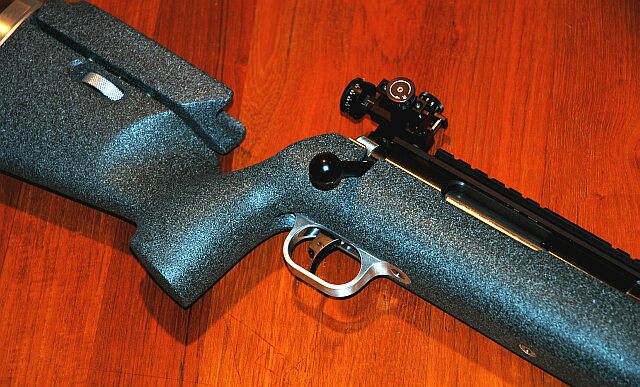
 For benchrest, F-Class, Silhouette, Tactical or High Power rifles, you may get the best results posting a For Sale ad on a Forum that caters to the right discipline. You want your ad to reach the right audience. On the other hand, a GunBroker.com auction will have tens of thousands of potential buyers. Realistically, however, if you price your rig attractively, it should sell quickly in a Forum Classified Advert. Plus with conventional Classifieds, you can sell immediately — you don’t have to wait for the auction to end. For scopes and reloading equipment (but not firearms, actions, barrels etc.), also consider eBay, which still allows many gun-related items.


