At the request of our readers, we provide select “Deals of the Week”. Every Sunday afternoon or Monday morning we offer our Best Bargain selections. Here are some of the best deals on firearms, hardware, reloading components, optics, and shooting accessories. Be aware that sale prices are subject to change, and once clearance inventory is sold, it’s gone for good. You snooze you lose.
1. Bullet Central — Lapua Brass Sale
We’re coming up on the end of the year and that means it won’t be long until it’s time for matches. Get ahead during the off season by taking advantage of the Lapua brass sale at Bullet Central. It’s smart to buy your brass for the 2020 season now, so you can do your brass prep and loading during the winter months.
The LabRadar is arguably the most sophisticated consumer chronograph on the market. These units rarely go on sale — but here’s your chance. Right now you can now get a LabRadar for $499.95 — that’s $60 off the normal price. (Sale price good through December 2, 2019). Purchase direct from Mylabradar.com, or order from leading vendors Midsouth Shooters (in-stock $499.95), Bruno’s (back-order $499.95), and Creedmoor Sports ($499.95 in stock).
3. Brownells — Giant Ammo Clearance
You can find discounts on certain ammunition brands at various vendors, but we’ve never seen a huge clearance like this with so many ammo types on sale. Take some time to check out all the amazing Ammo Clearance Deals now at Brownells. Over 1800 products are clearance priced so there’s sure to be something for everyone.
4. Natchez — Holiday Discount Codes, Save $10, $25, $40
Right now you can get direct money OFF nearly all products at Natchez Shooters Supply. Save $10 on purchases of $100 or more with CODE D191118A, or save $25 on $200 with CODE D191118B, or save a full $40 (13.3%) on orders of $300 or more with CODE D191118C. You must act soon, however, as these Discount Codes expire at 11:59 pm November 20, 2019. Some restrictions apply.
5. Field & Cave Outfitters — Silhouette Targets, up to 40% off
If you’re tired of shooting at paper targets, check out these sturdy varmint benchrest silhouette targets from Field & Cave Outfitters. There are a variety of animals to choose from. Right now you can save up to 40% off on these quality steel silhouette targets. The Prairie Dog and Armadillo are laser-cut and bent 18ga cold-rolled steel. The Coyote and Hog are 3/8″-thick AR500 steel, laser- cut then welded.
Here’s a great deal for those looking to either add a handgun to their collection or for those just getting started in the shooting sports. We found the Ruger Security-9 in 9mm for a great price of $279.99. Under $280 for a reliable, sturdy Ruger 9mm — that’s a smart choice for personal defense. This features a blued steel slide, 4″ barrel, polymer frame, and 15-rd magazine.
7. Amazon — Padded Shooting Mat, $37.99
Are you new to prone shooting or tired of using an old worn out mat? Grab one of these Redneck Convent padded shooting mats and you shoot in style and comfort all day long. These pads are weather, chemical and water resistant and the durable PVC material is easy to clean and maintain. Best of all it rolls up for easy storage and transport.
8. Midsouth — Frankford Arsenal Vibra Prime, $39.99
Do you still load up your priming tubes the old fashion way, one at a time out of a flip tray? Save yourself time and trouble with the Frankford Arsenal Vibra Prime Primer Tube Loader. This tool loads a universal primer tube in just seconds and can transfer the primers to just about any brand primer tube just as easily. We’ve used one of these for years without Hornady, RCBS and Dillon tubes without any issues.
9. Amazon — Waterproof Clipboard, $19.98
Planning on hitting the range or that next match but the forecast says there might be a few showers? Fear no more as you can grab one of these waterproof clipboards and keep your load data notes or your shooting partners scores safe and dry. We keep one of these with us anytime we go to a match because you can flip it over and use it as a regular clipboard when it’s dry too!
American Outdoor Brands Corporation (NASDAQ: AOBC), one of the world’s leading providers of firearms and products for shooting, hunting, and outdoor enthusiasts, is splitting into two separate companies, with the Smith & Wesson gun business becoming a stand-alone enterprise again. Last week American Outdoor Brands’ Board of Directors unanimously approved a plan to spin-off its outdoor products and accessories business as a tax-free stock dividend to its stockholders. The proposed transaction, which is expected to be completed in the second half of calendar 2020, would create two independent, publicly-traded companies: Smith & Wesson Brands, Inc. (encompassing the firearm business) and American Outdoor Brands, Inc. (encompassing the outdoor products and accessories business).
According to AOBC: “The purpose of the spin-off is to enable the management team of each company to focus on its specific strategies, including (1) structuring its business to take advantage of growth opportunities in its specific markets; (2) tailoring its business operation and financial model to its specific long-term strategies; and, (3) aligning its external financial resources, such as stock, access to markets, credit, and insurance factors, with its particular type of business.”
Barry M. Monheit, Chairman of the Board, said, “There have been significant changes in the political climate as well as the economic, investing, and insurance markets since we embarked upon what we believe have been our very successful diversification efforts. We believe that separating into two independent public companies will allow each company to better align its strategic objectives with its capital allocation priorities. From the standpoint of our stockholders, at the time of the spin-off, the AOBC stockholders will own 100% of each company, thereby maintaining their pre-spin interest in both companies, and will thereafter have the ability to make distinct investment decisions tailored to their particular investment profile.”
Mark Smith Will Lead Smith & Wesson After Spin-Off
Upon successful completion of the spin-off, Mark Smith will become CEO of Smith & Wesson Brands, Inc.; Smith is currently the President of the Manufacturing Services Division of AOBC and supports all of its businesses. James Debney, current AOBC President and CEO, will lead the outdoor products and accessories company as CEO after the spin-off.
The Future of Smith & Wesson Brands, Inc. (Projections)
Headquartered in Springfield, Massachusetts, Smith & Wesson Brands, Inc. will continue its 167-year-old heritage of producing firearms. This business’s handgun, long gun, and suppressor products are marketed under the Smith & Wesson®, M&P®, Performance Center®, Thompson/Center Arms™, and Gemtech® brands. The company’s financial profile is expected to yield strong cash flows and profitability with a plan to eventually return capital to stockholders in the form of dividends and stock repurchases. Assuming a spin-off in eight to ten months, Smith & Wesson Brands, Inc. is expected to generate revenue between $450 million and $500 million and adjusted EBITDAS between $90 million and $105 million in its first 12 months as an independent company.
News Tip from EdLongrange. We welcome reader submissions.
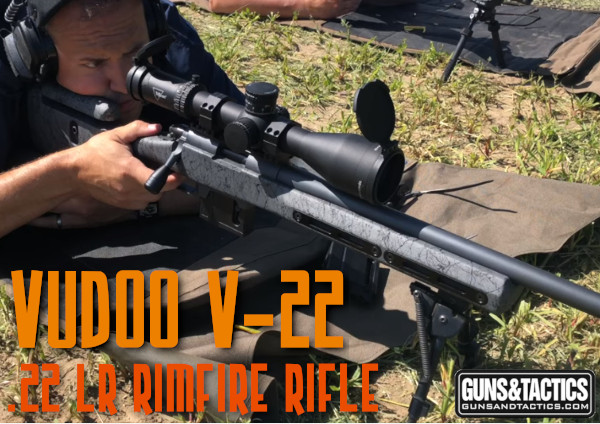
This Sunday GunDay story features a .22 LR rifle built around a Vudoo Gun Works V-22 rimfire repeater action. The V-22 action, arguably one of the best tactical rimfire actions available, owes its lineage to the respected Remington 40X action. Many rimfire matches have been won with 40X actions, so we understand why Vudoo chose that design for a starting point. Vudoo then added some important enhancements, including a controlled-feed design. This makes the Vudoo a great choice for rimfire cross-training, rimfire tactical matches, and NRL22 competition. In the video below you can see the Vudoo Gun Works rifle used an a PRS-style, long-range precision rimfire match in Minnesota.
As it has the same footprint as a Remington 700, the Vudoo Gun Works V-22 action is 100% compatible with a wide variety of Rem 700 chassis, triggers, and rifle accessories. This allows you to have a rimfire trainer with near-identical ergonomics as a centerfire match rifle. Rimfire training provides valuable trigger time with dramatically lower ammo costs. Along with actions, Vudoo sells barreled actions, and complete rifles through its website: VudooGunworks.com.
In this video, Dave Timm of GunsandTactics.com employs a Vudoo V-22 in the Minnesota .22 LR Long Range Precision Rimfire Match at the Rush Lake Range. This PRS-style match had targets out to 300 yards during the main match, followed by a long range challenge out to 465 yards. Dave’s Vudoo Gunworks V-22 rifle features a Grayboe Ridgeback stock, Harris bipod, and Trijicon Accupower 4.5-30x56mm FFP scope. Dave was shooting Lapua Center-X .22 LR ammunition.
This course of fire was challenging. Dave explains: “Stages included barricades and barrels and props to shoot out to targets at 100, 169, and 214 yards. So we’re shooting a 6″ piece of steel at 214 yards with an awkward position and a .22! It’s a good challenge and it really forced you to get all your fundamentals together. You’d be surprised at how much movement [there is]. You feel that you’re steady but all of a sudden that reticle just doesn’t want to stop moving.”
This Minnesota Match is similar to a PRS-style competition, but for rimfire rigs. Dave said “This match was an absolute blast and pushed out the .22 LR round out to some distance.”
About the V-22 Action — Controlled-Feed Design
Vudoo Gun Works states: “Our V-22 runs a full-size short action bottom metal (DBM) and our V-2210 magazine has a [full-size] AICS form factor. The V-22 is the only controlled-round-feed .22 LR receiver out there. The bolt has full capture control of the cartridge from the time it leaves the magazine until it ejects the spent round out the ejection port. That means the round never touches anything during feed travel so the bullets won’t be nicked/dented during rapid cycling.”
V-22 Product Description from Vudoo Gun Works:
The V-22 has been designed from the ground up as a true-to-scale Rimfire receiver that fits the Rem 700 footprint [for] stocks and chassis[.]. It also runs a full size short action bottom metal (DBM) and our V-2210 magazine has an AICS form factor[.]
The V-22 has a very unique control-round-feed protocol. The bolt has full-capture control of the cartridge from the time it leaves the magazine until it ejects the spent round out the ejection port. The significance of that is two-fold. Great feed and extraction reliability and…equally as important, the cartridge is controlled in a way that it never touches anything on its entrance into the bore. There is no feed ramp, nor does the projectile go in at an angle that would damage it in any way. We all know how susceptible the soft lead of the .22 LR is to accuracy-degrading damage and minor nicks during the chambering process. [That kind of bullet damage] is eliminated in the V-22 geometry.
About Dave Timm — Dave is a police officer serving his community on night patrol. Dave serves as his agency’s lead firearms and use of force instructor. He also owns and operates the Learning Firearms training operation in Baxter, Minnesota. Dave’s company offers realistic practical training solutions.
We see comparison tests of cars, cameras, and other hardware. But how about chronographs? What could we learn by setting up three different chronographs, and running a 20-shot string over all three at the same time. One of our Forum members, Randy S. (aka AAA) did that very test with three of the best chronographs you can buy: LabRadar, MagnetoSpeed, and an Oehler model 35P. The MagnetoSpeed was attached to the barrel of an F-Class rig, with the LabRadar placed on the left side of the shooting bench. The Oehler 35P was positioned about 23 feet downrange. The photo above shows the set-up. A 20-shot string was recorded with the results in a spreadsheet.
AAA talks about this interesting experiment in a Shooters’ Forum Thread. Here is his report:
Comparison Testing Three Chronographs
We all have our favorite chronograph. Each gives a number, but how would that number compare to the same round fired with another chronograph? I wanted to know so a friend and I set up the following test with three chronographs: LabRadar, MagnetoSpeed V3, and Oehler Model 35P.
For the test we fired Berger 105gr VLDs over the three chronographs simultaneously. The test rifle was my 6mm BR Ackley (BRA) F-class rig with fire-formed brass and 200 rounds on the new barrel.
Chronogaphs Tested
LabRadar
MagnetoSpeed V3
Oehler Model 35P
Temperature: 86 deg. F
Elevation: 854 feet
Cartridge: 6mm BRA (105gr Berger VLD)
Time between shots: 45 seconds
To start off, five rounds were fired to make sure all systems were recording and to warm the barrel. Then the test was 20 shots fired across all three instruments with 45 seconds between shots. The Oehler was set 7.5 yards from the muzzle so 12 FPS was added to the recorded value.
We were using the internal trigger on the LabRadar. The manual says the Vo indicated is the actual muzzle velocity when using the internal trigger, but not if using the Doppler. The 12 FPS Oehler adjustment (back to MV) was based on the Berger Ballistics Calculator.
The LabRadar Chronograph is on sale now through 12/7/2019. Buy for $499.95, a $60.00 savings.
Results of the Triple Chronograph Shoot-Out:
LR-M is FPS variance between LabRadar and MagnetoSpeed V3. LR-O is FPS variance between LabRadar and distance-adjusted Oehler 35P. You can see all three chronos were very consistent. ES was identical with the MagnetoSpeed and Oehler 35P, while SD was identical with the LabRadar and Oehler 35P.CLICK HERE for spreadsheet.
The tester, Randy S. (aka AAA) says: “Judge for yourself, but I was impressed by all.”
This is a manufacturer’s photo showing the Magnetospeed V3 as mounted. This is NOT the test set-up.
Comments by Forum Members
Our Forum members expressed interest in this Triple Chronograph test. Some confirmed that the LabRadar and Magnetospeed give very similar FPS numbers, based on their own tests:
“Great test and thanks for sharing. I’ve tested my MagnetoSpeed and LabRadar together and results are always within 2-4 FPS of one another.” — Big D
“Very happy to see your numbers support my decision to buy a MagnetoSpeed. Had read reports comparing it to the Oehler and the numbers I get seem to be supported by my long range shooting results. Many thanks for taking the time and effort [to perform] this comparative test. Always good to get actual test results.” — Texas10
“I did a 4-shot test with my MagnetoSpeed and another shooter’s LabRadar a couple of days ago. The results were within 4 fps with the LabRadar being optimistic.” — Pat Miles
Forum Member Powderbreak studied AAA’s original spreadsheet from the chronograph trio test, then figured out the shot-by-shot FPS variance between the machines. He concluded that all the machines performed very well. Powderbreak posted:
Analyzing the Triple Chronograph Test — What Can We Conclude?
AAA did a great job of comparing the 3 chronos. What conclusions can be drawn?
1) I have not checked the manufacturer’s claims of accuracy, but the three chronos are very close to one another. There is no way for us to determine the actual true velocities, but we do not need to do so. Any of the chronos would be more than adequate for an accurate shooter.
2) The resolution of the three chronographs is actually pretty astounding. One foot per second (FPS) is a resolution of 0.033%.
3) AAA did a great job of reloading a very consistent round. With an extreme spread of 33 fps out of 3014 for 20 rounds, that is only 1.09% total spread of velocities.
4) There is a closer velocity match between the MagnetoSpeed and the LabRadar, but that does not mean the Oehler is less accurate. There is simply an offset between the Oehler and the other two. This could be due to the greater distance, the location, or the internal working of the Oehler.
5) Believe your chronograph, it is probably the most accurate reloading tool that you own.
Brian Litz of Applied Ballistics carefully explained the operation, set-up, accuracy and comparison of AB’s chronographs in his books. [Those books] are well worth the money, and give great insight into the workings of chronographs.” — Powderbreak
Umarex USA offers an big-bore .50-Caliber Air Rifle, which it claims is the world’s most powerful air gun. The new Umarex Hammer can launch a 550 grain slug at 760 fps, delivering an impressive 705 foot-lbs of energy at the muzzle. That energy total rivals a 10mm Auto Cartridge (220 grainer at 1200 fps). Not bad for an air rifle with an $815.99 MSRP.
With lighter projectiles, the Umarex Hammer also delivers fairly high velocities — it can drive a 200 grain lead projectile at 1055 fps. That’s equivalent to a .45 ACP +P load. The design team at Umarex say this air rifle has the power to take deer and other game — when the animals are close enough.
The Umarex Hammer has features you might find on a modern centerfire rifle: 29.5″ button-rifled barrel, straight-pull bolt, 8.5″ Picatinny rail, and quality trigger with 3-lb pull. The Made-in-USA Hammer is powered by an on-board, 24-cubic-inch carbon fiber cylinder filled at 4500 psi. The Hammer incorporates a Lightspeed™ valve and precision regulator that launches the projectiles with a 3000 psi air blast. Umarex says the Hammer is quite accurate — capable of putting three, 350- grain lead slugs in an inch at 50 yards.
Thanksgiving is right around the corner. That means a large percentage of Americans will be on the road to visit relatives. We know many of our readers have concealed carry permits or will otherwise be traveling with firearms. When crossing into different states with guns in a vehicle, you need to be mindful of all state and local laws and restrictions.
Five Worst States for Traveling with Firearms
This article appears in the Cheaper Than Dirt Shooter’s Log.
The U.S. is a patchwork of confusing and cumbersome laws that change the rules of what you can carry, where you can carry, and whether you can possess the firearm, ammunition of magazine at without running afoul of the local laws. Now, if every state was like Vermont, law abiding gun owners could freely travel with their firearms with no worries. Unfortunately, many states have a history of being hostile to traveling gun owners.
The federal “Firearms Owner Protection Act” allows travel through any state as long as the firearm is unloaded, in a locked case, and not easily accessible to the passengers. However, that is not to say that certain states that are less friendly to firearms have not created their own laws that would snare unsuspecting otherwise law-abiding firearm owners. This led us to name the Top 5 States to Avoid while traveling with a firearm this holiday season.
CONNECTICUT
Connecticut does not have any gun reciprocity agreements with other states. This means nonresidents are not allowed to carry handguns in Connecticut under a permit issued by another state.
HAWAII
Every person arriving into the state who brings a firearm of any description, usable or not, shall register the firearm within three days of the arrival of the person or the firearm, whichever arrives later, with the chief of police of the county where the person will reside, where their business is, or the person’s place of sojourn. GET Hawaii Firearms INFO HERE.
MASSACHUSETTS
Massachusetts imposes harsh penalties on the mere possession and transport of firearms without a license to carry. Prospective travelers are urged to contact the Massachusetts Firearms Records Bureau at (617) 660-4780 or contact the State Police. GET Massachusetts Firearms INFO HERE.
NEW JERSEY
New Jersey has some of the most restrictive firearms laws in the country. Your firearm must be unloaded, in a locked container, and not accessible in the passenger compartment of the vehicle. The New Jersey Supreme Court ruled that anyone traveling within the state is deemed to be aware of these regulations and will be held strictly accountable for violations. If you’re traveling through New Jersey, the N.J. State Police website provides information regarding transporting firearms within state lines. GET New Jersey Firearms INFO HERE.
NEW YORK
Use extreme caution when traveling through New York state with firearms. New York’s general approach is to make the possession of handguns and so-called “assault weapons” illegal. A number of localities, including Albany, Buffalo, New York City, Rochester, Suffolk County, and Yonkers, impose their own requirements on the possession, registration, and transport of firearms. Possession of a handgun within New York City requires a New York City handgun license or a special permit from the city Police Commissioner. This license validates a state license within the city. Even New York state licenses are generally not valid within New York City unless a specific exemption applies. Possession of a shotgun or rifle within New York City requires a permit, which is available to non-residents, and a certificate of registration.
More Scary States for Gun Owners
Here are six other jurisdictions (five states and DC) where you need to be wary when traveling. California, for example, treats all handguns in vehicles as “loaded” if there is ammunition loaded into an attached magazine. It’s wise, when in California, to have handguns unloaded in a LOCKED case, with all ammunition or magazines in a separate section of the vehicle. These states (and DC) all have laws that can trap unsuspecting gun-owners. Be wary.
California
Delaware
Dist. of Columbia
Illinois
Maryland
Rhode Island
Brownells has partnered with Special Operations Wounded Warriors (SOWW), a 501(c)(3) charitable organization, to provide service dogs for Purple Heart recipients of the U.S. Special Operations community during the Cash for K9s event.
Cash for K9s started on Veterans Day (November 11th) and runs through November 17. Brownells shoppers may make donations to support Cash for K9s, with Brownells matching the total of all donations up to $50,000. Brownells will donate a minimum of $25,000 to SOWW and will match up to $50,000.
Customers can donate on the Brownells SOWW page by clicking on the brown buttons below the Cash for K9s image. there are seven (7) buttons, for $1 up to $100 donations. All donations are sent directly to SOWW to help cover all costs associated with training the dogs and pairing them with their new, deserving best friends.
CLICK buttons to go to DONATION Page. Matching Program ends 11/17/2019.
“We are forever thankful for the great support offered to America’s Veterans and members of the Special Operations communities by our partners in charity at Brownells,” said SOWW Board Vice President Joel Pellicci. “Their efforts today to raise funds for our K9 program will help provide these incredible service animals to Warriors in need[.] Brownells’ continued and consistent ability to serve those that serve us is truly helping save lives.”
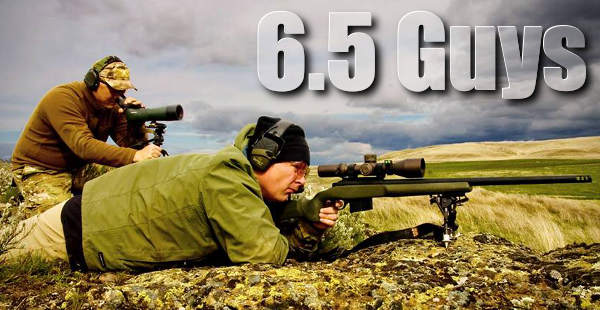
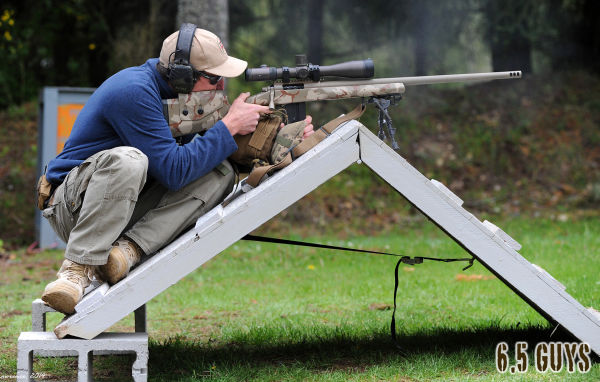
Our friends, Ed Mobley and Steve Lawrence, aka the “6.5 Guys”, have written an excellent article on getting started in practical/tactical competition. If you are new to the game, these tips can help you save money, progress faster, and have more fun. Here are article highlights, but we recommend you read the full story,5 Tips for Attending Your First Precision Rifle Match, onwww.65guys.com.
We often meet people who are new to long range precision shooting, and want to improve their knowledge and skill level. However, they aren’t sure if they are ready to sign up to compete in a match. They often ask, “What knowledge or skills are necessary to compete in a match?” Others may state, “I need to purchase this gear or that gear before I can attend a match”. For those guys who have a strong interest in precision rifle shooting, and who wish to chec out a precision rifle match, below are Five Tips to make it a positive experience.
TIP ONE: Make Plans and Commit to Go
First you need to start by finding a match to attend. This may entail a little bit of research and investigative work on your part to find what matches are scheduled in the next few months. We recommend starting with any match that may be within a reasonable driving distance. This may likely be a local “club” match, many of which are held on a regular basis. These make great venues because it will provide an opportunity to meet some of the regular attendees as well as shooters that are from your geographic area. Additionally, most of the smaller matches are a little more relaxed in terms of level of competitiveness.
Once you decide on the match you want to attend, do your homework. This means finding out if you need to pre-register or pre-pay the match fee. Commit to going by registering for the match and putting it on your schedule. Be sure to find other useful information for questions such as:
— What time should I arrive?
— Is there a mandatory safety briefing for new shooters at that venue?
— What is the travel time required to get to the match site?
— How many stages will there be?
— Is there a description of the stages available before the match?
— How many rounds should you bring?
— Are there special equipment requirements? (E.g. do you need chamber flags, is there a pistol stage?)
TIP TWO: Bring What You Have
(Don’t Spend a Fortune at the Start)
Some new shooters often assume they need a custom match rifle or all of the miscellaneous shooting gear associated with long range precision shooting to compete in match. While having a Kestrel weather meter and a high quality laser range finder and other shooting accoutrements are invaluable kit, you will find other shooters at your first match that will provide you with the information and coaching you need to get on target.
In fact, the only gear you really need to bring is a scoped rifle with a bipod and ammo capable of consistently shooting within one MOA. Also, be sure to know the ballistic drops or have a ballistic drop table prepared for your rifle/ammo to dial the correct DOPE on your scope for different target ranges. Many of the other participants at the match will be willing to let you borrow a support bag, bipod, tripod or other gear if you need one — just ask. Don’t use the excuse of not having the right gear to delay getting out to a match!
One reason not to make a big initial investment in a new rifle and assorted gear before competing, is we’ve seen a number of people come into the sport and try it for a year and then make the decision to move on to something else.
TIP THREE: Be Prepared to Learn
As a new shooter at a match, there is no better opportunity to learn. We often look to our local club matches as a group ‘training’ session to prepare for the bigger matches. You will find competitors at all levels of skill and many of your fellow shooters will enthusiastically provide helpful advice once they learn you are new to the sport. Take advantage of the opportunity to ask questions if you would like ideas for how to engage a stage, but also be sure to do more listening than talking as you receive guidance and tips from more experienced competitors.
Watch and observe other shooters and how they approach and ‘game’ a specific stage or course of fire. You’ll begin to recognize which shooting positions work best for different scenarios, and maybe even come up with some new ones that no one has thought of before.
Seeing what the better shooters do is an invaluable instructional tool. You can use your smart phone’s video camera to record other shooters (with their permission). When you’re ready to shoot, ask another shooter to record your performance. Watching yourself will point out needed areas of improvement.
After each match conduct an informal after action review and summarize for yourself the things that went well and what you should continue to do. You should also identify the specific shooting skills you should develop and make a plan to integrate the appropriate practice drills into your practice sessions. Finally, if you maintain a shooter’s data book or journal you’ll want to note things such as:
After Action Review – How you did, what went well, things you need to work on in practice. Stage Observations – Successful methods used for specific courses of fire. Note barricades, positions used, specific gear used for stages. Gear Observations – How your rifle/gear performed, what new items you should add to your “buy list”.
TIP FOUR: Be Safe and Have Fun
You’ve all heard a parent or teacher say, “It’s all fun and games until someone loses an eye.” The same can be said of the shooting sports. Safe handling of firearms is the number one rule at any match, and comes before the FUN part in terms of importance.
Before all matches start there will always be some form of a mandatory safety briefing. Make sure you know, understand, and follow any unique safety protocols for the match you attend. Some matches require all rifles have chamber flags inserted and are stowed in bags/cases while not on the firing line — other matches may not. If you run afoul of any safety rules, you risk the chance of being disqualified from a stage or worse, the entire match.
The second rule is simply have fun. This starts with having a good attitude throughout the day. Keep in mind that as a new competitor you should think of a match as a solid day of practice and training. If you blow a stage, use it as an opportunity to diagnose what you could have done differently or what you need to improve on — then smile and drive on.
Any day at the range or shooting is a good day. A match is an opportunity to hang out with like-minded people who are passionate about shooting and impacting targets far-far away. Life is great when you are doing what you enjoy!
TIP FIVE: Make Friends
There is no better way to meet lots of precision rifle shooters and make friends than at a match. The people that attend the tactical precision matches on a regular basis are those that have ‘fallen into the deep end of the pool’ and are really into the sport. As a result, they have become part of the local precision shooting community. As you strike up conversations at the match, find out if your new-found friends visit specific forum boards or social media outlets, or if there are other matches they attend.
Precision shooters tend to congregate and share information in different corners of the Internet. It will serve you well to meet some of the guys in person at matches and be able to connect a face to a screen name. As you develop your friendships and develop a level of trust, you will find opportunities become available to shoot with others in your local area, or get ‘read-in’ on a secret honey-hole of a spot to shoot long distance. Additionally, the local shooting community will often find it more convenient to sell or trade gear and equipment locally than deal with buyers/sellers that are out of state.
Can you really make a silk purse from a sow’s ear? Would you believe a winning benchrest rifle could be constructed with a stock fashioned from a cast-off log-splitter? Well it can.
Anyone who has attended an IBS benchrest match knows that this brotherhood of shooters includes some “backyard engineers” who can build amazing things with low-cost components. Consider Steve Jordan. He has built a winning Heavy Gun with a gunstock made out of a wood splitter. Check out the photo. The butt section is in the shape of a “V” like an ax. The “V” sits on an adjustable, flat rear sandbag. The flat shaft of the wood-splitter, running horizontally, serves as the main chassis and fore-end. The barrel block sits on top (with the action floated), while the flat, forward section of the shaft rides the front bag. Not only does this “log-splitter” stock work, but Jordan has won IBS matches with it! Sometimes simple and cheap beats expensive and fancy.
Sam Hall Says the Log-Splitter Has Been “Kicking Our Tails”
Sam Hall (multi-time IBS 600-yard champion) reports: “I was not at the first match (years ago) where Steve Jordan debuted his barrel-blocked, Heavy Gun stock made out of a wood splitter. From what I heard he cleaned house with it that day. When I first heard about this log-splitter rig, I thought guys were pulling my leg. But the log-splitter Heavy Gun really exists. In fact, over the past two years at Piedmont, Steve’s home-built log-splitter HG has won numerous Heavy Gun matches, out-performing nearly all the other Heavy Guns on the line, even those that cost thousands more to build.
Steve made the rifle as economical as possible. Steve’s entire stock is made from a metal wood splitter. From what I understand, Ray Lowman gave him the barrel block. This rides on the shaft of the wood splitter. With this inexpensive, simple rig Steve has kicked our tails at times! By the way, Steve’s Heavy Gun is chambered as a 6mm Dasher.”
While devotees of this site are hard-core accuracy addicts, who normally shoot tiny groups with sophisticated Benchrest and Varmint rifles, we should not overlook the pure fun of shooting a classic iron sights lever-action rifle at reactive targets. Lever guns are fun to shoot, easy to transport, AND they require a lot less maintenance than your modern black rifle.
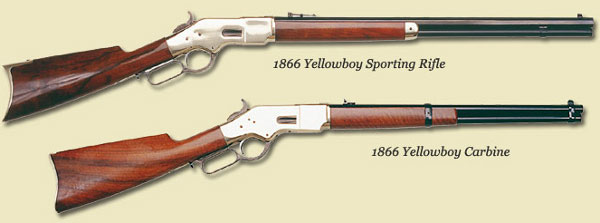
Drilling a tight 1/4-MOA group is very satisfying. But for simple, basic shooting fun, it’s hard to beat a slicked-up, “race-ready”, Winchester-clone lever gun. In fact, this Editor’s favorite rifle for “fun shooting” is my 20″ Uberti Model 1866 “Yellowboy” Lever gun. Shooting low-recoil .38 Special rounds at steel targets from a standing position offers old-fashioned shooting satisfaction. When I invite a new shooter to the range, I usually bring the 1866 Yellowboy, and let the newbie shoot steel at 50 yards. New shooters (of all ages) love the look and feel of the rifle, and the low recoil. The typical response is: “Wow, that was fun!”.
My rifle features a slicked-up action and lightened trigger. After a “CodyMatic” action job by cowboy gunsmith Cody Conagher, my Yellowboy’s lever can be cycled with just one finger. Trigger pull is about a pound and a half. The high-gloss, blued octagonal barrel is very accurate and the mirror-finish bore cleans up easily.
Based on the Model 1866 Winchester, Uberti’s Yellowboy, and its Model 1873 “older brother”, feature a toggle-link action that is extremely smooth. The toggle action design also keeps the linkages separate from the chamber so the gun runs extremely clean. After firing 100 rounds or more, all you need to do is wipe off the bolt and breech-face with some solvent and run a bore-snake down the bore a few times. To be honest, the Yellowboy is more fun to shoot at steel than my AR Carbine. And maintenance-wise, for every five minutes I spend cleaning the 1866, I’ll spend an hour detail-stripping and cleaning the AR. The shooting-to-cleaning ratio favors the lever gun by orders of magnitude.
These Italian-made Winchester clones are very handsome, with nicely figured wood under a durable clearcoat. You can polish the brass receiver to keep it shiny, or leave it alone to develop an authentic, dulled patina. Uberti’s Model 1873 features a steel receiver with gorgeous color case-hardening.
After the fun factor, what’s the best thing about Uberti lever guns? Resale value. I can sell my 1866 for quite a bit more than I paid for it. Over the past decade, the price of Italian-made Uberti lever guns has been steadily rising. This means that older rifles fetch a premium on the used market.