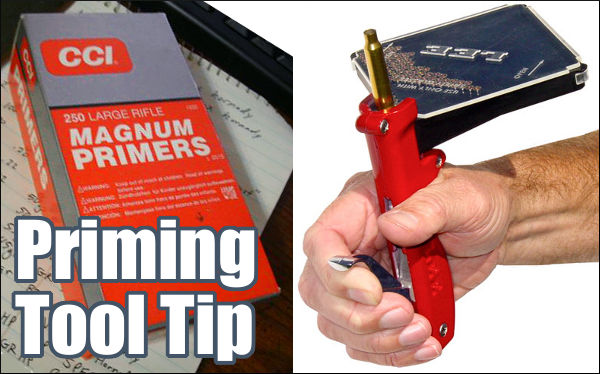
From time to time, we all encounter a primer that doesn’t go off. It’s normal to attribute the problem to a bad primer. But sometimes there are other explanations. George S., one of our Forum members, experienced a couple failures to fire, but he learned that the issue was his priming TOOL, not his primers. Here’s what George told us. There’s a lesson to be learned:
“I had issues with CCI 450s when I had my first 6BR barreled. I had probably three or four out of 20 rounds that failed to fire. the primers were dented but didn’t fire. I called CCI since I had bought a case of them. The tech was decent enough but had the audacity to tell me I was not seating the primers all the way in the pocket. I proceeded to let him know I had been reloading longer than he had been alive and I knew how to seat a primer.
Turns out that I did and I didn’t! I was using the RCBS primer tool I had used for years and the primers felt just fine to me. I finally decided to check the tool and since I had a new one I took the seating pins out and measured them. The seating pin on the tool I had been using for years was shorter by a few thousandths! I then used the pin from the new primer tool and darned if the primers that didn’t seat down to the bottom of the cup.
I switched to a K&M primer tool for seating the CCI primers and have not had a problem since. It was the combination of harder cup and lack of proper seating. I did call the CCI tech back and apologized for being an idiot.”
Another Forum member witnessed a problem cause by misuse of a priming tool: “I did … see a failure to fire on a Rem 9 1/2 primer only a week ago. That was in the new Rem muzzleloader that uses a primed case to ignite the pellets. After watching the muzzleloader’s owner seat his primers, I believe that it was operator error not the primer. He was seating the primer and then squeezing the priming tool so hard that his hands hurt after a few. We got that corrected.”
One of the most popular items in our Shooters’ Forum is the ongoing “Pride and Joy” thread. Since 2009, Forum members have posted photos and descriptions of their most prized firearms. Here are some of the most recent “Pride and Joy” rifles showcased in our Forum. Do you have a gun you’d like to see featured there? Register for the Forum and you can add your favorite gun to the list.
For this week’s Sunday GunDay we’ve selected five fan favorites from the Pride and Joy Archives. First up is a beautiful .284 Winchester with a one-of-a-kind Claro Walnut stock crafted by the owner.
.284 Winchester in Owner-Crafted Claro Walnut Stock
Here is a unique Claro Walnut tactical/practical rig. Notably, the rifle’s owner, Forum member CStuck, built the handsome stock himself: “I crafted the stock, installed the Remage barrel, pillar-bedded the rig, and put all the pieces together.” Key components for this wood-stocked beauty include a Defiance Tenacity RH Long Action mated to a McGowen 28″ Heavy Palma 1:9″-twist barrel chambered for the .284 Win GAP. The scope is a Burris XTR II 5-25x50mm in an MPA BA Mount. The trigger is a Timney HIT. The rifle feeds from a Hawkins DB magazine.
6BRA with BAT Action, Brux Barrel — The Blue Beauty
Next is a blue 6BRA beauty from Forum Member RiflePainter: “This is my brand new 6BRA Light Gun built by Jason Danley at Danley Precision! Jason did all of the work including paint. Brass was done by Darrel Jones at DJ’s brass service.” This features a Johnny Byers stock painted in HOK Custom Oriental Blue Candy mix. The action is a BAT DS Left-load, Right-eject, Right bolt fitted to a 1.5 oz. Jewell trigger. The barrel is a 28″ Brux HV 1:8″-twist chambered for the 6BRA (6mmBR Ackley) and fitted with a Harrell’s radial muzzle brake. On top is a Sightron SIII 10-50x60mm optic riding in BAT 1-piece scope rings.
Eye-Catching 30 PPC — 13-YO Grandson’s First Competition Rifle
We like this project because it connects a grandfather with his grandson. These family connections are very important. Forum member 20PPC posted: “Here is my 13-year-old grandson Remy’s first competition rifle. We just finished it up.” The rifle is chambered for a 30 PPC with a 1:17″-twist Lilja HV barrel fitted with an Ezell tuner up front. The action is a Stolle Panda RBLP, Right Eject fitted with a Kelbly trigger. The stock is a Robertson JTR model wearing a very snazzy finish, which looks like many coats of clear over an orange/gold hydro-dip (we think). On top is a 45X Sightron fixed-power scope. This eye-catching grandson’s rig will definitely get noticed at the range.
Click image for full-screen view.
Twin Grendels with Handsome Wood, One with Home-made Tuner
Here are a pair of 6.5 Grendel bolt-action rigs. Forum member Ramblerman posted: “The Twin Grendels are finished! My buddy Tom did the wood and I did the metal — more testing this weekend. Mine now sports a tuner I made (see bottom photo).”
6BRA in Green Wheeler Stock with Krieger Barrel
Last but not least, here is a serious IBS/NBRSA Light Gun for 600/1000-yard competition, owned by Forum member “6.5×47″. Chambered for the ultra-accurate 6BR Improved (aka 6BRA), this rifle features a polished BAT ‘B’ action with roller upgrade. The action is mated to a 28″ Krieger 1:7.5″-twist HV barrel. The 6mm Krieger is chambered for .272″ case-neck, with .115″ freebore. The BAT action is glued and screwed in an Alex Wheeler stock with green candy paint. Note the wide fore-end with side plates and the adjustable stock keel in the rear. Another advanced feature is a slick removable weight system in the butt stock. A Jewell benchrest trigger resides inside a BAT trigger guard.
Left to Right, Sherri Jo Gallagher, Mother Nancy Tompkins, and Michelle Gallagher — All Champions.
Happy Mother’s Day
Today we want to wish Happy Mother’s Day to all the moms around the world. All of us must remember that we literally owe our lives and our well-being to our mothers, who brought us into the world. Without the love, support, caring, and nurturing of our mothers, none of us would be here. So to mothers everywhere, we say:
“Thank you. Bless you. May your lives be filled with happiness today and everyday.”
At the top is a cherished photograph of the one of the greatest moms in the shooting community, Nancy Tompkins, along with her two little girls (who both turned into pretty darn good shooters themselves). On Nancy’s right is Michelle Gallagher, multi-time National Long-Range Championship. On the left is Sherri Jo Gallagher, who was the second woman in history to capture the NRA National High Power Championship at Camp Perry. Who was the first woman ever to accomplish that feat? You guessed it — Nancy Tompkins, Sherri’s mom, was the first-ever female High Power Champion. Nancy is married to another great shooter, Mid Tompkins. This is truly America’s “First Family of shooting”.
Nancy Tompkins is one of the greatest long-range shooters in American history. She has won the National Long Range Championship 5 times (1986, 1997, 1999, 2003, and 2015), the across-the-course National High Power Championship (1998), the Metric Smallbore Nationals (2012), and the Fullbore Nationals (2012). She has also been the Wimbledon Cup winner (1993) and a 7-time Leech Cup winner (1995, 1997, 1999, 2003, 2005, 2011 and 2012). She has won both team and individual medals in the World Championships and has been on 8 Palma Teams (as both a shooter and a coach).
Tompkins’ treatise, Prone and Long Range Rifle Shooting, is a must-read for serious Palma, F-Class, and High Power shooters. The revised Second Edition includes F-Class equipment and techniques, and newly updated information. Topics include Mental and Physical training, Reading Wind and Mirage Shooting Fundamentals, International Competition, and Loading for Long Range.
Team Smith & Wesson shooter Julie Golob has a message for Mother’s Day (Sunday, May 12th). Julie writes: “While some are using Mother’s Day week to push a gun control agenda, I’d like to encourage moms to ‘Take a Moment’. Talk to your kids about firearms safety. Help them learn what to do around firearms and have an open, honest discussion about guns and gun safety.
I truly believe that, no matter if you are pro-gun or anti-gun, everyone should know and understand the basic rules of firearm safety. It is equally important for parents to have the discussion about guns and what to do if your child finds one. Both the NSSF’s Project ChildSafe and the NRA’s Eddie Eagle GunSafe® Program are excellent. They offer resources for parents, educators, and child care providers to help ensure kids stay safe.
In this video, Julie encourages parents to have “the talk” about firearm safety with their kids sooner rather than later, and provides tips for how to have a helpful discussion. Sherra Scott, a mom and a certified NRA instructor, agrees with Julie: “Whether you have firearms in your home or not, if you have children in your life, please watch this video and talk WITH them about firearm safety and what to do if they come into contact with a firearm.”
Bolt Action Reloading is a popular YouTube channel that has amassed 97,000 subscribers. For this Saturday Video Showcase we are featuring seven (7) interesting videos. If you’re getting started in reloading, definitely watch the video on Five Common Mistakes. And all handloaders can benefit from the videos which covers affordable tools, all under $50.00 (at time of filming).
Getting Started in Reloading — Lessons Learned
This is a very helpful video for anyone getting started in reloading. The host summarizes the important lessons he has learned over the years. Here he covers some of the common issues handloaders face and how to avoid problems as you get started. As he notes: “When you are getting started reloading, some things you learn the hard way. In this video I cover things that I wished I knew before I got started [reloading]. There were several things that held me back when I started and in this video we cover 10+ of them.”
Five Common Mistakes Made by Novice Handloaders
This video spotlights five (5) common mistakes made by people when they get started hand-loading ammunition. These are some of the most common errors and misconceptions that affect “newbie” reloaders. Here are the five common problems encountered by folks getting started in handloading:
1. Not Using LOAD DATA from a Reliable Source — Use verified, properly developed load data from a powder maker or bullet maker. Don’t trust private social media posts. And always start conservatively.
2. Inconsistent Case Sizing — this can be the result of sloppy die set-ups or not knowing how to measure cases correctly.
3. Cartridge Overall Length (COAL) Variances — Don’t assume that COAL book values apply to your ammo. You should measure your own cases based on your chamber, headspace, and bullet choice. AccurateShooter.com recommends you use QuickLoad or Gordon’s Reloading Tool software to help adjust loads for different COAL.
4. Hand-Loading Is Not Always a Money-Saver — For a cartridge you don’t shoot much (say a .30-06 for hunting only), hand-loading might not save you money once you count the cost of dies and tools.
5. Reloading Kits Are NOT Complete — Don’t assume that the $500 reloading kit you acquired (with press, powder measure, scale etc.) has all the components and tools you actually need. You will still need dies, comparators, and many other tools.
Primer Pocket Uniforming — Is It Worth the Time and Effort?
With Lapua and Peterson brass we have had very good results — great accuracy and with low ES and SD — using brass that has NOT had the primer pockets uniformed with some kind of cutter. We always do check to make sure there are no flakes or obstructions in the flash holes, but we generally do NOT need to cut into the pockets. But with lesser brands of brass you can benefit from uniforming your primer pockets. And yes there are some top shooters who DO uniform pockets even on premium-brand brass. That is up to you. This video explains the process for primer pocket uniforming and looks at some test results.
Developing a Load — OCW vs. 10-Round Ladder
This video talks about two methods of determining an accurate load. We include this video here because many people are curious about Optimal Charge Weight (OCW) load development. Frankly, however, we believe there are better, more reliable ways to find a good load — many people have wasted many hours and much barrel life on the OCW quest. NOTE: With a good cartridge of known accuracy, such as a 6mmBR or 6mm Creedmoor using top-quality brass, we really do NOT advocate either method described in this video. We suggest you do a search to find the best bullet choice and powder choices. Then, if you are shooting from the bench with a custom barrel, consider starting in the lands, about .003-.005 past first touch. NOT full jam!! If you are shooting in conditions where you may have to unload a round during a match, start .020″ back from first touch. Chronograph every round. Shoot three-shot groups at 100 yards, looking to keep all shots touching. Many people doing OCW waste a ton of time (and barrel life). And one bit of advice for people with average factory barrels — it may be pointless to expect anything much under 1 MOA from that barrel no matter what you do.
Handloading Cool Tools — All Under $50.00
Along with powder measure, dies, and reloading press, there are a wide variety of tools that can help achieve good results when handloading ammo. This Bolt Action Reloading video identifies ten (10) tools that can be acquired for $50.00 or less. Here is the list:
1. Check Weights (00:20) — These help ensure your scale is measuring properly.
2. Digital Calipers (00:57) — You can spend $200+ on calipers, but you can get good results from caliper that cost less than $50.00, and every reloader should have a back-up set of calipers.
3. Comparator Sets (01:26) — These are fittings that attach to calipers. Bullet Comparators are sized to fit a bullet diameter to get reliable base-to-ogive measurements. Case comparators fit the neck of the cartridge, allowing you to measure shoulder bump.
4. Stock Case Remover (02:48) — This allows you to remove a brass case that may be stuck in a die.
5. Imperial Sizing Die Wax (03:20) — There are many types of case lubricants, but Imperial Die Wax is still a popular choice and very affordable.
6. LEE Cutter and Lock Stud (03:44) — This is a cheap way to trim cases. We prefer a Forster trimmer or a deluxe power trimmer but LEE system is inexpensive.
7. Chamfering and Deburring Tools (04:38) — After brass is trimmed to length you need to chamfer and deburr the case necks. Good chamfering/deburring tools are “must have” items for hand-loaders.
8. Case Neck Brushes (05:50) — If you don’t tumble your brass it’s a good idea to brush the inside of your fired cases before seating bullets. A couple swipes is all it takes — and you may find you get more consistent seating if you leave a bit of carbon in the necks.
9. Primer Pocket Swage Gauge (Ballistic Tool) (06:24) — These little tools let you check the dimensions of your primer pockets.
10. Decapping Die (06:57) — The decapping die removes spent primers without sizing the case. This is very handy if you want to remove primers before tumbling brass. NOTE: If your cases have small-diameter flash-holes you need to check the diameter of the decapping rod.
11. Powder Trickler (07:40) — A good trickler is an absolute “must have” when manually weighing each charge. The trickler allows you to add a couple grains at a time.
12. Powder Funnel with Drop Tube (08:45) — While most folks have a basic funnel, a deluxe funnel with a drop tube helps to get a full charge and more consistent powder density.
13. Kinetic Bullet Puller (09:36) — This is like a hammer that holds a loaded round. Using kinetic energy this tool can unseat a bullet with a couple of whacks. However, if you must unload a large quantity of rounds you’ll want a cam-lock bullet puller (09:58) that works with your press.
14. Caliber Specific Reloading Trays (10:28) — These are handy if you are loading specific cartridges. There is less wobble for each round.
Setting Neck Tension with Expanders and/or Bushings
There are three main ways (in addition to collet dies), by which you can set the neck diameter on cartridge brass and thereby control neck tension or the “grip” on the seated bullet. First, the sizing die itself can reduce the neck diameter. This can be a fitted die with the neck honed to a precise diameter. Or, the die can take neck bushings, which allow a range of neck tensions via different bushing internal diameters. Because they allow a wide range of tension settings, bushing dies are popular and effective. You can also have a die that takes the neck dimension down a few thousandths, but then have an expander mandrel that brings the neck inside diameter to an exact dimension. This has the advantage of keeping the INSIDE of the neck perfectly round, with any variances in neck-wall thickness pushed to the outside. This Bolt Action Reloading video explains the use of neck bushings and expander mandrels.
Full-Length-Sizing vs. Neck-Sizing of Cases
NOTE: At AccurateShooter.com we recommend that handloaders always full-length size their brass for many important reasons. Virtually all champion shooters in multiple disciplines full-length size their brass. Full-length sizing can achieve record-setting accuracy, and, importantly, it offers consistent shoulder bump with each loading. But we know that people are curious about neck-sizing, so we are including this video.
This video compares identical charge-weight loads tested with full-length-sized 6.5 Creedmoor brass vs. neck-sized 6.5 Creedmoor brass. The tester states: “I use the 142gr Sierra Match King HPBT loaded with Alliant Reloder 16. There is velocity and group data at 150 yards. FYI, we recommend always full-length sizing most cartridge brass, bumping the shoulder about .003″ (or more if required in a semi-auto).”
Here are two different bullet types, seated to the same CBTO length, but different COAL. Note the shiny scratches on the bullets made by the comparator tool which indicates a point on the bullet ogive near where the ogive will engage the rifling.
Effects Of Cartridge Over All Length (COAL) And Cartridge Base To Ogive (CBTO) – Part 2 by Bryan Litz forBerger Bullets. Part One of this series focused on the importance of COAL in terms of SAAMI standards, magazine lengths, seating depths, and pressure levels. Another measure of length for loaded ammunition is highly important to precision, namely Cartridge Base to Bullet Ogive Length (CBTO).
Figure 2. Chamber throat geometry showing the bullet jump to the rifling or lands.
Look at Figure 2. Suppose the bullet was seated out of the case to the point where the base of the bullet’s nose (ogive) just contacted the beginning of the riflings (the lands) when the bolt was closed. This bullet seating configuration is referred to as touching the lands, or touching the riflings and is a very important measurement to understand for precision hand-loading. Due to the complex dynamics of internal ballistics which happen in the blink of an eye, the distance a bullet moves out of the case before it engages the riflings is highly critical to precision potential. Therefore, in order to systematically optimize the precision of his handloads, it’s critically important that the precision hand-loader understands how to alter bullet seating depth in relation to the barrel rifling. Part of the required knowledge is understanding how to accurately and repeatably measure the Cartridge Base To Ogive (CBTO) dimension. This is explained in the FULL ARTICLE.
Bryan Litz offers an extended discussion on how to measure CBTO using different tools and methods, including the Hornady OAL gauge. You can read this discussion in the full article found on the Berger Bullets website. CLICK HERE to Read Full Article.
Why Not Use CBTO as a SAAMI Standard?
If CBTO is so important to rifle accuracy, you might ask, “Why is it not listed as the SAAMI spec standard in addition to COAL?” There is one primary reason why it is not listed in the standard. This is the lack of uniformity in bullet nose shapes and measuring devices used to determine CBTO.
Benefits of Having a Uniform CBTO
There is another aspect to knowing your CBTO when checking your COAL as it pertains to performance. With good bullets, tooling, and carefully-prepared cases you can easily achieve a CBTO that varies less than +/- .001″ but your COAL can vary as much as .025″ extreme spread (or more with other brands). This is not necessarily bad and it is much better than the other way around. If you have a CBTO dimension that varies but your COAL dimension is tight (within +/- .002″) then it is most likely that your bullet is bottoming out inside the seater cone on the bullet tip. This is very bad and is to be avoided. It is normal for bullets to have precisely the same nose shape and it is also normal for these same bullets to have nose lengths that can vary as much as .025″.
Summary of Cartridge Base To Ogive (CBTO) Discussion
Here are four important considerations regarding bullet seating depth as it relates to CBTO:
1. CBTO is a critical measurement to understand for handloaders because it’s directly related to precision potential, and you control it by simply setting bullet seating depth.
2. Tools and methods for measuring CBTO vary. Most of the measurement techniques have pitfalls (which may give rise to inconsistent results) that you should understand before starting out.
3. A CBTO that produces the best precision in your rifle may not produce the best precision in someone else’s rifle. Even if you have the same rifle, same bullets, same model of comparator gauges, etc. It’s possible that the gauges are not actually the same, and measurements from one don’t translate to the same dimension for another.
4. Once you find the CBTO that produces the best precision in your rifle, it’s important to allow minimal variation in that dimension when producing quality handloads. This is achieved by using quality bullets, tooling, and properly preparing case mouths and necks for consistent seating.
Here’s something you don’t see every day — a reloading press that has loaded over 1,000,000 rounds of ammo. At the NRA Convention in Dallas in 2018, Redding showcased an old Redding T-7 Turret Press delivered to Sierra Bullets decades ago. 0ne of the very first T-7s made by Redding, this “old warrior” was used by Sierra Bullets to load over 1,000,000 rounds of ammunition in Sierra’s ballistics lab.
Redding T-7 Still Within Spec
After all that loading, Redding tested the press and, remarkably, found that it still remained “within spec”. Redding notes: “This press was subjected to real world reloading wear and stress yet remains within ‘new’ spec after this historic test”. When showcased in Dallas, this Redding turret press was fitted with indicators to show “just how good American steel and craftsmanship remains after what, in a normal situation, would represent numerous lifetimes of use.”
About Redding Reloading
Redding Reloading Equipment has crafted quality, American-made products for the precision handloading market since 1946. Along with single-stage and turret presses, Redding makes great dies.
And Redding’s line of tools/accessories includes concentricity gauges, scales, trimmers, powder measures, powder tricklers, cleaning tools, deburring tools, bushings, and many other quality items.
Shooting Sports USA Editor John Parker presents Rob Leatham with NRA Golden Bullseye Competitor Award at the 2025 NRA Annual Meetings and Exhibits. SSUSA photo by Peter Fountain.
Rob Leatham Wins Golden Bullseye Award
Renowned competitive pistol shooter Rob Leatham has received the inaugural (first-ever) Shooting Sports USA Golden Bullseye Competitor Award. Leatham received the award at the 2025 National Rifle Association Annual Meetings & Exhibits in Atlanta, Georgia. CLICK HERE for full story.
Winners of NRA Golden Bullseye Awards are determined by NRA Media staff, who represent more than a century of collective experience in the shooting industry. In particular, the NRA Golden Bullseye Competitor Award recognizes a competitive shooter who has displayed outstanding performance in competition and has “given back” to the shooting sports world by providing guidance and support to the next generation of competitive shooters.
“This award honors the highest level of achievement in competitive shooting — and there is no one more deserving to receive it first than Rob Leatham”, said John Parker, Editor-in-Chief ofShooting Sports USA. “For more than 40 years, Rob has set the bar — not just with his championship titles, but with his relentless pursuit of excellence, his sportsmanship and his influence on generations of competition shooters. He’s a competitor, a pioneer and a true ambassador of the shooting sports.”
Interview with Rod Leatham for The Armory Life
Competing since 1978, Leatham has amassed a remarkable record of success over the past four decades — eight-time IPSC World Champion, 11-time NRA Bianchi Cup Action Pistol Champion, 34-time USPSA/IPSC National Champion (Overall & Aggregate), eight-time Steel Challenge World Speed Shooting Champion, seven-time IDPA champion, and more.
Rob Leatham, By the Numbers:
34X USPSA / IPSC NATIONAL CHAMPION (Overall and Aggregate)
11X NRA BIANCHI CUP ACTION PISTOL CHAMPION
8X IPSC WORLD CHAMPION
4X USPSA CLASSIC NATIONALS AGGREGATE CHAMPION
14X USPSA / IPSC NATIONAL “SENIOR” CHAMPION
10X IPSC WORLD “TEAM” CHAMPIONS #TeamUSA
19X SINGLE STACK CLASSIC CHAMPION
3X AMERICAN HANDGUNNER WORLD SHOOTOFF CHAMPION
8X STEEL CHALLENGE WORLD SPEED SHOOTING CHAMPION
7X IDPA NATIONAL CHAMPION
2019 IDPA WORLD SENIOR CHAMPION
2006 ICORE INTERNATIONAL REVOLVER WORLD CHAMPION – LIMITED DIVISION
“I am truly honored to have been selected as the first recipient of this new award from NRA’s Shooting Sports USA,” said Rob Leatham. “I have loved shooting all my life, and I’m humbled and thankful that I’ve had the opportunity to do this for a living with Springfield Armory. Thank you to Dennis Reese and the Springfield Armory team for making my dreams come true.”
Rob Leatham has more than four decades behind the trigger as a professional shooter, trainer and expert. It is this background that has earned him the moniker of “The Great One”, or simply TGO. In fact, Springfield Custom created the “TGO 1″ handgun named in his honor and designed by the man himself. This special edition featured the Rob Leatham signature on the wood grips.
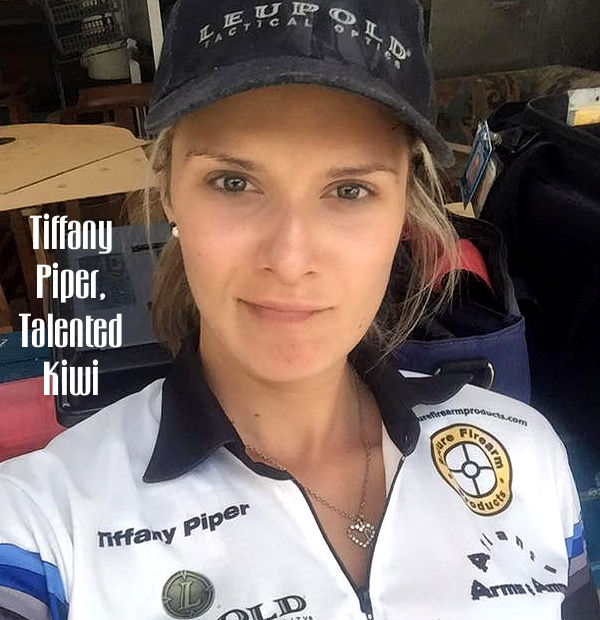
The NRABlog has interviewed seven prominent lady shooters, asking them for tips for other lady shooting sports enthusiasts, particularly new shooters. Top female competitors such as 2016 Bianchi Cup Winner Tiffany Piper and Team S&W Co-Captain Julie Golob offer good advice on competitive shooting as well as using firearms for self-defense. Read the full article here.
Here Are Some of the Top Tips from Leading Ladies:
Theresa Vail, Hunter and Host of NRA All Access “If you’re new to shooting or wanting to start, find some girlfriends that are interested in trying it with you. Having female friends go to the range with you takes the pressure off and makes a typically male-dominant arena much less intimidating. There is such thing as strength in numbers!”
Tiffany Piper (Action Pistol): The best piece of advice I would give is practice makes perfect. In New Zealand, we barely get enough range time with our noise restrictions so muscle memory and technique are key. Study up on shooting techniques, watch YouTube videos of other professional women shooters, and try out what you see. Don’t get intimidated thinking it’s a male’s sport[.]”
Julie Golob (Team S&W, 3-Gun and Pistol): “If something isn’t clear, just ask about it! Shooters are some of the best people you’ll ever meet, but we can be confusing and use a lot of shooter slang and lingo. When in doubt, ask!”
Tori Nonaka (Team Glock): “I always recommend to new shooters to first concentrate on the basics of gun safety. That way they will be more comfortable when they next learn about the particular gun…. Their confidence will grow as they familiarize themselves with their specific weapon. Then, it’s all about practice at the range.”
Corey Cogdell (Olympic Trap Shooter): “It’s empowering for women to know how to use a firearm in a sporting atmosphere as well as for self-defense. So if you are new to firearms, check out your local gun club and take a lesson! There you’ll find instructors and other shooting sports enthusiasts who will be more than willing to help you.”
When shooting pistols do your shots normally land smack dab in the middle of the target? If not, you may have some technique problems that are causing your shots to move off center. Top Shot Champion Chris Cheng has produced a good video for the National Shooting Sports Foundation (NSSF) that helps handgunners diagnose accuracy issues. By shooting 3-shot groups and looking at the pattern and location of the shots, you can see what you’re doing wrong (or right). Here are some examples. Note, this process works best for shooters whose shots fall typically in one target zone. If your shots are all over the target, your form is inconsistent and problems will be harder to diagnose.
1. Low Left — Jerking Trigger: Here we see three (3) shots at the 7 O’clock position. This shows that the shooter is jerking the trigger, meaning that the shooter is pulling the trigger too quickly and therefore forcing the barrel to drop when breaking the shot. This is a very common problem, particularly with novices who are reacting to the noise/recoil of the pistol.
2. 9 O’Clock — Too Little Trigger Finger: If we see three (3) shots at the 9 O’clock position, what this can be indicative of too little trigger finger on the trigger. And therefore with every shot, the shots are getting pushed to the left. Try moving your trigger finger on to the pad of your index finger. Also try dry firing drills.
3. High Left — Anticipating Recoil: In this next example, we see three shots around the 11 O’clock position. What could be happening here is that the shooter is anticipating the recoil, and is actually lifting the gun up when he shoots. We recommend slowing down, working on your breathing, and, again, do dry-firing drills.
4. 3 O’Clock — Too Much Trigger Finger: Finally, if you see three (3) shots at the 3 O’clock position, this can indicate that there is too much trigger finger on the trigger. Therefore when the shot breaks the shooter is pulling each shot to the right. Note: Each of these descriptions is for a RIGHT-handed shooter. If you are a left-handed shooter you’ll want to reverse those descriptions.




 Happy Mother’s Day
 Nancy Tompkins is one of the greatest long-range shooters in American history. She has won the National Long Range Championship 5 times (1986, 1997, 1999, 2003, and 2015), the across-the-course National High Power Championship (1998), the Metric Smallbore Nationals (2012), and the Fullbore Nationals (2012). She has also been the Wimbledon Cup winner (1993) and a 7-time Leech Cup winner (1995, 1997, 1999, 2003, 2005, 2011 and 2012). She has won both team and individual medals in the World Championships and has been on 8 Palma Teams (as both a shooter and a coach).
 Team Smith & Wesson shooter


 Effects Of Cartridge Over All Length (COAL) And Cartridge Base To Ogive (CBTO) – Part 2

 Redding T-7 Still Within Spec