At the request of our readers, we provide select “Deals of the Week”. Every Monday morning we offer our Best Bargain selections. Here are some of the best deals on firearms, hardware, reloading components, optics, and shooting accessories. Be aware that sale prices are subject to change, and once clearance inventory is sold, it’s gone for good. You snooze you lose.
Here’s something you don’t see very often — a straight-pull 17 HMR with a handsome fancy AA Maple stock. The slick, straight-pull T-Bolt design lets you load/eject with a simple pull back/push forward movement. The T-Bolt cycles nearly as fast as a semi-auto, but with bolt-action accuracy. This rifle features Browning’s patent pending 10-round rotary Double Helix™ magazine. Browning says “No magazine is easier to load and more reliable” than the new Double Helix. This rifle originally sold for $839.99. Now, you can get one for $499.99 after $100 Browning Rebate. This same rifle is also available in .22 LR and .22 WMR for the same price. REBATE INFO.
2. Grizzly.com — Bald Eagle Rests $165.00 – $199.95
Bald Eagle (by Grizzly) offers one of the best value-priced front rests on the market. We’ve seen F-Class shooters win matches with the Bald Eagle Slingshot Windage Rest, which costs less than a fifth of a premium co-axial rest. For a new shooter, this is a very cost-effective solution. One Forum member purchased this Bald Eagle BE1006 rest for his grandson, deciding it was the best rest under $300.00. Both rests shown offer a cable (with large knob) for easy windage adjustment. The Slingshot model, in cast iron or aluminum, has an elongated front leg for added stability. This also brings the Windage knob within easy reach. The aluminum version (BE1005) is considerably lighter and $35 cheaper, so it may be preferred by rimfire and varmint shooters. Note: Front sandbag sold separately.
Bushnell’s highly-regarded Elite 4500 Series scopes offer very good performance and reliability for the price. Here’s a great deal on a Bushnell 6-24x40mm Elite 4500 with Multi-X Reticle, 1/4-MOA clicks, and 1″-diameter main tube. Right now this fine optic is just $359.99 — nearly $240 off the regular price. This would be a good choice for a varmint rifle. Hard to find better glass at anywhere near this price. Verified buyer states: “Great scope. Clear, tracks correctly, and is repeatable. Great glass, to my eyes better than Leupold VX3 and Weavers.” Get FREE Shipping with code FS180723 through 7/24/18.
4. Walmart — EZShoot Rifle Case with Shoulder Straps, $24.99
We like this versatile bag for hunting and varmint trips. The 47.2″ EZshoot gun case provides good protection for scoped rifles with up to about 27″ barrels. The large pockets will hold binoculars, laser rangefinder, windmeter, ammunition, and other gear. The big bonus is this inexpensive carry case includes comfortable, adjustable shoulder straps. That makes it easy to carry everything from your vehicle to your shooting area. You get all this functionality for under twenty-five bucks. Walmart currently offers this 47.2″ case for just $24.99 with FREE shipping to your residence.
5. Brownells — CCI .22 LR Ammo, $24.99/500 or $89.96 for 2000
Here’s a great deal on big-name, rimfire ammo. Right now you can get a 500-round pack of CCI Standard Velocity 40gr LRN ammo for just $24.99. That works out to just five cents ($0.05) per round. But it gets even better. If you purchase at least four 500-rd packs (2000 rounds total), you also get FREE shipping and a $10.00 discount with CODE NBM. With that “NBM” discount code, your total price is just $89.96 for 2000 rounds delivered, or 4.5 cents per round! That’s a great deal on reliable CCI ammo that’s good for plinking and rimfire cross-training. NOTE: If the JDC code has expired, try CODE PJS for free shipping on $99+ orders.
6. Grafs.com — Lyman Summer Sale, 10-22% Off Select items
Lyman has brought out some fine products in recent years, tools that offer excellent performance for the price. Now you can get a serious discount on a variety of Lyman products, including the popular Lyman BoreCam, and the Lyman Trigger Pull Gauge, our “go-to” tool for measuring pull weights. Here are some of the best Lyman Summer Sale deals at Grafs.com now:
7. ARMorALLY.com — Nosler RDF Bullets, $24-$29 per 100
Nosler’s line of RDF (Reduced Drag Factor) bullets have high BCs for their weight. Precision shooters are reporting outstanding accuracy. Given their high performance and consistency, RDF bullets represent a superior value. At ARMorAlly you can get Nosler RDFs for under $29 per 100 for popular 6mm and 6.5 mm sizes. That’s up to $25 less per box than some other premium brands. And the .22-Caliber RDFs are even cheaper. ARMorAlly also has great pricing on Nosler Ballistic Tip, Custom Competition, Accubond, ABLR, and Lead Free bullets. All Nosler Bullets HERE.
8. VihtaVuori — $5.00 Per Pound Rebate on Vihtavuori Powders
The 2018 VihtaVuori Rebate Program is under way. For a limited time, earn $5.00 back per bottle when you purchase VihtaVuori powders. Offer is valid on qualifying purchases made between August 15, 2018 and October 15, 2018. Be sure to keep your receipts and note the labels. The Rebate application MUST include proof of purchase showing retailer name and date of purchase. And the Rebate Form MUST include the serial number for each VihtaVuori bottle purchased.
VV Rebate Start Date: 8/15/2018
VV Rebate End Date: 10/15/2018
Postmarked By Date: 11/30/2018
Minimum Purchase: One 1-pound bottle
Maximum Purchase: Twelve 1-pound bottles
Maximum REBATE is $60.00
9. Amazon — Howard Leight MAX NRR33 Earplugs, $8.00/50 Pairs
20 Pairs
50 Pairs
These Howard Leight NRR33 Max plugs are your Editor’s favorite foam earplugs. Between shooting, motorcycling and mowing lawns, I probably have Max plugs in my ears 2-3 days a week. This is a very good price for a bulk pack of 50 pairs. And if you act soon, you can get free shipping to boot.
Here’s a new ATACR scope from Nightforce that looks to be a fine choice for PRS and tactical competitors who prefer a medium zoom range. The new ATACR 4-16x50mm F1 features a first focal plane (FFP) design that keeps the reticle size constant relative to the target at all magnification levels. This scope boasts other qualities that made the previously-introduced second focal plane 4-16X ATACR popular — it’s tough, compact, and has a ton of “up”. The scope offers either 110 MOA or 30 Mils of elevation, with Zerostop, in a 33 oz. package with 34mm main tube. There’s an integrated stubby throw-lever for fast zooming.
The 4-16x50mm F1 ATACR is available in with ether 0.1 Milrad clicks or 1/4-MOA clicks with reticle hash marks to match the click values. Both optics retail for $2425.00 (street price). That’s pretty expensive for a 4-16X optic, but still over $1000 less than a 3-20x50mm Schmidt & Bender PMII.
Both 4-16x50mm F1 ATACR models feature outstanding ED (low-dispersion) glass and digital illumination for low-light use (red or green at user preference) These scopes are quite compact — 13.1 inches overall. Eye relief is ample 3.5 inches (89mm). Included with the scope are custom Tenebraex flip-up lens covers.
As part of the NRA’s Tips & Tactics video series, Kristy Titus explains how to prepare for a hunt. Titus, co-host of the Team Elk TV show, is a certified instructor has hunted around the globe. She grew up in the outdoors, running pack mules in Oregon with her father. In this video, Kristy discusses fitness training and demonstrates field positions that can be employed during a hunt.
Kristy explains: “Hunting can lead you into some steep, rough country. It’s really important that you train both your body and your mind to handle the elements and the rigors of hunting. With no two hunting situations being the same, we must train to be adaptable and make the most of every opportunity. The most important aspect of hunting success, ultimately, is the person behind the rifle. So, if you plan on going on a mountain hunt, get out and train your body. Train with your firearm. Get off the bench and have some fun with this. Do some positional shooting or, if you want to add a stress dynamic… have someone put you under a time parameter.”
“When it comes to bolt-action rifle fit, there is no ‘one size fits all’,” says Titus. “When picking out your rifle [consider options] after the purchase to ensure you are as comfortable as possible.”
Story Tip from EdLongrange. We welcome reader submissions.
Have a good look at the photos below — this may be one of the most noteworthy target strings we’ve ever published. What you can see is the effect of barrel tuner position on point of impact (POI). You can clearly see that the tuner position alters the up/down POI location in a predictable fashion.
This remarkable 15-shot sequence was shot by French benchrester Pascal Fischbach using his 6 PPC fitted with a CG (Carlito Gonzales) action and a Bukys barrel tuner.
Pascal reports: “After [bullet] seating and load validation, I put the Bukys tuner on, screwing it out 10 turns. According to Carlito, the CG’s super stiff action-to-barrel fit gives a faster vibration modulus that is detrimental below 10 turns [position of the tuner].” Pascal’s procedure was to screw out the tuner 1/4 turn progressively from one shot to the next. He shot one bullet at each tuner position, with a total of 15 shots.
Left Half of Target Strip (shots with 1/4 rotation change of tuner in sequence)
Right Half of Target Strip (shots with 1/4 rotation change of tuner in sequence)
Pascal observed: “Note the point of impact displacement [from shot to shot] tracks clearly along a sinusoide (sine wave curve).” This is indeed notable and significant! This shows how the tuner’s ability to change barrel harmonics can alter the position of the muzzle as each bullet exits, resulting in a higher or lower POI. Pascal sent his results to Carlito Gonzales in Argentina for analysis.
Pascal poses this question to readers: “Guess which three positions Carlito recommends to try?”
Editor’s Note: While this target sequence clearly shows how tuner position can alter bullet point of impact, this, by itself, does not tell us which tuner position(s) are best for accuracy. That will require further multi-shot group testing, involving careful experimentation with tuner position (and powder charge weights). But for those folks who doubt that a tuner can make a difference on a short, fat barrel, just take another look at the photos. The up/down changes are undeniable, and noteworthy in the wave pattern they follow.
Shooting Set-up and Test Conditions:
Pascal did this test at an outdoor range under very good conditions: “This was shot at my home range, outdoors, with four Smiley flag. The range is a narrow cut in high woods. Wind was consistent with readable flags. I started testing the tuner from 10 turns out and on to 15. I recently… found a sweet spot very close to the rearmost position of the tuner, so the rigidity provided by this super long tenon (just short of 70mm) was not a reason to overlook the recommended Bukys tuning procedure.”
National Hunting and Fishing Day (NHF Day) takes place on Saturday, September 22, 2018. The annual celebration serves as a reminder that conservation succeeds because of leadership and funding from hunters, shooters and anglers. National, regional, state and local organizations will run thousands of “open house” hunting- and fishing-related events around the country. Events will include Fishing Derbys, Hunting Expos, Wing-shooting tournaments, and much more. Over four million Americans will participate.
Find Events in Your State
For info on NHF Day, visit www.nhfday.org. To find NHF Day events in your state, click links below:
Hunters Aid Conservation Efforts
The contributions of hunters, in the form of excise taxes paid on firearms, ammunition, and archery equipment, benefit every state. These taxes have generated approximately $5.6 billion for wildlife conservation since 1939.
We know that Competition Machine (Gary Eliseo) makes great chassis systems and Pierce Engineering (John Pierce) makes great actions. But sometimes a project comes together even better than one can imagine. The folks at Pierce Engineering recently completed an Eliseo Tubegun that displayed some mind-blowing accuracy during initial testing. This was a special rifle built to a client’s spec in .22 PPC.
After his team completed the rifle, John Pierce took the Tubegun to the range to make sure everything was working right. The rifle was chambered for the .22 PPC, a known accuracy cartridge. Would this cartridge shoot in this gun? Heck yeah was the answer! The first two shots out of the gun were touching. That was promising enough. But then John drilled a five-shot group that was basically one hole! Here is that target. First two shots upper left, then the five-shot group below and to the right. Chassis-maker Gary Eliseo commented: “that’ll do just fine…”
Disclaimer: John shot some more groups with this Tubegun that were definitely NOT one-holers. That first five-shot masterpiece could not be duplicated. However, we’re told that the rifle shot other groups in the 2s, 3s, and 4s — impressive performance for a rifle designed for prone and position shooting. This shows how well the Pierce action mates to the Competition Machine chassis.
And if the owner ever wants to show off a “wallet group” for his new rifle — well he’s got that, thanks to John’s great trigger-pulling and rifle-building. Using On-Target software we measured that five-shot group at 0.189″ (see photo at right). That’s crazy small for a new gun with zero load development. That’s also a testimony to the quality of the Norma .22 PPC brass.
Why the .22 PPC Chambering?
The customer owns other Eliseo Tubeguns, but wanted something that combined extreme accuracy with very low recoil. He also wanted to be able to shoot factory brass without fire-forming. Norma makes very high-quality .22 PPC cartridge brass that is an easy load and shoot solution. In fact the folks at Pierce Engineering custom-loaded a quantity of .22 PPC ammo for this Tubegun and shipped it off to the customer along with the new rifle. NOTE: Loading ammo is not something that Pierce normally does, but this was a special client request.
Shoot Better by Maintaining Physical Fitness
Even at age 68, Vera Koo was one of the top female shooters in the action pistol game. An 8-time Bianchi Cup Women’s Champion, Vera knows what it takes to win. She credits her success not just to dedicated practice, but also dedication to personal health. Vera has always regarded personal fitness as a key priority that helps her achieve competitive success. In this video, Vera explains the benefits of fitness training. Shooting practice combined with physical fitness training can bring your performance to the next level, says Vera. And Vera adds that shooting sports (or any competitive activity), provides key motivation to exercise — which will provide long-term health benefits.
“You cannot perform your best, if you are not AT your best. Stick with an exercise program that you enjoy, and see your strength and stamina develop. And then see your scores go up!
I noticed all the top shooters are in great physical condition. Since I entered the sport at a rather late age — at 47 — I took up weight lifting and aerobic excercise. My exercise programs have helped me gain strength and stamina that allows me to focus and shoot well.” — Vera Koo
The Competitive Mindset — Focus on the Victories
Along with physical fitness, mental “fitness”, i.e. having the proper competitive mindset, is also important to success in the shooting sports. In this second video, 8-Time Bianchi Cup Lady’s Winner Vera Koo explains how she works to develop focus, calmness, and self-confidence when she competes. Vera explains one needs to adopt a “Warrior Mindset”.
“Champions spend hours practicing for the smallest improvements. Even when they are good, they strive to be great. The common characteristic among [all Champions] is that they are all strong of heart — they are all warriors.” — Vera Koo
Learning from Vera Koo, video host Gabby Franco concludes: “Our mind is one of the most powerful tools we have to achieve our goals”.
Whether it’s getting involved in competitive shooting or firing a gun for the very first time, Vera Koo has overcome the fears that come along with new experiences. True champions are those who, like committed warriors, never give up. Vera encourages shooters to focus on each victory — no matter how small — in order to keep growing and improving.
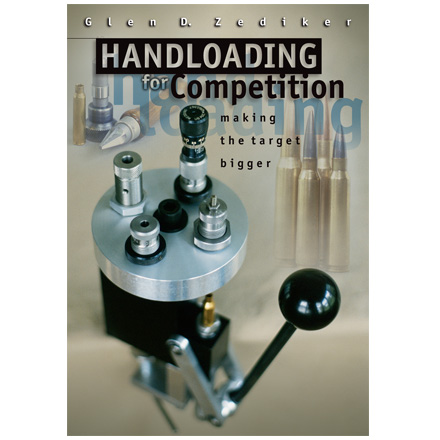
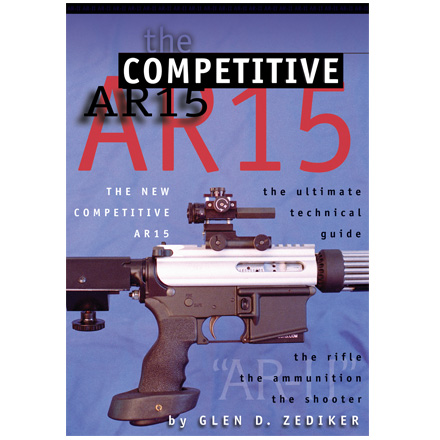
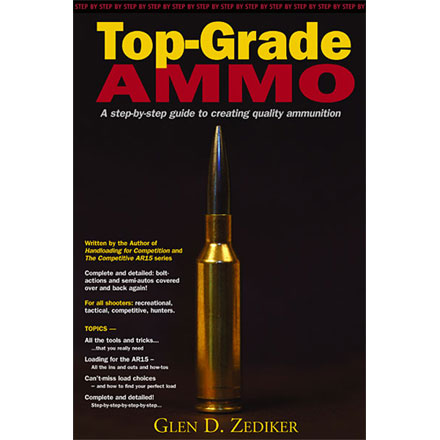
Here is an article Glen Zediker wrote for the Midsouth Blog. In this article Glen gives important advice on selecting, handling, seating, and testing primers. The right primer choice can and will affect your load’s performance and accuracy. And proper primer handling is essential for safety.
by Glen Zediker
The primer is one component in the collection that might not get all the attention it warrants. That’s because it is the one thing, above all other components, that you don’t want to just swap and switch around. We’ve all heard cautions about testing new lots of every component, especially propellant, but primers not only change lot to lot, they vary greatly in their influence on any one load, brand to brand.
The difference in one brand to the next can equal a good deal more or less pressure, for instance. While there are “general” tendencies respecting the “power” of various-brand primers, always (always) reduce the load (propellant quantity) when switching primers.
This has become more of an issue over the past few years as we’ve faced component shortages. I can tell you without a doubt that going from a WW to a CCI, or from a Remington to a Federal, can have a major influence on a load. I establish that from chronograph readings. No doubt, it’s best to have a good supply of one primer brand and lot that produces good results, and when that’s not possible, it’s a hard sell to convince someone to stop loading ammo and get back to testing. But. It is important. I can tell you that from (bad) experience. How I, and we all, learn most things…
When I switch primers, whether as a test or a necessity, I reduce my load ONE FULL GRAIN. There can be that much effect.
The Elements of a Primer
A primer is made up of a brass cup filled with explosive compound (lead styphate). Lead styphate detonates on impact. Primers don’t burn – they explode! In the manufacturing process, this compound starts as a liquid. After it’s laid into the cup, and while it’s still wet, a triangular piece or metal (the “anvil”) is set in. When the cup surface is struck by the firing pin, the center collapses, squeezing the explosive compound between the interior of the cup and the anvil. That ignites the compound and sends a flame through the case flash hole, which in turn lights up the propellant.
Primers Can be Dangerous — Particularly When Stacked
Don’t underestimate that. I’ve had one experience that fortunately only created a huge start, but I know others who have had bigger more startling mishaps. These (almost always) come from primer reservoirs, such fill-tubes. Pay close attention when charging up a tube and make sure all the primers are facing the right way, and that you’re not trying to put in “one more” when it’s full! That’s when “it” usually happens. What will happen, by the way, is akin to a small grenade. Static electricity has also been blamed, so keep that in mind.
Sizes and Types of Primers
Primers come in two sizes and four types. “Large” and “small”: for example, .223 Rem. takes small, .308 Win. takes large. Then there are pistol and rifle in each size.
Rifle primers and pistol primers are not the same, even though they share common diameters! Rifle primers [normally] have a tougher cup, and, usually, a hotter flash. Never swap rifle for pistol. Now, some practical-style competitive pistol shooters using their very high-pressure loads (like .38 Super Comp) sometimes substitute rifle primers because they’ll “handle” more pressure, but they’ve also tricked up striker power. That’s a specialized need.
Further, some primer brands are available with a “magnum” option. Some aren’t. My experience has been that depends on the “level” of their standard primer. A magnum primer, as you might guess, has a more intense, stouter flash that travels more “deeply” to ignite the larger and more dense powder column. It reaches further, faster.
Flash Consistency Counts Flash Consistency is very important, shot to shot. The consistency of every component is important: bullet weights, diameters, case wall thicknesses, and all the way down the list. We’re hoping to get more consistent behavior from a “match” or “benchrest” primer, and we’re paying more for it. I can tell you that some brands that aren’t touted as “match” are already consistent. That all comes from experience: try different primers, just respect the need to initially reduce the load for each test. I can also tell you that my notes tell me that the primer has a whopping lot to do with how high or low my velocity deviations plot out.
Primer Dimensional Differences and Primer Tools
One last thing — there are small variations in primer dimensions (heights, diameters) among various brands. These variations are not influential to performance. However — small diameter variations can influence feeding through priming tools. This can be a hitch especially in some progressive loading machines. Manufacturers usually offer insight (aka: “warnings”) as to which are or aren’t compatible, so find out.
This article is adapted from Glen’s books, Handloading For Competition and Top-Grade Ammo, available at Midsouth HERE. Learn more about Glen’s books at ZedikerPublishing.com.
Readers often ask us: “Is there an inexpensive way I can get started in position shooting?” The answer is “yes” — across the country CMP-affiliated clubs host Rimfire Sporter matches. You can use a wide variety of .22 LR rimfire rifles — manual actions (such as a Winchester model 52) or semi-automatics (such as a Ruger 10/22). There are prone, sitting/kneeling, and standing stages. CMP rules provide separate classifications for scoped rifles, open-sighted rifles, and aperature-sighted rifles. The matches are fun, the ammo is inexpensive, and everyone has a good time while improving their marksmanship.
The rapid-fire sitting or kneeling stage of a CMP-sanctioned .22 Sporter Match consists of two, 5-shot strings. A manually-operated or semi-automatic rifle may be used for this match.
The video shows the sitting/kneeling rapid-fire stage of a Rimfire Sporter match.
Our friend Dennis Santiago helps run CMP Rimfire Sporter Matches in Southern California. Dennis observes: “You want something challenging? Well that X-Ring 50 yards away is the diameter of a 50 cent piece, and there are people out there that can womp that thing with iron sights.”
Dennis notes: “There are six (6) stages of fire on a tough little target. Notice the rifles that can be used run the gamut from pump and bolt actions to variations on the semi-auto theme. All still require a good eye and a steady hold to earn one’s bragging rights for the day. A match takes about an hour and a half per relay. The slowest part of the match is initial sighting in. It’ll take longer than the allocated 5 minutes for the typical first timer coming to a club match.”
At Dennis’s Burbank Rifle & Revolver Club (BRRC), procedures are modified a little bit: “What we typically do at BRRC is run two relays. Experienced competitors shoot per the full rulebook. New shooters are afforded a bit more relaxed environment to make the experience more fun and inviting. We do the same thing in our M-1 Garand Clinic/Match series.”
Rimfire Sporter Match Basics
The CMP Rimfire Sporter Rifle Match is an inexpensive, fun-oriented competition using .22 caliber sporter rifles (plinking and small game rifles) commonly owned by most gun enthusiasts. To compete, all you need is a basic rifle, safety gear, and ammunition. No fancy, high-dollar rifles are required.
The event is shot with standard sporter-type, rimfire rifles weighing no more than 7 ½ lbs, with sights and sling. Rifles may be manually-operated or semi-automatic. Shooters with manually-operated actions are given extra time in the rapid-fire stage to compensate for the difference. (See Video).
There are three classes of competition — the standard “O Class” for open-sighted rifles, “T-Class” for telescope-sighted and rear aperture-sighted rifles and “Tactical Rimfire” class, which is a .22 caliber A4 or AR15 style rifle. Firing for all classes is done at 50 and 25 yards on a target with a 1.78″ ten-ring and an 18″ outer one-ring. Even new shooters can get hits on this target, but it’s still tough enough that no one yet has fired a perfect 600×600 score.
The Civilian Marksmanship Program (CMP) has a CMP Guide to Rimfire Sporter Shooting. This FREE, 50-page digital publication covers equipment, positions, course of fire, rules, scoring and much more. You’ll find helpful “how-to” sections on aiming, sight picture, hold control, and trigger control. Reading these instructional sections can benefit any prone or three-position competitive shooter.
Here’s a killer deal on a Front Focal Plane (FFP) optic good for PRS competition and tactical applications. The Vortex Viper PST 4-16x50mm scope features 0.1 Milrad clicks with an EBR-1 illuminated reticle with Mil-based hash marks. There are 21 Mils of Elevation amd Windage. The scope is 13.7 inches long, has a 30mm main tube, and weighs 22 ounces (without rings).
Not that long ago, this scope sold for around $900.00. Now you can get the Vortex Viper PST 4-16x50mm for just $599.99, a $300.00 savings. That’s a steal for a PRS-ready FFP comp scope with a proven track record and rock-solid Vortex warranty.
SAVE Additional $30.00
with Code PST30
$569.99 Total
EuroOptic’s listed Sale price is $599.99 for the Viper PST 4-16x50mm. However you can an additional $30 off with Code PST30. That drops your net price to just $569.99. You need to act quickly — this Promo Code expires on 9/30/2018.


 Have a good look at the photos below — this may be one of the most noteworthy target strings we’ve ever published. What you can see is the effect of barrel tuner position on point of impact (POI). You can clearly see that the tuner position alters the up/down POI location in a predictable fashion.


 Disclaimer: John shot some more groups with this Tubegun that were definitely NOT one-holers. That first five-shot masterpiece could not be duplicated. However, we’re told that the rifle shot other groups in the 2s, 3s, and 4s — impressive performance for a rifle designed for prone and position shooting. This shows how well the Pierce action mates to the Competition Machine chassis.



 Flash Consistency is very important, shot to shot. The consistency of every component is important: bullet weights, diameters, case wall thicknesses, and all the way down the list. We’re hoping to get more consistent behavior from a “match” or “benchrest” primer, and we’re paying more for it. I can tell you that some brands that aren’t touted as “match” are already consistent. That all comes from experience: try different primers, just respect the need to initially reduce the load for each test. I can also tell you that my notes tell me that the primer has a whopping lot to do with how high or low my velocity deviations plot out.
 Get Midsouth products


