Old Gun… New Gadget. A while back, our friend Dennis Santiago has been practicing with his trusty old Springfield, in preparation for the CMP Western Games in Phoenix. To help improve his off-hand hold, Dennis utilized a laser training device that plots shot location on a laptop computer. Here’s a report from Dennis on his laser-enabled dry-fire practice:
Laser Dry-Fire Practice with Vintage Rifle
Something old, something new. Take a M1903A3 Springfield, put a laser in its nose, and practice your off-hand shooting until staying on focus with the front sight throughout the shot process becomes a reflex.
If the last thing you see is the front sight, the shot is in. If the last thing you see is the bull, it’s out. Simple as that. If you had told someone in the 1920s or 1930s that this much tech would one day be available to aid in training … come to think of it, it’d have made real riflemen smile.
Here is the receiving end of the laser beam:
About the Hardware and Software
Dennis was using the BeamHit 190 series Personal Marksmanship Training System. This interactive dry-fire training system uses a laser detecting device to transmit hits directly to a computer in real time. The BeamHit 190 software allows shooters to choose from multiple targets and even create timed scenarios. You can save strings of fire for later review directly on the connected computer. The included software is compatible with Windows 98, ME, 2000, XP, Vista, Windows 7. It seems like the system Dennis used is out of production, though EoTech still offers a 190-3 system through Amazon.com. The BeamHit 190 system has been replaced with the simpler Insight/Beamhit MDM1001 Portable Target System. This is less sophisticated and does not require a connected computer.
Why are there 7000 records? Start with the fact that there are a host of different NRA disciplines: Air Pistol, Action Pistol, High Power Rifle, Smallbore Rifle, Fullbore, just to name a few. Within each discipline there may be records for metallic sight, any sight, rapid fire, slow fire, prone, standing, and other variations. And then there may be separate records for indoor, outdoor, distance, and number of shots fired. Then add team records on top of the individual records. Finally, there are separate records for all the NRA classifications: Open, Civilian, Service, Woman, Junior, Senior, Police, and so on….
The task of validating and registering so many different records is daunting. And the work never stops. Consider this — the NRA sanctions 11,000 tournaments each year. This means that new record claims are being submitted throughout the year.
Report based on story by Kyle Jillson inNRAblog.com.
At the request of our readers, we provide select “Deals of the Week”. Every Monday morning we offer our Bargain selections. Here are some of the best deals on firearms, hardware, reloading components, and shooting accessories. Be aware that sale prices are subject to change, and once clearance inventory is sold, it’s gone for good. You snooze you lose.
This is a very good spotting scope for the price. Yes it gives up some low-light performance to a spotter with an 80mm objective, but otherwise it is a good performer, and we can’t think of much that will touch this Vortex Diamondback spotting scope for anywhere near the $399.99 sale price. Choose from angled or straight version for the same $399.99 price, which includes the 20-60X zoom eyepiece.
Magnification: 20-60X Zoom
Objective Lens Diameter: 60 mm
Eye Relief: 14-17 mm
Close Focus: 20 feet
Length: 14 inches
Weight: 33.8 ounces
2. Amazon — Caldwell Long Range Target Camera System, $399.49
A few Forum members have purchased this system and they’ve found that it works reliably, providing a clear signal to any WiFi-enabled mobile device (smartphone, iPad, Laptop). One member specifically tested the unit at 1000 yards and it functioned fine. NOTE: This system does NOT have a zoom camera lens, so you need to position the camera with 10 yards or so of the target. But if you place it to the side a bit, this shouldn’t be a problem. This system comes with a very nice, fitted carrying case that holds camera, transceivers, antennas, and stands. You get a very capable system for under $400.00.
The Ruger Precision Rifle has been one of the hottest-selling long guns in America since its releases. It has pretty much been sold out for months. And Ruger just bumped the price on the new Gen2 edition up to $1599.00 MSRP. The Superstore got hold of some of some Gen 1 production RPRs in .243 Winchester. These rifles are IN STOCK and on sale for $1049.50. That’s a great price. The venerable .243 Win cartridge is a good choice for this rifle — Gavin Gear of UltimateReloder.com has an RPR chambered in .243 Win that has proven very accurate.
4. Grafs.com — Magnetospeed Sporter $179.99
If you have been waiting to get a Magnetospeed… wait no longer. Priced at just $179.99 at Grafs.com, the Magnetospeed Sporter model costs less than half as much as Magnetospeed’s V3 models. This chronograph attaches directly to your barrel so you don’t have to go downrange to position tripods and set up skyscreens. For most people the Sporter Model contains all the features they need. Using Magnetospeed’s XFR adapter (sold separately), data can be transferred easily from the display module to your mobile device. READ Magnetospeed Sporter Review.
The American Furniture Classics Gun Concealment Storage Bench hold ups to five (5) long guns. There is also a removable accessory tray for handguns or other accessories. There is padding on top and the outside of the bench is covered with stitched brown polyurethane. In the upper compartment (above the guns), you can store blankets, bedding, or other outdoor gear. NOTE: while the lower gun compartment has a lock, this is NOT a steel-shielded gun locker; the walls are wood composite.
This is quality, CCI made-in-USA ammo with reloadable, brass casings. We have used this CCI-made Blazer 9mm ammo in Sig, HK, and Glock pistols and it performed very well. This stuff won’t last long at this price (less than $0.20 per round). If you need 9mm practice ammo, order soon — this very same 1000-round case of Blazer 9mm ammo costs $60.00 more at MidwayUSA. Blazer Brass is loaded in boxer-primed, reloadable brass cases for added value.
7. MidwayUSA — Promo Codes, $10, $20, or $30 Off
For the 4th of July, MidwayUSA is offering money-off Promo Codes. Use Code 10July100 to save $10 on $100 or more order, use code 20July200 for $200+ orders, and use code 30July300 on orders of $300 or more. Exclusions: Gift Certificates, out-of-stock products, products with Quantity Limits. Also excludes any product from FNH, 5.11 Tactical, Benchmade, Geissele, Garmin, Leica, Atlas Bipods, Accu-Shot, Airforce, select Leupold, select Redfield, Nightforce, Sitka Gear, Zero Tolerance, Under Armour, Oakley and First Lite.
Today, July 4th, we are celebrating a special birthday — the launching of a new nation that would become the world’s greatest exemplar of freedom and democracy. It is easy to lose sight of the challenges that faced our fore-fathers, and the continuing burdens we all share, as Americans, to maintain freedom at home and stand as an example to other peoples engaged in the struggle for democracy. It is more important than ever that we remember the ideals on which the nation was founded, and remember that our nation became great through the efforts and talents of a free citizenry.
In the Beginning — Overcoming Great Odds
In a July 4th speech, Navy Lt. Ellen Connors wrote: “Our nation declared its independence in order for our families to live free –- not just for one generation but for future generations. And what odds [the founding fathers] faced. It must have seemed impossible. Our forefathers went up against the world’s most colossal empire since ancient Rome. No colony had ever successfully left a mother country to set up a self-governing state.”
The Price of Freedom… The Pride of A Nation
Here is a selection from Daniel Webster’s July 4th, 1851 Oration. His words ring true even now:
On the 4th of July, 1776, the assembled Representatives of the United States of America in Congress declared that these United Colonies are, and of right ought to be, FREE and INDEPENDENT States. This Declaration, made by most patriotic and resolute men, trusting in the justice of their cause and the protection of Heaven, and yet made not without deep solicitude and anxeity, has now stood for seventy-five years, and still stands. It was sealed in blood. It has met dangers, and overcome them; it has had enemies, and conquered them; it has had detractors, and abashed them all….
Every mans’ heart swells within him… as he remembers that seventy-five years have rolled away, and that the great inheritance of liberty is still his — his, undiminished and unimpaired, his in all its original glory; his to enjoy; his to protect; and his to transmit to future generations.
Harold Seagroves’ 3-time Hickory Ground Hog Match-Winning Rifle
At clubs across the country, varmint fun shoots (also known as “groundhog matches”) are becoming more popular every year. In these matches, usually shot from the bench, you engage paper targets, clay pigeons, steel “critter” silhouettes, or some combination of paper and reactive targets. Shooters like these matches because you can shoot a wide variety of rifles, you don’t have to spend a fortune to be competitive, and there is fun for the whole family. Rules are inclusive — you won’t be turned away because your rifle is two ounces overweight. A large percentage of the match fees usually go back to shooters in the form of cash prizes. And the level of camaraderie is high.
Inclusive Rules Welcome All Shooters
Forum member Danny Reever has explained the appeal of groundhog matches: “We don’t have a governing organization, or have to pay $50 a year membership just to compete in matches. Sure the rules vary from club to club, but you adapt. You build your rifle (or even pistol) to fall within the rules of either the clubs you shoot, or to fit all the clubs rules. If not there still is a class for you to compete in. If your factory rifle doesn’t conform to the rules, it can shoot in a custom class. If your custom doesn’t make weight for Light Custom (usually 17 pounds and under), you shoot it in heavy custom class. If you want to try your Tactical rifle or F-Class rig, bring it out there’s a class you can shoot it in. If you don’t like one club’s rules, you just don’t shoot there. It’s no big deal.
There are no National records, or Hall of Fame points — just individual range records. If you want to shoot in BIG matches (with big prizes), there is the Hickory Ground Hog Shoot among others. If competition isn’t your bag, many clubs offer mid-week fun matches that you can shoot just for fun. You shoot the same targets but with a more relaxed atmosphere with no time limits.
The best part is you don’t have to shoot perfect at every yardage. You always have a chance because in this sport it really isn’t over until the last shot is fired. Typically ALL the entry money goes to the host club, with much of the cash returned back to the shooters via prizes. Junior shooters often shoot for free, or at a reduced rate. That lessens the burden on the family’s wallet (not a small thing in these economic times). The low entry cost also encourages young guys to get involved who don’t have $4000 custom rifles or the money to buy them.
More Fun, Fewer Complications
There isn’t a sea of wind flags to shoot over or to put up and take down. If the range has a couple of flags so much the better, but after all it is a varmint match. No pits to spot shots and slow things down either. If you can’t see your hits through your rifle scope or spotting scope well you are in the same boat as everybody else. That’s what makes it interesting/ sometimes frustrating!
As for calibers, I’ve seen everything from .223 Rem to .338 Lapua and everything in between. Our range record at my club is held by Bill Slattery, who shot a 147 out of a possible 150 with a 22BR 13 months ago. That’s on a target with a 1.250 ten ring at 200/300/500 meters. That record will stand for awhile, and shows you that some very good shooting is done at groundhog matches.
The best part is it’s laid back, everyone gets along, there is no place for big egos here. We who shoot the Ground Hog Matches don’t begrudge the other organizations and shooting disciplines, or those that shoot in them, heck some of us cross over and compete in registered benchrest matches too. Life’s too short, live and let live is our motto so just come out and have fun!”
Fellow Forum members chimed in:
FdShuster: “I’ve competed in our local ground hog matches for several years now, have introduced a number of others to them, and we all enjoy them and more importantly, continue to learn from them. Distances are as close as 100 yards, (with a 5/8″ 10 ring) to as far as 500 meters. With a 2″ 10 ring. Wind, mirage, bullet trajectories, all make them a challenge, and unlike shooting for group, where the group can be anywhere on the paper, in this game they must be very small, but also in the 10 ring. With the different classes — Custom, Factory, Hunter — almost any rifle will fit in somewhere. And Danny is correct about the friendly attitudes. I’ve seen competitors go out of their way, and jeopardize their chances of winning, to help someone else who may have a problem on the line.”
Mike C: “Here in Texas, our version of groundhog matches involves shooting at clay pigeons at 400 yards. We use 60mm, 90mm, and 108mm clay pigeons attached to target boards. You have 10 shots to break 8 clays, with a seven-minute time limit. We have developed a good following at these matches. In past years, a Shooter of the Year Award was given based on the Aggregate score for three of our matches, which are held in Utopia, San Angelo, and Huntsville.”
40X Guy: “I would have to say upon finishing my first year ever of groundhog matches, that the average Joe can grab his Swift, or his 25-06, or his 22-250 and go rip some holes in paper. Everybody is having a good time and its a gathering of like-minded people who have all shot chucks at some point or another. Even if one does not win the match, you can look at your target and say “darn that chuck target has five holes in him at 400 yards and he’s dead” just as well as the next guy shooting a custom bench rifle. Everybody fits in and everybody, 8 to 80, is having fun! It is addictive and will drive you to spend your hard-earned currency for sure!”
What goes into a £77,500.00 ‘Royal’ model hand-crafted shotgun? Watch this remarkable video from Holland & Holland to find out. Filmed in the Holland & Holland factory, this nine-minute video shows all the key stages in the creation of H&H’s prized shotguns and rifles. The video shows barrel-making, stock checkering, metal engraving and more…
There is one subject as to which we should all be in agreement — the need to wear quality, protective eyewear whenever one uses a firearm. Sadly, it’s not uncommon, at the range, to see shooters wearing no eye protection, or wearing cheap, “dime-store” glasses that can shatter on impact.
This video from Luckygunner Labs shows what can happen with low-quality eyewear. When hit with pellets, the left lens came out and the right lens entered the eye socket!
Read Our Guide to Protective Eyewear
We’ve created a comprehensive Guide to Protective Eyewear. Forum member ChuckW2 told us: “That was the most important article that has ever been posted on this site. I am amazed how many people do not wear glasses while shooting or hunting. Great read….” If you haven’t done so already, read the story. We guarantee you’ll learn something new.
The Eyewear Guide explains the safety standards that apply to protective eyewear and reviews the best lens materials currently available including Polycarbonate, Trivex™, and SR-91. You may not have heard of Trivex, but it is probably the best material out there right now — it’s tough, lightweight, and has better optical properties than Polycarbonate. SR-91 is a good choice for those who need a polarized lens. Our Eyewear Guide also includes a section by Danny Reever on Prescription Shooting Glasses. Danny discusses the available options in lens materials and has many helpful recommendations.
Along with our reviews of lens materials, tint properties, and frame design, we highlight a study done by the NRA’s American Hunter magazine. 10 popular brands of eyewear were tested, with some very interesting results. The testers observed that price does not necessarily assure quality. Relatively inexpensive Bollé VX and Pyramex eyewear both worked better than some expensive brands.
On the other hand, don’t select eyewear simply because it’s cheap or easy to find. American Hunter editor Jeff Johnston observed: “It’s a mistake to assume that any plastic-lens sunglasses off the rack at the local 7-11 are made of polycarbonate and therefore are effective as shooting glasses—cheap plastics are not polycarbonates; in fact, wearing them could be worse than wearing nothing, as they can introduce sharp shards of plastic to your eyes in addition to the projectile(s) that caused them to break.”
California Governor Jerry Brown just departed for a luxurious European vacation. But before he left the state, he savaged the Second Amendment rights of millions of California gun owners. Less than 24 hours after they arrived on his desk, Brown signed six anti-gun bills railroaded through the Democratic-controlled California Legislature. Among the bills signed by Brown was SB 1446 which will require Californians to forfeit, destroy, or ship out of the state ALL firearms magazines that can hold more than ten rounds. Owners of legally-obtained magazines, previously “grandfathered”, will receive no compensation though they must give up their property. Those who fail to comply will be fined and charged with an infraction, a low-level crime. This magazine restriction goes into effect July 1, 2017.
Gov. Brown also signed SB 1235 which will require background checks for the purchase of any and all ammunition. Ammo buyers’ names and personal information will be logged and tracked in a database.
Notice from NSSF RE California Legislation
The NSSF issued this statement: “The National Shooting Sports Foundation is extremely disappointed that Gov. Brown today chose to sign into law these highly restrictive and unneeded gun control measures, all of which will affect law-abiding Californians while doing nothing to stop the criminal misuse of firearms. By acting within 24 hours after being sent these bills, and not allowing the public to voice their opinions in order to depart for his European vacation, the governor compounded the miscarriage of legislative process and procedure while demonstrating disdain for Californians who now face laws that clearly infringe on their Constitutional rights.”
Gov. Brown SIGNED the following bills into law:
AB 1135 (Levine) and SB 880 (Hall) Firearms: Assault Weapons – Expands the definition of assault weapons based on whether a semiautomatic firearm has a detachable magazine, banning thousands of popular firearms.
SB 1235 (de Leon) Ammunition – Requires authorization to purchase ammunition and track what and how much ammunition each person buys, creating a database of ammunition purchasers.
SB 1446 (Hancock) Firearms: Magazine Capacity – Makes it illegal to possess magazines capable of holding more than 10 rounds no matter how long a person has owned them.
AB 1511 (Santiago) Firearms: Lending – Makes it illegal to loan a firearm to a person who is personally known to you (except for family members with restrictions).
AB 1695 (Bonta) Firearms: False Reports – Creates a 10-year prohibition on owning firearms for someone convicted of falsely reporting a lost or stolen firearm.
Gov. Brown VETOED the following bills:
SB 894 (Jackson) Firearms: Lost or Stolen: reports – Would have made it a crime not to report lost and stolen firearms to law enforcement within the arbitrary time limit.
AB 1673 (Gipson) Firearms: Unfinished frame or receiver – Would have expanded the definition of a firearm to include partially finished frames and receivers (no definition of what this means) and require their registration.
AB 1674 (Santiago) Firearms: Transfers – Would have made it illegal to buy or receive more than one firearm in any 30-day period.
If you wish to Contact Gov. Brown’s office to voice your concern about his signing of six anti-gun measures, here is the contact information:
Governor Jerry Brown
c/o State Capitol, Suite 1173
Sacramento, CA 95814
In our Shooters’ Forum, many questions are asked about QuickLOAD software — how to get best results, how to use the advanced features, how to adjust for temperature and so on. To help answer those questions, here’s a short feature we first ran during SHOT Show 2012. You can also CLICK HERE for a very detailed explanation of QuickLOAD in our main site.
At SHOT Show, we had the chance to meet with German software engineer Hartmut Broemel, creator of QuickLOAD software. This software program, while not a substitute for conventional load manuals, allows shooters to evaluate a wide range of powders and bullets, comparing potential loads on the basis of predicted pressures, velocities, load density and projectile in-barrel time.
We took the opportunity, in the video below, to explain some of the fine points of QuickLOAD for our members. QuickLOAD, sold by Neconos.com, helps reloaders understand how changing variables can affect pressures and velocities. It can predict the effect of changes in ambient temperature, bullet seating depth, and barrel length.
In the video below we explain how to adjust the program for true case capacity, bullet seating into the lands, and other important factors. If you are a new QuickLOAD user, or are contemplating buying the $152.95 program, you should watch the video. The program isn’t perfect, but it can accelerate the load development process, and it can save you money by narrowing down the list of appropriate powders for your cartridge.
No other product currently available to serious reloaders offers as much predictive power as QuickLOAD, and you’ll find your money well spent just for the vast collection of data on bullets and cartridges. With a couple mouse-clicks you can instantly get the specifications of hundreds of bullets and cartridges. Likewise, in a matter of seconds, you can compare load density for a half-dozen powders, or compare the projected velocities of one cartridge versus another.
Here’s a good deal — Creedmoor Sports is offering free ground shipping this weekend to celebrate Independence Day. Buy all you want from the Creedmoor Sports website, and ground shipping is FREE, from Friday, July 1 through Monday, July 4th, ending at midnight Pacific Daylight Time.
AUTOMATIC DISCOUNT: Creedmoor’s free shipping discount is automatic. You don’t need to enter a coupon or promo code during online checkout. Just make your purchases and the shipping will automatically be free. For more info, or to place an order, visit www.CreedmoorSports.com or www.CreedmoorAmmo.com.
This 4th of July weekend special applies to Creedmoor’s full line of shooting accessories — everything from range supplies and reloading components, to gloves, slings, gun cases and targets, and much more. Along with FREE Shipping (contiguous USA only) Creedmoor is offering 10% off shirts, 10% off Anschutz shooting coats, and 15% off books.
The Free Shipping offer also covers Creedmoor-brand ammo, which is very good stuff. Creedmoor rifle ammunition is offered in popular centerfire calibers from .223 Rem to .308 Win, with numerous load options. Creedmoor pistol ammunition is offered in .380 Auto through .45 ACP, with many bullet weight/type options.
Creedmoor Ammunition is made from all new, top-shelf components (no cheap or reclaimed components) and every round is hand-inspected. Creedmoor ammunition is loaded in state-of-the-art AmmoLoad machines that are typically run at half the recommended speed to produce a more uniform, consistent load.


 Did you know the


 Today, July 4th, we are celebrating a special birthday — the launching of a new nation that would become the world’s greatest exemplar of freedom and democracy. It is easy to lose sight of the challenges that faced our fore-fathers, and the continuing burdens we all share, as Americans, to maintain freedom at home and stand as an example to other peoples engaged in the struggle for democracy. It is more important than ever that we remember the ideals on which the nation was founded, and remember that our nation became great through the efforts and talents of a free citizenry.
 Inclusive Rules Welcome All Shooters
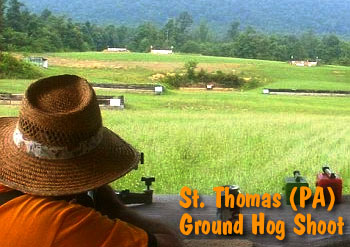 More Fun, Fewer Complications
 Mike C: “Here in Texas, our version of groundhog matches involves shooting at clay pigeons at 400 yards. We use 60mm, 90mm, and 108mm clay pigeons attached to target boards. You have 10 shots to break 8 clays, with a seven-minute time limit. We have developed a good following at these matches. In past years, a Shooter of the Year Award was given based on the Aggregate score for three of our matches, which are held in Utopia, San Angelo, and Huntsville.”


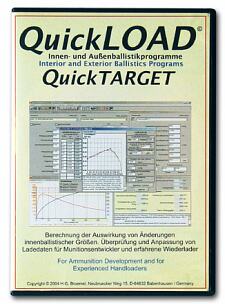 At SHOT Show, we had the chance to meet with German software engineer Hartmut Broemel, creator of QuickLOAD software. This software program, while not a substitute for conventional load manuals, allows shooters to evaluate a wide range of powders and bullets, comparing potential loads on the basis of predicted pressures, velocities, load density and projectile in-barrel time.


