The Civilian Marksmanship Program (CMP) invites young men and women shooters to apply for CMP scholarships for the 2016-2017 school year. The CMP offers $1,000 one-year scholarships to current high school seniors. Since 2005, CMP has awarded over $1 million in scholarship grants.
Last year the CMP authorized over 150 scholarships. Based on merit, selected individuals are high school seniors who are currently enrolled in a team or club that is participating in rifle or pistol marksmanship competitions. Applicants must provide rifle or pistol competition history, list of awards, and future goals in the shooting sports. Applicants must also provide academic GPA and an official high school transcript (3.0 Minimum GPA Required).
Applications are Being Accepted Now for 2016-2017
The CMP is now taking scholarship applications for the 2016-2017 freshman college year. Scholarships are one-year awards that may be used to fund any accredited, post-secondary education or vocational program. (Note: Students planning to enroll in a military academy are not eligible).
The deadline for CMP Scholarship Application is March 20, 2016. Learn more about the program at the CMP Website Scholarship Page. If you have any questions, please contact Kathy Williams at 419-635-2141, ext. 709, or email kwilliams [@] thecmp.org.
Here’s important news for owners of Accuracy International (AI) rifles. There is now an approved AI service facility in the United States: Mile High Shooting Center (Erie, Colorado). After Mile High’s tech team received extensive training at the AI production center in England, Mile High Shooting Center has been appointed the USA’s first Accuracy International Factory Authorized Service Center.
Mile High, owned by Randy and Diann Pennington, has been an AI distributor for many years and the Service Center will be run by professional gunsmith Adam Rehor. To contact the new Service Center, email AIservice@milehighshooting.com or call (303) 255-9999.
Mile High Shooting Center is located in the Denver metropolitan area. The company has fully-equipped facilities to provide LEO and civilian users with factory standard spares, service, and repair for all Accuracy International rifles and equipment.
Mile High Shooting Accessories
3731 Monarch Street
Erie, CO 80516
Toll Free: 1.877.871.9990
Phone: 1.303.255.9999
Fax: 1.303.254.6572
The Coriolis Effect comes into play with extreme long-range shots like this. The rotation of the earth actually moves the target a small distance (in space) during the course of the bullet’s flight. Photo by Dustin Ellermann at Whittington Center Range.
When you’re out at the range, the Earth seems very stable. But it is actually a big sphere zooming through space while spinning around its axis, one complete turn every 24 hours. The rotation of the earth can create problems for extreme long-range shooters. During extended bullet flight times, the rotation of the planet causes an apparent deflection of the bullet path over very long distances. This is the ballistics manifestation of the Coriolis Effect.
Bryan Litz of Applied Ballistics has produced a short video that explains the Coriolis Effect. Bryan notes that Coriolis is “a very subtle effect. People like to make more of it than it is because it seems mysterious.” In most common shooting situations inside 1K, Coriolis is not important. At 1000 yards, the Effect represents less than one click (for most cartridge types). Even well past 1000 yards, in windy conditions, the Coriolis Effect may well be “lost in the noise”. But in very calm conditions, when shooting at extreme ranges, Bryan says you can benefit from adjusting your ballistics solution for Coriolis.
Bryan explains: “The Coriolis Effect… has to do with the spin of the earth. You are basically shooting from one point to another on a rotating sphere, in an inertial reference frame. The consequence of that is that, if the flight time of the bullet gets significantly long, the bullet can have an apparent drift from its intended target. The amount [of apparent drift] is very small — it depends on your latitude and azimuth of fire on the planet.”
Coriolis is a very subtle effect. With typical bullet BCs and velocities, you must get to at least 1000 yards before Coriolis amounts to even one click. Accordingly, Bryan advises: “Coriolis Effect is NOT something to think about on moving targets, it is NOT something to think about in high, uncertain wind environments because there are variables that are dominating your uncertainty picture, and the Coriolis will distract you more than the correction is worth.”
“Where you could think about Coriolis, and have it be a major impact on your hit percentage, is if you are shooting at extended range, at relatively small targets, in low-wind conditions. Where you know your muzzle velocity and BC very well, [and there are] pristine conditions, that’s where you’re going to see Coriolis creep in. You’ll receive more refinement and accuracy in your ballistics solutions if you account for Coriolis on those types of shots. But in most practical long-range shooting situations, Coriolis is NOT important. What IS important is to understand is when you should think about it and when you shouldn’t, i.e. when applying it will matter and when it won’t.”
The Coriolis Effect — General Physics
The Coriolis Effect is the apparent deflection of moving objects when the motion is described relative to a rotating reference frame. The Coriolis force acts in a direction perpendicular to the rotation axis and to the velocity of the body in the rotating frame and is proportional to the object’s speed in the rotating frame.
A commonly encountered rotating reference frame is the Earth. The Coriolis effect is caused by the rotation of the Earth and the inertia of the mass experiencing the effect. Because the Earth completes only one rotation per day, the Coriolis force is quite small, and its effects generally become noticeable only for motions occurring over large distances and long periods of time. This force causes moving objects on the surface of the Earth to be deflected to the right (with respect to the direction of travel) in the Northern Hemisphere and to the left in the Southern Hemisphere. The horizontal deflection effect is greater near the poles and smallest at the equator, since the rate of change in the diameter of the circles of latitude when travelling north or south, increases the closer the object is to the poles. (Source: Wikipedia)
Holiday Greetings to Our Readers
Merry Christmas and Happy Holidays to all our readers and especially our nearly 30,000 Forum Members. This marks our our 11th Christmas “in business”, and the site is stronger than ever thanks to our members and industry sponsors. AccurateShooter.com (and 6mmBR.com) are now accessed by over 550,000 visitors every month. Part of the reason for that success is the hard work of our volunteer helpers.
Unsung Heroes Deserve Recognition
I want to acknowledge some guys who have really helped out the site. Number one is JayChris, our IT guy — he keeps the servers running smoothly and maintains our Forum. Jay has been working through the holidays on a major Forum upgrade we hope to roll out at year’s end. This is a big undertaking, requiring great technical expertise. Jay deserves our thanks for all his hard work and his dedication… working nights and weekends to keep this big project on schedule. Thanks also go to Jeff Williams, our “Answerman” who fields miscellaneous questions from our readers. We have a great place to test rifles thanks to our good buddy (and designated trigger-puller) Joe Friedrich. Special thanks go to the 6.5 Guys, Ed Mobley and Steve Lawrence, who authored our latest Cartridge Guide, and contributed SHOT Show videos. I also want to recognize our regular contributors, including Vince Bottomley, German S., Jason Baney, Robert Whitley, Tony Chow, Mark LaFevers, and Gavin Gear. And we must acknowledge Boyd Allen and EdLongRange who tirelessly supply story leads for the Daily Bulletin. These guys (and many others) have all contributed much time and effort.
We also want to thank our major sponsors, without whose support the site could not provide the full AccurateShooter.com experience, with an active Forum, an archive of in-depth articles, and fresh content 365 days a year in our Daily Bulletin. We’re grateful to all our sponsors and advertisers. In particular, I want to acknowledge Shiraz Balolia, a great friend of the shooting sports, and a gifted marksman in his own right. Shiraz has provided key support for this site though his companies Bullets.com and Grizzly Industrial.
John Adams and Jerry Tierney Have Left the Range…
I also want to say a word in remembrance of two good men (and talented shooters) who really helped the site. John Adams, one of the site’s first Forum members, and a great supporter of our efforts, passed away just over a year ago. And we lost Jerry Tierney, a champion shooter in many disciplines, just this month. These men both served as mentors to me, and their knowledge (and good fellowship) will be missed. John and Jerry — rest in peace, my friends.
With each passing day, prices are dropping at Midsouth Shooters Supply. Right now Midsouth is running its end-of-year Inventory Closeout Count-Down. This is a very unique sale — now through December 31st the price on Midsouth’s clearance items drops 5% each successive day. So the deals get sweeter and sweeter. But, inventories are limited — if you wait too long you may be out of luck.
Today, four days into the sale, every item on clearance is 25% off. That’s pretty tempting. Remember — the number of clearance items offered is strictly limited. If you see something you like you can watch the price drop 5% each day. But if you procrastinate, the item may get sold. As Midsouth says: “Wait too long and it may be gone”. CLICK HERE for SALE.
Here are some of the best deals we saw this morning (12/24):
What could be more fun than decorating a Christmas tree? Well how about busting Xmas ornaments with a .50 BMG. Boys will be boys, right? This 50 Cal Days of Christmas video features some fantastic slow-motion footage of a Barrett .50 Caliber M82. This bad boy pumps out some serious muzzle flash. Watch carefully at the 1:05 mark and you can see the .50-caliber projectile exit the muzzle brake and spin through the ball of smoke and flame.
The video carries “overkill” to the max, as the shooter uses his big Barrett to blast Christmas ornaments and a snow-globe. To top things off, at the 2:50 mark, the shooter fires the .50 cal at a pyro-equipped gingerbread house. (The gingerbread shot is taken from a standing hold no less!) The results (at 3:22) are impressive — gingerbread house becomes flaming gingerbread pudding.
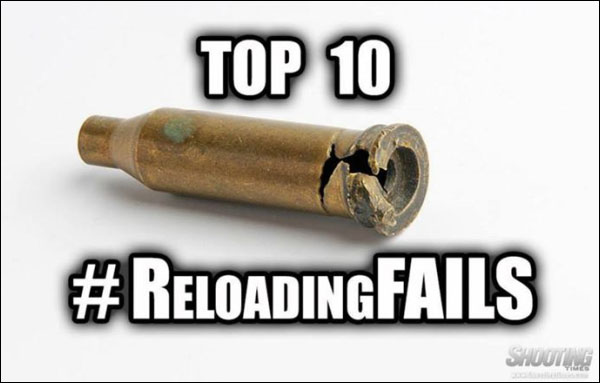
Shooting Times has released an article entitled “Ten Most Common Reloading Mistakes”. Listed below are the Top Ten mistakes hand-loaders can make, at least according to Shooting Times. What do you think of this list — does it overlook some important items?
Top Ten Reloading Mistakes According to Shooting Times:
1. Cracked Cases — Reloaders need to inspect brass and cull cases with cracks.
2. Dented Cases — Dents or divets can be caused by excess case lube.
3. Excessive Powder Charge — Overcharges (even with the correct powder) can be very dangerous.
4. Primers Not Seated Deep Enough — “High” primers can cause functioning issues.
5. Crushed Primers — Some priming devices can deform primers when seating.
6. Excess Brass Length — Over time, cases stretch. Cases need to be trimmed and sized.
7. Bullets Seated Too Far Out — If the bullet is seated too long you may not even be able to chamber the round. Also, with hunting rounds, bullets should not engage the rifling.
8. Burrs on Case Mouths — Ragged edges on case mouths can actually shave bullet jackets.
9. Excess Crimp — This is a common problem with pistol rounds loaded on progressives. If case lengths are not uniform some cases will get too much crimp, others too little.
10. Inadequate Crimp — This can be an issue with magnum pistol cartridges in revolvers.
Do you agree with this list? We think some important things are missing, such as not adjusting full-length sizing dies properly. This can cause the shoulder to be pushed back too far (or not far enough). Another common mistake is using brass that is worn out, i.e. stretched in the case-head area from multiple cycles of hot loads. We also think the #1 error a reloader can make is using the wrong powder altogether. That can be a fatal mistake. See what happens when you load pistol powder in a rifle.
Christmas is almost here, so today we’re featuring a hand-picked collection of “stocking stuffers” for precision shooters. So as not to bust your holiday budget, all of our selections are priced under $10.00. These items are handy tools that you’ll use over and over again at the range and/or at your loading bench (so you’re allowed to buy them for yourself, even after Christmas). Our AccurateShooter staffers use most of these items, including the Loading Blocks, Ballistol, Mirage Shades, Crocogators, and Barrel Bags.
Gifts $1 to $5
Surveyors Tape
$1.99
Safety Eyewear
$1.99
Hood Kwik Estimator
$2.50
Barrel Mirage Shade
$4.95
Surveyors’ Tape. Always watch the wind when you shoot. Inexpensive, Day-Glo Surveyors’ Tape (aka “Flagging Tape”), attached to a stake or target frame, makes a good wind indicator. It will flutter even in mild breezes, alerting you to both angle and velocity shifts. This should be part of every range kit. Don’t leave home without it.
Safety Eyewear ANSI Z87.1. Yes you can get ANSI-approved Safety Eyewear for under two bucks. At that price you should pick up a half-dozen sets, just so you have extras. We recommend that shooters wear eye protection at all times when handling firearms. This eyewear special is offered by CDNN Sports. Call 800-588-9500 to order.
Hood Kwik Estimator. Here’s a very handy tool to measure your 6mm groups. Bracket the group within the diverging lines of the Kwik Estimator and you’ll instantly get a good approximation of the actual group size. No more trips to the tool box for calipers. The inexpensive Kwik Estimator fits in a shirt pocket. (Thanks to Boyd Allen for this suggestion.)
Sinclair Barrel Mirage Shade. For high-volume varminters, and competitors who shoot fast in warm weather, a mirage shield is absolutely essential. This prevents hot air rising off the barrel from distorting the image in your scope. The aluminum Sinclair shield can be trimmed to fit, and comes with stick-on Velcro attachments. Two lengths are available: 18″ for short BR barrels, and 24″ for longer barrels.
Gifts $6 to $10
Dewey Crocogator
$6.50
Ballistol Aerosol Lube
$8.99
Sinclair Barrel Bag
$9.95
Sinclair Load Block
$9.99
Dewey Crocogator. The Crocogator tool, with knurled “teeth” at both ends, is simple, inexpensive, and compact. Yet nothing zips though primer-pocket gunk faster or better. Unlike some cutter-tipped primer pocket tools, the Crocogator removes the carbon quick and easy without shaving brass. One end is sized for large primer pockets, the other for small.
Ballistol Aerosol Lube. Ballistol is a versatile, non-toxic product with many uses in the reloading room. We have found it is ideal for lubricating cases for normal full-length sizing. It is clear, not gooey or chalky like other lubes. It is very, very slippery, yet is easy to apply and just as easy to wipe off. As you lube your cases, the Ballistol will also clean powder fouling off the case necks. For heavy-duty case forming and neck expansion, we’ll still use Imperial die wax, but for every-day case sizing, Ballistol is our first choice. It also helps prevent your dies from rusting and it even conditions leather. Ballistol is a favored bore cleaner for Black Powder shooters because it neutralizes acidic powder residues.
Sinclair Barrel Bag. If you run a switch-barrel rig, or take spare barrels to a big match, this simple but effective barrel bag will protect your valuable steel. The bag is moisture-resistant vinyl on the outside with a soft, quilted interior to protect the barrel’s finish and delicate crown. There are two sizes: one for barrels up to 26 inches, the other for barrels up to 31 inches. Both sizes are priced at $9.95 per bag. That’s cheap insurance for those priceless barrels.
Sinclair ‘Poly’ Loading Block. We’ve tried wood and injection-molded loading trays, and we prefer Sinclair’s white polyethylene loading blocks. They featured chamfered holes properly sized for the particular case you reload. The blocks are heavy enough to be stable on the bench, and the “dishwasher-friendly” material is easy to clean. The standard Poly Loading Block holds 50 cases, while the Competition Loading Block holds 25 cases with a tray for empties. For a bit more money, there’s also a Heavy-Duty 50-case model with an extra-thick 1″ base.
PMA Tool now offers a unique “adjustable” Stock Weight System with variable weighting from 2 to 8 ounces (including internal sleeve). This $65.95 system allows the shooter to add or remove weight (in the buttstock) to balance the gun, or adjust the weight to meet class weight limits. Say, for example you were running at max weight but then changed your scope for a new optic that weighed 4 ounces less. With this system, you can easily get back up to the “legal limit”. You can also use the weight to adjust balance when running barrels of different lengths or contours.
The PMA Stock Weight system is made up of a sleeve, a nut and three interchangeable weights. The sleeve and nut weigh 2 ounces (combined) and weight inserts of 2, 4 and 6 ounces are included in the system. The sleeve is machined from aluminum, while the nut and weights are machined from stainless steel. All weights are roll-stamped with their weights and “coin-slotted” so they can be easily installed using a screwdriver or coin. The nut utilizes a 1/4″ hex wrench for removal from the sleeve and installation of weights.
While installation of these Stock Weight Systems is fairly simple, PMA states that: “The sleeve should be installed into the buttstock by someone with some mechanical aptitude and an understanding of stock construction, preferably a trained gunsmith or stock-fitter.”
Product tip from EdLongrange. We welcome reader submissions.
iPhone owners rejoice. The much-awaited iOS Ballistics App for the Kestrel LiNK Weather Meter is now available. Now you can sync your 5700 Series Kestrel wirelessly with your iPhone, iPod, or iPad. With Apple iOS devices being so popular among serious shooters, this is an important software release. Bryan Litz of Applied Ballistics was proud to announce the new development: “Kestrel LiNK Ballistics is now available for iOS! It has been available for Android, and was also recently updated to fix some issues. Android users should be on version 1.67 by now. We say thank you to those who have been patiently waiting for the iOS version”. The software is a FREE download from the Apple App Store. For supporting info and Users’ Guides for both iOS and Android versions, visit the Applied Ballistics Resource Site.
This App is designed to work with the new 5700-series Kestrel Elite Weather Meter (5700AL) or Kestrel Sportsman Weather Meter (5700SL) with LiNK, powered by Bluetooth Smart.


 The Civilian Marksmanship Program (CMP) invites young men and women shooters to apply for CMP scholarships for the 2016-2017 school year. The CMP offers $1,000 one-year scholarships to current high school seniors. Since 2005, CMP has awarded over $1 million in scholarship grants.


 When you’re out at the range, the Earth seems very stable. But it is actually a big sphere zooming through space while spinning around its axis, one complete turn every 24 hours. The rotation of the earth can create problems for extreme long-range shooters. During extended bullet flight times, the rotation of the planet causes an apparent deflection of the bullet path over very long distances. This is the ballistics manifestation of the

 Holiday Greetings to Our Readers


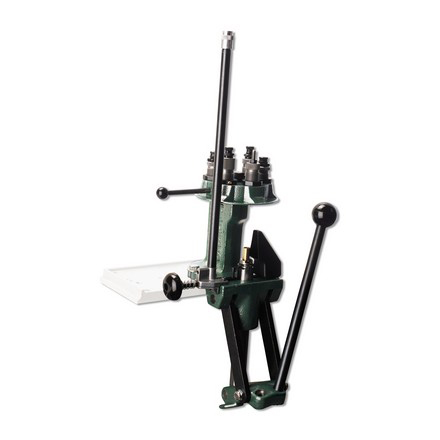
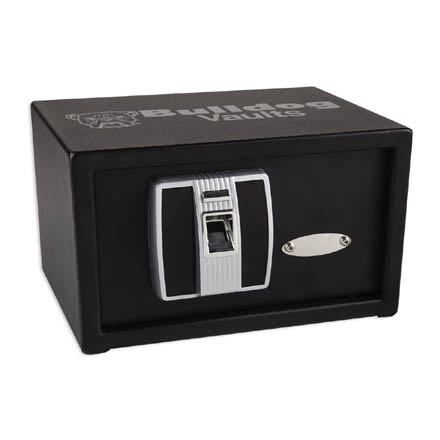
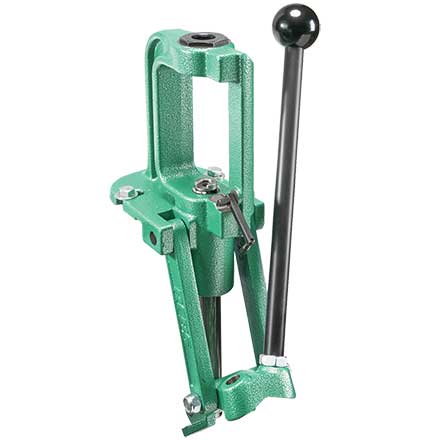 RCBS Rock Chucker Supreme Press, Closeout Price: $126.89 (was $169.19)

 Christmas is almost here, so today we’re featuring a hand-picked collection of “stocking stuffers” for precision shooters. So as not to bust your holiday budget, all of our selections are priced under $10.00. These items are handy tools that you’ll use over and over again at the range and/or at your loading bench (so you’re allowed to buy them for yourself, even after Christmas). Our AccurateShooter staffers use most of these items, including the Loading Blocks, Ballistol, Mirage Shades, Crocogators, and Barrel Bags.


 iPhone owners rejoice. The much-awaited iOS Ballistics App for the Kestrel LiNK Weather Meter is now available. Now you can sync your 5700 Series Kestrel wirelessly with your iPhone, iPod, or iPad. With Apple iOS devices being so popular among serious shooters, this is an important software release. Bryan Litz of


