Here is an interesting new measuring device from L.E. Wilson, makers of precision hand dies, case trimmers, and other precision tools. This new Case Gage Depth Micrometer measures shoulder “bump”, so you can determine your headspace both before and after Full-Length sizing. With this Depth Micrometer, you can ascertain exactly how much your FL-sizing die is pushing back the shoulder during the sizing process. While you can measure shoulder setback with comparators on calipers, this Wilson Depth Mic is much more handy. Just place your sized round in the base gage and then slip the micrometer over the top. Take a measurement before FL sizing and then, after sizing, click the micrometer top to verify the amount of shoulder set-back. The measurement is quick and repeatable — very slick.
This is one more nice product from the folks at L.E. Wilson. The $110.00 tool comes with a Gage Block and micrometer top with .001 gradations. The Depth Mic top is compatible with all other Wilson case L.E. Wilson Gages (one size works for all).
Product Tip from EdLongrange. We welcome reader submissions.
At the request of our readers, we have launched a “Deals of the Week” feature. Every Monday morning we offer our Bargain Selections. Here are some of the best deals on hardware, reloading components, and shooting accessories. Be aware that sale prices are subject to change, and once clearance inventory is sold, it’s gone for good. You snooze you lose.
1. Optics Planet — Lyman BoreCam, $299.49
The Lyman BoreCam is an electro-optical borescope with a digital display. You can record “stills” on a SD card. This is one of the hottest products on the market right now — so hot that it sold out at Grafs, Midsouth, and MidwayUSA. But we found some in stock. Optics Planet has the BoreCam for $299.49 with free shipping. The Tactical Store, an Optics Planet outlet, also shows the product for $299.49.
The system really works. A few of our Forum members have the system and they say it functions very well and is “very easy to set up and use”. Here’s what an Optics Planet BoreCam buyer wrote: “I have used Hawkeye borescopes and know their quality. The Lyman worked as advertised and is a great tool for checking for leading, cleanliness of bore, and bore wear. The compact size, ability to take pictures, and store them are a big plus.”
2. Amazon — NRR 34dB Safety Ear Muffs
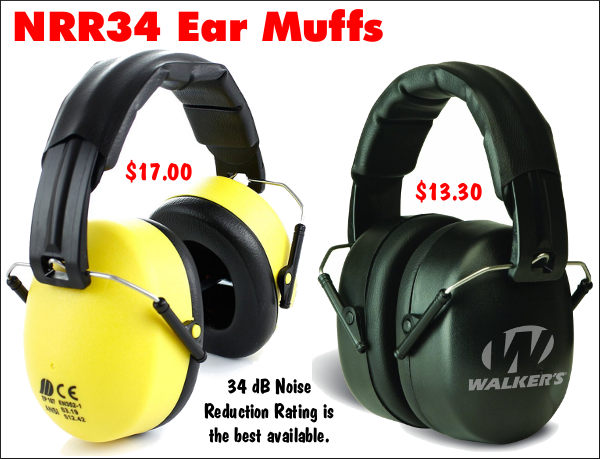
Ear muffs with a NRR34 noise rating were the most popular items we’ve yet listed in our Deals of the Week. Now we’ve found two more ANSI-approved muffs, both with a 34dB Noise Reduction Rating — the best you can get. Chose the dark green Walker EXT Range Muffs for $13.30, or the Bright Yellow TR Industrial Muffs at $17.00. Both products have padded head-bands and fold into a compact size. If you prefer “basic black”, consider the $19.99 Sumsonic G47 Muffs which also carry a 34dB NRR.
3. WeatherFlow — Remote Bluetooth Weather Meter
This handy, multi-function WeatherFlow Weather Meter provides key weather data to your iOS and Android Mobile devices wirelessly via Bluetooth. The unit measures temperature, humidity, air pressure and dew points. With its built-in impeller, the Weather Meter will also record wind speed (average and gust), and wind direction. Hand-hold it or attach it to a pole/tripod. This wireless Weather Meter is compatible with iPhone, iPad, iPod Touch and all major Android devices. This unit offers a lot of capabilities for $79.95 at Amazon.com.
We have used MidwayUSA shooting mats, as have many Forum members. This Competition Mat is a good product. The 400 denier, PVC-coated material is durable, the overall size is good, and we like the front flap that can be staked down. MidwayUSA normally sells this mat for about $85.00. Currently, it is on sale for $49.99, the best price we’ve seen all year. It’s hard to find a better padded mat for anywhere near that price.
Unrolled Dimensions: 73-½” Long x 35-½” Wide (Does not count the front flap).
Rolled Dimensions: 8-½” Diameter x 35-½” Wide | Weight: 6.5 lbs.
5. Amazon — Neiko Digital Calipers, $17.79
Even if you have a good set of calipers, you may want to get one of these Neiko 01407A Digital Calipers. The #1 best-selling digital caliper on Amazon.com, this Neiko tool features a large LCD Screen and measures up to 6.0 inches. With 1,500+ customer reviews, this product has earned an overall rating of 4.4 out of 5 stars. It’s hard to go wrong for $17.79, even if you just use these as a spare set for measuring group sizes and case trim lengths.
6. Eabco.com — Pillar-Bedded Laminated Stock for Savage
For a Savage-based general purpose rifle, this Laminated Thumbhole Savage Stock is a good choice, and a fine value at just $175.00 including installed pillars. (Most bargain-priced laminated stocks do NOT include pillars). This stock fits Savage actions with detachable magazines. There are four color options: Camo laminate (shown in photo), Brown Laminate, Gray Laminate, and walnut color.
7. Powder Valley — Berger .308 High-BC Match Bullets
Looking for High-BC .308-caliber match bullets? Well Powder Valley Inc. (PVI) has Berger .308 match bullets from 175 to 230 grains in stock at very attractive prices. Need Juggernauts or the latest 230gr Hybrids? PVI has them. If you are shooting a .308 Win in F-TR or a .300 WSM in F-Open, you may want to stock up now before demand picks up next spring. (PVI also has good inventories of Berger Bullets in lighter weights and other calibers.)
8. Monmouth Reloading — 1000 Lake City 5.56 Cases, $59.95
1000 pieces of Lake City brass for under sixty bucks? Yep, that’s a deal and a half. Monmouth Reloading is selling genuine, once-fired Lake City 5.56x45mm brass, thick-walled and sourced direct from the U.S. Military. Monmouth reports: “Our current stock of Lake City 5.56 looks to be all newer year Lake City head stamp but may contain a small percentage of other NATO headstamps. Lake City is a popular, reliable brass, normally capable of many reloads.” Monmouth includes 1% overage to account for any damaged brass. NOTE: Brass has crimped primers, so the pockets with need to be reamed or swaged prior to reloading.
Have Fun with Rifles and Equipment You Probably Already Have….
Forum member Rod Vigstol (aka Nodak7mm) has written a great Introduction to F-Class for shooters getting started in this rewarding discipline. Rod’s article, which originally appeared in the Rifleman’s Journal Blog, covers F-Class basics and addresses concerns that “newbies” may have when trying a new shooting sport. Rod stresses that most guys who own a varmint-hunting or tactical rig likely have nearly all the gear they need to give F-Class competition a try.
Rod explains: “If you’re reading this, you have more than just a general interest in the shooting sports and in the awesome rifles that shoot tiny groups at insane distances. You probably even have friends that enjoy shooting as much as you do. The quandary you may find yourself in is your friends haven’t quite jumped into it head-first like you have and they haven’t spent a lot of money and time obtaining the equipment you have to go shoot these matches. But you know what? Your prairie-dog shooting buddy or coyote-hunter friend can attend these matches and shoot alongside with you. He or she more than likely already has the basic equipment needed to shoot a match.” Most varmint shooters already have a suitable, accurate rifle and the following equipment:
• A variable-power scope in the 4.5-14x range or higher.
• A front bipod like the trusty old Harris 9″-13″, or maybe even a basic pedestal front rest.
• A rear sand-bag or similar sand-sock to rest the butt stock.
• A basic shooting mat from Midway or at least a piece of carpet or canvas to lay on.
Rod also provides a handy checklist of items to bring to the range. These include: Canvas or carpet strip (to set under bipod), Notebook, Kitchen Timer, Cleaning Rod, Camp Chair, Elbow Pads, Shooting Hat, and Open Bolt Indicator (OBI). Along with rifle, bipod (or front rest), rear bag, and ammo, that’s pretty much all you need.
Rod encourages all shooters to give F-Class a try — even novices. Rod explains: “We have all been rookies, newbies, new kids on the block or whatever. So we all have a good idea of what may be going on in your mind, the questions and concerns you may have. I’m telling you this sport is full of fantastic people who deep down find it far more fulfilling to help a new shooter get started than running a clean target. You just have to take the first step to get involved.”
Lots of slots — that’s what you’ll find on the top of RCBS’s new Pro-Chucker 7 progressive reloading press. This thing has SEVEN (7) stations, which gives you great flexibility when reloading. You have plenty of extra slots for special dies such as crimp dies or powder-check dies. The 7-hole interchangeable die-plate (aka tool-head) is am impressive bit of engineering — it looks like the cylinder for a super-sized revolver.
Our friend Gavin Gear of UltimateReloader.com got his hands on one of the first production models of the new Pro Chucker 7 progressive press. Gavin reports: “This 7-station auto-indexing progressive is the ‘big brother’ of the RCBS Pro Chucker 5, and is built on the same frame. While it shares most of the same internals, there are a few differences”. Key differences include a seven-station shellplate and seven-station die-plate (vs. five stations on the Pro Chucker 5). In addition the priming system is slightly different and the Pro Chucker 7 comes with a much larger powder hopper.
Watch Pro Chucker 7 Unboxing Video:
To demonstrate the new features of the Pro Chucker 7, Gavin has produced an unboxing video that shows the components of the system. This is a completely different design than the RCBS 2000 system progressive press (which this editor owns). The Pro Chucker series 5 and 7 presses have a more compact frame and a more conventional, vertical column priming system. They don’t take up much more space on your loading bench than a turret press, yet they offer full progressive capability, creating one loaded round with every pull of the handle.
If you are considering purchasing a progressive press (whether green, red, or blue), you should watch the video and see the press features. Gavin Gear will demonstrate how the Pro Chucker 7 works with another video to be released in the near future.
Bryan Litz with his F-TR Nat’l Championship-winnning rifle, and the man who built it, John Pierce.
Bryan Litz knows something about bullet shapes and dimensions. He’s the chief designer of many of Berger’s projectiles, including the successful line of Hybrid bullets. Bryan also understands how bullets actually perform in “real world” competition. Bryan won BOTH the Mid-Range and Long-Range National F-TR Championships this year, a remarkable accomplishment. With Bryan’s technical expertise combined with his shooting skills, few people are better qualified to answer the question: “how should I sort bullets when loading for competition?”
Bullet Sorting Strategies — OAL vs. Base to Ogive
At the 2015 Berger Southwest Nationals, Forum member Erik Cortina cornered Bryan Litz of Applied Ballistics. Erik was curious about bullet sorting. Knowing that bullets can be sorted by many different criteria (e.g. weight, overall length, base to ogive length, actual bearing surface length etc.) Erik asked Bryan to specify the most important dimension to consider when sorting. Bryan recommended sorting by “Base to Ogive”. Litz noted that: “Sorting by overall length can be misleading because of the nature of the open-tip match bullet. You might get a bullet that measures longer because it has a jagged [tip], but that bullet might not fly any different. But measuring base to ogive might indicate that the bullet is formed differently — basically it’s a higher resolution measurement….”
Ballistics Q & A in Shooter’s Forum
Got more questions about bullets? Our Shooters’ Forum has a special area for Bullets & Ballistics topics. There you can get your own questions about bullets and ballistics answered by Bryan Litz and other experts from Applied Ballistics.
Doan Trevor is a master gunsmith and stock-maker who works in the old style. He still hand-crafts stocks from start to finish, and does all the metal-work on the custom rifles he builds. Starting with highly-figured woods, Doan carves and shapes his stocks largely by hand, with meticulous attention to detail. Each rifle he builds is optimized for its intended discipline, and custom-fitted for the customer.
With the help of his talented wife Sue (who does the photography and builds the web pages), Doan has created a wonderful website, DoanTrevor.com, that is a feast for the eyes. You can see beautiful wood-stocked rifles being hand-crafted. Doan also illustrates how he creates custom metal parts, and how he beds barreled actions into the finished stocks.
Set aside a few minutes and visit Doan’s website. Be sure to click on the site’s secondary pages: Rifle Building, Woodworking, and Metalworking. You’ll find dozens of high-quality photos and fascinating information on gun-building.
For more information, visit DoanTrevor.com, or call (505) 890-0368, 10am-5pm M-F.
Looking for a perfect gift for a hunter or target shooter? What gift could be more well-received by an avid shooter than a new firearm? And there’s still time to save on a Savage. Right now you can save up to $75.00 on the purchase of select Savage rifles. Put the money you save with this “cash-back” rebate into ammo or hunting gear. This cash-back rebate is good through 12/31/2015.
Qualifying Rifles and Rebate Rules
A $75.00 Rebate is offered for these products: the Model 10 Predator Hunter, 11/111 Long Range Hunter, 11/111 Lightweight Hunter, 11/111 Lady Hunter, 11/111 FCNS Hunter, 16/116 Bear Hunter or 16/116 FCSS Weather Warrior. A $50.00 Rebates is offered for the choose any Trophy Hunter XP, Trophy Predator Hunter XP, AXIS or AXIS II XP. Rimfire shooters who purchase any Mark I, Mark II, Model 93, Model 93R17, B.MAG or Model 42 will be eligible for a $25 mail-in Rebate.
Firearms must be purchased between August 1, 2015 and December 31, 2015. Rebate coupon must be received by January 31, 2016. Offer valid in U.S.A. and Canada. USA funds only. For all the details and restrictions go to SavageArms.com/Promotions.
Looking for a tough, heavy-duty gun case for under $100? The excellent Plano All-Weather Rifle Case is now just $68.67 with free shipping. That’s an awesome deal. This Plano shares many features of a much more expensive Pelican case at a fraction of the price. An O-Ring runs all around the lid, providing dust protection and a watertight seal. The bottom-level foam is pre-configured into little “pluckable” cubes, so you can easily customize the case for your rifle (no “hot-knife” work required). The interior size is 43″ x 13″ x 5″. That’s big enough for most AR-platform and hunting rifles. For long-barreled competition rifles, you will want to detach the barreled action from the stock — and then place them in two different slots (one for the stock, one for the barreled action.) We’ve transported long-barreled F-Open rifles in cases like this — just separate the rifle into two parts first.
REAL REVIEWS: Here are comments from verified purchasers of the Plano Tactical case:
This gun case is everything I expected. Latches very securely and is durable enough to handle laying in the bed of my truck bouncing down a dirt road. The foam is nice because it allows for almost exact shaping to your rifle and accessories. I plan on ordering three more. You can’t beat this price. — Coach
The absolute best without busting my wallet. NOTHING wrong with this case … nothing. Clamps are solid and do not slip open when bumped. You will not go wrong with owning this model/price gun case. Satisfied! — SF67n2
This Plano All-Weather Case offers great value for the money. A similar, 44″-long Pelican model 1720 case retails for about $240.00. The Plano offers most of the same capabilities of the Pelican, for about one-third the price. Both cases are watertight (with O-Ring seal), both cases have pressure release valves, and both cases have strong “gorilla-proof” outer shells. If you need more capacity, Plano also makes a large Double Scoped Rifle Case with wheels for $114.99 (51.5″ x 12.63″ x 5.25″ interior). All gun case prices are subject to change.
Christmas Day is just a week away. Books have always been popular holiday gifts. If you haven’t completed your holiday shopping, here are some recommended titles that should please the serious shooters and firearms enthusiasts on your shopping list. For shooting clubs, books also make great end-of-season member awards. Most of us would rather have a useful book than one more piece of wood to toss in a box in the closet.
Here Are TEN TITLES Recommended for Serious Shooters:
If you’re a serious long-range shooter, consider adding this book to your library. Relying on extensive ballistics testing, Modern Advancements contains some fascinating research results, including the effects of twist rate on muzzle velocity, BC, and precision. Other sections detail the evolution of modern rifle, bullet, and optics designs. And there is an important comparison test of chronographs. Laser rangefinders and wind measurement devices are explained in detail by contributing author Nick Vitalbo. This book is a valuable resource for anyone who wants to understand the current “state of the art” in today’s shooting world. There is a ton of “hard science” in this book — not just opinions.
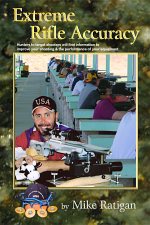
This book should be on the shelf of every short-range benchrest shooter. (Shooters in other disciplines will find the book helpful as well.) Butch Lambert says Mike’s book is “far and away the best Benchrest book written. Very comprehensive, it touches on every aspect of our game.” Mike’s 368-page book is dedicated to getting the most from modern rifle accuracy equipment with an emphasis on shooting 100-200-300 yard group benchrest tournaments. This book covers the most popular hardware plus new equipment offerings are covered, including external mount scopes, actions, triggers, stocks, wind flags, and more. Also covered are rifle handling techniques, note taking, tuning, bullet selection, goals, and match strategies. Mike provides many tips that will help active competitors update their own competitive program.
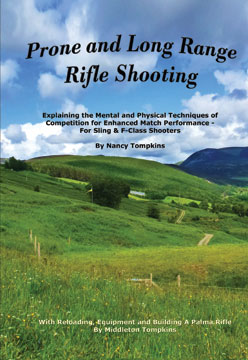
Nancy Tompkins is one of the greatest long-range shooters in American history. She has won five National Long-range Championships. Tompkins’ treatise is a must-read for serious Palma, F-Class, and High Power shooters. The revised Second edition includes F-Class equipment and techniques, and newly updated information. Color pictures. Topics include Mental & Physical training, Reading Wind & Mirage Shooting Fundamentals, International Competition, and Loading for Long Range. Nancy Tompkins is a 4-time winner of the National Long Range Championships, and has won countless other major events. Nancy has been on six Palma Teams (as both a shooter and a coach).
Tony Boyer, the most successful shooter in the history of short-range benchrest competition, shares many of his match-winning tips in this 323-page book. The book covers all aspect of the benchrest discipline: loading, windflags, rest set-up, addressing the rifle, and match strategies. This is a high-quality publication, filled with valuable insights. Every serious benchrest shooter should read Tony’s book. Boyer has dominated registered benchrest in a fashion that will never be duplicated, having amassed 142 U.S. Benchrest Hall of Fame points. The next closest shooter, Allie Euber, has 47 Hall of Fame points. This handsome, full-color book is 323 pages long, with color photos or color illustrations on nearly every page.
This book by 11-time National High Power Champion David Tubb focuses on position shooting and High Power disciplines. Section One covers fundamentals: position points, natural point of aim, breathing, triggering mechanics and follow-through, sling selection and use, getting started, getting better, avoiding obstacles. Section Two covers mechanics of offhand, sitting, and prone positions. Section Three covers shooting skills, including wind reading and mental preparation. Section Four covers the technical side of shooting, with extensive disuctions of rifle design, load development, reloading barrel maintenance, and rifle fitting. We consider this book a “must-read” for any sling shooter, and there is plenty of good advice for F-Class shooters too.
Many of our Forum members have recommended The Wind Book for Rifle Shooters by Linda Miller and Keith Cunningham. This 146-page book, published in 2007, is a very informative resource. But you don’t have to take our word for it. If you click this link, you can read book excerpts on Amazon.com. This lets you preview the first few chapters, and see some illustrations. Other books cover wind reading in a broader discussion of ballistics or long-range shooting. But the Miller & Cunningham book is ALL about wind reading from cover to cover, and that is its strength. The book focuses on real world skills that can help you accurately gauge wind angle, wind velocity, and wind cycles.
Rifle Accuracy Facts by Harold R. Vaughn, (Softcover and Hardcover, Used Price Varies)
Decades after it was written, Vaughn’s work remains a seminal treatise on accuracy. Vaughn was a serious scientist, working for the Sandia National Laboratories. Many “gun writers” toss out hunches about rifle accuracy. Vaughn, by contrast, did serious empirical testing and statistical analysis. Vaughn wondered why some guns shot well while seemingly identical rifles did not. Rifle Accuracy Facts covers a wide variety of topics, including internal ballistics, chamber design, barrel vibration, bullet imbalance, external ballistics, scope design and more. Writer Boyd Allen notes: “If you are serious about precision shooting, Vaughn’s book belongs in your library.”
The Accurate Rifle by Warren Page, $14.95 (Softcover), $20.99 (Hardcover)
We include this book in our list because it is an older classic that has been out of print for a while. Warren Page was the shooting Editor of Field & Stream magazine for 24 years. Long out of print, this seminal work on rifle accuracy was republished in 1996 with an updating chapter by Dave Brennan, long-time Editor of Precision Shooting magazine. If you are interested in the progress of rifle accuracy, it is worth reading this book to see how technology has developed over time (and what older methods still work today). This would make a great gift for an older shooter who grew up reading Warren Page articles in Field & Stream.
Steven Boelter’s 352-page book is a comprehensive study of all types of rimfire ammunition (including 17s and 22 mags), with over 600 photos. In a remarkable undertaking, Steven Boelter fired every brand and sample of rimfire ammo he could acquire (including .22 LR, 17 Mach 2, 17 HMR and .22 WMR), and recorded all the results. In all, Steven tested 11 brands and 137 different rimfire rounds, firing over 32,000 test rounds.
Always controversial, Bill Calfee is nonetheless a major player in the world of rimfire accuracy. Calfee-built rimfire rifles have set many records and won many titles. He harbors strong opinions about what works and what doesn’t, but if you are involved in rimfire competition you should read this book. This work covers all aspects of rimfire gunsmithing and accurizing: barrels, tuners, chambering, triggers, stock design, bedding, action design and much more. He examines each aspect of rimfire accuracy discussing all of the components and their contribution to the improved accuracy. We don’t agree with all of Calfee’s theories about accuracy, but this book still remains a “must-read” for those serious about precision rimfire shooting.
Butch Lambert of ShadeTree Engineering provided this tip. Butch notes that many 6 PPC benchrest group shooters also enjoy shooting in score matches. But to be really competitive in the BR for score game, that means shooting a 30BR, which has a wider, .308-class rim (0.4728″ diameter). Likewise, if you want to compete in 600-yard registered BR events or in varmint matches, you probably want to run a bigger case, such as the 6BR, 6mm Dasher, or 6-6.5×47. Those cartridges also have the larger 0.4728″ rims.
To convert a PPC-boltface action to shoot the bigger cases you can spend a ton of money and buy a new bolt. That can cost hundreds of dollars. The simpler solution is to turn down the diameter of the larger cases on a lathe. Butch explains: “We’ve seen plenty of interest in rebating case rims. This lets you shoot a 30BR in score matches using your PPC action. All you need is a new barrel. This saves buying another bolt, receiver, or rifle if you have a PPC boltface. Anyone who has access to a lathe can do this job pretty easily. Yesterday I turned 150 case in about an hour.” Below are photos of a rebated 6BR case, along with the lathe form tool Butch uses to rebate the case rims.