Every serious shooter needs to know the muzzle velocity (MV) for his load, so he can run ballistics solvers. And very consistent MV with low Extreme Spread (ES) and Standard Deviation SD is vital for consistent long-range shooting. You need good components and reloading techniques for low ES/SD. You want a good, reliable, and consistent chronograph to record your muzzle velocity — there are many good types now, including the compact Garmin Xero C1 and the handy Magnetospeed units which attach to your rifle.
Today we feature a new 55-minute video from Bryan Litz of Applied Ballistics. In this video Bryan explains how to measure muzzle velocity with various chronograph types and then explains some methods for optimizing your ES/SD. Bryan explains: “Muzzle velocity is an important variable for long range shooters. This video covers some key concepts for beginners and also goes into some advanced topics that are not normally encountered to keep it interesting for experienced shooters as well.”
This video from the manufacturer explains how to use the excellent Garmin Xero C1 radar chronograph. This popular new unit has proven to be user-friendly and very reliable. The ultra-compact size makes it easy to transport and deploy at the range.
Get a Good Ballistics App — Consider the NEW AB Quantum App
Once you have recorded your muzzle velocity successfully you can use the MV data with your known bullet BC and range altitude to plot the trajectory of bullet flight. This will tell you the correct scope elevation setting for the distance of your target. We recommend getting a good Ballistics App for your mobile device so you can run ballistics at the range.
Definitely check out the impressive new AB Quantum App from Applied Ballistics. Consumers can now download the AB Quantum App for either iOS (Apple) or Android devices. There is a free basic version, as well as an Elite subscription, which unlocks many more features for just $2.99/month or $19.99/year (see chart below). For more information visit AppliedBallisticsllc.com/ab-quantum.
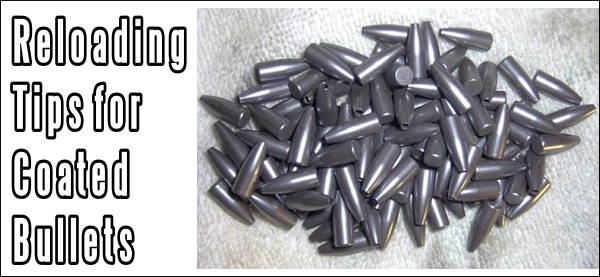
Coating bullets with a friction-reducing compound such as Molybdenum Disulfide (Moly) offers potential benefits, including reduced barrel heat, and being able to shoot longer strings of fire between bore cleanings. One of the effects of reduced friction can be the lessening of internal barrel pressures. This, in turn, means that coated bullets MAY run slower than naked bullets (with charges held equal).
To restore velocities, shooters running coated bullets are inclined to “bump up” the load — but you need to be cautious.
Be Careful When Increasing Loads for Coated Bullets
We caution shooters that when your start out with coated bullets in a “fresh barrel” you should NOT immediately raise the charge weight. It may take a couple dozen coated rounds before the anti-friction coating is distributed through the bore, and you really start to see the reduced pressures. Some guys will automatically add a grain or so to recommended “naked” bullet charge weights when they shoot coated bullets. That’s a risky undertaking.
We recommend that you use “naked” bullet loads for the first dozen coated rounds through a new barrel. Use a chronograph and monitor velocities. It may take up to 30 rounds before you see a reduction in velocity of 30-50 fps that indicates that your anti-friction coating is fully effective.
We have a friend who was recently testing moly-coated 6mm bullets in a 6-6.5×47. Moly had not been used in the barrel before. Our friend had added a grain to his “naked” bullet load, thinking that would compensate for the predicted lower pressures. What he found instead was that his loads were WAY too hot initially. It took 30+ moly-coated rounds through the bore before he saw his velocities drop — a sign that the pressure had lowered due to the moly. For the rounds fired before that point his pressures were too high, and he ended up tossing some expensive Lapua brass into the trash because the primer pockets had expanded excessively.
LESSON: Start low, even with coated bullets. Don’t increase your charge weights (over naked bullet loads) until you have clear evidence of lower pressure and reduced velocity.
Procedure After Barrel Cleaning
If you shoot Moly, and clean the barrel aggressively after a match, you may want to shoot a dozen coated “foulers” before starting your record string. Robert Whitley, who has used Moly in some of his rifles, tells us he liked to have 10-15 coated rounds through the bore before commencing record fire. In a “squeaky-clean” bore, you won’t get the full “benefits” of moly immediately.
To learn more about the properties of dry lubricants for bullets, read our Guide to Coating Bullets. This covers the three most popular bullet coatings: Molybdenum Disulfide (Moly), Tungsten Disulfide (WS2 or ‘Danzac’), and Hexagonal Boron Nitride (HBN). The article discusses the pros and cons of the different bullet coatings and offers step-by-step, illustrated instructions on how to coat your bullets using a tumbler.
At the request of our readers, we provide select “Deals of the Week”. Every Sunday afternoon or Monday morning we offer our Best Bargain selections. Here are some of the best deals on firearms, hardware, reloading components, optics, and shooting accessories. Be aware that sale prices are subject to change, and once clearance inventory is sold, it’s gone for good. You snooze you lose.
NOTE: All listed products are for sale to persons 18 years of age or older. No products are intended for use by minors.
⏺️ Buy good FFP or SFP ZeroTech scopes and get FREE binoculars
ZeroTech makes quality scopes for hunting, PRS/NRL, and general shooting. Currently when you purchase ZeroTech Thrive or Vengeance scopes you can receive a FREE set of ZeroTech Thrive HD binoculars. These 30mm-tube ZeroTech scopes are offered in both FFP and SFP versions with MIL or MOA clicks. There are a variety of reticle types, both illuminated and non-illuminated. Magnification and objective size options include 3-12x44mm, 4-16x50mm, 4-20x50mm, 4-24x50mm, 6-24x50mm, and 5-25x56mm. The FREE ZeroTech Thrive binoculars have retail values from $170 to $230.
2. Midsouth — White River Large Rifle Primers, $79.99
⏺️ Large rifle primers IN STOCK at affordable price
It’s been hard to find large rifle primers at an affordable price lately. If you’ve been waiting for the price of large rifle primers to come down here’s your chance. We found these American-made White River Large Rifle Primers on sale for just $79.99/1000 at Midsouth. These are made to tight tolerances and report from shooters and handloaders have been quite positive.
3. CDNN Sports — Walther P22 Target, $249.55
⏺️ Very good .22 LR Target/Training pistol plus 200 rds FREE Ammo
All shooters should have a quality .22 LR rimfire pistol with a good trigger, ergonomic grip, and excellent accuracy. With the Walther P22 Target Model, you can get all those things for just $249.55 at CDNN Sports, a great deal. Plus you get 200 rds (4 boxes) of FREE Federal .22 LR ammo — a $40 value. The P22 Target pistol is a very nice rimfire handgun with a 5″ barrel plus a forward ported compensator. The ergonomic grip has interchangeable backstraps.
4. Amazon — Frankford Arsenal Universal Bullet Seater, $59.99
⏺️ One affordable seater serves multiple calibers
Are you tired of buying another expensive seating die every time you try a new cartridge type? With the unique Frankford Arsenal Universal Bullet Seating Die you can have one die that loads multiple cartridge types. This clever bullet-seating system includes 3 different stems and 9 sleeves allowing you to seat .224 to .338-caliber bullets with this one multi-caliber tool. Forum members using this system have praised it. NOTE: the universal seating die comes with the .308-caliber sleeve pre-installed.
5. Graf & Sons — Caldwell Bipod Sale
⏺️ Good bipods offered at very attractive prices ($33-$52)
Bipods are useful for varminters, hunters, and tactical shooters. If you need a durable, adjustable bipod at a great price, consider Caldwell Bipods now on sale at Graf & Sons starting at just $33.14. The aluminum design adds minimal weight and deploys quickly, with legs that spring out to the shooting position with the touch of a button. The Caldwell bipod legs are notched for easy indexing to a specific height.
6. Creedmoor Sports — Custom Shooting Mat Sale, $104.95
⏺️ Very high-quality shooting mat now on sale — 30+ colors
A quality shooting mat provides vital comfort and stability when shooting prone. One of the best mats on the market is the Creedmoor Custom Mat, now $104.95 on sale at Creedmoor Sports. This features durable 1000 denier Cordura Nylon with textured non-slip pads for elbow placement. Interior jute padding in the mat provides ample protection for the shooter in all positions. There are many color choices so you can pick an unique color that’s easy to spot on the firing line.
7. Amazon — Caldwell Rock Front Rest, $72.22
⏺️ Low-priced reliable rest that’s good for sighting-in and varmint work
Need a good basic front rest to sight-in a hunting rifle or do load development? Here’s a solid, functional front rifle rest at a great price. The Caldwell The Rock Deluxe Shooting Rest (#ad) adjusts for windage and elevation and is solid and stable. Save with a low $72.22 Amazon sale price. This Caldwell Rest will more than suffice for testing a hunting rifle or basic bench-work. NOTE: REST ONLY — rear bag NOT included.
8. MidwayUSA — Wheeler Gunsmithing Tool Sale
⏺️ Large variety of specialized gun maintenance tools at good prices
When it comes to firearm maintenance it pays to have the right tools or you could damage your parts. Wheeler offers a good line of specialized Wheeler gunsmithing tools. Chose among a wide assortment of firearm tools including barrel vise kits, screwdriver sets, armorer’s kits, scope mounting devices and more. You’ll see a wide range of Wheeler tool sets on sale now at MidwayUSA.
9. Amazon — Frankford Arsenal Wet Tumbler, $78.74
⏺️ Very good smaller tumbler that is efficient and effective
Wet tumbling efficiently cleans cartridge brass inside and out. One of the best modestly-priced wet tumblers is the Frankford Arsenal Rotary Tumbler Lite. (#ad) When combined with stainless steel cleaning pins, this rotary tumbler can work faster than ultrasonic or vibratory tumbling methods. The media pins easily penetrate inside cases to deliver serious cleaning power. This 3.3-liter tumbler is ideal for cleaning small batches of brass and easily fits on any reloading bench.
10. Amazon — Lyman BrassSmith Funnel with Inserts, $31.99
⏺️ Very useful kit we use — avoids powder spills
Having a good powder funnel really helps precision reloading. The Lyman Products Brass Smith Pro Powder Funnel System (#ad) is a great little system. Unlike plastic powder funnels, the aluminum DIE cast body and CNC-turned aluminum caliber-specific inserts are static-free to eliminate powder cling. The precision fit to your case necks eliminates spilled powder. The kit includes six laser-marked, caliber-specific aluminum inserts to fit calibers 22 to 338: .22, .243/6mm, .25/6.5mm, .270/7mm, .30, and .338. The inserts can be quickly and easily interchanged when changing cartridge types.
BONUS: Get $100, $50, or $25 Rebate with Savage Rifle Purchase
Savage Sleigh Full of Savings — Purchase any A or B series Savage rifle and receive $50 Manufacturer’s REBATE. Or purchase any Rascal, 93, 93R17 and MKII and qualify for a $25 REBATE. These qualifying rifles (Promotion #R13262) must be purchased between 12/1/2024 through 12/31/2024. DEADLINE for Mail-In-Rebate (MIR) or online submission is 1/31/2025. CLICK HERE for Rebate Application Form.
There is also a $100 Rebate for Savage Impulse hunting rifles, Promotion #R13373. Purchase any Impulse rifle and receive a $100 Manufacturers REBATE. The Impulse Rifle must be purchased between 11/1/2024 through 12/31/2024, with 1/31/2025 rebate submission deadline. CLICK HERE for Impulse Rebate Form.
As an Amazon affiliate, this site can earn revenues through sales commissions.
New Product Showcase Part ONE
Shooting Industry’s December 2024 issue has the first installment of the 2025 New Product Showcase — featuring new (or recently introduced) products from dozens of companies including FN America, Gemtech, H&K, Hornady, Kimber, MDT, Remington, Ruger, Savage, Smith & Wesson, Taurus, Trijicon, Vudoo Gun Works and more. You can see all these new products in a mobile-friendly format that works with cell phones.
Or, CLICK HERE to see the full December 2024 issue in printable PDF format. The New Product Showcase is on pages 52-67, with a Shot Show Preview on pages 48-51.
Below we feature our Top Six Picks among the many new products featured this month in Shooting Industry magazine. There are dozens of other new (or recently introduced) products in Shooting Industry’s Part 1 2025 Product feature, found in the current December 2024 issue. CLICK HERE to see ALL the featured new products.
Pick Six — Top New-for-2025 Shooting Products, Guns and Gear
MDT Sporting Goods — New CRBN Ultra-Lightweight Stock
The new MDT CRBN Rifle Stock is a lightweight carbon fiber stock with an internal mini-chassis weighing a mere 27 ounces — that’s light! Crafted from foam-filled carbon fiber, the MDT CRBN Rifle Stock is both incredibly lightweight and durable. The CRBN Stock features a full-length ARCA rail, adjustable comb height, adjustable length-of-pull, M-LOK slots, QD attachment points, thumb shelves, and a 20-degree grip angle. A V-Bedding block ensures a precise fit between the stock and action, and the barrel channel can accommodate a 1.2″ profile barrel.
Savage New Revel Rimfire Lever-Action Rifles
Savage Arms will offer the Revel Classic and Revel DLX rimfire lever-action rifles in .22 LR, .22 WMR, and .17 HMR chamberings. These are take-down rifles with simple disassembly for cleaning and maintenance. The Revels feature a nice, satin-finish walnut wood stock plus a large lever loop for rapid cycling. These new rimfire lever guns start at $439.00 MSRP for the Revel Classic and $539.00 for the Revel DLX. The .22 LR Revel Classic is available now while the .22 WMR and .17 WMR versions will be available in early spring 2025, as will all Revel DLX models.
Kimber CDS9 Metal-frame Compact Pistol
If you want a compact carry pistol but are not a fan of Glock-style polymer frames, you may favor Kimber’s new CDS9 (Covert Double Stack 9mm) pistol. This high-capacity, optics-ready compact handgun features all-metal frame with accessory rail for light or laser. The grip is available with a high-contrast red and black finish.
The CDS9 has an ambidextrous safety and slide release plus a reversible mag release. The CDS9 TFS version comes with a threaded barrel for suppressor, compensator or muzzle brake. The new MDT ships with a 13-round or 15-round magazine plus a 10-round flush magazine is offered for areas where high-capacity magazines are not allowed. Watch the video above for field test.
CenterPoint Optics has some new products that deliver decent glass and advanced internal electronics at an ultra-low price. The CPNV01 Night Vision Monocular boasts day and night vision modes, 6X optical zoom and 8X digital zoom, plus day and night vision modes with a 2″ display. You can record stills and video to a micro SD card. Priced at just $129.99, this could be a nice unit for hunters.
CenterPoint also has a decent laser rangefinder at a super low price. Costing just $129.99, the CPLRF6221K laser rangefinder measures distances up to 1,100 yards and features 6X magnification. The unit has scan mode with continuous distance readings to help track moving targets. The unit, with 22mm objective, also has a built-in inclinometer.
Silencer Central
Meat-Eater Suppressor
Silencer Central has worked with Banish to develop a new 30-caliber “Meat Eater” suppressor rated for cartridges up to .300 RUM. Designed for hunting, the maker claims this suppressor can reduce sound levels by 32 decibels and reduce recoil by up to 40% via its integrated “anchor brake”. Quite light-weight, the Meat-Eater suppressor weighs 10.3 oz., and measures 5.85″ long. It employs an industry-standard hub mount.
Vudoo Gun Works
Precision Rifle Bag
The impressive Vudoo Precision Rifle Bag has many notable features including thick foam padding on all sides, 3 Zippered mesh pockets, removable scope cover, muzzle cover with bungee, Velcro interior walls, and cleaning rod sleeve. The fully customizable compartments keep gear organized, while thick, high-density padding shields your firearm from the toughest conditions.
All these features make for a really great gun case, but it is very pricey at $225.00!
Discover more products ShootingIndustry.com. Dealers and retailers can subscribe to the magazine and get weekly emails with the latest industry news and new product info. And everyone can access regular news items via the Shooting Industry Facebook page.
With the skyrocketing prices of ammo, more shooters than ever are hand-loading pistol and rifle ammunition. But many novice reloaders tell us that it’s a bit overwhelming in the beginning. Just learning all the technical terms (e.g. ogive, meplat, ballistic coefficient, load density etc.) is difficult, and the task of selecting the right tools and gear can be daunting.
The first thing a new reloader should do is find an experienced reloading mentor. One can learn the basics much more quickly under the guidance of an experienced hand-loader who “knows the ropes”. We also recommend that newbies acquire a good basic reloading handbook — not just a list of load recipes, but a book that explains the processes.
Since the first edition was published in the 1970s, the ABCs of Reloading series has taught countless firearms owners safe/reliable methods for creating their own ammunition. ABCs of Reloading provides beginners what they need to know to get started in reloading. From basic topics such as “How does a cartridge work?” and “What components do I need?” to more advanced discussions of cartridge pressure, headspace, and chrono testing, this is a great resource for new handloaders.
In addition, the sections on advanced reloading and new powders make the new edition valuable for experienced handloaders. And long-range shooters will benefit from the sections on making ultra-consistent ammo and fine-tuning for precision accuracy. Massaro’s coverage of new reloading gear and components is another bonus (shown below is the new RCBS MatchMaster powder dispenser).
Review from purchaser of “The ABCs of Reloading”, 8th Edition:
“When I first got the itch to load my own ammunition, I was overwhelmed by the amount of information and terminology involved in this fascinating field/hobby. It was very difficult to take all the individual pieces of information that I had and form it into an understandable process. I was snowed in under a blizzard of data that I was piecing together through chat rooms and web sites. Phrases like ‘roll crimp’ and ‘headspace’ came at me in a blizzard. I could look up each phrase, understand each one as a piece, but still the whole picture was fuzzy. In essence, that is what this book will do for you — turn it all into a coherent, linear whole. The writing is very solid and clear, the illustrations are well-done and helpful, and the information is very complete. After reading this book, the entire process made sense to me, and more importantly, I was fully warned about the dos and don’ts of the reloading world. The coverage is very complete. Primers, powders, bullets, and … all necessary tools and accessories are discussed and explained. This is just a great book. It won’t make you an expert … but it will put you on the right road if you wish to become one.” — Mykal Banta
In our Shooter’s Forum there is a popular thread, Let’s See Those Hunting Rifles. This long-running thread features dozens of interesting hunting rifles of all varieties — from rimfires to big magnums. In that thread we found the focus of today’s story, a .221 Fireball. Now that we are in the thick of winter, with Christmas just two weeks away, we showcase this .221 Rem Fireball rifle from Norway. This rig belong to Thomas Haugland, aka “Roe” on our Forum. An avid backcountry hunter, Thomas also happens to be one of the best gun-content video producers on YouTube — check out Haugland’s THLR.NO YouTube Channel.
We’ll begin with two of Haugland’s remarkable videos — worth watching just for the stunning scenery. Thomas skis through the Norwegian Arctic backcountry, then successfully uses his suppressed, white-camouflaged .221 Fireball rifle to bag a Ptarmigan bird — bringing home a well-earned winter dinner.
NOTE: This is the short preview version. Watch the full hunt in second video.
The 7-minute video below shows the full ski hunt. The Ptarmigans are spotted at 4:30 time mark and Thomas takes the shot at 5:36. Great video — you feel like you are there in Norway’s white wilderness. The images above (including top photo) are pulled from this video.
About the .221 Fireball Cartridge
The .221 Remington Fireball cartridge was developed by Remington in 1963 for the XP-100 bolt action pistol. Today the cartridge remains popular with hunters/varminters, both in the original version, and with wildcats such as the .20 Vartarg and .17 Fireball. Lapua started making superb .221 Rem Fireball cartridge brass starting in 2014. However, according to Lapua: “This case is no longer in active production.” On 12/8/2024, we checked many leading vendors including Graf’s, MidwayUSA, and Powder Valley, but could not find new .221 Rem Lapua brass. Lapua notes: “Fireball brass has… seen a dramatic surge in popularity, due in large part to the efforts of wildcatters working with this versatile case. Whether used in its original form, or necked into one of the many cases that it serves as a parent for, the Lapua .221 Fireball brass is a sure winner[.]”
Haugland .221 Fireball with New Carbon Stock and Walther Barrel
Shown above is Haugland’s same .221 Rem Fireball from the videos, but with a new camo stock and new barrel. (The previous stock was painted white). Originally a Remington 700 Light Varmint, this was rebarreled to .221 Fireball with Lothar Walther 1:12″ barrel. Thomas admits he “Goofed a little on the barrel profile, so it is a tad heavier than I wanted.” The stock is a carbon-fiber Gunwerks ClymR and on top is a Leupold 3-18x44mm MK5 HD with Gunwerks RH1 reticle. Only the action and the trigger is left from the original rifle.
With the 1:12″ twist, this rifle is restricted to 55gr maximum bullet weight. Thomas posted: “Shoots well with Vihtavuori N130 and Norma N200 powders, not so good with RL7.” Due to lack of light in far-Northern Norway in winter (see photo above), Roe has not hunted with this rifle much since rebarreling, but as you can see, it’s very accurate — look at that group. Thomas says the gun shoots much better with the new barrel: “With the factory barrel (which I believe was 1:14″-twist) it didn’t shoot better than 1 MOA at 100 yards. Now it approaches half-MOA for three shots (see photo).”
And Thomas was successful with this rig as “reborn” with new stock and barrel. Here’s the gun and a Ptarmigan he shot in the Norwegian snow-covered backcountry.
If you like that Gunwerks ClymR carbon stock, here’s a Gunwerks video showcasing the ClymR Rifle System. A complete Gunwerks ClymR rifle with Titanium action and scope was a shocking $9734.99, so we can understand why Thomas went with the stock alone, paired with a older Rem 700 action.
Gun-maker Bear Creek Arsenal has a good article on its website about rifling barrels. The article explains four common methods of rifling the interior of barrels: Cut Rifling, Broach Rifling, Button Rifling, and Hammer Forging. In addition, the article describes a new (and somewhat radical) method, Cation Rifling, which employs acid to etch rifling. READ Full Article.
The main focus of the article is on Cold Hammer Forging of barrels. This requires massive, expensive tooling, but the results can be very consistent. Many top gun-makers, such as FN, HK, and Ruger, have used the hammer forging process. And now Bear Creek Arsenal also offers hammer-forged barrels. Bear Creek recently acquired two state-of-the-art cold hammer forging machines. With hammer forging, a chamber can be formed and barrel contour shaped at the same time. This process produces some of the most consistent barrels available today. Here is a summary of how Cold Hammer Forging works:
Cold Hammer Forging — Machinery and Process
A cold hammer-forged barrel starts life… as a short and fat blank with a polished hole running through the center. A hardened mandrel of proper width (caliber) and rifling pattern — again reversed/inverted — is placed into the smooth bore. The pair go into a forging machine that compresses the steel against the mandrel, hammering it into final shape. The barely detectable external spiral patterns that remain on some barrels are imprints from those hammers at work. Some companies polish them out, however.
Cold hammer forging machinery is very expensive, representing a significant investment for companies. However, when the hammer forging process is done and the mandrel removed, the resulting barrel is the proper length and profile with rifling that is consistent and butter smooth. No lapping is required — a time and expense saver — although a stress-relief step often follows.
The process takes place at room temperature, despite the misleading “cold” terminology. There is a hot hammer forging process, but the equipment is even more expensive and the slight improvement in grain consistency hasn’t proven advantageous enough for a return on that investment. Performance is impressive and consistent.
One of the biggest advantages of a cold hammer forged barrel is longevity. They… survive abuse and last longer. The manufacturing process adds those enviable virtues with each strike of those hammers — strengthening the metal in a work-hardening process employed by blacksmiths for centuries.
Comparing Popular Rifling Methods
What rifling process should you choose? If long-distance is your passion and you home brew custom cartridges to print tiny groups in the next zip code, cut rifling is the optimum choice. Button rifling is a solid second choice, but not always the Holy Grail long-distance shooters dream about. Cold hammer forged barrels, however, last longer and [offer great performance for the price.]
Close-up view of a sectioned case. This one here was “fixin’ to pop”, observed Glen Zediker.
Here are highlights from an article Glen Zediker wrote for the Midsouth Blog. In that article Glen, who sadly passed away in 2020, focused on cartridge brass. Glen identified the most common failures that appear with brass that has been shot multiple times, or which has been fired at excessive pressures. Glen explained some simple ways to check your cartridge brass to detect “early warning signs” of case failure, particularly case head separation, which can be very dangerous.
How Cases Degrade with Multiple Firings By Glen Zediker
This article explains when, and then how, to check after the progress of changes commencing with the firing on a new case. It’s the “progress of degeneration,” in a way of looking at it because the concern is getting a handle on when enough change in the brass has come about to require attention. Or abandonment. As said then, for me that’s 4 firings. That, as said last time, is when I might see changes that need attention. Also as said, that figure didn’t come out of a hat, but from my own notes in running my competition NRA High Power Rifle loads. [Editor’s Note: With Lapua brass, using moderate loads, in bolt-action rifles, we typically get about 10 good (match-worthy) firings. But if you anneal your Lapua brass, and run modest pressures, Lapua brass can perform well for 20 or more load cycles.]
The areas most affected are the case neck and case head area. Case neck walls get thicker [but] the case head area body walls get thinner. Primer pockets get shallower and larger diameter.
This case shows a cracked neck AND a crack (separation) above the case head. Zediker says it is “rare to see one case with both of the most common failures. [This case] was attacked by an M14.”
Case Head — Causes of Separation and Cracking
When a case is under pressure during firing, the brass, like water, flows where it can, where it’s more free to move. Of course, the chamber steel limits the amount it can expand. The case shoulder blows fully forward and the case base is slammed back against the bolt face. There is, therefore and in effect, a tug on both ends — it gets stretched. The shoulder area is relatively free to expand to conform to the chamber, but the other end, the case head area, is not. Since that’s the area of the case with the thickest walls, it doesn’t expand “out” much at all. What it does is stretch. The “case head area,” as I refer to it here, is the portion of the case above the web, which is just above the taper that leads in to the extractor groove. The “area” extends approximately an eighth-inch up the case body.
Here’s a “pressure ring.” You’ll see this after firing, if you see it. And, if you see it, that case is done. The bright ring indicates excessive stretching, which indicates excessive thinning. If you see a ring circling the case, noticeable because it’s lighter color than the case body, and it’s in this area, I’d say that case is done. And that’s right where a “head separation” occurs. It can crack and also blow slap in two, and that’s the “separation” part of case head separation.
Photo courtesy GS Arizona.
This is a spot to keep close watch on as cases age. It is also the area that is more “protected” by sizing with less case shoulder set-back. That is, pretty much, where the freedom for the stretching movement in this area comes from (the case shoulder creates a gap). If you’re seeing a sign that a head separation [might happen with relatively few firings], chances are the shoulder set-back is excessive, and also… the load pressure level.
Bent Paper Clip Case-Wall Gauge
Editor: You can use a bent paper clip to detect potential case wall problems. Slide the paper clip inside your case to check for thin spots. GS Arizona explains: “This simple little tool (bent paper clip) will let you check the inside of cases before you reload them. The thin spot will be immediately apparent as you run the clip up the inside of the case. If you’re seeing a shiny line on the outside and the clip is really hitting a thin spot inside, it’s time to retire the case.” Photo by GS Arizona.
Monitor Primer Pocket Dimensional Changes
Another case-head-area and pressure-related check is the primer pocket. As said, the primer pocket will get larger in diameter and shallower in depth each firing. As with many such things, the questions are “when” and “how much,” and the main thing, “how much?”
If the pocket gets excessively shallow, and that’s judged by a primer that seats fully but isn’t at least a tick below flush with the case base, there could be function issues. There’s a risk of a “slam-fire” with a semi-auto that uses a floating firing pin, and, if there is actual protrusion, that has the same effect as insufficient headspace. A primer pocket uniformer can reset the depth of a shallowed primer pocket to what it should be, but the real test for me is how easily the next primer seats into it. If it’s significantly less resistance, I’ll say that case is done. Shallower can be refurbished. That’s a primary function of a primer pocket uniformer. Larger diameter, though, can’t be fixed. I’ve mentioned in another article or two that, any more at least, my main gauge of load pressure has become how much primer pocket expansion there’s been.
To shoot tight groups and high scores from the bench, or in prone F-Open competition, a quality front rest is essential. And a good rest is also very valuable when zeroing rifles, testing loads, and shooting varmints from a portable bench. Today’s Saturday video showcase includes multiple video reviews of some of the best front rests on the market — great products from SEB, Rodzilla, 21st Century, Lenzi, and Sinclair Int’l. In addition, the lead-off video from F-Class John covers some of the less expensive rests as well as SEB Joy-Pod coaxial bipods.
Review of Many Popular Front Rests from $250 to $2200
If you are shopping for a front rest, definitely watch this comprehensive 42-minute video from start to finish. This is probably the most informative video about premium shooting rests available on YouTube. Top F-Class shooter and video-maker F-Class John covers a wide selection of front rests, with some observations about coaxial bipods as well. John covers the impressive new SEB NEO-X, the easy-to-transport SEB Mini-X, the excellent Rodzilla Rest, the innovative 21st Century Hybrid Rest, the sleek Italian Lenzi Rest. And at the end of the video John reviews the very affordable Caldwell Fire Control Rest ($220.93 on Amazon), explaining how it can be a decent choice for shooters on a limited budget.
NEW SEB NEO-X — Set-Up in the Field
Still in its final prototype stage, the innovative SEB NEO-X raises the bar for transportable coaxial front rests. An innovative design with hinged legs allows the 20-lb NEO-X to be transported in a small case. Once the legs are extended however, the NEO-X has proven to be very stable. And this new coaxial rest offers very precise, easy-to-use controls. A swivel head speeds up deployment, as the allows you to quickly align the rest top to the target. Users have confirmed the NEO-X works great and is very stable. In the video above ace F-Class shooter Erik Cortina (below) shows how to quickly deploy the NEO-X in the field.
Rodzilla T-Rex — High Quality, Big Footprint, Advanced Features
The impressive Rodzilla T-Rex front rest offers outstanding stability with smooth, precise performance. Designer/builder Rod Brakhage (the Rod in Rodzilla) started from the ground up to create a user-friendly, match-ready, modular front rest on the market. The T-Rex weighs just over 21 pounds, and the T-Rex has a large footprint, rivaling the largest rests on the market. That provides exceptional stability, even with heavy-recoiling rifles.
The T-Rex boasts an adjustable joystick that extends from 15.5″ to 21″ in length. With this adjustability, no matter what your stock length or design, you can find a comfortable position without having to stretch uncomfortably. Rodzilla delivers the T-Rex in a custom-designed hard carry case that fits it perfectly and still has room for additional feet and accessories. The T-Rex can be ordered with excellent Sand Feet. Along with the T-Rex, Rodzilla now offers the excellent Raptor Front Rest, a lighter rest designed for easy air travel and portability without sacrificing features or stability.
21st Century Hybrid-X Front Rest
Lateral Control Arm, Vertical Elevation Knob
The innovative 21st Century Hybrid-X front rest offers the “best of both worlds”. It allows precise lateral movement (for wind holds) with no elevation change. The entire center section of the rest rotates as one unit for fast, perfect horizontal alignment to target. Then adjust vertical precisely with the rotary knob on the outboard end of the control rod. Our Daily Bulletin Hybrid-X article has a full description with multiple photos of this unique rest. See additional Hybrid-X Video.
Sinclair Int’l Competition Front Rest — Sturdy and Stable Design
The Sinclair Int’l Competition Rest is a classic heavy and very stable rest that works great on the bench. Weighing 30+ pounds, with a 1″-thick steel base, this rest has a very low center of gravity and is ultra-stable. Currently priced at $579.99, the Sinclair Competition Rest is less than half the cost of the more exotic front rests.
Horizontal (windage) movement is controlled with a large rear knob which uses dual sets of twin tapered roller bearings for a non-binding windage operation. Nearly four feet of windage adjustment is offered at 100 yards. Elevation changes are made with the large wheel. With its mass and low COG, this Sinclair Rest is very stable. And because of its ability to hold elevation shot to shot, this rest has been popular with long-range benchrest competitors who often shoot quick strings of 5 or 10 shots.
SEB Mini-X and SEB Mini — Transportable Joystick Tripod Rests
The original SEB Mini was an innovative collapsible tripod rest with a coaxial top. On its introduction the SEB Mini became immediately popular with varminters, F-TR shooters, and anyone who wanted an affordable, easy-to-transport front rest that offered easy, precise and rapid adjustment of windage and elevation with the Joystick. Building on the success of the original SEB Mini, the SEB Mini-X offers an improved head design, and new adjustable “ankle” units on all three legs. This makes it easier to level the Mini-X on uneven ground. The Mini-X has proven very successful in competition, winning major F-Open matches. Folding into a very compact package, it is easy to transport in airline luggage. Yet it offers a very stable shooting platform with precise, effortless joystick control of elevation and windage.
“December 7, 1941, a date which will live in infamy…”
Today, 83 years later, it remains important to remember what took place at Pearl Harbor, and to honor those soldiers, sailors, marines (and civilians) who lost their lives in the surprise attack. The tragic memory of Pearl Harbor reminds us that our nation should never be lulled into complacency. The world remains a dangerous place. The nation must remain alert to all dangers, and be prepared to respond to all threats, both known and unknown. As Wendell Phillips said famously: “Eternal vigilance is the price of liberty.”
The Shooting Wire noted: “Today, as we live in another period of uncertainty … we owe our lives and success as a nation to the more than 16 million Americans who left their homes and traveled over the world to protect freedom.” According to U.S. Department of Veterans Affairs, only about 240,000 of the 16 million Americans who served in World War II are alive in 2021. Today, it’s appropriate to remember them and the sacrifices they made for us.
This Editor’s father and uncle both fought in WWII, father in the Army, uncle in the U.S. Navy. A Lieutenant in the Corps of Engineers, my father took part in three landings — North Africa, Sicily, and the south of France. I still have his invasion armband — a treasured memento. Sadly, we lost my uncle in 2019, when he died at age 100. While in the Pacific, he served at the Tulagi Navy Base, where he knew Lt. (JG) John F. Kennedy. Of Kennedy, my uncle told me: “Jack? He was a good kid… and he loved his country.”
Thoughts on Pearl Harbor, by Dennis Santiago
When I think of December 7th, I remember it is the day my elders began the most difficult four years of their lives. I have seen in their eyes the fear, anger and resolve that come from experiencing what it was like to survive in territory occupied by the Empire of the Rising Sun. My mother had never heard of Pearl Harbor. For her, World War II began on the same day seeing the Japanese bomb a U.S. naval installation called Cubi Point, at the entrance to Manila Bay in the Philippine Islands.
My maternal grandfather never spoke of what horrors he had seen on the Bataan Death March or his years in the prison camps. When I look at my father, I think of my other grandfather’s memories of his son — my father — hanging off the side of a Japanese patrol boat in Subic Bay with an Arisaka pointed at him, forced to give up the catch needed to feed his family….
Time has passed but the poignancy has not faded. Each December 7th, I’m thankful my elders survived because I would not be here to muse about it, had they not. The echoes of their ordeal drive me deeply to make sure that such a thing will never happen again. Whether called the Greater East Asia Co-Prosperity Sphere or some other name made up by the contemporaries of my day, the evil that lurks underneath those who believe their ideas justify the horrors they impose must always be confronted and defeated.




 About the .221 Fireball Cartridge


 The
The