Wouldn’t it be great if you could put up one BIG target that would handle a myriad of important tasks at the range: Zeroing, Load Development, Click Value Verification, and Click Tracking Repeatability Tests. Well the team at Box to Bench Precision (B2B) has developed what may be the most versatile (and biggest) precision targets ever developed. With precise grid geometry, and razor-sharp printing, B2B’s targets are probably the most advanced shooting targets ever created.
B2B’s 100 Yard Long Range Load Development and Scope Tracking Target will perform many functions. This big, 30″ x 23.5″ target has specific aiming points for various tasks. In the upper left, there are 11 small orange circles for precision load testing. Over on the upper right are 7 more small, orange circles for doing a Seating Depth Comparison test.
The bottom half of the target has larger black-on-white circles that serve multiple functions. Use the corner circles to do a “Box Test” to confirm scope tracking. On the bottom row is one B/W circle to confirm zero and another to use for velocity testing. There’s another great feature on this target — running up the center of the target is a tall line that shows elevation in both MILs and MOA. That helps you confirm the TRUE click values of your optic. You’d be surprised how many scopes are slightly off — not exactly 1/4 MOA, 1/8 MOA, or 1/10 Mil as advertised. That’s why Long Range shooters absolutely need to verify their click values.
Click Tracking Grid Target
Need to test the click tracking of your optics? B2B developed an advanced target just for that task. The MOA Grid Target (shown below) provides a highly precise grid for testing elevation and windage clicks. The unique grid design has small tics denoting 1/4 MOA, 1/2 MOA, and 3/4 MOA. 1 MOA is marked with a “+” and the 5, 10, 15, 20, & 25 MOA elevation lines are bolded for better visibility. There are aiming points at 5 MOA intervals over the full grid.
Buyers Praise the B2B Targets
The B2B Targets are printed on high-quality, tear-resistant card stock. We can attest the printing is very precise — with accurate elevation and windage values. These aren’t your ordinary targets — they are LARGE — nearly three feet tall. Verified buyers praise these targets, one noting how the B2B target revealed his scope was not tracking properly:
“Thank you for talking to me about the MIL and MOA markers on your targets. They are very accurate. While using the Long Range 100-Yard Load Development/Scope Tracking target and my new scope, it helped me realize that my scope wasn’t tracking correctly (both turrets). So, I sent the scope to the manufacturer. When it came back, and using your target as my known constant… the scope is now ‘spot-on’ accurate. These targets are a great tool to gain a better understanding of your rifle, scope, turrets etc., all on one sheet.” — Stan
“Almost too nice to put holes in. I was in the printing industry for 35 years and these are really well done. Quality paper and precise printing, should be able to see bullet holes easily with these!” — Dan
One Shooters’ Forum member asked: “What makes an AR accurate? What parts on an AR can really affect accuracy — such as free-floating handguards, barrels, bolts, bolt carriers?” He wanted an honest, well-informed answer, not just sales pitches. Robert Whitley posted a very detailed answer to this question, based on his experience building/testing scores of AR-platform rifles. Robert operated AR-X Enterprises, which produced match-grade uppers for High Power competitors, tactical shooters, and varminters.
Building an Accurate AR — What is Most Important
by Robert Whitley
There are a lot of things that can be done to an AR to enhance consistent accuracy, and I use the words “consistent accuracy” because consistency is a part of it (i.e. plenty of guns will give a couple great 5-shot groups, but won’t do a very good 10- or 20-shot groups, and some guns will shoot great one day and not so good on others).
Here are 14 key things we think are important to accuracy.
1. Great Barrel: You’ll want a premium match-grade barrel, well-machined with a good crown and a match-type chambering, true to the bore and well cut. The extension threads must also be cut true to the bore, with everything true and in proper alignment.
2. Rigid Upper: A rigid, heavy-walled upper receiver aids accuracy. The typical AR upper receiver was made for a lightweight carry rifle and they stripped all the metal they could off it to make it light to carry (which is advantageous for the military). The net result are upper receivers that are so thin you can flex them with your bare hands. These flexible uppers are “strong enough” for general use, but they are not ideal for accuracy. Accuracy improves with a more rigid upper receiver.
3. True Receiver Face: We’ve found that truing the receiver face is valuable. Some may argue this point but it is always best to keep everything related to the barrel and the bore in complete alignment with the bore (i.e. barrel extension, bolt, upper receiver, carrier, etc.).
4. Barrel Extension: You should Loctite or glue the barrel extension into the upper receiver. This holds it in place all the way front to back in the upper receiver. Otherwise if there is any play (and there typically is) it just hangs on the face of the upper receiver completely dependent on the face of the upper receiver as the sole source of support for the barrel as opposed to being made more an integral part of the upper receiver by being glued-in.
5. Gas Block: You want a gas block that does not impose pointed stress on the barrel. Clamp-on types that grab all the way around the barrel are excellent. The blocks that are pinned on with tapered pins that wedge against the barrel or the slip on type of block with set screws that push up from underneath (or directly on the barrel) can deform the bore inside of the barrel and can wreck the accuracy of an otherwise great barrel.
6. Free-Float Handguard: A rigid, free-float handguard (and I emphasize the word rigid) really makes a difference. There are many types of free-float handguards and a free-float handguard is, in and of itself, a huge improvement over a non-free-float set up, but best is a rigid set-up. Some of the ones on the market are small diameter, thin and/or flexible and if you are shooting off any type of rest, bipod, front bag, etc., a rigid fore-end is best since ARs want to jump, bounce and twist when you let a shot go, as the carrier starts to begin its cycle before the bullet exits the bore.
7. Barrel Contour: You want some meat on the barrel. Between the upper receiver and the gas block don’t go real thin with a barrel (we like 1″ diameter if it’s workable weight-wise). When you touch off a round and the bullet passes the gas port, the gas system immediately starts pressuring up with a gas impulse that provides vibrations and stress on the barrel, especially between the gas block back to the receiver. A heavier barrel here dampens that. Staying a little heavier with barrel contour through the gas block area and out to the muzzle is good for the same reasons. ARs have a lot going on when you touch off a round and the gas system pressures up and the carrier starts moving (all before the bullet exits the bore) so the more things are made heavier and rigid to counteract that the better — within reason (I’m not advocating a 12-lb barrel).
8. Gas Tube Routing Clearance: You want a gas tube that runs freely through the barrel nut, through the front of the upper receiver, and through the gas key in the carrier. Ensure the gas tube is not impinged by any of them, so that it does not load the carrier in a stressed orientation. You don’t want the gas tube bound up so that when the gas tube pressures up it immediately wants to transmit more force and impulse to the barrel than would normally occur. We sometimes spend a lot of time moving the gas block with gas tube on and off new build uppers and tweaking gas tubes to get proper clearance and alignment. Most gas tubes do need a little “tweaking” to get them right — factory tubes may work OK but they typically do not function optimally without hand-fitting.
9. Gas Port Tuning: You want to avoid over-porting the gas port. Being over-gassed makes the gas system pressure up earlier and more aggressively. This causes more impulse, and increases forces and vibration affecting the top end and the barrel. Tune the gas port to give the amount of pressure needed to function properly and adequately but no more.
10. Front/Back Bolt Play: If accuracy is the game, don’t leave a lot of front/back bolt play (keep it .003″ but no more than .005″). We’ve seen factory rifles run .012″ to .015″ play, which is OK if you need to leave room for dirt and grime in a military application. However, that amount of play is not ideal for a high-accuracy AR build. A lot of front/back bolt play allows rounds to be hammered into the chamber and actually re-formed in a non-consistent way, as they are loaded into the chamber.
11. Component Quality: Use good parts from a reputable source and be wary of “gun show specials”. All parts are NOT the same. Some are good, some are not so good, and some aftermarket parts are simply bad. Don’t be afraid to use mil-spec-type carriers; by and large they are excellent for an accuracy build. Also, remember that just because a carrier says “National Match” or something else on it does not necessarily mean it’s any better. Be wary of chrome-plated parts as the chrome plating can change the parts dimensionally and can also make it hard to do hand-fitting for fit and function.
12. Upper to Lower Fit: A good upper/lower fit is helpful. For quick and dirty fit enhancement, an Accu-Wedge in the rear helps a lot. The ultimate solution is to bed the upper to a specific lower so that the upper and lower, when together, are more like one integral unit. For the upper receivers we produce, we try to get the specs as close as we can, but still fit the various lowers in the market place.
13. Muzzle Attachments: Don’t screw up the muzzle (literally). Leave as much metal on the barrel at the muzzle as you can. People like to thread the muzzle for a flash hider, suppressor, muzzle brake, or some other attachment, but if you really want accuracy, leave as much metal as you can there. And, if you have something that screws on, set it up so that it can be put on and have it stay there without putting a lot of torque and stress on it right where the bullet exits the bore. If you are going to thread the end of the barrel, make it concentric with the bore and make sure what you screw on there is as well. For all muzzle attachments, also ensure that the holes through which the bullet passes through are dead true to the bore. Many aftermarket screw-on things are not so good that way. Anything that vents gas should vent symmetrically (i.e. if it vents left, it should vent equally right, and likewise, if it vents up, it should vent down equally). Uneven venting of gas can wreck accuracy.
14. Quality Ammunition: Ammo is a whole story by itself, but loads that are too hot typically shoot poorly in an AR-15. If you want accuracy out of an AR-15, avoid overly hot loads. Shown below are test groups shot with four (4) different uppers, all with moderate loads. These four uppers all pretty much had the same features and things done to them as explained in this article, and they all shot great.
This deluxe, roll-out Rush Creek Creations 42-0000 69″ x 16″ gun cleaning mat (with pockets), is available from Amazon for $69.84 (#ad).
We normally use a gun cradle when cleaning or adjusting our rifles. But there are situations, such as when working on a barreled action, when it’s nice to use a pad that lies flat. Many work pads are too small — they’re nothing more than oversize mouse pads. Here are three gun pads that are big enough to work well with rifles and/or barreled actions.
DryMate Gun Cleaning Pad
The Drymate Gun Cleaning Pad is a full 59″ x 16″. That’s nearly five FEET from end to end — longer than most rifles, so you have plenty of surface area for working. Conveniently, this product can be washed with soap and water. It is offered in Green and Charcoal Gray colors. We prefer the Green version because the color makes it a bit easier to see small black and gray parts such as screws and springs.
Boyt Harness Counter Pad
The 48″ x 12″ Boyt Harness Counter Pad was originally designed more for display purposes than for serious work sessions, but we like this product. It is useful if you want to lay your gun on a bench to make small adjustments. The Boyt Counter Pad, $27.99 at MidwayUSA, is nice and big, a full four feet from end to end. The back side is canvas while the top-size is a quilted cotton fabric. This product has received high praise from buyers. Here are actual owner reviews:
Worth every penny. I bought three of them because I want to have at least one always around. I use one for a shooting bench or tailgate mat and another for my primary gun cleaning workbench mat. Awesome for both purposes. This one was perfect for my array of needs. — Joe D.
This mat is great for cleaning guns and keeping your surfaces clear of oil or solvent. The mat has plenty of space for a rifle or handgun and the padding is thick enough[.] I would definitely buy again and have recommended this to my friends and family. — Safety Guy
I bring this to the rifle range with me every time, to rest my rifle on the table without worrying about scratches. It fits nicely in my soft rifle case. One side is a tough canvas material that doesn’t show scratches, and the other side is a soft fleece material that protects the finish of your gun. — MACPSU
Hoppes Gun Cleaning Pad
The Hoppes Gun Cleaning Pad is 36″ wide x 12″. That’s big enough for many barreled actions (unless you have a really long barrel). This pad has a non-slip nylon backing, and Hoppes claims that the “Soft acrylic material absorbs 8 times its weight in fluids.” This Hoppes Cleaning Pad is very affordable. It costs just $12.66 at Amazon (#ad).
Every serious shooter needs to know the muzzle velocity (MV) for his load, so he can run ballistics solvers. And very consistent MV with low Extreme Spread (ES) and Standard Deviation SD is vital for consistent long-range shooting. You need good components and reloading techniques for low ES/SD. You want a good, reliable, and consistent chronograph to record your muzzle velocity — there are many good types now, including the compact Garmin Xero C1 and the handy Magnetospeed units which attach to your rifle.
Today we feature a new 55-minute video from Bryan Litz of Applied Ballistics. In this video Bryan explains how to measure muzzle velocity with various chronograph types and then explains some methods for optimizing your ES/SD. Bryan explains: “Muzzle velocity is an important variable for long range shooters. This video covers some key concepts for beginners and also goes into some advanced topics that are not normally encountered to keep it interesting for experienced shooters as well.”
This video from the manufacturer explains how to use the excellent Garmin Xero C1 radar chronograph. This popular new unit has proven to be user-friendly and very reliable. The ultra-compact size makes it easy to transport and deploy at the range.
Get a Good Ballistics App — Consider the NEW AB Quantum App
Once you have recorded your muzzle velocity successfully you can use the MV data with your known bullet BC and range altitude to plot the trajectory of bullet flight. This will tell you the correct scope elevation setting for the distance of your target. We recommend getting a good Ballistics App for your mobile device so you can run ballistics at the range.
Definitely check out the impressive new AB Quantum App from Applied Ballistics. Consumers can now download the AB Quantum App for either iOS (Apple) or Android devices. There is a free basic version, as well as an Elite subscription, which unlocks many more features for just $2.99/month or $19.99/year (see chart below). For more information visit AppliedBallisticsllc.com/ab-quantum.
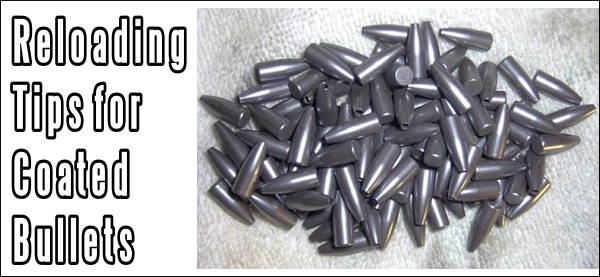
Coating bullets with a friction-reducing compound such as Molybdenum Disulfide (Moly) offers potential benefits, including reduced barrel heat, and being able to shoot longer strings of fire between bore cleanings. One of the effects of reduced friction can be the lessening of internal barrel pressures. This, in turn, means that coated bullets MAY run slower than naked bullets (with charges held equal).
To restore velocities, shooters running coated bullets are inclined to “bump up” the load — but you need to be cautious.
Be Careful When Increasing Loads for Coated Bullets
We caution shooters that when your start out with coated bullets in a “fresh barrel” you should NOT immediately raise the charge weight. It may take a couple dozen coated rounds before the anti-friction coating is distributed through the bore, and you really start to see the reduced pressures. Some guys will automatically add a grain or so to recommended “naked” bullet charge weights when they shoot coated bullets. That’s a risky undertaking.
We recommend that you use “naked” bullet loads for the first dozen coated rounds through a new barrel. Use a chronograph and monitor velocities. It may take up to 30 rounds before you see a reduction in velocity of 30-50 fps that indicates that your anti-friction coating is fully effective.
We have a friend who was recently testing moly-coated 6mm bullets in a 6-6.5×47. Moly had not been used in the barrel before. Our friend had added a grain to his “naked” bullet load, thinking that would compensate for the predicted lower pressures. What he found instead was that his loads were WAY too hot initially. It took 30+ moly-coated rounds through the bore before he saw his velocities drop — a sign that the pressure had lowered due to the moly. For the rounds fired before that point his pressures were too high, and he ended up tossing some expensive Lapua brass into the trash because the primer pockets had expanded excessively.
LESSON: Start low, even with coated bullets. Don’t increase your charge weights (over naked bullet loads) until you have clear evidence of lower pressure and reduced velocity.
Procedure After Barrel Cleaning
If you shoot Moly, and clean the barrel aggressively after a match, you may want to shoot a dozen coated “foulers” before starting your record string. Robert Whitley, who has used Moly in some of his rifles, tells us he liked to have 10-15 coated rounds through the bore before commencing record fire. In a “squeaky-clean” bore, you won’t get the full “benefits” of moly immediately.
To learn more about the properties of dry lubricants for bullets, read our Guide to Coating Bullets. This covers the three most popular bullet coatings: Molybdenum Disulfide (Moly), Tungsten Disulfide (WS2 or ‘Danzac’), and Hexagonal Boron Nitride (HBN). The article discusses the pros and cons of the different bullet coatings and offers step-by-step, illustrated instructions on how to coat your bullets using a tumbler.
At the request of our readers, we provide select “Deals of the Week”. Every Sunday afternoon or Monday morning we offer our Best Bargain selections. Here are some of the best deals on firearms, hardware, reloading components, optics, and shooting accessories. Be aware that sale prices are subject to change, and once clearance inventory is sold, it’s gone for good. You snooze you lose.
NOTE: All listed products are for sale to persons 18 years of age or older. No products are intended for use by minors.
⏺️ Buy good FFP or SFP ZeroTech scopes and get FREE binoculars
ZeroTech makes quality scopes for hunting, PRS/NRL, and general shooting. Currently when you purchase ZeroTech Thrive or Vengeance scopes you can receive a FREE set of ZeroTech Thrive HD binoculars. These 30mm-tube ZeroTech scopes are offered in both FFP and SFP versions with MIL or MOA clicks. There are a variety of reticle types, both illuminated and non-illuminated. Magnification and objective size options include 3-12x44mm, 4-16x50mm, 4-20x50mm, 4-24x50mm, 6-24x50mm, and 5-25x56mm. The FREE ZeroTech Thrive binoculars have retail values from $170 to $230.
2. Midsouth — White River Large Rifle Primers, $79.99
⏺️ Large rifle primers IN STOCK at affordable price
It’s been hard to find large rifle primers at an affordable price lately. If you’ve been waiting for the price of large rifle primers to come down here’s your chance. We found these American-made White River Large Rifle Primers on sale for just $79.99/1000 at Midsouth. These are made to tight tolerances and report from shooters and handloaders have been quite positive.
3. CDNN Sports — Walther P22 Target, $249.55
⏺️ Very good .22 LR Target/Training pistol plus 200 rds FREE Ammo
All shooters should have a quality .22 LR rimfire pistol with a good trigger, ergonomic grip, and excellent accuracy. With the Walther P22 Target Model, you can get all those things for just $249.55 at CDNN Sports, a great deal. Plus you get 200 rds (4 boxes) of FREE Federal .22 LR ammo — a $40 value. The P22 Target pistol is a very nice rimfire handgun with a 5″ barrel plus a forward ported compensator. The ergonomic grip has interchangeable backstraps.
4. Amazon — Frankford Arsenal Universal Bullet Seater, $59.99
⏺️ One affordable seater serves multiple calibers
Are you tired of buying another expensive seating die every time you try a new cartridge type? With the unique Frankford Arsenal Universal Bullet Seating Die you can have one die that loads multiple cartridge types. This clever bullet-seating system includes 3 different stems and 9 sleeves allowing you to seat .224 to .338-caliber bullets with this one multi-caliber tool. Forum members using this system have praised it. NOTE: the universal seating die comes with the .308-caliber sleeve pre-installed.
5. Graf & Sons — Caldwell Bipod Sale
⏺️ Good bipods offered at very attractive prices ($33-$52)
Bipods are useful for varminters, hunters, and tactical shooters. If you need a durable, adjustable bipod at a great price, consider Caldwell Bipods now on sale at Graf & Sons starting at just $33.14. The aluminum design adds minimal weight and deploys quickly, with legs that spring out to the shooting position with the touch of a button. The Caldwell bipod legs are notched for easy indexing to a specific height.
6. Creedmoor Sports — Custom Shooting Mat Sale, $104.95
⏺️ Very high-quality shooting mat now on sale — 30+ colors
A quality shooting mat provides vital comfort and stability when shooting prone. One of the best mats on the market is the Creedmoor Custom Mat, now $104.95 on sale at Creedmoor Sports. This features durable 1000 denier Cordura Nylon with textured non-slip pads for elbow placement. Interior jute padding in the mat provides ample protection for the shooter in all positions. There are many color choices so you can pick an unique color that’s easy to spot on the firing line.
7. Amazon — Caldwell Rock Front Rest, $72.22
⏺️ Low-priced reliable rest that’s good for sighting-in and varmint work
Need a good basic front rest to sight-in a hunting rifle or do load development? Here’s a solid, functional front rifle rest at a great price. The Caldwell The Rock Deluxe Shooting Rest (#ad) adjusts for windage and elevation and is solid and stable. Save with a low $72.22 Amazon sale price. This Caldwell Rest will more than suffice for testing a hunting rifle or basic bench-work. NOTE: REST ONLY — rear bag NOT included.
8. MidwayUSA — Wheeler Gunsmithing Tool Sale
⏺️ Large variety of specialized gun maintenance tools at good prices
When it comes to firearm maintenance it pays to have the right tools or you could damage your parts. Wheeler offers a good line of specialized Wheeler gunsmithing tools. Chose among a wide assortment of firearm tools including barrel vise kits, screwdriver sets, armorer’s kits, scope mounting devices and more. You’ll see a wide range of Wheeler tool sets on sale now at MidwayUSA.
9. Amazon — Frankford Arsenal Wet Tumbler, $78.74
⏺️ Very good smaller tumbler that is efficient and effective
Wet tumbling efficiently cleans cartridge brass inside and out. One of the best modestly-priced wet tumblers is the Frankford Arsenal Rotary Tumbler Lite. (#ad) When combined with stainless steel cleaning pins, this rotary tumbler can work faster than ultrasonic or vibratory tumbling methods. The media pins easily penetrate inside cases to deliver serious cleaning power. This 3.3-liter tumbler is ideal for cleaning small batches of brass and easily fits on any reloading bench.
10. Amazon — Lyman BrassSmith Funnel with Inserts, $31.99
⏺️ Very useful kit we use — avoids powder spills
Having a good powder funnel really helps precision reloading. The Lyman Products Brass Smith Pro Powder Funnel System (#ad) is a great little system. Unlike plastic powder funnels, the aluminum DIE cast body and CNC-turned aluminum caliber-specific inserts are static-free to eliminate powder cling. The precision fit to your case necks eliminates spilled powder. The kit includes six laser-marked, caliber-specific aluminum inserts to fit calibers 22 to 338: .22, .243/6mm, .25/6.5mm, .270/7mm, .30, and .338. The inserts can be quickly and easily interchanged when changing cartridge types.
BONUS: Get $100, $50, or $25 Rebate with Savage Rifle Purchase
Savage Sleigh Full of Savings — Purchase any A or B series Savage rifle and receive $50 Manufacturer’s REBATE. Or purchase any Rascal, 93, 93R17 and MKII and qualify for a $25 REBATE. These qualifying rifles (Promotion #R13262) must be purchased between 12/1/2024 through 12/31/2024. DEADLINE for Mail-In-Rebate (MIR) or online submission is 1/31/2025. CLICK HERE for Rebate Application Form.
There is also a $100 Rebate for Savage Impulse hunting rifles, Promotion #R13373. Purchase any Impulse rifle and receive a $100 Manufacturers REBATE. The Impulse Rifle must be purchased between 11/1/2024 through 12/31/2024, with 1/31/2025 rebate submission deadline. CLICK HERE for Impulse Rebate Form.
As an Amazon affiliate, this site can earn revenues through sales commissions.
New Product Showcase Part ONE
Shooting Industry’s December 2024 issue has the first installment of the 2025 New Product Showcase — featuring new (or recently introduced) products from dozens of companies including FN America, Gemtech, H&K, Hornady, Kimber, MDT, Remington, Ruger, Savage, Smith & Wesson, Taurus, Trijicon, Vudoo Gun Works and more. You can see all these new products in a mobile-friendly format that works with cell phones.
Or, CLICK HERE to see the full December 2024 issue in printable PDF format. The New Product Showcase is on pages 52-67, with a Shot Show Preview on pages 48-51.
Below we feature our Top Six Picks among the many new products featured this month in Shooting Industry magazine. There are dozens of other new (or recently introduced) products in Shooting Industry’s Part 1 2025 Product feature, found in the current December 2024 issue. CLICK HERE to see ALL the featured new products.
Pick Six — Top New-for-2025 Shooting Products, Guns and Gear
MDT Sporting Goods — New CRBN Ultra-Lightweight Stock
The new MDT CRBN Rifle Stock is a lightweight carbon fiber stock with an internal mini-chassis weighing a mere 27 ounces — that’s light! Crafted from foam-filled carbon fiber, the MDT CRBN Rifle Stock is both incredibly lightweight and durable. The CRBN Stock features a full-length ARCA rail, adjustable comb height, adjustable length-of-pull, M-LOK slots, QD attachment points, thumb shelves, and a 20-degree grip angle. A V-Bedding block ensures a precise fit between the stock and action, and the barrel channel can accommodate a 1.2″ profile barrel.
Savage New Revel Rimfire Lever-Action Rifles
Savage Arms will offer the Revel Classic and Revel DLX rimfire lever-action rifles in .22 LR, .22 WMR, and .17 HMR chamberings. These are take-down rifles with simple disassembly for cleaning and maintenance. The Revels feature a nice, satin-finish walnut wood stock plus a large lever loop for rapid cycling. These new rimfire lever guns start at $439.00 MSRP for the Revel Classic and $539.00 for the Revel DLX. The .22 LR Revel Classic is available now while the .22 WMR and .17 WMR versions will be available in early spring 2025, as will all Revel DLX models.
Kimber CDS9 Metal-frame Compact Pistol
If you want a compact carry pistol but are not a fan of Glock-style polymer frames, you may favor Kimber’s new CDS9 (Covert Double Stack 9mm) pistol. This high-capacity, optics-ready compact handgun features all-metal frame with accessory rail for light or laser. The grip is available with a high-contrast red and black finish.
The CDS9 has an ambidextrous safety and slide release plus a reversible mag release. The CDS9 TFS version comes with a threaded barrel for suppressor, compensator or muzzle brake. The new MDT ships with a 13-round or 15-round magazine plus a 10-round flush magazine is offered for areas where high-capacity magazines are not allowed. Watch the video above for field test.
CenterPoint Optics has some new products that deliver decent glass and advanced internal electronics at an ultra-low price. The CPNV01 Night Vision Monocular boasts day and night vision modes, 6X optical zoom and 8X digital zoom, plus day and night vision modes with a 2″ display. You can record stills and video to a micro SD card. Priced at just $129.99, this could be a nice unit for hunters.
CenterPoint also has a decent laser rangefinder at a super low price. Costing just $129.99, the CPLRF6221K laser rangefinder measures distances up to 1,100 yards and features 6X magnification. The unit has scan mode with continuous distance readings to help track moving targets. The unit, with 22mm objective, also has a built-in inclinometer.
Silencer Central
Meat-Eater Suppressor
Silencer Central has worked with Banish to develop a new 30-caliber “Meat Eater” suppressor rated for cartridges up to .300 RUM. Designed for hunting, the maker claims this suppressor can reduce sound levels by 32 decibels and reduce recoil by up to 40% via its integrated “anchor brake”. Quite light-weight, the Meat-Eater suppressor weighs 10.3 oz., and measures 5.85″ long. It employs an industry-standard hub mount.
Vudoo Gun Works
Precision Rifle Bag
The impressive Vudoo Precision Rifle Bag has many notable features including thick foam padding on all sides, 3 Zippered mesh pockets, removable scope cover, muzzle cover with bungee, Velcro interior walls, and cleaning rod sleeve. The fully customizable compartments keep gear organized, while thick, high-density padding shields your firearm from the toughest conditions.
All these features make for a really great gun case, but it is very pricey at $225.00!
Discover more products ShootingIndustry.com. Dealers and retailers can subscribe to the magazine and get weekly emails with the latest industry news and new product info. And everyone can access regular news items via the Shooting Industry Facebook page.
With the skyrocketing prices of ammo, more shooters than ever are hand-loading pistol and rifle ammunition. But many novice reloaders tell us that it’s a bit overwhelming in the beginning. Just learning all the technical terms (e.g. ogive, meplat, ballistic coefficient, load density etc.) is difficult, and the task of selecting the right tools and gear can be daunting.
The first thing a new reloader should do is find an experienced reloading mentor. One can learn the basics much more quickly under the guidance of an experienced hand-loader who “knows the ropes”. We also recommend that newbies acquire a good basic reloading handbook — not just a list of load recipes, but a book that explains the processes.
Since the first edition was published in the 1970s, the ABCs of Reloading series has taught countless firearms owners safe/reliable methods for creating their own ammunition. ABCs of Reloading provides beginners what they need to know to get started in reloading. From basic topics such as “How does a cartridge work?” and “What components do I need?” to more advanced discussions of cartridge pressure, headspace, and chrono testing, this is a great resource for new handloaders.
In addition, the sections on advanced reloading and new powders make the new edition valuable for experienced handloaders. And long-range shooters will benefit from the sections on making ultra-consistent ammo and fine-tuning for precision accuracy. Massaro’s coverage of new reloading gear and components is another bonus (shown below is the new RCBS MatchMaster powder dispenser).
Review from purchaser of “The ABCs of Reloading”, 8th Edition:
“When I first got the itch to load my own ammunition, I was overwhelmed by the amount of information and terminology involved in this fascinating field/hobby. It was very difficult to take all the individual pieces of information that I had and form it into an understandable process. I was snowed in under a blizzard of data that I was piecing together through chat rooms and web sites. Phrases like ‘roll crimp’ and ‘headspace’ came at me in a blizzard. I could look up each phrase, understand each one as a piece, but still the whole picture was fuzzy. In essence, that is what this book will do for you — turn it all into a coherent, linear whole. The writing is very solid and clear, the illustrations are well-done and helpful, and the information is very complete. After reading this book, the entire process made sense to me, and more importantly, I was fully warned about the dos and don’ts of the reloading world. The coverage is very complete. Primers, powders, bullets, and … all necessary tools and accessories are discussed and explained. This is just a great book. It won’t make you an expert … but it will put you on the right road if you wish to become one.” — Mykal Banta
In our Shooter’s Forum there is a popular thread, Let’s See Those Hunting Rifles. This long-running thread features dozens of interesting hunting rifles of all varieties — from rimfires to big magnums. In that thread we found the focus of today’s story, a .221 Fireball. Now that we are in the thick of winter, with Christmas just two weeks away, we showcase this .221 Rem Fireball rifle from Norway. This rig belong to Thomas Haugland, aka “Roe” on our Forum. An avid backcountry hunter, Thomas also happens to be one of the best gun-content video producers on YouTube — check out Haugland’s THLR.NO YouTube Channel.
We’ll begin with two of Haugland’s remarkable videos — worth watching just for the stunning scenery. Thomas skis through the Norwegian Arctic backcountry, then successfully uses his suppressed, white-camouflaged .221 Fireball rifle to bag a Ptarmigan bird — bringing home a well-earned winter dinner.
NOTE: This is the short preview version. Watch the full hunt in second video.
The 7-minute video below shows the full ski hunt. The Ptarmigans are spotted at 4:30 time mark and Thomas takes the shot at 5:36. Great video — you feel like you are there in Norway’s white wilderness. The images above (including top photo) are pulled from this video.
About the .221 Fireball Cartridge
The .221 Remington Fireball cartridge was developed by Remington in 1963 for the XP-100 bolt action pistol. Today the cartridge remains popular with hunters/varminters, both in the original version, and with wildcats such as the .20 Vartarg and .17 Fireball. Lapua started making superb .221 Rem Fireball cartridge brass starting in 2014. However, according to Lapua: “This case is no longer in active production.” On 12/8/2024, we checked many leading vendors including Graf’s, MidwayUSA, and Powder Valley, but could not find new .221 Rem Lapua brass. Lapua notes: “Fireball brass has… seen a dramatic surge in popularity, due in large part to the efforts of wildcatters working with this versatile case. Whether used in its original form, or necked into one of the many cases that it serves as a parent for, the Lapua .221 Fireball brass is a sure winner[.]”
Haugland .221 Fireball with New Carbon Stock and Walther Barrel
Shown above is Haugland’s same .221 Rem Fireball from the videos, but with a new camo stock and new barrel. (The previous stock was painted white). Originally a Remington 700 Light Varmint, this was rebarreled to .221 Fireball with Lothar Walther 1:12″ barrel. Thomas admits he “Goofed a little on the barrel profile, so it is a tad heavier than I wanted.” The stock is a carbon-fiber Gunwerks ClymR and on top is a Leupold 3-18x44mm MK5 HD with Gunwerks RH1 reticle. Only the action and the trigger is left from the original rifle.
With the 1:12″ twist, this rifle is restricted to 55gr maximum bullet weight. Thomas posted: “Shoots well with Vihtavuori N130 and Norma N200 powders, not so good with RL7.” Due to lack of light in far-Northern Norway in winter (see photo above), Roe has not hunted with this rifle much since rebarreling, but as you can see, it’s very accurate — look at that group. Thomas says the gun shoots much better with the new barrel: “With the factory barrel (which I believe was 1:14″-twist) it didn’t shoot better than 1 MOA at 100 yards. Now it approaches half-MOA for three shots (see photo).”
And Thomas was successful with this rig as “reborn” with new stock and barrel. Here’s the gun and a Ptarmigan he shot in the Norwegian snow-covered backcountry.
If you like that Gunwerks ClymR carbon stock, here’s a Gunwerks video showcasing the ClymR Rifle System. A complete Gunwerks ClymR rifle with Titanium action and scope was a shocking $9734.99, so we can understand why Thomas went with the stock alone, paired with a older Rem 700 action.
Gun-maker Bear Creek Arsenal has a good article on its website about rifling barrels. The article explains four common methods of rifling the interior of barrels: Cut Rifling, Broach Rifling, Button Rifling, and Hammer Forging. In addition, the article describes a new (and somewhat radical) method, Cation Rifling, which employs acid to etch rifling. READ Full Article.
The main focus of the article is on Cold Hammer Forging of barrels. This requires massive, expensive tooling, but the results can be very consistent. Many top gun-makers, such as FN, HK, and Ruger, have used the hammer forging process. And now Bear Creek Arsenal also offers hammer-forged barrels. Bear Creek recently acquired two state-of-the-art cold hammer forging machines. With hammer forging, a chamber can be formed and barrel contour shaped at the same time. This process produces some of the most consistent barrels available today. Here is a summary of how Cold Hammer Forging works:
Cold Hammer Forging — Machinery and Process
A cold hammer-forged barrel starts life… as a short and fat blank with a polished hole running through the center. A hardened mandrel of proper width (caliber) and rifling pattern — again reversed/inverted — is placed into the smooth bore. The pair go into a forging machine that compresses the steel against the mandrel, hammering it into final shape. The barely detectable external spiral patterns that remain on some barrels are imprints from those hammers at work. Some companies polish them out, however.
Cold hammer forging machinery is very expensive, representing a significant investment for companies. However, when the hammer forging process is done and the mandrel removed, the resulting barrel is the proper length and profile with rifling that is consistent and butter smooth. No lapping is required — a time and expense saver — although a stress-relief step often follows.
The process takes place at room temperature, despite the misleading “cold” terminology. There is a hot hammer forging process, but the equipment is even more expensive and the slight improvement in grain consistency hasn’t proven advantageous enough for a return on that investment. Performance is impressive and consistent.
One of the biggest advantages of a cold hammer forged barrel is longevity. They… survive abuse and last longer. The manufacturing process adds those enviable virtues with each strike of those hammers — strengthening the metal in a work-hardening process employed by blacksmiths for centuries.
Comparing Popular Rifling Methods
What rifling process should you choose? If long-distance is your passion and you home brew custom cartridges to print tiny groups in the next zip code, cut rifling is the optimum choice. Button rifling is a solid second choice, but not always the Holy Grail long-distance shooters dream about. Cold hammer forged barrels, however, last longer and [offer great performance for the price.]


 5. Gas Block: You want a gas block that does not impose pointed stress on the barrel. Clamp-on types that grab all the way around the barrel are excellent. The blocks that are pinned on with tapered pins that wedge against the barrel or the slip on type of block with set screws that push up from underneath (or directly on the barrel) can deform the bore inside of the barrel and can wreck the accuracy of an otherwise great barrel.


 The
The 

 The
The 




 About the .221 Fireball Cartridge


