One of our Forum members asked us the question: “Does anybody make a good range box with cradles for cleaning at the bench?” The answer is yes — the MTM model RBMC Range Box offers slide-in plastic cradles that provide a reasonably sturdy platform for a quick clean when you’re done shooting. The RBMC box also offers plenty of storage for jags, brushes, solvents, ammo boxes and other miscellaneous gear you need for the range.
Among the many range boxes available, the MTM model RBMC Range Box leads the pack in terms of versatility. It is rugged, it has plenty of storage space, and it doubles as a handy cleaning station. This Editor has used the MTM Range Box to clean rifles and as a “range expedient” rifle holder when adjusting scopes and tensioning action screws. It’s a good product that does the job and stands up to rough handling. The MTM Shooting Range Box is in stock now for $43.80 at Midsouth (green version).
Fitted Cleaning Cradles
The key feature setting MTM’s RBMC apart from most range boxes is the rubber-coated cradle system. Wide enough to fit a 3″-wide fore-arm, the cradles slide into vertical slots on either end of the box. This allows your range box to serve as a maintenance station. The RBMC is really pretty stable in this role, and the cradles won’t mark your stock. The cradles even feature slots on each side to hold your cleaning rods. The MTM Range Box is secure enough to stay in place when you’re brushing the barrel. However, if you’re working on a carpeted bench top, keep one hand on the box when running a cleaning rod through the bore, just to ensure the box doesn’t slide.
Versatile Upper Tray with Dividers
The MTM Range Box has two major components — the box base (with cradles), and a large upper tray with hinged top and carry handle. This large upper tray clamps securely to the bottom unit for transport. The top tray has a long section that holds cleaning rod guides, long brushes, grease syringes and the like. There are two, clear-plastic fitted divider trays. These will hold your patches and jags, plus comparators, ring wrenches, and other small tools.
MTM offers a black “tactical” version of this Range Box for a bit more money — $48.76 at Midsouth. This Tactical Range Box includes a special bracket that supports AR-type rifles through the magazine well. As show at right, this is red. However, some previous production models had black brackets (see below).
What Might Be Improved
Though we really like the MTM Range Box, it’s not perfect. First, we wish the box was a bit deeper, to have added carrying capacity. The dimensions of the MTM Range Box are: 25″ long x 11.5″ wide x 8.75″ high. We’d like to see it 12″ high/deep to allow larger solvent bottles to stand upright and to provide more space to carry tools and shooting muffs. However, it is deep enough to hold the large 100-round MTM cartridge boxes that are popular with many shooters (see photo at right).
While we like the twin clear plastic dividers that fit into the removable top-tray, but we wish the dividers had individual hinged tops. This would keep small items more secure.
Hi-Lux Optics has created three videos of interest to across-the-course and service rifle competitors. The first video highlights the appeal of service rifle shooting, with comments from 2021 Camp Perry competitors. The second video offers five tips for new service rifle shooters. The third video focuses on the CMP matches at Camp Perry this past summer. If you have ever wanted to share the Camp Perry experience, this last video provides a great over-view of the event.
Four Reasons to Shoot Service Rifle
Service Rifle shooting is fun yet challenging. You need to develop skills with multiple positions and be able to make rapid wind calls. However, the modern AR-based service rifle is affordable and has relatively low recoil. Highly-customizable, modern service rifles can be fitted with adjustable stocks and optional magnified optics. Older military rifles, such as the M1A and M1 Garand, offer different challenges with heavier-recoiling cartridges, greater weights, and classic iron sights. Hi-Lux asked competitors at Camp Perry during CMP’s 2021 summer games what they enjoyed most about competition with service rifles and Military rifles such as the M1 Garand. The shooters’ responses had four key themes: Self-Improvement, Comradery, History (enjoying shooting rifles with heritage), and Challenge.
Five Tips for New Service Rifle Shooters
This summer at Camp Perry, Hi-Lux reporters asked competitors “What advice do you have for new shooters getting into service rifle?” The most common responses, explained below, were: Keep Learning, Don’t Quit, Stay Calm, Practice Fundamentals, and “Get Started!”. These tips will actually apply to a wide variety of shooting disciplines.
00:21 Keep Learning
Every shot you take is a learning experience. There are so many ways to learn — talk to fellow shooters, watch training videos, attend a training clinic such as those hosted at the CMP Regional Games. Don’t be afraid to ask, and never stop learning.
01:38 Don’t Quit
You may hit a performance plateau. Don’t let that stop you. The only way to get better is to continue moving forward. Persevere and continue your training off-season with dry-fire practice.
03:10 Stay Calm and Focused
Go into each shot with a clear and empty mind. While you’re up on the line, it’s just you and your rifle.
04:20 Practice Fundamentals
With the right mindset in place, practice will strengthen your fundamentals. Dry firing can reveal issues with follow-through and trigger pull that might not be noticeable under recoil. This is especially true with offhand shooting.
05:48 Get Started
You’re not too old to start a new discipline. There are many free clinics available, and many local ranges have regular service rifle competitions where you can hone your skills. Learn more about Service Rifle shooting clinics on the CMP website.
The 2021 National Matches at Camp Perry — Return of the Games
After cancellation in 2020 due to COVID, the CMP National Matches at Camp Perry returned in summer 2021 with a full selection of matches for pistol and rifle. This video showcases the unique experience that is Camp Perry — the leading venue for American marksmanship competition since 1907. The video covers different disciplines, including Service Rifle, M1 Garand matches, Vintage Sniper, and more.
History of Camp Perry
“In the year 1907 the machinery of the National Matches, now grown to immense proportions, was moved to the mammoth new range at Camp Perry.”
—James Drain, Arms and the Man, August 1911
Federal legislation originally launched the National Matches. The 1903 legislation also established the National Matches, commissioned the National Trophy and provided funding to support the Matches. The National Matches have been held at Camp Perry since 1907. The range is located along the shores of Lake Erie in northern Ohio near Port Clinton. The site was first acquired in 1906, in response to the need for a larger facility for military training and the NRA’s shooting programs. In 1906 Gen. Ammon B. Crichfield, Adjutant General of Ohio, ordered construction of a new shooting facility on the shores of Lake Erie, 45 miles east of Toledo, Ohio. The original land for Camp Perry was purchased in 1906, and the reservation was named after Commodore Oliver Hazard Perry, the American naval commander who won the Battle of Put-in-Bay during the War of 1812.
On August 19, 1907, Cpl. L. B. Jarrett fired the first shot at the new Camp Perry Training Site. And that year, 1907, Camp Perry held its first National Pistol and Rifle Championship events. This location has hosted the annual National Matches ever since (though they were cancelled in 2020 due to COVID). Typically over 4,000 competitors attend the National Matches each year, making it the most popular shooting competition in the western hemisphere.
Janna Reeves is one of the nation’s top female 3-gun competitors. She is fast AND accurate, and she knows how to plan her stages to achieve the best results.
In a series of videos produced for Brownells, Janna talks about the 3-Gun game, reviewing the latest trends in 3-Gun firearms and gear. Janna also provides stage-planning tips, offering winning strategies to employ in competition. Though these videos, Janna hopes to help novice shooters. In particular, Jenna hopes to encourage new lady shooters to get involved in 3-gun competition, a fun and challenge sport.
In this action-oriented video, Janna walks through a 3-Gun course, explaining how to plan shots, movements, and reloads. Janna shares tips, tricks, and strategies that can improve your hit percentage and shave seconds off stage times. Janna offers specific advice on target transitions, loading on the move, and stage planning.
In this hardware-centric video, Janna explains how she set up her guns for competition and why she selects specific components and accessories. If you are just getting started in 3-Gun competition, this will help you choose firearms, holsters, ammo caddies, optics and accessories. Janna’s advice helps you get the most “bang for your buck” when assembling your
The fall Hunting Season is here. Do you plan to use factory ammo in your hunting rifles? Perhaps you buy bulk centerfire ammo for your AR15 or varmint rifle. Then this book can definitely benefit you.
If you ever shoot factory ammo, you should consider getting Ammo & Ballistics 6. This resource lists over 2,600 different loads for 200+ cartridge types from .17 Mach 2 up to .700 Nitro Express, including the most popular centerfire and rimfire cartridges (both rifle and handgun). In this updated-for-2020 Sixth Edition, there are over 3,000 tables covering virtually every caliber and every load for all commercially-loaded hunting ammunition sold in the USA. Tables include velocity, energy, wind drift, bullet drop, and ballistic coefficients up to 1,000 yards.
Ammo & Ballistics 6 helps you select ammo for a hunt — quickly compare the velocity and knock-down power of various commercial ammo. This book can also help you choose a caliber/chambering for your next hunting rig.
Verified Book Purchaser Reviews
“Outstanding reference guide for shooters and ballistic enthusiasts alike. Has data on velocity, energy delivered, Taylor KO index, windage and elevation on numerous loadings for hundreds of [cartridge types]. Each cartridge has all dimensions labeled (i.e rim, case length, neck, etc.), and has an informative description of the cartridges history/relevance.” — S. Step, 2017
“Great heaps of data! This volume has pages and pages of new data for .22LR like the hot Velocitor, and also on the .22 WMR from 30 grains up into the 50s. Most importantly there is lots of range data, drop, windage, kinetic energy, etc. — Terrific reference guide….” — E. Svanoe
Ammo & Ballistics 6 contains data and illustrations on virtually every sporting cartridge sold in the USA. This 2020 Edition covers 200-plus cartridge types from .17 Mach 2 up to .700 Nitro Express.
Accurate, modular, and supremely versatile, the AR15 is America’s favorite semi-auto rifle. But let’s face it, the AR is a maintenance hog. The AR’s gas tube blows carbon and soot right into the middle of the bolt assembly where it cakes on to the metal. The AR bolt also has many tiny parts, and small recesses, which must be cleaned regularly. This author has seen numerous ARs fail simply because there was gunk (dried lube, carbon, brass shavings) in the ejector slot or extractor spring recess.
A Clean AR is a Happy AR — Whether You Run ‘Wet’ or ‘Dry’
There are various schools of thought when it comes to maintaining an AR. Some folks prefer to run their AR “dry” with minimal lube on the lugs and friction surfaces. Other shooters prefer to run their ARs “wet”, with lots of lube. But whatever your preference, you need to clean your AR regularly. And nothing is more important than the AR’s bolt/carrier assembly. Because it is involved in feeding, firing, and extracting, the AR-15 bolt/carrier assembly can be considered the most critical portion of the AR-15 from a maintenance standpoint.
Bolt Take-Down Guide on Top Quark Blog
The editor of the Top Quark Blog has created an excellent illustrated AR15 Bolt Take-Down Guide that shows how to disassemble an AR15 bolt and carrier for regular cleaning. Even if you’re an experienced AR15 shooter, you can learn something from this page (sample at right), and you may want to bookmark it for future reference. The photos are large and clear and there are helpful hints for each step of the process.
The author knows his stuff and offers some important insights. For example, he notes that “Extractor springs in most AR15 bolt assemblies are fairly weak, and this can lead to various extraction-related failures. One of the few high points about Colt assemblies is their usage of higher-strength extractor springs. You can tell the difference by looking at the inner plastic insert. ‘Normal’ springs feature a blue plastic insert, Colt strong springs have a black insert.”
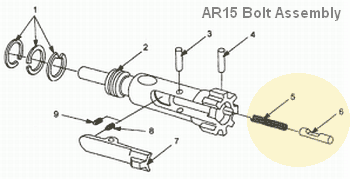
There is one notable oversight on this page — the author doesn’t cover disassembly and cleaning of the ejector assembly. This is actually quite important. A few small brass shavings, combined with carbon and lube in the ejector slot, WILL cause malfunctions. In fact, when this editor is called to diagnose problem ARs, the first things I look at (after swapping magazines) are the ejector recess and the slot for the extractor. Clogged ejectors are responsible for fail-to-ejects and other jams. It is essential that you keep the ejector hole clean. Old, gooey lube residues mixed with carbon and tiny brass shavings in the ejector recess will create all sorts of problems. As shown in the diagram below, it is simple to remove the ejector (#6) and ejector spring (#5), by drifting the ejector retaining pin (#4).
NOTE: The original Quark Blog Article appears to be offline (See Quark LINK.) However, this excellent article has been preserved via the WayBack Machine Internet Archives. CLICK HERE to access the Full Quark Blog Article via WayBack Machine Archive.
Hornady’s 6mm ARC cartridge will be featured on tomorrow’s Shooting USA broadcast. Optimized for the AR-15 platform, the 6mm ARC (Advanced Rifle Cartridge) was developed in response to a request from the Department of Defense, according to Hornady Marketing Director, Neil Davies: “The DOD guys wanted a platform built that would give them all of the advantages of the .308 [7.62×51] and try to get rid of some of the disadvantages, [such as the heavier] weight of the entire system. So they went from an AR-10 system to an AR-15 system. But they also wanted to engage targets, not just across the street or inside a room, but maybe across a valley.”
SHOW TIMES: This Shooting USA Episode airs Wednesday, June 30, 2021 at 9:00 PM Eastern and Pacific; 8:00 PM Central. If you miss the regular broadcast, you can stream the show at any time on Vimeo for $0.99 per episode.
In June 2020, Hornady introduced the 6mm ARC, a new SAAMI cartridge optimized for AR-platform rifles*. The new 6mm ARC is basically a 6.5 Grendel necked down to 6mm, with the shoulder moved back around .030″. That pushed-back shoulder does reduce case capacity (and velocity), but we assume Hornady did that to create a shorter, proprietary chamber so people could not simply neck-down Lapua 6.5 Grendel brass, as has been done for years with Robert Whitley’s outstanding 6mm AR wildcat.
What Is the 6mm ARC Cartridge? The 6mm ARC cartridge is a new SAAMI-spec cartridge based on the 6.5 Grendel case necked down for 6mm bullets, with the shoulder moved back 0.030. Yes it is designed to run in AR15-platform rifles. You’ll need a new barrel, bolt, and mags. If you already have an AR chambered in 6.5 Grendel, the ONLY thing you need to change is the barrel. Everything else — bolt, magazines, gas system – is compatible with 6mm ARC.
▶ Official SAAMI Cartridge (not wildcat)
▶ Fits standard AR15-platform rifles
▶ Fits Short/Mini action bolt rifles
▶ Efficient short, fat case design
▶ 30-degree case shoulder
What Do I Need To Shoot the 6mm ARC?
Faxon and Ballistic Advantage are already producing barrels, with more manufacturers sure to follow. All the other required components are already on the market for 6.5 Grendel rifles. Aero Precision already offers complete 6mm ARC uppers.
The 600-yard target has an X-Ring 6 inches (1 MOA) across, while the 10-Ring spans 12 inches (2 MOA).
The following article is about reloading for NRA/CMP Highpower Rifle competition and is geared toward competitors shooting the AR15 Service Rifle. In Highpower Rifle competition, shooters fire in four stages: Standing slow-fire at 200 yards, Sitting rapid-fire at 200 yards, Prone rapid-fire at 300 yards, and Prone slow-fire at 600 yards. Competitors use a sling for support in all positions but standing. A typical AR15 Service Rifle sports a 20″ free-floated barrel and a 4.5-pound trigger. Service Rifle scopes are limited to maximum power of 4.5X.
Thoughts on Loading for Service Rifles, Particularly for 600 Yards
by Danny Arnold, Team CMP Article originally published in CMP Shooting News
Before we get started, I want to stress that all of the information that follows is geared toward the .223/5.56 Service Rifle. That doesn’t mean that there’s nothing here for anyone else, but the .223/5.56 Service Rifle platform is where I’ve spent the majority of my time, so here we go.
There is only one “Perfect” 600–yard load for my rifle, True or False? This example is more anecdotal than scientific, but it provides some food for thought….
Team CMP spent the early part of March competing in the Orange Blossom Regional. As soon as we got on the range, Sara Rozanski (Team CMP member) started having problems with her 600-yard ammunition. Nearly 1/3 of her cases were exiting the chamber minus the primers. I offered to swap my ammunition for hers, suspecting that my Wylde chamber would be more forgiving than her CLE chamber — a solution that seemed to solve the problem. At least neither of us was blowing primers!
Sara’s ammunition was a factory load using a well-known 80+ grain bullet with an unknown primer and powder, using brass from a respected manufacturer. My load was a different brand of 80-grain bullet, with my choice of powder and primer, all in brass made by someone else. Given the color of the primers, the only thing that our ammunition could possibly have had in common was the brand of powder… maybe. So, how did we shoot?
Sara and I shot the two-person team together and the entire 2,400 Aggregate, although on different relays. Sara’s combined 600-yard score was 780-28X (97.5%). Mine was a 783-24X (97.87%). Our scores were never more than two points apart on any of the four days. Keep in mind that we were using each other’s ammunition the entire time.
So, we had different barrels, chambers and ammunition, but similar results. That goes back to the idea that a good load will perform similarly if fired in a good barrel.
Are We Too Focused on Ballistic Coefficients (BCs)?
The revailing wisdom has always trended toward loading the highest-BC bullet we could find and pushing it as fast as possible. Back in the early ’90s when I got started with the AR15, the 80-grain Sierra was state of the art. Actually, I picked up all of my Leg points with it, although today it looks a bit dated — kinda like me.
So, the question I’ll pose is this: Would you rather shoot a high-BC bullet that groups 3/4-MOA (minute of angle) or a lower-BC bullet that groups into one-half-MOA traveling 50 feet-per-second faster? The reason that I posed this question is a situation I found myself in a decade ago. Our coach decided that he wanted us to pair-fire some 600-yard for practice. Unfortunately, I hadn’t gotten the memo and all that I had available was my normal short-line ammunition, loaded with a 77-grain bullet. The shooter I was paired with was using a higher-BC bullet than I was, but in the end, we both shot 198s.
Admittedly, using 77-grainers meant that coach had to work a little harder to keep us together on target, but it was a teaching moment for me. I knew that my upper shot 77s better than the available bullets in the 80-grain range, so I cranked out a windage table for the 77-grain bullet at 600 yards and shot those for the rest of the season. After all, the wind blows ALL bullets around. It’s just a matter of knowing what YOUR bullet is doing.
With the shortages that we’re experiencing right now, a lighter bullet may be all that you have available for the 2021 season. That doesn’t mean that you’re disadvantaged though.
Danny Arnold teaching Highpower Clinic at 2021 CMP Eastern Games
Loading High-BC Bullets
In the past decade, several bullets have appeared that weigh 80-grains or more. One thing that many of them have in common is a very sharp nose profile, whether metal or polymer. The question is: Are you using the right seating stem?
The jacket material in the bullet’s nose is very thin. If you section a bullet, you’ll find that there is a surprising amount of air space in the nose. If you’re using older seating dies, your seating stem may be contacting the bullet nose too close to the tip, where the jacket is the both thinnest and is unsupported by the lead core. This can manifest itself either as a deformation at the very tip of the bullet or as a circular dent around the bullet nose that you can see and feel with your thumbnail. I think we can all agree that denting a bullet is usually considered a bad thing.
One company goes so far as to recommend their proprietary seating stem for use with their high-BC bullets. Other companies leave it up to you to find a seating stem that will allow the bullet nose to go deeper into the seating stem, moving the contact point further down the bullet where the jacket is thicker and supported by the core material.
Seating Depth and Bullet Preferences
Some bullets don’t mind some “jump” into the lands, but some really do. Unfortunately, manufacturers don’t tell you much about that. Your chamber configuration (Wylde, CLE, or some hybrid of the two) and the bullet that you choose will determine your optimal seating depth. Long and short of it, a quality measuring tool to determine seating depth is a necessity these days. Keep in mind that if you’re doing this with a brand new barrel, the throat is likely going to change slightly in the first 200 rounds and may need to be re-measured. Actually, since all of your short range ammunition has to be loaded to magazine length, you’re probably better off developing your short range loads before starting on long range load development. That gives the throat a chance to wear in a bit on a new barrel.
Brass Prep — Why It Is Important
When match-grade AR15s first arrived on the scene, it was amazing how little it took to get them to shoot well. Other than making sure that I had brass from the same lot and running it through a set of match-grade dies, I did nothing. Of course, we were also using a post front sight. Was the occasional bad shot me, the rifle, the load or just an archaic sighting system?
Transitioning to optics has caused me to reconsider how and what I do in my reloading process: That, and having some extra time on my hands to experiment.
A little (or a lot) of time spent with a neck turning tool, a primer-pocket uniformer and a flash-hole reamer will quickly show you how consistent brass is by manufacturer and even by individual lot. That exercise also makes the prices charged for high-quality brass seem ridiculously cheap. That doesn’t mean that I advocate neck-turning or other uniforming practices, nor do I advocate spending scandalous amounts of money on long-range brass. However, our sport is about consistency. The consistency of your brass is a matter of choice, whether you choose to simply segregate cases by weight (cheap option), neck turn (labor intensive) or open your wallet a little wider for premium brass.
Weighing Charges vs. Throwing with Powder Measure
To measure or weigh? For a long time, I used a powder measure to throw all of my 600-yard loads. The powder I was using metered well, and the results downrange didn’t justify the extra time spent with a scale. That was in the day of iron sights though. Nowadays, I’m throwing my charges and trickling up to the desired weight as measured on a scale that weighs to a 100th of a grain.
To quantify the difference between individually weighing each charge versus throwing charges with a powder measure, I weighed six kernels of powder that I trickled into the pan and then dumped them into the hopper. Going through that process 10 times, I came up with an average weight of .08 grains for six kernels. Next, I threw 50 charges for weighing using my powder measure. If I felt the measure hanging up as it cut kernels, I put the charge back into the hopper without weighing it.
That’s six kernels of powder sitting in the pan — average weight .08 grains.
Those 50 smoothly-thrown charges varied .26 grains from lowest to highest, with the majority varying no more than .16 grains from highest to lowest. If the desired weight was exactly in the middle, at worst you’d be .13 grains (9-10 kernels) low or high, with the majority being off no more than .08 grains (6 kernels) above or below the desired charge weight. Is that enough to send a shot outside the 2-MOA 10-Ring? Probably not.
Has more consistent brass and weighing charges to one-hundredth (0.01) of a grain added up to higher scores? Honestly, this question is hard to answer. Looking at the results on paper at 200 yards, using a powder that meters well combined with a consistent touch on the loading lever doesn’t appear measurably different than meticulously weighing each and every powder charge. Looking back over my 600-yard plots however, I can see a trend toward a group that is closer to X-Ring height.
Since the bullseye is widest at the center, shooting groups that are the height of the X-ring gives you more room for error when the wind is blowing. That can translate into higher 600-yard scores.
How You Load Your Ammunition vs. How You Load Your Rifle
The loading/chambering cycle of the AR-15 is, in a word, violent. You have a relatively heavy bolt and carrier assembly under power of a stout buffer spring slamming forward to chamber each round of ammunition. By design, those rounds were supposed to be held securely by the magazine feed lips until the bolt stripped them off the follower. Obviously, due to their overall length, 600-yard loads can’t be chambered that way. Although the barrel extension is funnel-shaped, it’s also got a lot of “teeth” ringing the inside of it (see below).
Whether you’re using a standard magazine or a single-round loading device (SLED), dropping a round in the loading port and releasing the bolt is an act of faith in that you’re trusting the bullet to arrive in the chamber undamaged.
Ask yourself, how many times have you seen someone drop a round on the follower, press the bolt release and watch as the bolt jammed on a cockeyed round? If that happens once every 100 tries, how many times did the bolt close on a scratched, dented, or misaligned bullet? Could that be the cause of the occasional errant shot?
My technique is to drop each round on top of the SLED and then push it slightly forward with my finger, partially chambering it before releasing the bolt. Admittedly, some people may be unable to do this due to body configuration or left-handedness, but why go to all the trouble of loading “perfect” ammunition and then damage it on the way into the chamber?
Now that we’ve covered bullets, brass, and assorted errata we can move on to discussing loads for 600 Yards…
The NRA Highpower 600-yard target has a 6-inch (1 MOA) X-Ring, and a 12-inch (2 MOA) 10-Ring.
Load Development for 600 Yards
Finding a load for 600 yards is a lot like finding a load for short range. Once I decide on a bullet, powder, primer, velocity range and a measured guesstimate of seating depth, I load 10 rounds of each test load, increasing in 0.2 (2/10) grain increments. I test them from the prone position at 200 yards. Ideally, I want to see two loads that are 0.2 (2/10) of a grain apart that shoot almost identical groups. The load that I choose will fall in between the two best shooting loads that I tested. If the first load is XX.2 grains and the second is XX.4 grains, my chosen load will be XX.3 grains.
Why develop loads in 0.2-grain (tenths) increments if I have a scale that measures in 0.01-grain (hundredths) increments? Or, why not test in 0.1-grain increments?
For me, working in 0.2-grain increments gets me to the results quicker. Also, there is a difference between accuracy and consistency in this scenario. Developing loads in 0.2-grain increments gets me to an accurate load. Producing that load using a scale that accurately measures to .01-grain insures a consistent load, assuming that I do my part.
Once I’ve settled on a load, it’s time to play with seating depth, if I choose to. If I’m lucky and the groups are acceptable as-is, I won’t do anything. If I think there’s room for improvement, I’ll experiment a little. Depending on the bullet, changing the seating depth by a couple of thousandths one way or the other may change the group size. During this phase of testing, it’s a good idea to chamber a round and see if the entire round will then extract. If you leave a bullet stuck in the throat, your rounds are too long. Finding that out at a match can ruin an otherwise good day.
Danny Arnold shooting his AR15 Service Rifle, standing position at 2021 CMP Eastern Games.
Another thing to keep in mind is that your barrel is not static. Every round fired has an effect on the throat, vaporizing and scouring away metal until the distance the bullet travels before meeting the rifling measurably increases. If you have chosen a bullet that shoots best when close to the lands, you’ll need to periodically re-measure and possibly change your bullet seating depth to maintain that optimal relationship.
The Elephant in the Room — User Skill Level
There’s really not a delicate way to put this, so I won’t try. There’s little point in spending time and effort developing a load that shoots into half-MOA off the bench if you’re only capable of shooting 2 MOA using a sling right now.
That doesn’t mean that there’s no hope. On the contrary, it just means that your time and effort is better spent practicing with some good short-range ammunition on reduced targets at a 100 or 200-yard range. At that distance, wind is not a factor and your technique can be improved more quickly so you’re in a position to benefit from that ½ MOA ammunition.
About Team CMP
CMP has created a Highpower Team with top competitors. Team CMP competes at several events throughout the year and most importantly, helps to teach Highpower Clinics at CMP Competition Events. Learn from Team CMP at Camp Perry during the Advanced Highpower Clinic, scheduled this year for July 30 through August 1, 2021. Visit the Highpower Clinic Web Page for more information.
The Civilian Marksmanship Program is a federally-chartered 501(c)(3) non-profit corporation. It is dedicated to firearm safety and marksmanship training and to the promotion of marksmanship competition for citizens of the United States. For more information about the CMP and its programs, visit www.TheCMP.org.
Trigger images from PrimaryArms.com, which sells all the triggers reviewed here: Geissele, Elftmann, Timney, and ALG Defense.
Are you thinking of upgrading the trigger system for your AR-platform rifle? There are dozens of options available, from $45 up to $350. Thankfully, Brownells has created video reviews of some of the more popular AR trigger options from Timney, Geissele, and ALG Defense. And we included a video review of the highly-regarded Elftmann Match Trigger. If you want the best solution for Service Rifle competition, you might favor the Geissele. For ease of installation, it’s hard to beat the Timney, a “drop-in” module. Like the Timney, the super-smooth Elftmann is a drop-in module. At $249.99 from Brownells it’s pricey, but it is one of the best AR triggers out there. If you’re on a tight budget, the best “bang for your buck” may be the “Perfected Mil-Spec” ALG trigger at $49.00.
Multiple AR Triggers, including Elftmann and Geissele, Reviewed
Though pricey ($249.00 at PrimaryArms.com), we really like the Elftmann AR trigger. It combines the best of both worlds — the precision and smoothness of the Geissele with the Timney’s ease of installation. This single stage trigger is user-adjustable from 2.75 to 4 pounds pull weight. It is offered with either straight or curved trigger blade. Primary Arms says: “The amazingly short take-up, glass-rod crisp break and [near-zero] over-travel can be compared to the finest custom 1911 triggers.”
Geissele Enhanced Two-Stage Trigger
Geissele makes a variety of quality AR trigger sets both single-stage and two-stage. Many High Power competitors like the two-stage Geissele trigger. This delivers a repeatable, controlled pull through the first stage with a very clean break in the second stage. The Super Dynamic Enhanced Trigger, shown above, features a distinctive, trigger blade. Reviewer Thomas Conroy says: “The flat surface is very easy to press against. Both stages are light and very distinct.”
Timney Drop-In Trigger Module
This trigger module is available for both the AR15 and the AR10 platform (see above video). Timney triggers are easy to install and come with multiple pin size and pull-weight options. Reviewer Thomas Conroy confirms that the single-stage Timney “breaks cleanly and crisply. This trigger is modular, meaning that the trigger, sear, hammer, and spring are all encased in a bright, shiny yellow aluminum housing.”
ALG Defense Trigger — Higher-Quality Basic AR Trigger
According to Thomas Conroy, ALG triggers “are the perfected version of the standard, non-adjustable mil-spec original trigger. They have the same geometry, but are made to higher quality standards, and come with … hardened and smoothed-out sear contact surface to eliminate all grittiness.” These are also offered in a nickel-boron coated version. Available for under $56.00, the ALG is a well-made, low-cost option for shooters who want a better factory-type trigger system.
For More Information about These Triggers
Learn more about Geissele, Timney and ALG triggers, plus two more AR trigger options (CMMG and Rock River Arms) in a Trigger Comparison Review by Thomas Conroy on Ammoland.com.
One of the most radical black rifles ever created wowed the crowd at the SHOT Show Range Day back in 2019. At the Boulder Rifle & Pistol Club outside Las Vegas, Battle Arms Development showcased a true “UltraLight AR”. With Titanium and carbon fiber components, the Battle Arms OIP Gen 2 AR-platform rifle weighs just 3.8 pounds unloaded. Compare that to 7.5 pounds (or more) for a typical AR-15.
Battle Arms 3.8-Lb Titanium/Carbon OIP 2 — World’s Lightest AR
At the Boulder City Range GunsAmerica Digest Managing Editor True Pearce talked with one of the Battle Arms gun designers who helped created this unique rifle, claimed to be the world’s lightest AR (yes it is lighter than ARs with polymer lowers). READ GunsAmerica Battle Arms OIP 2 Review HERE.
In the video below, True Pearce shows the key features of the $3290.00 Battle Arms OIP 2. Then he tests its function shooting offhand at steel targets. Despite its low mass, and exotic components, the Battle Arms OIP 2 AR carbine performed flawlessly.
The video above features the Battle Arms OIP GEN 2 AR that weighs just 3.8 pounds. To save weight, this carbine features a carbon fiber handguard and various titanium parts including a Titanium muzzle brake. Look carefully at how even small controls have been modified to save ounces.
GunsAmerica reported: “Battle Arms has done a lot of work to find all the ounces that can be spared to make this gun as light as possible.” Even at just 3.8 pounds, the gun is very controllable during rapid fire. Despite a steep $3290.00 MSRP, the first run of Battle Arms’ sub-4-lb GEN 2 OIP sold out. That proves that “light is right”, as least in the AR carbine market.
Pew-Pew Tactical Review of Battle Arms OIP 2
The team at Pew-Pew Tactical also field-tested the Battle Arms OIP Gen 2 rifle. The reviewers were impressed, finding that felt recoil was very manageable, even given the rifle’s very low 3.8-lb weight:
Pew-Pew Tactical Battle Arms OIP Gen 2 Review
The Concept Behind the OIP — Why Go Ultra-Light
Recoil Magazine featured an earlier model OIP rifle back in 2016 (Issue 21). This design was later refined into the current OIP Gen 2 version. Recoil’s writers explained the concept behind this unique design:
Battle Arms OIP Rifle — How Low Can You Go…
“The OIP had its genesis as a simple idea to build a lightweight gun that just plain worked. Dave Lake and Matt Babb of Bentwood Gunsmithing spent years perfecting the concept, incorporating the latest components where they existed and working with companies to customize parts that didn’t. They wanted a well-balanced gun with an optimized operating system and literally no excess — to be as light as humanly possible.
Bentwood didn’t want to utilize polymer receivers and worked with Battle Arms Development to develop a super lightweight receiver set with intricate machining to shave as much weight as they could. They investigated some more exotic material choices, but found them to be prohibitively expensive.”
— Source: RecoilWeb.com
Battle Arms OIP 2 Owner’s Review on TFB
Last year, The Firearm Blog (TFB) published an extensive review of the Battle Arms OIP 2. TFB writer/tester Rusty S. had purchased this OIP 2 rig with his own funds — making a serious $3290.00 investment.
After using the rifle in the field, Rusty concluded: “Objectively, the Battle Arms Development OIP 2 is a very well put together, reasonably accurate and very lightweight rifle. It has proven to be reliable, durable, and soft shooting despite its lightweight configuration. Subjectively, the OIP 2 has proven to be the rifle I most often bring with me into the backcountry with the exception of during deer and elk hunting season. It’s nice to have a 500-yard-capable rifle with me that weighs so little. All that being said, the amount that the OIP2 will lighten one’s wallet by will be a real sticking point for most prospective buyers.” Rusty added: “At this price point, I would appreciate some sort of ultra lightweight flip-up iron sights. I also don’t think the rear of the buttstock is as ergonomically optimal as it could be.”
Product Description from Battle Arms
[The Battle Arms OIP 2 is] the lightest, purpose-built, no compromise, production ultralight survival carbine[.] It took years in R&D, engineering and multiple U.S. Patents to create the most robust and reliable lightweight AR platform on the market. Building something that is not only lightweight but all the while not sacrificing strength and performance is the ultimate secret of the Battlearms OIP.
Every component, shy of a few detents and springs, are custom built and designed to work together as a complete system. No, you will not find a parts gun here….The OIP utilizes a patented OIP buffer system in conjunction with a lightweight titanium bolt carrier with ArmorTi finish for durability. It is balanced with a custom mid-length gas system and a specially designed titanium THUMPER compensator.
New in Gen 2 is the user-configurable M-LOK carbon fiber handguard and a carbon-fiber pistol grip that weighs barely one ounce. A new titanium billet CNC-machined bolt catch and a lightweight single-side Clutch charging handle are just a couple more of the new upgrades to the OIP. The rifle was designed to be an optics-ready carbine, providing a single stretch of Picatinny rail in the optimal spot for a red dot sight while eliminating the unnecessary weight of the rail elsewhere. The patented, lightweight 7075-T6 billet aluminum receivers are not simply skeletonized and hollowed out but is carefully engineered with structural consideration. The technology and engineering that foes into the OIP® Ultralight Rifle bring forth the next evolution of the AR platform.
Want to learn more? Check out this review of the Battle Arms OIP 2 Carbine on DefenseReview.com.
The U.S. Army Marksmanship Unit (USAMU), in cooperation with Shooting USA TV, has created a series of instructional Pro Tip pages covering a wide range of shooting disciplines. All totaled, there are more than 50 USAMU Pro Tips. Most relate to rifle marksmanship but there are also numerous tips for shotgunners and pistol shooters. Each Pro Tip entry includes multiple photos and 6-15 paragraphs, in an easy-to-follow format. Many Pro Tips also include an instructional video produced by Shooting USA. Here are three Pro Tip videos, and links to seven more Pro Tip web pages.
USAMU TOP TEN PRO TIPS
1. Reading the Wind with SGT Sherri Gallagher.
Apart from gravity, wind has the most pull on the bullet as it travels down range. Being able to accurately read the wind and mirage will greatly enhance your performance on the rifle range. National Champion, SGT Gallagher gives you some of her tips.
2. Angle Shooting with SFC (Ret.) Emil Praslick.
SFC Praslick shows you how to determine the angle to your target, and then how to include that to change your data necessary to hit your target on the first shot.
3. Rifle Grip, Stance and Body Position for 3-Gun with SFC Daniel Horner.
Professional 3-gun marksman SFC Daniel Horner, U.S. Army Marksmanship Unit (USAMU), give tips on how to properly handle a semi-automatic rifle, including grip, stance and body position.


 MTM offers a black “tactical” version of this Range Box for a bit more money — $48.76 at Midsouth. This Tactical Range Box includes a special bracket that supports AR-type rifles through the magazine well. As show at right, this is red. However, some previous production models had black brackets (see below).
 What Might Be Improved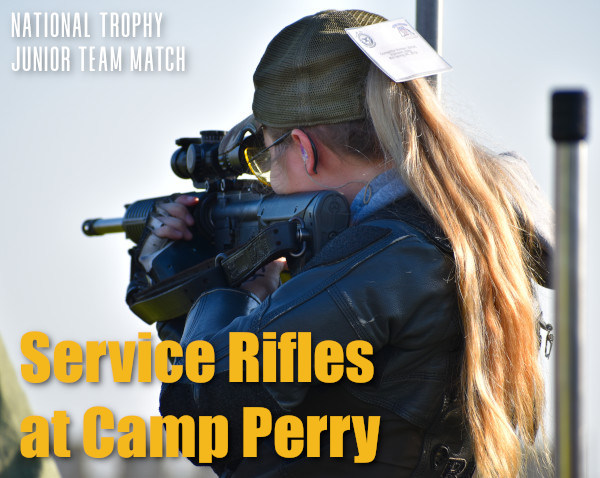


 Janna Reeves is one of the nation’s top female 3-gun competitors. She is fast AND accurate, and she knows how to plan her stages to achieve the best results.




 Trigger images from
  According to Thomas Conroy, ALG triggers “are the perfected version of the standard, non-adjustable mil-spec original trigger. They have the same geometry, but are made to higher quality standards, and come with … hardened and smoothed-out sear contact surface to eliminate all grittiness.” These are also offered in a nickel-boron coated version. Available for


