Here are two different bullet types, seated to the same CBTO length, but different COAL. Note the shiny scratches on the bullets made by the comparator tool which indicates a point on the bullet ogive near where the ogive will engage the rifling.
Effects Of Cartridge Over All Length (COAL) And Cartridge Base To Ogive (CBTO) – Part 2 by Bryan Litz forBerger Bullets. Part One of this series focused on the importance of COAL in terms of SAAMI standards, magazine lengths, seating depths, and pressure levels. Another measure of length for loaded ammunition is highly important to precision, namely Cartridge Base to Bullet Ogive Length (CBTO).
Figure 2. Chamber throat geometry showing the bullet jump to the rifling or lands.
Look at Figure 2. Suppose the bullet was seated out of the case to the point where the base of the bullet’s nose (ogive) just contacted the beginning of the riflings (the lands) when the bolt was closed. This bullet seating configuration is referred to as touching the lands, or touching the riflings and is a very important measurement to understand for precision hand-loading. Due to the complex dynamics of internal ballistics which happen in the blink of an eye, the distance a bullet moves out of the case before it engages the riflings is highly critical to precision potential. Therefore, in order to systematically optimize the precision of his handloads, it’s critically important that the precision hand-loader understands how to alter bullet seating depth in relation to the barrel rifling. Part of the required knowledge is understanding how to accurately and repeatably measure the Cartridge Base To Ogive (CBTO) dimension. This is explained in the FULL ARTICLE.
Bryan Litz offers an extended discussion on how to measure CBTO using different tools and methods, including the Hornady OAL gauge. You can read this discussion in the full article found on the Berger Bullets website. CLICK HERE to Read Full Article.
Why Not Use CBTO as a SAAMI Standard?
If CBTO is so important to rifle accuracy, you might ask, “Why is it not listed as the SAAMI spec standard in addition to COAL?” There is one primary reason why it is not listed in the standard. This is the lack of uniformity in bullet nose shapes and measuring devices used to determine CBTO.
Benefits of Having a Uniform CBTO
There is another aspect to knowing your CBTO when checking your COAL as it pertains to performance. With good bullets, tooling, and carefully-prepared cases you can easily achieve a CBTO that varies less than +/- .001″ but your COAL can vary as much as .025″ extreme spread (or more with other brands). This is not necessarily bad and it is much better than the other way around. If you have a CBTO dimension that varies but your COAL dimension is tight (within +/- .002″) then it is most likely that your bullet is bottoming out inside the seater cone on the bullet tip. This is very bad and is to be avoided. It is normal for bullets to have precisely the same nose shape and it is also normal for these same bullets to have nose lengths that can vary as much as .025″.
Summary of Cartridge Base To Ogive (CBTO) Discussion
Here are four important considerations regarding bullet seating depth as it relates to CBTO:
1. CBTO is a critical measurement to understand for handloaders because it’s directly related to precision potential, and you control it by simply setting bullet seating depth.
2. Tools and methods for measuring CBTO vary. Most of the measurement techniques have pitfalls (which may give rise to inconsistent results) that you should understand before starting out.
3. A CBTO that produces the best precision in your rifle may not produce the best precision in someone else’s rifle. Even if you have the same rifle, same bullets, same model of comparator gauges, etc. It’s possible that the gauges are not actually the same, and measurements from one don’t translate to the same dimension for another.
4. Once you find the CBTO that produces the best precision in your rifle, it’s important to allow minimal variation in that dimension when producing quality handloads. This is achieved by using quality bullets, tooling, and properly preparing case mouths and necks for consistent seating.
Over the past 12 months, this article was one of the TOP 20 most-read Daily Bulletin features. We’re reprising it today for those who may have missed it the first time. The above diagram comes from a TiborasurasRex YouTube Video comparing G1 and G7 BC models. CLICK HERE to watch the video.
The better, up-to-date ballistics programs let you select either G1 or G7 Ballistic Coefficient (BC) values when calculating a trajectory. The ballistic coefficient (BC) of a body is a measure of its ability to overcome air resistance in flight. You’ve probably seen that G7 values are numerically lower than G1 values for the same bullet (typically). But that doesn’t mean you should select a G1 value simply because it is higher.
Some readers are not quite sure about the difference between G1 and G7 models. One forum member wrote us: “I went on the JBM Ballistics website to use the web-based Trajectory Calculator and when I got to the part that gives you a choice to choose between G1 and G7 BC, I was stumped. What determines how, or which one to use?”
The simple answer is the G1 value normally works better for shorter flat-based bullets, while the G7 value should work better for longer, boat-tailed bullets.
G1 vs. G7 Ballistic Coefficients — Which Is Right for You?
G1 and G7 refer both refer to aerodynamic drag models based on particular “standard projectile” shapes. The G1 shape looks like a flat-based bullet. The G7 shape is quite different, and better approximates the geometry of a modern long-range bullet. So, when choosing your drag model, G1 is preferable for flat-based bullets, while G7 is ordinarily a “better fit” for longer, boat-tailed bullets.
Drag Models — G7 is better than G1 for Long-Range Bullets
Many ballistics programs still offer only the default G1 drag model. Bryan Litz, author of Applied Ballistics for Long Range Shooting, believes the G7 standard is preferrable for long-range, low-drag bullets: “Part of the reason there is so much ‘slop’ in advertised BCs is because they’re referenced to the G1 standard which is very speed sensitive. The G7 standard is more appropriate for long range bullets. Here’s the results of my testing on two low-drag, long-range boat-tail bullets, so you can see how the G1 and G7 Ballistic coefficients compare:
G1 BCs, averaged between 1500 fps and 3000 fps:
Berger 180 VLD: 0.659 lb/in²
JLK 180: 0.645 lb/in²
The reason the BC for the JLK is less is mostly because the meplat was significantly larger on the particular lot that I tested (0.075″ vs 0.059″; see attached drawings).
For bullets like these, it’s much better to use the G7 standard. The following BCs are referenced to the G7 standard, and are constant for all speeds.
Many modern ballistics programs, including the free online JBM Ballistics Program, are able to use BCs referenced to G7 standards. When available, these BCs are more appropriate for long range bullets, according to Bryan.
[Editor’s NOTE: BCs are normally reported simply as an 0.XXX number. The lb/in² tag applies to all BCs, but is commonly left off for simplicity.]
This article is copyright 2023 AccurateShooter.com. No 3rd Party republication of this article is allowed without advance approval and payment of licensing fees.
At the request of our readers, we provide select “Deals of the Week”. Every Sunday afternoon or Monday morning we offer our Best Bargain selections. Here are some of the best deals on firearms, hardware, reloading components, optics, and shooting accessories. Be aware that sale prices are subject to change, and once clearance inventory is sold, it’s gone for good. You snooze you lose.
NOTE: All listed products are for sale to persons 18 years of age or older. No products are intended for use by minors.
1. Brownells — Weekly Featured Deals and Memorial Day Sale
⏺ Great deals at Brownells — ammo, bullets, optics, chronos, and more
2. EuroOptic — 50% Off Vortex for Military, LE, First Responders
⏺ 50% Off MSRP for Military, police, first responders through 5/30/24
Today (5/27/24) is Memorial Day. To help mark this day, Vortex, via EuroOptic, has a special promotion with 50% off MSRP for Vortex products. This offer runs through May 30, 2024. After that a similar Military/LE/First Responder discount may be available at 40% off MSRP. CLICK HERE for more information. To qualify you must set up a user account. The offer excludes close-outs and discontinued items.
3. Primary Arms — Memorial Day Sale, Save up to 30%
⏺ Major savings on hundreds of items — great for AR components
Primary Arms is running a big Memorial Day Sale with hundreds of items on Sale. Along with the featured special, you can shop for deals by Manufacturer/Brand (e.g. Vortex, EoTech, Magpul) or by Product Category (e.g. Optics, Barrels, Ammo, AR Uppers). Shown above are four noteworthy deals, but there are over 2000 items discounted.
4. Midsouth — Peterson Brass on Sale, 24 Varieties
⏺ High quality, long lasting brass — good PRS/NRL choice
Excellent American-made Peterson brass is on sale now at Midsouth. You’ll find many 6mm options including 6mm Dasher and 6mm Creedmoor. If you shoot a Dasher, this Peterson brass will let you avoid the time and expense of fire-forming cases. Hunters will be pleased to find a number of large magnum cartridge types available including 7mm PRC, 7mm RUM, .300 WinMag, .300 Norma Mag, 33 Nosler, .338 Lapua Magnum, and more.
5. MidwayUSA — ATN Day/Night 3-14X Video Scope, $559.00
⏺ Advanced scope records video and operates daytime and night-time
Here’s a great electro-optics product for hunters. The 3-14X ATN X-Sight scope offers day/night viewing capability, PLUS it can record HD video of your hunt. This scope even has a built-in Ballistics Calculator that shows hold-overs. Right now this 3-14X optic is $559.00 at MidwayUSA, a $140.00 (20%) discount. In addition to the ATN 3-14X model, there is a 5-20X version for $639.00 on sale at Midway USA. Both models offer HD video recording, ballistics, electronic compass, multiple reticle options, and smartphone connectivity. BONUS: Both 3-14X and 5-20X ATN optics ship with 30mm Picatinny rings.
6. Creedmoor Sports — Berger 6mm, 6.5mm, 7mm Bullets Sale
⏺ Good prices on top-tier Berger match bullets
Berger bullets are favored by top competitors in many disciplines. Right now you can get significant savings on popular Berger match bullets in 6mm, 6.5mm, and 7mm calibers. F-Class shooters — take note that Berger 180gr Match Hybrid Target bullets and 184gr F-Open Hybrid Target bullets are on sale — save $10 per hundred. Along with the savings on top-tier bullets, through 5/28/24 you can get FREE Shipping with orders over $149.00. Use Creedmoor Sports discount code REMEMBER.
7. Amazon — Lyman BrassSmith Funnel, $31.99
⏺ Very useful kit we use — avoids powder spills
Having a good powder funnel really helps precision reloading. The Lyman Products Brass Smith Pro Powder Funnel System (#ad) is a great little system. Unlike plastic powder funnels, the aluminum DIE cast body and CNC-turned aluminum caliber-specific inserts are static free to eliminate powder cling. The precision fit to your case necks eliminates spilled powder. The kit includes six laser-marked aluminum inserts to fit calibers 22 to 338: .22, .243/6mm, .25/6.5mm, .270/7mm, .30, and .338.
8. Midsouth — CCI Blazer .22 LR Ammo, $32.99/500 Rounds
⏺ Very low price on good, reliable .22 LR ammunition
If you use .22 LR ammo for NRL22, varminting, or plinking, consider this CCI Blazer 40gr ammunition. Rated at 1235 fps, this CCI ammo runs pretty fast and packs a punch. Right now you can get a 500-ct brick for just $32.99. That’s just $3.29 per 50-ct box, a great value for quality American-made ammo.
9. MidwayUSA — Plano Protector Pro-Max Rifle Case, $33.99
⏺ Good price on a sturdy, 52″ interior transport case for long rifles
Do you have a long-barreled hunting or varmint rifle? With a 52″ internal size, this Plano Protector Pro-Max Rifle Case handles rifles with barrels up to 30″ (or 31″ with a thin buttplate). On the inside the case has high-density, interlocking foam padding. On the outside, the case has four clamps, padlock tabs, and a handy carry handle. NOTE: This case will work well for normal trips to the range. However, you’ll want a thicker, more sturdy TSA-approved case for airline transport.
⏺ Under $20 for versatile, multi-lens Eye Protection
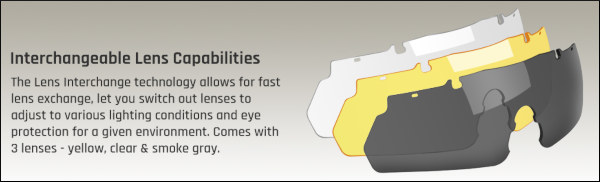
All shooters need quality eye protection when operating firearms. XAegis Tac Eyewear is a versatile and affordable option. These ANSI Z87+ rated shooting glasses come with three different interchangeable lenses (Clear, Yellow, Gray). You also get a transport case, lanyard, and cleaning cloth. Choose from three frame colors, each for $18.99: Black frame, Green Frame, or Khaki frame. For under $20 these are hard to beat. It’s nice to have the color lens options for different weather conditions, and indoors/outdoors.
As an Amazon affiliate, this site can earn revenues through sales commissions.
Berger Twist-Rate Stability Calculator
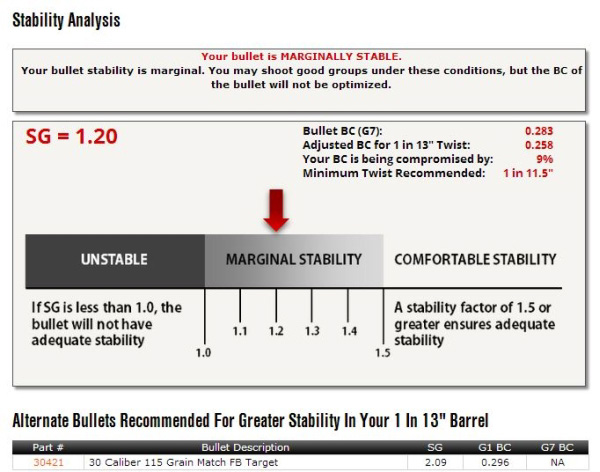
On the Berger Bullets website you’ll find a handy Twist-Rate Stability Calculator that predicts your gyroscopic stability factor (SG) based on mulitiple variables: velocity, bullet length, bullet weight, barrel twist rate, ambient temperature, and altitude. This cool tool tells you if your chosen bullet will really stabilize in your barrel.
How to Use Berger’s Twist Rate Calculator
Using the Twist Rate Calculator is simple. Just enter the bullet DIAMETER (e.g. .264), bullet WEIGHT (in grains), and bullet overall LENGTH (in inches). On its website, Berger conveniently provides this info for all its bullet types. For other brands, we suggest you weigh three examples of your chosen bullet, and also measure the length on three samples. Then use the average weight and length of the three. To calculate bullet stability, simply enter your bullet data (along with observed Muzzle Velocity, outside Temperature, and Altitude) and click “Calculate SG”. Try different twist rate numbers (and recalculate) until you get an SG value of 1.4 (or higher).
Gyroscopic Stability (SG) and Twist Rate
Berger’s Twist Rate Calculator provides a predicted stability value called “SG” (for “Gyroscopic Stability”). This indicates the Gyroscopic Stability applied to the bullet by spin. This number is derived from the basic equation: SG = (rigidity of the spinning mass)/(overturning aerodynamic torque).
If you have an SG under 1.0, your bullet is predicted not to stabilize. If you have between 1.0 and 1.1 SG, your bullet may or may not stabilize. If you have an SG greater than 1.1, your bullet should stabilize under optimal conditions, but stabilization might not be adequate when temperature, altitude, or other variables are less-than-optimal. That’s why Berger normally recommends at least 1.5 SG to get out of the “Marginal Stability” zone.
In his book Applied Ballistics For Long-Range Shooting, 3rd Ed., Bryan Litz (Berger Ballistician) recommends at least a 1.4 SG rating when selecting a barrel twist for a particular bullet. This gives you a safety margin for shooting under various conditions, such as higher or lower altitudes or temperatures.
Story idea from EdLongrange. We welcome reader submissions.
Guest Article By Michelle Gallagher, Berger Bullets
Let’s face it. In the world of firearms, there is something for everyone. Do you like to compete? Are you a hunter? Are you more of a shotgun shooter or rifle shooter? Do you enjoy running around between stages of a timed course, or does the thought of shooting one-hole groups appeal to you more? Even though many of us shoot several different firearms and disciplines, chances are very good that we all have a favorite. Are we spreading ourselves too thin by shooting different disciplines, or is it actually beneficial? I have found that participating in multiple disciplines can actually improve your performance. Every style of shooting is different; therefore, they each develop different skills that benefit each other.
How can cross-training in other disciplines help you? For example, I am most familiar with long-range prone shooting, so let’s start there. To be a successful long-range shooter, you must have a stable position, accurate ammunition, and good wind-reading skills. You can improve all of these areas through time and effort, but there are other ways to improve more efficiently. Spend some time practicing smallbore. Smallbore rifles and targets are much less forgiving when it comes to position and shot execution. Long-range targets are very large, so you can get away with accepting less than perfect shots. Shooting smallbore will make you focus more on shooting perfectly center shots every time. Another way to do this with your High Power rifle is to shoot on reduced targets at long ranges. This will also force you to accept nothing less than perfect. Shoot at an F-Class target with your iron sights. At 1000 yards, the X-Ring on a long range target is 10 inches; it is 5 inches on an F-Class target. Because of this, you will have to focus harder on sight alignment to hit a center shot. When you go back to the conventional target, you will be amazed at how large the ten ring looks.
Also, most prone rifles can be fitted with a bipod. Put a bipod and scope on your rifle, and shoot F-TR. Shooting with a scope and bipod eliminates position and eyesight factors, and will allow you to concentrate on learning how to more accurately read the wind. The smaller target will force you to be more aggressive on your wind calls. It will also help encourage you to use better loading techniques. Nothing is more frustrating than making a correct wind call on that tiny target, only to lose the point out the top or bottom due to inferior ammunition. If you put in the effort to shoot good scores on the F-Class target, you will be amazed how much easier the long-range target looks when you return to your sling and iron sights. By the same token, F-Class shooters sometimes prefer to shoot fast and chase the spotter. Shooting prone can help teach patience in choosing a wind condition to shoot in, and waiting for that condition to return if it changes.
Benchrest shooters are arguably among the most knowledgeable about reloading. If you want to learn better techniques about loading ammunition, you might want to spend some time at benchrest matches. You might not be in contention to win, but you will certainly learn a lot about reloading and gun handling. Shooting F-Open can also teach you these skills, as it is closely related to benchrest. Benchrest shooters may learn new wind-reading techniques by shooting mid- or long-range F-Class matches.
Position shooters can also improve their skills by shooting different disciplines. High Power Across-the-Course shooters benefit from shooting smallbore and air rifle. Again, these targets are very small, which will encourage competitors to be more critical of their shot placement. Hunters may benefit from shooting silhouette matches, which will give them practice when shooting standing with a scoped rifle. Tactical matches may also be good, as tactical matches involve improvising shots from various positions and distances. [Editor: Many tactical matches also involve hiking or moving from position to position — this can motivate a shooter to maintain a good level of general fitness.]
These are just a few ways that you can benefit from branching out into other shooting disciplines. Talk to the other shooters. There is a wealth of knowledge in every discipline, and the other shooters will be more than happy to share what they have learned. Try something new. You may be surprised what you get out of it. You will certainly learn new skills and improve the ones you already have. You might develop a deeper appreciation for the discipline you started off with, or you may just discover a new passion.
This article originally appeared in the Berger Blog. The Berger Blog contains the latest info on Berger products, along with informative articles on target shooting and hunting.
Applied Ballistics Founder Bryan Litz and Former USAMU and Team USA coach Emil Praslick III share their wisdom in an informative Guns Magazine Podcast. Along with being a true ballistics guru, Bryan Litz is an outstanding competitive shooter, having won F-TR National Championships, and both Sling and F-TR divisions at the Berger SW Nationals, along with many other matches. Emil is considered one of the world’s great wind-readers and team coaches, having coached 20+ championship teams.
Guns Magazine podcast host Brent Wheat asks Bryan and Emil about multiple topics including: exterior ballistics, bullet design, wind reading, ballistic solvers, BC myths, and more.
Brent reports: “Together, Bryan and Emil understand what happens from the time a bullet leaves the muzzle until it impacts the target, including the atmospheric affects along the way. Grab a pencil, listen in, and get ready to take notes.”
This Long Range Grad School podcast features Berger’s Chief Ballistician, Bryan Litz, and Berger’s Emil Praslick. Both have extensive long range competitive shooting experience, with championship titles (as shooter and/or coach) in a multitude of long range disciplines. CLICK arrow below to start podcast audio:
Emil Praslick (left) confers with Bryan Litz (right) at King of 2 Miles ELR Event.
In this Video Emil Praslick explains his methods for determining wind direction.
Bryan Litz coaching Team USA in Canada using a WIND PLOT.
Figure 1. When the bullet is seated farther out of the case, there is more volume available for powder. This enables the cartridge to generate higher muzzle velocity with the same pressure.
Effects Of Cartridge Over All Length (COAL) And Cartridge Base To Ogive (CBTO) – Part 1 by Bryan Litz forBerger Bullets.
Many shooters are not aware of the dramatic effects that bullet seating depth can have on the pressure and velocity generated by a rifle cartridge. Cartridge Overall Length (COAL) is also a variable that can be used to fine-tune accuracy. It’s also an important consideration for rifles that need to feed rounds through a magazine. In this article, we’ll explore the various effects of COAL, and what choices a shooter can make to maximize the effectiveness of their hand loads.
Sporting Arms and Ammunition Manufacturers’ Institute (SAAMI)
Most loading manuals (including the Berger Manual), present loading data according to SAAMI (Sporting Arms and Ammunition Manufacturers’ Institute) standards. SAAMI provides max pressure, COAL and many other specifications for commercial cartridges so that rifle makers, ammo makers, and hand loaders can standardize their products so they all work together. As we’ll see later in this article, these SAAMI standards are in many cases outdated and can dramatically restrict the performance potential of a cartridge.
Bullet seating depth is an important variable in the accuracy equation. In many cases, the SAAMI-specified COAL is shorter than what a hand loader wants to load their rounds to for accuracy purposes. In the case where a hand loader seats the bullets longer than SAAMI specified COAL, there are some internal ballistic effects that take place which are important to understand.
Effects of Seating Depth / COAL on Pressure and Velocity
The primary effect of loading a cartridge long is that it leaves more internal volume inside the cartridge. This extra internal volume has a well known effect; for a given powder charge, there will be less pressure and less velocity produced because of the extra empty space. Another way to look at this is you have to use more powder to achieve the same pressure and velocity when the bullet is seated out long. In fact, the extra powder you can add to a cartridge with the bullet seated long will allow you to achieve greater velocity at the same pressure than a cartridge with a bullet seated short.
When you think about it, it makes good sense. After all, when you seat the bullet out longer and leave more internal case volume for powder, you’re effectively making the cartridge into a bigger cartridge by increasing the size of the combustion chamber. Figure 1 illustrates the extra volume that’s available for powder when the bullet is seated out long.
Before concluding that it’s a good idea to start seating your bullets longer than SAAMI spec length, there are a few things to consider.
Geometry of a Chamber Throat
The chamber in a rifle will have a certain throat length which will dictate how long a bullet can be loaded. The throat is the forward portion of the chamber that has no rifling. The portion of the bullet’s bearing surface that projects out of the case occupies the throat (see Figure 2).
The length of the throat determines how much of the bullet can stick out of the case. When a cartridge is chambered and the bullet encounters the beginning of the rifling, known as the lands, it’s met with hard resistance. This COAL marks the maximum length that a bullet can be seated. When a bullet is seated out to contact the lands, its initial forward motion during ignition is immediately resisted by an engraving force.
Seating a bullet against the lands causes pressures to be elevated noticeably higher than if the bullet were seated just a few thousandths of an inch off the lands.
A very common practice in precision reloading is to establish the COAL for a bullet that’s seated to touch the lands. This is a reference length that the hand loader works from when searching for the optimal seating depth for precision. Many times, the best seating depth is with the bullet touching or very near the lands. However, in some rifles, the best seating depth might be 0.100″ or more off the lands. This is simply a variable the hand loader uses to tune the precision of a rifle.
This is one of the very best books ever published about Long Range shooting. Based on sophisticated testing and research, this 356-page hardcover from Applied Ballistics offers important insights you won’t find anywhere else. Modern Advancements in Long Range Shooting – Volume II, a major treatise from Bryan Litz, is chock full of information, much of it derived through sophisticated field testing. As Chief Ballistician for Berger Bullets (and a trained rocket scientist), author Bryan Litz is uniquely qualified. Bryan is also an ace sling shooter and a past F-TR National Champion. Moreover, Bryan’s company, Applied Ballistics, has been a leader in the Extreme Long Range (ELR) discipline.
AUDIO FILE: Bryan Litz Talks about Modern Advancements in Long Range Shooting, Volume 2. (Sound file loads when you click button).
Volume II of Modern Advancements in Long Range Shooting ($44.95) contains all-new content derived from research by Applied Ballistics. Author Bryan Litz along with contributing authors Nick Vitalbo and Cal Zant use the scientific method and careful testing to answer important questions faced by long range shooters. In particular, this volume explores the subject of bullet dispersion including group convergence. Advanced hand-loading subjects are covered such as: bullet pointing and trimming, powder measurement, flash hole deburring, neck tension, and fill ratio.
Each topic is explored with extensive live fire testing, and the resulting information helps to guide hand loaders in a deliberate path to success. The current bullet library of measured G1 and G7 ballistic coefficients is included as an appendix. This library currently has data on 533 bullets in common use by long range shooters.
Bryan tells us that one purpose of this book is to dispel myths and correct commonly-held misconceptions: “Modern Advancements in Long Range Shooting aims to end the misinformation which is so prevalent in long range shooting. By applying the scientific method and taking a Myth Buster approach, the state of the art is advanced….”
Bullet Dispersion and Group Convergence
Part 1 of this Volume is focused on the details of rifle bullet dispersion. Chapter 1 builds a discussion of dispersion and precision that every shooter will benefit from in terms of understanding how it impacts their particular shooting application. How many shots should you shoot in a group? What kind of 5-shot 100 yard groups correlate to average or winning precision levels in 1000 yard F-Class shooting?
Chapter 2 presents a very detailed investigation of the mysterious concept of group convergence, which is the common idea that some guns can shoot smaller (MOA) groups at longer ranges. This concept is thoroughly tested with extensive live fire, and the results answer a very important question that has baffled shooters for many generations.
Part 2 of this Volume is focused on various aspects of advanced hand-loading. Modern Advancements (Vol. II) employs live fire testing to answer the important questions that precision hand loaders are asking. What are the best ways to achieve MVs with low ES and SD? Do flash hole deburring, neck tension, primer selection, and fill ratio and powder scales sensitivity make a difference and how much? All of these questions are explored in detail with a clear explanation of test results.
One of the important chapters of Part 2 examines bullet pointing and trimming. Applied Ballistics tested 39 different bullet types from .224 through .338 caliber. Ten samples of each bullet were tested for BC in each of the following configurations: original out of the box, pointed, trimmed, pointed and trimmed. The effect on the average BC as well as the uniformity in BC was measured and tabulated, revealing what works best.
Part 3 covers a variety of general research topics. Contributing author Nick Vitalbo, a laser technology expert, tested 22 different laser rangefinders. Nick’s material on rangefinder performance is a landmark piece of work. Nick shows how shooters can determine the performance of a rangefinder under various lighting conditions, target sizes, and reflectivities.
Chapter 9 is a thorough analysis of rimfire ammunition. Ballistic Performance of Rifle Bullets, 2nd Edition presented live fire data on 95 different types of .22 rimfire ammunition, each tested in five different barrels having various lengths and twist rates. Where that book just presented the data, Chapter 9 of this book offers detailed analysis of all the test results and shows what properties of rimfire ammunition are favorable, and how the BCs, muzzle velocities and consistency of the ammo are affected by the different barrels.
Chapter 10 is a discussion of aerodynamic drag as it relates to ballistic trajectory modeling. You will learn from the ground up: what an aerodynamic drag model is, how it’s measure and used to predict trajectories. Analysis is presented which shows how the best trajectory models compare to actual measured drop in the real world.
Finally, contributing author Cal Zant of the Precision Rifle Blog presents a study of modern carbon fiber-wrapped barrels in Chapter 11. The science and technology of these modern rifle barrels is discussed, and then everything from point of impact shift to group sizes are compared for several samples of each type of barrel including standard steel barrels.
Powder Valley has added Norma products to its extensive inventory of ammunition, reloading components, tools, and shooting accessories. Powder Valley is now carrying Norma products for shooters and handloaders. Norma ammo and components are developed with the high quality raw materials and tight tolerances to ensure long life and accuracy.
About Norma Precision AB
Dedicated to outfitting shooting enthusiasts with quality products since 1902, Norma started out in a small Swedish town and is now a top global brand boasting more than 350 employees, most of whom are hunters, shooters, and reloaders themselves. For hunting and target shooting applications Norma manufactures many millions of rounds annually for 100+ different cartridge types.
VERY Informative Video Show Cartridge Brass and Ammunition Production:
Here’s a cool video showing how bullet, brass, and ammunition are produced at the Norma Precision AB factory. You can see how cartridges are made starting with brass disks, then formed into shape through a series of processes, including “hitting [the cup] with a 30-ton hammer”. After annealing (shown at 0:08″), samples from every batch of brass are analyzed (at multiple points along the case length) to check metal grain structure and hardness. Before packing, each case is visually inspected by a human being (3:27″ time-mark). The video also shows how bullets are made from jackets and lead cores. Finally, you can watch the loading machines that fill cases with powder, seat the bullets, and then transport the loaded rounds to the packing system.
12 Days Of Christmas Contest at Powder Valley
Beginning Monday, December 4, 2023, Powder Valley has been running a major give-away contest, with prize products from a different maker each day. Today, 12/6/23, Berry’s Bullets are the Prize. And, TAKE NOTE readers, tomorrow 12/7/2023 Lapua, Berger, and Vihtavuori products are the Daily Contest Prize. If you need Lapua Brass, Berger Bullets, or VV powder, be sure to enter before end of day 12/7/2023. The 12 prizes vary by day and by value. Each day’s prize will be posted on Facebook and Instagram. WINNER SELECTION: A random drawing will be conducted the following day by Sponsor or its designated representatives. The Sweepstakes began on 12/4/23 and ends on 12/15/23.
About Powder Valley Powder Valley began in 1984 as Dexter Automotive, the first master distributor of Accurate powder. In 2000, Bryan and Noel Richardson purchased the company and moved operations to Winfield, Kansas with a focus on providing the finest in reloading components at the best possible price. Powder Valley expanded its vision to offer every type of powder and primer available so reloaders would have a single shopping source. Since then, Powder Valley has grown into the largest distributor of canister powder in the United States and currently carries an ever-expanding offering of high-quality bullets, brass, wads, shot, gun care items, and ammunition at an excellent value.
We congratulate John Masek (F-Open) and Keith Trapp (F-TR), the 2023 NRA F-Class Mid-Range National Champions. The Mid-Range Nationals were held at the Ben Avery Range outside Phoenix, Arizona, and the F-Class Long Range Nationals continue November 2 through November 5, 2023. Keith’s 2023 Mid-Range title was his second big win in a row — Keith won the Long-Range F-TR Championship in 2022.
2023 F-Class Mid-Range National Champions Keith Trapp (L) and John Masek (R).
We were particularly pleased to see our colleague John Masek earn this major victory. John helps AccurateShooter.com with product tests/reviews, and John works on our Deals of the Week features. John also has a popular F-Class John YouTube Channel with videos we frequently feature. And you can see John’s content on his new website FClassJohn.com. CLICK HERE to access John’s videos and product tests.
John Masek Wins His First Nationals
John finished with a very impressive 1774-95X score, followed by Jason Simes (1772-84X) and Norm Harrold (1768-99X). John shot very well in difficult, windy conditions, finishing with not just the highest Grand Aggregate score, but the second highest X-Count (after Norm Harrold). This is a big win for John, his first-ever National title. No one has worked harder to raise his game through advanced reloading processes and lots of practice both with centerfire and rimfire rifles.
Forum member and fellow F-Class competitor David Joe praised John’s performance: “Hey John, great wind calling this week, congratulations! Who needs Long-Range with wind like that. What a close and hard won contest! Great scores today!”
In the F-TR Division, Keith Trapp took top honors with a 1776-87X score, followed by Tracy Hogg (1767-70X), and James Crofts (1762-67X). Keith, a proven F-TR superstar, also won the F-TR 1000-yard Nationals at Ben Avery in 2022.
Here’s an insightful interview with John Masek and fellow F-Open ace and YouTube host Erik Cortina:
And here is a video F-Class John produced at last year’s Long-Range (1000-yard) F-Class Championship. This was also held at the Ben Avery Range in Arizona.
Destiny Fulfilled: Before John left his Oregon home for the 2023 F-Class Nationals, this Editor spoke to John on the telephone. I said “Good luck John, I think you’re due to stand on the podium and hold a trophy.” That prediction proved prophetic. We are glad to see our friend and colleague John Masek now hold the title of NRA F-Class Open Mid-Range National Champion!
Shown above is John’s 7 PRCW F-Open Rifle. This features a Borden BRMXD action, X-Ring stock, and Flavio Fare trigger. On top is the 8-80x56mm March Majesta scope, a very advanced new optic. The rifle is chambered for the 7mm PRCW cartridge. John loads with Lapua brass, Vihtavuori N555 powder, and Berger 180gr Hybrid bullets.


 Effects Of Cartridge Over All Length (COAL) And Cartridge Base To Ogive (CBTO) – Part 2

 The better, up-to-date ballistics programs let you select either G1 or G7 Ballistic Coefficient (BC) values when calculating a trajectory. The ballistic coefficient (BC) of a body is a measure of its ability to overcome air resistance in flight. You’ve probably seen that G7 values are numerically lower than G1 values for the same bullet (typically). But that doesn’t mean you should select a G1 value simply because it is higher.
 Drag Models — G7 is better than G1 for Long-Range Bullets






 Position shooters can also improve their skills by shooting different disciplines. High Power Across-the-Course shooters benefit from shooting smallbore and air rifle. Again, these targets are very small, which will encourage competitors to be more critical of their shot placement. Hunters may benefit from shooting silhouette matches, which will give them practice when shooting standing with a scoped rifle. Tactical matches may also be good, as tactical matches involve improvising shots from various positions and distances. [Editor: Many tactical matches also involve hiking or moving from position to position — this can motivate a shooter to maintain a good level of general fitness.]


 Part 2 of this Volume is focused on various aspects of advanced hand-loading. Modern Advancements (Vol. II) employs live fire testing to answer the important questions that precision hand loaders are asking. What are the best ways to achieve MVs with low ES and SD? Do flash hole deburring, neck tension, primer selection, and fill ratio and powder scales sensitivity make a difference and how much? All of these questions are explored in detail with a clear explanation of test results.
 Here’s a cool video showing how bullet, brass, and ammunition are produced at the


 John Masek Wins His First Nationals


