|
|
April 4th, 2014
Here’s a way you can support competitive shooting, while getting a tax deduction. Donations to the NRA Competitive Shooting & National Championships Endowment can be tax-deductible. Started in 2007 by then NRA President John Siegler, the Endowment provides direct funding for shooting programs, including the NRA National matches at Camp Perry. This is a permanent Endowment, with investment income channeled to shooting programs.
According to the NRABlog: “Donations go right into the fund and stay there. They are never touched. 85% of the earnings (or interest) generated by the fund are dispersed to the Competitive Shooting Division for their yearly budget. The other 15% goes back into the principal. By never touching the principal, and reinvesting a portion of the earnings, the endowment will always grow. Simple as that.”

You can contribute in one of two ways — as a gift or as a tax-deductible donation. No matter what path you choose, the money still goes towards the overall cost of running the competitions. To make a contribution to the fund, download the Competitive Shooting & National Championships Endowment flyer, fill out the form and send it to:
NRA Treasurer’s Officer
11250 Waples Mill Road
Fairfax, Virginia 22030
“Once [the Endowment] is big enough, it could pay for all of competitive shooting. That’s something every competitor would benefit from.” — Dennis Willing, NRA Competitive Shooting Director.
February 19th, 2014
The 2014 National Matches Program Calendar has just been released. CLICK HERE for Calendar PDF.

The National Matches were first held in 1903, moved to Camp Perry, Ohio, in 1907 and continue to take place every summer at Camp Perry. The National Matches have become a huge, national shooting sports festival with well over 6,000 annual participants.

The National Matches include the CMP National Trophy Rifle and Pistol Matches, the Pistol and Rifle Small Arms Firing Schools, CMP Games rifle events, and the NRA National Pistol Championships, High Power Rifle Championships, Long Range High Power Championships, and Smallbore Championships. NOTE: For the next two (2) years, the Smallbore Championships will be held at the Chief Wa-Ke-De Range in Bristol, Indiana instead of Camp Perry, Ohio.
February 17th, 2014
 Online registration is officially open for the 2014 NRA National Matches. Each summer, at the NRA National Rifle & Pistol Championships, the nation’s finest civilian and military marksmen and women square off for weeks of rifle and handgun competition. From pistol, to smallbore rifle, high power rifle, and long range high power rifle (including F-Class), the national matches have something for just about every serious shooter. Online registration is officially open for the 2014 NRA National Matches. Each summer, at the NRA National Rifle & Pistol Championships, the nation’s finest civilian and military marksmen and women square off for weeks of rifle and handgun competition. From pistol, to smallbore rifle, high power rifle, and long range high power rifle (including F-Class), the national matches have something for just about every serious shooter.
As usual, the pistol, High Power, and High Power Long Range Championships will be held at Camp Perry, Ohio, on the shores of Lake Erie. However, for 2014 and 2015, the NRA National Smallbore Position Championships and Smallbore Prone Championships will be held at the Chief Wa-Ke-De Range in Bristol, Indiana, this year and next. The smallbore championship venue is being shifted to accommodate the 2015 World Palma Rifle Championships at Camp Perry. (The World Palma teams will arrive this summer to do a practice run for next year.)
Head on over to the Camp Perry Sign-up Page and get started on this year’s application.

NRA Also Seeks Target Pullers for Nat’l Matches — $75/day plus housing
The NRA is seeking experienced persons to pull targets during the 2014 National Fullbore Championships, August 4 – 10, 2014, at Camp Perry, Ohio. Accepted applicants will receive a $75 per day pay rate and free housing. Candidates must have 2+ years of target pulling of high-power scoring experience to apply. Interested parties should apply before the May 1, 2014 deadline using the form linked below. For more information, email comphelp @ nrahq.org.
CLICK HERE for Target Puller Job Application (PDF).
January 15th, 2014
 It’s a rare thing when you can talk with a living legend about the sport he loves. We had just that opportunity yesterday at SHOT Show when we chatted with Carl Bernosky, TEN-TIME National High Power Champion. We covered a lot of ground in the interview, discussing the future of the High Power game and the changes in hardware Carl has seen during his storied career. Carl also offers some “rock solid” advice for younger High Power shooters hoping to improve their skill sets. We also talked about Carl’s plans for 2014 and his epic battle with SSG Brandon Green at the 2013 High Power Championships at Camp Perry. Carl and Brandon battled to the last shot of the last relay of the last day. After four complete days of shooting, the two men remained tied on points and tied on X-count. Apply a tie-breaker rule based on X-count at long-range, Green was named the 2013 Champion, with Carl named runner-up. That 2013 event was a true “Battle of the Titans” between two immensely talented marksmen. It’s a rare thing when you can talk with a living legend about the sport he loves. We had just that opportunity yesterday at SHOT Show when we chatted with Carl Bernosky, TEN-TIME National High Power Champion. We covered a lot of ground in the interview, discussing the future of the High Power game and the changes in hardware Carl has seen during his storied career. Carl also offers some “rock solid” advice for younger High Power shooters hoping to improve their skill sets. We also talked about Carl’s plans for 2014 and his epic battle with SSG Brandon Green at the 2013 High Power Championships at Camp Perry. Carl and Brandon battled to the last shot of the last relay of the last day. After four complete days of shooting, the two men remained tied on points and tied on X-count. Apply a tie-breaker rule based on X-count at long-range, Green was named the 2013 Champion, with Carl named runner-up. That 2013 event was a true “Battle of the Titans” between two immensely talented marksmen.
We asked Carl about trends in the High Power game. He said that more and more shooters are moving to the AR15 platform. The accuracy is there, and there are advantages to the self-loading actions particularly during rapid-fire. Carl also felt that it takes more training time to master cycling a bolt while shooting in the standing position. Because he does not have to manipulate a bolt, Carl says his self-feeding AR helps him when standing (Carl is considered one of the best standing shooters ever).
Watch Interview with Carl Bernosky, 10-Time National High Power Champion
Though most readers will recognize Carl from reports of his many National Championships, you may not realize that Carl is also a very skilled stock-maker. Carl produces high quality laminated-wood stocks at his shop in Pennsylvania. He offers a full range of stocks for Prone, Palma, F-TR, F-Open, Long Range Benchrest competition, and he also builds fine tactical stocks and hunting stocks. You can see examples of Carl’s stocks at CarlBernosky.com. Carl recently acquired a CNC machine for inletting. This can create ultra-precise inlets for a wide variety of actions.
December 23rd, 2013
Massachusetts smallbore shooter Dan Holmes, well-known match shooter and gun writer Hap Rocketto, and Erik Hoskins have developed a great dedicated website for competitive small-bore and air rifle shooters. Over the past few years, Pronematch.com has delivered quality content, including match reports, shooting tips, rule changes/updates, tech reports, and a calendar of events.

 Pronematch.com also has a “human interest” feature, called the “Shooter Spotlights”. Holmes and his staff have interviewed dozens of shooters. Each marksman answers a few questions about his/her background in shooting, shooting techniques, match strategies, and personal items (such as “What is your favorite pre-match meal?). Pronematch.com also has a “human interest” feature, called the “Shooter Spotlights”. Holmes and his staff have interviewed dozens of shooters. Each marksman answers a few questions about his/her background in shooting, shooting techniques, match strategies, and personal items (such as “What is your favorite pre-match meal?).
The “Shooter Spotlights” let you “tap into” the wisdom of some of the county’s best shooters. Many of those interviewed offer some great tips, or they share fascinating anecdotes about the shooting sports.
We recommend you visit Pronematch.com, if nothing else to peruse the profiles, check the upcoming matches and read the popular “Hap’s Corner” stories. Hap is a talented writer who has provided plenty of content to ProneMatch.com. As just one example, Hap has written a fascinating Short History of Camp Perry and The National Championships.
December 18th, 2013
Report based on Lars Dalseide story in NRAblog
 If you watched the position and prone shooters at the 2012 London Olympic Games, you couldn’t help but notice the exotic rifles competitors were shooting. There were wood stocks, metal stocks, off the shelf rifles and customized specials. Why are there are so many different design features and stock types? To answer this question, the NRAblog’s editors called on Jessie McClain of the NRA Competitive Shooting Division. If you watched the position and prone shooters at the 2012 London Olympic Games, you couldn’t help but notice the exotic rifles competitors were shooting. There were wood stocks, metal stocks, off the shelf rifles and customized specials. Why are there are so many different design features and stock types? To answer this question, the NRAblog’s editors called on Jessie McClain of the NRA Competitive Shooting Division.
“The customized rifles, like the Anschütz you showed me, can make a real difference in a shooter’s performance,” explained McClain. “I went from a decent shooter to making the varsity shooting team my freshman year because of the rifle.” As Jessie explained, one new feature out there is the adjustable stock, which she called the Porsche of the shooting world. Fully adjustable from the butt plate to the check piece to the hand stop and risers and bolt knobs, this component is fully customizable to the athlete … which can be a huge advantage. “Every person is different … a customizable rifle fits anyone. A rifle team can purchase four of these and field a shooting team for years.”
Not for Novices
The one warning she did have is that these are not for the novice shooter. Get a couple of years of shooting under your belt and then think about moving on to a customized rifle. That way, you can learn the basics before investing in the high dollar equipment. “You wouldn’t give your 16 year old a Ferrari for his first car, would you?”
The Modern Anschütz Position Rifle
Smallbore match rifle makers are using modern materials in response to the need for greater adjustability (and enhanced accuracy). One of the popular new designs is the Anschütz model 1913 position rifle with a “1918 ALU Precise” brushed aluminum stock. This looks like it has been crafted in an aircraft plant.


Story by Lars Dalseide, courtesy the NRA Blog.
November 7th, 2013
The National Rifle Association celebrates its 142nd birthday this month. First chartered in New York state in November, 1871, the NRA was originally created to train citizens in marksmanship. Here’s an interesting account of the history of the NRA in the late 18th and early 20th century:
How the NRA Got Started in the 1870s
Dismayed by the lack of marksmanship shown by their troops, Union veterans Col. William C. Church and Gen. George Wingate formed the National Rifle Association in 1871. The primary goal of the association would be to “promote and encourage rifle shooting on a scientific basis,” according to a magazine editorial written by Church.
After being granted a charter by the state of New York on November 17, 1871, the NRA was founded. Civil War Gen. Ambrose Burnside, who was also the former governor of Rhode Island and a U.S. Senator, became the fledgling NRA’s first president.
 An important facet of the NRA’s creation was the development of a practice ground. In 1872, with financial help from New York state, a site on Long Island, the Creed Farm, was purchased for the purpose of building a rifle range. Named Creedmoor, the range opened a year later, and it was there that the first annual matches were held. An important facet of the NRA’s creation was the development of a practice ground. In 1872, with financial help from New York state, a site on Long Island, the Creed Farm, was purchased for the purpose of building a rifle range. Named Creedmoor, the range opened a year later, and it was there that the first annual matches were held.
Political opposition to the promotion of marksmanship in New York forced the NRA to find a new home for its range. In 1892, Creedmoor was deeded back to the state and NRA’s matches moved to Sea Girt, New Jersey.
The NRA’s interest in promoting the shooting sports among America’s youth began in 1903 when NRA Secretary Albert S. Jones urged the establishment of rifle clubs at all major colleges, universities and military academies. In February 1903, an amendment to the War Department Appropriations Bill established the National Board for the Promotion of Rifle Practice (NBPRP). This government advisory board became the predecessor to today’s Corporation for the Promotion of Rifle Practice and Firearms Safety, Inc. that now governs the CMP. The 1903 legislation also established the National Matches, commissioned the National Trophy and provided funding to support the Matches. By 1906, NRA’s youth program was in full swing with more than 200 boys competing in matches at Sea Girt that summer.
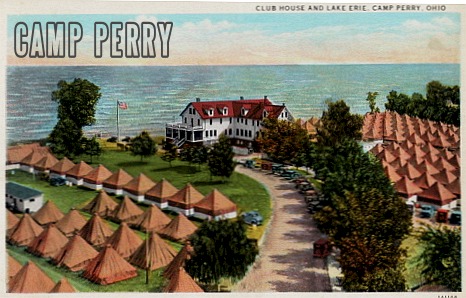
Camp Perry Site Acquired in 1906
Due to the overwhelming growth of NRA’s shooting programs, a new range was needed. Gen. Ammon B. Crichfield, Adjutant General of Ohio, had begun construction of a new shooting facility on the shores of Lake Erie, 45 miles east of Toledo, Ohio. The original land for Camp Perry was purchased in 1906, and the reservation was named after Commodore Oliver Hazard Perry, the American naval commander who won the Battle of Put-in-Bay during the War of 1812.

On August 19, 1907, Cpl. L. B. Jarrett fired the first shot at the new Camp Perry Training Site. And that year, 1907, Camp Perry held its first National Pistol and Rifle Championship events. This location has hosted the annual NRA National Matches ever since. Today, over 4,000 competitors attend the National Matches, making it the most popular shooting competition in the western hemisphere.
October 25th, 2013
 We expect you’ve heard of David Tubb, 11-time NRA National High Power Champion. Without question, David is one of the greatest rifle shooters who ever lived. What you may not know is that David came from a family of shooters. David’s father, George Tubb, was a nationally-ranked High Power competitor. What’s more (now this may surprise you), David’s mother “Polly” was was a great shooter in her own right. When she wasn’t rearing a future Champion, Polly was hitting the X-Ring at rifle matches. We expect you’ve heard of David Tubb, 11-time NRA National High Power Champion. Without question, David is one of the greatest rifle shooters who ever lived. What you may not know is that David came from a family of shooters. David’s father, George Tubb, was a nationally-ranked High Power competitor. What’s more (now this may surprise you), David’s mother “Polly” was was a great shooter in her own right. When she wasn’t rearing a future Champion, Polly was hitting the X-Ring at rifle matches.
Pauline (“Polly”) S. Tubb of Canadian, Texas, earned several rifle championships during the course of her shooting career. In this photo, Polly took a moment to appear for a photo after winning the 1962 National Woman’s Bolt Rifle championship at Camp Perry. One shooter who competed against Polly observed: “I was there as a 1962 Pennsylvania State Team junior! I remember Polly. She beat some of the best Army and Marine shooters and always did it with style and good humor.”
Now that’s our kind of gal. God Bless you Polly. Thanks for being a Leading Lady of our sport.

Archive photo courtesy Civilian Marksmanship Program, TheCMP.org.
October 21st, 2013
Here’s a feel-good story about a talented young shooter.
Article based on report by Lars Dalseide, for NRA Blog.

Finding the X-Ring while taking part in NRA’s National Rifle and Pistol Championships can be challenging enough. Finding the X-Ring from three positions during the smallbore rifle phase of the championships can be even more trying. But Amy Fister, winner of this year’s NRA 3-Position Rifle High Woman title, found it with no trouble at all. A surprising result given her wry self-description.
“I’m a nerd,” she said with a laugh. “I’m very dedicated to my studies.”
Based out of Kutztown, Pennsylvania, Fister walked away from the 3-Position Awards Ceremony with three titles: High Woman with Metallic Sights, High Civilian with Metallic Sights, and High Woman Overall. Fister finished with a score of 2374 – 140X (good for 7th overall). “Last year I was close but not close enough,” said Fister. “I guess this year it was my time.” Seeing her on stage, winning award after award, it’s hard to believe that it almost didn’t happen — she nearly fell victim to the summer heat at Camp Perry.
Fighting Dehydration at Camp Perry
About halfway through the National Championship match, Fister was setting up targets when she realized something was wrong: “I was delusional, seeing things,” Fister explained. “After setting up my target, it wasn’t there. I started chasing down the target guy for another one. It was an interesting and a little bit scary of an experience.”
She was dehydrated. Heartbeat rapid, extremely lethargic, unsteady on her feet — she recognized the signs and started back for the line. Pulling a bottle of Gatorade out of her bag, she gulped until it emptied. Feeling a touch steadier, she made for the water coolers behind the line. A few cups later and she was ready to proceed. “Luckily it happened during prone,” she said with a laugh. “Standing would have been a different story.”
How a Nerd Became a World-Class Rifle Shooter
Starting as far back as she can remember, Fister was out shooting with her dad. First as the official gear porter, then as a huntress. “Deer and goose, that’s what we went for,” she said. “I go out deer hunting whenever I can, but it cuts into my shooting time. You’ve got to find a happy medium.”
 Though it was dad who first put a rifle in her hand, it was her sister Valerie who started her down the competitive trail. Like most stories of sibling rivalry, big sister joined the rifle team so little sister (Amy) wanted to also. A little practice, a little patience, and it all came together — so well in fact that Amy has earned a shooting scholarship to the University of Memphis. But her ambitions don’t stop there. They reach as far as Rio de Janeiro, site of the 2016 Olympics. Though it was dad who first put a rifle in her hand, it was her sister Valerie who started her down the competitive trail. Like most stories of sibling rivalry, big sister joined the rifle team so little sister (Amy) wanted to also. A little practice, a little patience, and it all came together — so well in fact that Amy has earned a shooting scholarship to the University of Memphis. But her ambitions don’t stop there. They reach as far as Rio de Janeiro, site of the 2016 Olympics.
“I missed a spot on the U.S. Team by two points. Now the goal is to be part of the Olympic Rifle Team in 2016. Problem is that I don’t want my scores to drop and I don’t want my grades to drop.
“My goal is to become a pediatrician and an Olympian. Guess I’ll just find a way.”
To learn more about the NRA’s Competitive Shooting Programs, visit compete.nra.org.
August 13th, 2013
 SSG Ty (Tyrel) Cooper of the USAMU won the 2013 NRA National High Power Rifle Long Range Championships with a final score of 1243-71X. Ty grabbed the lead from fellow USAMU shooter Shane Barnhart on the final day of competition, shooting superbly to take the Long Range title. Also moving up in the standings today was SSG Brandon Green, who won the NRA High Power Championships last week. Green was a close second. Though both soldiers finished with a total score of 1243 points, Cooper’s X count topped Green’s by seven (71 to 64). On his Facebook page, Green praised his USAMU team-mate: “Congrats to Ty Cooper, he is the 2013 Long Range National Champion! And I’m the first loser! … Stupid Xs.” (Photo courtesy NRA Blog.) SSG Ty (Tyrel) Cooper of the USAMU won the 2013 NRA National High Power Rifle Long Range Championships with a final score of 1243-71X. Ty grabbed the lead from fellow USAMU shooter Shane Barnhart on the final day of competition, shooting superbly to take the Long Range title. Also moving up in the standings today was SSG Brandon Green, who won the NRA High Power Championships last week. Green was a close second. Though both soldiers finished with a total score of 1243 points, Cooper’s X count topped Green’s by seven (71 to 64). On his Facebook page, Green praised his USAMU team-mate: “Congrats to Ty Cooper, he is the 2013 Long Range National Champion! And I’m the first loser! … Stupid Xs.” (Photo courtesy NRA Blog.)
Below is a file photo of SSG Ty Cooper at 2012 High Power Championship. In the Long Range Championships, Cooper used a Nesika-actioned bolt gun with long barrel chambered in 7mm SAUM.

NRA Blog editor Lars Dalseide interviewed Ty Cooper shortly after he won the 2013 Long Range title. “It’s a long time coming,” said Cooper with a smile. “Years of shooting and now here it is. It’s overdue — that much is true.”
Cooper edged out USAMU teammate Brandon Keith Green for the win by seven Xs, after four days of long-range competition. “You don’t get much closer than that,” said Russ, a competitor from Georgia. “Winning by an X count. Boy that is something.”
Rounding out the top five in the overall Long Range Championships are Bob Gustin with 1239-76X, Shirley Mcgee with a 1238-65X, and Eric Smith with a 1236-55X.
Complete Results from the Long Range Championships will be posted on the NRA Competitive Shooting Championships Results Webpage later today.
|


