This image is from multi-time Nat’l Long Range Champion Nancy Tompkins, author of Prone and Long Range Rifle Shooting. Nancy loves to photograph the Aurora Borealis.
As a Christmas present for our readers, today we showcase eight very informative videos from AccurateShooter Forum member F-Class John. A talented F-Class competitor with a smart, technically-focused mind, John has created a series of videos about reloading and precision loading tools, along with rifle and shooting accessories. Many of John’s product reviews are the most thorough and detailed you’ll find in video format. You’ll find over 120 informative videos on F-Class John’s popular YouTube Channel.
21st Century Hydro Press and Arbor Press — Product Review
Many of the world’s top benchrest, long-range, and F-Class shooters prefer to seat their bullets using arbor-type presses with inline dies. This allows smooth, repeatable bullet-seating with very low run-out. One of the very best arbor-type seating presses ever created is the 21st Century Hydro Press. This offers plenty of leverage driving a precision ram. The Hydro Press also features a hydraulic line to drive a precision seating force gauge. Along with the Hydro Press, John tests 21st Century’s standard arbor press.
Cartridge Case Separation — Tell-Tale Warning Signs
If you reload and haven’t experienced a case separation yet then you are fortunate. It’s a fact of life in the shooting world. A bad case separation can have very unfortunate consequences. Therefore you need to watch for warning signs on your cartridge brass, so you stay safe. The video above shows what to look for — and how to recognize signs of incipient separation. One important factor leading to case head separation is improper head-spacing causing growth. To learn more about case head separation watch F-Class John’s follow-up video Case Head Separation Causes, identification and prevention.
Accuracy One Concentricity Gauge — Product review
Every person who makes precision hand-loads should have a quality concentricity gauge to measure run-out of case-necks and loaded rounds. Here John tests one of the best such tools on the market, the Accuracy One Concentricity Gauge. This measures the internal and external neck runout of cartridge cases as well as seated bullet runout. It can also measure the runout of the ogive, bearing surface, and boat-tail of individual bullets and can even measure primer pocket runout. John notes: “I think most precision shooters should have one of these to make sure their ammo is within their specs they’re happy with.”
How to Use a Barrel Tuner to Improve Accuracy and Repeatability
In this video, John works with a barrel tuner created by Erik Cortina, a member of Team Lapua/Brux/Borden. A tuner can be useful in modulating barrel vibrations and that can translate to smaller groups on target. Sometimes the positive effects are quite noticeable. Tuners have been popular with short-range benchresters for many years and now they are becoming more common on top F-Class and Long Range rifles.
John says: “I’ve been using Erik’s E.C. Tuner for a while now and I really like what it’s done to help as my final step in load development. Just remember, a tuner is a tool, not a magician. You still need good load development practices, good brass prep, and solid skills but the tuner does help make great loads even better.”
Teslong Rigid 26″ Borescope with 4.5″ Monitor — Product Review
There are a variety of affordable Teslong digital borescopes for inspecting your barrels and diagnosing issues. All Teslongs deliver impressively sharp images/video. Some units plug into a laptop or tablet, while others work via a dongle to communicate wirelessly. Here John tests a 26″ rigid model borescope that comes complete with its own 4.5″ viewing screen. Priced at $129.99 on Amazon, this system is completely self-contained — you don’t need a laptop or smartphone. You don’t have to worry about connections and there are no Apps to install or configure. John says: “Teslong now offers a 26″ rigid rod model with a 4.5″ monitor. This allows you to use the unit without the need for any mobile device or computer.”
Dillon 550 vs. Dillon 750 for Precision Reloading — Pros and Cons
Progressive presses are not just for bulk reloading these days. Many top shooters, including 5-time National Long Range Champion John Whidden, use Dillon progressive presses to complete many cartridge loading operations more efficiently. Even in the F-Class world, Top Guns such as Erik Cortina have found ways to use Dillon progressives for bullet pointing, case prep and other repetitious tasks, even if a precision arbor press is used for final bullet seating. In this video, F-Class John compares two Dillon options: “If you’re deciding between a Dillon 550 or 750/650 reloading press for precision reloading, here are some pros and cons of each. Both are capable of producing high quality ammunition but each has their own quirks so knowing your capabilities and loading style is important when choosing one over the other.
AutoTrickler V3 — General Set-Up and Operational Advice
In this video, John offers some general advice for setting-up the AutoTrickler system. He notes that you want to set the initial drop weight (from the powder measure) in an optimal range: “When you set the original drop you need it to be about 1 to 1.5 grains below. Some people set it too close to the final weight they want and it actually doesn’t let the trickler unit work as efficiently, consistently and accurately as it will if you start 1 to 1.5 grains low.” John also explains how to hook up the cords and how to position the trickler unit. John places his AutoTrickler on a 30-lb piece of granite, with a thin polymer “anti-static” pad on top. John also uses a line conditioner and grounding wire to provide the best electrical flow to the scale and trickler. John also shows how the angle of the trickler unit can be adjusted. If you own an AutoTrickler or plan to purchase one, we definitely recommend you watch this entire video.
ShotMarker Power-User Tip — How to Test Unit without Shooting
The ShotMarker is an advanced system that plots shot location using electronic sensors mounted on a frame. ShotMarker arrays are now used in many competitions because they are reliable, precise, and much more affordable than competing systems. Invented by Canadian Adam MacDonald, the ShotMarker plots bullet entry on target using sensors activated by the bullet’s soundwaves. Using 8 high precision MEMS microphones placed in the corners of your frame, ShotMarker precisely measures the point of impact and down-range velocity of each shot, so that you can analyze your groups and shoot for score in competition. In this video, John shows how you can quickly and easily test your ShotMarker before deploying it at the range: “Here’s a quick and simple way to ensure your system is working 100% before taking a shot on it.”
Bryan Blake, a very clever machinist and gunsmith, has created an ultra-precise and speedy neck-turning machine. Bryan, who runs Blake Machine, Blake Barrel, and F-Class Products has created a system that uses twin precision cutter tips to turn case necks inside and out quickly and efficiently, with superior precision. This advanced IDOD Neck Turning Machine holds cases securely in a precision-machined spindle attached to an electric motor. Twin blades move precisely during the cutting process, milling the necks inside and out. The turned necks come out perfect every time, with the shoulders trimmed exactly (with doughnut removed) as well. If you turn hundreds of cases during a shooting season, you may want to consider getting an IDOD from F-Class Products. Bryan was able to turn 30 cases in just 6 minutes. And there is an even more advanced version, called the AUTODOD, shown in the last video below.
Our friend Erik Cortina recently visited Bryan Blake in Phoenix. Erik saw the IDOD in action and was impressed. Erik notes: “For a very long time, we have been turning brass the exact same way. Use a mandrel as a pilot and have a cutter with a specified gap go around the perimeter and turn the necks to specified thickness. The IDOD uses a technique called ‘pinch turning’ to turn the ID and the OD (IDOD) at the same time.” You can watch how it works in Erik’s video below (action starts at 7:55 time-mark):
The secret to the efficiency of the Blake IDOD is a vibration-free motor, high-mass case-holder, precision OD/ID-adjustable cutter, along with an advanced tracking system that moves the cutter heads towards the case neck (and back again) with absolute, 100% repeatable precision. Watch the video from 8:30 to 10:10 to see Bryan explain how to adjust the system for a perfect result.
This shows how to set up the IDOD Neck-turning machine for a particular cartridge type:
This video shows a close-up of a neck being with perfect neck-wall consistency:
This latest video from Blake Machine shows the new AUTODOD machine with power controls. This speeds up and simplifies neck-turning process.
Here’s the super-speedy way to turn case-necks. Our friend Erik Cortina figured out how to turn his match cartridge case-necks using his milling machine. Erik told us: “While in Raton [a while back], Mid Tompkins told me that he turns his brass on milling machine. He said he could do about 500 in two hours, so I decided to try it.”
Erik fitted a Don Nielson “Pumpkin” neck-turner to the mill, and he used a modified 21st Century case holder to secure the brass. As you can see from this video, Erik was very successful with the process. The tool spins at 1500 rpm, turning Lapua 6.5-284 cases that have been necked up to 7mm.
Video Shows Eric Cortina Neck-Turning Cases with Milling Machine:
Cartridge Brass: Lapua 6.5-284 necked up to 7mm
Lubricant: Lithium grease inside and outside of neck
Neck-Turner: Nielson Pumpkin running at 1500 RPM
It’s hard to argue with Erik’s results. Here are his turned Lapua cases, which have neck-wall thickness consistent to two ten-thousandths of an inch. Think you could do better turning manually?
Some of Erik’s Facebook friends had questions about this process:
Q: Who makes the shell-holder?
Erik Cortina: I did! The shell-holder you can get from 21st Century. I Tig-welded a punch as a handle.
Q: I love the idea of working smarter not harder! Any galling issues? What are your mitigation techniques?
Erik Cortina: No issues. I use lithium grease in spray can. Makes a foam that I dip necks into.
Q: Shouldn’t either the case or the cutter be floating to allow most precise neck turning?
Erik Cortina: Up until [I tried this] I believed the same thing. I was going to build a floating case holder but decided to try rigid setup on a few cases before I built it. Results were great. Neck thickness doesn’t vary more than .0002″, which is same as when I was doing it with floating case holder on the lathe.
Q: Any problems with the Pumpkin changing the cut as it heats up?
Erik Cortina: No — there were no issues with that.
NOTE: Erik Cortina is a very skilled machinist who custom-crafted fittings used for this process. This kind of neck-turning with a milling machine may not be for the everyday hand-loader!
Nielson “Pumpkin” Neck-Turner
The circular orange cutting fixture on Erik’s Milling Machine is a Don Nielson “Pumpkin” neck-turning tool. Don designed this tool to be used by hand or with power. The Pumpkin boasts an eccentric mandrel that allows the cut to be adjusted easily in precise .0001″ increments. Benchresters like this as it allows for very precise control of cut depth and neck-wall thickness.
Nielson Neck Turner with carbide mandrel. Photo Courtesy Butch’s Reloading.
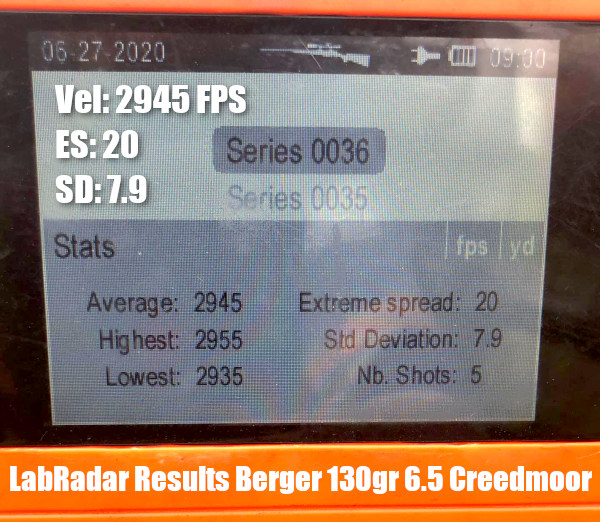
Is factory 6.5 Creedmoor ammunition good enough to win a PRS or NRL competition? The answer is a resounding “YES” if we’re talking about Berger ammunition. Produced with Berger match bullets and premium Lapua brass, this Berger 6.5 ammunition demonstrated excellent accuracy, impressive velocity, and very good ES/SD numbers. When tested at 1000 yards with an MPA-stocked PRS rig with Rem 700 action, this ammo showed just half-MOA of vertical, and produced a group that would have been a 50-1X in F-Class competition. That’s quite impressive for a PRS rig.
This ammo test was performed by our friend Erik Cortina from Texas. Erik is a top F-Class competitor who also shoots tactical matches (for fun and glory). Erik recently built a new 6.5 Creedmoor with a Remington 700 action. Though this rifle sports a top-shelf MPA chassis and premium Kahles scope, Erik calls this his “budget build” because it has a plain Rem 700 factory action rather than the elite Borden actions he normally runs. Erik’s actions of choice are the Borden Mountaineer for PRS and Borden BRM-XD for F-Class.
Erik posted: “Shot my budget 6.5 Creedmoor today with Berger Bullets factory ammo. I shot five rounds over the chrono to get speed. I used BC info from the box and it all lined up properly. I adjusted my ECTuner to tune load and it took just 15 shots to get it shooting well. It’s simple with good components.”
This Berger factory ammo features Berger 130gr Hybrid OTM Tactical bullets. The Lapua 6.5 Creedmoor cases have a large rifle primer. You can see this ammo displays good velocity with Extreme Spread and Standard Deviation rivaling good hand-loads.
Cortina says the very accurate Brux barrel and razor-sharp 6-24x56mm Kahles scope help achieve this kind of outstanding performance at 1000 yards. Here are the key components for Erik’s latest PRS rig:
Barrel Tuner by Erik Cortina — Fits Behind Muzzle Brake
This rifle features a barrel tuner designed and crafted by Erik Cortina. You can the ECTuner alone, or, as you can see, the ECTuner can be fitted BEHIND a muzzle brake. Erik tells us: “The ECTuner allowed me to tune the barrel to my ammo rather than tuning the ammo for barrel as is done when reloading. With the tuner, there is no need to try different brands of ammo as they can all be tuned to shoot as good as possible in my rifle.”
MPA Chassis Configuration Guide
Erik’s “budget” PRS rifle employs a MasterPiece Arms (MPA) BA Competition Chassis with Rapid Adjustment Technology (RAT). This MPA Arms Video shows how to set up an MPA Chassis to suit the owner:
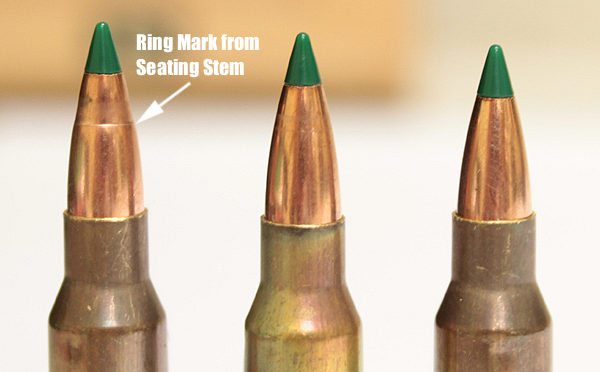
Here’s a simple task you can do that will give your seater die a more perfect fit to your match bullets. You can lap the inside of the seater stem so that it matches the exact profile of the bullet. This spreads out the seating force over a larger area of the bullet jacket. That allows smoother, more consistent seating, without putting dents, creases, or sharp rings in your bullets.
This process is demonstrated here by our friend Erik Cortina of Team Lapua-Brux-Borden. Erik, one of the nation’s top F-Class shooters and a skilled machinist, explains: “Here I’m lapping my new seater die stem with lapping compound. I chuck up a bullet in the lathe and lap the inside of the seating stem. I put lapping compound on the bullet and also in the stem. You can do the same with a hand drill and bore paste. You can see in the piture below how much contact area the stem has on the bullet after being lapped. This bullet is a Berger 7mm 180-grain Hybrid. ”
It can be helpful but it’s not necessary to make your seating stem an exact match to a bullet, particularly if you’re loading hunting or varmint rounds. But it is helpful to do some mild internal stem polishing. This should eliminate any ring (or dent) that forms on the bullet jacket during seating.
Sharp edges on a seating stem can cause a ring to be pressed into the bullet jacket — especially with compressed loads that resist downward bullet movement.
Q2: Is there any down-side to the process?
Not really. However, if you shoot many different bullet types for a particular cartridge, you may not want to conform the stem aggressively to one particular bullet design. Lightly lap the inside of the stem to remove burrs/sharp edges but leave it at that. A light lap will prevent a ring forming when seating bullets.
If you look at that 5-round group you might think it was shot with a 6 PPC or maybe a 6mmBR. But no, this was done with heavy 180gr Berger Hybrid bullets and the .284 Shehane, an improved version of the .284 Winchester. In fact, this impressive sub-quarter MOA group was shot while fire-forming with a very well-worn barrel! Gun builder Ryan Pierce of Piercision Rifles explains:
Here’s a 5-shot 0.191″ group at 100 yards with my .284 Shehane fire-forming loads. This barrel has 2200 rounds through it. It had 2000 as a straight .284 Win and then I set it back to .284 Shehane to form brass with. This was the first five rounds through it after I cleaned it after the last match. [The load was] 180 Hybrids with 54.0 grains of H4831 SC.
Ya, I figured why not I had some old barrels laying around so I just chopped 2″ off the back and 1″ off the front and chambered it up as a Shehane. Had 1000 pieces to fireform and didn’t want to do all that on a brand new barrel.
My fireform loads are going 2765 FPS. I have a 29″ barrel also though since it’s a setback. Once you get it formed I would push it faster than that or I wouldn’t even bother with the Shehane. My old straight .284 load at 2890 fps had ES spread in single digits for 10 shots. I figured if I get it up to 2935-2950 fps that will be a point or two saved in a several day match.
Our friend Erik Cortina notes that the .284 Shehane has a velocity edge over the straight .284 Win because it holds more powder: “The Shehane has more capacity than the .284 Winchester. Ryan is using 54.0 grains simply as a fire-forming load. Typical load for a Shehane is around 57.0 grains of Hodgdon H4831 SC.” By blowing the sidewalls out 0.010″, the .284 Shehane picks up about 3.3 grains of extra case capacity. That enhancement makes a BIG difference. The extra boiler room is enough to drive the 180s at 2900-2950 fps with H4831sc, with long barrels.
Forum member Jim Hardy has shot the .284 with great success. He tells us: “In my humble opinion, the .284 Shehane is the best balanced long-range round there is — bar none. Here is why:
You have to shoot a 30 Cal Magnum with a 240gr bullet to equal the performance of most 7mm chamberings with the 180 Berger VLD. With the .284 Shehane, you have a .308 bolt face, medium action, and Lapua brass. You use less powder than the 7 mags, and have great accuracy and ballistics even while fire-forming. The .284 Shehane shoots inside the 6.5 AND the straight .284, the .300 WSM, and the .300 Win Mag with less recoil. What is not to love about the 284 Shehane? It is a no-brainer for long range — F-Class or Prone or 1000-yard Benchrest.”
Scotland’s Grant Taylor. who used the .284 Shehane to finish third at the 2009 F-Class Worlds in England says the .284 Shehane is “very accurate with superb vertical spreads at 1000 yards. [This] caliber… has awesome accuracy. I’m getting 2930-2950 fps with spreads in the 3-5 fps range. I use Hodgdon H4831sc powder, CCI BR2 primers, and pointed 180gr Bergers.”
Dominators — that’s what these blue-shirted guys were at the 2020 Berger Southwest Nationals (SWN). For the third straight year, Team Lapua-Brux-Borden won the coveted F-Open Team Grand Aggregate award at the Berger Southwest Nationals, finishing with a score of 2584-160X (out of a possible 2600). And Team Member Jay Christopherson (AccurateShooter’s System Admin) won the F-Open Overall title, while Team Member Tod Hendricks won the 600-yard Mid-Range Event. Mighty impressive…
Team members are Jay Christopherson, David Christian, Tod Hendricks, Pat Scully, and Jeremy Smith (alternate), with Bob Sebold serving as Coach and Erik Cortina as Captain. Remarkably Jay (1247-83X), Pat (1247-72X), and Tod (1245-81X) placed first, second, and third respectively in the F-Open Grand Aggregate individual awards. That’s right, three team-mates secured ALL the podium places. And all three were separated by only two points!
Record-Setting Performances by Team
Notably Team Lapua-Brux-Borden established a new Ben Avery range record along the way to winning the Palma Team Match with a score of 1791-113 (out of a possible 1800). We’re told that the Team’s 793-47X LR score was also a new match record. Jay set a LR Aggregate Record with 799-50X, while Tod set a LR individual relay record of 200-18X.
Photo by Sherri Jo Gallagher.
Team Lapua-Brux-Borden — Winning “Team First” Philosophy Commentary by Jay Christopherson
For Team Lapua-Borden-Brux, winning gold is the entire focus. To that end, ego is the only enemy. Sure, we all have egos as individual shooters, but as a team, ego is subsumed into that one overriding goal. If you can’t do that, then you can’t shoot on Lapua-Borden-Brux. No matter how good you think your rifle is or how well you are shooting individually, the coach is the only arbiter — no exceptions. Every job on the team is focused towards that single goal of gold and no job is more or less important than another. Our plotter saves points by spotting high or low trends and calling that out, and ensuring we don’t lose points when a scorer misses a shot. Our back-coach saves points by spotting upcoming condition changes or making observations. Our target-puller strives to provide an example of the best possible target service. And our scorer focuses on providing attentive service to the team next to us. A failure in one job is a failure in all and we either win or lose together as a team. That is only possible when each individual understands that there is only one goal.
The Berger Southwest Nationals, hosted by the Desert Sharpshooters Rifle Club, took place February 5-9, 2020 at the Ben Avery Shooting Facility in Phoenix, AZ with a sold-out roster of 400 competitors. America’s biggest rifle match west of the Mississippi, the Southwest Nationals is a “must-attend” event for long-range shooters competing in F-Open, F-TR, and Sling disciplines. Competitors from at least nine different countries were in attendance. The Grand Aggregate is the total score from firing points of 600, 800, 900, and 1,000 yards.
Praise from Team Captain
“I am very proud of the team”, stated Team Captain, Erik Cortina: “From setting a new range record to placing first in the F-Open Grand Aggregate, our success is directly attributed to Lapua’s premium components.”
About Lapua — Premium Brass, Bullets, and Ammunition
Lapua produces the highest-quality small caliber cartridges and components for civilian and professional use. Lapua is a part of the Capstone Precision Group, exclusive U.S. distributor for Berger, Lapua, Vihtavuori, and SK-Rimfire products. For more information, visit Lapua.com.
It’s 2020! Welcome the new year and a new decade. We know many of our readers will be spending the winter day indoors. If you need a break from the bowl games on TV, here are eight interesting and informative videos that are worth watching. The subject matter runs the gamut from benchrest gunsmithing to long-range varmint silhouette competition. There are also reviews of some of the best precision rifle options for PRS and NRL22 disciplines. Enjoy our New Year 2020 Video Fest.
Epic Reloading Hardware Test — 14 Single-Stage Presses. In this remarkable video, Gavin Gear of UltimateReloader.com reviews fourteen (14) single-stage reloading presses. This is the most comprehensive reloading press comparison test ever done by anyone, anywhere. The presses range from compact units to large-frame exotics from Europe. If you are in the market for a single-stage press in 2020 this is a MUST-watch video. Brands include Forster, Hornady, Lyman, MEC, RCBS, Redding, Turban (Prazipress).
2. Precision Riflesmith — Profile of Benchrest Smith Mike Bryant
Texas gunsmith Mike Bryant is a talented benchrest shooter and a highly respected builder of competition and hunting rifles. In this wide-ranging interview, Mike talks about benchrest competition, the key factors that contribute to rifle accuracy, and about his career as a gunsmith.
3. Erik Cortina — Mag-Feed Testing Borden Action with 6BR
Click the Speaker Icon (lower right) to HEAR AUDIO
Our friend Erik Cortina has built a new PRS/NRL rifle based on the new Borden Super Short 6 Action. This video show Erik’s first mag-feeding test with ten 6BR loaded rounds. You’ll see there is NO problem speed-feeding the short 6BR case. Erik tells us: “I removed the firing pin from bolt for safety. The magazine has not been modified in any way. I would say there is no need to do anything to it, she’s ready to run!” Impressive indeed.
4. Shooting USA — Texas Varmint Benchrest Match
This episode of Shooting USA TV features long-range varmint silhouette competition in Texas. This discipline combine the pure accuracy of benchrest competition with the fun of knocking down critter targets. These are smaller than standard silhouettes, so it’s quite a challenge to hit them at 300 yards and beyond.
In this episode, host John Scoutten competes with his 6.5 Creedmoor PRS rifle. Most shooters use benchrest-grade rifles with premium front rests. NOTE: This video shows some top-flight benchrest rifles, and also covers the origins of benchrest varmint silhouette in Pennsylvania. There are even some AccurateShooter Forum members on screen.
5. Vickers Tactical — .308 Win Bolt Gun Vs. .308 Win Gas Gun
This interesting video from Vickers tactical compares and contrasts two tactical style rifles both chambered for the .308 Winchester. The test team compares functionality, accuracy, ergonomics, and versatility. Each platform has its advantages, as the video reveals.
6. Outdoor Life — The Best New Affordable Precision Rifles
This video showcases three modern tactical-style rifles suitable for the PRS Production (Factory) Class which is limited to $2000 for rifle alone, not counting optics (Rule 2.3.1). Outdoor Life Shooting Editor John Snow puts three capable rifles through their paces: Patriot Valley Arms John Hancock, BadRock Precision SouthFork, and Seekins Precision Havoc Bravo.
7. Aerial View of Deep Creek Shooting Range in Montana
The Deep Creek Range near Missoula, Montana, is one of the best 1000-yard ranges in the country. Many long-range benchrest records have been set in this scenic, tree-lined facility. Now, thanks to Forum member David Gosnell (aka “Zilla”), you can see Deep Creek from the air. David flew a camera drone over the Deep Creek Range, soaring from firing line to the target bay and back again. This video gives you a “birds-eye view” of one of America’s elite ranges.
8. Nat’l Rifle League — Intro to NRL22 Rimfire Tactical Matches
NRL22 is a great way to get into competition shooting with minimal expense. There are Five (5) classes: Open, Base, Ladies, Young Guns (8-16), and Air Rifle. Base Class is for the budget-minded shooter — the combined MSRP of Rifle and Optic may not exceed $1050.00 (so you could spend $550 on a rifle and $500 on a scope for example). That keeps the sport affordable. Open, Youth, and Ladies Classes have no price limits on Rifle and Optic. Visit NRL22.org to find an NRL22 match near you.
Here’s the super-speedy way to turn case-necks. Our friend Erik Cortina figured out how to turn his match cartridge case-necks using his milling machine. Erik told us: “While in Raton, Mid Tompkins told me that he turns his brass on milling machine. He said he could do about 500 in two hours, so I decided to try it.”
Erik fitted a Don Nielson “Pumpkin” neck-turner to the mill, and he used a modified 21st Century case holder to secure the brass. As you can see from this video, Erik was very successful with the process. The tool spins at 1500 rpm, turning Lapua 6.5-284 cases that have been necked up to 7mm.
Video Shows Erik Cortina Neck-Turning Cases with Milling Machine:
Cartridge Brass: Lapua 6.5-284 necked up to 7mm
Lubricant: Lithium grease inside and outside of neck
Neck-Turner: Nielson Pumpkin running at 1500 RPM
It’s hard to argue with Erik’s results. Here are his turned Lapua cases, which have neck-wall thickness consistent to two ten-thousandths of an inch. Think you could do better turning manually?
Some of Erik’s Facebook friends had questions about this process:
Q: Who makes the shell-holder?
Erik Cortina: I did! The shell-holder you can get from 21st Century. I Tig-welded a punch as a handle.
Q: I love the idea of working smarter not harder! Any galling issues? What are your mitigation techniques?
Erik Cortina: No issues. I use lithium grease in spray can. Makes a foam that I dip necks into.
Q: Shouldn’t either the case or the cutter be floating to allow most precise neck turning?
Erik Cortina: Up until [I tried this] I believed the same thing. I was going to build a floating case holder but decided to try rigid setup on a few cases before I built it. Results were great. Neck thickness doesn’t vary more than .0002″, which is same as when I was doing it with floating case holder on the lathe.
Q: Any problems with the Pumpkin changing the cut as it heats up?
Erik Cortina: No — there were no issues with that.
NOTE: Erik Cortina is a very skilled machinist who custom-crafted fittings used for this process. This kind of neck-turning with a milling machine may not be for the everyday hand-loader!
Nielson “Pumpkin” Neck-Turner
The circular orange cutting fixture on Erik’s Milling Machine is a Don Nielson “Pumpkin” neck-turning tool. Don designed this tool to be used by hand or with power. The Pumpkin boasts an eccentric mandrel that allows the cut to be adjusted easily in precise .0001″ increments. Benchresters like this as it allows for very precise control of cut depth and neck-wall thickness.
Jason C., commenting on Erik’s YouTube video stated: “I have a couple of those too. Nothing cuts like a Pumpkin. [Don Nielson] made the best cutter tool ever.” These are still available if you ask around. The photo shows Don with a case-holder mounted to a power assembly. A talented machinist and tool-maker, Don has also been a successful short- and long-range benchrest shooter, who has won NBRSA 600-Yard Championships. CLICK HERE to read about Don’s success with the 6.5×47 Lapua.
Nielson Neck Turner with carbide mandrel. Photo Courtesy Butch’s Reloading.
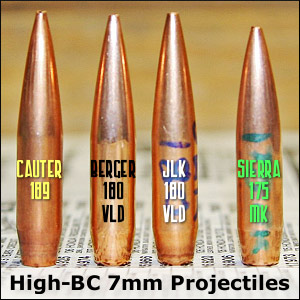
7mm (.284) remains the caliber to beat in F-Class Open Division (though some shooters have had success with .30-Cal short magnums.) With a standard .284 Winchester, or better yet, a .284 Improved, you can drive the high-BC Berger 180gr and 184gr bullets to competitive velocities.
The straight .284 Win is an excellent cartridge, quite capable of winning F-class matches. However, in most barrels, it can’t push the 180s at 2900-2950 fps velocity levels*. A lot of barrels will top out at about 2850 fps. That’s where the .284 Shehane comes into play.
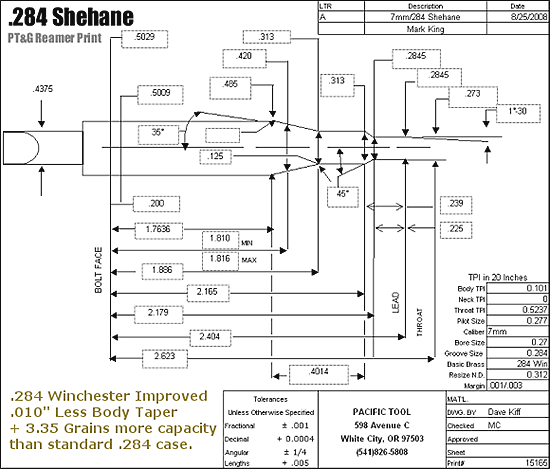
The .284 Shehane is a slightly modified wildcat that retains the same 35° shoulder as the parent case. However, by blowing the sidewalls out 0.010″, the .284 Shehane picks up about 3.3 grains of extra case capacity. That enhancement makes a BIG difference. The extra boiler room is enough to drive the 180s at 2900-2950 fps with H4831sc. With N560 or Reloder 17 you can go even faster.
Norm Harrold Won 2018 F-Class Open Division Nationals with .284 Shehane Rifle
Norm Harrold (above) won the 2018 USA F-Class Nationals shooting a .284 Shehane. Norm’s F-Open rig features a McMillan Kestros ZR stock and Bartlein barrel chambered for the .284 Shehane, which has a bit more case capacity than a standard .284 Winchester. Norm loaded Berger 184gr 7mm bullets in Lapua brass. Norm revealed his load in an Erik Cortina YouTube Video.
F-Class shooter Erik Cortina notes that the .284 Shehane has a velocity edge over the straight .284 Win because it holds more powder: “The Shehane has more capacity than the .284 Winchester. Ryan is using 54.0 grains simply as a fire-forming load. Typical load for a Shehane is around 57.0 grains of Hodgdon H4831 SC.” By blowing the sidewalls out 0.010″, the .284 Shehane picks up about 3.3 grains of extra case capacity. That enhancement makes a BIG difference. The extra boiler room is enough to drive the 180s at 2900-2950 fps with H4831sc, with long barrels.
Forum member Jim Hardy has shot the .284 with great success. He tells us: “In my humble opinion, the .284 Shehane is the best balanced long-range round there is — bar none. Here is why:
You have to shoot a 30 Cal Magnum with a 240gr bullet to equal the performance of most 7mm chamberings with the 180 Berger VLD. With the .284 Shehane, you have a .308 bolt face, medium action, and Lapua brass. You use less powder than the 7 mags, and have great accuracy and ballistics even while fire-forming. The .284 Shehane shoots inside the 6.5 AND the straight .284, the .300 WSM, and the .300 Win Mag with less recoil. What is not to love about the 284 Shehane? It is a no-brainer for long range — F-Class or Prone or 1000-yard Benchrest.”
Scotland’s Grant Taylor. who used the .284 Shehane to finish third at the 2009 F-Class Worlds in England says the .284 Shehane is “very accurate with superb vertical spreads at 1000 yards. [This] caliber… has awesome accuracy. I’m getting 2930-2950 fps with spreads in the 3-5 fps range. I use Hodgdon H4831sc powder, CCI BR2 primers, and pointed 180gr Bergers.”
.284 Shehane Shines in 1K Benchrest Competition Too
The .284 Shehane has won in Benchrest as well as F-Class competition. In 2013, Henry Pasquet won the IBS 1000-Yard Nationals shooting a .284 Shehane. Henry’s Championship-winning rig is shown below. Note the 5″-wide fore-end which is not legal for F-Class. Henry also runs a combo tuner/muzzle-brake.
Amazing Accuracy When Fire-Forming .284 Shehane
If you look at that 5-round group you might think it was shot with a 6 PPC or maybe a 6mmBR. But no, this was done with heavy 180gr Berger Hybrid bullets and the .284 Shehane. In fact, this impressive sub-quarter MOA group was shot while fire-forming with a very well-worn barrel! Gun builder Ryan Pierce of Piercision Rifles explains: “Here’s a 5-shot 0.191″ group at 100 yards with my .284 Shehane fireforming loads. This barrel has 2200 rounds through it. It had 2000 as a straight .284 Win and then I set it back to .284 Shehane to form brass with. [The load was] 180 Hybrids with 54.0 grains of H4831 SC.”
*Some exceptional barrels chambered in straight .284 Win can reach 2900 fps with the 180s. Ryan Pierce has a 32″ Brux barrel that is delivering 2900 fps with the straight .284. However, Ryan acknowledges that his velocities are not typical: “A lot of .284 Win barrels top out at around 2850 fps with the 180s”.


 In this video, John works with a barrel tuner created by Erik Cortina, a member of Team Lapua/Brux/Borden. A tuner can be useful in modulating barrel vibrations and that can translate to smaller groups on target. Sometimes the positive effects are quite noticeable. Tuners have been popular with short-range benchresters for many years and now they are becoming more common on top F-Class and Long Range rifles.


 Cortina says the very accurate Brux barrel and razor-sharp 6-24x56mm Kahles scope help achieve this kind of outstanding performance at 1000 yards. Here are the key components for Erik’s latest PRS rig:






 Praise from Team Captain
 This episode of Shooting USA TV features long-range varmint silhouette competition in Texas. This discipline combine the pure accuracy of benchrest competition with the fun of knocking down critter targets. These are smaller than standard silhouettes, so it’s quite a challenge to hit them at 300 yards and beyond.
 The circular orange cutting fixture on Erik’s Milling Machine is a Don Nielson “Pumpkin” neck-turning tool. Don designed this tool to be used by hand or with power. The Pumpkin boasts an eccentric mandrel that allows the cut to be adjusted easily in precise .0001″ increments. Benchresters like this as it allows for very precise control of cut depth and neck-wall thickness.
 7mm (.284) remains the caliber to beat in F-Class Open Division (though some shooters have had success with .30-Cal short magnums.) With a standard .284 Winchester, or better yet, a .284 Improved, you can drive the high-BC Berger 180gr and 184gr bullets to competitive velocities.


