Shotgun vs. Handgun — which is better for home defense? That’s a question that inspires strong opinions on both sides. We think the best answer may be “both”. There are some situations where a pistol is most handy, while there are other situations where the power (and lethality) of the shotgun clearly wins out. Some would argue that the shotgun offers an “intimidation” factor that may better resolve a threat without a shot being fired.
The NSSF, in cooperation with Thunder Ranch Training Center, has created an interesting video that examines the Shotgun vs. Handgun debate. As the Cheaper Than Dirt Blog notes: “The primary argument against the shotgun is a longer length leading to less maneuverability. On the other hand, the pistol offers better maneuverability, but lacks the stopping power of a shotgun”. Moreover, the pistol may be less accurate, according to some critics. This NSSF video looks at the question from a logical standpoint — making some surprising points.
As you can see in this still frame from the video, the shooting stance of the pistol shooter (Clint) is NOT much more compact than that of the two shotgunners (compare actual muzzle positions). So a shotgun may actually be more handy inside a home than some people realize. Clint concludes that the gun selection debate “is all very easily solved by only one question: ‘If someone was going to run across a bedroom at you and they had a big knife, would you rather shoot him one time with a pistol or one time with a shotgun?’ When you answer the question you figure out why this [shotgun length] doesn’t really bother us. We simply take these [shotguns] and use them in a slightly different manner…”
In this video, Thunder Ranch Director Clint Smith explains why the overall length of a shotgun, as held in firing position against the shoulder, is not really that much greater than the “shooting stance length” of a handgun held in a proper firing position (with arms extended). Accordingly gun length/size should not be the deciding factor when choosing a firearm for home defense.
Whatever Weapon You Choose — Train with It
Fundamentally, you should use the firearm that is 100% reliable, and with which you have trained regularly. Mastery of a defensive firearm — whether shotgun or handgun — needs to be second-nature. You should be able to operate all the controls (safety, pump, decocker, slide, bolt handle etc.) by “instinct” based on hours of training. Likewise you should know how to operate the light/laser if your defensive firearm is so equipped. Importantly, you should be able to reload in darkness, and clear malfunctions without panicking.
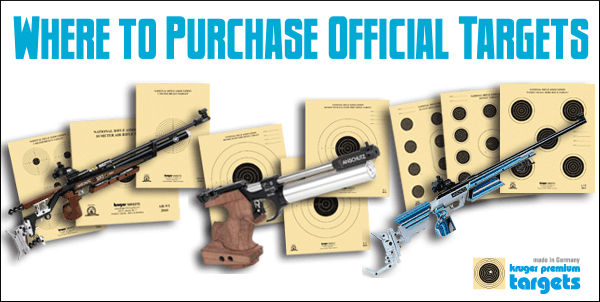
AccurateShooter.com offers dozens of FREE, printable targets for target practice, load development, and fun shooting. We also offer a few of the most popular NRA Bullseye targets. One or more of these printable targets should work for most training purposes. However, some readers have asked: “Where can we get the real targets… exactly like the ones used in NRA, IBS, and NBRSA shooting matches?”
All these vendors carry nearly all the NRA High Power and Smallbore targets, including the new, smaller F-Class targets. Germany’s Kruger Targets sells all the important NRA targets, and international (ISSF) air rifle and smallbore targets too.
Orrville Printing currently sells IBS targets for rimfire (50 yard) benchrest, short-range centerfire Benchrest (100, 200, 300 yards), Hunter BR Rifle (100, 200, 300 yards), plus the official 600-yard and 1000-yard IBS targets. National Target Company also has most of the IBS targets. NBRSA short-range, 600-yard, and 1000-yard benchrest targets are available directly from the NBRSA Business Office. Call (307) 655-7415 to order for the season.
Do you have a friend or family member who is just getting started in handgunning? The NSSF has created five Handgun 101 videos that cover the basics of handgun shooting, starting with key principles of firearms safety. Hosted by Top Shot Season 4 Champion Chris Cheng, these videos explain the important fundamentals of pistol shooting. If you will be taking a youngster (or novice adult) to the range for the first time, it would be a good idea to have him or her watch one or both of these videos. CLICK HERE to view all Handgun 101 videos.
Handgun 101: Rules for Safe Firearm Handling
Handgun 101: Single Action vs. Double Action Explained
The nation’s top bullseye pistol shooters were at Camp Perry last week for the NRA National Trophy Pistol Championships. If you’ve every wondered what it takes to win a pistol match using the classic, one-handed hold, here are some tips from one of the best ever, Brian “Gunny” Zins, 12-Time NRA National Pistol Champion.
Brian has authored an excellent guide to bullseye pistol shooting. Brian’s Clinic on the Fundamentals recently appeared in The Official Journal of the New York State Rifle & Pistol Association. The CMP scanned the story so you can read it online. CLICK HERE to read full article.
Top Tips from Brian Zins:
Trigger Movement: If trigger control is ever interrupted in slow fire the shot needs to be aborted and the shot started over.
Relationship between Sight Alignment and Trigger Control: Often when the fundamentals are explained these two are explained as two different acts. Well, truth be told it’s really kind of hard to accomplish one without the other. They have a symbiotic relationship. In order to truly settle the movement in the dot or sights you need a smooth, steady trigger squeeze.
Trigger Finger Placement: Where should the trigger make contact on the finger? The trigger should be centered in the first crease of the trigger finger. Remember this is an article on Bullseye shooting. If this were an article on free pistol or air pistol it would be different.
Proper Grip: A proper grip is a grip that will NATURALLY align the gun’s sights to the eye of the shooter without having to tilt your head or move your or move your wrists around to do that. Also a proper grip, and most importantly, is a grip that allows the gun to return to the same position [with sights aligned] after each and every shot. The best and easiest way to get the proper grip, at least a good starting position… is with a holster. Put your 1911 in a holster on the side of your body[.] Allow your shooting hand to come down naturally to the gun.
After a rip-roaring Opening Ceremony, the 2016 National Matches at Camp Perry commenced with the handgun Small Arms Firing School (SAFS) on July 11th, followed by Excellence-In-Competition (EIC) pistol matches on July 12th. The SAFS was led by USAMU, Military Team, and CMP instructors. Following classroom instruction and practice on the range, SAFS participants fired a true M9 EIC Match with the goal of earning points towards the prestigious Distinguished Badge.
On July 12th, the CMP .22 Rimfire and Service Pistol EIC matches were held. These matches were hugely popular — with 480 Rimfire competitors and 400 Service Pistol shooters. This year, there was plenty of talent on the firing line. Of the top 50 Service Pistol shooters, 46 were Distinguished, including the top 18 competitors.
The USAMU’s SSG Greg Markowski won the Service Pistol EIC Match with a score of 293-11X. Fellow USAMU team members SFC Lawrence Cleveland (286-5X) and SFC James Henderson (284-9X) finished second and third respectively.
In the .22 Rimfire EIC Pistol Match a USAMU shooter again took top honors. SFC Michael Gasser shot 293-5X to become the overall winner. Close behind, with identical 292-11X scores, were Jonathan Shue and SGT Ryan Franks. It’s notable that both Shue and Franks had many more Xs than SFC Gasser, the overall winner.
Talented shooters stood shoulder to shoulder on the firing line…
The license plate says it all — perfection at Perry is a 10X.
There were 480 registered competitors in .22 Rimfire EIC match.
USAMU Shooters won both EIC pistol matches (.22 Rimfire and Service Pistol).
Many U.S. Military Service Personnel attended the EIC Matches
It took decades of competition to acquire all those patches — that’s dedication to the sport.
A California company, CaseCruzer, makes the nicest multi-pistol hard cases we’ve ever seen. With capacities from 3 pistols to 6 pistols, these lockable range cases hold handguns securely in angled “quick-draw” slots. In addition to the molded pistol carriers, there are slots for magazines together with a separate compartment for muffs, ammo, and other accessories. Starting at $240.00 MSRP for the Quick Draw 3-Pack, these boxes are expensive, but they offer great protection with great usability. Water-tight and dust-proof, CaseCruzer cases are airline approved (ATA 300).
4-Gun Case
The smart design of the “Quick Draw” CaseCruzer cases lets you keep your pistol locks in place during transport. There is enough clearance to stow the pistols securely even with bulky trigger-guard locks.
Do you have a concealed carry permit, or do you plan to carry a concealed handgun in the future? Then you can benefit from Beretta’s FREE 15-page e-book, Ten Essential Tips for CCW Holders. This eBook, in handy PDF format, helps gun owners select an appropriate handgun (and holster), understand legal obligations and responsibilities, and train effectively with the firearm. This short eBook offers many useful tips to consider, in particular for gunowners who are contemplating the pros and cons of everyday carry for themselves.
As the Beretta CCW booklet says, “Carrying a concealed handgun requires a certain amount of confidence. You need to be confident in your knowledge of laws and regulations. You have to have confidence in your accuracy, and you need to trust that you can carry a gun effectively, securely and comfortably. If a gun is a burden for you to carry, you probably won’t.”
Surprising Facts About Actual Defensive Handgun Use
You may be surprised to learn when and how handguns are actually used for self-defense. Most defensive uses are at very short range and the incident only lasts a matter of seconds. You need to be prepared, and train to be proficient drawing and aiming your weapon. And remember, shooting is a last resort, when a safe retreat is not available.
55% of gunfights take place in 0-5 feet.
20% of gunfights take place in 5-10 feet.
20% of gunfights take place in 10-21 feet.
95% of gunfights take place in 0-21 feet. (Source: FBI)
The average man can cover 21 feet of ground in 1.5 seconds.
The average gunfight is over in 3-5 seconds.
3 to 4 shots are usually fired.
Most gunfights take place in low-light conditions.
On average, one shot in four strikes someone.
Here are two (2) sample pages from Beretta’s CCW eBook.
Here is Ernie Bishop’s pride and joy, a specialty pistol nicknamed “Batman” because the black carbon-fiber stock looks like the Batmobile. This is one sophisticated handgun. Complete with scope, the Batman pistol weighs under 7.5 pounds, thanks to the ultra-light stock. The carbon stock is 6 inches wide at the fore-end, yet weighs just one pound. Ernie tells us: “This gun shoots amazing and is easy to shoot especially with my SEB MAX Rest.” Ernie adds, “The gun will soon also have a field-usable rear-grip stock so I can shoot it prone from a bipod as well.”
The Batman pistol is chambered for the 6mm “Long Dasher”, a 6mm 40°-shouldered variant of the 6.5×47 Lapua. Ernie loads Berger 105gr Hybrid bullets pushed by Hodgdon H-4350 powder.
Gun Specifications The gun, crafted by Eric Wallance of Nawaka Firearms, features an XP-100 action, Jewell trigger, and 15″-long, Brux 1:8″-twist barrel with aluminum muzzle brake. Interestingly, this gun does not have a traditional recoil lug. Instead, gunsmith Wallace milled out a lug from the bottom of the XP-100 action to save weight. On top of the action, the rig carries a Sightron Inc S-III 6-24X56mm scope in Kelbly rings on a custom +20 MOA rail.
Long Dasher Wildcat
Shown at right is a “Long Dasher” 40° wildcat created by Forum member Sunbuilder. This is very similar to Ernie Bishop’s chambering, though there may be small variations related to reamer design (such as freebore). Sunbuilder’s 6-6.5×47 Improved (aka “Long Dasher”) reamer was made by Dave Kiff of Pacific, Tool & Gauge. This wildcat cartridge adds about 2.0 grains capacity to the 6.5×47 necked down to 6mm. The case certainly is impressive with that 40° shoulder. We’re just waiting for the tactical guys to starting run this improved cartridge with its original 6.5mm bore.
Here are three FIVE-shot groups at 500 yards, shot by Ernie’s Batman pistol:
Federal Ammunition is releasing a new line of range ammunition with polymer-encased projectiles. American Eagle Syntech is the first range-specific factory-loaded ammunition designed to reduce fouling and extend barrel life with a high-tech polymer bullet coating plus specially-formulated clean-burning powders. The potential for reduced wear and fouling is real — when tested against conventional FMJ ammunition, Federal claims Syntech produced an average of 12% less barrel friction and 14% less heat. Also, since Syntech bullets lack a metal jacket, there is less chance of ricochets on steel targets. Initially, three (3) types of Syntech ammo will be offered: 9mm Luger (115 grain); 40 S&W (165 grain); and .45 ACP (230 grain).
For years this Editor has loaded his .45 ACP and .44 Mag handguns with polymer/moly matrix-coated bullets from Precision Bullets in Texas. Those poly/moly-encased lead bullets shot VERY accurately and I found that my barrels fouled much less than with conventional lead bullets. Likewise, there was much less cylinder fouling on my revolvers. If the American Syntech bullets work as well as those Precision bullets, I think the Syntech line will be a winner. Syntech bullets should benefit any shooter who frequents a range where lead ammo is not allowed.
Features & Benefits
• Polymer-encapsulated Syntech bullet prevents metal-on-metal contact in the bore, eliminating copper and lead fouling, while extending barrel life.
• Exclusive primer formulation provides reliable, consistent ignition.
• Clean-burning propellants minimize residue and fouling.
• Significantly reduces the required frequency of cleaning.
• Absence of a copper jacket minimizes splash-back on steel targets.
Do you know someone who wants to get started in pistol shooting? Here’s a new opportunity. The NRA now offers its Basics of Pistol Shooting Course in an online format. That makes it easy to cover the “classroom” part of the course on your own time. The $60.00 online course includes 11 step-by-step lessons (to be followed by live range training). CLICK HERE to enroll in online Pistol Training Course.
Train Online, Then Register for a Range Session
For the NRA Basics of Pistol Shooting course, Phase 1 is conducted in an online environment, completed on your own time (cost is $60.00, non-refundable). After successfully completing the online exam, students can register for Phase 2, the instructor-led training session. Phase 2 is conducted at your local range with an NRA Certified Instructor. You must successfully complete Phase 1 and Phase 2 in order to receive your NRA Basics of Pistol Shooting course certificate.
Designed and developed by experts to accommodate busy schedules, the web-based course takes a blended learning approach to firearms training with both online and physical components. Students have 90 days to work through 11 online lessons before registering for Phase 2, the NRA Certified Instructor-led phase at a local range. “America has more first time gun owners than ever and the NRA remains dedicated to being the number one provider of firearm training,” said Executive Director of NRA General Operations, Kyle Weaver. “Thanks to our online courses and network of more than 125,000 NRA Certified Instructors, it has never been easier to learn basic firearm skills.” The NRA offers other online training courses at Onlinetraining.nra.org. These offerings include a Range Safety Office (RSO) course, and a Range Development and Operations course.




 Do you have a friend or family member who is just getting started in handgunning? The NSSF has created five Handgun 101 videos that cover the basics of handgun shooting, starting with key principles of firearms safety. Hosted by Top Shot Season 4 Champion Chris Cheng, these videos explain the important fundamentals of pistol shooting. If you will be taking a youngster (or novice adult) to the range for the first time, it would be a good idea to have him or her watch one or both of these videos.
 The nation’s top bullseye pistol shooters were at Camp Perry last week for the NRA National Trophy Pistol Championships. If you’ve every wondered what it takes to win a pistol match using the classic, one-handed hold, here are some tips from one of the best ever, Brian “Gunny” Zins, 12-Time NRA National Pistol Champion.




 The gun, crafted by Eric Wallance of Nawaka Firearms, features an XP-100 action, Jewell trigger, and 15″-long, Brux 1:8″-twist barrel with aluminum muzzle brake. Interestingly, this gun does not have a traditional recoil lug. Instead, gunsmith Wallace milled out a lug from the bottom of the XP-100 action to save weight. On top of the action, the rig carries a Sightron Inc S-III 6-24X56mm scope in Kelbly rings on a custom +20 MOA rail.